
Reviewed · BUENOS AIRES TOURS
Shared Jewish Walking Tour – Visit Libertad Synagogue + Jewish Museum
Jewish Buenos Aires has stories on every block. This 4 to 5 hour walk connects immigration, faith, commerce, tragedy, and daily life across central Buenos Aires. I especially like the visit to Libertad Synagogue, one of the city’s most striking Jewish landmarks, and the time spent in Once, where kosher restaurants, synagogues, garment shops, and even kosher phone stores reveal a living community. The main consideration is the pace: you will walk about 5 kilometers, stand for long stretches, and handle stairs.
The tour costs $105 per person, with admission to the Jewish Museum and synagogue included. Guides such as Melanie, Cande, Estaphan, and Fernando have earned strong praise for clear English, warm personalities, and the ability to explain both Argentine history and Jewish life. Bring your passport, not just a copy, since one participant could not enter the museum with photocopies.
In This Review
- Key points to know before you book
- Why this walk adds something different to Buenos Aires
- Plaza Houssay and the first look at Once
- AMIA and the memorials of a painful decade
- Walking through Once beyond the landmarks
- The Jewish Museum and immigration from the late 1800s
- Libertad Synagogue, the tour’s architectural finish
- Tribunales, Retiro, and a useful central Buenos Aires finish
- The guides make or break the experience
- Is $105 a fair price?
- Who will enjoy this Jewish Buenos Aires walk?
- Practical details that can save you trouble
- Should you book it?
- FAQ
- How long does the Jewish walking tour last?
- How far will I walk?
- Where does the tour begin?
- What time does the tour start?
- Where does the tour finish?
- Are museum and synagogue admissions included?
- Do I need to bring my passport?
- What is the maximum group size?
- Is the tour suitable for people with limited mobility?
- Can cruise passengers book this experience?
Key points to know before you book
- Once offers a working Jewish neighborhood, not just historic monuments: Expect garment districts, quinceañera shops, kosher restaurants, synagogues, shuls, and unusual businesses such as kosher phone shops.
- AMIA and the Israeli Embassy memorials add difficult but essential history: The tour addresses the terrorist attacks of the 1990s with memorial artwork and personal context.
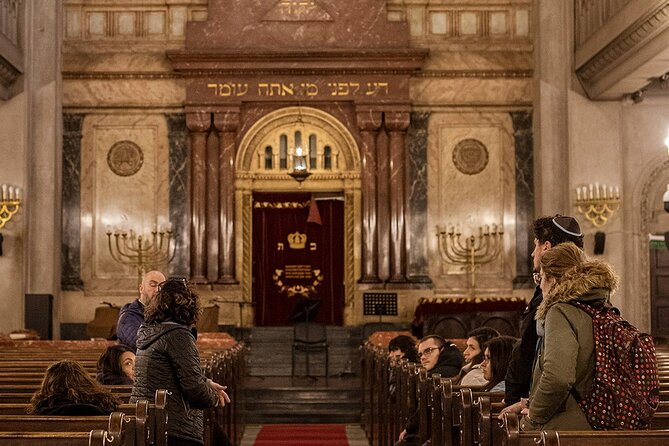
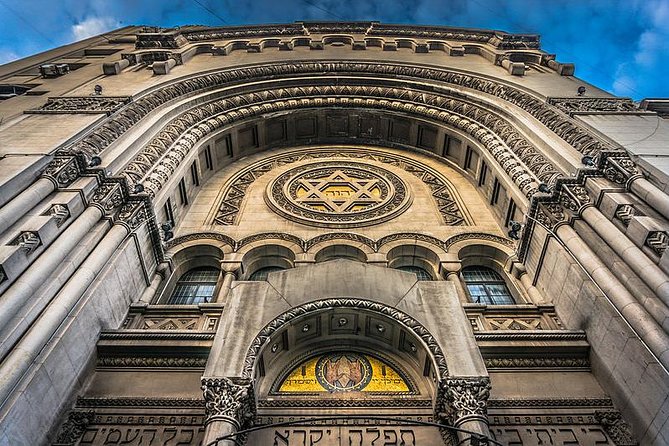
- Libertad Synagogue is the visual high point: The synagogue visit gives the tour a strong architectural and spiritual finish.
- The guides are the heart of the experience: Melanie, Cande, Estaphan, and Fernando are praised for their English, command of the subject, and friendly approach.
- This is a serious half-day walk: Plan for roughly 5 kilometers, stairs, standing, and a group of no more than 15 people.
- The final location is useful for further sightseeing: You finish at Plaza Lavalle, near the Jewish Museum and Teatro Colón.
Why this walk adds something different to Buenos Aires
Buenos Aires is often introduced through grand boulevards, cafés, tango, and elegant European-style buildings. Those are part of the city, but they do not tell the whole story. This tour shows you how Jewish immigration and Jewish institutions became part of Argentina’s social and urban life.
The experience begins near Once, one of the most important Jewish districts in the country. That choice matters. You are not only looking at isolated monuments. You are seeing a neighborhood where religious, commercial, and family life developed side by side.
The guide links local places to larger events: colonial-era origins, immigration from the late 1800s, the growth of kosher dining, and the attacks that scarred the community in the 1990s. The result is less a procession of buildings and more a guided explanation of how a community took root, adapted, suffered, and continued.
The small group limit of 15 helps here. This is the sort of tour where you may want to ask about antisemitism, Israel, Argentine politics, religious practice, or the difference between Orthodox and other Jewish communities. Previous guide Estaphan was praised for discussing these sensitive subjects openly, while Melanie was singled out for bringing her own perspective and experience into the conversation.
More Walking Tours in Buenos Aires
- Buenos Aires Hop-On Hop-Off Bus, Free Walking Tours & Discounts
★ 4.5 · 2,218 reviews - Buenos Aires: La Boca Guided Walking Tour in English
★ 4.8 · 1,587 reviews - La Boca Walking Tour
★ 5.0 · 1,029 reviews
Plaza Houssay and the first look at Once
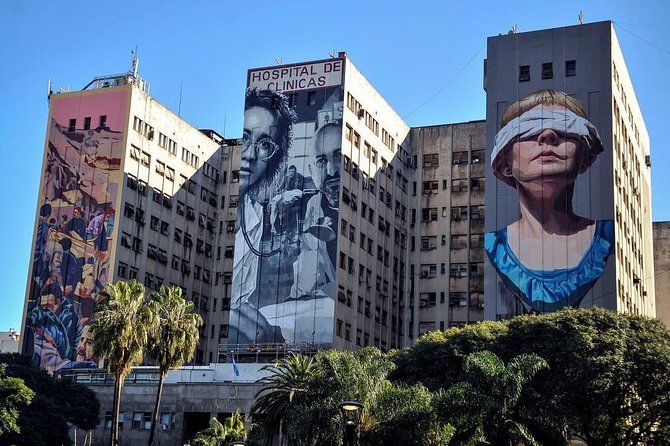
Your meeting point is at Junín 802 to 900, near Plaza Prof. Dr. Bernardo Houssay, at 10:00 a.m. The plaza is described as the gateway to Once, and the opening talk sets the historical frame for the morning.
Here, the guide explains the colonial origins of Argentine Jewry before turning to a much more recent episode. You will see murals honoring doctors and first responders who helped victims of the terrorist attack on the area’s major Jewish institution.
This is a thoughtful start because it places Jewish Buenos Aires within the wider story of the city. The murals are not simply decorative. They honor care, rescue, and public service, giving the tour a human opening before it moves toward the institutions and attacks that shaped modern memory.
You will spend about 20 minutes here. That is enough time to orient yourself without getting bogged down in a long lecture at the first stop.
AMIA and the memorials of a painful decade
The next stop is Asociación Mutual Israelita Argentina, usually called AMIA. It is one of the central Jewish institutions in Argentina and was targeted by a terrorist attack in the 1990s. The building was later rebuilt, and the tour discusses both the attack and the community’s response.
You will have about 15 minutes at AMIA, including time to look at memorial artwork. The visit is emotionally serious, and it should be. This is not history treated as a footnote. The guide explains what happened and how the institution became a symbol of continued Jewish life in Argentina.
The route also includes the area outside AMIA again later, along with the memorial connected to the Israeli Embassy bombing. One detailed account of the tour described hearing about rescue and recovery near a hospital mural as well as visiting the Israeli Embassy memorial. The precise order may vary, but you should expect the attacks to receive substantial attention.
If you prefer a light sightseeing walk with little discussion of tragedy, this may not be the right choice. If you want to understand Jewish Buenos Aires honestly, these stops are necessary.
Walking through Once beyond the landmarks
The Once portion is one of the tour’s most useful features. You see the neighborhood as a functioning part of Buenos Aires rather than as a museum display.
The walk passes through bulk and garment trading districts, quinceañera shops, kosher restaurants, synagogues, and small shuls. You also see Diversity Corner and enter the Orthodox area. The mention of kosher phone shops is a wonderfully specific detail. It shows how religious practice can shape everyday commerce in ways you would probably miss on your own.
The tour also explains the development of kosher restaurants. That may sound like a small subject, but food is one of the clearest ways to understand how a community maintains identity while adapting to a new country. You are not only told that Jewish life exists here. You see the businesses and services that support it.
Allow about 45 minutes for this neighborhood section. The pace gives you time to look around, though the district’s commercial character means the experience is about observation and explanation rather than grand scenery.
Wear comfortable shoes. Once is a working neighborhood, and the route covers real streets, not a carefully controlled pedestrian attraction. Stopping to listen, crossing streets, and moving through shops or institutions can make the distance feel longer than the number suggests.
More museums in Buenos Aires:
- Buenos Aires: Tickets to Boca Juniors Museum & Stadium
★ 4.5 · 581 reviews - Buenos Aires: River Plate and Boca Juniors Museum Tour
★ 4.5 · 72 reviews - Buenos Aires: Hop-On Hop-Off Bus and Football Museums
★ 4.3 · 39 reviews - Buenos Aires: Tickets to River Plate Museum
★ 4.6 · 32 reviews
The Jewish Museum and immigration from the late 1800s
The Jewish Museum of Buenos Aires provides the historical anchor for the tour. Inside, the guide discusses the major immigration of the late 1800s and places the community’s later development in that context.
The museum visit itself is listed at about 30 minutes. That is not a huge amount of time, so expect a focused introduction rather than an exhaustive museum study. The guide’s explanation is important because the displays make more sense when connected to the streets and institutions you have already seen.
One practical rule matters: bring your actual passport. At least one person was unable to enter because a passport copy was not accepted. Another guide, Cande, once rearranged the stops and even went back to a hotel with a participant to retrieve the document, but you should not count on that kind of rescue. Put your passport in your day bag before leaving.
The museum and Libertad Synagogue are included in the price. That helps justify the $105 cost, particularly if you value a guided interpretation rather than simply walking past Jewish sites from the sidewalk.
Libertad Synagogue, the tour’s architectural finish
The tour visits Libertad Synagogue, also known as Templo Libertad, and finishes near the Jewish Museum at Libertad 769. The synagogue is one of the most frequently praised parts of the experience. One guide described it as a place not to miss, while another called it the most beautiful synagogue on the route.
The synagogue gives the tour a different mood after the commercial streets and memorials. You move from neighborhood life and public grief toward a place of worship and institutional continuity.
The published timing allows about three hours for the larger Buenos Aires portion of the route, including Libertad, the Once district, Tribunales, Retiro, and the outside view of AMIA. The total experience runs approximately four to five hours, so the exact rhythm depends on access, walking speed, questions, and the day’s route.
A holiday or schedule change can affect entry. One participant found the synagogue closed because of a Jewish holiday, and the operator arranged a partial refund after contacting a supervisor. That is a good sign about how problems may be handled, but it is also a reminder that religious buildings operate on their own calendars.
Tribunales, Retiro, and a useful central Buenos Aires finish
The route extends beyond Once into Tribunales and Retiro. This broadens the experience from one neighborhood to the wider center of Buenos Aires.
You will see how Jewish institutions fit into the city’s civic and commercial core rather than existing in isolation. The walk ends at Plaza Lavalle, beside the Jewish Museum and close to Teatro Colón. That is a handy finish. You can continue sightseeing without arranging another transfer, and the theater is specifically suggested as a next stop.
The end point also makes planning easier if you are building a full day around central Buenos Aires. After several hours on foot, you may want a seated activity, lunch, or a short break before continuing.
The guides make or break the experience
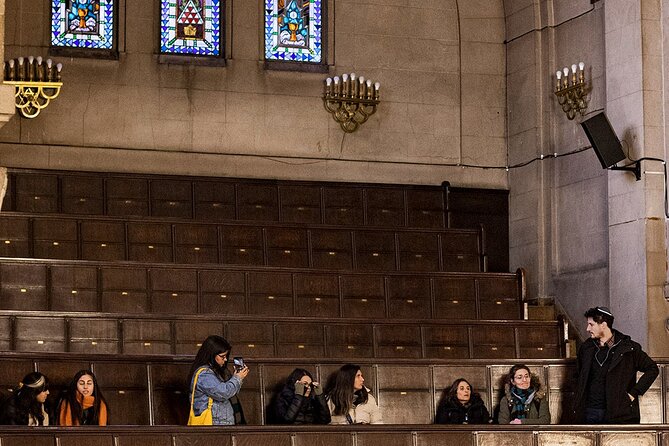
The strongest part of this tour is the guiding. Multiple guides have been praised, not just one person.
Melanie is described as passionate, friendly, highly informed, and able to explain difficult subjects in clear English. She has also been praised for sharing her own story, which can make the discussion of Jewish life feel personal rather than purely academic.
Cande received praise for her command of Argentine Jewish history and for her kindness when a participant forgot a passport. Estaphan was noted for perfect English, an entertaining delivery, and the ability to cover subjects from the Inquisition to modern politics. Fernando was appreciated for historical explanation as well as practical recommendations for restaurants and activities.
That range matters because this is a talk-heavy tour. You spend much of the time listening, asking questions, and making connections between places. A guide who can handle both facts and personal questions is far more valuable here than one who merely points out buildings.
The experience has a 4.9 rating from 28 reviews, and all listed respondents recommend it. That is a small sample, but the praise is unusually consistent: guide quality, clear explanations, the synagogue, and the chance to understand a little-known side of Buenos Aires come up again and again.
Is $105 a fair price?
At $105 per person, this is not a cheap city walk. The price makes more sense if you use the tour for what it offers: four to five hours of guiding, a small group capped at 15, admission to the Jewish Museum and Libertad Synagogue, and access to a subject that is difficult to piece together independently.
You are paying for interpretation as much as entry tickets. The guide connects colonial origins, immigration, religious practice, commerce, antisemitism, terrorist attacks, and present-day community life. Without that context, you could visit the museum or see AMIA and understand only part of the story.
The value is weaker if you are mainly looking for architecture or a fast list of sights. Much of the tour involves standing and listening, and the route covers about 5 kilometers. Tips are not included, so budget separately for that.
For someone with a strong interest in Jewish history, Argentina, immigration, or the social history of Buenos Aires, the price is easier to defend. For a general sightseeing itinerary with limited time, you may prefer a shorter central city tour.
Who will enjoy this Jewish Buenos Aires walk?
I would recommend it most to you if you want to understand how Jewish life developed in Argentina rather than simply visit a synagogue. It suits Jewish visitors, students of immigration, history-minded couples, solo visitors, and anyone curious about the parts of Buenos Aires that standard sightseeing routes often leave out.
It also works well for first-time visitors because the guide adds general Argentine history, not only religious information. One person specifically appreciated gaining a broader understanding of Buenos Aires through the Jewish perspective.
You should think twice if long walks, stairs, and extended standing are difficult. A moderate fitness level is required, and the route is about 3.5 miles. It is also not available to cruise passengers, so do not plan it around a cruise port visit.
The subject matter can be heavy. The discussions of AMIA, the Israeli Embassy bombing, antisemitism, and current geopolitical issues are handled as part of the tour’s educational purpose. You will likely leave with a more serious understanding of the community, not just a collection of pleasant city snapshots.
Practical details that can save you trouble
The tour begins at 10:00 a.m. near Plaza Houssay and ends at Plaza Lavalle, by the Jewish Museum and close to Teatro Colón. It is near public transportation, and one detailed account included a subway ride as part of the day, though you should confirm any transport arrangements when booking.
Confirmation is normally issued at booking. If you reserve within one day of the tour, confirmation comes as soon as possible and depends on availability.
Free cancellation is available up to 24 hours before the start time. Changes or cancellations made inside that window are not accepted for a refund.
Plan for comfortable walking shoes, water, and your passport. Dress in a way that lets you visit religious and cultural institutions respectfully. Most important, leave room in your schedule. A guide who welcomes questions can easily turn four hours into a fuller conversation.
Should you book it?
Book this tour if you want a serious, personal introduction to Jewish Buenos Aires, especially if you value strong guiding over a quick sightseeing checklist. The visit to Libertad Synagogue, the working streets of Once, and the memorials at AMIA create a useful balance of beauty, daily life, and difficult memory.
I would not choose it for a relaxed, low-walking morning or if you want to avoid discussions of terrorism and politics. For everyone else, the combination of a small group, included admissions, central locations, and highly praised guides makes it a strong choice. Bring your passport, wear good shoes, and give the subject the attention it deserves.
FAQ
How long does the Jewish walking tour last?
The experience lasts approximately four to five hours.
How far will I walk?
The tour involves about 5 kilometers, or roughly 3.5 miles, of walking.
Where does the tour begin?
It begins at Junín 802 to 900, near Plaza Prof. Dr. Bernardo Houssay in Buenos Aires.
What time does the tour start?
The scheduled start time is 10:00 a.m.
Where does the tour finish?
It finishes at Plaza Lavalle, by the Jewish Museum and near Teatro Colón.
Are museum and synagogue admissions included?
Yes. Admission to the Jewish Museum and Libertad Synagogue is included in the price.
Do I need to bring my passport?
Yes. Bring your actual passport. A passport copy was not accepted for museum entry in one reported case.
What is the maximum group size?
The tour has a maximum of 15 participants.
Is the tour suitable for people with limited mobility?
The tour requires a moderate fitness level and includes about 5 kilometers of walking, standing, and stairs. The provided details do not describe special accessibility arrangements.
Can cruise passengers book this experience?
No. This experience is not available to cruise passengers.
Just added in Buenos Aires
- Discover Buenos Aires’ independent art scene — Ticket included★ 5.0 · 30 reviews
- Photo Session in Buenos Aires★ 5.0 · 26 reviews
- Your Private Photographer in Buenos Aires★ 5.0 · 4 reviews
- Yerba Mate Workshop – Learn to Drink Mate like a Local!★ 5.0 · 11 reviews
- Your Personal Photographer in Buenos Aires★ 5.0 · 24 reviews
- BA: Wine Tasting and Blending Experience in Palermo★ 5.0 · 1 review
- Winery and Tasting Experience in Buenos Aires★ 5.0 · 1 review
- Taste of Tradition: Yerba Mate & Alfajores Experience★ 4.0 · 5 reviews
Buenos Aires Tours, compared.
Local Foodie Adventure in Buenos Aires with Sherpa Food Tours
Read our review →
Buenos Aires City Private Tour with Local Guide
Read our review →
Buenos Aires Hop-On Hop-Off Bus and Exclusive Benefits
Read our review →

Argentine Experience Interactive Dining and Cooking
Read our review →Browse the lists this tour appears in