
Reviewed · BUENOS AIRES TOURS
Private Afro-Argentine Heritage Walking Tour in Buenos Aires
Afro-Argentine history changes how you see Buenos Aires. This three-hour private walk links San Telmo streets, old religious buildings, and Parque Lezama with the story of African people in Argentina. I especially like the personal format, and I like that the tour treats tango, asado, and Lunfardo as clues to African influence rather than isolated cultural symbols. The main drawback is the price: at $207 per person, it is costly unless your group values a focused, private guide.
The route is compact, but the subject is not. You will spend much of the time listening, asking questions, and connecting places to the path from slavery to freedom. Guide Karl has earned particular praise for being friendly, patient, and methodical, though the tour is best for visitors who want history and discussion more than a fast sightseeing checklist.
In This Review
- Key points before you book
- Why this three-hour walk matters
- Starting at Casa Minima
- San Telmo over a drink
- The Sunday antiques market square
- San Pedro Gonzalez Telmo and its long religious past
- Galeria del Viejo Hotel and cultural memory
- Ending at Parque Lezama
- What the private format adds
- Is $207 per person a fair price?
- Timing, walking, and practical planning
- Who should book this experience?
- Should you book it?
- FAQ
- How long is the Afro-Argentine heritage walking tour?
- Is the tour private?
- What language is the tour offered in?
- Where does the tour begin?
- Where does the tour finish?
- What is included in the experience?
Key points before you book
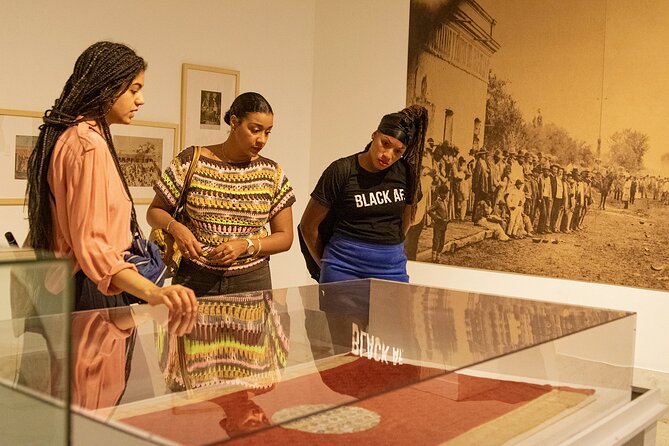
- Casa Minima opens the story with a small building and a large subject: Learn how Afro-Argentines organized after slavery ended.
- San Telmo supplies the setting for a coffee and conversation: Talk about Africa before colonization and the daily lives of people who worked in colonial homes.
- The tour connects culture to African roots: Tango, asado, and Lunfardo all enter the conversation at Galeria del Viejo Hotel.
- Parque Lezama provides the historical frame: Hear how African people arrived in the Rio de la Plata region through the slave trade.
- A private group means room for questions: Your guide can spend more time on the subjects that matter most to you.
- The finish leaves you near a museum: The walk ends at the gates of the Museo Histórico Nacional, where you may visit the exhibition independently.
Why this three-hour walk matters
Buenos Aires often presents itself through grand European avenues, cafés, Italian influence, and nineteenth-century architecture. Those parts of the city are real, but they do not tell the whole story. This walk asks you to look again at San Telmo and Parque Lezama, two familiar areas, through the experience of Afro-Argentine people.
The subject is especially useful because African history in Argentina is easy to overlook. The tour explains the arrival of African people in the Rio de la Plata region, the slave trade, life in colonial households, and the changes that followed the end of slavery.
You are not simply moving from one old building to another. The guide uses each stop to connect physical places with social history. That approach gives the walk a clear purpose, and it helps you understand why certain cultural traditions remain important even when their African roots have been minimized or forgotten.
The private setup is a real benefit here. A group of only your own party can ask direct questions and pause when a subject needs more time. That matters on a tour where the best parts may come from conversation rather than from a plaque or a grand monument.
More History Tours in Buenos Aires
- Historical Sherpa Food Tour of San Telmo with Street Food, Drinks
★ 5.0 · 920 reviews - Nazis in Buenos Aires: a historical walking tour
★ 4.9 · 193 reviews - San Telmo: Historical Guided Tour with Street Food & Drinks
★ 5.0 · 87 reviews
Starting at Casa Minima
The meeting point is at San Lorenzo and Defensa in Buenos Aires. From there, the first stop is Casa Minima, described as the smallest house in the city.
Its size makes it an effective opening. A tiny residence can draw your eye, but the story attached to it points toward much larger questions: what happened to Afro-Argentine people after slavery ended, and how did they build community and organize themselves afterward?
You will spend about 30 minutes here, with no admission charge. That is a generous amount of time for a small site, but the purpose is not simply to admire the façade. The guide uses Casa Minima to set up the social changes that followed emancipation.
I like this opening because it gives the tour a human scale. Instead of beginning with a broad lecture about colonial Argentina, you start with a building and then move outward to the people connected to its history. You should expect interpretation more than a long interior visit, since the information provided centers on the exterior site and the conversation around it.
San Telmo over a drink
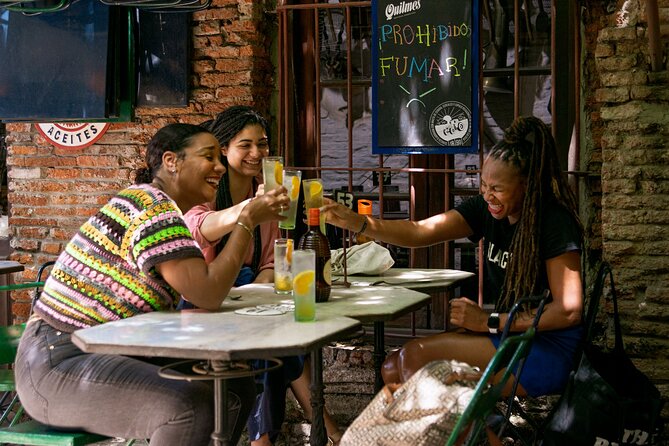
The next stop takes place in a traditional spot in the heart of San Telmo. You will have a coffee or another non-alcoholic drink while discussing Africa before colonization and the daily lives of people who worked in the house.
This is one of the most useful parts of the route because it slows the pace. A short break with a drink gives you time to ask questions and allows the guide to explain life beyond formal political events. The focus on household workers also brings the colonial period down to an everyday level.
The stop lasts about 20 minutes, so it is a conversation break rather than a full café meal. Coffee or tea and a non-alcoholic drink are included. If you want lunch or a longer café visit, plan that separately.
San Telmo is a fitting setting for this discussion. The neighborhood is known for its colonial character, and the tour uses that setting to consider who lived and worked in these spaces. You will get more from this part if you arrive ready to listen closely and ask about the connection between household labor, race, and social status.
The Sunday antiques market square
The route passes the square where San Telmo’s famous antiques market takes place every Sunday. The stop is a walk-by rather than a separately timed visit, so do not book this tour expecting a market shopping session.
Still, the location adds useful context. San Telmo’s public spaces are part of the city’s popular image, while the tour encourages you to notice the less visible people and histories connected to them. If your walk happens on a Sunday, the market may add noise and activity to the setting. On another day, you can focus more easily on the guide’s explanation.
This is also a good reminder that the tour is built around interpretation. Some places matter because of a building or collection. Others matter because the guide helps you question the story a neighborhood usually tells about itself.
More Walking Tours in Buenos Aires
- Buenos Aires Hop-On Hop-Off Bus, Free Walking Tours & Discounts
★ 4.5 · 2,218 reviews - Buenos Aires: La Boca Guided Walking Tour in English
★ 4.8 · 1,587 reviews - La Boca Walking Tour
★ 5.0 · 1,029 reviews - Recoleta Cemetery Walking Tour
★ 5.0 · 668 reviews
San Pedro Gonzalez Telmo and its long religious past
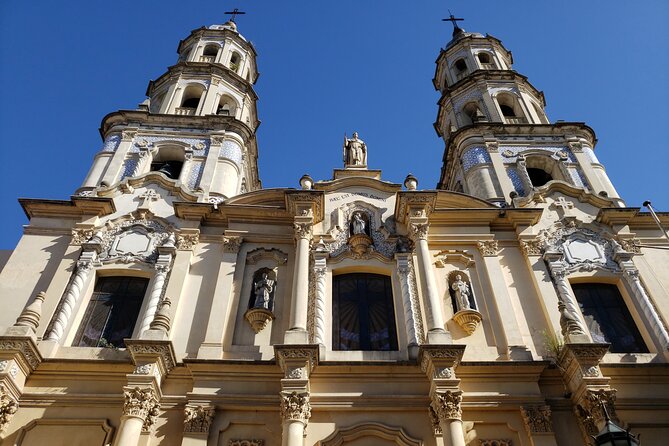
Parroquia de San Pedro Gonzalez Telmo is one of the oldest churches in Buenos Aires. Work began in 1735, and the Bethlemite religious order continued the project after the Jesuits were expelled.
You will spend about 10 minutes here, and admission is free. The church also has a museum with pieces dating back more than 200 years. The short stop means you should think of it as a focused exterior or orientation visit, not a lengthy museum tour.
This site adds institutional context to the walk. Religious buildings played an important role in colonial society, and the church’s history helps place the lives of Afro-Argentine people within the larger structures of the period. Your guide can explain how religious orders, colonial households, and urban life intersected.
If you want to study the museum’s objects at length, you may need to return on your own. Ten minutes is enough for the tour’s main point, but not enough for a slow examination of every historic piece.
Galeria del Viejo Hotel and cultural memory
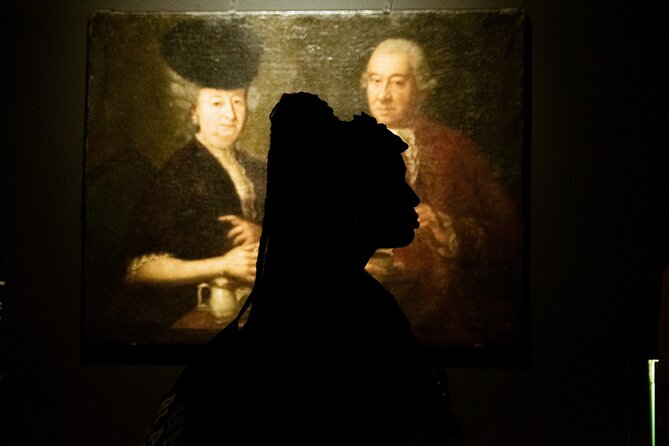
At Galeria del Viejo Hotel, the conversation turns to European immigration and the way it symbolically erased African heritage from the national story.
This is likely the most direct stop for understanding how culture can survive even when public memory changes. The guide explains African roots in several well-known Argentine traditions, including tango, asado, and Lunfardo slang.
That connection gives the subject a practical hook. You may already know these parts of Argentine culture before arriving in Buenos Aires. The tour asks you to consider where those traditions came from and which communities helped shape them.
The stop lasts about 15 minutes. As with the church, the time is limited, so the value comes from the guide’s explanation rather than from a long independent visit. I would pay close attention here, especially if you are interested in music, food, language, or the way national identity is formed.
The idea of symbolic erasure is also important. The tour is not only about locating African influence in the past. It examines how European immigration became central to Argentina’s public image while African contributions were pushed aside. That makes this stop a useful bridge between history and present-day cultural memory.
Ending at Parque Lezama
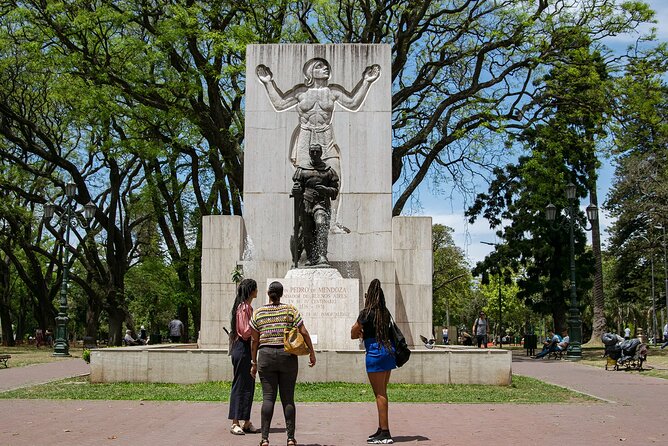
The final major stop is Parque Lezama, where the accredited guide explains the origins of the African population in the Rio de la Plata region and the slave trade in what is now Argentina.
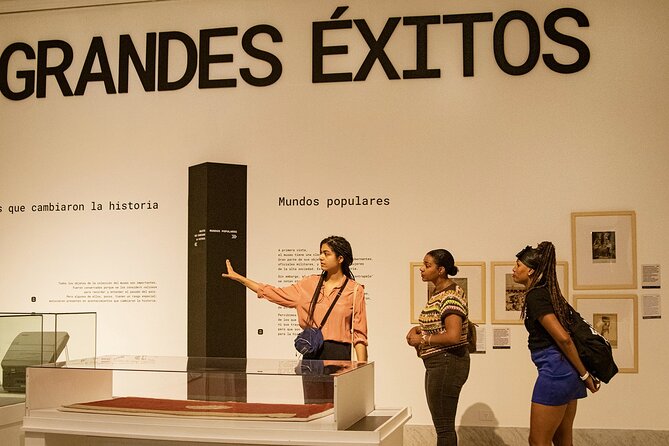
You will spend about 20 minutes in the park. Admission is included, and the tour ends at the gates of the Museo Histórico Nacional. You are then free to see the museum’s exhibition on your own.
Parque Lezama gives the walk room to widen its focus. The earlier stops deal with homes, churches, labor, and cultural traditions. Here, the guide returns to the larger movement of people and the systems that brought them to the region.
The end point is practical. If the museum interests you, you can continue your history lesson without arranging another transfer. The tour does not include a guided museum visit, so allow extra time if you want to explore the exhibition carefully.
I also like the route’s direction. It begins in the streets of San Telmo and finishes in a large public park, moving from individual lives and neighborhood buildings toward a broader account of migration and slavery.
What the private format adds
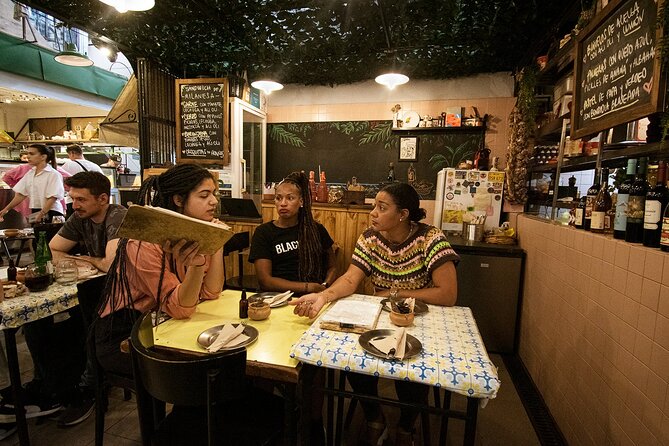
This is a private activity, so only your group participates. That changes the feel of a sensitive history tour. You can ask about difficult subjects without worrying about holding up a large party, and the guide can adjust the explanation to your interests.
The published experience is offered in English. Guide Karl has received strong praise for being friendly, personable, patient, and methodical. One particularly useful detail is that Karl was noted for interacting naturally with people encountered along the route, rather than simply delivering a fixed speech at each stop.
The company has also worked with a guest’s schedule, which suggests some flexibility may be possible. You should still confirm any timing request when booking instead of assuming that every change can be made.
A private tour is most valuable when you use it actively. Bring questions about Afro-Argentine identity, the history of San Telmo, cultural traditions, and the difference between historical evidence and national mythology. If you prefer to walk quietly behind a guide without discussion, you may not get the full value from the format.
Is $207 per person a fair price?
At $207 per person, this is not a budget walk. The listed duration is about three hours, and the price includes a private guide, the walking experience, and a coffee or other non-alcoholic drink. Group discounts are available, which can change the calculation for larger parties.
The key question is how many people are sharing the cost. For one or two people, the price is high compared with a standard group walking tour. For a family or small party that wants a private English-language discussion of a subject rarely covered in ordinary city tours, the value becomes easier to defend.
You are paying for access to a specialist conversation and a route shaped around Afro-Argentine history, not for a long list of admission tickets. Most stops are free, and the museum at the end is not part of the guided visit. That means the guide’s time, attention, and ability to connect the sites are the main product.
The perfect audience is a group with a clear interest in Argentine social history, African diaspora history, culture, or the origins of tango and Lunfardo. If you mainly want famous architecture, market browsing, or a broad introduction to Buenos Aires, another tour may offer more for less.
Timing, walking, and practical planning
The tour lasts about three hours and moves between several sites in San Telmo and Parque Lezama. The information provided does not give a total distance, so you should be prepared for a city walk rather than a seated lecture.
Wear comfortable shoes and allow time to reach the meeting point at San Lorenzo and Defensa. The area is near public transportation, which makes the start reasonably convenient. The tour finishes at Parque Lezama, at the gates of the Museo Histórico Nacional, rather than returning to the starting point.
Most people can participate, and service animals are allowed. Confirmation is received at booking. Since the route includes a coffee stop and several outdoor locations, check the day’s conditions before setting out, though no special weather policy is provided here.
The meeting and ending points are useful for planning the rest of your day. You can begin in San Telmo, continue to the museum after the walk, or make your own plans around Parque Lezama. Just remember that the museum exhibition is for independent visiting, not part of the guided tour.
Who should book this experience?
I would choose this walk if you want a focused account of a part of Buenos Aires that standard city tours often leave out. It suits history-minded visitors, repeat visitors who have already seen the main sights, and anyone interested in how slavery, migration, race, and culture shaped Argentina.
It also works well for people who prefer questions and conversation. The private format lets you ask for clarification and follow an idea further, which is especially helpful when discussing the near disappearance of Afro-Argentine history from common public awareness.
I would hesitate if you have only a few hours in Buenos Aires and want to cover San Telmo’s major attractions quickly. The route is thoughtful rather than fast, and some stops receive only 10 or 15 minutes. I would also compare the cost carefully if you are traveling alone.
The perfect timing is after you have learned the basic layout of Buenos Aires, but it can also be an excellent early tour if you want history to shape the rest of your visit. Either way, keep some time after the walk for the Museo Histórico Nacional.
Should you book it?
Book this private walk if you want a serious, personal look at Afro-Argentine history and are willing to pay for a specialist guide. The strongest reasons are the focused route, the chance to speak directly with a guide from the Afro-Argentine community, and the way the tour links history to tango, asado, and Lunfardo.
Skip it if you want a cheap overview or a tour centered on shopping, architecture, and photographs. At $207 per person, this is a considered purchase. For the right group, though, it can add an important missing chapter to your understanding of Buenos Aires.
FAQ
How long is the Afro-Argentine heritage walking tour?
The tour lasts approximately three hours.
Is the tour private?
Yes. Only your group participates in the activity.
What language is the tour offered in?
The tour is offered in English.
Where does the tour begin?
The meeting point is at San Lorenzo and Defensa in Buenos Aires.
Where does the tour finish?
The tour ends at Parque Lezama, at the gates of the Museo Histórico Nacional. You may visit the museum exhibition independently after the walk.
What is included in the experience?
A coffee or tea stop with a non-alcoholic drink is included. Admission is also included for Parque Lezama, while the other listed stops have no admission charge.
Just added in Buenos Aires
- Discover Buenos Aires’ independent art scene — Ticket included★ 5.0 · 30 reviews
- Photo Session in Buenos Aires★ 5.0 · 26 reviews
- Your Private Photographer in Buenos Aires★ 5.0 · 4 reviews
- Yerba Mate Workshop – Learn to Drink Mate like a Local!★ 5.0 · 11 reviews
- Your Personal Photographer in Buenos Aires★ 5.0 · 24 reviews
- BA: Wine Tasting and Blending Experience in Palermo★ 5.0 · 1 review
- Winery and Tasting Experience in Buenos Aires★ 5.0 · 1 review
- Taste of Tradition: Yerba Mate & Alfajores Experience★ 4.0 · 5 reviews
Buenos Aires Tours, compared.
Local Foodie Adventure in Buenos Aires with Sherpa Food Tours
Read our review →
Buenos Aires City Private Tour with Local Guide
Read our review →
Buenos Aires Hop-On Hop-Off Bus and Exclusive Benefits
Read our review →

Argentine Experience Interactive Dining and Cooking
Read our review →Browse the lists this tour appears in