
Reviewed · BUENOS AIRES TOURS
Nazis in Buenos Aires: a historical walking tour
History can hide in plain sight. This 2.5-hour Buenos Aires walking tour links grand avenues, a working theater, a coffee stop, and a memorial to the Nazi presence in Argentina after World War II. Led in English by Max, a history teacher from the University of Buenos Aires, it asks a hard question: was Argentina simply a destination for war criminals, or did parts of the government help them arrive?
I like the tour’s careful use of evidence and its focus on real city locations rather than a lecture in a classroom. I also like Max’s teaching style, which is friendly, direct, and willing to admit when a point remains uncertain. The main drawback is that the subject is politically and emotionally heavy, and visitors hoping for a narrow story about fugitives may find the discussion of Peronism, Jewish life, and Argentine politics takes up a large share of the walk.
In This Review
- Key points to know before booking
- Why this tour matters in Buenos Aires
- Starting beside Monumento a Juana Azurduy
- Luna Park and the 15,000-seat Nazi meeting
- ABC Restaurant and the Eichmann story
- Museo de Armas de la Nación and the machinery of power
- Palacio San Martin and the question of government policy
- Italian Circle and Buenos Aires’ Jewish community
- Ending at the former Israeli Embassy memorial
- Max’s guiding style and the pace of the walk
- Is $25 a fair price?
- Who should book this walk?
- Practical advice for making the most of it
- Should you book Nazis in Buenos Aires?
- FAQ
- Where does the tour begin?
- How do I identify the guide?
- Where does the tour end?
- How long does the experience last?
- What language is the tour offered in?
- What is included in the price?
- Are admission tickets included?
- Is the tour suitable for children?
- Is the route suitable for wheelchair users?
- What should I bring?
- Can I cancel for a refund?
Key points to know before booking
- Adolf Eichmann’s Buenos Aires connection: Visit the place where the notorious war criminal reportedly sat for coffee before his identification and capture.
- Luna Park’s 15,000-seat meeting: See the still-operating theater tied to a major Nazi gathering in Buenos Aires.
- The former Israeli Embassy memorial: End at the site of the worst terrorist attack in Latin America, according to the tour’s historical focus.
- Max’s evidence-based approach: Expect photographs, graphics, questions, and careful treatment of disputed claims.
- A city walk through three central districts: The route connects Recoleta, Retiro, and Microcentro rather than staying in one museum or neighborhood.
- Good value at $25: The fee covers the English-speaking guide and roughly two to two-and-a-half hours of instruction and walking.
Why this tour matters in Buenos Aires
Buenos Aires is often sold through tango, architecture, cafés, and grand political stories. This tour adds a less comfortable chapter: the arrival of Nazi war criminals after 1945, the Argentine government’s possible role in those migrations, and the effect on the city’s Jewish community.
That makes the experience more than a hunt for sensational locations. You are asked to consider how people escaped justice, how governments handled their presence, and how memory survives in an ordinary city. The guide also places these questions beside the presidency of Juan Domingo Perón, one of the most important and disputed figures in twentieth-century Argentina.
You should arrive with a basic grasp of World War II and the Holocaust. You do not need a degree in European or Argentine history. Max explains the setting as the tour develops, and the questions and answers help fill gaps. Still, the experience is easier to follow if you already know who Adolf Eichmann was and why Nazi fugitives mattered after the war.
More History Tours in Buenos Aires
- Historical Sherpa Food Tour of San Telmo with Street Food, Drinks
★ 5.0 · 920 reviews - San Telmo: Historical Guided Tour with Street Food & Drinks
★ 5.0 · 87 reviews - Buenos Aires: La Boca Art and History Walking Tour
★ 4.8 · 55 reviews
Starting beside Monumento a Juana Azurduy
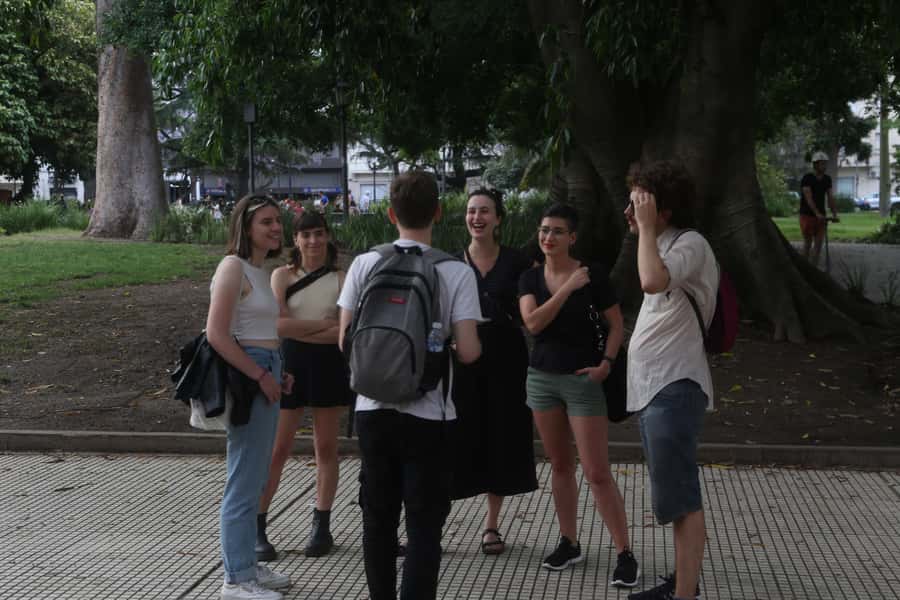
The walk begins a few meters from the Monument to Juana Azurduy, beside the benches facing Palacio Libertad, formerly known as the CCK. Max wears a black cap, which makes the meeting point easier to spot in this central part of the city.
The opening location is useful because it places you near several major institutions and public spaces before the tour moves through Retiro and Microcentro. Max uses the beginning to set out the questions that will guide the walk. Rather than throwing names and dates at you, he builds the story in stages.
That approach is one of the tour’s strongest features. The subject has plenty of room for myths, political slogans, and dramatic claims. Max’s method is to separate what is documented from what is debated. He uses photographs and other visual material at several stops, which helps when the subject involves people and events you cannot see in the streets today.
The meeting point is central, but you should still wear comfortable shoes. Water is a sensible addition, and a ten-minute pause is provided for the restroom.
Luna Park and the 15,000-seat Nazi meeting
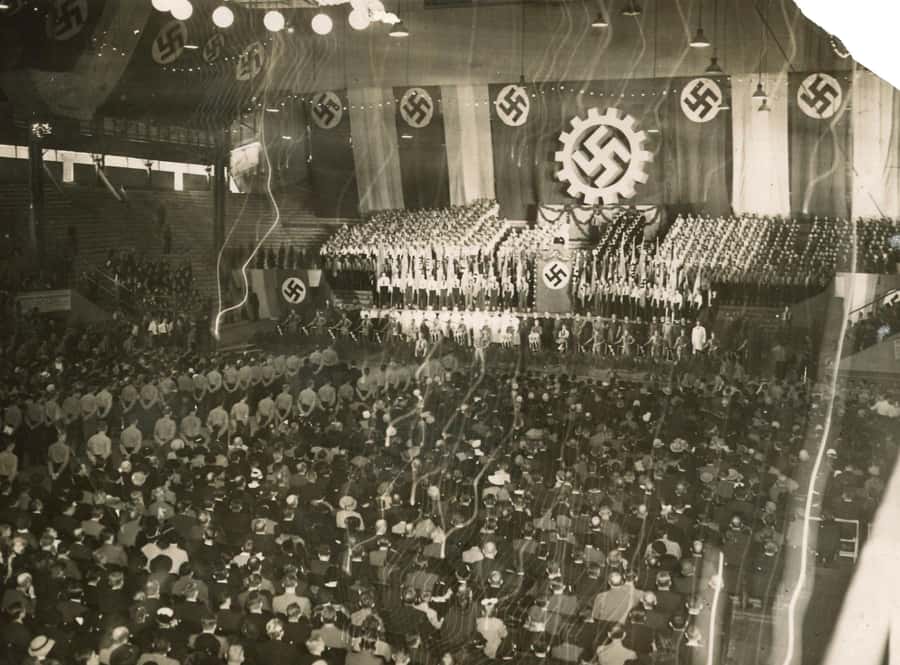
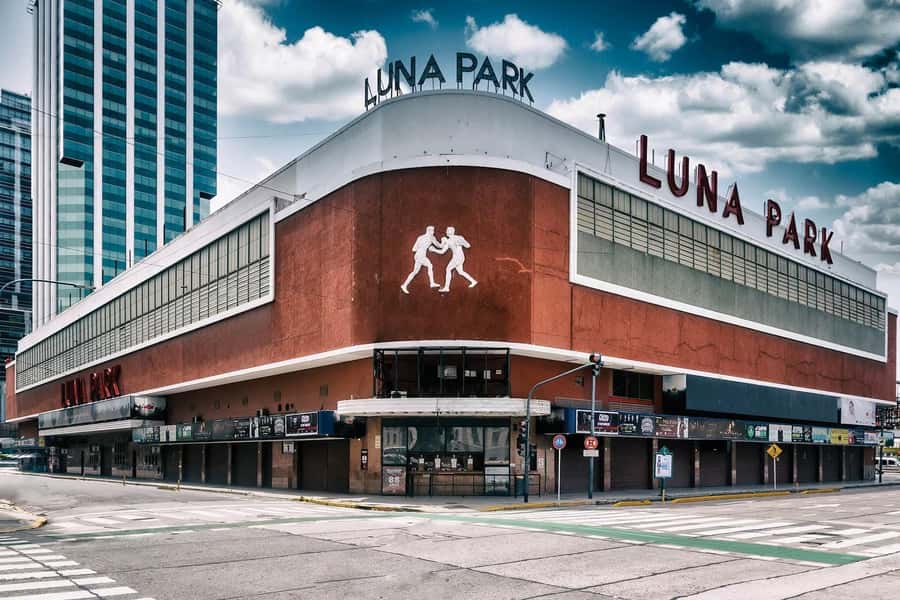
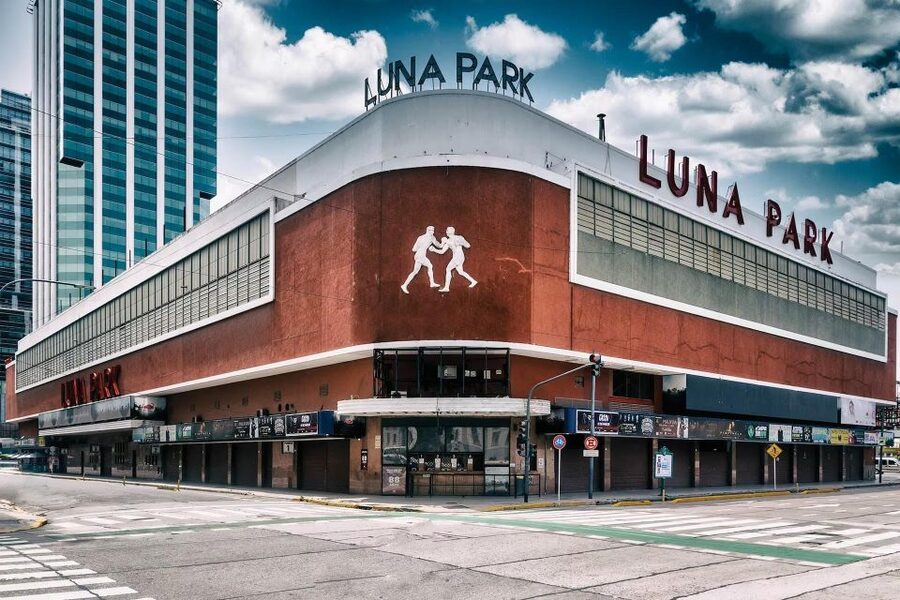
Luna Park is one of the most striking stops because it is not a vanished site marked only by a plaque. It remains an operating stadium, making the connection between the present-day city and the political gatherings of the past especially clear.
The tour examines a Nazi meeting held there before an audience of roughly 15,000 people. That scale matters. It pushes the story beyond a few secretive fugitives hiding after the war and raises questions about public support, political networks, and the visibility of extremist ideas in Buenos Aires.
You spend about 20 minutes at Luna Park. The time is long enough to establish the setting without turning the visit into a formal stadium tour. Entry to the stadium is not included, so expect to view and discuss the location from the route rather than receive a ticketed interior visit.
For me, this is the kind of stop that gives a historical walk its value. A book can tell you that a major gathering took place. Standing in front of the still-operational venue helps you picture the crowd and think about how public the event was.
ABC Restaurant and the Eichmann story
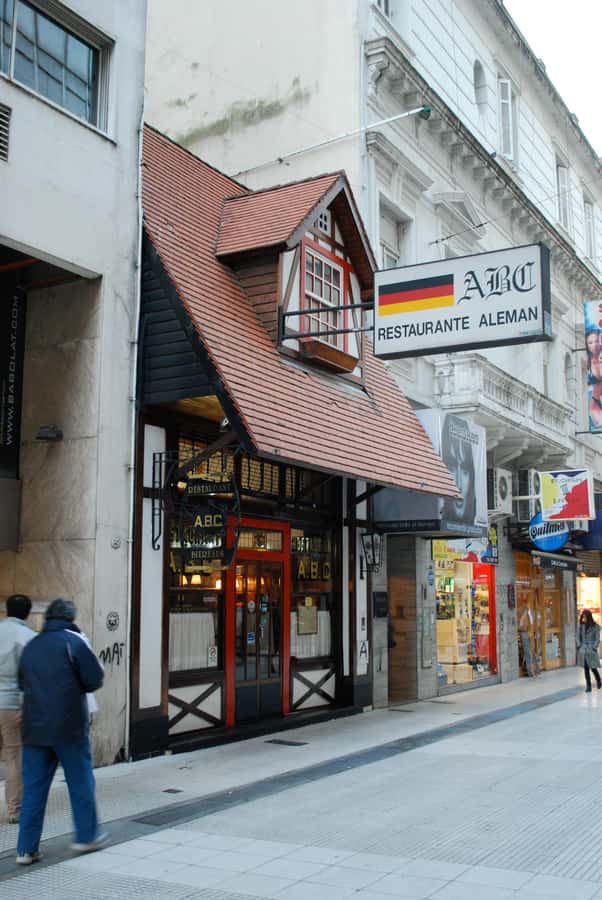
The next stop is ABC Restaurant, where the tour explores the reported connection to Adolf Eichmann. This is the point where the walk takes on the feel of a spy story, but Max keeps the focus on the evidence behind the story.
You learn about Eichmann’s identification and capture, including the detail that he sat for a cup of coffee at this location. The setting gives the account a plain, almost unsettling quality. A famous war criminal is not presented only as a distant figure from a courtroom photograph. He becomes part of the city’s everyday geography.
About 20 minutes are devoted to the restaurant. The value here comes less from the building itself than from the way the guide connects the location to the wider process of finding and identifying Eichmann.
This stop also shows why you should not expect a simple list of Nazi hideouts. The tour looks at how information circulated, how identities were established, and how the Argentine setting shaped the search. If your main interest is escape routes and fugitives, you may want more time on that subject. The broader political discussion is intentional.
More Walking Tours in Buenos Aires
- Buenos Aires Hop-On Hop-Off Bus, Free Walking Tours & Discounts
★ 4.5 · 2,218 reviews - Buenos Aires: La Boca Guided Walking Tour in English
★ 4.8 · 1,587 reviews - La Boca Walking Tour
★ 5.0 · 1,029 reviews - Recoleta Cemetery Walking Tour
★ 5.0 · 668 reviews
Museo de Armas de la Nación and the machinery of power
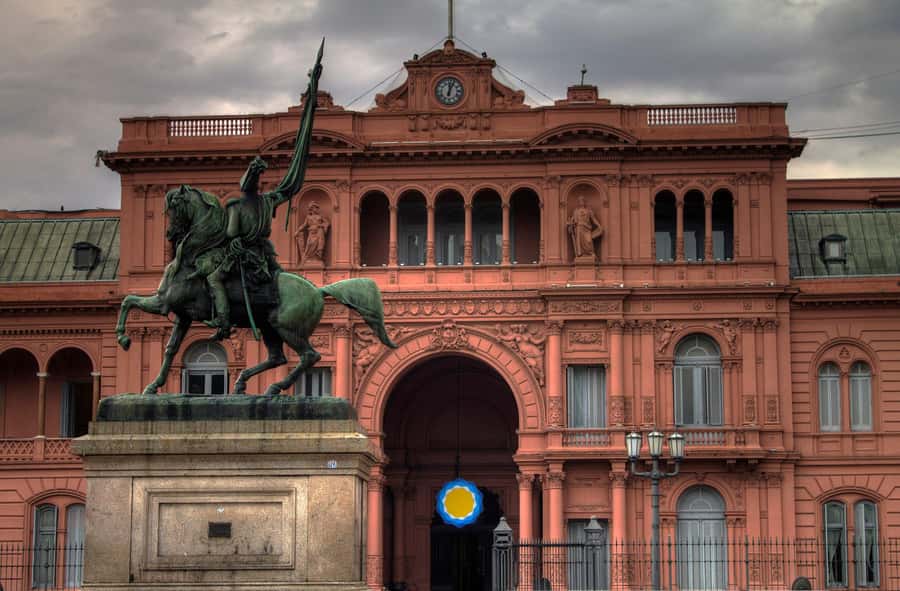
At the Museo de Armas de la Nación Tte. Gral. Pablo Riccheri, the tour turns toward institutions, weapons, and the role of the state. The visit lasts around 20 minutes, but the museum’s importance lies in the questions it raises rather than in a long collection visit.
This stop helps place postwar migration within Argentina’s political and military setting. You consider what government officials knew, what they may have supported, and how later interpretations have changed. The tour does not present every claim as settled fact, which is important when discussing a subject surrounded by political argument.
The museum also adds variety to the walk. You are not simply moving from one café or monument to another. The route uses different types of sites to show how international events touched official institutions, public venues, and private life.
Do not assume the tour includes a standard museum admission. The supplied details list the guide as included but do not promise entry to the museum. The same caution applies to other named buildings along the route. Confirm access arrangements when you book.
Palacio San Martin and the question of government policy
Palacio San Martin brings the discussion closer to diplomacy and Argentina’s place in the postwar world. Here, the key issue is not just which war criminals reached the country, but how their migration may have been known, tolerated, or encouraged by parts of the Argentine government.
That distinction is central. It is easy to tell a dramatic story about people arriving under false names. It is harder, and more useful, to ask how paperwork, political decisions, international relations, and public silence might have allowed such movement.
Max’s teaching style suits this section. The experience has been praised for being balanced and for handling controversial claims without reducing them to a simple good-versus-bad argument. You are encouraged to ask questions, and the guide addresses subjects ranging from Nazism and Judaism to Argentine politics and the war.
The route also looks at Perón’s presidency. If you know little about Peronism, this part may be especially useful, though it can feel like a change of subject if you came expecting only stories about Nazi fugitives. In reality, the politics are part of the explanation.
Italian Circle and Buenos Aires’ Jewish community
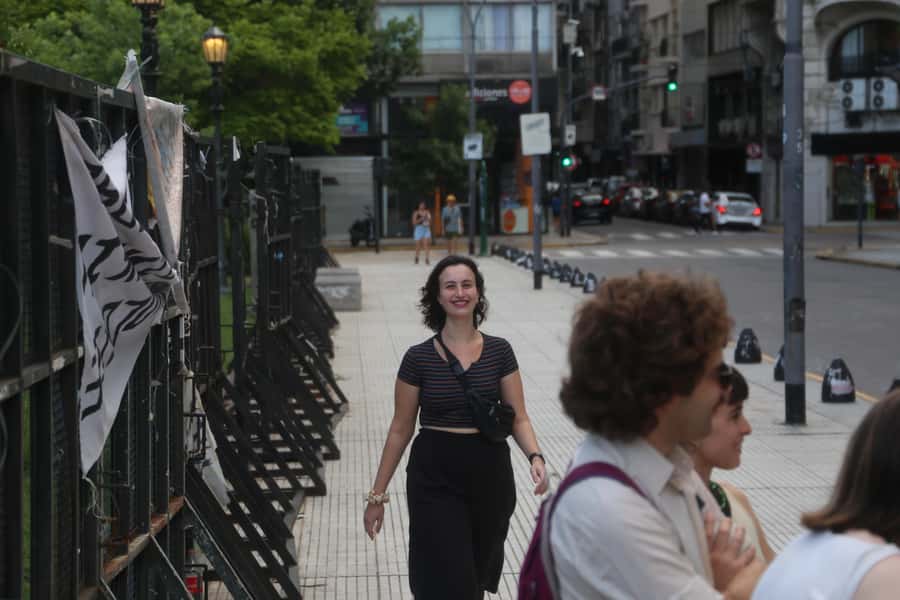
The Italian Circle of Buenos Aires provides another setting for discussing networks, identity, and the city’s European connections. The stop lasts about 20 minutes and contributes to the tour’s wider look at how Buenos Aires absorbed people and ideas from Europe before and after World War II.
You also learn about the Jewish community in Buenos Aires, described as the second largest on the continent. This gives the tour a necessary human center. The story is not only about Nazi arrivals, government policy, and international investigations. It is also about the people who built Jewish life in Argentina and faced the consequences of antisemitism and political violence.
This part may be particularly worthwhile if you want to understand Buenos Aires beyond its usual tourist routes. The city’s Jewish history is not always part of a first visit, yet it is closely tied to the events discussed on the walk.
The tour treats the subject as living history rather than a closed chapter. That can make the final section more affecting, especially when the guide connects past violence with present-day concerns. You should be ready for serious material and respectful discussion.
Ending at the former Israeli Embassy memorial
The tour finishes at Plaza Embajada de Israel, the memorial site of the former Embassy of Israel. The stop focuses on the attack described in the tour as the worst terrorist attack in the history of Latin America.
Ending here gives the walk a clear shift from postwar Nazi escape networks to the later history of antisemitism and terrorism in Buenos Aires. The memorial is not simply a final photo stop. It asks you to think about how political hatred changes form and how communities carry the memory of violence.
This is also why the tour can feel relevant beyond World War II. The walk begins with Nazi ideology and postwar escape stories, but it ends with the continuing consequences of antisemitism and extremist violence. The material is difficult, but the guide’s purpose is remembrance and understanding, not shock value.
There is a small point to clarify before you set out. The route information says the activity ends at Plaza Embajada de Israel, while the meeting information also says the activity ends back at the meeting point. Because those details do not fully match, confirm the final endpoint when booking.
Max’s guiding style and the pace of the walk
Max is the key reason this experience works. He is described as a history teacher from the University of Buenos Aires, and his teaching background shows in the structure of the walk. He sets the scene, raises questions, adds evidence at each stop, and leaves room for discussion.
You can expect a guide who is passionate without turning the walk into a political speech. Max uses photographs and graphics to support the stories, and he is prepared to explain the background for people with different levels of prior knowledge.
The strongest praise centers on three things: his preparation, his ability to tell a story, and his care with uncertain evidence. That combination matters here. The topic is too sensitive for casual claims, but a dry academic lecture would be hard to follow on a city sidewalk. The tour aims for a middle ground.
The advertised duration is 2.5 hours. The included-services section describes it as a two-hour walking tour, so allow at least two and a half hours in your schedule. Each listed stop takes about 20 minutes, with a ten-minute restroom break, plus the walking between districts.
Is $25 a fair price?
At $25 per person, this is good value if you want a focused history lesson tied to Buenos Aires locations. You are paying for a live English-language guide with a specialist subject, not for museum admissions or transport.
The price works especially well because the tour covers several districts and connects them through one argument. A casual walk through Recoleta, Retiro, and Microcentro might show you impressive buildings. This experience explains why particular places matter.
The value is lower if you want a short, light introduction to Buenos Aires or a tour focused only on architecture. It is also not ideal if you dislike political history or prefer to explore at your own pace. The discussion is the product, and the locations are its evidence.
The experience has a 4.9 rating from 193 reviews, with repeated praise for Max’s preparation, clear English, balanced approach, and ability to keep the two-plus hours moving. One useful criticism suggests that some people may prefer more time on Nazi fugitives and less on the political setting. That is a fair expectation to set before booking.
Who should book this walk?
I would choose this tour if you enjoy history, investigative stories, difficult questions, and city walks that reveal less visible parts of Buenos Aires. It suits visitors who want to understand Argentina’s connection to World War II rather than simply collect famous sights.
It is also a good choice for older children and teenagers who can handle the material. The activity is not suitable for children under 10, and one parent found it suitable for a 14-year-old. The guide can answer questions from people with different levels of background knowledge.
You should skip it if you need a wheelchair-accessible route, since it is listed as unsuitable for wheelchair users. You should also reconsider if you want a relaxed sightseeing stroll. The walk deals with terrorism, war crimes, antisemitism, and political controversy.
Practical advice for making the most of it
Read a short overview of World War II and the Holocaust before you go. Knowing the basic role of Nazi Germany and the significance of Eichmann will help you follow the political and legal questions without getting lost in names.
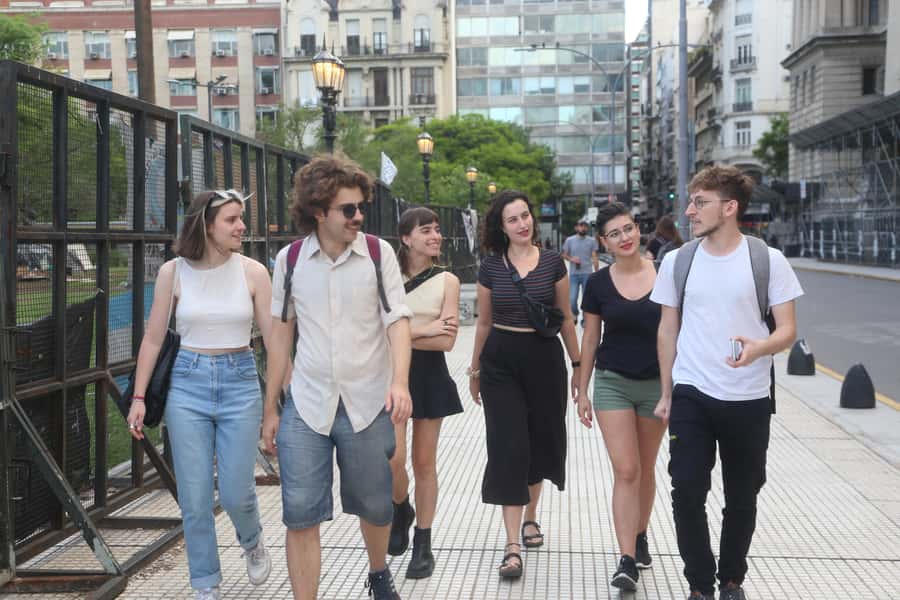
Wear comfortable shoes and bring water. This is a walking tour across central Buenos Aires, and the combination of standing, walking, and extended explanations makes good footwear more important than it sounds.
Arrive at the monument near Palacio Libertad with enough time to find the benches facing the building. Look for Max in a black cap. Since entry to Casa Rosada, Libertad Synagogue, and Luna Park Stadium is not included, do not plan on interior visits to those places as part of the $25 fee.
The tour is offered in English. You can cancel up to 24 hours before the start for a full refund, and the reserve-now, pay-later option gives you some flexibility when your schedule is still changing.
Should you book Nazis in Buenos Aires?
Book it if you want a serious, well-supported look at Argentina’s Nazi connections, Jewish history, Peronism, and later antisemitic violence. Max’s clear teaching, visual material, and use of real locations make the subject easier to grasp and harder to forget.
Do not book it expecting a narrow catalogue of Nazi fugitives or a light sightseeing tour. The experience spends time on government policy, Argentine politics, and the Jewish community because those subjects explain the larger story.
For a visitor with two and a half hours, comfortable shoes, and a real interest in history, this is one of the stronger specialist walks in Buenos Aires. Its value comes from asking difficult questions carefully, then showing you where those questions belong in the city.
FAQ
Where does the tour begin?
It begins a few meters from Monumento a Juana Azurduy, near the benches facing Palacio Libertad, formerly known as the CCK.
How do I identify the guide?
Max wears a black cap and waits by the benches facing Palacio Libertad.
Where does the tour end?
The route information gives Plaza Embajada de Israel as the final stop. The meeting information also says the activity ends back at the meeting point, so confirm the endpoint when booking.
How long does the experience last?
The activity is advertised as lasting 2.5 hours. Another description calls it a two-hour walking tour, so allow at least two and a half hours.
What language is the tour offered in?
The live guided tour is offered in English.
What is included in the price?
The $25 price includes the guide and the walking tour.
Are admission tickets included?
Entry to Casa Rosada, Libertad Synagogue, and Luna Park Stadium is not included. The provided details do not list separate museum admission as included.
Is the tour suitable for children?
It is not suitable for children under 10. The guide can answer questions from participants with different levels of background knowledge.
Is the route suitable for wheelchair users?
The activity is listed as unsuitable for wheelchair users.
What should I bring?
Bring comfortable shoes and water. There is also a ten-minute pause for restroom use.
Can I cancel for a refund?
You can cancel up to 24 hours in advance for a full refund. A reserve-now, pay-later option is also available.
Just added in Buenos Aires
- Discover Buenos Aires’ independent art scene — Ticket included★ 5.0 · 30 reviews
- Photo Session in Buenos Aires★ 5.0 · 26 reviews
- Your Private Photographer in Buenos Aires★ 5.0 · 4 reviews
- Yerba Mate Workshop – Learn to Drink Mate like a Local!★ 5.0 · 11 reviews
- Your Personal Photographer in Buenos Aires★ 5.0 · 24 reviews
- Winery and Tasting Experience in Buenos Aires★ 5.0 · 1 review
- Taste of Tradition: Yerba Mate & Alfajores Experience★ 4.0 · 5 reviews
- BA: Wine Tasting and Blending Experience in Palermo★ 5.0 · 1 review
Buenos Aires Tours, compared.
Local Foodie Adventure in Buenos Aires with Sherpa Food Tours
Read our review →
Buenos Aires City Private Tour with Local Guide
Read our review →
Buenos Aires Hop-On Hop-Off Bus and Exclusive Benefits
Read our review →
Argentine Experience Interactive Dining and Cooking
Read our review →Browse the lists this tour appears in