
Reviewed · BUENOS AIRES TOURS
Buenos Aires Private Historical Downtown, San Telmo and La Boca Walking Tour
Buenos Aires reveals itself one street at a time. This private four-hour walk connects the city’s grand center with San Telmo’s colonial streets and the colorful La Boca district, while a local guide explains the politics, architecture, and everyday culture behind the sights. I like the mix of famous landmarks and less obvious details, especially the story of Casa Minima and the naval cannons reused at Centro Naval. I also like the built-in coffee break, a welcome pause in a long city walk.
The main concern is pace. Twenty stops are packed into roughly four hours, and one person found the tour rushed while another said it lasted only two hours. The route can also change because of weather, strikes, repairs, demonstrations, or other city conditions. You will get the most from it if you want a broad first look at Buenos Aires, not a slow visit inside every building.
In This Review
- Key points to know before booking
- Starting beneath the Obelisk and along Corrientes
- Florida Street, naval bronze, and Galerías Pacífico
- Plaza de Mayo, Casa Rosada, and Argentina’s public memory
- Puerto Madero and the city’s changing face
- Casa Minima and the old streets of San Telmo
- Parque Lezama and the colors of La Boca
- What the four hours feel like
- Is $125 per person fair value?
- Who should book this walk?
- Should you book the Buenos Aires walking tour?
- FAQ
- How long is the Buenos Aires walking tour?
- Is this a private tour?
- Where does the tour start?
- Where does the tour end?
- Is the coffee break included?
- Are admission tickets included?
- Can children join the tour?
- Does the tour operate in bad weather?
Key points to know before booking
- A private tour for your group: Only your party participates, with a minimum of two passengers required.
- Three very different Buenos Aires districts: The route links central avenues, old San Telmo, and colorful La Boca.
- Strong local context: Guides such as Joaquin and Soledad explain history along with present-day Argentine issues.
- Coffee is included: The café break gives your feet a rest and adds a small local ritual to the walk.
- Mostly exterior sightseeing: Many stops last only five or ten minutes, so expect explanations and views rather than lengthy interior visits.
- Plaza Dorrego is the official endpoint: It is a useful place to continue with the San Telmo antiques market, cafés, and antique shops.
Starting beneath the Obelisk and along Corrientes
The meeting point is Petit Colón at Libertad 505, near the Teatro Colón. From there, the walk begins with the Obelisco de Buenos Aires, the city’s most recognizable marker.
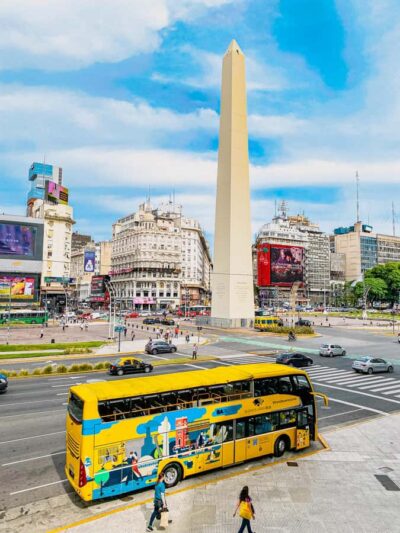
The Obelisk rises where Avenida Corrientes meets Avenida 9 de Julio, often described as the world’s widest avenue. It was built in 1936 to mark the 400th anniversary of the city’s first founding. Your guide uses this opening stop to explain how Buenos Aires remembers its past, including the stories attached to the monument itself.
You spend only about five minutes here, so this is a photo and orientation stop, not a full monument visit. That short pause makes sense in a packed route. The Obelisk is easy to see on your own, but a guide can give it meaning before you set off through the city.
The next stops are the Palace of Justice, Teatro Colón, and Teatro Nacional Cervantes. At the Palacio de Tribunales, you learn about Argentina’s court system and the controversies connected with this imposing building. The five-minute stop will not satisfy anyone hoping to explore the interior, but it does help you read the city’s grand civic architecture.
Teatro Colón is one of the major opera houses of the world and one of Buenos Aires’s great cultural landmarks. The tour offers a brief exterior introduction rather than a performance or formal theater visit. If you want to tour the inside, you would need to arrange that separately.
The nearby Teatro Nacional Cervantes has an unusual connection with Spain. It was donated to Argentina by the Spanish kings in the early twentieth century, and the guide points out a detail about the stage that is not obvious from the street. This is the kind of small architectural story that gives the walking tour its value.
More History Tours in Buenos Aires
- Historical Sherpa Food Tour of San Telmo with Street Food, Drinks
★ 5.0 · 920 reviews - Nazis in Buenos Aires: a historical walking tour
★ 4.9 · 193 reviews - San Telmo: Historical Guided Tour with Street Food & Drinks
★ 5.0 · 87 reviews
Florida Street, naval bronze, and Galerías Pacífico
Florida Street changes the mood. This pedestrian thoroughfare is one of downtown Buenos Aires’s best-known commercial streets, with a long record of shopping, politics, and public gatherings. The tour touches on Harrods’ only branch outside London, the first performance of Argentina’s national anthem, and Galerías Pacífico.
You get about ten minutes on Florida Street, enough to see the setting and hear how commerce and national identity have overlapped here. The street can be busy, so stay close to your guide and keep an eye on bags and phones. That is ordinary city-walking advice, but it matters on a popular pedestrian thoroughfare.
Centro Naval is a quick but memorable stop. Its art nouveau entrance uses bronze made from melted cannons connected with Argentina’s wars of independence. The building was founded in 1882 by wealthy Argentine naval officers, and its ornate entrance gives you a glimpse of the old elite world that shaped central Buenos Aires.
Galerías Pacífico deserves a little more time. The building began in 1889 as a Beaux-Arts department store modeled on Paris’s Le Bon Marché. It later became a high-end shopping center, and its ceiling murals and French-inspired design are the real attraction.
The tour allows about ten minutes here. I would treat that as a visual introduction, not a shopping stop. Look upward for the murals and notice the scale of the building. If you want to browse the shops or inspect the artwork at leisure, return later.
Plaza de Mayo, Casa Rosada, and Argentina’s public memory
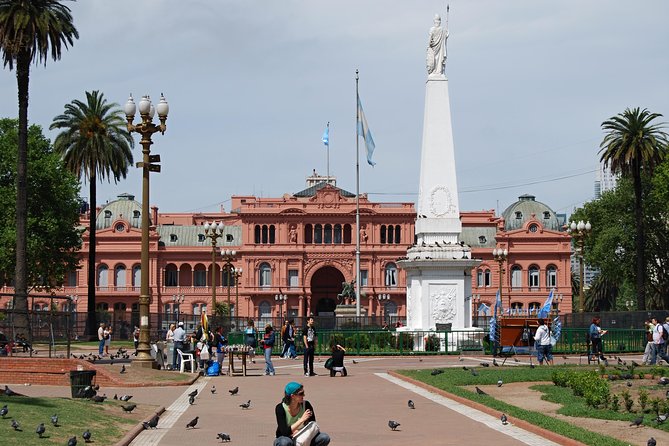
Plaza de Mayo is the emotional and political center of the route. This is where Buenos Aires began, where the Casa Rosada faces the square, and where major political events have unfolded.
The guide spends roughly thirty minutes here, the longest stop in the downtown section. That extra time is important. The square is not just a formal plaza surrounded by impressive buildings. It is a place where Argentina’s political life has repeatedly taken public form.
You hear about the Mothers of the Disappeared, whose gatherings in the square became a lasting symbol of Argentina’s struggle to account for people who vanished during the military dictatorship. This is serious material, and a good guide can connect the events to the physical space without turning the stop into a dry lecture.
The Casa Rosada, or Pink House, is the president’s office and one of Buenos Aires’s best-known buildings. Its museum holds objects linked to former presidents, but the walking tour does not include a museum visit. You see the government building from the outside and learn why it has become such a powerful national image.
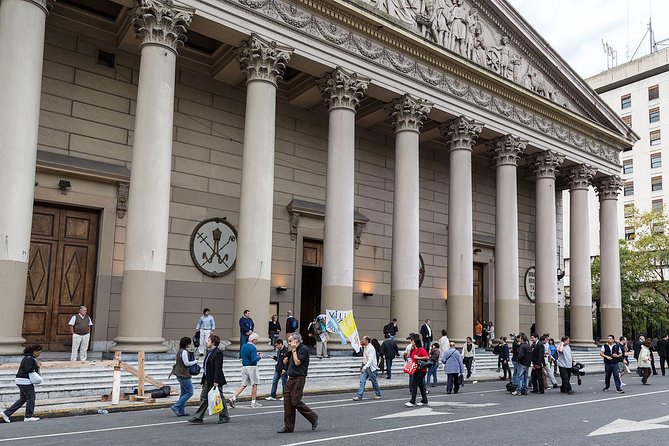
The Metropolitan Cathedral is next. It was once the church of Jorge Mario Bergoglio, now Pope Francis, when he served as Archbishop of Buenos Aires. General José de San Martín, one of Argentina’s leading independence heroes, is buried here as well.
The cathedral stop is listed at fifteen minutes, with another ten minutes for San Martín’s mausoleum. That division reflects the building’s layered importance: religious, political, and military. The tomb has an unusual story, which your guide explains, though the short schedule may limit the time available for close inspection.
The May Pyramid, located in the center of Plaza de Mayo, is the oldest national monument in Buenos Aires. It is easy to overlook among the Casa Rosada and cathedral, but the guide explains what it represents and why it matters.
This part of the tour is strongest when you listen rather than rush for photographs. One participant felt there was not enough time to photograph the cathedral properly, so I would plan to return if architectural photography matters to you.
Puerto Madero and the city’s changing face
Puerto Madero offers a sharp contrast with the old center. The port project began in 1882 under businessman Eduardo Madero, but the original plan failed. In recent decades, the district has been remade with modern buildings, restaurants, and fashionable public spaces.
The tour allows about ten minutes here. That is enough to discuss the port’s failure and later renewal, but not enough for a long waterfront stroll. Puerto Madero works best in this tour as a lesson in how Buenos Aires keeps rebuilding itself.
The contrast is useful. Within the same half-day, you move from colonial foundations and nineteenth-century institutions to a district associated with newer architecture and urban investment. The guide’s explanation helps you see the city as a work in progress rather than a preserved museum.
More Walking Tours in Buenos Aires
- Buenos Aires Hop-On Hop-Off Bus, Free Walking Tours & Discounts
★ 4.5 · 2,218 reviews - Buenos Aires: La Boca Guided Walking Tour in English
★ 4.8 · 1,587 reviews - La Boca Walking Tour
★ 5.0 · 1,029 reviews - Recoleta Cemetery Walking Tour
★ 5.0 · 668 reviews
Casa Minima and the old streets of San Telmo
The route then turns toward San Telmo, Buenos Aires’s oldest neighborhood. Casa Minima is one of the most distinctive stops. It is described as the narrowest colonial house in the city and was built by freed people after the abolition of slavery in Argentina in 1812.
That small building carries a large subject. It gives the tour a chance to discuss freedom, class, housing, and the lives of people who are often left out of grand stories about presidents and military heroes. You spend only five minutes there, but it is an excellent example of why a guide adds value.
Plaza Dorrego is the heart of San Telmo’s antique trade. Its earlier names reflect its older role as a stopping place for wagons heading toward the city. The square later became known as Plaza del Comercio before taking its current name in 1905.
Today, it is a natural place to pause among cafés, antique shops, and the famous San Telmo antiques market. The tour officially ends here, although the supplied route also includes Defensa Street, San Pedro González Telmo Church, Pasaje de la Defensa, Parque Lezama, and La Boca. That means the exact order and endpoint deserve confirmation before you go. City conditions and timing can affect how much of the listed route is covered.
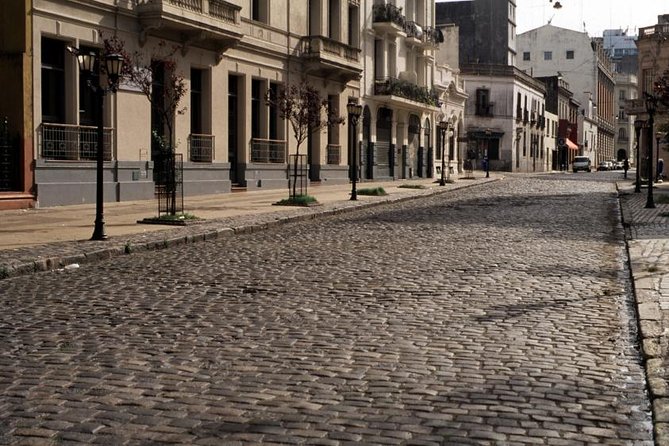
Defensa Street links downtown with San Telmo and carries much of the neighborhood’s historic character. Its cobbled surface and old buildings make it one of the most pleasant parts of the walk, though the uneven pavement is another reason to wear sturdy walking shoes.
The Church of San Pedro González Telmo began as a church connected with Our Lady of Bethlehem and an armory associated with the Jesuits. After the Jesuits were expelled in 1767, the site changed uses, including a period as a women’s jail. The church also played a role during the first British invasion of Buenos Aires in 1806.
Pasaje de la Defensa occupies a restored former Ezeiza family mansion. The restoration helped preserve and renew similar old structures, including former conventillos, or crowded tenement buildings. This is where San Telmo’s social history becomes visible in courtyards, narrow passages, and reused homes.
Parque Lezama and the colors of La Boca
Parque Lezama offers one of the oldest stories on the route. Historians believe its eastern slope may be where Spanish conquistador Pedro de Mendoza landed during the first, failed attempt to establish Buenos Aires in 1536.
The stop itself is short, about five minutes. Think of it as a historical marker rather than a park visit. If you want time among the monuments and paths, you will need to return independently.
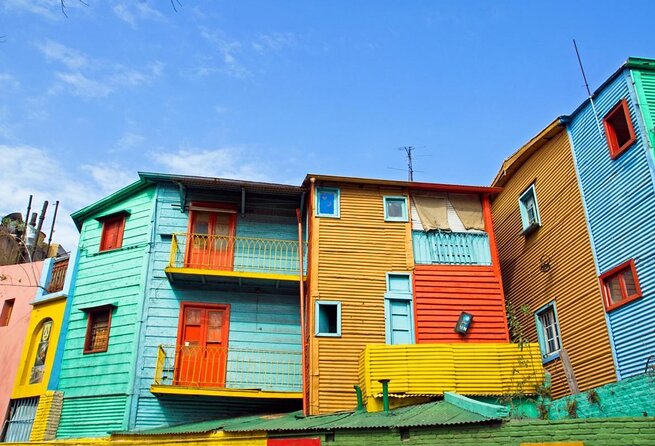
La Boca is the final major district listed. Its colorful houses, pedestrian Caminito, tango performers, Italian taverns, and tango shops make it one of the most visually striking parts of Buenos Aires.
The planned time here is about forty-five minutes, longer than any stop except Plaza de Mayo. That gives you enough room to take in the painted buildings and street atmosphere, though it is still a compact visit. La Boca is tourist-oriented, and the tango performances and souvenir stalls can feel staged. That does not make the district worthless, but you should see it as a lively public showplace rather than a quiet residential neighborhood.
The tour’s combination of La Boca and San Telmo is useful because the districts offer different versions of old Buenos Aires. San Telmo emphasizes cobblestones, colonial buildings, antiques, churches, and courtyards. La Boca emphasizes immigrant roots, color, tango, and street performance.
What the four hours feel like
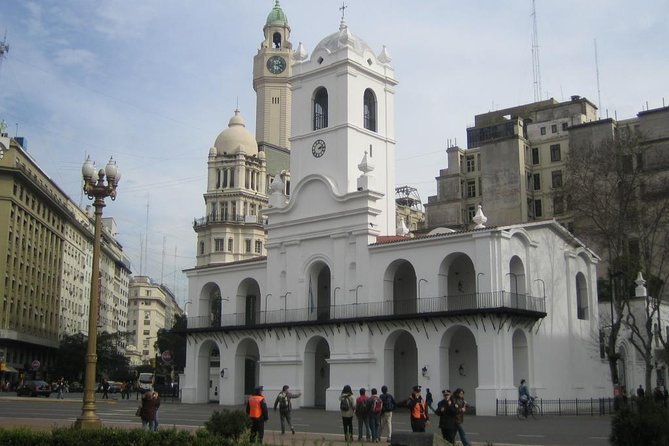
The schedule lists about twenty stops. Many last five or ten minutes, while Plaza de Mayo, Defensa Street, and La Boca receive more attention. In practice, you should expect a steady walk with frequent pauses, not a relaxed day of museum visits.
A coffee break is included. One person specifically described enjoying a cortado in an old, traditional café, and that detail captures the appeal of the pause. You get a chance to sit, ask questions, and watch local life for a few minutes. Food and other drinks are not included.
The tour runs rain or shine. Bring sensible shoes and plan for changing conditions. Since the walk crosses major avenues, pedestrian streets, cobblestones, plazas, and older neighborhoods, comfort matters more than fashion.
Private touring is a real advantage here. A small group lets you ask about Argentine politics, architecture, religion, immigration, or daily life without waiting for a large crowd to catch up. The best guide experiences reported by name were with Joaquin and Soledad. They were praised for clear explanations, friendly manner, and comments connecting earlier Argentina with the country today.
Still, the guide makes a major difference. One poor experience described a shortened two-hour tour and an unhelpful attitude. That account conflicts with the advertised four-hour duration, so I would confirm the meeting time and expected route after booking, especially if the schedule is important to you.
Is $125 per person fair value?
At $125 per person, this is not a budget walk. The price makes more sense if you are traveling as a couple or small private group and want personal attention from an English-speaking guide.
You are paying for interpretation, route planning, and the ability to ask questions, not admission tickets. All listed stops are free, and the tour does not include hotel pickup, food, or drinks beyond the coffee break. If you only want to photograph the Obelisk, Casa Rosada, and Caminito, you can see much of the route independently for less.
The value improves if this is your first time in Buenos Aires. The guide gives you a usable framework for the rest of your stay: where the city began, how San Telmo developed, why La Boca looks the way it does, and how national politics appear in public spaces.
The advertised score is 4.5 out of 5, with 92 percent recommending it. That is encouraging, but the small number of ratings means you should focus on the tour’s structure and fit rather than treat the score as a guarantee.
Who should book this walk?
I would choose this tour for a first visit, especially if you want context before exploring Buenos Aires on your own. It suits couples, families with older children, and small groups who prefer a private guide over a large scheduled outing.
Children under eight are free when accompanied by an adult. Most people can participate, but the walking distance, cobblestones, and quick transitions may not suit anyone who needs frequent rest.
This tour is also a good match for you if architecture interests you. Teatro Colón, Teatro Cervantes, Centro Naval, Galerías Pacífico, the cathedral, Casa Rosada, and San Telmo’s old homes create a fine outdoor survey of the city.
I would hesitate if you want long interior visits, a slow photographic walk, or a detailed exploration of La Boca. The itinerary covers a great deal, and the tradeoff is limited time at individual buildings.
Should you book the Buenos Aires walking tour?
Book it if you want a private, guide-led introduction to central Buenos Aires, San Telmo, and La Boca, with strong historical explanation and a coffee pause built in. Joaquin and Soledad appear to offer the kind of personal, thoughtful guiding that makes the price easier to accept.
Before paying, confirm the exact route, duration, and endpoint. The stated meeting point is Petit Colón, while Plaza Dorrego is given as the endpoint, yet the route also includes La Boca. If the full itinerary matters to you, ask how the day will be organized.
Free cancellation is available up to 24 hours before the start time. The tour needs at least two passengers to operate, and confirmation arrives within 48 hours, subject to availability.
FAQ
How long is the Buenos Aires walking tour?
The tour lasts approximately four hours.
Is this a private tour?
Yes. Only your group participates, and at least two passengers are required for the tour to operate.
Where does the tour start?
The listed starting point is Petit Colón, at Libertad 505 in Buenos Aires.
Where does the tour end?
The listed endpoint is Plaza Dorrego in San Telmo, at Humberto 1º 400. The route also includes La Boca, so confirm the exact order and final stop when booking.
Is the coffee break included?
Yes. A coffee break is included. Other food and drinks are not included.
Are admission tickets included?
The listed stops have no admission charge. The experience does not include paid interior visits or other admission expenses.
Can children join the tour?
Yes. Children under eight are free when accompanied by an adult.
Does the tour operate in bad weather?
Yes. The tour operates rain or shine, although weather and city conditions may affect how much of the route is completed.
Just added in Buenos Aires
- Discover Buenos Aires’ independent art scene — Ticket included★ 5.0 · 30 reviews
- Photo Session in Buenos Aires★ 5.0 · 26 reviews
- Your Private Photographer in Buenos Aires★ 5.0 · 4 reviews
- Yerba Mate Workshop – Learn to Drink Mate like a Local!★ 5.0 · 11 reviews
- Your Personal Photographer in Buenos Aires★ 5.0 · 24 reviews
- BA: Wine Tasting and Blending Experience in Palermo★ 5.0 · 1 review
- Winery and Tasting Experience in Buenos Aires★ 5.0 · 1 review
- Taste of Tradition: Yerba Mate & Alfajores Experience★ 4.0 · 5 reviews
Buenos Aires Tours, compared.
Local Foodie Adventure in Buenos Aires with Sherpa Food Tours
Read our review →
Buenos Aires City Private Tour with Local Guide
Read our review →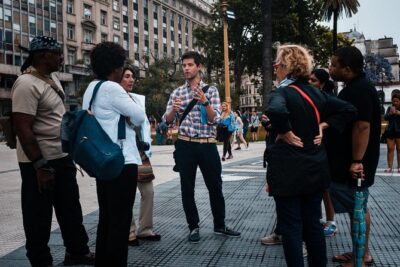
Buenos Aires Hop-On Hop-Off Bus and Exclusive Benefits
Read our review →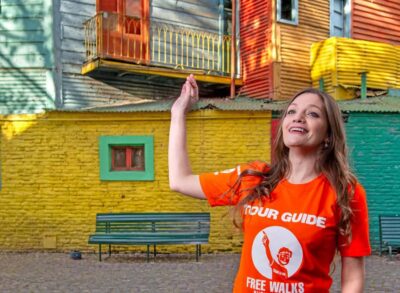

Argentine Experience Interactive Dining and Cooking
Read our review →Browse the lists this tour appears in