
Reviewed · BUENOS AIRES TOURS
Buenos Aires: Historic District Private Guided Walking Tour
Buenos Aires history starts in a square. This private walking tour gives you direct access to Plaza de Mayo, the city’s political and historic heart, while a guide explains Argentina’s independence, traditions, and famous figures. I like the compact two-hour format, and I especially like that admission to both the Cabildo and Metropolitan Cathedral is included.
The main drawback is meeting-point communication. The tour begins outside Café Tortoni, but one booking had a last-minute meeting-point change that was not clearly received. You should have internet access, arrive early, and confirm the meeting details before setting out.
In This Review
- Key points at a glance
- Why this two-hour walk works well
- Starting outside Café Tortoni
- Plaza de Mayo and the founding of Buenos Aires
- The Cabildo and colonial Buenos Aires
- The Metropolitan Cathedral’s unusual design
- A subway station with a city story
- What the guide adds to the buildings
- Is $52 per person good value?
- Who should book this walking tour?
- Practical advice before you go
- Should you book the Historic District tour?
- FAQ
- Where does the Buenos Aires Historic District tour meet?
- How long does the walking tour last?
- What is included in the price?
- Is hotel pickup included?
- Which languages are available?
- Is the tour private?
- Can I cancel for a full refund?
Key points at a glance
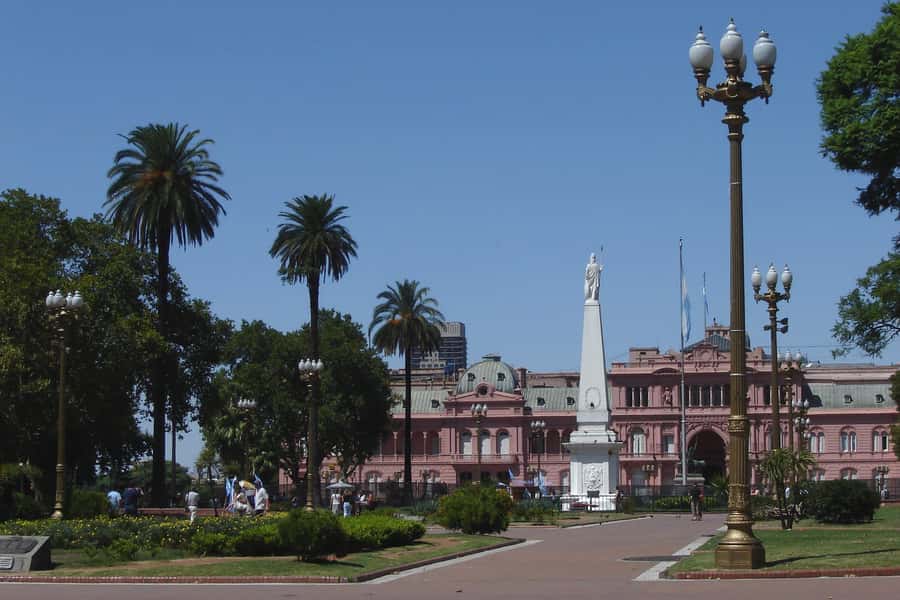
- Plaza de Mayo anchors the walk: Visit the place where Buenos Aires was founded in 1580 and see the Argentine president’s office at Casa Rosada.
- Two major interiors are included: Enter the Metropolitan Cathedral and Cabildo without paying extra admission.
- Private attention comes with the price: At $52 per person, you get a private group and a live guide rather than a large shared walk.
- The guide is central to the experience: Juan Manuel Sanchez earned praise for clear English, strong historical explanations, and a friendly manner.
- Café Tortoni adds a fitting start: Meet outside one of Buenos Aires’ best-known cafés and hear about its famous patrons and meeting place in city life.
- The tour is short and accessible: Plan for two hours, comfortable shoes, and internet access. The activity is listed as wheelchair accessible.
Why this two-hour walk works well
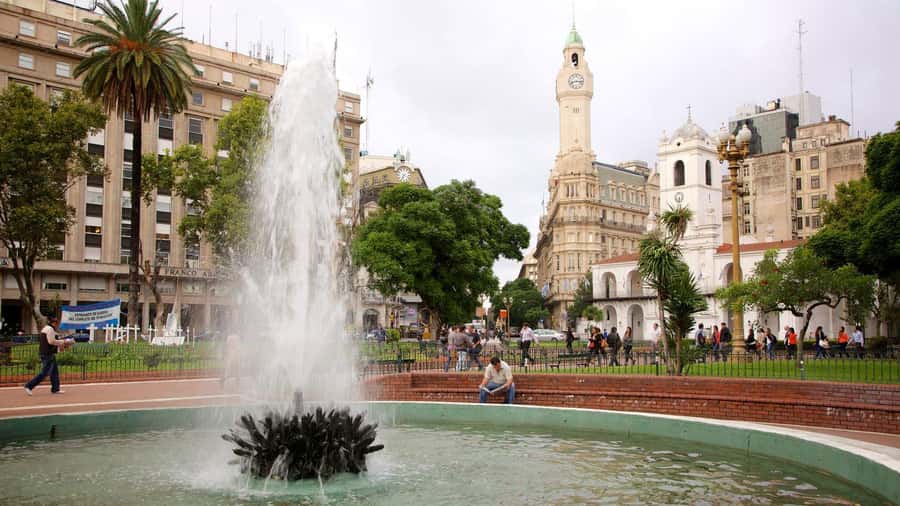
Buenos Aires can feel like several cities stitched together. Grand government buildings, colonial remnants, cafés, churches, and subway entrances all sit close together, but the meaning of each place is easy to miss when you walk past alone. This tour gives those streets a clear order.
You meet outside Café Tortoni, a landmark in its own right. The café is used as more than a simple meeting point. Your guide introduces its role as a gathering place for famous figures in Argentine history, giving you an early look at the city’s café culture and public life.
From there, the route moves through the Historic District toward Plaza de Mayo. The walk is focused rather than sprawling. You will not cover every corner of central Buenos Aires, but you will see several of the city’s most important institutions in one small area.
I find the two-hour length sensible for a first look. It is long enough for context and short enough to fit before lunch, dinner, or another appointment. Since this is a private group, you can ask questions as you go instead of waiting for a large group to catch up.
More History Tours in Buenos Aires
- Historical Sherpa Food Tour of San Telmo with Street Food, Drinks
★ 5.0 · 920 reviews - Nazis in Buenos Aires: a historical walking tour
★ 4.9 · 193 reviews - San Telmo: Historical Guided Tour with Street Food & Drinks
★ 5.0 · 87 reviews
Starting outside Café Tortoni
Café Tortoni gives the tour a memorable beginning. It is one of Buenos Aires’ iconic cafés, and the guide uses its past as a doorway into local traditions and famous personalities.
The meeting point is outside the café, not hotel pickup. That detail matters. You need to make your own way there, and the tour does not include transportation to or from your accommodation.
Arrive a little early. One serious problem reported with this experience involved a guide not appearing at the listed meeting point after the meeting location was changed by email shortly before the start. The booking party lacked easy phone access and could not complete a WhatsApp setup, then waited and left without taking the tour.
That appears to be an isolated but important warning. Keep your phone connected to the internet, check your email shortly before departure, and save the provider’s contact details. The activity specifically asks you to bring internet access. If a message mentions a change, you want to see it before reaching the café.
Plaza de Mayo and the founding of Buenos Aires
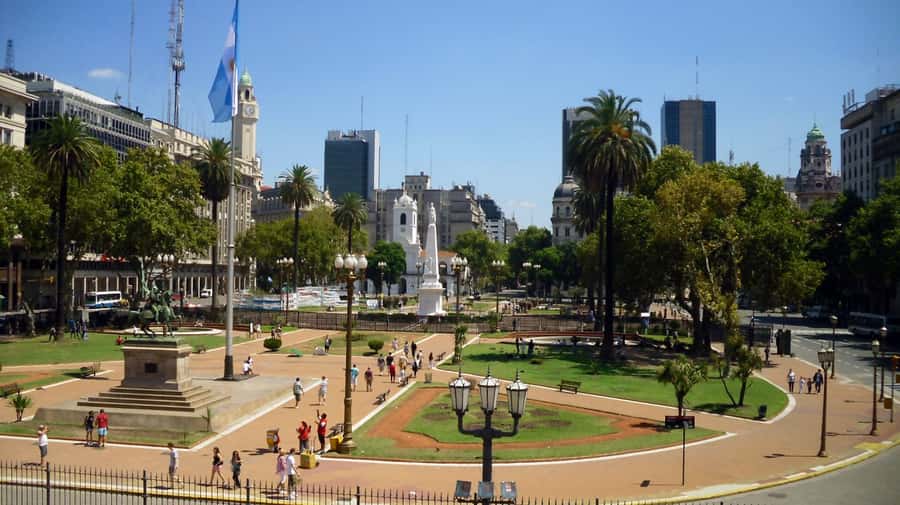
Plaza de Mayo is the heart of the walk. Buenos Aires was founded here in 1580, and the square remains tied to the country’s government, public ceremonies, protests, and national memory.
A guide adds value here because the open space can otherwise seem like a collection of large buildings. You learn how Argentina’s independence and political story connect to the square, rather than simply taking a few photographs and moving on.
The tour also points out Casa Rosada, the Argentine president’s office. Its colored façade makes it one of the city’s easiest buildings to recognize, but the important part is its role. From the square, you can see how government power has been placed directly in the middle of the city’s public life.
This is also a good place to ask questions. The strongest praise for the guides focuses on their ability to explain basic Argentine history in clear terms. Juan Manuel Sanchez was singled out for understandable English, impressive historical knowledge, and a personable approach. Another booking described Juan Miguel as professional and helpful in explaining the country’s basic historical story while visiting central institutions and squares.
That praise is useful for setting expectations. This is not presented as an academic lecture. It is an accessible introduction, with enough background to help you understand what you are seeing without burying the walk in dates and names.
The Cabildo and colonial Buenos Aires
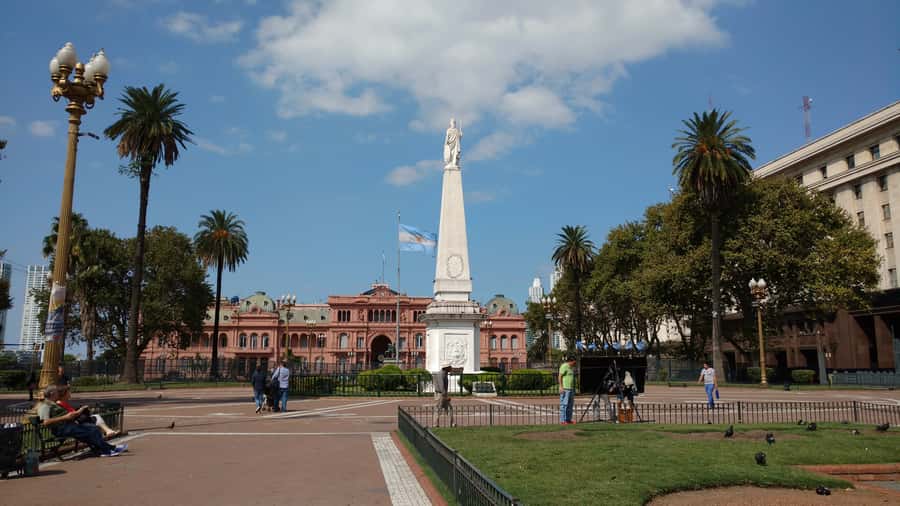
The Cabildo is one of the tour’s most valuable stops. During the colonial period, this building served as the seat of the town council. Its presence helps you picture how Buenos Aires was governed before the modern Argentine state took shape.
The exterior gives you a sense of the district’s older architecture, while the included entry lets you see the building from inside. That inclusion makes the $52 price easier to assess, since you are not paying only for a guide in the street.
The Cabildo also helps connect the city’s colonial period to independence. Your guide explains Argentina’s break from colonial rule and the traditions that grew from that change. The details will depend on the guide and your questions, but the setting itself gives the conversation a useful focus.
I would pay attention to the contrast between the Cabildo and the larger government buildings around Plaza de Mayo. The area shows several periods of Buenos Aires in a short walk. You see the older administrative center, the current presidential office, and the religious center represented by the cathedral.
More Walking Tours in Buenos Aires
- Buenos Aires Hop-On Hop-Off Bus, Free Walking Tours & Discounts
★ 4.5 · 2,218 reviews - Buenos Aires: La Boca Guided Walking Tour in English
★ 4.8 · 1,587 reviews - La Boca Walking Tour
★ 5.0 · 1,029 reviews - Recoleta Cemetery Walking Tour
★ 5.0 · 668 reviews
The Metropolitan Cathedral’s unusual design
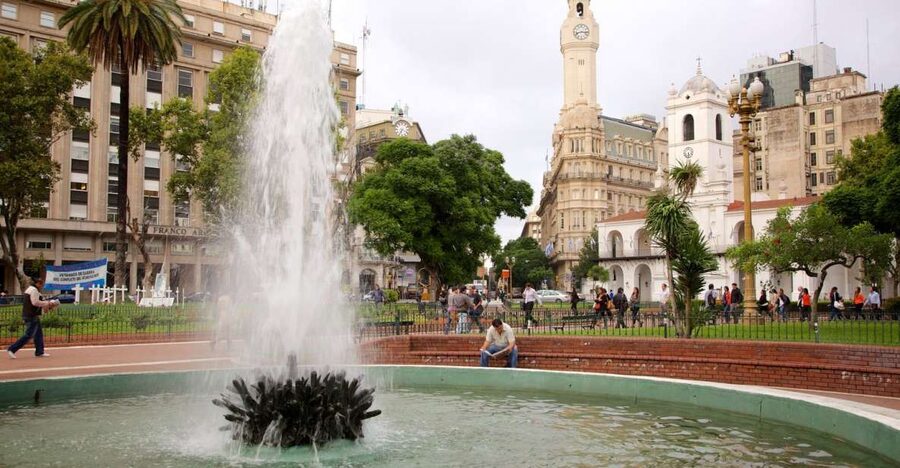
The Metropolitan Cathedral is another included interior. Its neoclassical design is unusual enough to deserve more than a quick photograph from the square.
The cathedral’s appearance may surprise you if you expect a traditional Spanish colonial church. The broad classical front gives it a formal, almost temple-like character. Your guide can point out what makes the design different and explain its place in Argentine public life.
This stop is especially useful for visitors who do not want to spend their entire time looking at façades. Admission is covered, so you can step inside without adding another ticket or deciding on the spot if the visit is worth the cost.
The cathedral is near Plaza de Mayo, which keeps the route efficient. You will not lose much of the two-hour visit moving from one sight to the next. Still, the time is limited, so this is a guided look rather than an extended church visit. If you prefer to sit quietly and study every detail, you may want to return on your own later.
A subway station with a city story
Near the cathedral, the guide points out the Plaza de Mayo subway station. This is where Buenos Aires’ subway system began.
It is a small detail, but it broadens the tour beyond presidents, churches, and colonial government. The station represents the city’s move into modern urban life and gives you another way to read the district. Buenos Aires is not frozen in its early history. Its transportation system grew from the same central area that shaped its political story.
The station is viewed as part of the walking route rather than described as a separate ride. That distinction matters. You should expect an exterior stop and an explanation, not a subway excursion.
What the guide adds to the buildings
The buildings are worth seeing on your own, but the guide is the reason to book this particular activity. The strongest part of the experience is the interpretation between stops.
The guide explains Argentina’s independence, history, and traditions, then connects those subjects to the places in front of you. The positive feedback about Juan Manuel Sanchez highlights clear English and a willingness to answer questions. A Portuguese-speaking booking also described Juan Manoel as excellent and especially accommodating.
The provider lists English, Portuguese, and Samoan. You should select or confirm your preferred language when booking, since the available guide may affect how comfortable the explanations feel.
The private format should also help. You are not tied to the pace of a large group, and your questions can shape the discussion. That is useful at Plaza de Mayo, where a short explanation may lead naturally to questions about independence, the presidency, or national traditions.
The overall score is 4.7 from nine ratings, with most of the praise focused on friendly service, clear explanations, and solid historical background. The one poor experience involved communication and the meeting point, not the quality of the historical tour itself. I would treat that as a practical warning rather than ignore it.
Is $52 per person good value?
At $52 per person, this is not the cheapest way to walk around central Buenos Aires. You can view Plaza de Mayo and the exteriors of several buildings without paying for a tour. The price makes more sense if you want a private guide and included admission to the Cabildo and Metropolitan Cathedral.
For a private group, the cost can be fair, especially if you are traveling with family or friends and prefer to ask questions freely. A shared group may cost less, but you also get less control over the pace and discussion.
The two-hour duration keeps the commitment modest. You are paying for a concentrated introduction, not a full-day city tour. I would consider it good value for a first visit when you want a clear explanation of the Historic District before exploring Buenos Aires independently.
The value drops if you already know Argentine history, have a strong interest in architecture, or prefer to read about each site at your own pace. In that case, you may get more from visiting the buildings alone and spending the $52 elsewhere.
Who should book this walking tour?
I would recommend it most strongly to first-time visitors who want to understand central Buenos Aires quickly. The route gathers the city’s founding place, presidential office, colonial council building, cathedral, and early subway system in one manageable walk.
It also suits anyone who prefers a private experience. Families, couples, and small groups can ask questions without feeling they are holding up strangers. The private setup is useful if your group has different interests, since the guide can spend more time on architecture, politics, or traditions depending on what catches your attention.
The tour is also a practical choice if you have only a short stay in Buenos Aires. Two hours gives you an introduction without consuming an entire morning or afternoon.
You should think twice if you dislike fixed meeting points, cannot maintain internet access during your outing, or want hotel pickup. None of those services is included. Comfortable shoes are also important because this is a walking tour, even though the activity is listed as wheelchair accessible.
Practical advice before you go
Wear shoes you can comfortably use for two hours. The route is short, but standing and walking through public squares and historic buildings can still be tiring.
Bring internet access and check your messages before leaving for Café Tortoni. Because the meeting point has reportedly changed for at least one booking, I would not rely only on an old confirmation email.
Allow time to reach the café on your own. Hotel pickup and drop-off are not included, so your schedule should account for getting to the Historic District before the stated starting time.
The tour offers free cancellation up to 24 hours in advance, and you can reserve now while paying later. Those terms are useful if your plans are still shifting, but the communication issue makes it wise to confirm the exact meeting details close to departure.
Should you book the Historic District tour?
Book it if you want a focused introduction to Buenos Aires history with a private guide, two included interiors, and a short route through the city’s most important central square. The best reason to choose it is the guide-led context. Plaza de Mayo, the Cabildo, Casa Rosada, and the cathedral mean more when someone explains how they fit together.
I would not book it solely for sightseeing access. Most of the area can be viewed from outside, and independent visitors can explore at their own speed. At $52, the tour earns its price through the guide, private format, and included entries.
My advice is simple: choose it for history and questions, arrive early at Café Tortoni, and keep your internet connection ready. If you do that, this compact walk should give you a useful first chapter in Buenos Aires.
FAQ
Where does the Buenos Aires Historic District tour meet?
The meeting point is outside Café Tortoni in Buenos Aires.
How long does the walking tour last?
The tour lasts two hours.
What is included in the price?
The price includes a live guide, the walking tour, and entrance to the Metropolitan Cathedral and Cabildo.
Is hotel pickup included?
No. Hotel pickup and drop-off are not included.
Which languages are available?
The listed guide languages are English, Portuguese, and Samoan.
Is the tour private?
Yes. The activity is offered as a private group tour.
Can I cancel for a full refund?
Yes. You can cancel up to 24 hours in advance for a full refund.
Just added in Buenos Aires
- Discover Buenos Aires’ independent art scene — Ticket included★ 5.0 · 30 reviews
- Photo Session in Buenos Aires★ 5.0 · 26 reviews
- Your Personal Photographer in Buenos Aires★ 5.0 · 24 reviews
- Your Private Photographer in Buenos Aires★ 5.0 · 4 reviews
- Yerba Mate Workshop – Learn to Drink Mate like a Local!★ 5.0 · 11 reviews
- BA: Wine Tasting and Blending Experience in Palermo★ 5.0 · 1 review
- Winery and Tasting Experience in Buenos Aires★ 5.0 · 1 review
- Taste of Tradition: Yerba Mate & Alfajores Experience★ 4.0 · 5 reviews
Buenos Aires Tours, compared.
Local Foodie Adventure in Buenos Aires with Sherpa Food Tours
Read our review →
Buenos Aires City Private Tour with Local Guide
Read our review →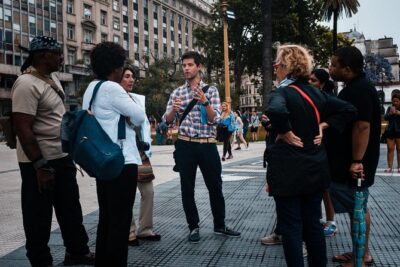
Buenos Aires Hop-On Hop-Off Bus and Exclusive Benefits
Read our review →

Argentine Experience Interactive Dining and Cooking
Read our review →Browse the lists this tour appears in