
Reviewed · BUENOS AIRES TOURS
Walking Tour of the Plaza de Mayo in Buenos Aires
Buenos Aires history begins in this square. This two-hour walk links Plaza de Mayo with the Metropolitan Cathedral, the Cabildo, and Avenida de Mayo, giving you a compact introduction to Argentina’s political past and daily city life. I like the small maximum of 10 people, and I like that a local guide such as Nicole can connect the square’s founding story with Buenos Aires today. The main consideration is the price: at $61.80 per person, this is not a bargain if you only want a quick look at the buildings.
The route is short, central, and easy to fit into a first morning in the city. Still, uneven surfaces and two hours on foot make it unsuitable for anyone with walking difficulties, and hotel transportation is not included.
In This Review
- Key points to know before booking
- Why Plaza de Mayo is the right place to begin
- The Metropolitan Cathedral and Pope Francis’s former workplace
- The Cabildo and the colonial government
- Walking Avenida de Mayo for architecture and public life
- What the two-hour format gives you
- Price, group size, and practical value
- Who will get the most from this walk
- Timing, meeting point, and cancellation terms
- Should you book the Plaza de Mayo walking tour?
- FAQ
- Where does the walking tour begin?
- What time does the tour start?
- Where does the tour finish?
- How long does the tour last?
- What language is offered?
- What is included in the price?
- Is hotel pickup included?
- How large is the group?
- Can I cancel for a full refund?
Key points to know before booking
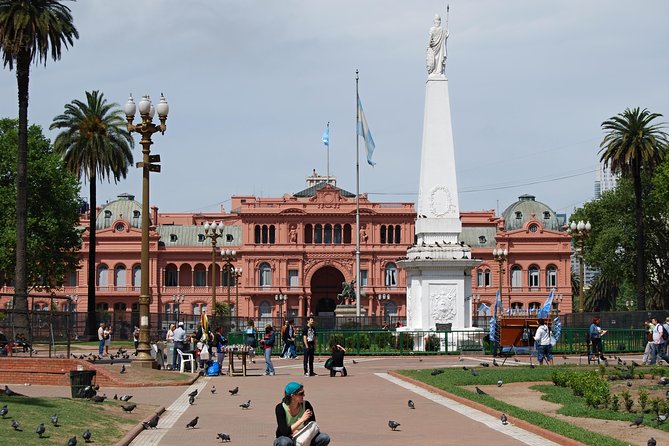
- A compact introduction to Buenos Aires: The two-hour route covers the city’s central civic square, main cathedral, colonial government building, and one of its grandest avenues.
- A maximum of 10 people: The small group should make it easier to hear the guide and ask questions than on a large city tour.
- Nicole receives special praise: Her tour connected the history of May Square with Argentina’s present-day life, not just dates and architecture.
- A powerful political setting: Plaza de Mayo has hosted major national events since the Revolution of May 25, 1810.
- Architecture changes as you walk: Avenida de Mayo brings together Art Nouveau, Belle Époque, and Art Déco façades.
- Plan for a 10 a.m. start: The meeting point is Bolívar 160, and the tour finishes back there.
Why Plaza de Mayo is the right place to begin
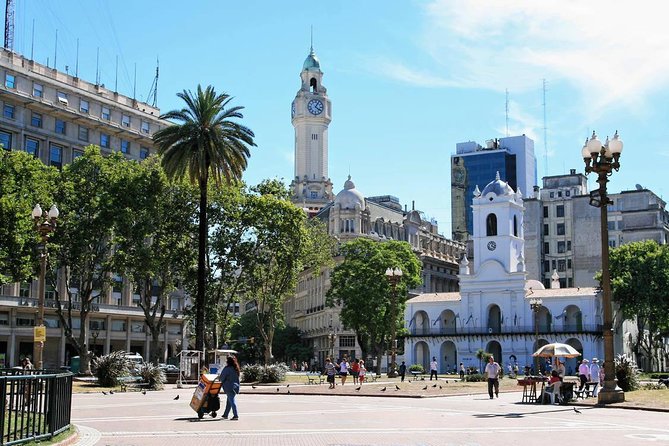
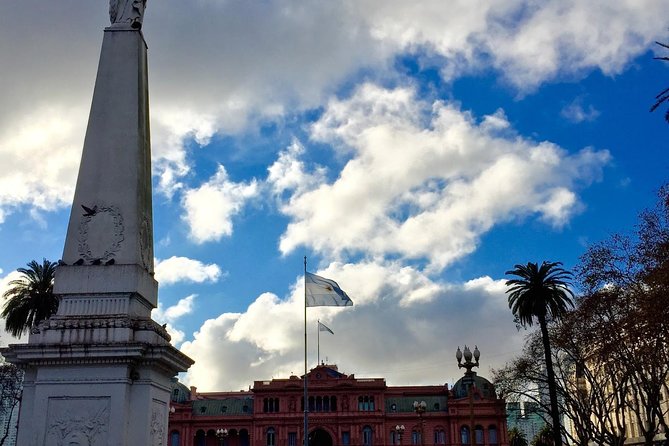
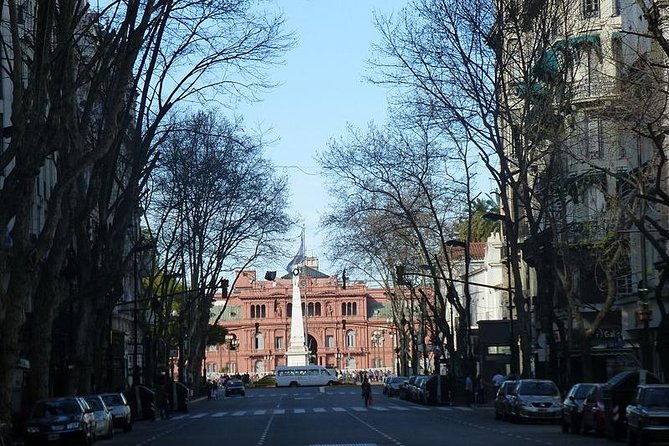
Plaza de Mayo is not simply an attractive open space in central Buenos Aires. It is the city’s oldest and most important public square, located in Monserrat in the area linked with the foundation of Buenos Aires. If you have only a short time in the capital, this is a sensible place to begin because several major landmarks sit around or close to the square.
The name points to May 25, 1810, when citizens gathered here to remove the viceroy and form a creole government. That event helped set Argentina on the road toward independence, and the square has continued to host major political and social moments ever since.
The first stop lasts about 20 minutes, with no separate admission charge. That timing is useful. You get enough time to understand why the square matters without spending the whole morning in one place.
I would pay attention to the guide’s explanation of how the square changed from a colonial public space into a national stage. The value here is not only in looking at a plaza. It is in understanding why Argentines repeatedly return to this particular patch of ground when the country faces political conflict, celebration, or grief.
The square can also be a busy city setting, so do not expect a quiet garden stroll. Its importance comes from public life and national memory, not from peaceful scenery.
More Walking Tours in Buenos Aires
- Buenos Aires Hop-On Hop-Off Bus, Free Walking Tours & Discounts
★ 4.5 · 2,218 reviews - Buenos Aires: La Boca Guided Walking Tour in English
★ 4.8 · 1,587 reviews - La Boca Walking Tour
★ 5.0 · 1,029 reviews
The Metropolitan Cathedral and Pope Francis’s former workplace
Across from Plaza de Mayo, close to the Casa Rosada, the Metropolitan Cathedral gives the tour a different mood. Construction began in the 17th century, but the present building was not finished until the early 20th century. That long construction period helps explain why the cathedral is best understood as a layered building rather than a single, perfectly unified design.
The tour allows about 20 minutes here, again with free admission. You can use this stop to look beyond the exterior and consider the cathedral’s role as Argentina’s principal Catholic church.
The most personal detail is its connection with Pope Francis. Before becoming pope, he spent many years working and serving here. That fact gives the cathedral a direct link to modern religious history, not only to colonial Buenos Aires.
I like this stop because it breaks up the political focus of Plaza de Mayo. The square tells you about government and public action. The cathedral brings in faith, ceremony, and the personal story of one of Argentina’s best-known figures.
The time is limited, so this should not be treated as an extended church visit. If you want to study every architectural detail or sit quietly for a long period, you will need to return on your own. On the tour, the cathedral works best as a focused stop within a larger story.
The Cabildo and the colonial government
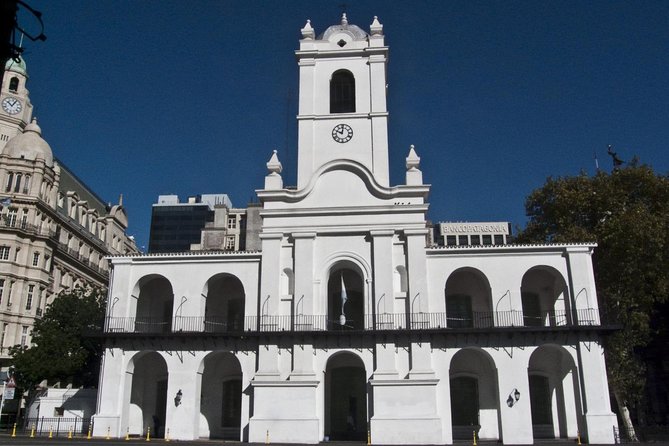
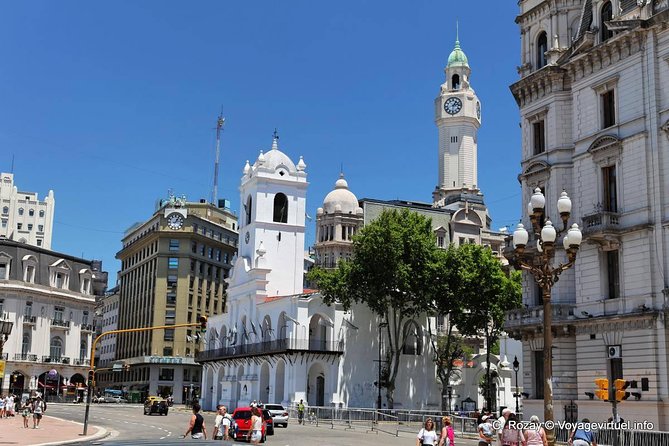
The Cabildo sits on the western side of Plaza de Mayo, between Avenida de Mayo and Diagonal Sur, also known as General Roca Street. This historic building once served as the colonial government’s seat, representing the Crown in Buenos Aires and copying the institutions of Spain.
Its importance becomes clearer when you view it with the square and cathedral nearby. In a few steps, you can see the old colonial power structure, the church, and the public space where citizens later challenged Spanish rule.
The Cabildo does not have a separate admission charge as part of this walk. The supplied timing does not list a distinct duration for the stop, so expect the guide to discuss it from the outside or as part of the Plaza de Mayo explanation rather than provide a long interior visit.
This is where a good guide matters. A building can look formal and attractive while its political purpose remains easy to miss. I would listen for the explanation of who governed from here, whom the institution represented, and how its role fits into the events of 1810.
The Cabildo also helps you read Buenos Aires by layers. The city did not begin as the grand capital you see today. Its present identity grew from colonial institutions, local opposition, and later national changes.
Walking Avenida de Mayo for architecture and public life
From the square, the route continues along Avenida de Mayo, one of Buenos Aires’s major avenues. The street preserves much of its old grandeur and shows the city’s cosmopolitan character through its façades.
This is the most visual section of the walk. You will see a mix of Art Nouveau, Belle Époque, and Art Déco styles. The Barolo Palace and the Real Estate Building are named as the two key examples, so keep your eyes up as you walk. The point is not simply to photograph a grand façade. It is to notice how several architectural periods share one avenue.
Avenida de Mayo also remains a place for demonstrations and celebrations. That gives the street a useful connection to Plaza de Mayo. You are not moving from history into a dead museum district. You are following a route that still plays a role in the public life of Buenos Aires.
The stop lasts about 20 minutes, which is enough for an overview but not enough for a full architectural survey. If you are passionate about buildings, you may want to return later and explore at a slower pace. For a first orientation, though, this section adds variety and helps you understand the city’s European-influenced appearance.
I especially like the way this part keeps the walk from becoming a string of isolated monuments. The avenue connects the landmarks physically and gives you a sense of how the central districts fit together.
A completely different kind of day:
- Local Foodie Adventure in Buenos Aires with Sherpa Food Tours
★ 5.0 · 6,875 reviews - Buenos Aires City Private Tour with Local Guide
★ 5.0 · 3,475 reviews - Buenos Aires Small-Group City Tour
★ 5.0 · 2,226 reviews - Buenos Aires: Piazzolla Tango Show with Optional Dinner
★ 4.4 · 2,122 reviews
What the two-hour format gives you
Two hours is a practical length for this route. You get a clear introduction without committing half a day to a single neighborhood. The stops are close enough to create a coherent walk, and the 10 a.m. start leaves the rest of your day open for museums, food, or further sightseeing.
The format is best for someone who wants context quickly. You will learn why Plaza de Mayo matters, see the cathedral connected with Pope Francis, understand the Cabildo’s colonial role, and observe the architectural mix along Avenida de Mayo.
The short duration also sets limits. This is not a broad Buenos Aires tour, and it does not promise extensive time inside each landmark. You should book it for interpretation and orientation, not for a long list of admissions or detailed building access.
One useful advantage is the small group. With no more than 10 people, the guide can keep the pace personal and respond to questions more easily. A previous participant described the walk as personalized and an excellent overview, which matches what this format is designed to do.
Nicole receives particular praise for explaining the square from the city’s first foundation through its life today. That is an important strength. The best central-city walk does not stop at old dates. It explains why the place still matters.
Price, group size, and practical value
At $61.80 per person, this walk is priced above a casual orientation stroll. You are paying for a professional local guide, a small group, and a focused explanation of four important sites.
The value depends on how you like to sightsee. If you are comfortable reading signs, following a map, and researching the buildings yourself, the price may feel high because the tour includes no listed admissions and no hotel pickup. If you want a clear story that links the landmarks together, the cost becomes easier to justify.
The group limit of 10 is the strongest practical reason to pay more. A guide speaking to a small group can usually point out details, answer questions, and keep everyone involved more effectively than a large crowd. The positive comments about a personalized experience support that expectation, though the exact feel will depend on the guide and the people booked that day.
The mobile ticket is convenient, and confirmation arrives when you book. The meeting point is Bolívar 160 in Buenos Aires, near public transportation. You will need to arrange your own way there and back, since hotel pickup and drop-off are not included.
Wear comfortable shoes. The route involves uneven surfaces, and the activity calls for a moderate level of physical fitness. The stated accessibility warning is important: this walk is not recommended if you have a walking disability.
Who will get the most from this walk
I would recommend it most strongly for a first visit to Buenos Aires, especially if you want a historical framework before exploring the city alone. The route gives you names, dates, buildings, and political context in one manageable outing.
It also suits people who prefer small groups. A maximum of 10 feels more personal than a large coach-style city tour, and the comments about Nicole suggest that the guide can make the history feel connected to present-day Argentina.
This could work well for couples, solo visitors, and families with older children who can comfortably walk for two hours. A child rate is available only when the child shares with two paying adults, so families should check the final booking price carefully.
I would be less likely to recommend it to someone seeking a full architectural tour, a long cathedral visit, or extensive access inside the buildings. The route is an overview. It gives you a strong starting point, then leaves room for independent visits.
It is also not the best match if you need door-to-door transport or have difficulty with uneven pavement. Those are not minor details in a walking tour. They affect whether the experience feels comfortable.
Timing, meeting point, and cancellation terms
The tour begins at 10 a.m. at Bolívar 160, C1066AAD, in Buenos Aires. It ends back at the same meeting point, which makes planning the next activity easier than a route that leaves you across the city.
Public transportation is nearby, but hotel transfers are not included. I would allow enough time to reach Bolívar 160 before the start rather than arrive at the last minute, especially since the tour begins at a fixed morning time.
Free cancellation is available if you cancel at least 24 hours before the local start time. If you cancel less than 24 hours in advance, the payment is not refunded, and changes within that period are not accepted.
Those terms are reasonable for a small-group activity, but mark the deadline clearly if your plans in Buenos Aires are still changing.
Should you book the Plaza de Mayo walking tour?
Book it if you want a small-group, history-focused introduction to central Buenos Aires and value a guide who can connect colonial institutions, the 1810 revolution, religious life, architecture, and current public events.
The strongest parts are the central route, the maximum of 10 people, and the personal guiding style praised in connection with Nicole. You will leave with a better sense of why Plaza de Mayo matters, not merely a set of photographs.
Skip it if $61.80 feels too high for a two-hour walk with no included admissions, or if you want extensive interior visits. Also skip it if uneven surfaces or two hours of walking would be uncomfortable.
For a first morning in Buenos Aires, I think the tour makes the most sense when you want orientation with substance. It is short, focused, and practical, with enough history to help the rest of your time in the city make more sense.
FAQ
Where does the walking tour begin?
The tour begins at Bolívar 160, C1066AAD, Buenos Aires, Argentina.
What time does the tour start?
The start time is 10:00 a.m.
Where does the tour finish?
The activity ends back at the original meeting point.
How long does the tour last?
The walking tour lasts approximately two hours.
What language is offered?
The tour is offered in English.
What is included in the price?
The price includes a professional local guide and the walking tour.
Is hotel pickup included?
No. Hotel pickup and drop-off are not included.
How large is the group?
The activity has a maximum of 10 participants.
Can I cancel for a full refund?
Yes, provided you cancel at least 24 hours before the experience start time. Cancellations made less than 24 hours before the start are not refunded.
Just added in Buenos Aires
- Discover Buenos Aires’ independent art scene — Ticket included★ 5.0 · 30 reviews
- Photo Session in Buenos Aires★ 5.0 · 26 reviews
- Your Private Photographer in Buenos Aires★ 5.0 · 4 reviews
- Yerba Mate Workshop – Learn to Drink Mate like a Local!★ 5.0 · 11 reviews
- Your Personal Photographer in Buenos Aires★ 5.0 · 24 reviews
- BA: Wine Tasting and Blending Experience in Palermo★ 5.0 · 1 review
- Winery and Tasting Experience in Buenos Aires★ 5.0 · 1 review
- Taste of Tradition: Yerba Mate & Alfajores Experience★ 4.0 · 5 reviews
Buenos Aires Tours, compared.
Local Foodie Adventure in Buenos Aires with Sherpa Food Tours
Read our review →
Buenos Aires City Private Tour with Local Guide
Read our review →

Buenos Aires Hop-On Hop-Off Bus and Exclusive Benefits
Read our review →

Argentine Experience Interactive Dining and Cooking
Read our review →Browse the lists this tour appears in