
Reviewed · BUENOS AIRES TOURS
TodoMaradona in Buenos Aires: Diego Maradona House Museum and Stadium
Maradona’s story begins in a neighborhood. This three-hour Buenos Aires tour connects La Paternal, the streets of Diego’s youth, with the first house he owned and the stadium where his professional career began. I like the way it turns a famous football legend into a local story, and I especially like the visit to La Casa de D10S, where his family lived from 1978 to 1980.
The second strong point is the guide service. Fernando receives especially warm praise for his English, football knowledge, and genuine enthusiasm, while Claudia is also noted for her kindness and care. My main reservation is the $138 price, which is a serious expense for three hours, particularly if you have little interest in football or Maradona.
In This Review
- Key points to know before booking
- Why Maradona’s Buenos Aires story starts in La Paternal
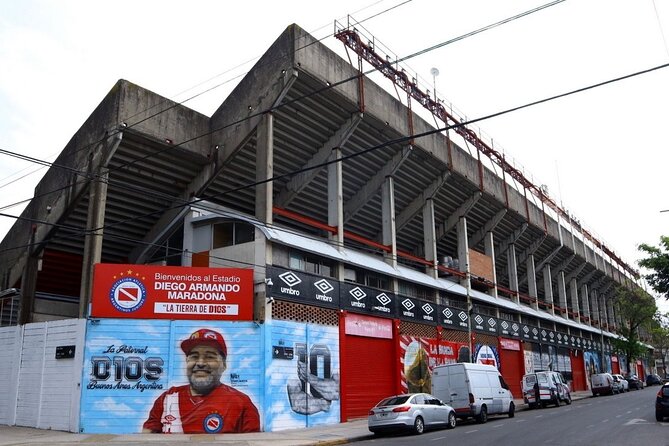
- Inside the Diego Armando Maradona Stadium
- La Paternal, seen through Maradona’s early years
- La Casa de D10S and the family home
- The guide can shape the entire experience
- Hotel pickup makes the three-hour plan easier
- Is $138 a fair price?
- Who will enjoy this most?
- Practical points before you reserve
- Should you book TodoMaradona?
- FAQ
- Where does the tour take place?
- How long does TodoMaradona last?
- Is hotel pickup included?
- Is the tour offered in English?
- What is included in the admission?
- How far in advance can I cancel?
Key points to know before booking
- Maradona’s first home: Visit La Casa de D10S, the house given to Diego and his family by Argentinos Juniors for his 18th birthday.
- A stadium with personal meaning: Tour the Diego Armando Maradona Stadium, where he made his professional debut for Argentinos Juniors at age 15.
- A neighborhood walk: See La Paternal through the story of the young player who once walked its streets.
- English-speaking guidance: Fernando is praised for clear English, strong football knowledge, and lively storytelling.
- Small-group format: The maximum group size is 10 people, with hotel pickup and return included within Buenos Aires.
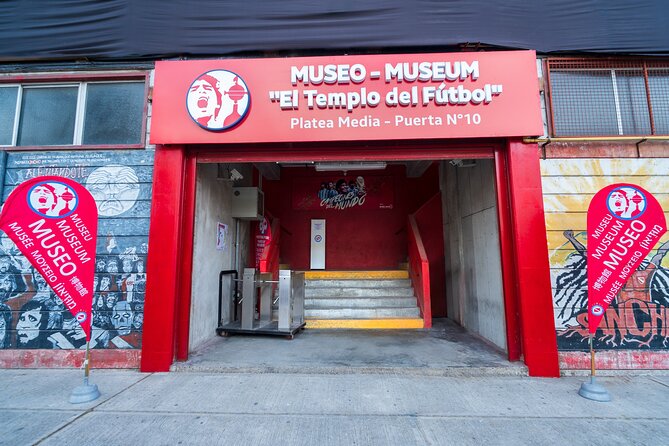
- Fan-built museum: The Temple of Soccer Museum was created through volunteer work by club members and supporters.
Why Maradona’s Buenos Aires story starts in La Paternal
Many football tours stay inside stadium walls. This one begins with a neighborhood, which gives the experience a more human scale. La Paternal was part of Maradona’s early life, before international fame, giant contracts, and the pressure of becoming Argentina’s most famous footballer.
You walk streets connected to his early career and hear about the period when he was still developing as a player at Argentinos Juniors. That setting matters. A stadium can show you trophies and photographs, but a neighborhood helps you picture the daily life around the footballer.
The tour is built around three linked places: the Diego Armando Maradona Stadium, La Paternal, and La Casa de D10S. That order creates a useful story. You see the club, connect it to the district, and then enter the family home that Argentinos Juniors gave Maradona.
You should not expect a broad tour of Buenos Aires. The focus is narrow and deliberate. This is a football and biography experience, not a general city sightseeing trip. If you want Plaza de Mayo, tango, cafés, or Buenos Aires architecture, spend your time elsewhere. If you want to understand Maradona’s roots, this route gives you a clear purpose.
More museums in Buenos Aires:
- Buenos Aires: Tickets to Boca Juniors Museum & Stadium
★ 4.5 · 581 reviews - Buenos Aires: River Plate and Boca Juniors Museum Tour
★ 4.5 · 72 reviews - Buenos Aires: Hop-On Hop-Off Bus and Football Museums
★ 4.3 · 39 reviews
Inside the Diego Armando Maradona Stadium
The stadium is the heart of the tour. It carries Maradona’s name because this is where he made his professional debut with Argentinos Juniors at the age of 15. For football fans, that detail gives the visit real weight. You are not simply touring a stadium connected to him by reputation. You are visiting the club ground where his professional story began.
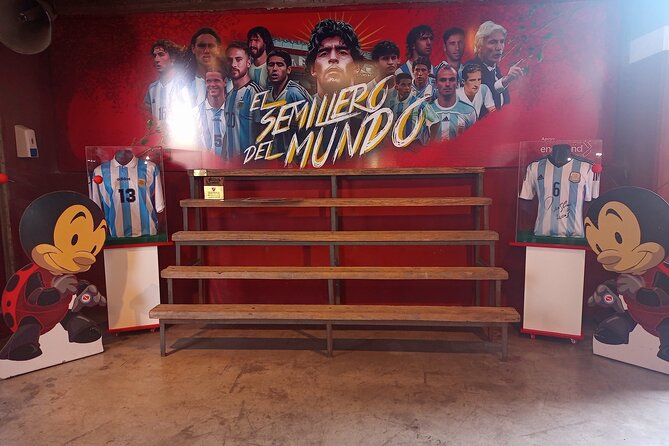
The site includes the Temple of Soccer Museum. Its unusual character comes from the people behind it. Club members and supporters created the museum through voluntary work, giving it a personal, community-led feel rather than the polished tone of a large commercial museum.
That can be a strength. A fan-built museum is likely to reflect what the club and its supporters care about most. You may find the experience more intimate and emotionally direct than a major sports museum built for mass tourism. It is also a reminder that Maradona belongs to Argentinos Juniors in a very specific way, not only to the world of football.
The stadium visit includes several areas:
- The playing field
- The changing rooms
- The central hall
- The press room
- The stands
- The Temple of Soccer Museum
The route gives you more than a look at the pitch from the sidelines. Moving through the changing rooms and press room helps explain how a football club functions around match day. The stands provide the familiar stadium view, while the central hall and museum connect the building to the club’s past.
One practical note: the stadium has been undergoing construction, according to the information provided by the tour operator. That did not prevent the full visit described by one participant, but building work can affect the appearance or access of certain areas. I would treat this as a living sports venue rather than a perfectly finished museum attraction.
The stadium section is likely to mean the most to someone who follows football closely. If you know Argentinos Juniors only as the club where Maradona started, the guide can fill in the gaps. If you already know the club well, you will probably value the physical access to the rooms and field more than a basic history lesson.
La Paternal, seen through Maradona’s early years
The neighborhood stop adds context that photographs alone cannot provide. You walk through La Paternal along streets connected with Maradona’s first years as a professional player. The point is not grand scenery. The point is location and memory.
I like this part because it connects the public figure to ordinary urban life. Before he became a global icon, Maradona was a young player moving through the same local streets as the people around him. That contrast is central to his story, and the guide’s narration helps join the places together.
The walking portion also breaks up the indoor visits. After the museum and stadium, a short neighborhood route gives you time to think about what you have seen. It makes the tour feel less like a sequence of displays and more like a story told across several sites.
The amount of walking is not specified, so you should be ready for movement between points in the neighborhood. The activity states that most people can participate, but anyone with mobility concerns should ask the operator for current details before booking.
Do not expect a large guided walking tour with a long list of architectural stops. La Paternal is valuable here because of its link to Maradona, not because the tour promises a full neighborhood survey. The guide’s stories are the main attraction.
La Casa de D10S and the family home
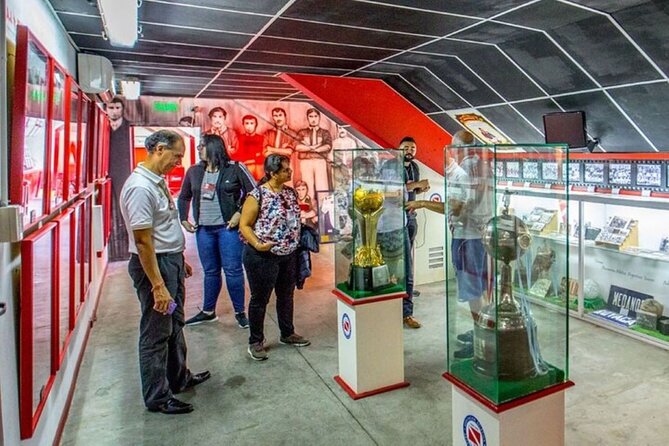
La Casa de D10S is the first home owned by Diego Maradona and his family. He lived there from 1978 to 1980, during his time as an Argentinos Juniors player. The club gave the house to him for his 18th birthday, making it a particularly personal part of the story.
The house has been recovered and recognized by the City Parliament as a historic place honoring Maradona. That official recognition gives the stop added importance, but the emotional force comes from the family connection. This was not a stadium, training ground, or public stage. It was home.
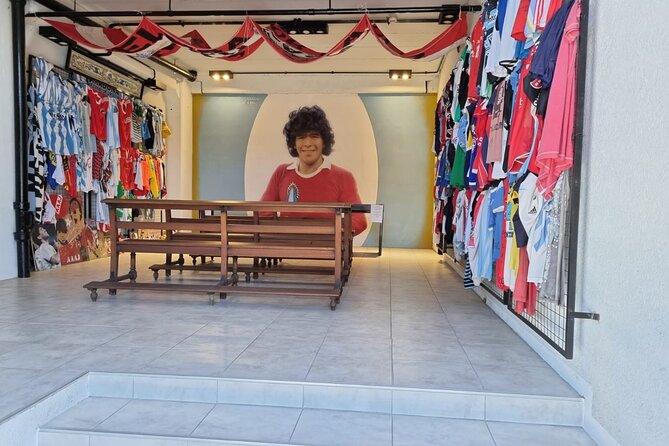
The interior has been recreated by people devoted to Maradona and to what he represented for Argentinians. You should think of the house as a memorial space shaped by fans, not as a preserved home with every object untouched from the 1970s. That distinction matters. The appeal lies in the effort to bring the domestic setting back to life.
One especially moving aspect is the change in scale. At the stadium, Maradona appears as a player beginning his professional career. At the house, you see the family setting around that young athlete. The two stops work well together because one explains the public career and the other suggests the private life supporting it.
The house visit is also where the tour may become emotional, even for people who are not devoted football followers. Maradona’s story includes family, ambition, local pride, and enormous fame. A home can communicate those themes more directly than a display case filled with sports memorabilia.
You are given time to explore both the house and stadium, according to the tour details and participant feedback. That is important. A rushed photo stop would weaken the experience, while time to look around lets the stories settle.
More things to do in Buenos Aires:
- Local Foodie Adventure in Buenos Aires with Sherpa Food Tours
★ 5.0 · 6,875 reviews - Buenos Aires City Private Tour with Local Guide
★ 5.0 · 3,475 reviews - Buenos Aires Small-Group City Tour
★ 5.0 · 2,226 reviews - Buenos Aires Hop-On Hop-Off Bus, Free Walking Tours & Discounts
★ 4.5 · 2,218 reviews
The guide can shape the entire experience
The guide is not a minor part of this tour. The route includes places that benefit from explanation, and the quality of that explanation will affect how much you get from each stop.
Fernando receives especially strong praise. He is described as a devoted Maradona fan with excellent English, strong football knowledge, and the ability to answer questions. He also handles the hotel transfer, so the conversation can begin on the way to the stadium rather than only after arrival.
That matters because the tour is not only about seeing objects. You need context about Argentinos Juniors, Maradona’s early years, and the role of the club in his career. Fernando’s enthusiasm appears to be one of the main reasons the tour feels personal rather than routine.
Claudia is also praised for being friendly and helpful. On a very hot day, she provided cold water and took good care of the group. That is a small detail, but it tells you something useful about the service: the guides pay attention to comfort as well as football stories.
The experience is offered in English, which makes it suitable for international visitors who want more than a self-guided look at the stadium. The maximum group size is 10 people, so you should get more opportunity to ask questions than on a large coach tour.
The available information does not promise a private tour for every booking. One participant described a private car for the family, but the stated maximum is 10 people. I would therefore expect a small group, while understanding that the exact arrangement can vary.
Hotel pickup makes the three-hour plan easier
Pickup and drop-off are offered at the door of your hotel in the City of Buenos Aires. That is useful because the stadium and house are not presented as central Buenos Aires attractions that you can simply fold into a walking day around the main square.
The included transfer also keeps the three-hour schedule tidy. You do not need to work out separate transport between your hotel, La Paternal, the stadium, and the house. The driver or guide can use the travel time to tell you about the club and Maradona’s life.
The tour lasts approximately three hours. That is long enough to cover the stadium, neighborhood, and home without taking an entire day from your Buenos Aires plans. It is also short enough to pair with other activities, though you should allow flexibility around pickup and traffic.
The vehicle was described as air-conditioned in one account, and pickup was on time for that participant. Air conditioning is especially welcome in hot weather. Still, I would not treat one specific vehicle detail as a formal guarantee for every departure.
The booking pattern also suggests planning ahead. This experience is booked an average of 54 days in advance. That does not mean every date sells out, but it is a sensible reason to reserve early if the visit is important to your Buenos Aires schedule.
Is $138 a fair price?
At $138 per person, this is not a cheap stadium visit. The value depends on what you are buying and how much Maradona means to you.
The fee includes hotel pickup and drop-off, an English-speaking guide, entrance to La Casa de D10S, and entrance to the Diego Armando Maradona Stadium museum. You are also paying for a combined route that joins three connected places, rather than arranging each visit separately.
I see the price as easier to justify for a serious football fan, a Maradona follower, or someone who wants a specialist experience with transport included. The small maximum group size and guide-led storytelling add value, especially if you want to ask questions and understand the connection between the club and the player.
The price is harder to defend for a casual sports visitor. If you simply want to see a famous football stadium, a lower-cost stadium visit may be enough. You also need to remember that the tour lasts about three hours, so the cost per hour is high compared with a standard city sightseeing excursion.
Still, the content is not generic. The house is a distinctive stop, and the stadium is tied directly to Maradona’s professional debut. Those details make this more than a standard football-themed outing.
Who will enjoy this most?
I would recommend this tour first to:
- People who consider Maradona one of football’s greatest figures
- Supporters of Argentinos Juniors
- Visitors interested in football’s connection to everyday neighborhoods
- Families or small groups who value hotel pickup
- English-speaking visitors who want a guided experience
- People who prefer personal stories to large museum displays
You do not need to be able to name every player in Argentinos Juniors to enjoy the tour. But you should have at least some interest in football or Maradona. The focus is specific, and there are no unrelated Buenos Aires sights to balance it.
The tour may also suit people who have already visited the city’s major attractions. Once you have seen the central landmarks, a local football story can give you a different view of Buenos Aires. The appeal comes from the connection between place, club, family, and memory.
Practical points before you reserve
Confirmation is provided at booking, and most people can participate. The maximum group size is 10 people.
Hotel pickup and return apply to hotels in the City of Buenos Aires. If your accommodation is outside the city, confirm the meeting arrangement before paying.
The tour is offered in English. The guide names associated with the experience include Fernando and Claudia, with Fernando receiving particular praise for his English and football knowledge.
The cancellation policy is generous as long as you plan ahead. You can cancel for a full refund up to 24 hours before the local start time. Changes or cancellations made less than 24 hours before the start are not accepted for a refund.
Should you book TodoMaradona?
Book it if Maradona’s career matters to you and you want to see the places that shaped its beginning. The combination of La Paternal, the Argentinos Juniors stadium, the fan-built museum, and La Casa de D10S gives you a focused story that a general Buenos Aires tour cannot provide.
I especially like the balance between public and private life. The stadium shows where Maradona became a professional player, while the house brings you closer to the family setting behind that rise. Fernando’s praised English and enthusiasm are another reason this experience has earned a perfect 5 rating from the eight published ratings supplied here.
Skip it if you are looking for a bargain, a broad city tour, or only a quick photograph outside a stadium. At $138, this is a specialist purchase. For a football fan, though, it offers access, context, and a strong sense of place that can make the price worthwhile.
FAQ
Where does the tour take place?
The experience takes place in Buenos Aires, with visits to La Paternal, La Casa de D10S, and the Diego Armando Maradona Stadium and Museum.
How long does TodoMaradona last?
The tour lasts approximately three hours.
Is hotel pickup included?
Yes. Pickup and drop-off are included from the door of hotels in the City of Buenos Aires.
Is the tour offered in English?
Yes. The experience is offered in English.
What is included in the admission?
The price includes entrance to La Casa de D10S, entrance to the Diego Armando Maradona Stadium and Museum, hotel transfers, and a guide.
How far in advance can I cancel?
You can cancel up to 24 hours before the experience start time for a full refund. Cancellations or changes made less than 24 hours before the start time are not accepted for a refund.
Just added in Buenos Aires
- Discover Buenos Aires’ independent art scene — Ticket included★ 5.0 · 30 reviews
- Photo Session in Buenos Aires★ 5.0 · 26 reviews
- Your Private Photographer in Buenos Aires★ 5.0 · 4 reviews
- Yerba Mate Workshop – Learn to Drink Mate like a Local!★ 5.0 · 11 reviews
- Your Personal Photographer in Buenos Aires★ 5.0 · 24 reviews
- BA: Wine Tasting and Blending Experience in Palermo★ 5.0 · 1 review
- Winery and Tasting Experience in Buenos Aires★ 5.0 · 1 review
- Taste of Tradition: Yerba Mate & Alfajores Experience★ 4.0 · 5 reviews
Buenos Aires Tours, compared.
Local Foodie Adventure in Buenos Aires with Sherpa Food Tours
Read our review →
Buenos Aires City Private Tour with Local Guide
Read our review →

Buenos Aires Hop-On Hop-Off Bus and Exclusive Benefits
Read our review →

Argentine Experience Interactive Dining and Cooking
Read our review →Browse the lists this tour appears in