
Reviewed · ARGENTINE FOOD AND WINE TASTINGS
The Asado Experience – Premium Steak
Come hungry, leave happily full. The Asado Experience turns Argentina’s famous barbecue into a hands-on evening in a more-than-100-year-old family house in Belgrano, where you learn the customs behind the meal instead of simply ordering a steak. I like the small-group setting, limited to eight people, and I like that the evening includes both cooking instruction and conversation over Malbec. The main consideration is the $200 price, which is high for a meal, even with premium cuts and a three-hour program.
You meet at Blanco Encalada 3190 and finish at the same address. The house can be easy to miss, and the doorbell is not immediately obvious, so arrive with the address ready on your phone and allow a few extra minutes. Once inside, the welcoming hosts and intimate setting do much to make the evening feel personal rather than commercial.
In This Review
- Key points to know before booking
- Arriving in Belgrano and entering the house
- Starting with Choripan and chimichurri
- Learning how Argentine fire cooking works
- Morcilla, molleja, and pork matambrito
- The premium tenderloin arrives with vegetables
- Malbec and dulce de leche finish the evening
- What the $200 price really covers
- The small-group format and social side
- Practical details, weather, and cancellations
- My call: book it for the culture, not only the steak
- FAQ
- Where does The Asado Experience take place?
- How long does the experience last?
- How many people can join?
- What food is included?
- Are drinks included?
- Does the experience end at the meeting point?
- Can I cancel for a refund?
Key points to know before booking
- The meal takes place in a 100-year-old family house: Belgrano gives the evening a residential setting rather than a restaurant feel.
- You help learn the fire and grill process: The hosts explain seasoning, cooking time, textures, and different levels of doneness.
- The menu moves well beyond steak: Choripan, chimichurri, morcilla, molleja, pork matambrito, tenderloin, vegetables, wine, and dulce de leche are all part of the experience.
- The group is capped at eight people: This keeps the instruction and conversation manageable.
- Malbec is part of the meal: Argentine wine accompanies the food rather than being an afterthought.
- The weather matters: The activity may be rescheduled or refunded if poor weather prevents it from going ahead.
Arriving in Belgrano and entering the house
The meeting point is Blanco Encalada 3190 in Buenos Aires, in the Belgrano neighborhood. The activity starts and ends there, with no separate drop-off point listed. The address is near public transportation, which makes it reasonably practical if you are staying elsewhere in the city.
I would not arrive at the last second. One person had trouble spotting the doorbell and felt uncertain after arriving late, so it is sensible to look carefully for the entrance. The booking confirmation gives the meeting address, but it is worth reading it closely so you know you are going directly to the house rather than expecting a ride somewhere else.
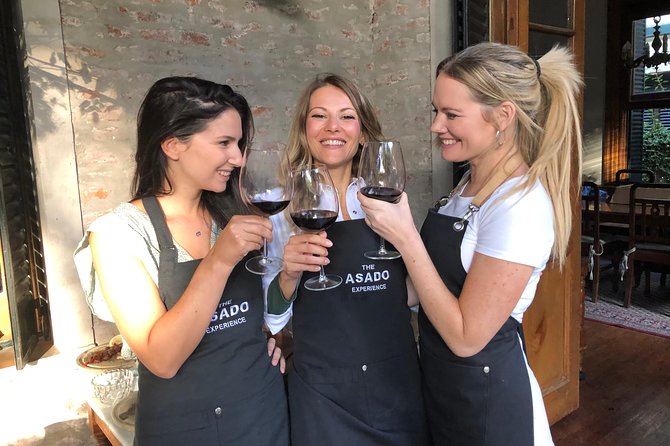
The setting is a major part of the appeal. This is not a purpose-built cooking studio with rows of workstations. You are welcomed into an old family home with a patio and an informal atmosphere. The house itself is attractive enough to be part of the evening, but the bigger benefit is the feeling of being received in someone’s home.
The hosts have included Belen, Lola, Sofia, Bernie, Paloma, Selmi, Panchi, Male, and Sofi. Names may vary by date, but the tone is consistent: warm, social, and eager to explain the food and customs. The experience is also run by women, which gives a fresh angle to a cooking tradition often presented as a male preserve.
More Food and Wine Tastings in Buenos Aires
- Local Foodie Adventure in Buenos Aires with Sherpa Food Tours
★ 5.0 · 6,875 reviews - Argentine Experience Interactive Dining and Cooking
★ 5.0 · 1,382 reviews - Cooking Class Designed by Michelin Chef @ Argentine Experience
★ 5.0 · 1,123 reviews
Starting with Choripan and chimichurri
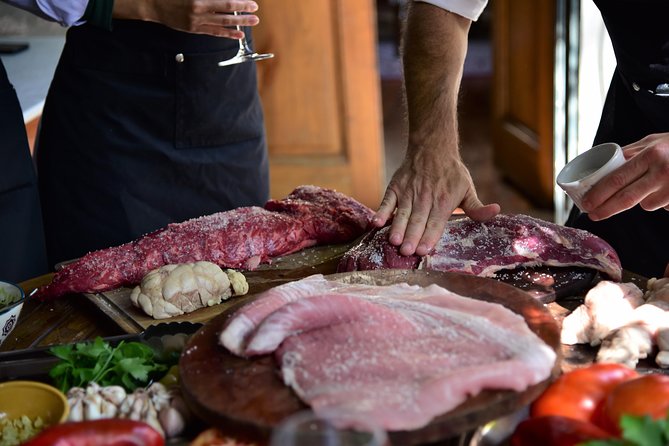
The evening begins with an introduction to the Parrilla, the Argentine grill, and to the way people in Argentina approach an asado. This is an important distinction. Asado is not simply meat placed over a hot grill. It involves the fire, the timing, the order of cooking, the cuts, the texture, and the relaxed social rhythm around the food.
You begin with Choripan, the beloved combination of grilled sausage and bread. The hosts explain how to season it and show you how to make chimichurri, the herb-based sauce that gives the sandwich its sharp, fresh lift. The lesson is useful because chimichurri is easy to recreate at home, and it gives you a practical memory to take beyond Buenos Aires.
This opening course also sets the pace. You are not rushed through a series of dishes. The food arrives as part of the conversation and instruction, with the fire doing much of the work in the background. The experience feels closer to learning a household ritual than attending a formal cooking class.
The Choripan is described as a premium version, so this is not just a small snack while you wait for dinner. It gives you an early taste of the quality level to come. If you are hoping to eat a large steak immediately, remember that the meal builds gradually.
Learning how Argentine fire cooking works
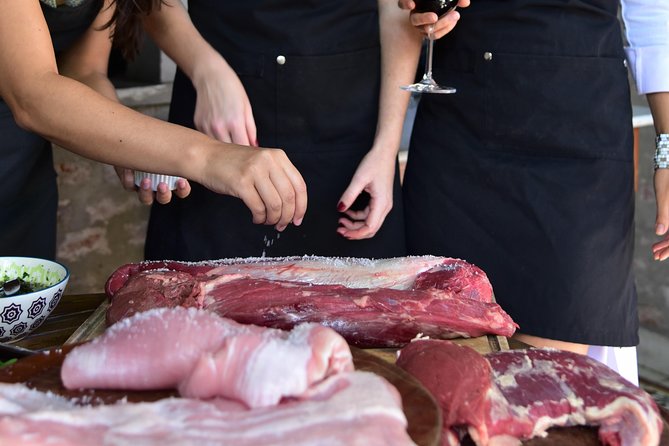
The most useful part for curious cooks is the explanation of the fire. You learn about cooking times, textures, and how to prepare different cuts to different degrees of doneness. The instruction is hands-on, although the available information does not promise that every participant will personally handle each stage of cooking.
I like this approach because it explains why Argentine barbecue tastes different from an ordinary backyard cookout. The hosts focus on control and patience rather than heavy seasoning or elaborate equipment. You begin to see the grill as the center of a social meal, not merely a machine for producing food.
The small group matters here. With a maximum of eight people, you have a better chance to hear the explanation, ask questions, and watch the grill master work. The intimate format also helps strangers talk to one another, which is part of the evening’s appeal. Several people describe meeting others from around the world and enjoying the easy conversation around the table.
This is not the right choice if you want a quiet, private dinner with no interaction. Even a private booking can involve personal conversation with the hosts, and the regular format is designed for sharing the meal with other people.
Morcilla, molleja, and pork matambrito
The middle part of the meal introduces cuts and preparations that many visitors may not order on their own. Morcilla is blood sausage, while molleja is sweetbread. Pork matambrito follows, adding another style of grilled meat to the progression.
These courses are valuable because they show the breadth of an asado. If you only eat tenderloin, you get a fine steak but miss the culture of the grill. Here, the less familiar items are treated as part of the meal’s identity, not as oddities placed on a plate for shock value.
Molleja can be a challenge if you are cautious about texture or offal. The tour does not claim to offer alternative dishes, so you should book with an open mind. You can appreciate the lesson even if one particular cut is not your favorite.
The hosts also explain how each item is cooked and what texture to expect. That guidance helps you approach the food with more confidence. Rather than guessing what you are eating, you have context for why it belongs on the Argentine grill.
A completely different kind of day:
- Buenos Aires City Private Tour with Local Guide
★ 5.0 · 3,475 reviews - Buenos Aires Small-Group City Tour
★ 5.0 · 2,226 reviews - Buenos Aires Hop-On Hop-Off Bus, Free Walking Tours & Discounts
★ 4.5 · 2,218 reviews - Buenos Aires: Piazzolla Tango Show with Optional Dinner
★ 4.4 · 2,122 reviews
The premium tenderloin arrives with vegetables
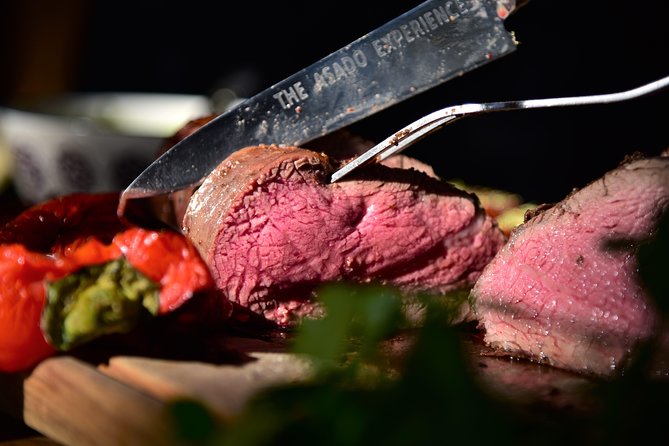
The main course is a premium cut of meat, identified as tenderloin, served with roasted vegetables. This is the part that justifies much of the price for steak lovers. The meat selection is described as plentiful and high quality, and the cooking is a central focus of the evening.
The goal is not simply to serve a large portion. The grill master explains how timing affects texture and how different levels of doneness can be achieved. You get a better sense of why a good steak depends on the cook as much as the cut.
Several details make the main course memorable. The meat is prepared in the open atmosphere of the house, the wine is already part of the table, and you have spent the earlier part of the evening learning how the meal comes together. By the time the tenderloin arrives, it feels like the result of a process rather than an isolated restaurant plate.
The meal can be generous. One person found the meat selection so plentiful that the group could not finish it all. That may be good news for hearty eaters, but it also means you should pace yourself. Save room for the later courses instead of treating the Choripan and earlier cuts as small samples.
Malbec and dulce de leche finish the evening
Argentine wine accompanies the meal, with Malbec as the natural star. Wine, water, and soda are included, according to the experience details. The pairing is not presented as a formal tasting course, but it adds to the sense of a complete Argentine dinner.
I like that the wine is built into the event rather than sold as an optional extra. You can enjoy it with the meat and use it as another way to understand the country’s food culture. If you do not drink alcohol, the inclusion of water and soda gives you alternatives.
Dessert is an Argentine dulce de leche preparation. The details of the exact dessert are not specified, but the sweet milk caramel flavor provides a fitting finish after the salty grilled meats. By this stage, you will likely be very full, so the dessert works best as a small final taste rather than another major course.
The three-hour length gives the evening enough room to breathe. A shorter event might cover the dishes but lose the social side. Here, the time allows food, explanation, wine, and conversation to share the same space.
What the $200 price really covers
At $200 per person, this is a premium experience. You are paying more than the cost of an ordinary Argentine dinner, even a very good one. The value comes from the combination of premium meat, wine, instruction, a private-home setting, and a small group.
I would compare it with the cost of booking a high-end meal plus a separate cooking class. That comparison makes the price easier to understand, because this evening combines both. You are not just buying tenderloin. You are paying for access to the family home, the hosts’ time, the fire lesson, the cultural explanation, and the complete progression of dishes.
The price will make the most sense if you care about food culture and want a personal evening. It may not suit you if your main goal is simply to eat the cheapest excellent steak in Buenos Aires. The city has many ways to enjoy beef for less.
The perfect audience includes couples, solo visitors, friends, and families with older children. A family group with teenagers enjoyed the evening, and the social format works well for solo participants who like meeting people. I would be less enthusiastic about booking it for very young children, since the supplied details do not describe child-specific activities or menus.
The small-group format and social side
The maximum of eight people is one of the strongest features. It is large enough to create conversation but small enough to keep the hosts involved. You may share the table with people from other countries, which adds an international note to a distinctly Argentine meal.
The hosts are not simply presenting food and disappearing into the kitchen. Their role includes explaining the cultural meaning of asado, answering questions, and sharing personal stories. That human contact is why the event feels more like an invitation into a home than a standard food tour.
The mood is relaxed, but you should still expect a structured evening. The cooking follows a sequence, from Choripan and chimichurri through the assorted cuts, main steak, wine, and dessert. The schedule gives the night shape without making it feel hurried.
If you prefer to keep to yourself, you can still enjoy the food, but the event is designed around conversation. The strongest moments come when the table starts talking and the meal becomes shared rather than merely served.
Practical details, weather, and cancellations
The experience lasts about three hours and returns to the meeting point at Blanco Encalada 3190. Confirmation is provided when you book, and the activity is near public transportation. It is commonly reserved well ahead, with an average booking lead time of about 40 days, so last-minute availability may be limited.
You can cancel for a full refund up to 24 hours before the start time. Changes or cancellations made inside that 24-hour window are not accepted for a refund. The cut-off follows local Buenos Aires time.
Weather is important because the activity requires good conditions. If poor weather forces cancellation, you are offered another date or a full refund. The same choice applies if the minimum number of participants is not met.
The meeting point is also the ending point, which keeps the logistics simple. Still, I would save the provider’s contact information, check the address before leaving your hotel, and arrive early enough to identify the entrance.
My call: book it for the culture, not only the steak
I recommend The Asado Experience if you want to understand how barbecue fits into Argentine life. The premium meat is a strong reason to go, but the real value comes from learning the fire, tasting less familiar cuts, making chimichurri, and sharing the meal in an old family home.
I would book it for a special evening in Buenos Aires, especially if you enjoy cooking, wine, and meeting people. The $200 cost is substantial, yet the small group, generous menu, included drinks, and personal hosting make it easier to defend than a standard restaurant bill.
Skip it if you want a quick meal, a low price, or a fully private dining room. For everyone else, this offers a warm and memorable way to meet Argentine food on its own terms. Book early, arrive with an appetite, and do not fill up on the first Choripan.
FAQ
Where does The Asado Experience take place?
It takes place at Blanco Encalada 3190, C1428 Cdad. Autónoma de Buenos Aires, in the Belgrano neighborhood of Buenos Aires.
How long does the experience last?
The experience lasts approximately three hours.
How many people can join?
The group has a maximum of eight participants.
What food is included?
The menu includes premium Choripan, chimichurri, morcilla, molleja, pork matambrito, a premium main cut identified as tenderloin, roasted vegetables, and an Argentine dulce de leche dessert.
Are drinks included?
Argentine wine is included, along with water and soda.
Does the experience end at the meeting point?
Yes. The activity ends back at Blanco Encalada 3190.
Can I cancel for a refund?
Yes. You can cancel at least 24 hours before the start time for a full refund. Cancellations or changes made less than 24 hours before the start time are not refunded.
Just added in Buenos Aires
- Photo Session in Buenos Aires★ 5.0 · 26 reviews
- Discover Buenos Aires’ independent art scene — Ticket included★ 5.0 · 30 reviews
- Your Private Photographer in Buenos Aires★ 5.0 · 4 reviews
- Yerba Mate Workshop – Learn to Drink Mate like a Local!★ 5.0 · 11 reviews
- Your Personal Photographer in Buenos Aires★ 5.0 · 24 reviews
- BA: Wine Tasting and Blending Experience in Palermo★ 5.0 · 1 review
- Winery and Tasting Experience in Buenos Aires★ 5.0 · 1 review
- Taste of Tradition: Yerba Mate & Alfajores Experience★ 4.0 · 5 reviews
Argentine Food and Wine Tastings, compared.
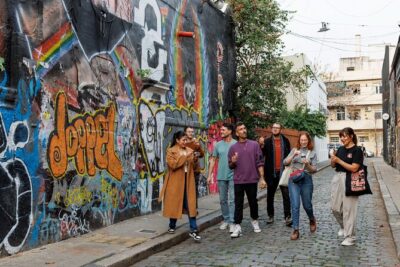
Local Foodie Adventure in Buenos Aires with Sherpa Food Tours
Read our review →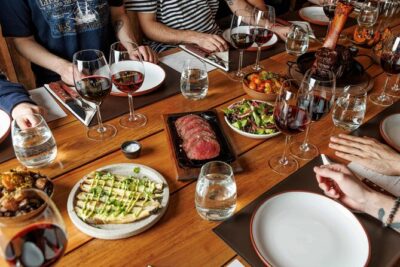
Argentine Experience Interactive Dining and Cooking
Read our review →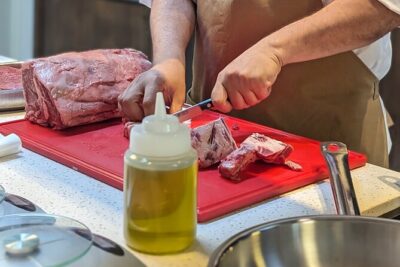
Cooking Class Designed by Michelin Chef @ Argentine Experience
Read our review →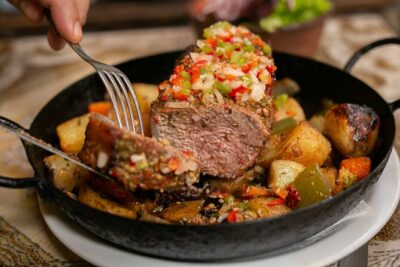
Historical Sherpa Food Tour of San Telmo with Street Food, Drinks
Read our review →
Join a Local Family Asado in Buenos Aires with Betty and Marcelo
Read our review →
Browse the lists this tour appears in