
Reviewed · BUENOS AIRES TOURS
Social History and Secrets of La Boca (pick up option)
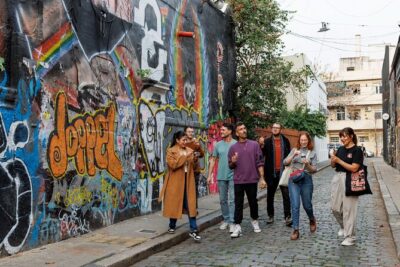
La Boca tells its story in color. This small-group walking tour with Paola De Luca connects immigrant life, local art, football, fire-fighting, and café culture in about two and a half hours. I like the mix of well-known sights and less obvious stops, especially the old fire station and the 1881 conventillo. I also like that you finish with coffee at Bar La Perla, a Notable Café where you can pause and talk rather than rush from one sight to the next.
The main trade-off is that several stops are brief, and the tour does not include entry to the Boca Juniors museum or the Museo Benito Quinquela Martín. You see La Bombonera from outside, and the fine-arts museum receives only a short explanation. Still, the group limit of 10 makes this a more personal way to understand La Boca than simply walking through Caminito with a camera.
In This Review
- Key points to know before booking
- Why La Boca needs more than a Caminito photo
- The transporter bridge and the working waterfront
- Inside Argentina’s first volunteer fire station
- Conventillo Historico 1881 and immigrant life
- La Bombonera from the outside
- Caminito, the open-air art center
- Coffee at Bar La Perla
- The school, church, and Quinquela’s story
- What the $35 price really gives you
- Timing, meeting point, and practical planning
- Who will enjoy this La Boca tour most
- Should you book Social History and Secrets of La Boca?
- FAQ
- How long does the Social History and Secrets of La Boca tour last?
- Where does the tour begin?
- Where does the tour end?
- Is coffee included?
- Does the tour enter La Bombonera?
- Are museum admissions included?
Key points to know before booking
- Small group, maximum 10 people: You get a better chance to ask Paola questions and keep the walk personal.
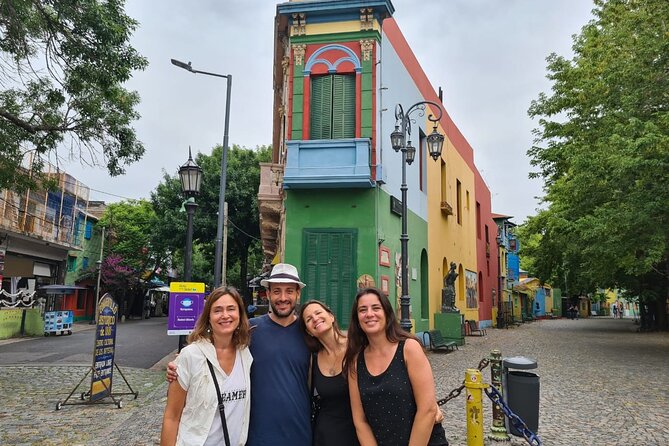
- La Boca beyond Caminito: The route puts the famous open-air street into its social setting, alongside a fire station, conventillo, school, church, and football stadium.
- Two worthwhile interior visits: Admission includes the Volunteer Fire Station museum and Conventillo Historico 1881.
- Coffee is part of the experience: Bar La Perla provides a proper pause and a look at the local café habit.
- A short, focused route: The tour lasts about 2 hours and 30 minutes, with the longest stop at the conventillo and café.
- Good value at $35: The price includes coffee or tea and both interior entries, though museum fans may want separate tickets elsewhere.
Why La Boca needs more than a Caminito photo
La Boca is often reduced to Caminito’s painted facades and tango poses. Those are real parts of the neighborhood, but they tell only the easiest chapter of the story. This route asks you to look at how working people, immigrants, artists, religious groups, football supporters, and emergency volunteers shaped the district.
That wider view is the tour’s strongest feature. You begin near Martín Rodríguez and Avenida Don Pedro de Mendoza, close to the Riachuelo, then work through several pieces of neighborhood life before finishing at Caminito. The sequence helps you understand why La Boca feels so different from other parts of Buenos Aires.
The mood is informal and conversational. A highly praised part of Paola’s guiding style is the space she gives you to ask questions. That matters here because La Boca brings together history, customs, personal stories, and local pride. A fixed speech would miss much of the point.
The tour also works well if you want a morning with some structure but not a full-day commitment. Most of the route is made up of short visits, with enough variety to keep the pace moving. You should expect walking and outdoor time, so comfortable shoes are sensible.
More History Tours in Buenos Aires
- Historical Sherpa Food Tour of San Telmo with Street Food, Drinks
★ 5.0 · 920 reviews - Nazis in Buenos Aires: a historical walking tour
★ 4.9 · 193 reviews - San Telmo: Historical Guided Tour with Street Food & Drinks
★ 5.0 · 87 reviews
The transporter bridge and the working waterfront
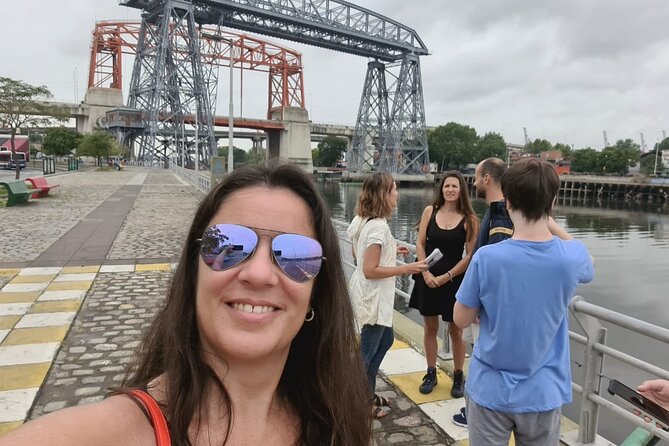
The first stop is the Puente Transbordador Nicolas Avellaneda, a distinctive transporter bridge. It is one of only eight such bridges still existing in the world, which gives the opening stop unusual weight.
You learn how the bridge worked and how it carried people and traffic across the water. The visit lasts about 10 minutes and does not require an admission ticket. Do not expect a long bridge visit or an interior tour. Its value is in the explanation and the view of an old piece of industrial transport.
This is a useful way to begin because it places La Boca beside its working waterfront rather than dropping you straight into its tourist center. The bridge helps explain the practical side of the neighborhood: movement, labor, trade, and access across the river.
If you enjoy engineering or urban history, you may wish the stop lasted longer. For most people, though, 10 minutes is enough to understand why this structure matters and to take in the setting before moving on.
Inside Argentina’s first volunteer fire station
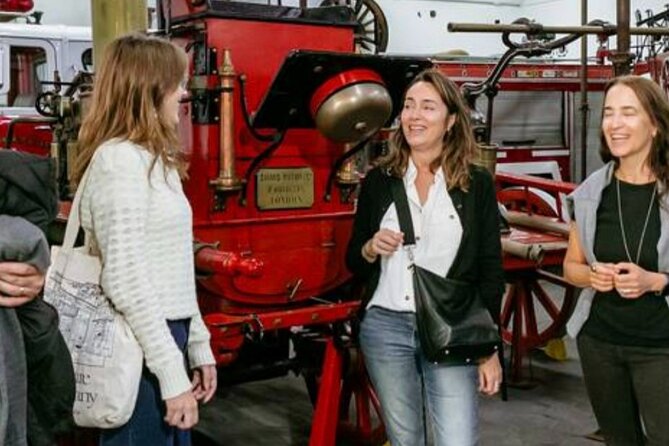
At the Plazoleta Bomberos Voluntarios de La Boca, the tour enters the country’s first Volunteer Fire Station. The included visit also covers a small museum with the first trucks used in the late 19th century.
This is one of the most distinctive stops because it gives you a direct look at community life. A fire station is not a grand monument, yet it tells you how residents organized themselves and protected one another. The early fire engines add a physical connection to that past.
The visit lasts about 15 minutes. That is enough time for a compact introduction, but not a slow museum study. If old machinery interests you, listen closely to the explanation and use the time well. The entry is included in the $35 price, so you do not need to budget an extra fee.
I especially like this stop for its local character. Caminito is polished for sightseeing. The firehouse feels more tied to the neighborhood’s day-to-day identity.
Conventillo Historico 1881 and immigrant life
The most substantial historical visit is the Conventillo Historico 1881, where you spend about 30 minutes. A conventillo was a tenement house, and this visit gives you a look at the type of shared housing associated with immigrant life in La Boca.
You also meet its artist owners. That detail changes the experience from a simple building visit into a conversation about how history is kept alive by people who live with it, work around it, and interpret it. The house is not just an old shell. It becomes a setting for stories about residents, art, and the neighborhood’s changing identity.
This is the stop where Paola’s conversational approach is most useful. You can ask about the building and its owners instead of only reading labels. The visit is included, and the half-hour timing gives it enough room to breathe.
You should keep your expectations realistic. This is a compact historical visit, not a large museum with extensive galleries. Its strength is the personal scale. You get a sense of how people shared space and how artists have helped preserve La Boca’s character.
For me, this is likely the best stop for anyone interested in social history. It explains more about the neighborhood than a row of colorful facades can do.
A completely different kind of day:
- Local Foodie Adventure in Buenos Aires with Sherpa Food Tours
★ 5.0 · 6,875 reviews - Buenos Aires City Private Tour with Local Guide
★ 5.0 · 3,475 reviews - Buenos Aires Small-Group City Tour
★ 5.0 · 2,226 reviews - Buenos Aires Hop-On Hop-Off Bus, Free Walking Tours & Discounts
★ 4.5 · 2,218 reviews
La Bombonera from the outside
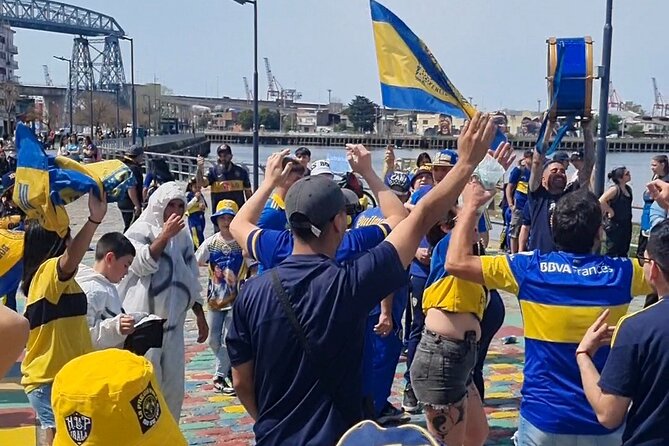
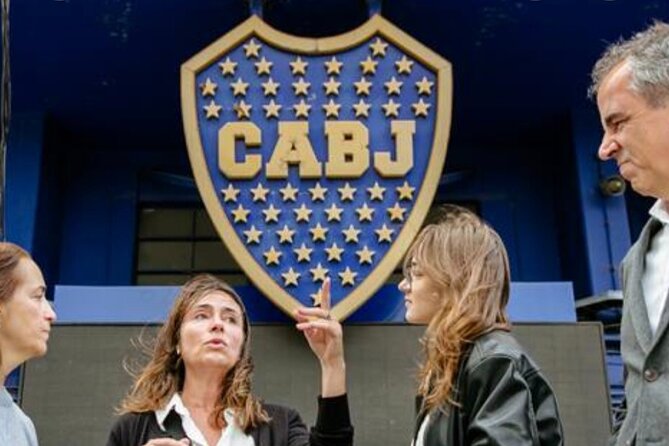
The next stop is Estadio Alberto J. Armando, better known as La Bombonera, the home of Boca Juniors. The tour spends about 15 minutes outside the stadium, discussing its history, customs, and football folklore.
You do not enter the stadium or the Boca Juniors museum on this tour. That limitation is important if you are booking mainly for football. You will get context and an exterior view, but not a stadium interior or museum collection.
For everyone else, the stop adds another layer to La Boca. Football here is not a side note. It is part of the neighborhood’s public identity and its local customs. Even a short explanation can help you see why the stadium matters to the area.
The outside visit also keeps the tour affordable and focused. A full stadium visit would take more time and require a different ticket. If you want both the neighborhood story and an interior football experience, you would need to arrange the museum separately.
Caminito, the open-air art center
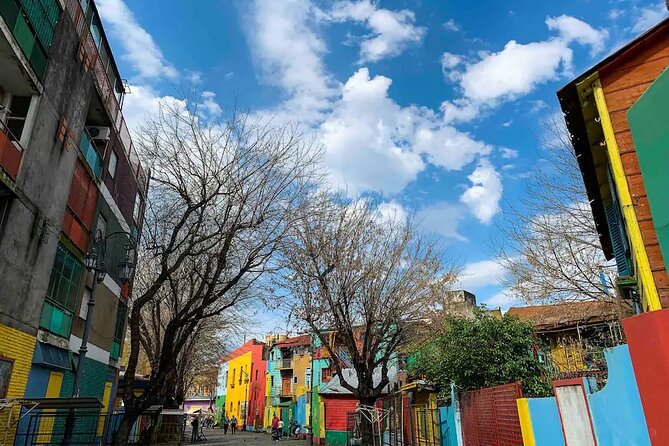
Caminito is the best-known part of La Boca, and this tour gives you about 20 minutes to walk through its open-air museum. The stop comes after the less polished, more social parts of the route, which is a smart choice.
You arrive at Caminito with context. The painted buildings and art displays are easier to appreciate when you have already heard about immigrant housing, local artists, community institutions, and football culture. Without that background, Caminito can feel like a colorful photo stop. With it, you can place the spectacle inside the neighborhood’s larger story.
Twenty minutes is enough for a guided walk and basic orientation, but not enough for an unhurried browse through every shop or gallery. If you want to linger, shop, or take many photographs, you may need extra time after the tour ends.
The tour finishes at Caminito, which is convenient. You do not have to retrace the route to the starting point. This also lets you continue exploring on your own, though the experience itself ends there.
Coffee at Bar La Perla
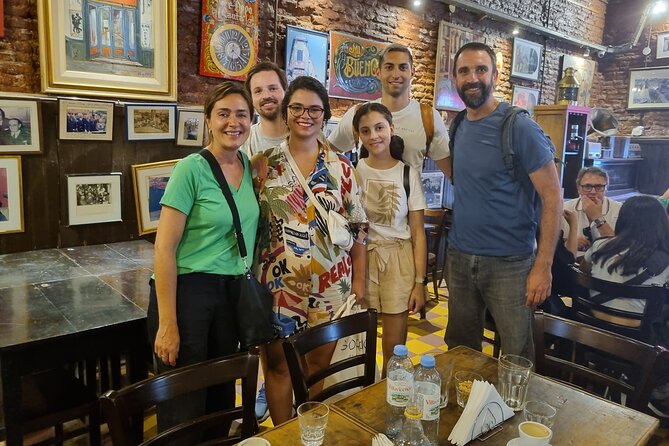
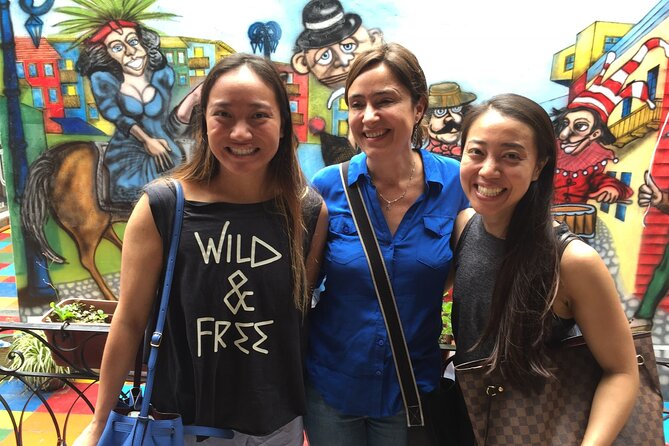
The longest stop is at Bar La Perla, where you spend about 40 minutes having coffee in the porteño style. Coffee or tea is included, and Paola treats you to a drink at this Notable Café.
This pause is more than a refreshment break. Buenos Aires café culture is part of the city’s social rhythm, and sitting down gives you time to talk through what you have seen. The coffee stop also creates room for questions, which is particularly useful after the fire station, conventillo, and stadium discussions.
The 40-minute timing makes the tour feel less mechanical. Many walking tours move from one point to another without giving you a chance to settle. Here, the café becomes part of the cultural lesson.
You should not expect a meal. The included item is coffee and/or tea, so plan separately if you need breakfast or lunch. Still, for a $35 tour, having a proper café stop included improves the value and gives the morning a pleasant change of pace.
The school, church, and Quinquela’s story
The route also includes a very short look at Colegio San Juan Evangelista, a Salesian school and church connected with the immigrants who arrived in La Boca. The stop lasts about three minutes and does not include admission.
Because it is so brief, treat this as a pointed explanation rather than a full visit. The school and church help show how religious and educational institutions became part of immigrant life in the neighborhood. You will not have time for an extended examination of the buildings.
The tour then introduces you to Museo Benito Quinquela Martín and the story of Quinquela, described as the father of La Boca. The allotted time is about 10 minutes, and admission to the fine-arts museum is not included.
This is another important limitation. You learn why Quinquela matters, but you do not tour the museum’s collection as part of the experience. If his work is a main reason for visiting La Boca, schedule a separate museum visit and allow more time.
The short introduction still has value. It gives you an artistic key for understanding the neighborhood before or after you walk through Caminito. Just do not mistake the exterior explanation for a museum tour.
What the $35 price really gives you
At $35 per person, this is reasonably priced for a 2.5-hour guided experience with a maximum of 10 people. The fee includes the coffee or tea at Bar La Perla, entry to the Volunteer Fire Station, and entry to Conventillo Historico 1881.
The value comes from access and interpretation, not from a long list of paid attractions. Two of the most unusual stops have included admission, and Paola’s presence ties them together. You are paying for a connected story rather than simply walking between free viewpoints.
The price is less attractive if your main goals are the Boca Juniors museum and Quinquela Martín’s fine-arts collection. Neither is included, and the stadium is viewed from outside. Add those costs and extra time to your plans if they matter to you.
The small group helps justify the price. With no more than 10 people, it should be easier to hear, ask questions, and keep the visit moving without the feel of a large coach group. The available rating is 4.7 out of 5, with 92 percent recommending the experience, a solid signal for a short neighborhood tour.
Timing, meeting point, and practical planning
The tour begins at Martín Rodríguez and Avenida Don Pedro de Mendoza, C1169 Buenos Aires. It ends at Caminito, C1166 Buenos Aires. That one-way arrangement is useful because you finish in the part of La Boca many people want to explore further.
The route is near public transportation, and most people can participate. The experience lasts approximately 2 hours and 30 minutes, though the stop timings add up to a schedule that may feel fairly full. Give yourself enough time to arrive at the starting point before the stated departure.
You should wear comfortable walking shoes and be ready for outdoor portions. The data provided does not give a detailed accessibility assessment, so if you have specific mobility needs, ask the provider before booking rather than guessing.
Confirmation normally arrives at booking. If you book within 17 hours of departure, confirmation comes as soon as possible and depends on availability. The tour also requires a minimum number of people, so a cancellation for that reason brings the choice of another date or experience, or a full refund.
Free cancellation is available up to 24 hours before the start time. After that point, the amount paid is not refunded, and changes made within 24 hours are not accepted.
Who will enjoy this La Boca tour most
I would recommend this experience to you if you want La Boca explained through ordinary places and local institutions, not just its famous street. It suits first-time visitors who want a clear introduction, as well as returning visitors who have already seen Caminito and want more context.
It is particularly good for:
- People interested in immigration and social history
- Visitors who enjoy small museums and personal stories
- Anyone curious about Buenos Aires café customs
- Football fans who want neighborhood background, even without stadium entry
- Art lovers who want an introduction to Quinquela and La Boca’s artists
- Solo visitors or couples who prefer a small group
It may be less suitable if you want a long museum visit, a stadium interior tour, or a photography walk with lots of free time. The schedule is varied but purposeful. You are guided from one place to the next, with only a limited amount of time to wander independently.
Should you book Social History and Secrets of La Boca?
Book it if you want to understand why La Boca is more than bright walls and football signs. The old transporter bridge, first volunteer fire station, 1881 conventillo, and café stop give you a rounded introduction to the neighborhood. Paola’s willingness to make room for questions is a real benefit, especially if you like a tour that feels like a conversation.
Skip it if you mainly want to enter La Bombonera or spend hours inside the Quinquela Martín museum. Those attractions are not part of the included program.
For $35, the tour offers a good balance of guided context, included admission, coffee, and a small group. I would book it when you want a focused morning in La Boca, then keep extra time afterward for Caminito or a separate museum visit.
FAQ
How long does the Social History and Secrets of La Boca tour last?
The tour lasts approximately 2 hours and 30 minutes.
Where does the tour begin?
It begins at Martín Rodríguez and Avenida Don Pedro de Mendoza in Buenos Aires.
Where does the tour end?
The tour ends at Caminito in La Boca.
Is coffee included?
Yes. Coffee or tea is included, and the tour includes a coffee stop at Bar La Perla, a Notable Café.
Does the tour enter La Bombonera?
No. The tour visits the exterior of Estadio Alberto J. Armando and discusses its history, customs, and folklore. Entry to the Boca Juniors stadium museum is not included.
Are museum admissions included?
Entry to Conventillo Historico 1881 and the Volunteer Fire Station is included. Entry to the Boca Juniors stadium museum and the Museo Benito Quinquela Martín fine-arts museum is not included.
Just added in Buenos Aires
- Discover Buenos Aires’ independent art scene — Ticket included★ 5.0 · 30 reviews
- Photo Session in Buenos Aires★ 5.0 · 26 reviews
- Your Private Photographer in Buenos Aires★ 5.0 · 4 reviews
- Yerba Mate Workshop – Learn to Drink Mate like a Local!★ 5.0 · 11 reviews
- Your Personal Photographer in Buenos Aires★ 5.0 · 24 reviews
- BA: Wine Tasting and Blending Experience in Palermo★ 5.0 · 1 review
- Winery and Tasting Experience in Buenos Aires★ 5.0 · 1 review
- Taste of Tradition: Yerba Mate & Alfajores Experience★ 4.0 · 5 reviews
Buenos Aires Tours, compared.
Local Foodie Adventure in Buenos Aires with Sherpa Food Tours
Read our review →
Buenos Aires City Private Tour with Local Guide
Read our review →
Buenos Aires Hop-On Hop-Off Bus and Exclusive Benefits
Read our review →

Argentine Experience Interactive Dining and Cooking
Read our review →Browse the lists this tour appears in