
Reviewed · ARGENTINE FOOD AND WINE TASTINGS
Small Group Tasting to Become a Mate Expert in Buenos Aires
Mate is Argentina in a cup. This 90-minute Buenos Aires workshop makes the country’s everyday drink easy to understand, showing you how yerba mate is grown, prepared, shared, and enjoyed.
I like the mix of hands-on tasting and cultural explanation. You do not simply watch someone prepare mate, you learn the steps yourself and try several blends, including flavored options such as chai. I also like the relaxed small-group format, with a maximum of 14 people and a host named Tomi, or Tomás, who is praised for his humor, patience, and clear answers.
The main consideration is time. The workshop covers origins, production, accessories, brewing, social customs, and several tastings in about an hour and a half. That keeps the session lively, but anyone wanting a full academic history of mate may find the cultural background a little brief.
In This Review
- Key points before you book
- Why mate deserves a place in your Buenos Aires plans
- Arriving at Tte. Benjamín Matienzo 1559
- The first lesson: yerba mate from plant to cup
- Comparing yerbas, gourds, cups, and straws
- Learning to prepare the perfect mate
- The social rules behind the straw
- What makes the guide, Tomi, important
- Is $29 good value for 90 minutes?
- Who will enjoy this Buenos Aires workshop?
- Practical details that affect your choice
- Should you book the mate tasting?
- FAQ
- Where does the mate workshop begin and end?
- How long does the experience last?
- How much does the experience cost?
- How many people can join the workshop?
- Can I attend if I do not speak Spanish?
- What will I taste during the workshop?
- What happens if I need to cancel?
Key points before you book
- Three or more mate styles to taste: Sample traditional and flavored yerba blends, then decide what suits your palate.
- Tomi leads the practical lesson: His friendly teaching style helps first-time drinkers and people who already prepare mate at home.
- You learn the cebador’s role: The workshop explains how to prepare, refill, and share mate as part of the Argentine ritual.
- Argentine sweets accompany the tasting: The snacks give you a pleasant break from the herbal, sometimes bitter flavor of yerba mate.
- A central cultural lesson in a small group: With no more than 14 participants, there is room for questions and conversation.
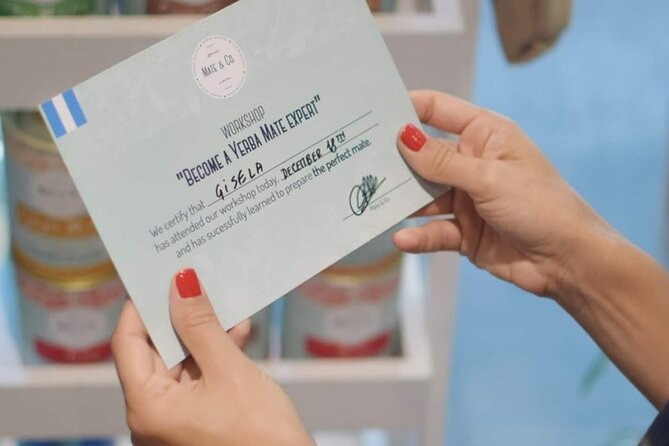
- You leave with a diploma and shop discounts: The certificate is a fun souvenir, while the discount can help if you want to take mate supplies home.
Why mate deserves a place in your Buenos Aires plans
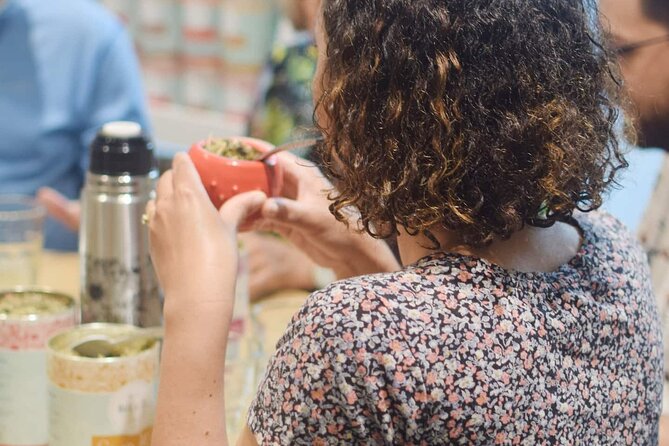
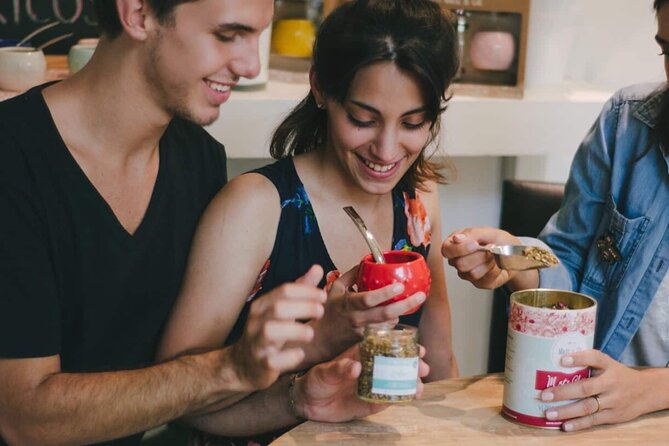
Mate is not just a hot drink. In Argentina, it is tied to friendship, family, conversation, and daily routine. A cup can circulate among people sitting together, with one person preparing and serving it in a particular order.
That social side is what makes this workshop useful. If you buy a gourd and straw on your own, you may understand the equipment but miss the etiquette. Here, the ritual is explained along with the drink itself, so you can recognize why the cebador, the person who prepares and serves the mate, matters.
I especially like this as an early Buenos Aires activity. It gives you a small piece of local knowledge that you can notice throughout the rest of your stay. You may see people carrying thermoses and mate gourds in parks, on public transport, or during a break, and the custom will make much more sense.
The class also works for different levels. If you have never tasted mate, you get a calm introduction rather than being handed a strong brew without context. If you already drink it, you can improve your technique, compare yerbas, and learn more about the cultural rules around sharing.
More Food and Wine Tastings in Buenos Aires
- Local Foodie Adventure in Buenos Aires with Sherpa Food Tours
★ 5.0 · 6,875 reviews - Argentine Experience Interactive Dining and Cooking
★ 5.0 · 1,382 reviews - Cooking Class Designed by Michelin Chef @ Argentine Experience
★ 5.0 · 1,123 reviews
Arriving at Tte. Benjamín Matienzo 1559
The workshop begins at Tte. Benjamín Matienzo 1559 in Buenos Aires, postal code C1426DAA. The address is near public transportation, which makes it a practical stop for visitors staying in the city, though you should allow enough time to find the exact entrance and arrive ready for the scheduled start.
The activity returns to the same meeting point. That is helpful because you do not need to plan a second pickup or learn your way to a different neighborhood at the end.
The location also shapes the experience. This is a focused workshop rather than a long city tour, so you are not spending time moving between sights. I would pair it with other plans in Buenos Aires, but I would avoid scheduling something that requires a rushed cross-city transfer immediately afterward.
Confirmation is provided at booking. Service animals are allowed, and the group can include up to 14 people. That maximum is small enough for a personal lesson, while still large enough to create the friendly, mixed setting that makes shared mate feel natural.
The first lesson: yerba mate from plant to cup
The opening portion explains what yerba mate means, where it comes from, and how it reaches the market. You learn about cultivation and harvesting, along with the production process that turns the plant into the dry mixture used for brewing.
This background matters because different yerbas can taste quite different. Some are more traditional, some are flavored, and some may have varying levels of intensity. Without this context, a tasting can feel like a string of similar green drinks. With it, you have a better way to compare what is in your cup.
The workshop also covers mate’s properties and its levels of consumption in Argentina and around the world. The point is not to turn the session into a science lecture. It is to help you place mate in everyday life, both inside Argentina and beyond it.
I would pay attention to the explanation of how mate is consumed. The drink has a particular method and a particular rhythm, and the way it is shared is as important as the ingredients. This is the part that turns a simple beverage lesson into a cultural activity.
One useful strength of the class is its openness to questions. Tomi is repeatedly praised for giving patient, detailed answers, even when a group has many questions. That makes a difference for beginners, who often need the same step explained twice before the ritual feels natural.
Comparing yerbas, gourds, cups, and straws
The next stage looks at the equipment. You learn about mate cups, straws, and related accessories, as well as the curing process for a traditional mate vessel.
The curing detail is easy to overlook, but it is useful if you plan to buy your own gourd. A new vessel is not always ready for immediate use in the same way as an ordinary mug. Learning about its preparation can save you from treating a special piece of equipment like a disposable souvenir.
You also hear about the different types of yerba available on the market. The workshop includes several blends for tasting, with traditional and flavored choices. One blend specifically praised in the class is chai, which may appeal if you find straight mate too sharp or herbal.
I like that the tasting is not limited to one supposedly perfect version. Taste is personal, and the chance to compare helps you discover if you prefer an original blend or something gentler and flavored. It also gives you a clearer idea of what to buy later.
If you already drink mate, this section may be the most valuable part of the experience. The workshop can help you identify what you like rather than buying a packet based only on attractive packaging. The class is also useful for families and groups with different tastes, since not everyone has to prefer the same blend.
A completely different kind of day:
- Buenos Aires City Private Tour with Local Guide
★ 5.0 · 3,475 reviews - Buenos Aires Small-Group City Tour
★ 5.0 · 2,226 reviews - Buenos Aires Hop-On Hop-Off Bus, Free Walking Tours & Discounts
★ 4.5 · 2,218 reviews - Buenos Aires: Piazzolla Tango Show with Optional Dinner
★ 4.4 · 2,122 reviews
Learning to prepare the perfect mate
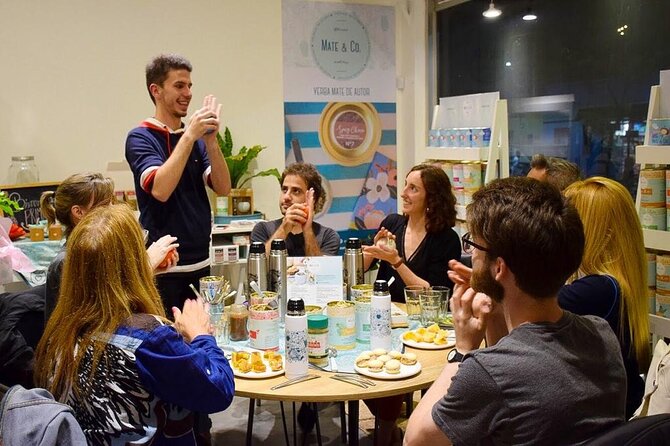
The practical lesson is the heart of the workshop. Tomi demonstrates how to prepare mate and then guides the group through the process of brewing and tasting.
The details include how to use the cup and straw, how to handle the yerba, and how the cebador serves the drink. The goal is not only to make a drink that tastes good. It is to understand the method well enough to repeat it at home and share it with friends.
For a first-time drinker, that guidance removes much of the uncertainty. Mate can look simple, but the arrangement of the yerba and the placement of the straw affect how it works. A short demonstration followed by tasting is more useful than a list of instructions in a guidebook.
The class also gives you a chance to try different blends prepared in the workshop. You can compare the taste, ask questions, and notice how your preference changes from one variety to the next. Typical Argentine sweets are served alongside the mate, adding a pleasant contrast to the drink’s earthy and sometimes bitter character.
I would not expect a restaurant-style meal. The sweets are there to accompany the tasting, not replace lunch. Plan to eat beforehand if you need a full meal, then treat the snacks as part of the lesson and a chance to reset your palate.
The social rules behind the straw
The workshop’s most memorable subject is the mate ritual. You learn why mate is shared, how the group participates, and why preparing the drink is more than a technical task.
This is where the class earns its cultural value. A casual visitor can easily think of mate as Argentina’s version of coffee or tea. It is certainly a drink, but the shared ritual carries its own manners and signals. Knowing that helps you participate with more confidence if someone offers you mate during your time in Argentina.
The session also explains the importance of the cebador. That person prepares the mate, serves it, and keeps the process moving. Watching the ritual in a friendly workshop gives you a safe place to ask about details that might feel awkward to question in a social setting.
I appreciate that the tone appears to be casual rather than formal. Tomi is described as funny, kind, welcoming, and a good storyteller. That matters because cultural etiquette is easier to remember when it is tied to a relaxed conversation rather than presented as a list of strict rules.
The group setting adds something, too. Mate is meant to be shared, and a workshop with people from different countries lets you practice that social quality right away. Families, couples, solo visitors, and friends can all take part without needing prior knowledge.
What makes the guide, Tomi, important
A lesson like this depends heavily on its host. The written material is useful, but the teacher determines if the session feels warm and practical or stiff and rushed.
Tomi, also referred to as Tomás, receives especially strong praise for his expertise, organization, patience, and sense of humor. He is described as an experienced cebador who can answer questions about preparation, history, and daily customs.
That combination is important. A specialist who only talks about taste might miss the cultural side. A guide who only explains tradition might not teach you how to prepare the drink. Tomi’s role brings both together.
The experience also appears to work well in English. English-speaking families specifically valued being able to follow the instruction, while the activity can also be checked for availability in Spanish. If your group includes mixed language abilities, confirm the language option when booking so everyone can follow the lesson comfortably.
I would expect some variation in the exact conversation because the group’s questions shape the session. That is a good thing for curious participants, though people who want a tightly scripted presentation may prefer a more formal class.
Is $29 good value for 90 minutes?
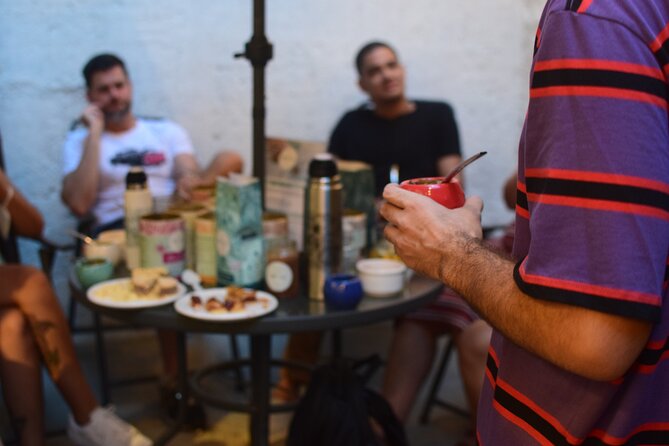
At $29 per person, this is a reasonable price for a specialized cultural activity in Buenos Aires. You receive instruction, several mate tastings, Argentine sweets, a participation diploma, and discounts at the shop afterward.
The value is strongest if you plan to buy yerba, a mate cup, or a straw. The shop discount may help offset part of the cost, though the exact savings are not specified. I would treat the discount as a useful extra rather than the reason to book.
The workshop also saves you from making several common beginner mistakes. You can taste before buying, learn the difference between blends, and see how the equipment is used. That practical advice has value beyond the 90-minute appointment, especially if you want to continue the ritual at home.
The price is less attractive if you already know how to prepare mate and have no interest in its cultural meaning. In that case, buying a drink or visiting a shop may be enough. But even experienced mate drinkers can pick up new information about yerbas, accessories, and the social ritual.
Who will enjoy this Buenos Aires workshop?
I would recommend it most strongly to first-time visitors who want a cultural activity that is short, social, and easy to fit into a city schedule. It is also a good choice for couples and families, including groups with college-age children, because everyone can taste and ask questions.
It suits solo visitors who enjoy meeting people in a small group. It also works well for anyone visiting Argentina through family connections and wanting a clearer understanding of a tradition they may already have seen at home.
The workshop is a good match for:
- People who have never tried mate
- Visitors who want to understand Argentine daily life
- Existing mate drinkers hoping to improve their preparation
- Families looking for an indoor cultural activity
- Anyone interested in taking yerba or mate equipment home
- English-speaking visitors who want a guided introduction
I would be less likely to recommend it to someone searching for a broad Buenos Aires history tour, a full meal, or a long, detailed lecture on South American agriculture. The focus is narrow by design: yerba mate, its preparation, its varieties, and its place in Argentine culture.
Practical details that affect your choice
The experience lasts approximately one hour and 30 minutes. That makes it easy to place between sightseeing plans, but do not forget to include travel time to and from Tte. Benjamín Matienzo 1559.
The maximum group size is 14 people. That is a useful balance. You get the energy of a shared activity without the scale of a large coach group, and the guide has a better chance of answering individual questions.
Free cancellation is available up to 24 hours before the start time for a full refund. Changes or cancellations made less than 24 hours before the activity are not accepted for a refund, and the cut-off follows local Buenos Aires time.
The activity requires a minimum number of participants. If it cannot run because that minimum is not met, you are offered another date or experience, or a full refund. I would keep that in mind when planning a tightly timed final day in the city.
Availability can be checked in Spanish as well. Service animals are allowed, and the meeting point is near public transportation, though the supplied details do not specify a particular station or route.
Should you book the mate tasting?
I would book this if you want more than a quick taste and would like to understand why mate matters in Argentina. The combination of Tomi’s friendly instruction, several blends, local sweets, and a real lesson in the ritual gives you something you can carry into the rest of your trip.
The best reason to go is not the diploma, although it makes a cheerful souvenir. The real payoff is leaving able to recognize the equipment, prepare mate with more confidence, choose a blend, and understand the social meaning behind the shared cup.
Skip it if your schedule is packed or if you have no interest in hot herbal drinks. For most visitors, though, $29 buys a useful, personal introduction to one of Argentina’s defining everyday customs, without taking half a day away from Buenos Aires.
FAQ
Where does the mate workshop begin and end?
It begins at Tte. Benjamín Matienzo 1559, C1426DAA, in Buenos Aires. The activity ends back at the same meeting point.
How long does the experience last?
The workshop lasts approximately one hour and 30 minutes.
How much does the experience cost?
The listed price is $29 per person.
How many people can join the workshop?
The activity has a maximum of 14 participants.
Can I attend if I do not speak Spanish?
Availability can be checked in Spanish, and the experience has been described as accessible to English-speaking participants. Confirm the language option when booking.
What will I taste during the workshop?
You will taste several mate blends, including traditional and flavored options, and the tasting is served with typical Argentine sweets.
What happens if I need to cancel?
You can cancel up to 24 hours before the start time for a full refund. Cancellations or changes made less than 24 hours before the start time are not accepted for a refund.
Just added in Buenos Aires
- Discover Buenos Aires’ independent art scene — Ticket included★ 5.0 · 30 reviews
- Photo Session in Buenos Aires★ 5.0 · 26 reviews
- Your Private Photographer in Buenos Aires★ 5.0 · 4 reviews
- Yerba Mate Workshop – Learn to Drink Mate like a Local!★ 5.0 · 11 reviews
- Your Personal Photographer in Buenos Aires★ 5.0 · 24 reviews
- BA: Wine Tasting and Blending Experience in Palermo★ 5.0 · 1 review
- Winery and Tasting Experience in Buenos Aires★ 5.0 · 1 review
- Taste of Tradition: Yerba Mate & Alfajores Experience★ 4.0 · 5 reviews
Argentine Food and Wine Tastings, compared.
Local Foodie Adventure in Buenos Aires with Sherpa Food Tours
Read our review →
Argentine Experience Interactive Dining and Cooking
Read our review →
Cooking Class Designed by Michelin Chef @ Argentine Experience
Read our review →
Historical Sherpa Food Tour of San Telmo with Street Food, Drinks
Read our review →
Join a Local Family Asado in Buenos Aires with Betty and Marcelo
Read our review →
Browse the lists this tour appears in