
Reviewed · BUENOS AIRES TOURS
Recoleta in Depth (not literally) Private Walking Tour
Recoleta hides a city inside its cemetery. This private walk links Recoleta Cemetery with more than 25 nearby landmarks, including Evita Perón’s mausoleum, the National Library, and Palermo’s giant metallic flower. I like the way it treats the neighborhood as more than a stop for famous graves. I also like the unusual mix of art, politics, architecture, tango, and Argentine history.
The main consideration is language: the live guide speaks Spanish, and the walk continues in rain or shine. You need at least two participants, and the route covers a lot of ground, so this suits you best if you enjoy walking and want a broad, story-filled introduction rather than a slow museum visit.
In This Review
- Key points to know before booking
- Starting at La Biela, Buenos Aires’ classic meeting point
- Two and a half hours among Recoleta’s marble tombs
- Evita’s mausoleum and the politics of memory
- Nuestra Señora del Pilar and Recoleta’s change of fortunes
- Five-minute break, then a long walk toward Palermo
- Art, tango, and public spaces along the route
- From the Centennial Monument to Floralis
- Brutalist concrete and Evita’s unfinished memorial
- Palermo Chico and the city’s grand addresses
- San Martin, antique cars, and the final stretch
- What $199 means for a private group of three
- Weather, language, and practical planning
- Who will get the most from this walk?
- Should you book Recoleta in Depth?
- FAQ
- Where does the tour begin?
- How long does the tour last?
- What is included in the price?
- How much does the tour cost?
- Is hotel pickup available?
- What language is the tour conducted in?
- Is the tour private?
- Are food and drinks included?
- What happens if it rains?
Key points to know before booking
- Evita’s mausoleum gets proper context, with attention to her life, public image, and the unfinished memorial nearby.
- The cemetery visit lasts about 2.5 hours, giving you time to look beyond the most famous tombs.
- The route continues from Recoleta to Palermo, linking landmarks that are easy to miss on your own.
- Architecture is a major part of the experience, from a former Jesuit monastery to brutalist concrete and a palace turned museum.
- The tour costs $199 per private group of up to three, making the value strongest for a small party sharing the fee.
- The guide speaks Spanish, and the tour requires a minimum of two participants.
Starting at La Biela, Buenos Aires’ classic meeting point
The tour begins at the corner door outside La Biela, the famous cafe in Recoleta. Your guide carries a small sign, which makes the meeting point easier to spot than a vague instruction to wait somewhere near the plaza.
This is a useful starting place because La Biela puts you right in the heart of the neighborhood. You do not waste time crossing the city before the tour begins. After meeting your guide, you head toward Recoleta Cemetery and begin with one of Buenos Aires’ most memorable places.
The experience is private, so the pace can feel more personal than a large group walk. The available information does not promise a customized route, but a private group of up to three usually makes it easier to hear the guide and ask questions as the stories unfold.
More Walking Tours in Buenos Aires
- Buenos Aires Hop-On Hop-Off Bus, Free Walking Tours & Discounts
★ 4.5 · 2,218 reviews - Buenos Aires: La Boca Guided Walking Tour in English
★ 4.8 · 1,587 reviews - La Boca Walking Tour
★ 5.0 · 1,029 reviews
Two and a half hours among Recoleta’s marble tombs
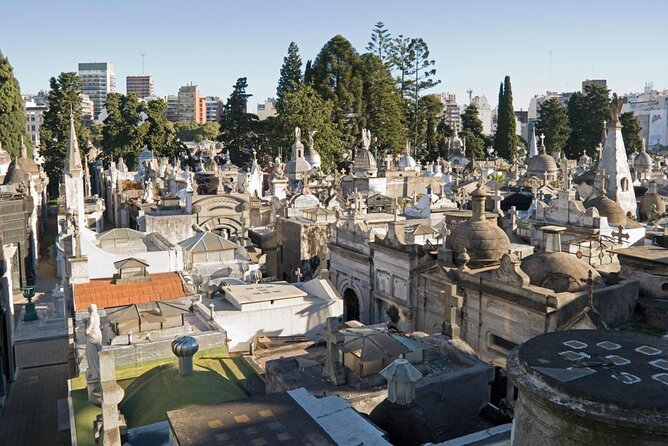
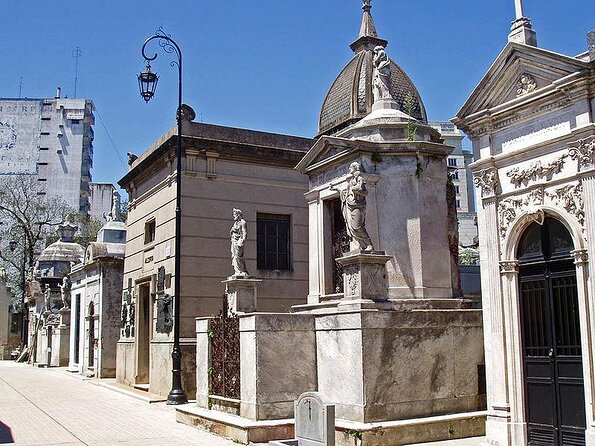
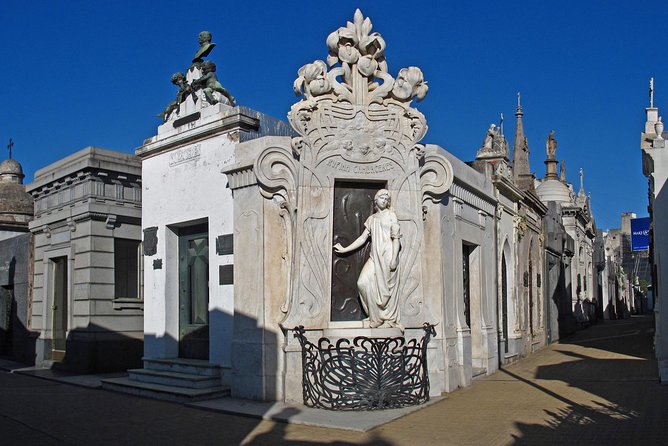
Recoleta Cemetery is the central part of the tour. It is not simply a place to locate Evita’s grave, take a photograph, and leave. The cemetery is a compact city of family mausoleums, narrow paths, statues, grand facades, and crowded memories.
An in-depth cemetery visit can help you understand how Argentina’s elite once displayed status. The tombs are built like small houses, chapels, and monuments. Their size and decoration reflect a period when powerful families wanted their names and social rank written into the city itself.
The phrase in depth, not literally is a useful warning. You are not going underground or entering hidden catacombs. The point is a detailed look at the cemetery’s stories and design, with plenty of walking through its above-ground paths.
The cemetery portion is listed at roughly 2.5 hours. That is a substantial block of time, especially if you prefer to stop often and listen. It also means this is not the right choice if you want a quick ten-minute cemetery visit before lunch.
Evita’s mausoleum and the politics of memory
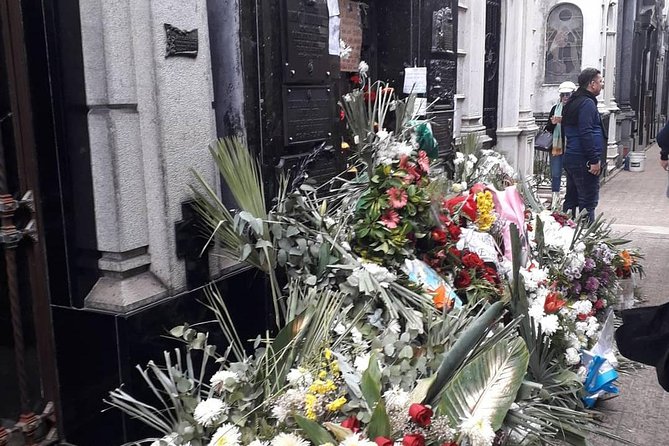
Eva Perón’s mausoleum is the most famous stop. Her resting place is tucked into the Duarte family mausoleum, a setting that carries its own importance. The tour explains Evita’s story rather than treating her grave as an isolated celebrity sight.
That context matters. Evita remains one of Argentina’s most powerful political and cultural figures, admired by some and fiercely criticized by others. A good explanation can help you understand why her name appears so often in Buenos Aires and why the cemetery attracts such strong interest.
The walk also includes Evita’s unfinished memorial and its notably uncomfortable location. The reference to an itchy location hints at a political story rather than a simple architectural oddity. You get a chance to connect Evita’s public image with the country’s conflicts, changing governments, and uneasy treatment of national symbols.
This is one of the strongest reasons to choose a guide instead of walking through the cemetery alone. You can see the mausoleum by yourself, but the meaning behind it is harder to grasp without background.
Nuestra Señora del Pilar and Recoleta’s change of fortunes
The visit to Nuestra Señora del Pilar Church adds an older religious layer to the neighborhood. It also connects with the story of Recoleta itself, described here as a transformation from rags to riches.
That change gives the neighborhood more depth. Recoleta is now associated with grand buildings, museums, expensive addresses, and the cemetery, but its identity developed over time. The tour uses its streets and institutions to show how the district moved from a less privileged past toward elite status.
I like this part because it keeps the walk from becoming a parade of famous names. You are not only checking off buildings. You are following the social history of a district through its church, cemetery, public institutions, and grand residences.
A completely different kind of day:
- Local Foodie Adventure in Buenos Aires with Sherpa Food Tours
★ 5.0 · 6,875 reviews - Buenos Aires City Private Tour with Local Guide
★ 5.0 · 3,475 reviews - Buenos Aires Small-Group City Tour
★ 5.0 · 2,226 reviews - Buenos Aires: Piazzolla Tango Show with Optional Dinner
★ 4.4 · 2,122 reviews
Five-minute break, then a long walk toward Palermo
After the cemetery tour, the itinerary includes a five-minute break. That is enough to pause, regroup, and perhaps drink water you bring with you, but it is not a meal stop.
Food, snacks, and drinks are not included. Plan ahead, especially because the route continues beyond Recoleta. The short break should not be treated as a full rest period or a chance to find lunch.
From there, the walk heads toward nearby Palermo. This is where the tour becomes a broad city walk, taking in museums, monuments, unusual buildings, and neighborhoods. The exact total walking time is not clearly stated, so you should be prepared for a full sightseeing day rather than a short local stroll.
Art, tango, and public spaces along the route
Several stops connect Buenos Aires’ cultural life with its buildings. The Buenos Aires Exhibition Center is presented through the old Roman idea of bread and circuses, a way of thinking about public entertainment and civic distraction.
The Palais de Glace brings in the history of tango. That is a welcome change of subject after cemetery architecture and political history. Tango is not treated as a separate evening show here. Instead, you get a sense of how music, dance, and fashionable public life shaped the city.
The Buenos Aires Design Center occupies a revamped old Jesuit monastery. This pairing of old religious architecture and modern design is typical of the route. You are shown how Buenos Aires often gives historic structures new uses rather than leaving them frozen in the past.
The National Gallery of Art adds another stop with an unusual history. The supplied details do not explain the full story, so you should expect the guide to supply the context during the visit rather than rely on the building alone.
From the Centennial Monument to Floralis
The Centennial Monument is described as a present from France to Argentina. That small detail opens a larger subject: Buenos Aires’ long connection with European culture, diplomacy, and architectural influence.
The route then reaches the Floralis Monument, the giant metallic flower. It is one of the most recognizable modern sights in this part of the city, with broad metal petals that make a strong contrast to Recoleta’s stone mausoleums and old churches.
This transition is one of the walk’s best features. You move from cemetery sculpture to public monuments, then from historic buildings to large modern forms. You get a city lesson through visual contrasts instead of a string of unrelated dates.
Brutalist concrete and Evita’s unfinished memorial
The National Library is included for its brutalist architecture. The description is refreshingly direct about the style. You should not expect a delicate colonial facade here. The building’s massive concrete form is meant to provoke a reaction.
Architecture fans will get the most from this section, but even if you are not an architecture specialist, the stop helps explain how Buenos Aires contains very different ideas about beauty. Ornate palaces, religious buildings, modern sculpture, and raw concrete all appear within the same extended walk.
The ATC buildings add a political layer. Their story touches on dictatorships and River Plate, suggesting a link between media, state power, and one of Argentina’s most important sports rivalries. The details are not fully set out in advance, which makes the guide’s explanation especially important.
The unfinished Evita memorial fits this section well. It is not just another statue. Its incomplete state and awkward setting reflect the difficulty of agreeing on how political figures should be remembered.
Palermo Chico and the city’s grand addresses
The route enters Barrio Palermo Chico, a district known for its spacious streets, formal buildings, and high-end residential character. The shift from Recoleta to Palermo lets you compare two affluent parts of Buenos Aires rather than treating them as one uniform area.
The Errázuriz Palace, now the Decorative Arts Museum, adds one of the tour’s grandest interiors and exteriors. The former palace gives you a look at the taste and social world of a wealthy Argentine family. Because it is now a museum, the building also shows how private luxury can become public culture.
The Chrysler Building, also called Alcorta Palace, comes with one of the route’s strangest details: a racetrack on top. That is exactly the kind of fact that can make a city walk memorable. It turns an ordinary-looking building into a clue about old entertainment, wealth, and urban ambition.
The MALBA, or Museum of Latin American Art of Buenos Aires, brings the route into modern and contemporary Latin American art. The tour does not list an included museum admission, so treat this as an exterior or contextual stop unless your guide confirms otherwise.
San Martin, antique cars, and the final stretch
General San Martin’s House adds another national figure to the walk. The description links the stop with keeping up the appearances, suggesting a story about public image, reputation, and how important figures are presented.
The Argentine Automobile Club and its antique cars museum shift the mood again. After politics, religion, tango, and art, you get a look at motoring culture and old vehicles. It is a fitting stop for anyone who enjoys mechanical design or unusual city collections.
The list of sights ends with and much more, but you should not read that as a promise that every building receives a long interior visit. The tour’s strength is the range of subjects and the connections between them. You see a lot, hear a lot, and move through several neighborhoods.
That range is also the main tradeoff. If you want to spend an entire afternoon inside one museum, this route may feel too scattered. If you want a guided overview that helps you notice buildings and stories you could easily pass, the variety works in its favor.
What $199 means for a private group of three
The price is $199 per group of up to three people. For one person, that is expensive. For three people sharing the fee, it works out to about $66.33 each, before any additional costs.
That price includes entry to Recoleta Cemetery and the private guided walk. It does not include food, snacks, drinks, or any other admission not specifically included. Downtown hotel pickup is available for an additional $20, which may be useful if you prefer not to make your own way to La Biela.
The value depends on how much you want from the guide. You are paying for a private Spanish-language explanation across a large number of landmarks, not just for access to the cemetery. A small group that enjoys history, architecture, and political stories is more likely to find the price worthwhile.
The current rating is five stars, with the guide described as friendly and informative. That praise fits the tour’s design: its success depends heavily on the guide’s ability to connect many subjects without losing you along the way.
Weather, language, and practical planning
The tour runs rain or shine. Bring suitable clothing and shoes, and do not assume that a rainy day will shorten the walk. Since food and drinks are not supplied, carry what you need for the route.
The live guide speaks Spanish. If you do not understand Spanish well, this is a serious point to consider because the experience depends on spoken explanations. The supplied information does not indicate that an English-language guide is available.
You can cancel up to 24 hours before the start for a full refund, and you can reserve now and pay later. The activity is valid for one day, with start times based on availability. You should also note the minimum of two participants, so a solo booking is not supported under the stated conditions.
Who will get the most from this walk?
I would choose this for a small party that wants to connect the famous Recoleta Cemetery with the wider city. It suits you if Evita, Argentine politics, architecture, museums, monuments, and neighborhood change all sound worthwhile.
It is also a good fit if you prefer asking questions as you go. The private format gives you a better chance to clarify a political reference, pause at an unusual building, or ask why a particular monument matters.
I would hesitate if you want a short, easy outing, an English-language tour, or a food-focused experience. The five-minute break is brief, and the route appears designed for walkers who can handle a long day outdoors.
Should you book Recoleta in Depth?
Book it if you want more than Evita’s grave and a quick look at the cemetery. The combination of Recoleta Cemetery, Nuestra Señora del Pilar, the Floralis Monument, Palermo Chico, palace architecture, brutalist concrete, tango history, and political landmarks gives you a useful view of Buenos Aires’ competing personalities.
Skip it if Spanish is a barrier or if you prefer to explore one museum at a time. For two or three people who share the $199 group price, the private format offers solid value, especially when the guide is as friendly and informative as the available rating suggests.
FAQ
Where does the tour begin?
It begins at the corner door outside La Biela Cafe in Recoleta. The guide will be holding a small sign.
How long does the tour last?
The activity is valid for one day, and the guided Recoleta Cemetery portion lasts about 2.5 hours. The full walk continues toward Palermo, but the exact total walking time is not specified.
What is included in the price?
The price includes entry to Recoleta Cemetery and a private walking tour covering more than 25 landmarks between Recoleta and nearby Palermo.
How much does the tour cost?
It costs $199 per private group of up to three people.
Is hotel pickup available?
Yes. Pickup is available from downtown hotels for an additional $20.
What language is the tour conducted in?
The live tour guide speaks Spanish.
Is the tour private?
Yes. It is offered as a private group experience for up to three people.
Are food and drinks included?
No. Food, snacks, and drinks are not included.
What happens if it rains?
The tour operates rain or shine, so you should be prepared for walking in wet weather.
Just added in Buenos Aires
- Discover Buenos Aires’ independent art scene — Ticket included★ 5.0 · 30 reviews
- Photo Session in Buenos Aires★ 5.0 · 26 reviews
- Your Private Photographer in Buenos Aires★ 5.0 · 4 reviews
- Yerba Mate Workshop – Learn to Drink Mate like a Local!★ 5.0 · 11 reviews
- Your Personal Photographer in Buenos Aires★ 5.0 · 24 reviews
- BA: Wine Tasting and Blending Experience in Palermo★ 5.0 · 1 review
- Winery and Tasting Experience in Buenos Aires★ 5.0 · 1 review
- Taste of Tradition: Yerba Mate & Alfajores Experience★ 4.0 · 5 reviews
Buenos Aires Tours, compared.
Local Foodie Adventure in Buenos Aires with Sherpa Food Tours
Read our review →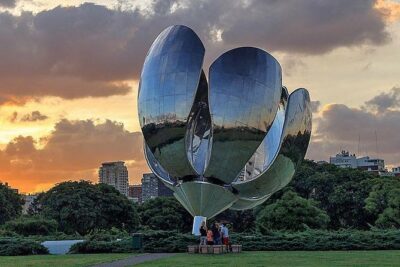
Buenos Aires City Private Tour with Local Guide
Read our review →
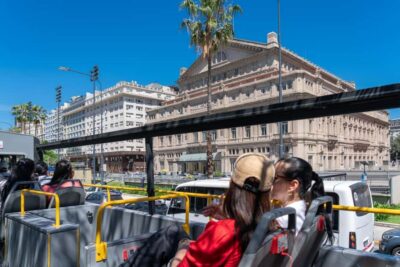
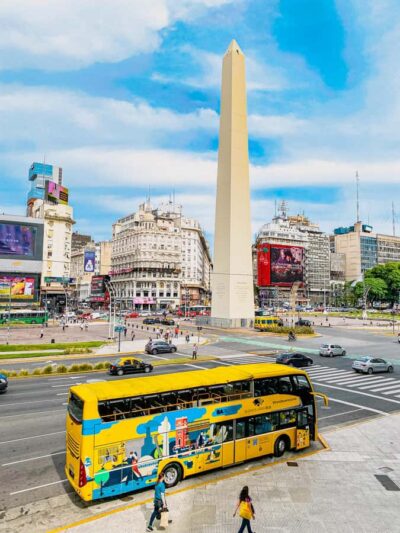
Buenos Aires Hop-On Hop-Off Bus and Exclusive Benefits
Read our review →

Argentine Experience Interactive Dining and Cooking
Read our review →Browse the lists this tour appears in