
Reviewed · BUENOS AIRES TOURS
Private Jewish Heritage Tour in Buenos Aires
Buenos Aires carries its Jewish story in plain sight. This private three-hour tour links the city’s oldest synagogue, two important museums, and the AMIA community center, giving you a focused look at immigration, faith, memory, and survival. I especially like the private format, which lets your guide adjust the conversation to your interests, and the included hotel pickup and drop-off, a real help in a city where traffic can eat up time. The main caution is cost: at $166 per person, plus required donations, this is a serious spend for three hours.
The tour earns a strong 4.8 rating from 16 published ratings, with 94 percent recommending it. Guides including Matias, Ariel, Axel, Eli, and Patricia receive repeated praise for clear English, warmth, and strong subject knowledge. Still, one unhappy guest felt the program offered too little for the price, so your satisfaction will depend on how much you value private access and historical interpretation.
In This Review
- Key points to know before booking
- Why Buenos Aires makes a strong Jewish heritage stop
- The Jewish Museum beside Templo Libertad
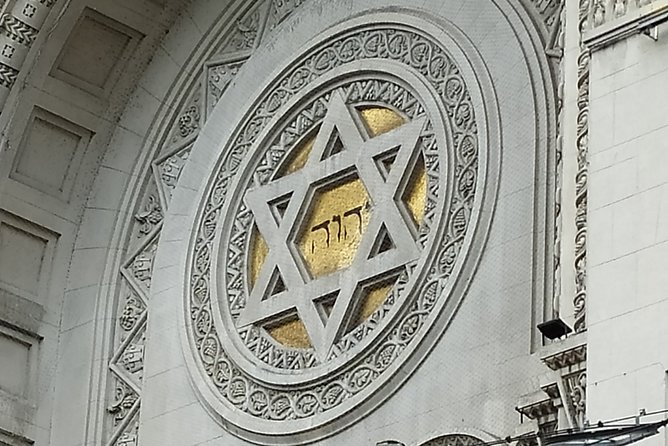
- Templo Libertad and the oldest synagogue in Argentina
- The Museo del Holocausto and the weight of evidence
- AMIA, memory, and a community rebuilt
- The route, car, and three-hour pace
- What the $166 price really buys
- Who will get the most from this experience
- Practical planning for a smoother morning
- Should you book the private Jewish heritage tour?
- FAQ
- How long is the private Jewish heritage tour?
- What sites does the tour visit?
- Is hotel transportation included?
- Are admission fees and donations included?
- Can the tour operate on weekends or holidays?
- Do I need to bring my passport?
Key points to know before booking
- Four sites in about three hours: You visit the Jewish Museum, Museo del Holocausto, Templo Libertad, and AMIA.
- Private vehicle and guide: Your group travels with a local guide, hotel pickup, and hotel drop-off included.
- Required donations cost extra: Each institution requires a donation, with the amount set at the start. Bring at least $25 per person, and be prepared for the possibility of more.
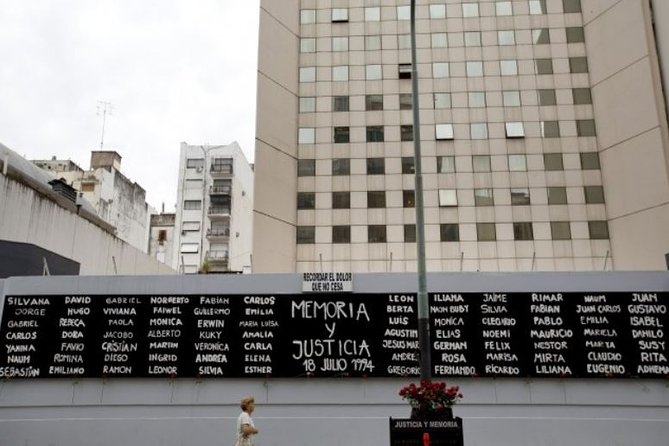
- A moving look at AMIA: The tour addresses the 1994 bombing, its 85 deaths, and the community’s rebuilding.
- The oldest synagogue in Argentina: Templo Libertad dates to the earliest period of Jewish institutional life in Buenos Aires.
- Weekday planning matters: The main institutions close on weekends and holidays, and you must carry a valid passport.
Why Buenos Aires makes a strong Jewish heritage stop
Buenos Aires has one of Latin America’s major Jewish communities, and this tour gives you several ways to understand it. You are not simply looking at an old building or a memorial. The route connects immigrant settlement, religious practice, European Jewish life, the Holocaust, terrorism, and the daily work of maintaining a community.
That range is the tour’s best feature. At one moment you are looking at Torah scrolls or synagogue architecture. Soon after, you are confronting photographs from the Warsaw ghetto or learning about the 1994 attack on AMIA. The subject is often difficult, but the route has a clear purpose: it shows both loss and continued community life.
The private setup matters here. With only your own group, you can ask direct questions without worrying about slowing down a larger party. Guides such as Matias, Ariel, Axel, Eli, and Patricia have been praised for making the subject personal without losing the historical facts.
The pace is brisk. Each listed stop allows about 20 minutes, which leaves time for driving and transitions. That is enough for an overview, not enough for a slow museum visit. If you want to read every panel or spend a long time in prayer spaces, you may wish the tour had another hour.
More History Tours in Buenos Aires
- Historical Sherpa Food Tour of San Telmo with Street Food, Drinks
★ 5.0 · 920 reviews - Nazis in Buenos Aires: a historical walking tour
★ 4.9 · 193 reviews - San Telmo: Historical Guided Tour with Street Food & Drinks
★ 5.0 · 87 reviews
The Jewish Museum beside Templo Libertad
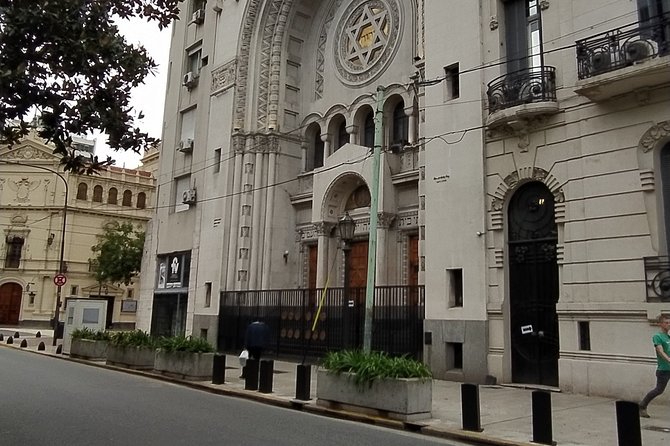
The Jewish Museum of Buenos Aires opened in 1967 through the work of Dr. Salvador Kibrick, a member of the Israeli Congregation of the Argentine Republic. That congregation dates to 1862 and is identified as the first Jewish institution in Argentina.
The museum sits beside Templo Libertad, which gives the opening stop an immediate sense of place. You begin with the arrival and settlement of Jewish immigrants, then move toward traditions and the Jewish colonies established in Argentina. The museum’s permanent collection changes in conversation with the present, so the aim is not simply to preserve objects behind glass.
I like this first stop because it sets up the rest of the morning. It gives you a basic framework for understanding how Jewish life took root in Argentina before the tour turns to persecution and modern community concerns. You can expect an interactive presentation rather than a purely architectural visit.
The scheduled time is about 20 minutes, and admission is not included. That short window may feel tight, especially if the museum is busy or you want to study the collection closely. Treat this as an introduction, then use your guide to fill in the gaps.
Templo Libertad and the oldest synagogue in Argentina
Templo Libertad is the first synagogue built in Buenos Aires and the oldest in the country. It belongs to the Israelite Congregation of the Argentine Republic and became a National Historic Monument in December 2000.
For many people, this is the most elegant part of the route. The building gives physical form to the story introduced at the museum. You are no longer hearing only about early Jewish institutions. You are seeing the place where that institutional life took shape.
The tour may include religious artifacts and Sephardic Torah scrolls, details that give the visit a more personal and ceremonial quality. One account also praised the chance to see symbolic objects inside the synagogue. The exact access and presentation can depend on the institution’s schedule, so do not assume you will have unlimited time inside.
The 20-minute allocation is again brief. I would focus on the building’s age, its role in Jewish communal life, and any artifacts your guide points out. If synagogue architecture matters greatly to you, this stop alone may leave you wishing for a longer visit.
The Museo del Holocausto and the weight of evidence
The Museo del Holocausto Buenos Aires examines Jewish life in Argentina and Europe before and during the Second World War. Its displays use objects, photographs, and written accounts to show how ordinary life was altered by persecution and mass murder.
One particularly significant collection includes photographs taken by German photographer Heinz Jöst in the Warsaw ghetto in 1941. Such material makes the subject direct and difficult. The museum’s goal is not only to preserve memory, but also to teach about the consequences of racism and xenophobia.
The building originally served the Italo Argentina Electricity Company. That earlier use adds another layer to the visit, but the important point is the museum’s educational role. The Shoah Museum works with the Memory of the Holocaust Foundation, which carries out public education about the Holocaust.
Expect a serious stop, not a light museum interlude. The scheduled 20 minutes gives you an introduction to the displays, but the subject deserves quiet attention. I would not choose this tour for very young children without first considering how they respond to Holocaust education. The tour is described as family-friendly, yet parents should decide if this particular content suits their children.
Admission is not included, and an obligatory donation applies to the institutions on the route. Ask your guide at the beginning how the donations will be handled so you can plan your cash.
A completely different kind of day:
- Local Foodie Adventure in Buenos Aires with Sherpa Food Tours
★ 5.0 · 6,875 reviews - Buenos Aires City Private Tour with Local Guide
★ 5.0 · 3,475 reviews - Buenos Aires Small-Group City Tour
★ 5.0 · 2,226 reviews - Buenos Aires Hop-On Hop-Off Bus, Free Walking Tours & Discounts
★ 4.5 · 2,218 reviews
AMIA, memory, and a community rebuilt
The Asociación Mutual Israelita Argentina, known as AMIA, serves as a center of Jewish community life. Its work includes supporting the welfare and development of Argentina’s Jewish community and keeping its traditions and values alive.
AMIA is also a place of mourning. On July 18, 1994, a car bomb struck its headquarters, killing 85 people and injuring 300. It was the largest terrorist attack in Argentine history. The event remains central to understanding modern Jewish life in Buenos Aires.
The replacement building began construction in August 1995 and opened on May 26, 1999. The design keeps the former building’s scars visible from the adjoining block, an intentional reminder that rebuilding does not mean forgetting.
This is often the emotional center of the tour. The visit can include films, art installations, and the Igram sculpture, which was praised as a moving tribute to those who died. The material here links one specific act of violence to the wider question of how a community continues its work after tragedy.
The AMIA stop can also be the most variable in feel. One account found the presentation too much like a promotional or fundraising talk and felt the information could have been shorter. That criticism is useful: if you want a quick sightseeing tour, this section may feel long or institutional. If you want to understand the community’s present-day work and response to terrorism, the time may feel worthwhile.
The route, car, and three-hour pace
The tour begins at 9:00 a.m. with hotel pickup and ends with hotel drop-off. That is a practical advantage. You do not need to find each address, arrange several taxis, or navigate between sites while keeping track of opening hours.
Buenos Aires traffic can be heavy. One strong account praised the driver and guide for coordinating their movements through traffic, which matters when the program has four stops packed into a short morning. Private transport also gives you a quieter setting for questions between locations.
Still, hotel pickup does not remove the need for planning. The main institutions close on weekends and holidays, so choose a weekday that is not a public holiday. You must provide all necessary booking information and carry your current passport throughout the tour. The passport requirement is explicit, so do not leave it in your hotel safe.
The private group format is best for families, couples, and friends who want a tailored discussion. It also suits anyone with a personal connection to Jewish history, Argentina, Israel, or Holocaust remembrance. Solo participants can join, but the per-person price may feel harder to justify.
What the $166 price really buys
At $166 per person, this is not a bargain sightseeing outing. The fee covers a private local guide and hotel pickup and drop-off, not admission or institutional donations. You are paying for time, transport, planning, and personal attention.
The value is strongest when you want context rather than a checklist. A taxi can carry you to addresses, but it cannot replace a guide who explains why Templo Libertad matters, connects Jewish immigration with community institutions, or places AMIA within Argentina’s modern history. Guides praised by name, including Matias, Ariel, Axel, Eli, and Patricia, appear to be a major part of the experience.
The value is weaker if you mainly want to see buildings from the outside. One past participant felt the route could be done independently for much less. That is a fair concern, especially because the tour lasts only about three hours and some stops receive just 20 minutes.
Add the required donations to your calculation. The information provided says each institution requires a donation of $20 per person, while the practical note tells you to bring at least $25 per person and says the amount is defined at the start. Because those figures do not perfectly match, ask for the current total when the tour begins and carry extra cash. Tips are also not included.
Who will get the most from this experience
I would choose this tour if you have limited time in Buenos Aires but want a serious introduction to Jewish life in the city. It brings together religious history, immigration, the Holocaust, and the AMIA bombing in a single morning.
It is also a good choice if you prefer conversation to independent museum browsing. The guide can explain terms, answer family-history questions, and help you understand why each site matters. Several guides have been praised for warm, personal service and strong English.
Families can take part, but the Holocaust and terrorist attack sections require thoughtful judgment. Couples and friends with a specific interest in Jewish heritage will likely find the private structure more satisfying than a general city tour.
I would hesitate to book it if your budget is tight, if you dislike fundraising or institutional presentations, or if you want long, unhurried museum visits. The schedule is compact, and the extra donations push the real cost higher.
Practical planning for a smoother morning
Book a weekday rather than a weekend or holiday. Confirm the pickup details and give complete information at the time of booking. The start time is 9:00 a.m., so be ready before then.
Carry your current passport and enough US dollars for donations. The supplied guidance says at least $25 per person, but the stated $20-per-institution rule means you should clarify the total rather than rely on the minimum figure.
Wear something suitable for religious and memorial institutions. The provided information does not list a dress code, so I would choose respectful, comfortable clothing and avoid treating the morning like a casual hop-on, hop-off outing.
Free cancellation is available until 24 hours before the start time. Cancellations or changes inside that window are not accepted for a refund, and the cut-off follows local Buenos Aires time.
Should you book the private Jewish heritage tour?
Book it if you want a focused, guided introduction to Buenos Aires Jewish history and are willing to pay for private transport and personal attention. The combination of Templo Libertad, the Jewish Museum, the Holocaust Museum, and AMIA gives the morning real range.
Skip it if you only want a cheap way to reach the sites or prefer to spend an hour or more in each museum. The tour’s strongest assets are its guides, its private format, and its handling of difficult history. Its weak points are the high price, short stop times, and extra donations.
For the right audience, this is a meaningful way to see a side of Buenos Aires that many city tours leave out. Go on a weekday, carry your passport and extra cash, and ask at the start exactly how much each institution requires.
FAQ
How long is the private Jewish heritage tour?
The tour lasts approximately three hours and begins at 9:00 a.m.
What sites does the tour visit?
The route includes the Jewish Museum of Buenos Aires, Museo del Holocausto Buenos Aires, Templo Libertad, and the Asociación Mutual Israelita Argentina, or AMIA.
Is hotel transportation included?
Yes. Private hotel pickup and drop-off are included in the tour price.
Are admission fees and donations included?
No. Admission tickets are not included, and each institution requires a donation. The amount is defined at the start of the tour. You should bring at least $25 per person, while also asking about the current total because the stated donation information lists $20 per institution.
Can the tour operate on weekends or holidays?
The main institutions are closed on weekends and holidays, so the tour should be planned for an available weekday.
Do I need to bring my passport?
Yes. A current valid passport is required on the day of the tour, and you must carry it throughout the experience.
Just added in Buenos Aires
- Discover Buenos Aires’ independent art scene — Ticket included★ 5.0 · 30 reviews
- Photo Session in Buenos Aires★ 5.0 · 26 reviews
- Your Private Photographer in Buenos Aires★ 5.0 · 4 reviews
- Yerba Mate Workshop – Learn to Drink Mate like a Local!★ 5.0 · 11 reviews
- Your Personal Photographer in Buenos Aires★ 5.0 · 24 reviews
- BA: Wine Tasting and Blending Experience in Palermo★ 5.0 · 1 review
- Winery and Tasting Experience in Buenos Aires★ 5.0 · 1 review
- Taste of Tradition: Yerba Mate & Alfajores Experience★ 4.0 · 5 reviews
Buenos Aires Tours, compared.
Local Foodie Adventure in Buenos Aires with Sherpa Food Tours
Read our review →
Buenos Aires City Private Tour with Local Guide
Read our review →
Buenos Aires Hop-On Hop-Off Bus and Exclusive Benefits
Read our review →

Argentine Experience Interactive Dining and Cooking
Read our review →Browse the lists this tour appears in