
Reviewed · BUENOS AIRES TOURS
In the Footsteps Of Dictators & the Auschwitz of Argentina -Private Walking Tour
Some history asks you to slow down. This private Buenos Aires tour examines Argentina’s Dirty War, the 1976 to 1983 military dictatorship, and the former clandestine detention centers where suspected dissidents were kidnapped and tortured. I like the small, private format, which allows the guide to adjust the discussion to your questions. I also like the local touch: bus tickets or taxis during the tour are included, so you move around Buenos Aires as residents do.
The main consideration is important: you cannot enter the former clandestine center. Restoration, conservation, archaeological work, and evidence gathering continue in closed areas. Much of the original site was dismantled before democracy returned, including sections where cells once stood. The experience is therefore based on the exterior, murals, plaques, and recorded testimony rather than a walk through preserved prison rooms.
This is a serious, thoughtful outing, not a standard sightseeing walk. The topic includes murder, torture, rape, disappearance, and the long search for the missing. Guide Elisa receives particular praise for explaining painful material clearly without making the experience feel overwhelming.
In This Review
- Key points before you book
- Why this Buenos Aires history tour matters
- Starting at Avenida Rivadavia 6401
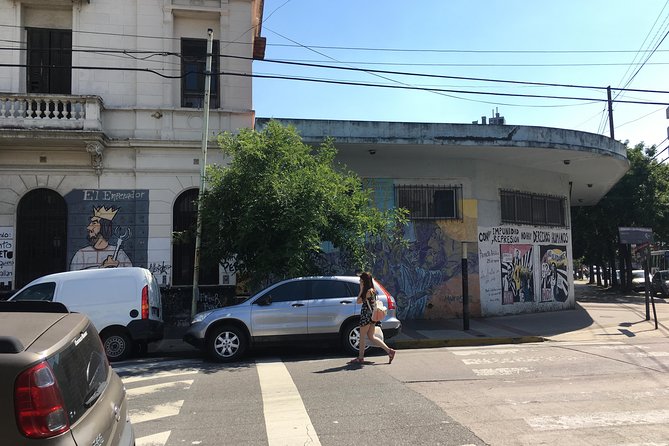
- Seeing the former clandestine center from outside
- The Garage Olimpo connection
- A private conversation, not a group lecture
- What the transportation arrangement adds
- Is $52.80 a fair price?
- Who should take this tour
- Practical details that affect your day
- Should you book it?
- FAQ
- How long does the tour last?
- Can I go inside the former clandestine center?
- How much walking is involved?
- Is transportation included?
- Where does the tour begin?
- Where does the tour finish?
- Is this tour suitable for children?
- Can I cancel for a full refund?
Key points before you book
- The former clandestine center is viewed from outside: You see murals, graffiti, memorial plaques, and other visible evidence while restoration work continues.
- Only about seven blocks are walked: Expect standing during detailed historical discussions, plus bus or taxi travel between parts of the experience.
- The private format matters: Only your group participates, giving you room for questions and a more personal conversation.
- Elisa is a major strength: Her engaging style and personal stories help connect political events with individual lives.
- Bus tickets or taxis are included: You do not need to work out every short transfer yourself.
- This is not designed for children: The subject matter is heavy and the tour is best suited to adults with a strong interest in recent history.
Why this Buenos Aires history tour matters
Argentina’s military dictatorship ruled from 1976 to 1983. During those years, clandestine centers of detention, torture, and annihilation were used to kidnap people suspected of opposing the government or being linked to dissident groups.
The word disappeared, or desaparecidos, is central to understanding this period. People were taken away, held secretly, tortured, and often killed. Families were left without clear answers. The tour also gives attention to the women and mothers who kept searching, including the remarkable determination that became one of the enduring parts of Argentina’s public memory.
That context makes this experience different from a general city walk. You are not simply passing a building and hearing a date. You are asked to look at physical traces, listen to recorded testimony, and consider how an entire society has worked to remember people who were deliberately erased.
I appreciate that the tour does not pretend this history is easy. At the same time, the guide’s approach is described as clear and manageable. Elisa is praised for making a sad subject engaging without softening its seriousness. That balance is valuable. A tour about state violence should not become theatrical, but it should help you understand.
More Walking Tours in Buenos Aires
- Buenos Aires Hop-On Hop-Off Bus, Free Walking Tours & Discounts
★ 4.5 · 2,218 reviews - Buenos Aires: La Boca Guided Walking Tour in English
★ 4.8 · 1,587 reviews - La Boca Walking Tour
★ 5.0 · 1,029 reviews
Starting at Avenida Rivadavia 6401
The tour begins at Av. Rivadavia 6401 in Buenos Aires, near public transportation. You should arrange your own way to this meeting point, since transportation to the start is not included.
From there, the guide leads your party through the experience using buses or taxis as needed. Bus tickets and taxis during the tour are included, which is a useful benefit in a city where a short transfer can otherwise add cost and confusion.
The tour lasts about two hours and thirty minutes. That is enough time for a substantial discussion, but not so long that the subject becomes impossible to absorb. You walk only about seven blocks, so this is not a strenuous walking tour in the usual sense. Still, you will spend time standing during historical explanations. Comfortable shoes remain a good idea, and you should dress for the weather.
The listing allows an afternoon departure, although the supplied schedule information describes the departure choice inconsistently. Confirm the exact available time when you book.
Seeing the former clandestine center from outside
The most important stop is an ex-clandestine center, sometimes called the Auschwitz of Argentina. The comparison signals the horror of the site, but it should not lead you to expect a preserved museum interior. You cannot go inside the closed areas.
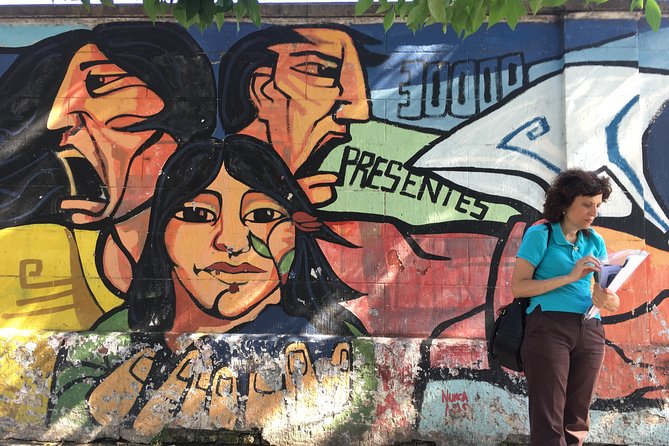
Instead, the guide explains what happened at the center while you examine the parts that can be seen outdoors. Murals and graffiti cover the subject in a direct, public way. They represent the people who disappeared, the families who continued to search, and the wider struggle to keep this period from being forgotten.
You also see memorial plaques dedicated to disappeared people. These names turn a broad political story into something more personal. A dictatorship can sound like an abstract chapter in a textbook. A plaque with a person’s name points back to an individual life and a family left behind.
Recorded testimonies add another layer. Hearing testimony gives the history a human voice without requiring access to areas that remain closed for conservation and evidence gathering. The experience is partly visual and partly oral, with the guide helping you connect the two.
There is a genuine limitation here. Before democracy returned, part of the former center was dismantled, and areas containing cells were demolished. The most interesting surviving evidence can often be seen from outside, but you should not book this expecting a conventional prison museum visit. The value lies in interpretation, testimony, memorials, and the difficult question of how a country preserves evidence after an atrocity.
The Garage Olimpo connection
The experience includes the Garage Olimpo, identified as one of the concentration centers connected with these events. Its name appears in the tour discussion because it represents the network of clandestine sites used during the dictatorship.
You should expect the guide to place the site within the wider system rather than treat it as an isolated building. That is one reason a private guide can help. You can ask how the centers functioned, who was targeted, and what happened to the buildings after the dictatorship ended.
Because the physical remains are incomplete, the explanation is essential. You may find that the murals, plaques, testimony, and discussion carry more meaning than the architecture alone. This is not a site where every room is preserved for easy viewing. It is a place where absence is part of the story.
A completely different kind of day:
- Local Foodie Adventure in Buenos Aires with Sherpa Food Tours
★ 5.0 · 6,875 reviews - Buenos Aires City Private Tour with Local Guide
★ 5.0 · 3,475 reviews - Buenos Aires Small-Group City Tour
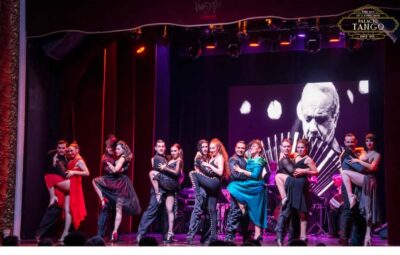
★ 5.0 · 2,226 reviews - Buenos Aires: Piazzolla Tango Show with Optional Dinner
★ 4.4 · 2,122 reviews
A private conversation, not a group lecture
Only your party takes part. That makes a noticeable difference on a subject this personal. You can ask for more background if you already know something about Argentina’s military government, or pause when a section needs more explanation.
The private format also helps the guide judge the pace. The tour is educational, but it does not need to follow a fixed script for a large crowd. The strongest praise for Elisa focuses on her ability to explain a very sad period with clarity and sensitivity. People who already know the basic history can still gain a fuller view of the disappeared and the effort to find them.
Personal stories are another strength. The guide has shared stories that make the events feel real rather than distant. That is especially useful if your knowledge begins and ends with the phrase Dirty War. You will come away with a better sense of the people involved, the violence carried out by the state, and the families who refused to stop asking questions.
The private setting does not make the topic lighter. It simply gives you a better chance to process it at your own pace.
What the transportation arrangement adds
Bus tickets or taxis during the tour are included. This is a modest detail, but it improves the experience. You do not have to calculate fares for each movement or wonder which short ride makes the most sense.
It also supports the tour’s local character. Rather than remaining on one tourist street, you travel through the city toward a site outside the usual Buenos Aires highlights. The tour is designed to show a less familiar part of the city and to connect the history with actual places.
Transportation to the meeting point is not included. At the end, the guide will help flag down a taxi and explain to the driver where you want to go. Any taxi you choose after the tour is your responsibility.
Bring a few extra pesos if you want bottled water, coffee, snacks, or a drink during the outing. Those purchases are not included.
Is $52.80 a fair price?
At $52.80 per person, the value depends on what you want from a Buenos Aires tour. This is not a cheap, quick walk to a famous landmark. You are paying for a private experience with a bilingual, university-educated guide, transportation during the tour, and two and a half hours focused on a difficult part of Argentine history.
The private arrangement makes the price easier to justify for couples, families of adults, or small groups who want to ask questions. A large group lecture might cost less, but it would not offer the same control over the conversation.
The included bus tickets or taxis also reduce the practical cost. You still pay to reach the meeting point, and you may buy your own refreshments, but the main movements during the tour are covered.
I would consider it good value for someone who already has an interest in political history, human rights, or the story of the disappeared. If your main goal is classic Buenos Aires architecture, food, or famous plazas, this is not the best use of your limited time. It is a focused history experience, and the subject demands attention.
The tour is booked an average of 24 days in advance, so plan ahead if the dates matter to you. Confirmation arrives within 48 hours, subject to availability.
Who should take this tour
I would recommend it most strongly to adults who want to understand Argentina beyond its traditional attractions. It suits you if you enjoy history, want to learn about the military dictatorship from a local guide, or believe that visiting a place of memory is part of understanding a country.
It is also a good choice if you have already read about the Dirty War but want to connect the facts with places, names, and testimony. The guide’s explanations can add detail that a book or museum label may not provide.
This is not for children. The content is too disturbing, and the tour requires attentive listening during periods of standing. You should also think carefully about your own response to accounts of torture, murder, rape, and disappearance.
The limited walking makes it manageable physically for most participants, but the emotional weight is greater than the physical effort. Go when you have enough time afterward to reflect rather than rushing straight into another major activity.
Practical details that affect your day
Wear comfortable shoes even though only about seven blocks are walked. The bigger issue is standing while the guide explains the history.
Dress for the weather. If rain is possible, take suitable clothing and ask your hotel whether you can borrow an umbrella. The experience requires good weather, and poor conditions can lead to a different date or a full refund.
Free cancellation is available if you cancel at least 24 hours before the start time. Cancellations or changes made less than 24 hours ahead are not accepted for a refund. The cut-off uses local Buenos Aires time.
The tour begins at Av. Rivadavia 6401 and finishes near Avenida Rivadavia and Avenida Lacarra, close to the former clandestine center. Since the end point differs from the meeting point, the included local transport is useful. You can also ask the guide to help arrange a taxi back to your accommodation.
Should you book it?
Book this tour if you want a serious, personal account of Argentina’s recent past and are comfortable visiting a former detention site from the outside. The strongest reasons are the private setting, the included local transport, the memorial plaques and recorded testimony, and Elisa’s praised ability to make painful history clear without turning it into spectacle.
Do not book it expecting to enter preserved cells or explore a large museum complex. The site has been altered, some areas were demolished, and conservation work limits access. The experience depends on the guide’s explanation and on what remains visible outdoors.
For an adult interested in the disappeared, the mothers and families who searched for them, and the crimes of the 1976 to 1983 dictatorship, this is a worthwhile use of two and a half hours in Buenos Aires. It takes you away from the standard sightseeing route and asks you to remember a part of Argentina that should not be overlooked.
FAQ
How long does the tour last?
The tour lasts approximately two hours and thirty minutes.
Can I go inside the former clandestine center?
No. The closed areas cannot be entered while restoration, conservation, archaeological work, and evidence gathering continue. The visit takes place around the exterior.
How much walking is involved?
The tour includes about seven blocks of walking. You should also expect periods of standing during historical discussions.
Is transportation included?
Bus tickets or taxis used during the tour are included. Transportation to the meeting point and taxis you choose after the tour are not included.
Where does the tour begin?
The meeting point is Av. Rivadavia 6401, C1406GLH, Buenos Aires.
Where does the tour finish?
The tour finishes near Avenida Rivadavia and Avenida Lacarra, close to the former clandestine center.
Is this tour suitable for children?
No. The tour is not intended for children because of its serious subject matter.
Can I cancel for a full refund?
Yes, if you cancel at least 24 hours before the experience start time. Cancellations or changes made less than 24 hours in advance are not accepted for a refund.
Just added in Buenos Aires
- Discover Buenos Aires’ independent art scene — Ticket included★ 5.0 · 30 reviews
- Photo Session in Buenos Aires★ 5.0 · 26 reviews
- Your Private Photographer in Buenos Aires★ 5.0 · 4 reviews
- Yerba Mate Workshop – Learn to Drink Mate like a Local!★ 5.0 · 11 reviews
- Your Personal Photographer in Buenos Aires★ 5.0 · 24 reviews
- BA: Wine Tasting and Blending Experience in Palermo★ 5.0 · 1 review
- Winery and Tasting Experience in Buenos Aires★ 5.0 · 1 review
- Taste of Tradition: Yerba Mate & Alfajores Experience★ 4.0 · 5 reviews
Buenos Aires Tours, compared.
Local Foodie Adventure in Buenos Aires with Sherpa Food Tours
Read our review →
Buenos Aires City Private Tour with Local Guide
Read our review →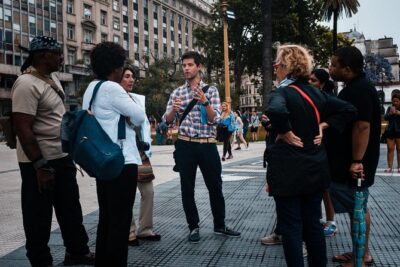
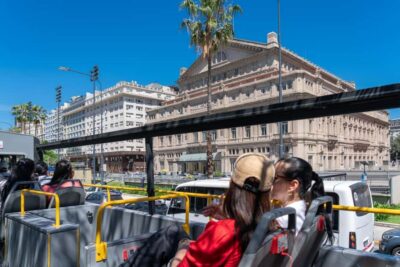
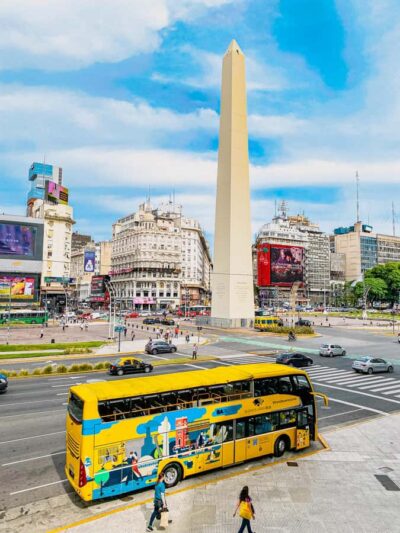
Buenos Aires Hop-On Hop-Off Bus and Exclusive Benefits
Read our review →

Argentine Experience Interactive Dining and Cooking
Read our review →Browse the lists this tour appears in