
Reviewed · BUENOS AIRES TOURS
Football Walking Tour in La Boca and Retiro
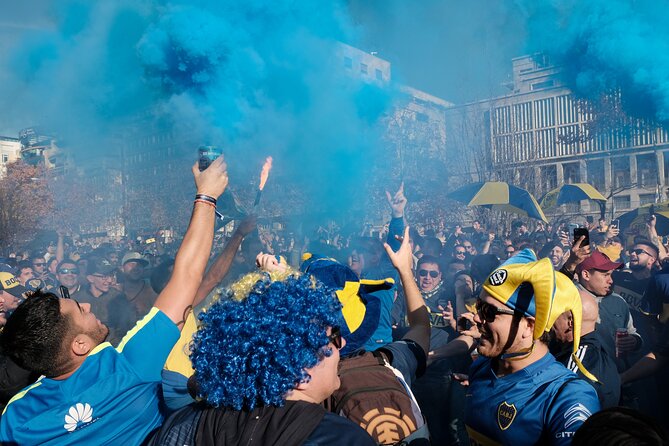
Football tells Buenos Aires’ story. This private tour links European immigration, old Retiro, Boca Juniors, and La Boca’s colorful streets in one compact outing. I like the personal guide attention and the way the tour connects sport with politics, migration, and city life. I also like that the Museo de la Pasión Boquense is included, rather than leaving you to arrange the main football stop yourself.
The main drawback is the price: $214 per person is a serious charge for a three-to-four-hour experience. You should also clarify the stadium access before booking, since the tour information says the museum admission includes guided access to football facilities, while the inclusions note says the stadium will be seen from outside.
In This Review
- Key points to know before booking
- Why this tour works for football fans and curious visitors
- Starting at Palacio San Martín in Retiro
- Plaza San Martín and Buenos Aires’ turning points
- Boca Juniors at Museo de la Pasión Boquense
- Caminito and the immigrant face of La Boca
- Timing, pace, and private attention
- Is $214 a fair price?
- Who should book this Buenos Aires tour?
- Should you book the Football Walking Tour?
- FAQ
- How long does the Football Walking Tour last?
- Where does the tour begin?
- Where does the tour end?
- Is the Museo de la Pasión Boquense included?
- Will I enter La Bombonera?
- Is this a private tour?
- Are group discounts available?
- Can I cancel for a full refund?
Key points to know before booking
- Retiro gives the tour a wider frame: You begin with Buenos Aires history and the city’s football roots, not just a stadium visit.
- Plaza San Martín adds political and military context: The square witnessed important events, including fighting during the second British invasion of Buenos Aires in 1807.
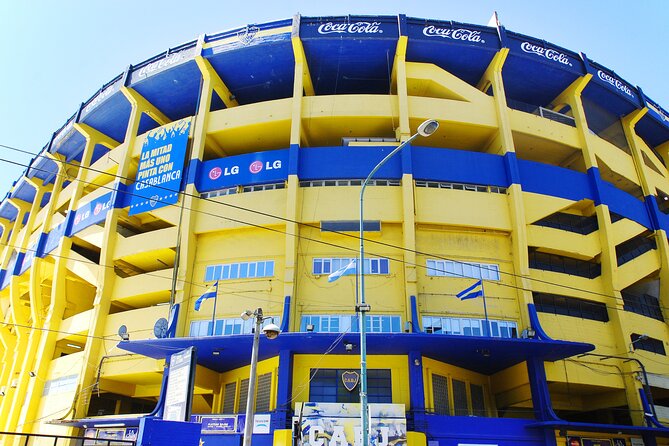
- Boca Juniors is the main attraction: The Museo de la Pasión Boquense focuses on the club’s identity, history, and sporting culture.
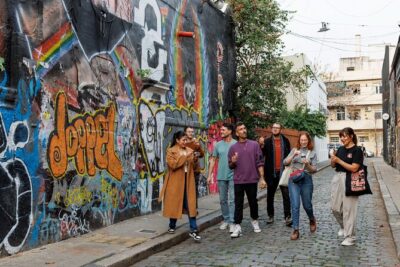
- Caminito shows La Boca beyond football: The colorful street museum reflects the port district’s immigrant housing and artistic character.
- The private format matters: Only your group takes part, so you can ask questions and set the pace more easily.
- The tour ends in La Boca: You finish at Estadio Alberto J. Armando, with public transport options available for returning downtown or staying in the area.
Why this tour works for football fans and curious visitors
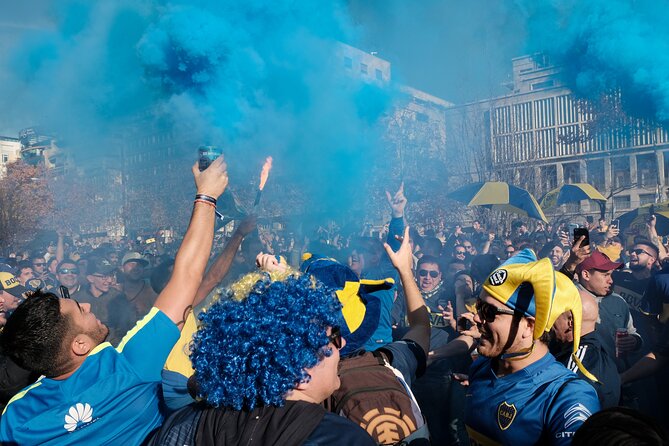
I see this as more than a club museum visit. The tour uses football as a way into Buenos Aires’ past, beginning with European immigration in the 1800s and following the sport into the modern city.
That approach should suit you if you want context as well as trophies, famous players, and stadium colors. A football fan may come for Boca Juniors, but the Retiro stops and the discussion of immigration give the outing a wider purpose.
The private format is one of the strongest points. You are not sharing the guide with a large group, and only your party participates. That makes it easier to stop for questions, ask about Argentine football culture, or request more explanation about the city’s political past.
The available feedback praises the guide’s storytelling and historical and geopolitical context. That is useful because a football tour can become a string of dates and club names. Here, the guide appears to connect football with larger forces that shaped Buenos Aires.
Still, keep your expectations in check. The tour lasts about three to four hours, so it cannot offer a full study of Argentine football or a broad tour of every important club. It is a focused introduction built around Retiro, Boca Juniors, and Caminito.
More Walking Tours in Buenos Aires
- Buenos Aires Hop-On Hop-Off Bus, Free Walking Tours & Discounts
★ 4.5 · 2,218 reviews - Buenos Aires: La Boca Guided Walking Tour in English
★ 4.8 · 1,587 reviews - La Boca Walking Tour
★ 5.0 · 1,029 reviews
Starting at Palacio San Martín in Retiro
The meeting point is Palacio San Martín at Arenales 761, in the Retiro area. This is a practical starting place because the tour begins in one of Buenos Aires’ historic central districts before moving south toward La Boca.
The first stop is described as Retiro, with about 30 minutes set aside. The neighborhood is presented as an English neighborhood with strong football roots. I would treat this opening as a scene-setting walk rather than a major attraction visit. Its value comes from hearing how football arrived and took hold in Buenos Aires.
That opening should help you understand that Argentine football was not created in isolation. European immigration in the 1800s brought people, customs, and organized sport to the city. The guide’s job here is to connect those arrivals with the football culture that later became such a powerful part of Argentine identity.
You may appreciate this stop most if you enjoy social history. If you want immediate access to a stadium, the first half-hour may feel slow. The tour deliberately begins with background, so football fans who prefer action from the first minute should know what they are buying.
Because the tour is private, this is a good place to ask questions about the relationship between immigration, neighborhoods, and clubs. You can also ask the guide to spend more time on football if that is your main interest.
Plaza San Martín and Buenos Aires’ turning points
The tour then gives you about 30 minutes at Plaza General San Martín. This is one of Buenos Aires’ oldest public squares and an important historical setting.
The square was the site of major events, including a decisive battle during the second British invasion of Buenos Aires in 1807. That detail gives the stop real weight. You are not just passing through an attractive central plaza. You are looking at a place tied to the city’s struggle for control and identity.
For me, this is where the tour’s history-and-football idea becomes clear. Football in Argentina developed within a city shaped by immigration, foreign influence, political conflict, and changing ideas about national identity. A good explanation here can make the later Boca Juniors visit feel less isolated.
The stop is free, and no admission ticket is listed. You should expect outdoor sightseeing and explanation rather than an indoor museum visit. Wear shoes that are comfortable for walking, since the experience is described as a walking tour and includes several separate stops.
Plaza San Martín also gives the private format a practical advantage. If you want more detail about the 1807 invasion, the city’s political history, or the area’s football connections, you can ask without worrying about holding up a large group.
Boca Juniors at Museo de la Pasión Boquense
The central football stop is Estadio Alberto J. Armando, better known to football fans as La Bombonera. The tour allocates about one hour to the Museo de la Pasión Boquense, and admission is included.
This is the part most likely to justify the tour for a committed Boca Juniors supporter. The museum is dedicated to the club and presents football as a source of pride, memory, and belonging. You can expect a sporting experience focused on Boca Juniors rather than a general museum about Argentine football.
The tour details say museum entry includes a guided visit to the installations, the pitch, the changing room, and the warm-up area. At the same time, the inclusions specify that the stadium is seen from outside. That wording is not perfectly clear, so I would ask Lunfarda Travel exactly which areas are accessible on your date and whether the pitch, changing room, and warm-up area are part of the museum visit or subject to restrictions.
That question matters because stadium access is likely to be the biggest part of the tour’s value for a football fan. If you expect a full behind-the-scenes stadium tour, confirm the scope before paying the $214 rate. If the visit is limited to the museum and exterior views, you will want to judge the price mainly on the private guide service and the historical walking tour.
The one-hour allocation is sensible. It gives you time to focus on club displays without allowing the football portion to swallow the entire outing. A private guide can also help explain why Boca Juniors matters locally, rather than simply pointing out exhibits.
I would not book this only because you want to attend a match. No match ticket is included, and the experience is a museum and history tour. It offers access to Boca Juniors’ story, not a live game.
The end point is Estadio Alberto J. Armando at Brandsen 805 in La Boca. Public transport choices are available from the area, and you can ask the guide how to return downtown or remain in La Boca for more time.
A completely different kind of day:
- Local Foodie Adventure in Buenos Aires with Sherpa Food Tours
★ 5.0 · 6,875 reviews - Buenos Aires City Private Tour with Local Guide
★ 5.0 · 3,475 reviews - Buenos Aires Small-Group City Tour
★ 5.0 · 2,226 reviews - Buenos Aires: Piazzolla Tango Show with Optional Dinner
★ 4.4 · 2,122 reviews
Caminito and the immigrant face of La Boca
The final sightseeing stop is Caminito, a colorful street museum in La Boca. About 30 minutes is planned here, and there is no admission charge.
Caminito is known for painted houses and the kind of immigrant dwellings that came to define this portside neighborhood toward the end of the 19th century. That setting links neatly with the tour’s opening discussion of European immigration. You are seeing the neighborhood where the social story introduced in Retiro takes on a physical form.
I like the decision to include Caminito because it keeps the tour from becoming a club-only outing. You get a short look at La Boca’s visual character, its portside past, and the popular image of Buenos Aires as a city of color and football.
The 30-minute stop is brief. You should see it as an introduction, not a full neighborhood tour. There is not enough time listed for a long exploration of La Boca, and the tour ends at the stadium rather than returning you to Retiro.
The contrast between Retiro and La Boca is part of the appeal. Retiro offers formal squares and major national history. La Boca brings you closer to immigrant housing, club identity, and the expressive public style associated with the neighborhood. Moving between the two gives the tour a useful sense of scale.
Your guide’s historical and geopolitical approach may be especially valuable here. Caminito can be reduced to colorful walls and quick photographs, but the immigration context gives those buildings more meaning.
Timing, pace, and private attention
The advertised duration is approximately three to four hours. The listed stops account for about two hours: 30 minutes in Retiro, 30 minutes at Plaza San Martín, one hour at the Boca Juniors museum, and 30 minutes at Caminito.
That leaves roughly one to two hours for movement, transitions, and explanation. The actual pace may depend on how the tour travels from Retiro to La Boca and how long your private group spends discussing each stop. Since the transport method between the districts is not specified, ask about it when booking.
The private format means only your group participates. I consider that a real benefit for a topic that invites questions. You can ask for more football detail, more city history, or more explanation of the areas you are seeing.
It also means the experience may depend heavily on the guide assigned to you. The one available rating praises the guide’s storytelling, especially the historical and geopolitical context. That is the clearest sign that the human element is central to the tour.
The tour is listed as suitable for most people, and service animals are allowed. It is near public transportation. No special fitness requirement is stated, but you should still expect time on foot and outdoor stops.
Is $214 a fair price?
At $214 per person, this is expensive compared with a simple self-guided visit to Caminito or a museum ticket on its own. The price makes more sense if you are booking for a small private group and want a guide to handle the history, connections, and timing.
The included Museo de la Pasión Boquense admission adds value, especially if you already plan to visit La Bombonera. The private structure also matters. You are paying for a dedicated guide rather than only entry to a museum.
Group discounts are available, so the cost may work better for a larger party. Ask how the discount changes the per-person rate before deciding. If you are alone or traveling as a couple, $214 per person requires a strong interest in Boca Juniors and guided history.
I would compare the price with your own priorities. If you mainly want photos at Caminito, this tour is too costly. If you want football, immigration history, Plaza San Martín, and a private guide in one half-day outing, the package is easier to defend.
Free cancellation is available until 24 hours before the start time. Changes or cancellations made inside that window are not accepted for a refund. Tips are not included, though they are welcomed by the tour team.
Who should book this Buenos Aires tour?
I would recommend it to:
- Boca Juniors supporters who want a club-focused museum visit
- Football fans interested in how European immigration shaped Argentine sport
- First-time visitors who want Retiro and La Boca connected by a single theme
- Families or private groups that value asking questions and setting their own pace
- History-minded visitors who prefer political and social context alongside sightseeing
I would be more cautious if you want a live match, a full stadium interior tour, or a long exploration of La Boca. None of those is clearly promised. The tour is best understood as a private introduction to Buenos Aires through football, with Boca Juniors as the centerpiece.
Should you book the Football Walking Tour?
Book it if football is a major reason for your Buenos Aires visit and you want more than a quick museum stop. The strongest feature is the link between sport, immigration, city history, and Boca Juniors, backed by a private guide who can tailor the conversation.
Before paying, confirm the exact stadium access and how you will travel between Retiro and La Boca. Those details affect the value of a $214 tour.
If the price fits your budget and the museum access matches your expectations, this is a focused and thoughtful way to meet Buenos Aires through its most famous sporting passion. If your interest in football is casual, choose a less costly museum visit and explore Caminito on your own.
FAQ
How long does the Football Walking Tour last?
The tour lasts approximately three to four hours.
Where does the tour begin?
It begins at Palacio San Martín, Arenales 761, in Buenos Aires.
Where does the tour end?
It ends at Estadio Alberto J. Armando, Brandsen 805, in La Boca.
Is the Museo de la Pasión Boquense included?
Yes. Admission to the Museo de la Pasión Boquense is included in the tour price.
Will I enter La Bombonera?
The tour information says the stadium will be seen from outside, while also describing guided access to installations, the pitch, changing room, and warm-up area through the museum. Ask the provider to confirm the exact access available for your visit.
Is this a private tour?
Yes. Only your group participates in the activity.
Are group discounts available?
Yes. Group discounts are offered.
Can I cancel for a full refund?
Yes, if you cancel at least 24 hours before the experience start time. Cancellations made less than 24 hours before the start time are not refunded.
Just added in Buenos Aires
- Discover Buenos Aires’ independent art scene — Ticket included★ 5.0 · 30 reviews
- Photo Session in Buenos Aires★ 5.0 · 26 reviews
- Your Private Photographer in Buenos Aires★ 5.0 · 4 reviews
- Yerba Mate Workshop – Learn to Drink Mate like a Local!★ 5.0 · 11 reviews
- Your Personal Photographer in Buenos Aires★ 5.0 · 24 reviews
- BA: Wine Tasting and Blending Experience in Palermo★ 5.0 · 1 review
- Winery and Tasting Experience in Buenos Aires★ 5.0 · 1 review
- Taste of Tradition: Yerba Mate & Alfajores Experience★ 4.0 · 5 reviews
Buenos Aires Tours, compared.
Local Foodie Adventure in Buenos Aires with Sherpa Food Tours
Read our review →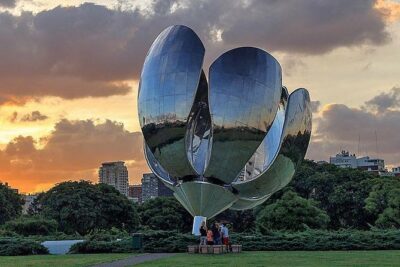
Buenos Aires City Private Tour with Local Guide
Read our review →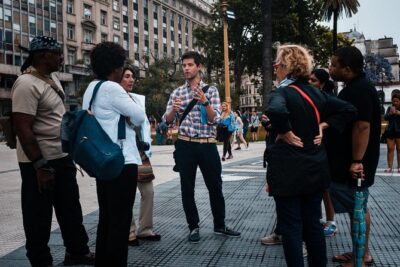
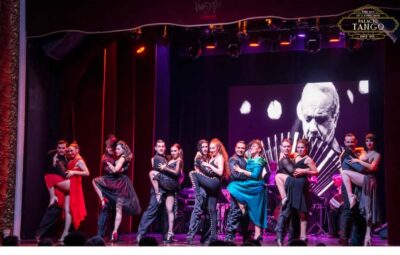
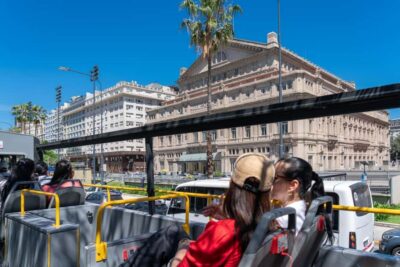
Buenos Aires Hop-On Hop-Off Bus and Exclusive Benefits
Read our review →
Argentine Experience Interactive Dining and Cooking
Read our review →Browse the lists this tour appears in