
Reviewed · BUENOS AIRES TOURS
Buenos Aires: San Telmo and Market Guided Walking Tour
San Telmo makes Buenos Aires feel wonderfully close-up. This two-hour walk links the city’s colonial beginnings with its modern street culture, moving from the Parroquia San Ignacio de Loyola through old religious buildings, comic-strip characters, the San Telmo Market, and, on Sunday, the famous street fair. I especially like the small-group-style personal guidance, even when the group is larger, and the way the route mixes architecture with ordinary local life. The $13 price also makes it an easy first look at one of Buenos Aires’ most characterful neighborhoods.
I like that guides such as Juan, Santiago, and Jorge bring different strengths to the walk. Juan is praised for humor and clear explanations, while Santiago is warm and ready for questions. The main drawback is practical: the group can be large, and narrow cobbled streets make it harder to stay close to the guide. The walk also runs rain or shine, so check the forecast before you set out.
In This Review
- Key points to know before you book
- Why San Telmo is a smart place to begin in Buenos Aires
- Starting at Parroquia San Ignacio de Loyola
- Iglesia y Convento de San Francisco: architecture with a story
- 19th-century facades and the story of immigration
- Clemente and the Paseo de la Historieta
- Meeting Mafalda, Buenos Aires’ beloved comic character
- Inside Mercado San Telmo
- The Sunday fair and San Telmo Square
- What the guides add to the experience
- Is two hours enough?
- Who should book this San Telmo walk?
- Price, booking flexibility, and practical value
- Should you book it?
- FAQ
- Where does the San Telmo walking tour start?
- Where does the tour finish?
- How long does the tour last?
- What language is the tour in?
- How do I identify the guide?
- Does the tour run in bad weather?
- What is included in the $13 price?
Key points to know before you book
- Start at Parroquia San Ignacio de Loyola: The opening point places you near some of the city’s oldest colonial-era religious architecture.
- See San Telmo through both history and pop culture: The route includes Clemente, the Mafalda statue, historic facades, and stories about immigration.
- Enter the San Telmo Market: This traditional indoor market is a useful place to understand the neighborhood’s food culture and daily rhythm.
- Sunday is the most atmospheric day: The street fair adds music, art, stalls, crowds, and tango around San Telmo Square.
- English guidance is the core inclusion: Food and purchases are not listed as included, so bring some Argentine pesos or a payment method if you want to sample something.
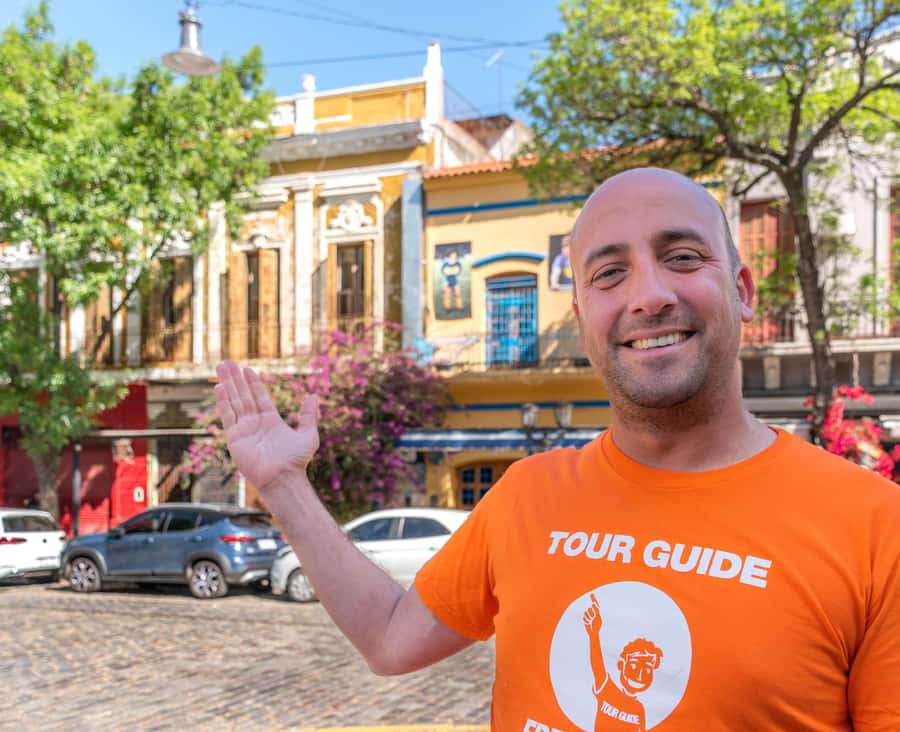
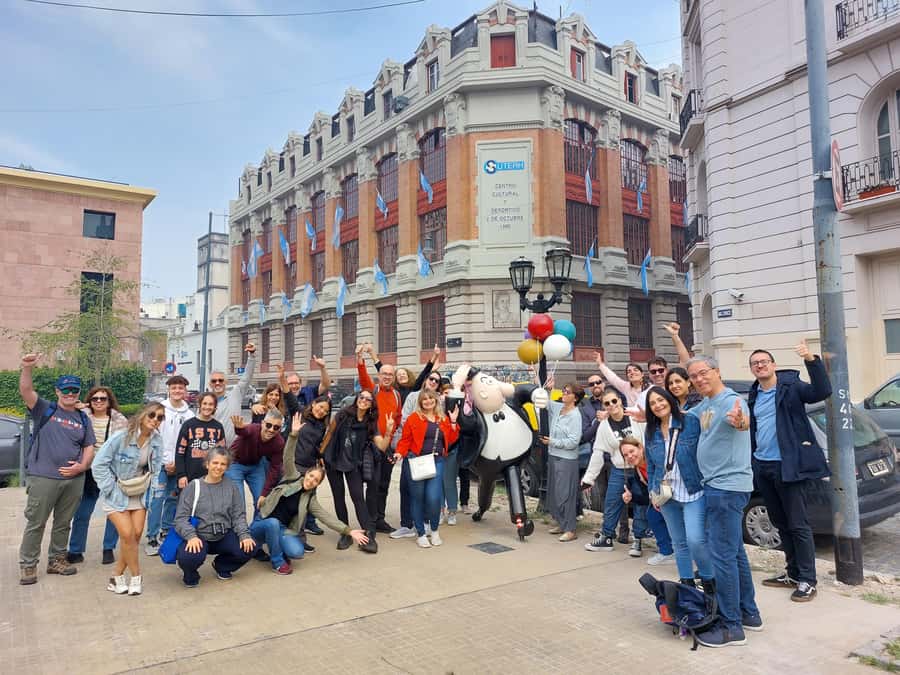
- Look for orange: The guide wears an orange shirt or carries an orange umbrella, which matters when several groups gather nearby.
Why San Telmo is a smart place to begin in Buenos Aires
San Telmo is Buenos Aires’ oldest neighborhood, and this walk gives you a useful introduction to how the capital grew. You hear about colonial foundations, the buildings that followed, and the waves of immigration that helped form the city’s modern culture.
That broad view is one of the tour’s strongest features. You are not simply being led from one photo stop to another. The guide connects architecture, religion, food, popular art, and national identity. In two hours, you get a framework that can make the rest of Buenos Aires easier to understand.
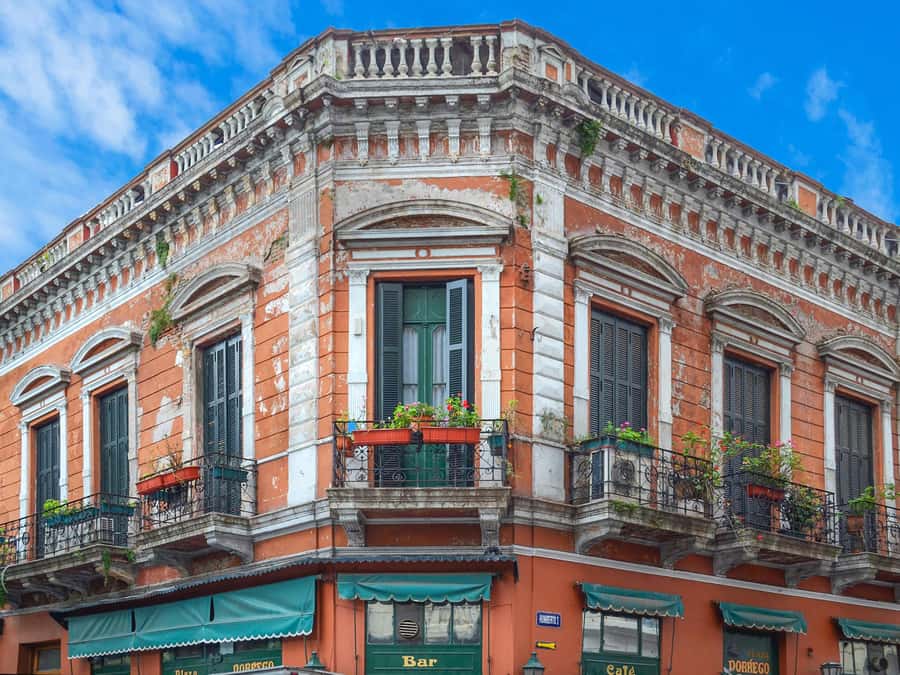
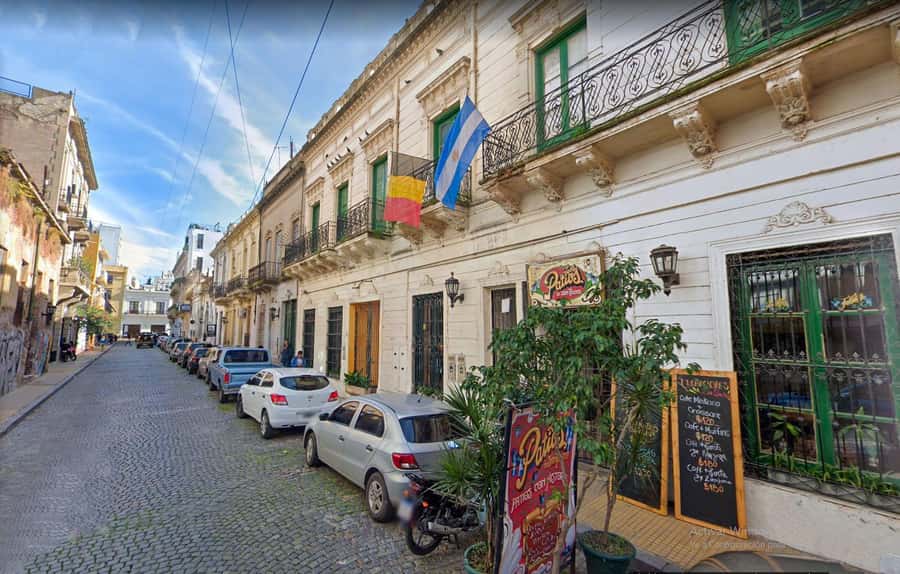
The old streets matter, too. Cobblestones and 19th-century facades give San Telmo a different feel from the grand avenues and newer districts elsewhere in the city. The collective houses are especially interesting. Their shared courtyards and compact facades reflect an urban past shaped by many families living close together.
You should expect the neighborhood to feel lived in rather than preserved like a museum. That is part of its appeal. It can also mean noise, uneven walking surfaces, packed sidewalks, and a fair amount of stopping in public spaces while the guide speaks.
More Walking Tours in Buenos Aires
- Buenos Aires Hop-On Hop-Off Bus, Free Walking Tours & Discounts
★ 4.5 · 2,218 reviews - Buenos Aires: La Boca Guided Walking Tour in English
★ 4.8 · 1,587 reviews - La Boca Walking Tour
★ 5.0 · 1,029 reviews
Starting at Parroquia San Ignacio de Loyola
The meeting point is Parroquia San Ignacio de Loyola. Look for the guide in an orange shirt or with an orange umbrella. This simple marker is useful because several walking groups may gather in the same general area.
Beginning at a church gives the tour a clear historical anchor. From here, the guide introduces the early foundations of Buenos Aires and explains how colonial buildings fit into the city’s story. The opening is not only about dates. It sets up the contrast between the old city and the busy, creative neighborhood San Telmo became.
You will want to arrive ready to walk and listen at the same time. The guide may stop in the street or near building facades, so keep your attention on both the explanation and your footing. Comfortable shoes are a sensible choice for cobbles and two hours on foot.
Iglesia y Convento de San Francisco: architecture with a story
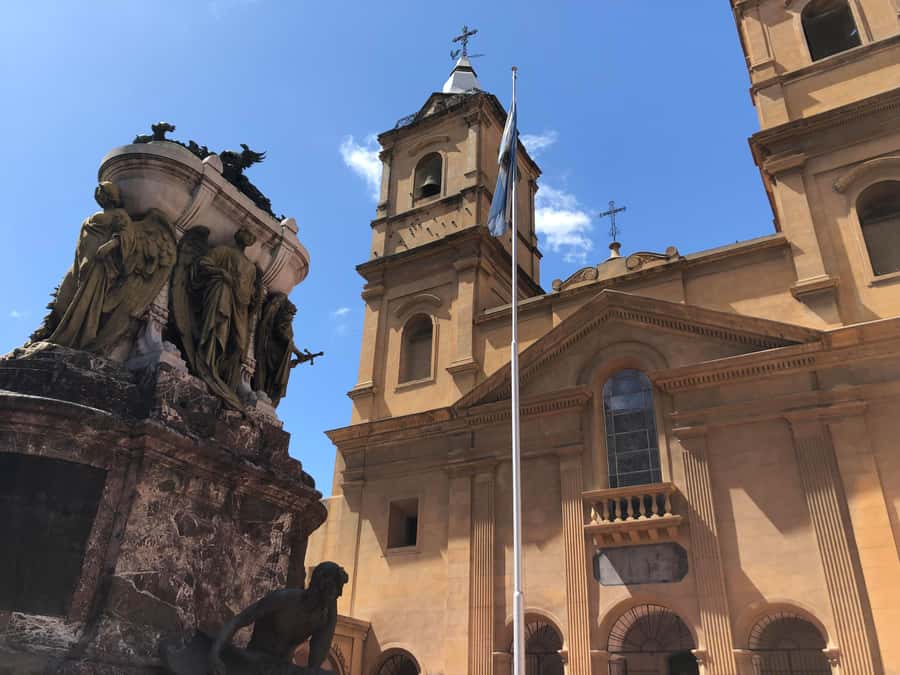
The route continues to Iglesia y Convento de San Francisco, where you receive a guided explanation of the church and convent. Religious buildings are often among the clearest survivors from a city’s earlier periods, and this stop helps you picture Buenos Aires before its later growth.
The value here comes from having someone point out what you might otherwise pass without noticing. Facades, construction details, and the relationship between church buildings and surrounding streets all make more sense when the guide explains their purpose.
This is also where a strong guide can make a difference. Juan has been praised for combining humor with clear historical detail, while Santiago is noted for warmth and for answering questions. Those qualities matter in a building-focused stop, since a dry list of dates would make the visit much less memorable.
The schedule is compact, so do not expect a long interior visit or a full architectural lecture. The experience is a guided look as part of a neighborhood walk, not a specialist church tour.
19th-century facades and the story of immigration
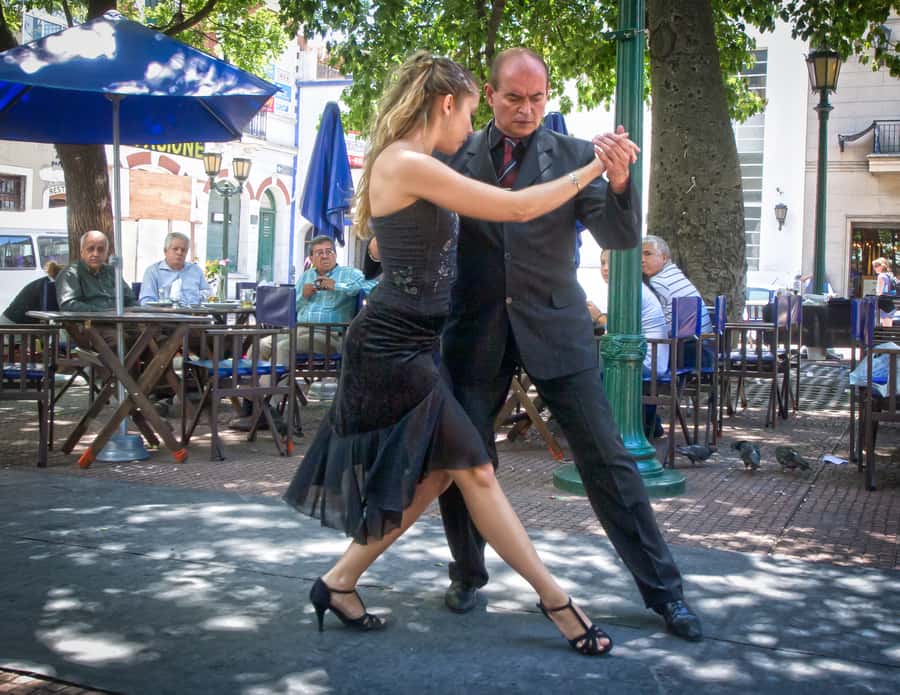
Between the named stops, the walking itself carries much of the tour. You pass picturesque 19th-century collective houses and colonial-era streets while the guide explains how immigration shaped local culture.
These buildings help turn a large subject into something visible. Shared housing, narrow streets, and old facades show how city life developed at street level. You can better understand San Telmo as a place formed by movement and mixture, not as a frozen colonial quarter.
I like this part because it asks you to look up and around. The most memorable details may be a doorway, a balcony, or a weathered wall rather than a famous monument. The guide’s local context helps you connect those details to Buenos Aires’ wider story.
The drawback is that the route is not designed for lingering at every facade. If you love architectural photography, you may want to return later and explore at your own pace. During the tour, stay with the group, especially when the streets become crowded.
A completely different kind of day:
- Local Foodie Adventure in Buenos Aires with Sherpa Food Tours
★ 5.0 · 6,875 reviews - Buenos Aires City Private Tour with Local Guide
★ 5.0 · 3,475 reviews - Buenos Aires Small-Group City Tour
★ 5.0 · 2,226 reviews - Buenos Aires: Piazzolla Tango Show with Optional Dinner
★ 4.4 · 2,122 reviews
Clemente and the Paseo de la Historieta
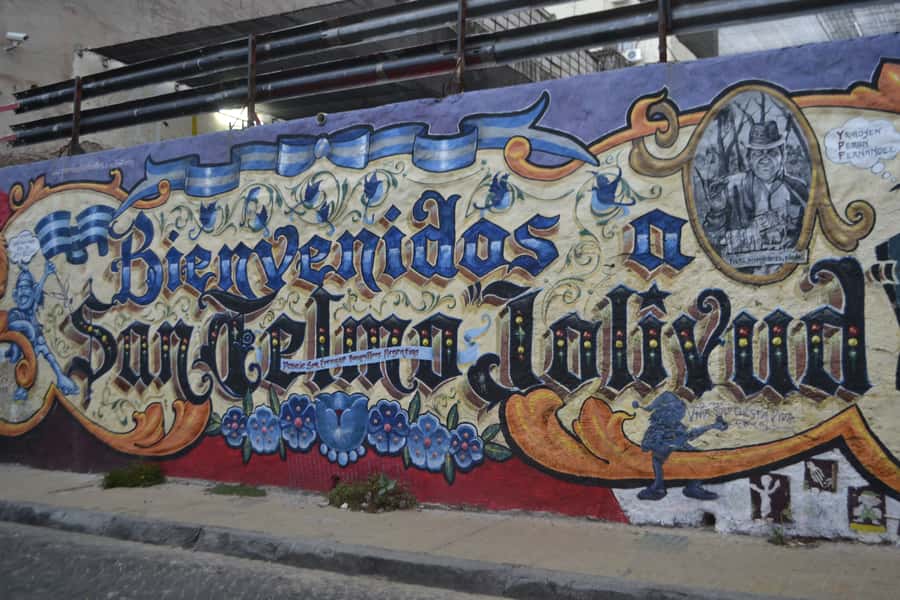
San Telmo’s history is not confined to churches and old houses. The stop at Clemente, part of the Paseo de la Historieta, introduces the neighborhood’s comic-strip culture.
This is a smart change of pace. You move from national history and architecture to characters familiar in Argentine popular culture. Clemente gives you a glimpse of how humor, drawing, and everyday social commentary have a place in the city’s public spaces.
The guide explains the significance of the character and the surrounding art, making the stop more than a quick photograph. It also helps younger members of a family stay interested when the architectural details begin to blur together.
The Paseo de la Historieta is a good example of San Telmo’s mixed personality. One moment you are looking at old masonry, and the next you are meeting a cartoon character on the pavement. That contrast is exactly what makes the neighborhood feel active and human.
Meeting Mafalda, Buenos Aires’ beloved comic character
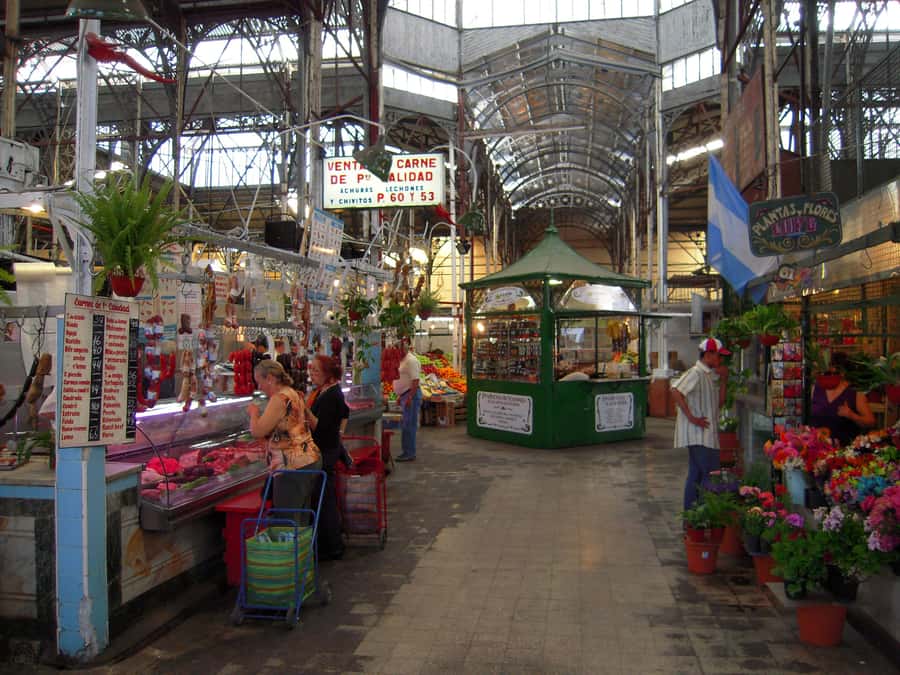
The Mafalda statue is one of the route’s most popular stops. Mafalda, the sharp and socially aware Argentine comic character, is closely tied to Buenos Aires’ public identity.
You will have a chance to see the statue and hear why it matters to local culture. It is a small stop, but it carries more meaning than its size suggests. Mafalda represents a distinctly Argentine form of humor, one that can be playful while still asking serious questions about society and the world.
For many people, this is the most approachable part of the tour. You do not need a background in Argentine history to enjoy it. If you already know Mafalda, the stop adds local context. If you do not, the guide gives you enough background to understand why the character appears in so many Buenos Aires souvenirs and photographs.
Expect other people to want pictures here. Your guide can explain the statue, but the stop may not feel quiet or private.
Inside Mercado San Telmo
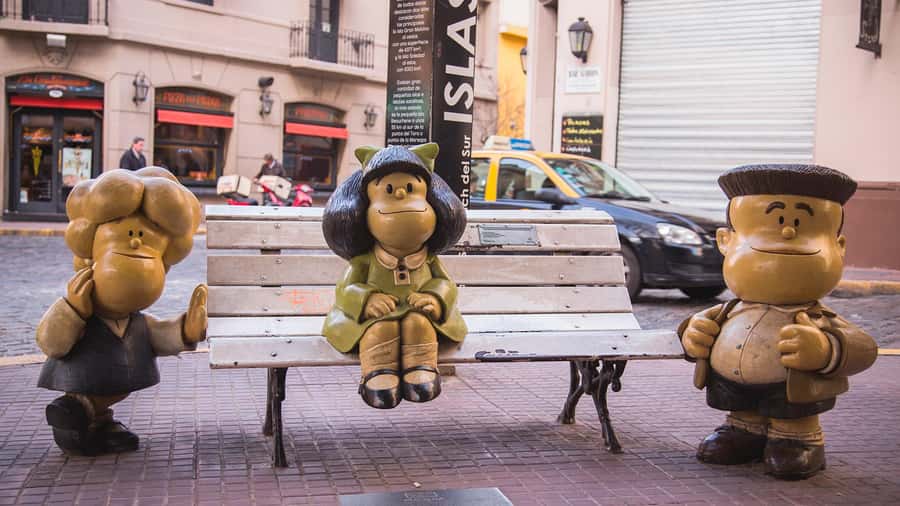
The San Telmo Market is the food and daily-life center of the walk. This traditional indoor market offers a chance to see where the neighborhood’s culinary side meets its older commercial character.
The guide leads you through the market and explains what makes it important to the community. You may find traditional Argentine food to sample, but the tour price covers the English-speaking guide only. Plan to pay separately for anything you eat or buy.
This stop works well because food gives history a practical edge. Instead of only hearing about immigration and cultural change, you see how those influences appear in what is sold and eaten. The market also gives you a chance to pause from the open street and take in the neighborhood through smells, displays, and everyday activity.
The market can be crowded, especially when combined with Sunday traffic. Keep track of the guide and remember the orange shirt or umbrella. If you want to browse carefully or eat a full meal, you may need to return after the walk.
The Sunday fair and San Telmo Square
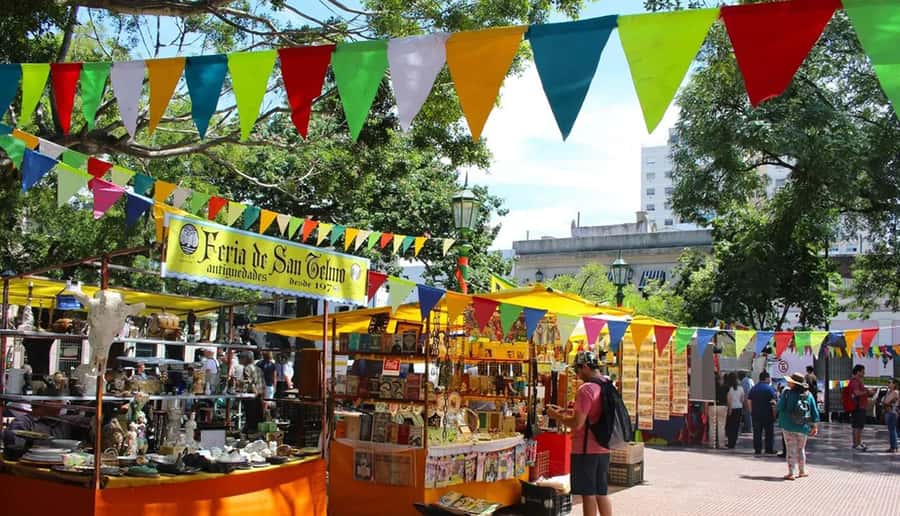
Sunday is the best time to catch the neighborhood at full volume. The street fair brings together stalls, music, art, and local culture along the streets, creating a very different mood from a quiet weekday walk.
The fair can be chaotic. That is not a flaw if you want the real atmosphere, but it does affect the logistics. Narrow streets become harder to cross, the group may stretch out, and you will need to listen closely when the guide stops.
One guide kept a group together and projected his voice well even with more than 30 people. That is reassuring, but a large group still has limits. You may not hear every sentence if you drift behind or stand beside a noisy stall.
The fair is especially useful if you want an insider’s introduction rather than simply wandering among vendors. The guide explains what you are seeing and helps place the market activity in the context of San Telmo’s identity.
The walk can finish around San Telmo Square, where tango dancers may perform. This is a fitting ending because it brings together music, public space, and the theatrical side of Buenos Aires. The tango moment is not presented as a separate show with a guaranteed schedule, so treat it as a possible bonus rather than the main reason to book.
What the guides add to the experience
The strongest part of this tour is the guiding. Juan is repeatedly described as funny, kind, and clear. Santiago is praised for warmth, patience, and his ability to answer questions. Jorge is remembered for giving detailed explanations, even while leading a group of more than 30 people.
That consistency matters. San Telmo has enough sights to fill a pleasant walk, but the difference between an ordinary stroll and a useful tour is the person explaining what you are seeing.
The guides cover history, architecture, art, local stories, and Argentine culture. They also seem comfortable adjusting to questions, which is helpful if you want more than a memorized speech.
Still, group size can vary. One participant felt the group was too large for the narrow streets. If you prefer quiet photography, long stops, or one-to-one conversation, a private tour may suit you better. At $13, though, this format offers impressive value for a first orientation.
Is two hours enough?
Two hours is a good length for a first visit. You see major highlights without giving up an entire morning or afternoon, and the route ends in San Telmo so you can continue exploring on your own.
The pace will be steady. You should expect regular walking, standing while the guide speaks, and short stops at several locations. Because the route combines churches, facades, statues, a market, and a fair, no single sight receives a huge amount of time.
That is both the strength and the limit. You get variety and context, but you do not receive a detailed museum-style treatment of each stop. I would use this walk to get oriented, then return to the market, comic sculptures, or square that caught your attention.
The tour operates rain or shine. Bring weather protection and wear shoes suited to old streets. The meeting marker, an orange shirt or umbrella, is particularly important on wet or crowded days.
Who should book this San Telmo walk?
I would recommend it to first-time visitors who want a quick introduction to Buenos Aires beyond its grand boulevards. It is also a good fit if you like local stories, street art, food markets, architecture, and a guide who can connect separate sights into one narrative.
Solo visitors should feel comfortable joining. One person who attended alone found the experience worthwhile, and the walking format makes it easy to follow the group without arranging a private guide.
Families may enjoy the mix of Mafalda, Clemente, food, and public art. History fans will appreciate the churches and immigration context. Food lovers should see the market as an introduction, not a dedicated tasting tour, since purchases are not included.
I would be more cautious if you dislike crowds or struggle to hear in a large group. Sunday gives you the fullest atmosphere, but it also brings the most congestion. For a calmer walk, check available starting times and consider a day when the fair is not the main feature.
Price, booking flexibility, and practical value
At $13 per person, the tour is inexpensive for a guided two-hour introduction to one of Buenos Aires’ key neighborhoods. The value comes from the local explanation, not from included food, transport, or entry tickets. You are paying for access to a guide who can connect San Telmo’s buildings, characters, market, and street culture.
You can cancel up to 24 hours ahead for a full refund, and you can reserve now while paying later. Those policies make it easier to fit the walk into a changing Buenos Aires schedule.
English is the stated tour language, and the live guide is included for the full two hours. Before booking, check the available starting time and keep your plans flexible enough to allow for a rain-or-shine walk.
Should you book it?
Yes, if you want a low-cost, well-rounded introduction to San Telmo. The mix of colonial architecture, the San Francisco church and convent, Mafalda, Clemente, the indoor market, and Sunday fair gives you far more than a simple photo walk.
Book it especially if you can join on Sunday and enjoy street life, though prepare for crowds and a potentially large group. If you prefer a slower architectural study or a quieter market visit, use the tour as your orientation and return to San Telmo afterward on your own.
FAQ
Where does the San Telmo walking tour start?
The tour starts at Parroquia San Ignacio de Loyola in Buenos Aires.
Where does the tour finish?
The walk finishes in San Telmo.
How long does the tour last?
The tour lasts two hours.
What language is the tour in?
The live tour guide speaks English.
How do I identify the guide?
Look for a guide wearing an orange shirt or carrying an orange umbrella.
Does the tour run in bad weather?
Yes. The tour takes place rain or shine.
What is included in the $13 price?
The stated inclusion is an English-speaking guide for two hours. Food, market purchases, and other expenses are not listed as included.
More Shopping in Buenos Aires
- 2 hrs. Walking Tour in San Telmo & Market
★ 5.0 · 277 reviews - Buenos Aires Shopping Tour
★ 4.5 · 14 reviews - Vintage and Thrift Shopping Tour in BA
★ 5.0 · 3 reviews - Private Market Tour and Cooking Class in San Telmo with Gabriela
★ 5.0 · 2 reviews
Just added in Buenos Aires
- Discover Buenos Aires’ independent art scene — Ticket included★ 5.0 · 30 reviews
- Photo Session in Buenos Aires★ 5.0 · 26 reviews
- Your Private Photographer in Buenos Aires★ 5.0 · 4 reviews
- Yerba Mate Workshop – Learn to Drink Mate like a Local!★ 5.0 · 11 reviews
- Your Personal Photographer in Buenos Aires★ 5.0 · 24 reviews
- Winery and Tasting Experience in Buenos Aires★ 5.0 · 1 review
- Taste of Tradition: Yerba Mate & Alfajores Experience★ 4.0 · 5 reviews
- BA: Wine Tasting and Blending Experience in Palermo★ 5.0 · 1 review
Buenos Aires Tours, compared.
Local Foodie Adventure in Buenos Aires with Sherpa Food Tours
Read our review →
Buenos Aires City Private Tour with Local Guide
Read our review →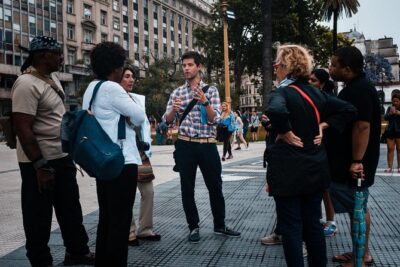
Buenos Aires Hop-On Hop-Off Bus and Exclusive Benefits
Read our review →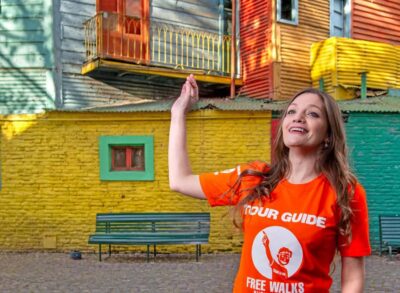

Argentine Experience Interactive Dining and Cooking
Read our review →Browse the lists this tour appears in