
Reviewed · BUENOS AIRES TOURS
Buenos Aires in One Day Private Walking Tour
Buenos Aires rewards walking. This six-hour private tour links the city’s grand avenues, political landmarks, old neighborhoods, and famous cemetery in one long day. I like the way it explains not just what you are seeing, but why Buenos Aires looks and feels the way it does. I also like the private format, which lets your guide adjust the pace and answer questions about Argentine life, politics, architecture, and customs.
The main drawback is simple: this is a serious walking day. You may walk for six or even seven hours, with one taxi ride required between attractions. The route covers a great deal, but some stops are viewed from the street rather than entered, and the experience can feel stretched if you prefer a short highlights tour.
The strongest guides have included Carlos, Soledad, Clemencia, and Eilat, all praised for clear English and lively explanations. One useful warning: the tour ends at Plaza Dorrego in San Telmo, not at the starting cafe, so plan your return before you set off.
In This Review
- What makes this Buenos Aires tour worth considering
- Starting at Florida Garden at 10am
- Retiro and Avenida Alvear: palaces, railways, and old money
- Recoleta Cemetery and the stories behind the tombs
- Palermo’s monuments and everyday Buenos Aires
- Downtown Buenos Aires, from Galerias Pacifico to the Obelisco
- Plaza de Mayo: the political heart of Argentina
- San Telmo and the old city’s uncomfortable stories
- Plaza Dorrego and the end of the route
- Puerto Madero adds a modern contrast
- Lunch, coffee, and the private-tour advantage
- Is $199 per person a fair price?
- What to know before you book
- Should you book this tour?
- FAQ
- How long is the Buenos Aires walking tour?
- Where does the tour begin?
- What time does the tour start?
- Where does the tour end?
- Is this a private tour?
- Is transportation included?
- Are meals included?
- Is admission to Recoleta Cemetery included?
- Is the optional La Boca visit included?
- Is the tour suitable for children?
What makes this Buenos Aires tour worth considering
- Plaza San Martin reveals the city’s European face: Palaces, churches, railway buildings, and the British Clock Tower explain why Buenos Aires earned its old nickname, Paris of the South.
- Recoleta Cemetery gets proper time: You spend about 45 minutes among ornate tombs, including Eva Peron’s grave and General San Martin’s guarded mausoleum in the Metropolitan Cathedral.
- San Telmo goes beyond antiques: The route covers slavery, colonial homes, British invasions, disappeared people, old churches, and the history behind Plaza Dorrego.
- A private guide changes the experience: Your group travels alone, so you can ask about Argentine politics, architecture, food, or daily life without waiting for a large group.
- You see both old and new Buenos Aires: The route moves from Casa Rosada and the Cabildo to Puerto Madero’s former docklands and Palermo’s modern cultural sights.
- The price buys context, not just transport: At $199 per person, the value depends on how much you want explanation and personal attention during a long city walk.
Starting at Florida Garden at 10am
Meet outside Florida Garden cafe at Florida 899, on the corner with Paraguay Street. Look for a guide holding or wearing a small BA Walking Tours sign, and arrive before the 10am start. The meeting point is central and near public transportation, but hotel pickup is not included.
The opening stretch follows Calle Florida, one of the city’s best-known pedestrian streets. Your guide points out its older buildings and explains how the street fits into Buenos Aires’ growth. It is a quick beginning, but useful for getting your bearings in the downtown core.
This is also where you discover the tour’s basic rhythm. You walk, stop, listen, and move on. Because much of the day takes place outdoors, wear comfortable shoes and bring protection from sun or rain. The tour operates in all weather, and the route can change because of strikes, repairs, demonstrations, or other city conditions.
More Day Trips in Buenos Aires
- Gaucho Day Trip from Buenos Aires: Santa Susana Ranch
★ 4.0 · 272 reviews - Colonia del Sacramento Small-Group Day Trip
★ 4.5 · 155 reviews - Gaucho Experience: A Day Trip to Don Silvano Ranch
★ 4.0 · 148 reviews
Retiro and Avenida Alvear: palaces, railways, and old money
Retiro gives the tour an impressive architectural start. Plaza San Martin has served several very different purposes over time, including a military bastion, bullfight ring, and slave market. That contrast is central to the tour’s style: elegant facades are never treated as the whole story.
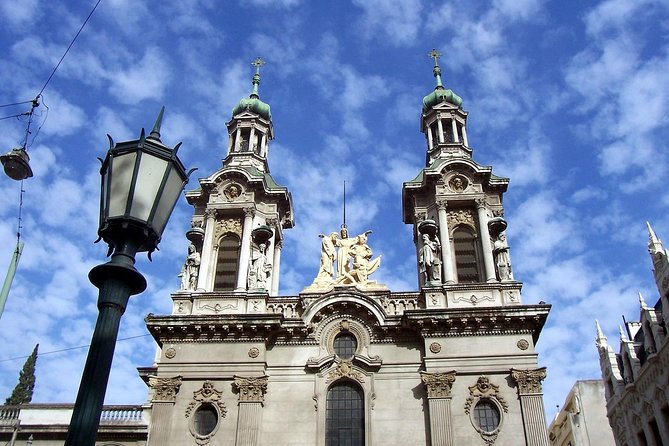
You see the Paz Palace, a grand belle époque mansion, along with the Kavanagh Building and Santísimo Sacramento Church. The British Clock Tower and railway stations open a discussion about Britain’s unexpected role in Argentina’s economy, transport, and public life. General San Martin’s monument brings the focus back to independence and the formation of the Argentine nation.
The next section along Avenida Alvear shifts toward French and Italian influence. You pass Barrio Norte, Arroyo Street and its galleries, and a long line of palaces and mansions. These include Palacio Ortiz-Basualdo, now the French Embassy, the Alzaga-Unzué Manor, the Duhau Mansion, Hume Mansion, and Alvear Palace.
You do not normally tour the interiors of these buildings. Their value here comes from the guide’s explanation of who built them, what immigrant groups shaped the city, and how Catholic, Jewish, and other communities affected Argentine society. If architecture interests you, this may be one of the best parts of the morning.
Recoleta Cemetery and the stories behind the tombs
Recoleta is one of the tour’s major anchors. The cemetery is not a quick photo stop. You spend about 45 minutes among elaborate mausoleums, monuments, narrow paths, and family vaults.
Eva Peron’s tomb is the obvious draw, but the guide also explains other famous graves and the people behind them. General San Martin’s tomb is located in the Metropolitan Cathedral rather than the cemetery, and the tour connects his story to the country’s struggle for independence.
The cemetery works best with a strong guide. Without context, it can seem like a maze of expensive stone. With clear storytelling, it becomes a record of Argentine power, fame, wealth, religion, and family life. Carlos has been especially praised for his explanations here, though some people found the cemetery section a little long. I would keep the time if you care about history, but ask for a quicker pace if you mainly want photographs.
Around Recoleta, you also see Nuestra Señora del Pilar Church, the Buenos Aires Exhibition Center, Palais de Glace, and the Buenos Aires Design Center. Palais de Glace provides a link to the rise of tango and the city’s changing cultural life.
Palermo’s monuments and everyday Buenos Aires
The Palermo section gives you a different view. Instead of focusing only on colonial buildings and national heroes, the route brings in art, public monuments, and modern city life.
You pass the National Gallery of Art, Peynot’s Grand Monument, and the Floralis Genérica, the giant metal flower. The route also includes the monument to Eva Peron, marking the place where she died, and the National Library building.
This part helps balance the grand downtown sights. Palermo is Buenos Aires’ largest and most populous neighborhood, so you get a sense of a place where people live, work, shop, and move through their ordinary day. The route does not promise a full neighborhood tour, but it gives you a useful taste of Palermo’s scale and character.
More Walking Tours in Buenos Aires
- Buenos Aires Hop-On Hop-Off Bus, Free Walking Tours & Discounts
★ 4.5 · 2,218 reviews - Buenos Aires: La Boca Guided Walking Tour in English
★ 4.8 · 1,587 reviews - La Boca Walking Tour
★ 5.0 · 1,029 reviews - Recoleta Cemetery Walking Tour
★ 5.0 · 668 reviews
Downtown Buenos Aires, from Galerias Pacifico to the Obelisco
The downtown segment brings together commerce, politics, culture, and finance. You revisit the story of Florida Street, then pass Galerias Pacifico, formerly connected with the British railway system and now known for its large mural paintings.
You also see the Centro Naval, a reminder of the city’s former wealth and the influence of ranchers and the military. Teatro Colón, one of Buenos Aires’ best-known cultural landmarks, and the Obelisco add two of the city’s essential urban symbols.
Your guide also points out the house connected with Mariquita Sánchez, whose story is tied to Argentina’s national anthem. The bank and finance district provides a chance to discuss more recent economic history. This is where the tour’s broad subject range can be useful, but also demanding. You will hear about architecture, independence, immigration, military power, and economic change in the space of one day.
If you want to go inside Teatro Colón or another major building, this tour may not satisfy that wish. The emphasis is on seeing places from the street and understanding their setting, rather than on interior visits.
Plaza de Mayo: the political heart of Argentina
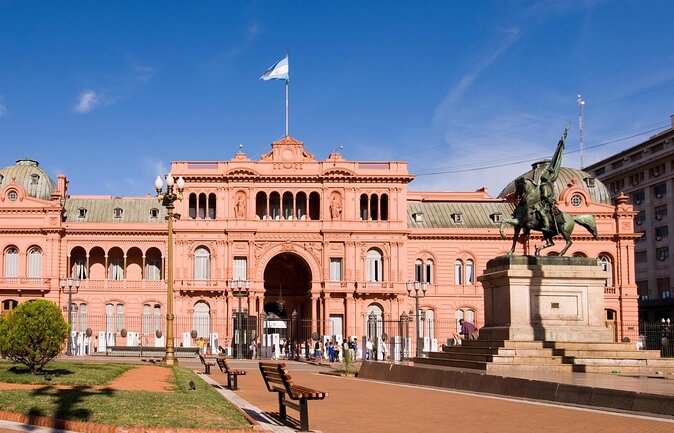
Plaza de Mayo is the key historical square in Buenos Aires. Here you see the Casa Rosada, the Metropolitan Cathedral, the Cabildo, the Pirámide de Mayo, and the area associated with the Mothers of the Disappeared.
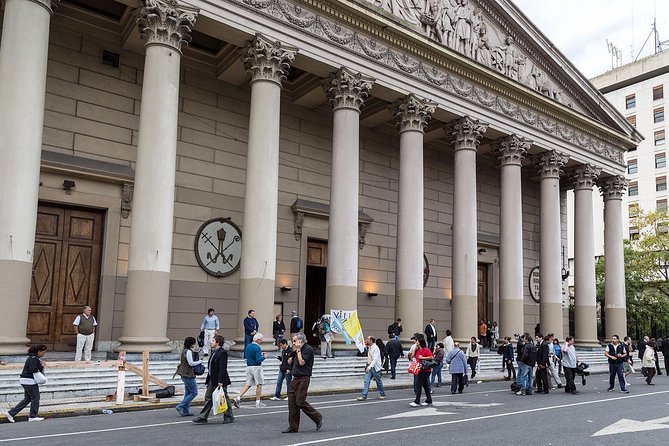
The Casa Rosada is the presidential office, and the guide explains its architecture and political role. The Cabildo, once the city hall, connects the square to the colonial period. The Cathedral is especially important because Pope Francis worked and preached there before becoming pope. Inside, you can see the guarded tomb of General San Martin.
The square also carries the painful story of Argentina’s dictatorship and the mothers who demanded answers about their missing children. That subject gives the tour more weight than a standard sightseeing loop. You are not only looking at attractive buildings. You are learning how public spaces carry political memory.
The Pyramid of May and the nearby government buildings add more detail. Shrapnel still marks some ministry buildings, a reminder of the coups and political violence that shaped recent Argentine history.
San Telmo and the old city’s uncomfortable stories
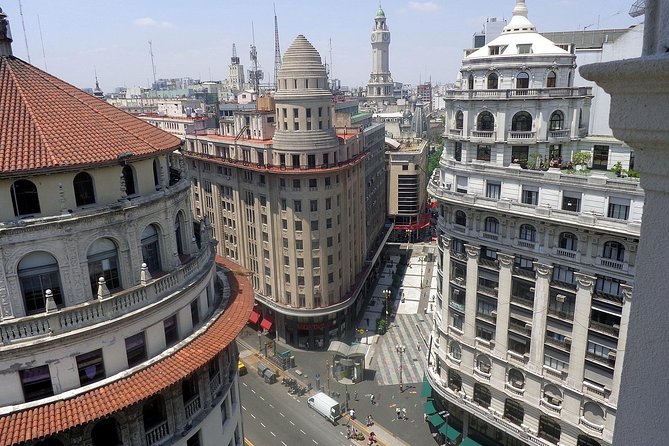
San Telmo is the oldest neighborhood on the route and one of its most rewarding sections. The colonial-style houses, old churches, narrow streets, and worn facades offer a strong contrast with the polished avenues of Recoleta and Retiro.
The tour covers Bolivar Street and Manzana de las Luces, an early center of learning and a foundational site for schooling in Buenos Aires. You also pass old shops, churches, and homes that have survived from the city’s early years. The guide explains how immigration changed both the population and the architecture.
Some of the most memorable details are small. A tiny house, unusually narrow for a huge city, is connected with the history of a freed slave. Calle Defensa recalls the British attacks of 1806 and 1807. The Saint Domingo Convent, Viceroy Liniers’ house, Chile Street, the Minimal House, Carlos Calvo Market, Belen Church, and Ezeiza’s Little Convent fill out the picture.
These are exactly the kinds of details you could walk past without help. The stories also keep San Telmo from becoming just a pretty antiques district. Its past includes slavery, invasion, religion, immigration, poverty, and social change.
Plaza Dorrego and the end of the route
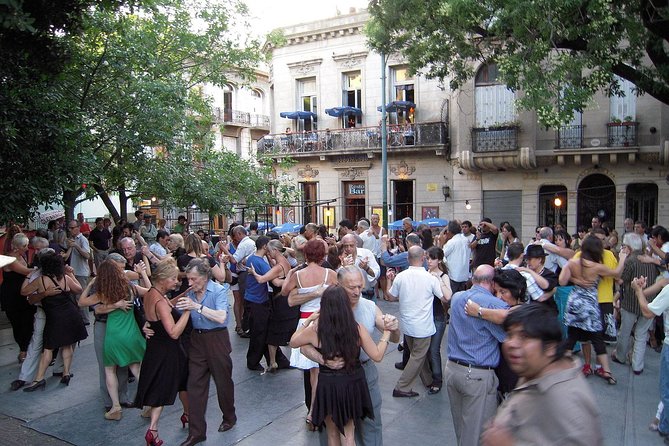
Plaza Dorrego is the official endpoint at Humberto 1º 400. It is the center of the San Telmo antiques fair and has cafes and antique shops nearby, making it a practical place to continue your afternoon.
The scheduled stop here is short, but you may want to stay after the guide leaves. The tour does not include hotel drop-off, and the ending can surprise people who assume the group returns to Florida Garden. Use a map or arrange a taxi if you are unsure how to get back.
An optional extension to La Boca may be available for an additional 45 minutes. It is not included in the base tour. The area is associated with Italian immigrants, sailors, dock workers, and colorful metal houses. Any added taxi cost should be clarified before agreeing to the extension.
Puerto Madero adds a modern contrast
Puerto Madero is the newest major neighborhood on the route. It was created by extending Buenos Aires across the old British docklands and into the water beyond the original coast.
The stop is brief, around 15 minutes, but it gives you a useful before-and-after comparison. Earlier sections show the old port, railway, colonial, and aristocratic city. Puerto Madero shows the city expanding into a newer urban district.
The route requires one taxi ride between attractions, costing about $5 to $7 and paid separately. Transportation during the tour is otherwise not included. Since this is sold as a walking experience, it is important to understand that you will not remain on foot every minute.
Lunch, coffee, and the private-tour advantage
A coffee and lunch break is built into the day, but meals are your responsibility. The break gives your feet a rest and lets you ask questions in a less formal setting. It also means the final schedule can shift slightly depending on the group, the guide, and the pace.
The private format is a real advantage for the right person. If you are the only participant, the route can be tailored to your interests. A couple interested in architecture can spend more time on palaces, while history-minded visitors can ask for more detail at Plaza de Mayo or San Telmo.
Guide quality matters. Carlos has been praised for faultless English and strong insight into Argentine life. Soledad, Clemencia, and Eilat have also received warm praise for their friendliness, clear explanations, and personal attention. There have been mixed experiences when a second guide took over after lunch, especially when the new guide spoke less fluent English or spent too long in Recoleta. If a guide change occurs, it is reasonable to ask how the remaining time will be handled.
Is $199 per person a fair price?
At $199 per person, this is not a budget walking tour. You are paying for a private guide, a long route, personal questions, and cemetery admission. You are not paying for meals, hotel transfers, or most transportation.
The price makes the most sense if you have only one day in Buenos Aires and want a city orientation with historical explanation. It is also useful if you dislike bus tours, shopping stops, or quick drive-by sightseeing. Several people found the tour worth the cost because it helped them understand places they had already seen on their own.
The value drops if you prefer entering buildings, lingering at cafes, or exploring one neighborhood at a relaxed pace. Much of the tour takes place outside, and some attractions are seen only from the street. You can visit many of the landmarks independently for less money, but you will not get the same continuous explanation or private access to a guide’s time.
What to know before you book
Plan for a moderate level of fitness and a long day on your feet. Six hours is the official estimate, but some outings have lasted close to seven hours.
Bring comfortable shoes, water, and weather protection. The tour runs rain or shine, and the full route may change because of weather, strikes, repairs, demonstrations, or other events.
Children age eight and under are free when accompanied by a paying adult. The activity is private, so only your group participates. Free cancellation is available up to 24 hours before the local start time, but changes or cancellations inside that window are not accepted.
Should you book this tour?
Book it if you want Buenos Aires explained rather than simply photographed. The route gives you political history at Plaza de Mayo, architecture in Retiro and Avenida Alvear, difficult social history in San Telmo, famous figures at Recoleta Cemetery, and a look at newer city growth in Puerto Madero.
Skip it if a six-hour walk sounds tiring, if you want lots of interior visits, or if you prefer to explore slowly on your own. For a first day in Buenos Aires, especially during a short stop, I think the tour offers strong value despite its high price. Start rested, confirm the taxi and ending arrangements, and tell your guide which subjects matter most to you.
FAQ
How long is the Buenos Aires walking tour?
The tour lasts approximately six hours. Some outings have lasted close to seven hours, so you should allow extra time.
Where does the tour begin?
It begins outside the corner door of Florida Garden cafe at Florida 899, near Paraguay Street. Look for a guide with a small BA Walking Tours sign.
What time does the tour start?
The start time is 10am. You should arrive before the tour begins.
Where does the tour end?
The scheduled endpoint is Plaza Dorrego in San Telmo, at Humberto 1º 400. Hotel drop-off is not included.
Is this a private tour?
Yes. Only your group participates in the private activity.
Is transportation included?
Transportation during the tour is not included. One taxi ride is required between attractions, and the taxi usually costs about $5 to $7.
Are meals included?
No. A coffee and lunch break is included in the schedule, but you pay for your own food and drinks.
Is admission to Recoleta Cemetery included?
Yes. Cemetery admission tickets are included.
Is the optional La Boca visit included?
No. The La Boca extension is optional and not included in the base tour. It adds about 45 minutes, and a taxi may be needed.
Is the tour suitable for children?
Children age eight and under are free when accompanied by a paying adult. All participants should be prepared for a long walk and a moderate level of physical activity.
Just added in Buenos Aires
- Discover Buenos Aires’ independent art scene — Ticket included★ 5.0 · 30 reviews
- Photo Session in Buenos Aires★ 5.0 · 26 reviews
- Your Private Photographer in Buenos Aires★ 5.0 · 4 reviews
- Yerba Mate Workshop – Learn to Drink Mate like a Local!★ 5.0 · 11 reviews
- Your Personal Photographer in Buenos Aires★ 5.0 · 24 reviews
- BA: Wine Tasting and Blending Experience in Palermo★ 5.0 · 1 review
- Winery and Tasting Experience in Buenos Aires★ 5.0 · 1 review
- Taste of Tradition: Yerba Mate & Alfajores Experience★ 4.0 · 5 reviews
Buenos Aires Tours, compared.
Local Foodie Adventure in Buenos Aires with Sherpa Food Tours
Read our review →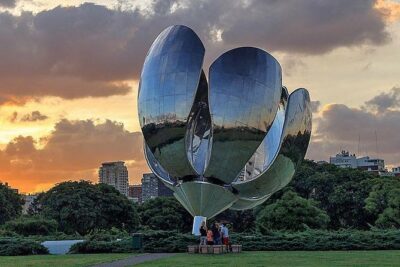
Buenos Aires City Private Tour with Local Guide
Read our review →

Buenos Aires Hop-On Hop-Off Bus and Exclusive Benefits
Read our review →

Argentine Experience Interactive Dining and Cooking
Read our review →Browse the lists this tour appears in