
Reviewed · ARGENTINE FOOD AND WINE TASTINGS
Buenos Aires: Empanadas and Alfajores Guided Cooking Class
Good food opens doors. This three-hour class brings you into a real Argentinian household in San Telmo, where you make empanadas, alfajores, and mate with local hosts rather than simply watching a demonstration. I especially like the small group of up to eight, which gives you room to work, and the warm family setting, which turns a cooking lesson into a friendly cultural evening. The main point to consider is that the instruction can feel less clear if you are new to cooking, and some people have needed to ask for the recipes afterward.
The food is the other big draw. You prepare the dough, fillings, twisted repulgue seal, cornstarch cookies, and dulce de leche filling, then eat what you make as part of a generous meal. At $37 per person, that is strong value, though wine costs extra and the table setup is informal.
In This Review
- What makes this class worth your time
- Arriving at Paseo Colon 1355 in San Telmo
- Starting with empanada dough and savory fillings
- Learning the Argentine repulgue
- Sharing mate the traditional Argentine way
- Making cornstarch alfajores with dulce de leche
- Eating together at the end
- Why the $37 price offers good value
- Group size, language, and access
- The recipe question you should settle before leaving
- Who will enjoy this Buenos Aires cooking class
- Should you book it?
- FAQ
- Where does the cooking class take place?
- How long does the experience last?
- How much does the class cost?
- What food do you make?
- Is mate included?
- Is wine included in the price?
- How many people can join the class?
- What languages are available?
- Is the activity wheelchair accessible?
- Can I cancel for a full refund?
What makes this class worth your time
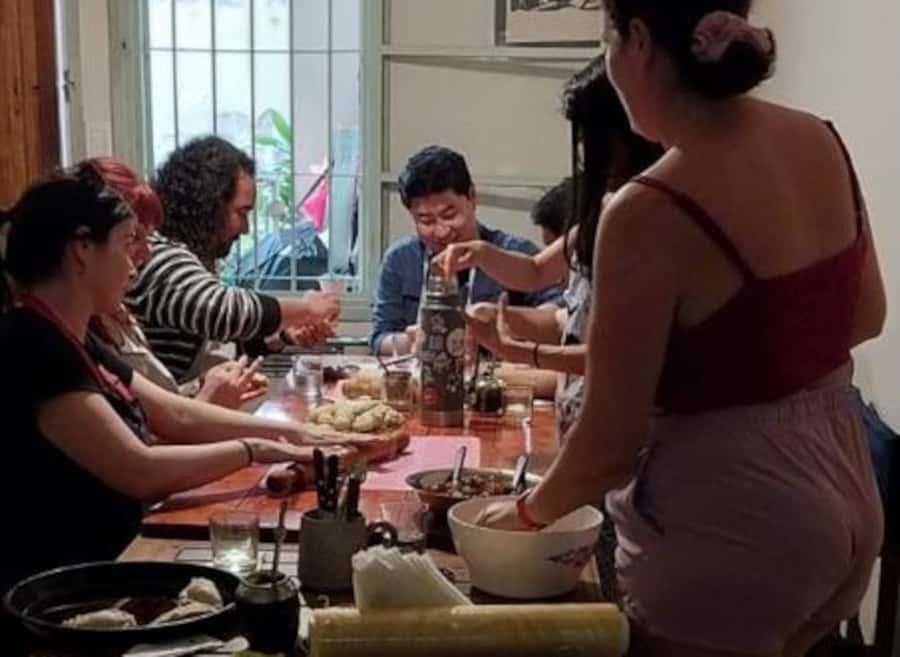
- A real San Telmo home: Meet at Paseo Colon 1355 and ring the bell for a class held in a local household rather than a formal cooking school.
- Two Argentine favorites: Make savory empanadas and sweet alfajores from basic ingredients, then enjoy the results.
- The repulgue lesson: Learn the twisted edge that seals an empanada and gives it a classic Argentine look.
- Mate with context: Prepare and share Argentina’s traditional herbal drink as part of the class.
- Small, social format: With no more than eight participants, the evening encourages conversation across nationalities.
- English and Portuguese instruction: Hosts can explain the cooking and cultural details in both languages.
Arriving at Paseo Colon 1355 in San Telmo
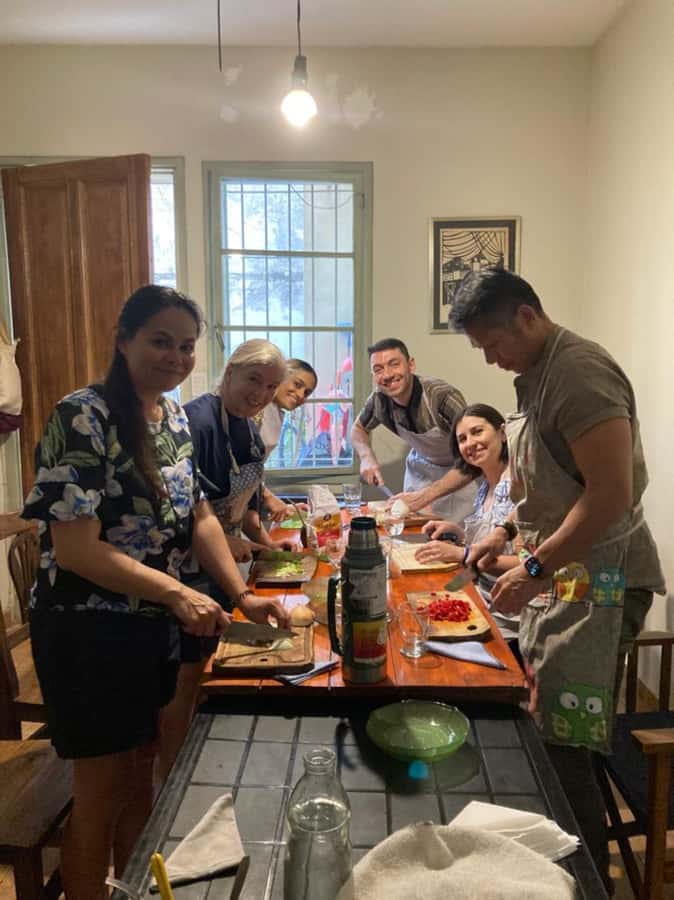
The class begins at Paseo Colon 1355 in San Telmo. You should arrive at the stated start time and ring the bell, since this is a private-home setting rather than a storefront with a large sign.
That address matters. San Telmo is one of Buenos Aires’ older neighborhoods, and entering a lived-in home gives the class a personal feel from the first minute. You are not being moved through a restaurant kitchen on a fixed production line. You are welcomed into a household, introduced to the people running the class, and invited to cook together.
The setting is cozy and fairly intimate. That helps with conversation, but it also means sightlines can be limited. If you sit at the end of the table, you may not see every technique as easily as someone near the center. I would ask to move closer when the host demonstrates an important step, especially the dough work and the repulgue.
The hosts have received especially warm praise for making people feel comfortable quickly. Thomas, Sophia, Maria, and other family members appear in the class feedback, with different hosts leading different sessions. Thomas is described as funny and professional, while Sophia is praised for her patience and cultural explanations. The exact host may vary, but the family-led approach is part of the experience.
More Food and Wine Tastings in Buenos Aires
- Local Foodie Adventure in Buenos Aires with Sherpa Food Tours
★ 5.0 · 6,875 reviews - Argentine Experience Interactive Dining and Cooking
★ 5.0 · 1,382 reviews - Cooking Class Designed by Michelin Chef @ Argentine Experience
★ 5.0 · 1,123 reviews
Starting with empanada dough and savory fillings
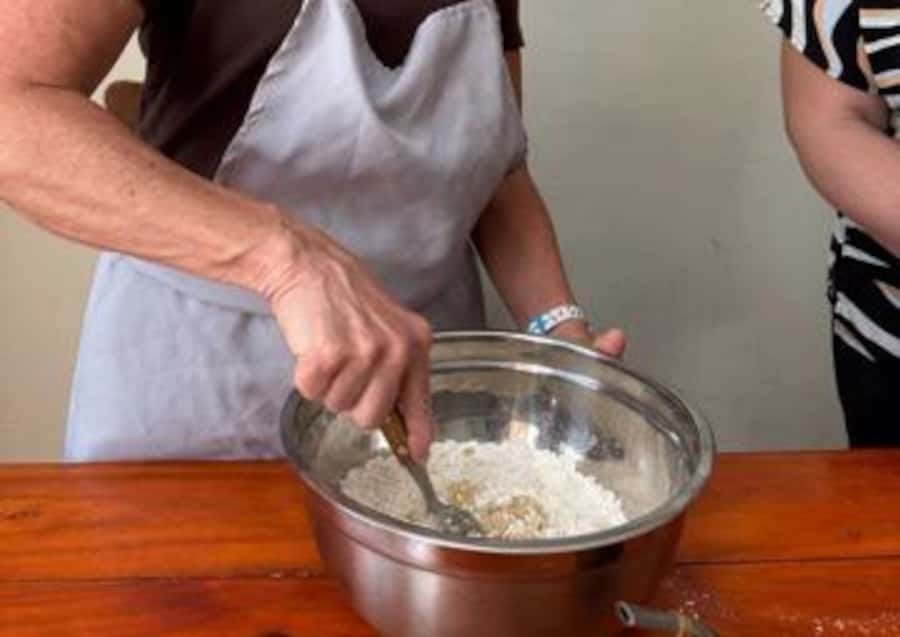
Empanadas are a useful dish to learn because they are common across Argentina and flexible enough to suit many tastes. At their simplest, they are filled dough that is baked or fried. The class focuses on making the dough and filling yourself, rather than handing you ready-made pieces.
You receive step-by-step help with the pastry and the savory center. The available examples include meat, ham and cheese, and vegetables. The feedback indicates that both a classic meat filling and a vegetarian option have been offered, making the activity workable for mixed groups.
One small limitation is worth noting. At least one session used the same meat filling twice, and a participant would have preferred a second flavor such as cheese. If trying several fillings is important to you, ask the host at the start what choices will be prepared that day. The menu can be more limited than the broad description suggests.
The hands-on part is the heart of the class. You help prepare ingredients, handle the dough, and shape the empanadas. This is not a quiet demonstration where you sit back with a drink while someone else does the difficult work. You may make uneven pastries at first, but that is part of the fun. The point is to leave with a method you can repeat at home, not to produce bakery-window perfection.
Learning the Argentine repulgue
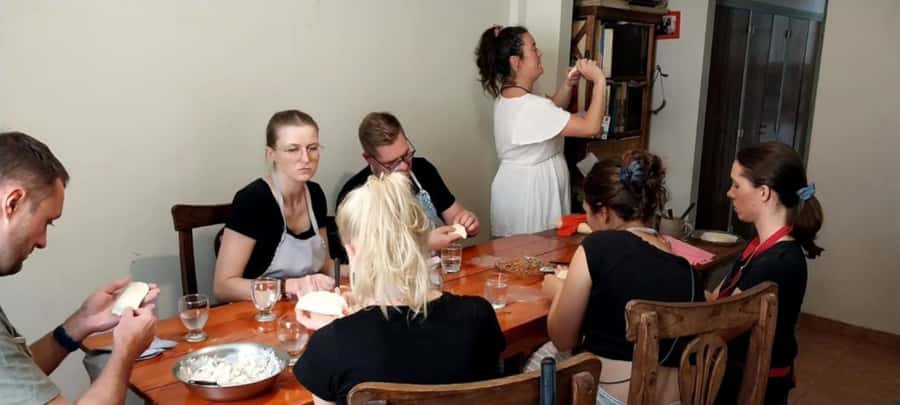
The repulgue is the twisted or folded edge used to close an empanada. It looks simple when an experienced cook does it, then becomes a small test of finger control when you try it yourself.
The instructor shows you how to seal the dough so the filling stays inside. This is a valuable lesson because the edge is both practical and visual. A well-sealed empanada holds its shape, while the pattern can help identify the filling in some Argentine kitchens.
The instructions have generally been easy for confident cooks to follow. If you are less comfortable in the kitchen, take your time and watch the demonstration from close up. One participant felt the explanations could have been clearer for beginners, and another noted that people at the far end of the table sometimes had trouble seeing. That is a fair warning, not a reason to avoid the class. You can ask questions, request another demonstration, and copy the movement slowly.
I like that the class lets you work with your hands throughout. You learn the feel of the dough, the amount of filling that fits, and the pressure needed to close the edge. Those small physical details are hard to pick up from a recipe alone.
Sharing mate the traditional Argentine way
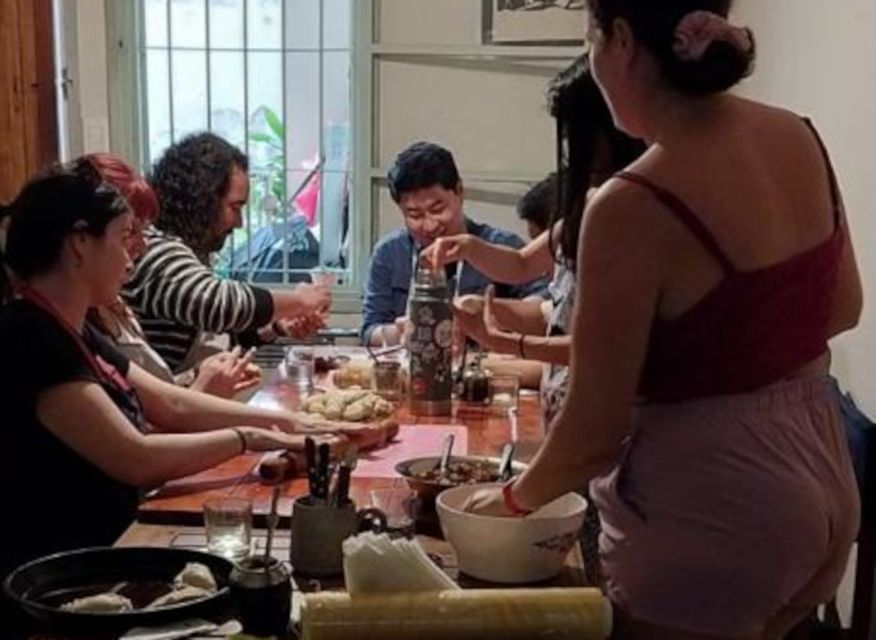
Mate is a social herbal drink made from yerba mate and prepared in a special gourd with a metal straw. The class includes mate and explains the traditional way to prepare and share it.
This portion adds cultural meaning to the cooking. You are not just making two dishes and sitting down to eat. You also learn a daily Argentine custom, including how the drink is prepared and enjoyed in company. Several participants valued this part because it helped connect the food to ordinary life in Argentina.
The hosts use mate as a natural pause during the cooking. It gives everyone a chance to talk, ask about Buenos Aires, and meet the other people at the table. The class has brought together people from several countries, and the small size makes conversation easier than it would be in a large group.
You should not expect mate to taste like a sweet tea. It is an herbal drink with a distinct, earthy flavor. The class is a good place to try it because you also learn the custom around it, rather than receiving an unexplained cup.
A completely different kind of day:
- Buenos Aires City Private Tour with Local Guide
★ 5.0 · 3,475 reviews - Buenos Aires Small-Group City Tour
★ 5.0 · 2,226 reviews - Buenos Aires Hop-On Hop-Off Bus, Free Walking Tours & Discounts
★ 4.5 · 2,218 reviews - Buenos Aires: Piazzolla Tango Show with Optional Dinner
★ 4.4 · 2,122 reviews
Making cornstarch alfajores with dulce de leche
After the savory work comes the sweet course. Alfajores are a beloved Argentine pastry, and this class teaches a style made with cornstarch and a creamy dulce de leche filling.
You prepare the cookie mixture, shape the pieces, and combine them with dulce de leche. The contrast with the empanadas makes the schedule work well. You move from a savory dough and filling to a softer, sweeter pastry that is strongly associated with Argentine food culture.
The alfajores are not merely a small sample served at the end. You make them yourself and eat the finished result with the rest of the meal. Several participants describe the food as delicious, and the amount is often generous enough that you may have extra empanadas or alfajores to finish later.
There is a practical lesson here too. Dulce de leche is essential to the finished pastry, and the class shows how it functions as the filling rather than treating it as a side condiment. If you have a sweet tooth, the alfajores may be your favorite part. If you prefer savory food, the empanadas still provide the main substance of the meal.
Eating together at the end
Once the cooking is complete, you sit down and eat what the group has prepared. Ingredients, water, mate, and the meal are included in the $37 price. Wine is not included, but it can be purchased separately.
The final meal is where the class shifts from instruction to social evening. You have spent time shaping food together, so conversation comes easily. The hosts also talk about Argentina, Buenos Aires, food customs, and local life. The experience is often praised for making a table of strangers feel relaxed and connected.
Do not expect formal restaurant service. One participant would have preferred small plates rather than napkins, which gives you a useful picture of the casual setup. Another described the room as a family kitchen where everyone took part. That informality is part of the appeal, but it may not suit you if you want polished table service or a carefully plated dinner.
The food quantity appears to be a strong point. You eat the empanadas and alfajores you have prepared, and the meal is described as filling. At this price, the class delivers both an activity and dinner, which makes it especially useful on an evening when you want to combine sightseeing with a substantial meal.
Why the $37 price offers good value
At $37 per person, this is not just a cooking demonstration. Your fee covers three hours, ingredients, mate, water, instruction, and the meal you prepare.
The value is strongest if you want several things in one booking:
- A hands-on cooking lesson
- A local food introduction
- A cultural activity centered on mate
- A social evening with a small group
- Dinner and dessert
You could likely spend a similar amount on a meal in Buenos Aires without learning how it was made or meeting the people behind it. On the other hand, you should not book this expecting a professional chef’s tasting menu. The setting is a home, the equipment is domestic, wine costs extra, and the presentation is casual.
For families, the price also covers an activity that can include teenagers and older children. A 12-year-old, a 14-year-old, and a 16-year-old have all been described as enjoying the hands-on work. The class gives younger participants a clear job, and they get to eat the result.
Group size, language, and access
The group is limited to eight people. That is small enough for personal help and large enough to create a lively table. If you prefer private instruction or complete control over the menu, this is not that type of booking. You are sharing the space and the food preparation with other participants.
Instruction is available in English and Portuguese. English-speaking participants have praised the explanations, especially the discussions about Argentine culture and food traditions. Still, the level of detail can vary with the group, so beginners should speak up if a step is moving too quickly.
The experience is listed as wheelchair accessible. That is useful information if access is important to your planning, though you may still want to confirm any personal requirements before booking a private-home activity.
Free cancellation is available up to 24 hours before the start time, and you can reserve now and pay later. Those terms make it easier to fit the class into a changing Buenos Aires schedule.
The recipe question you should settle before leaving
Recipes are shared after the class, but the process has not always been automatic. Some participants received them without trouble, while others had to follow the host on Instagram and ask directly.
If you want to repeat the dishes at home, do not assume the recipes will simply appear in your inbox. Ask the host before you leave and confirm exactly how you will receive them. This is the clearest practical improvement I would suggest for the organizers.
That small issue matters because the class is designed to build confidence. The techniques are useful only if you can remember the ingredient amounts and steps later. Ask for the recipe while everyone is still together, and check that you have received both the empanada and alfajor instructions.
Who will enjoy this Buenos Aires cooking class
I would recommend this class to you if you want personal contact with local hosts, enjoy making food with your hands, and prefer a social evening to a formal restaurant meal.
It is a particularly good fit for:
- Couples looking for a shared activity
- Families with children or teenagers
- Solo visitors who want an easy way to meet people
- First-time visitors seeking an introduction to Argentine food
- Cooks who want practical recipes to use at home
- Anyone curious about mate and the customs around it
You may want to choose something else if you need a very structured professional kitchen, several empanada fillings, or a quiet meal. Beginners can take part, but you should be ready to ask for clearer instructions or a closer view of the demonstration.
Should you book it?
Yes, if you value warmth, food, and conversation more than polished presentation. The class gives you three useful tastes of Argentina in one evening: savory empanadas, sweet alfajores, and shared mate.
The strongest reasons to book are the family-home setting, the small group, the generous meal, and the chance to learn a technique you can use after your trip. Before you arrive, ask what empanada fillings are planned, and before you leave, confirm how the recipes will be sent.
For $37, this is a well-priced cultural activity with dinner included. It is not perfect, but its minor shortcomings are mostly practical. If you want to cook, talk, laugh, and leave with a better feel for Argentine food traditions, reserve a spot.
FAQ
Where does the cooking class take place?
The class takes place at Paseo Colon 1355 in San Telmo, Buenos Aires. You should ring the bell at the scheduled starting time.
How long does the experience last?
The cooking class lasts three hours.
How much does the class cost?
The listed price is $37 per person.
What food do you make?
You make Argentine empanadas with savory fillings and alfajores made with cornstarch and dulce de leche.
Is mate included?
Yes. Mate, water, ingredients, and the meal are included.
Is wine included in the price?
No. Wine is available for purchase separately.
How many people can join the class?
The group is limited to eight participants.
What languages are available?
The instructors can teach in English and Portuguese.
Is the activity wheelchair accessible?
Yes, the experience is listed as wheelchair accessible.
Can I cancel for a full refund?
Yes. You can cancel up to 24 hours in advance for a full refund.
Just added in Buenos Aires
- Discover Buenos Aires’ independent art scene — Ticket included★ 5.0 · 30 reviews
- Photo Session in Buenos Aires★ 5.0 · 26 reviews
- Your Private Photographer in Buenos Aires★ 5.0 · 4 reviews
- Yerba Mate Workshop – Learn to Drink Mate like a Local!★ 5.0 · 11 reviews
- Your Personal Photographer in Buenos Aires★ 5.0 · 24 reviews
- BA: Wine Tasting and Blending Experience in Palermo★ 5.0 · 1 review
- Winery and Tasting Experience in Buenos Aires★ 5.0 · 1 review
- Taste of Tradition: Yerba Mate & Alfajores Experience★ 4.0 · 5 reviews
Argentine Food and Wine Tastings, compared.
Local Foodie Adventure in Buenos Aires with Sherpa Food Tours
Read our review →
Argentine Experience Interactive Dining and Cooking
Read our review →
Cooking Class Designed by Michelin Chef @ Argentine Experience
Read our review →
Historical Sherpa Food Tour of San Telmo with Street Food, Drinks
Read our review →
Join a Local Family Asado in Buenos Aires with Betty and Marcelo
Read our review →
Browse the lists this tour appears in