
Reviewed · BUENOS AIRES TOURS
Buenos Aires: Deluxe Walking Tour Like a Local, Recoleta Cemetery
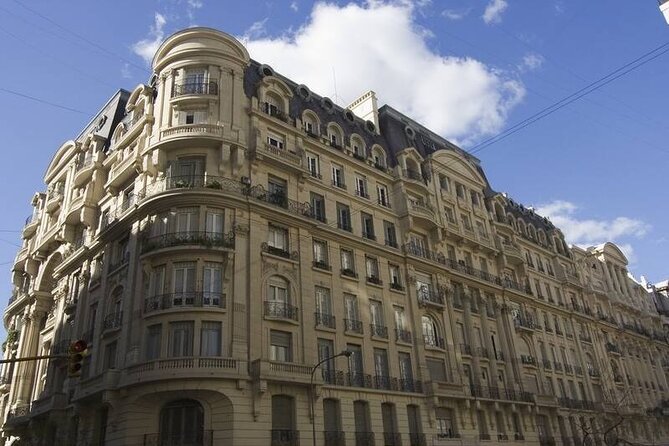
Buenos Aires reveals its secrets on foot. This small-group walking tour links grand palaces, embassies, private clubs, and Recoleta’s famous cemetery into one clear story about wealth, European ambition, and modern Argentina. I like the carefully chosen route along Arroyo Street and Alvear Avenue, and I like that the walk ends at Recoleta Cemetery, where you can choose to pay extra and explore inside. The main consideration is that cemetery admission costs another $15, and the tour itself finishes outside the entrance.
You’ll walk for about three to four hours, beginning at 10:00 a.m. and ending around midday at Junín 1760. I especially appreciate the maximum group size of 12, which should make it easier to hear the guide and ask questions. You’ll need comfortable shoes, water, and sun protection, since the tour is outdoors and includes a fair amount of walking.
In This Review
- Key points to know before booking
- Starting at San Martín Palace
- Palacio Estrugamou and the language of French style
- A quieter side of Buenos Aires on Arroyo Street
- Memory at the former Israeli Embassy site
- Alvear Avenue, where old Buenos Aires wanted to impress
- Embassies, palaces, and international ambition
- Duhau Palace and the changing meaning of luxury
- Alvear Palace Hotel and Plaza Francia
- Recoleta Cemetery: the important optional extra
- Is $60 a fair price?
- Timing, fitness, and weather
- Who should book this Buenos Aires walk?
- Should you book it?
- FAQ
- Where does the tour begin?
- What time does the tour start?
- Where does the tour end?
- How long does the tour last?
- Is Recoleta Cemetery admission included?
- Who collects the cemetery entrance fee?
- Can I arrange cemetery entry in advance?
- How large is the group?
- What should I bring?
- What happens in bad weather?
- Is the tour suitable for all fitness levels?
- Can I cancel for a full refund?
Key points to know before booking
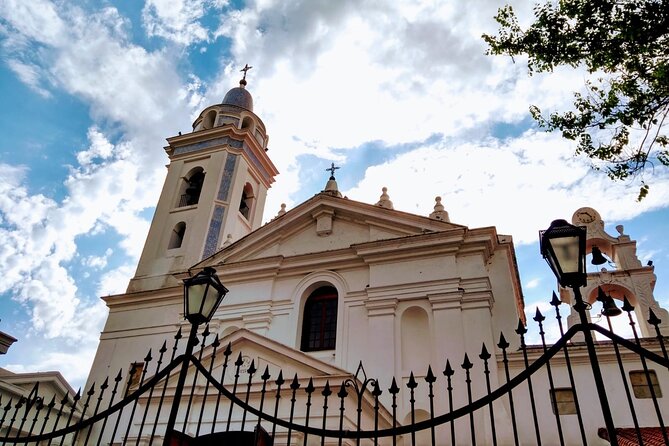
- A Belle Époque route with a clear theme: Palaces, embassies, hotels, and elite institutions show how Buenos Aires once looked toward Paris for style and status.
- The walk covers two elegant streets: Arroyo Street provides a quieter, more refined opening, while Alvear Avenue brings the grandest buildings and most famous names.
- Recoleta Cemetery is optional: The tour ends outside, and entrance costs an additional $15 per person, collected by the city.
- A licensed local guide leads the walk: The guide is registered with the Buenos Aires city tourism authority.
- Small groups make a difference: The shared group is limited to 12 people, a useful size for an urban history walk.
- The price is $60 per person: That is fair if you want context and storytelling, but less attractive if you only want a quick architectural stroll.
Starting at San Martín Palace
Meet your guide at 10:00 a.m. in front of Palacio San Martín at Arenales 761. This former aristocratic residence now houses the Ministry of Foreign Affairs, giving the tour an immediate connection to both private wealth and public power.
The opening stop takes about 15 minutes. You’ll hear how Buenos Aires’ upper class built homes that reflected its admiration for European culture around the turn of the 20th century. The phrase Belle Époque can sound like a museum label, but here it becomes easier to understand: wealthy families wanted their city to look polished, international, and unmistakably connected to Paris.
Admission to the palace is not included, and the route appears to focus on the exterior and surrounding setting. That is worth knowing if you expect an indoor palace visit. Still, beginning here gives the walk a strong frame. You are not simply looking at pretty façades. You are seeing the city’s old social order written in stone.
More Walking Tours in Buenos Aires
- Buenos Aires Hop-On Hop-Off Bus, Free Walking Tours & Discounts
★ 4.5 · 2,218 reviews - Buenos Aires: La Boca Guided Walking Tour in English
★ 4.8 · 1,587 reviews - La Boca Walking Tour
★ 5.0 · 1,029 reviews
Palacio Estrugamou and the language of French style
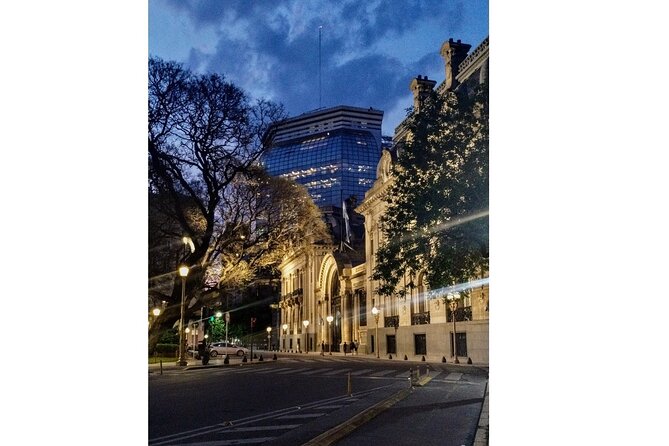
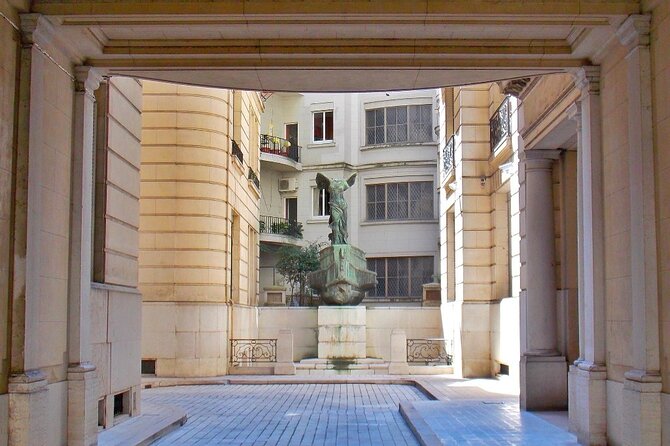
A short walk brings you to Palacio Estrugamou, a residential complex built in a refined French style. Its courtyard contains a replica of the Nike of Samothrace, the famous winged Greek sculpture associated with the Louvre.
That detail helps explain the taste of Buenos Aires’ elite better than a general lecture would. Classical art, French architecture, and European references were used to signal education, status, and cultural confidence. The stop lasts around 10 minutes, so expect a focused explanation rather than a long visit.
The palace is another exterior stop, with no admission included. If you enjoy architecture, this early section gives you several details to watch for: formal façades, grand entrances, sculptural decoration, and the way private residences were designed to make a public impression.
A quieter side of Buenos Aires on Arroyo Street
Arroyo Street receives about 30 minutes, making it one of the more substantial sections before Alvear Avenue. It is described as one of the city’s most elegant and discreet streets, and that contrast matters.
Buenos Aires is often associated with broad avenues and lively public spaces. Arroyo offers something more restrained. Here, the guide connects architecture with the daily life of the upper class, the city’s art scene, and the European influence that shaped this part of town.
I like this portion of the walk because it gives you time to slow down. You are not rushing from landmark to landmark. A quiet street can reveal as much about a city as a famous square, especially when a guide points out how style, money, and social habits came together.
The Nicolás Mihanovich Building adds another layer. This early skyscraper reflects a more modern Buenos Aires, one tied to shipping, immigration, and international trade. Its story helps prevent the tour from becoming a parade of old mansions. The city was not only copying Europe. It was also growing through commerce and its links with the wider world.
Memory at the former Israeli Embassy site
The Plaza Embassy of Israel is a brief stop on Arroyo Street, lasting about 10 minutes. It is a place of memory and reflection, connected with the history of the Israeli Embassy and the city’s response to violence and loss.
This changes the mood of the walk. Until this point, the focus is mostly architecture, class, and urban ambition. At the plaza, the guide brings in remembrance and resilience. It is a useful reminder that Buenos Aires’ elegant neighborhoods also carry painful chapters.
The stop is outdoors and free. You should expect a respectful explanation rather than a long formal visit. Because the tour moves through several distinct subjects, this pause adds moral and historical weight to the architectural story.
A completely different kind of day:
- Local Foodie Adventure in Buenos Aires with Sherpa Food Tours
★ 5.0 · 6,875 reviews - Buenos Aires City Private Tour with Local Guide
★ 5.0 · 3,475 reviews - Buenos Aires Small-Group City Tour
★ 5.0 · 2,226 reviews - Buenos Aires: Piazzolla Tango Show with Optional Dinner
★ 4.4 · 2,122 reviews
Alvear Avenue, where old Buenos Aires wanted to impress
The route then turns toward Avenida Alvear, with about 40 minutes devoted to the avenue itself. This is the core of the tour and the place where the Belle Époque theme becomes most visible.
Alvear Avenue was the address of high society, lined with palaces, embassies, grand hotels, and buildings designed to project status. You’ll hear how luxury and European influence shaped the area, and why this avenue became such a strong symbol of Argentina’s international ambitions.
The avenue is best approached as a social story, not just an architectural one. Each façade points to a network of families, diplomats, business leaders, and institutions that helped shape Buenos Aires. You are looking at buildings, but you are also learning who had power and how that power was displayed.
Since this is a walking tour, the guide can connect one building to the next as part of a larger sequence. The drawback is that most stops are brief, often 10 minutes. If you want to examine every architectural detail or take many photographs, you may need to do another slow walk on your own later.
Embassies, palaces, and international ambition
The Embassy of France marks the beginning of Alvear Avenue. Its French academic architecture reflects Argentina’s close cultural ties with Paris and the desire of the local elite to reproduce European elegance at home.
Next comes Pereda Palace, now the Embassy of Brazil. This is an especially useful stop because it shows how a private residence could later become a diplomatic building. Its French-inspired design reflects the social world of the people who commissioned it, while its current role points to Buenos Aires as a center of international relations.
Admission is not included at either building, and the tour does not promise interior access. The value comes from the guide’s explanation of what you are seeing from the street and why these buildings were placed here.
The Jockey Club reveals another side of elite life. This exclusive institution shaped high-society leisure and networks of influence. The tour also addresses an uncomfortable fact: women were excluded from membership until very recently. That detail keeps the story from becoming too glossy. The old social world had clear boundaries, and the buildings along Alvear Avenue represented privilege as much as taste.
The Vatican Embassy, or Apostolic Nunciature, continues the theme of international influence. Here the focus shifts toward religion, diplomacy, and the role of international institutions in elite Buenos Aires. You’ll spend about 10 minutes at the stop, enough for context without turning the morning into a formal civics lesson.
Duhau Palace and the changing meaning of luxury
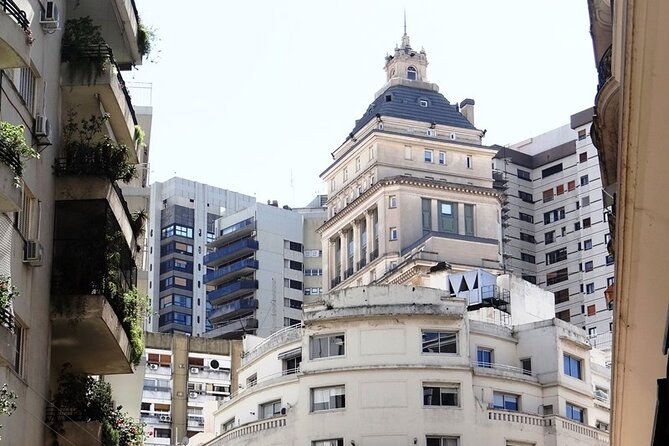
Palacio Duhau is now the Park Hyatt Buenos Aires, but it began as a grand private residence belonging to one of Argentina’s powerful families. The building offers a clear example of how historic architecture can be adapted for modern luxury hospitality.
I find this transition especially interesting. The palace no longer serves the family life for which it was built, yet its architecture continues to sell an idea of refinement and privilege. The setting has changed from private residence to high-end hotel, but the language of status remains.
You should not expect a hotel tour or an included visit inside. The guide’s role is to explain the building’s past and its place along Alvear Avenue. This is a photo and storytelling stop, not a room tour.
Nearby, the Maguire Residence is described as the only palace on Alvear Avenue that remains a private home. That makes it an unusual sight in a district where many grand residences have become hotels, embassies, or public institutions.
The private status also means you should expect to admire it from outside. Its importance lies in continuity. It gives you a glimpse of a tradition that has survived while much of the surrounding avenue has changed function.
Alvear Palace Hotel and Plaza Francia
The Alvear Palace Hotel is another symbol of old-style luxury. The hotel has hosted aristocracy, celebrities, and world leaders, and it continues the avenue’s connection with high society.
The stop lasts about 10 minutes. The guide can place the hotel within the wider story: private palaces were not the only settings for prestige. Grand hotels also became places where influential people met, stayed, and displayed their social position.
The walking section ends at Plaza Intendente Torcuato de Alvear, better known as Plaza Francia. This is the heart of Recoleta, and it offers a change from the formal avenue. The square connects daily city life with culture and historic landmarks, including views of the Basilica de Nuestra Señora del Pilar.
The name can be confusing, so the explanation of its history is useful. Plan for about 15 minutes here. It is a good point to pause, take photographs, and get your bearings before reaching the cemetery.
Recoleta Cemetery: the important optional extra
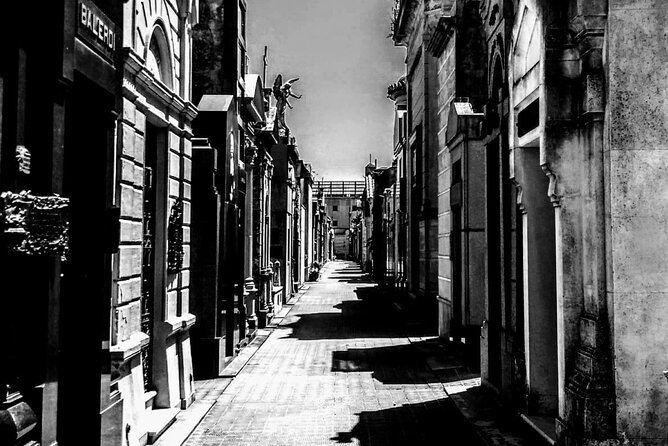
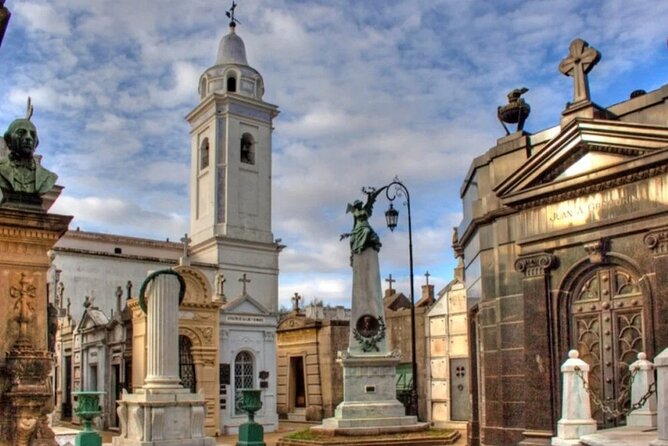
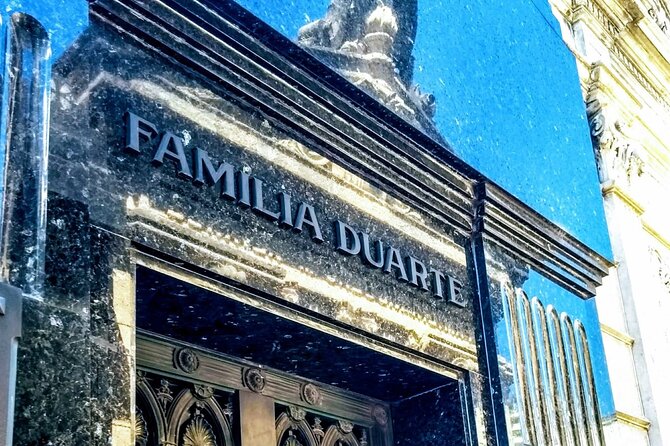
The tour finishes facing Recoleta Cemetery around midday. The guide introduces the cemetery as a powerful symbol of wealth, memory, and social rank, but the standard walking tour does not include entry.
If you want to go inside, admission costs an additional $15 per person. The fee is charged and collected by the Government of the City of Buenos Aires, and you can buy the ticket at the entrance. You may also contact the provider in advance if you want to add the cemetery visit to your plans.
The timing is practical. After the street walk ends, you have free time to take a break nearby and recharge before entering. I would treat the cemetery as an optional second act rather than a minor add-on. If this is your first visit to Buenos Aires, the tombs, family mausoleums, and famous names can be hard to understand without guidance.
One past booking comment praised the way the walk made the neighborhood and the view toward the cemetery easier to understand, especially for a first international trip. That is a useful point. Even if you have already visited Recoleta Cemetery, the approach from San Martín Palace can change how you read the surrounding district.
The supplied information does not confirm that a guide accompanies you inside the cemetery, so you should clarify that point before paying the extra fee. The tour clearly ends outside, and entry is optional.
Is $60 a fair price?
The cost is $60 per person. That price includes the walking tour and a local guide licensed by the tourism authority of Buenos Aires. It does not include entry to Recoleta Cemetery or admission to any of the buildings along the route.
For a three to four-hour small-group walk, the price is reasonable if you want explanation, historical links, and a planned route through some of the city’s most prestigious streets. You are paying for the story that connects the buildings, not for access inside a string of palaces.
The value is weaker if you mainly want photographs or a quick orientation. Much of the tour takes place outside, and several stops last only 10 minutes. In that case, you could walk parts of Alvear Avenue independently and save the fee.
The strongest case for booking is the route design. San Martín Palace, Arroyo Street, Alvear Avenue, Plaza Francia, and Recoleta Cemetery form a logical line. You do not waste time crossing the city between unrelated sights.
Timing, fitness, and weather
The walk begins at 10:00 a.m. and takes roughly three to four hours. It ends around midday at Recoleta Cemetery, so plan your lunch and afternoon from that point rather than from the starting address.
You should have moderate physical fitness. Comfortable shoes are important, and water and sunscreen are recommended. The route is outdoors, so hot sun may make the walk feel longer than the clock suggests.
The activity is suspended only in cases of very heavy rain or a weather alert. Light changes in weather do not automatically cancel it. Free cancellation is available when you cancel at least 24 hours before the local start time. Changes or cancellations inside that window are not accepted for a refund.
The group is shared and limited to 12 people. That is small enough for a personal feel without making the price of a private tour. The route is also near public transportation, which helps if you are staying outside Recoleta or need to continue elsewhere afterward.
Who should book this Buenos Aires walk?
I would recommend it to first-time visitors who want a social and architectural introduction to Buenos Aires. It suits anyone curious about how the city’s upper class, diplomatic institutions, religious power, trade, and luxury hotels shaped one neighborhood.
It is also a good fit for solo visitors. The group setting provides company without requiring a full-day commitment, and the direct route makes the morning easy to manage.
You may want something else if you need wheelchair-specific information, extensive indoor access, or a slower photography tour. The supplied details only confirm a moderate fitness requirement and an outdoor route, so ask the provider about your exact mobility needs before booking.
Should you book it?
Book this tour if you want context more than checklists. The best feature is the way it links Buenos Aires’ grand architecture to class, diplomacy, commerce, memory, and changing ideas about luxury.
The main decision is Recoleta Cemetery. If you want the cemetery included, budget $15 extra and confirm the arrangements in advance. If you prefer to explore it independently, the walking tour still ends at a convenient location.
At $60, this is not the cheapest way to stroll through Recoleta. It is a good value for a small group, a licensed local guide, and a focused three to four-hour route through the city’s most polished historic district.
FAQ
Where does the tour begin?
The tour begins in front of Palacio San Martín at Arenales 761 in Buenos Aires.
What time does the tour start?
The walking tour starts at 10:00 a.m.
Where does the tour end?
It ends facing Recoleta Cemetery at Junín 1760, around midday.
How long does the tour last?
The tour lasts approximately three to four hours.
Is Recoleta Cemetery admission included?
No. Cemetery entry is optional and costs an additional $15 per person.
Who collects the cemetery entrance fee?
The Government of the City of Buenos Aires collects the $15 entrance fee at the cemetery entrance.
Can I arrange cemetery entry in advance?
Yes. If you want to add entry, you can contact the provider in advance at [email protected].
How large is the group?
The shared group has a maximum of 12 people.
What should I bring?
You should bring comfortable shoes, water, and sunscreen.
What happens in bad weather?
The tour is suspended only in cases of very heavy rain or a weather alert.
Is the tour suitable for all fitness levels?
The tour recommends a moderate level of physical fitness because it is an outdoor walking activity.
Can I cancel for a full refund?
Yes. You can cancel at least 24 hours before the local start time for a full refund. Cancellations or changes made less than 24 hours before the start are not refunded or accepted.
Just added in Buenos Aires
- Discover Buenos Aires’ independent art scene — Ticket included★ 5.0 · 30 reviews
- Photo Session in Buenos Aires★ 5.0 · 26 reviews
- Your Private Photographer in Buenos Aires★ 5.0 · 4 reviews
- Yerba Mate Workshop – Learn to Drink Mate like a Local!★ 5.0 · 11 reviews
- Your Personal Photographer in Buenos Aires★ 5.0 · 24 reviews
- BA: Wine Tasting and Blending Experience in Palermo★ 5.0 · 1 review
- Winery and Tasting Experience in Buenos Aires★ 5.0 · 1 review
- Taste of Tradition: Yerba Mate & Alfajores Experience★ 4.0 · 5 reviews
Buenos Aires Tours, compared.
Local Foodie Adventure in Buenos Aires with Sherpa Food Tours
Read our review →
Buenos Aires City Private Tour with Local Guide
Read our review →

Buenos Aires Hop-On Hop-Off Bus and Exclusive Benefits
Read our review →

Argentine Experience Interactive Dining and Cooking
Read our review →Browse the lists this tour appears in