
Reviewed · BUENOS AIRES TOURS
Buenos Aires: 7 Hour Small Group “BA 101” Walk
Start with Buenos Aires at street level. This seven-hour small-group walk links the city’s grand squares, old cafes, political landmarks, neighborhood markets, and famous cemetery in one well-planned day. With a maximum of seven participants, the experience feels more personal than a large bus tour, and the English-speaking guide can answer questions as you go.
I especially like the mix of major sights and ordinary city life, from Recoleta Cemetery and the Obelisk to a morning coffee, a metro ride, and lunch. I also like the route’s range: you move through Barrio Norte, Recoleta, San Nicolas, Monserrat, and San Telmo rather than seeing only one polished corner of Buenos Aires. The main drawback is the pace. Seven hours on foot, with public transport and many stops, calls for good shoes and reasonable stamina.
The guide can make a real difference here. Tracy is praised for combining local language, history, and a friendly manner, while Chris is known for answering questions and pointing out details you could easily miss alone. I would treat this as a city orientation day, not a slow museum tour.
In This Review
- Key points at a glance
- Starting among bookstores and grand civic buildings
- Recoleta Cemetery and the story of Evita
- Opera, law, and the widest avenue
- Florida Street and the political heart of Buenos Aires
- Lunch, local transport, and the move to San Telmo
- San Telmo’s old streets and market halls
- What the $160 price includes
- Who should book this Buenos Aires walk?
- Should you book the BA 101 walk?
- FAQ
- How long is the Buenos Aires BA 101 walking tour?
- Where does the tour begin?
- Where does the tour end?
- How many people can join the group?
- What language is the tour conducted in?
- Is lunch included?
- Is coffee included?
- Is admission to Recoleta Cemetery included?
- Is public transportation included?
- Who cannot take this tour?
Key points at a glance
- A seven-hour route covers four major areas: Barrio Norte, Recoleta, the city center, and San Telmo.
- Recoleta Cemetery entry is included: This saves more than US$15 and lets you focus on the tombs rather than ticket arrangements.
- The group is capped at seven people: That gives you a better chance to ask questions and keep the walk conversational.
- Coffee, lunch, water, and public transport are included: You are not paying only for sightseeing.
- The itinerary reaches both famous sights and local corners: You see the Casa Rosada, Obelisk, and Cathedral, then finish among San Telmo’s market stalls and antique shops.
- The tour begins at 10 a.m. and ends around 5 p.m.: It uses most of a day, so plan your evening with some flexibility.
Starting among bookstores and grand civic buildings
The tour begins at 10 a.m. in Barrio Norte, near Avenida Santa Fe and Avenida Callao. The exact corner arrives with your confirmation instructions, but the area is easy to reach and gives you an immediate taste of Buenos Aires architecture and daily life.
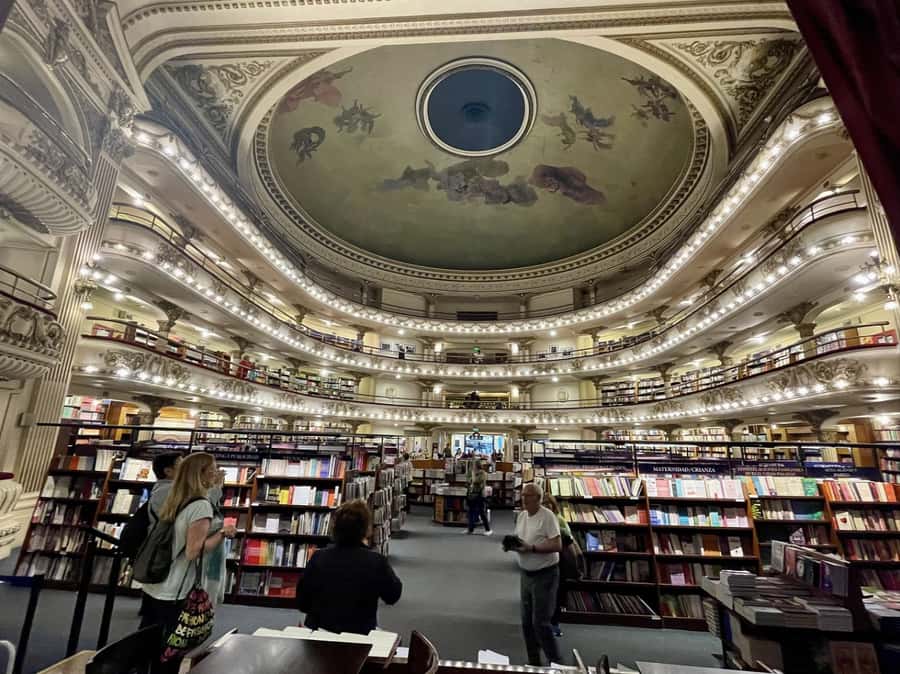
The first stop is El Ateneo Grand Splendid, a former theater turned bookstore. Its appeal is visual as much as literary. You can admire the preserved theater details while learning how an old performance space found a second life as a bookshop. It is a smart opening stop because it introduces Buenos Aires as a city that keeps older buildings in use.
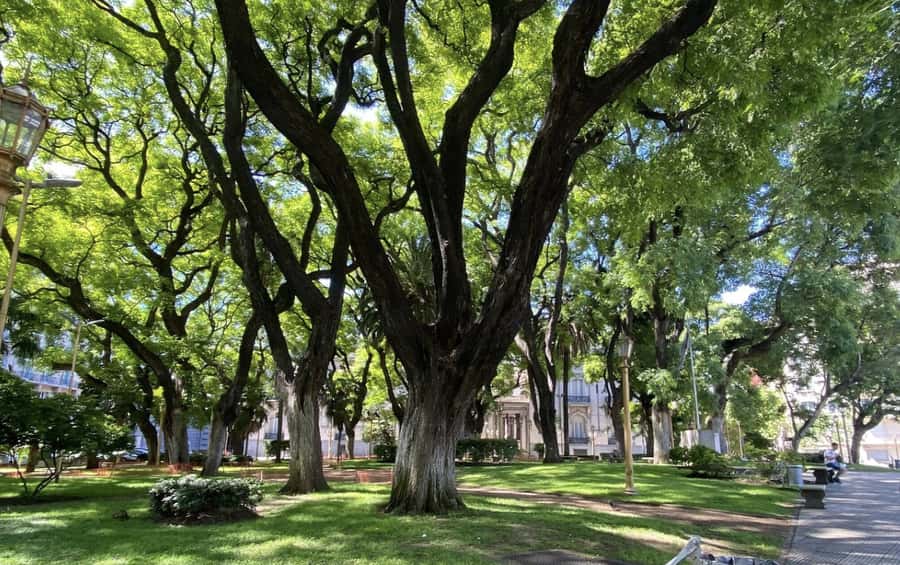
You then walk through leafy Plaza Rodriguez Peña, where the Palacio Sarmiento houses Argentina’s Ministry of Education. The square gives your legs a gentler start before the route moves into larger streets and denser city blocks. I like this early contrast: Buenos Aires is not only monumental avenues and political buildings. Small green spaces matter too.
The Palacio de Aguas Corrientes is another useful surprise. Its elaborate exterior hides a practical purpose, and the building comes with a story that helps explain the city’s growth and infrastructure. This is the kind of stop that can be easy to pass without a guide. You may not think to photograph a waterworks building, but its design makes clear that Buenos Aires once treated public utility buildings with serious architectural ambition.
Coffee is included during the morning, or you can choose a drink of equal value. That break matters on a long walking day. It also gives the guide a chance to answer questions before the route reaches Recoleta.
More Walking Tours in Buenos Aires
- Buenos Aires Hop-On Hop-Off Bus, Free Walking Tours & Discounts
★ 4.5 · 2,218 reviews - Buenos Aires: La Boca Guided Walking Tour in English
★ 4.8 · 1,587 reviews - La Boca Walking Tour
★ 5.0 · 1,029 reviews
Recoleta Cemetery and the story of Evita
Recoleta is one of the tour’s strongest sections. The neighborhood is associated with elegant architecture and public squares, but the cemetery is the main event. Recoleta Cemetery is less like a conventional burial ground and more like a compact city of mausoleums, lanes, family chapels, and ornate stonework.
Entry is included, which is important because the listed value is more than US$15 per person. You can spend your attention on the design and stories inside instead of worrying about an extra fee.
The most famous stop is the tomb of Eva Perón, known as Evita. Her political and cultural importance in Argentina gives the visit more weight than a simple celebrity grave. The guide can place her life in the country’s political story and explain why her name still carries such force.
The cemetery also rewards looking beyond Evita. Elaborate tombs belonging to Argentina’s wealthy and famous fill the lanes, and many are striking in ways that range from elegant to eerie. I would not rush this part. It is one of the few places on the itinerary where the best details may be on a doorway, statue, or worn inscription rather than at the main photo stop.
Afterward, the group walks through Plaza Francia and sees Our Lady of Pilar Church. The church is described as one of the city’s best-preserved examples of colonial architecture. That makes it a useful counterpoint to the cemetery’s grand mausoleums. You get a sense of earlier religious Buenos Aires before the route shifts toward opera, law, government, and modern city traffic.
Opera, law, and the widest avenue
The route continues into San Nicolas, where the Teatro Colon introduces Buenos Aires as a major performance city. The tour focuses on seeing the opera house from the outside, so you should not expect a backstage visit or concert. Even so, its place in the city makes it a worthwhile landmark, especially when the guide explains the role of theater and music in local life.
Nearby Plaza Lavalle brings another kind of civic history. You see the Palacio de Justicia de la Nación, home to Argentina’s Supreme Court. The square places culture and government within a short walk of one another, a pattern you will notice repeatedly in central Buenos Aires.
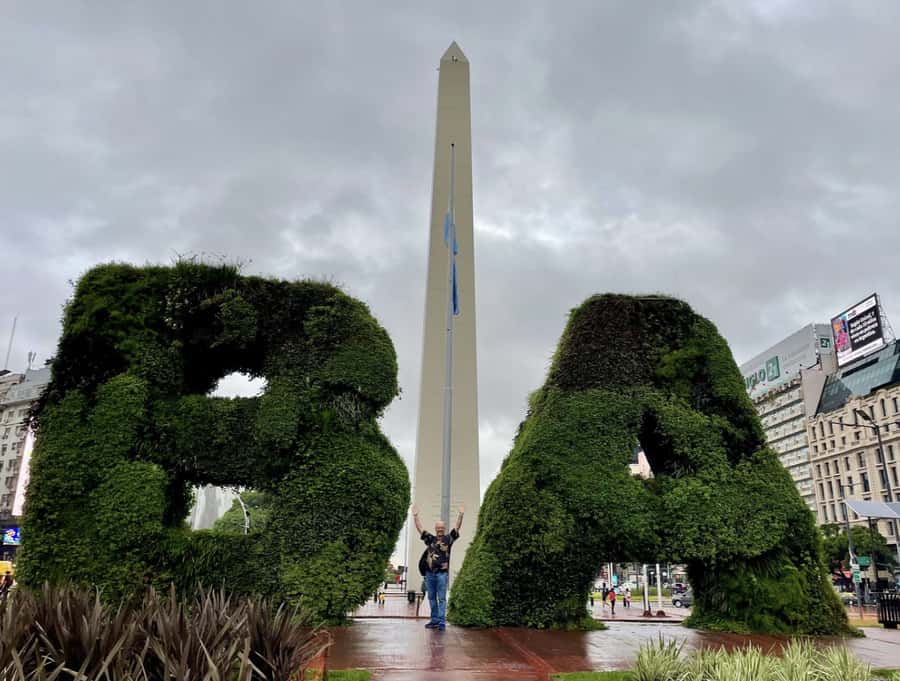
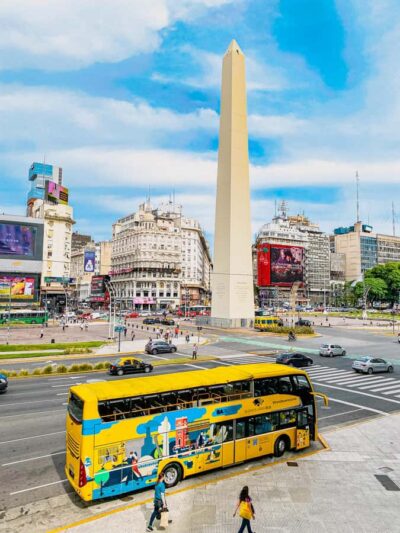
Then comes Avenida 9 de Julio, one of the city’s defining spaces. It is famous for being the widest avenue in the world, and crossing or viewing it helps you understand the scale of Buenos Aires. The Obelisk provides the classic photograph, while the green BA sign adds a lighter photo stop.
The scale can be tiring here. Large avenues mean traffic, noise, and long crossings, and the city center does not offer the same calm rhythm as Plaza Rodriguez Peña or Recoleta. The benefit is context: you are not just ticking off the Obelisk. You are seeing how Buenos Aires organizes itself around grand, oversized public spaces.
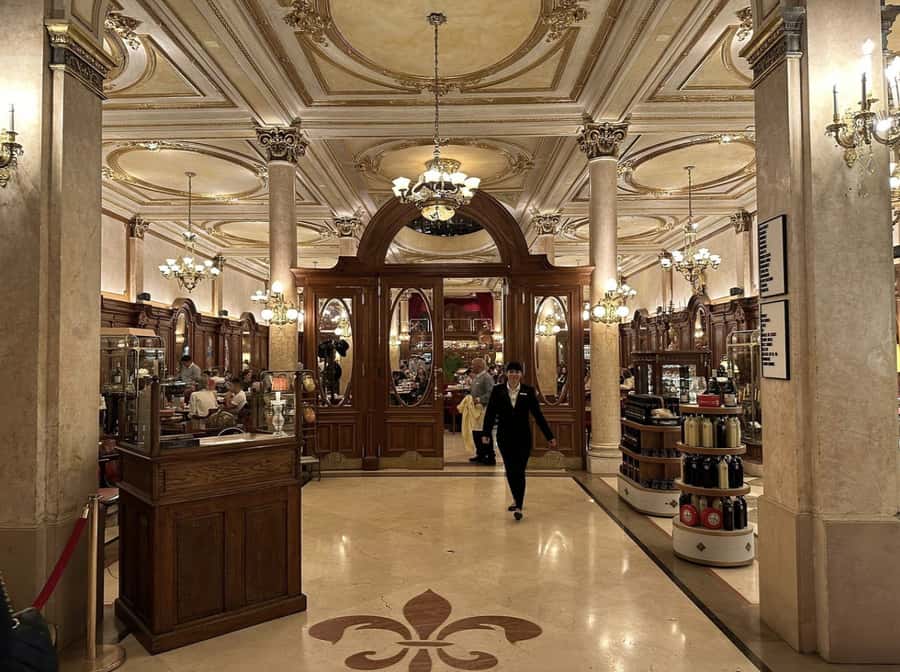
Avenida Corrientes follows, known as the street that never sleeps. The route includes Confiteria La Ideal, an old cafe with a restored interior. It is another example of the city preserving places tied to its cafe culture. The stop is especially useful if you like architecture with a social story behind it, not just a facade made for photographs.
Florida Street and the political heart of Buenos Aires
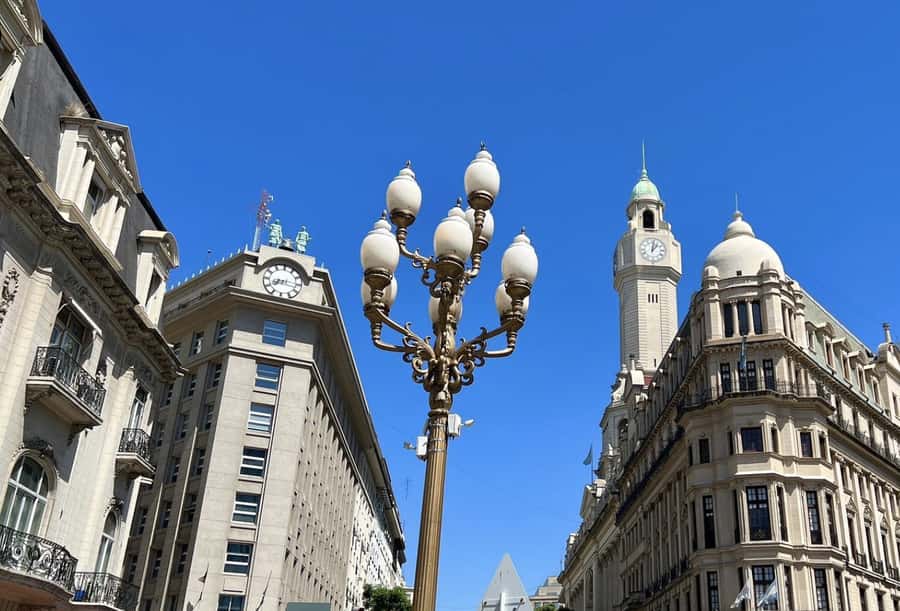
Florida Street is the city’s main pedestrian shopping area. Here, the walking changes character. Instead of quiet residential streets or formal squares, you get shops, foot traffic, historic buildings, and a more commercial side of the capital.
Galería Güemes is one of the notable buildings along the way. Its decorative interior and old-world character make it a good reminder that Buenos Aires often hides grand details inside busy commercial streets. Keep looking upward and through entrances. The guide’s value is strongest in places like this, where you could easily walk past without knowing what you are seeing.
The tour then enters Monserrat and the historic center. Plaza de Mayo is the anchor. It is the main square of Buenos Aires and the place where the city was successfully founded in 1580. From here, the capital grew outward, so the square offers a clear way to connect the city’s earliest foundations with its later government buildings and public movements.
The Casa Rosada, or Pink House, faces the plaza. It houses Argentina’s executive government and is famous for the balcony where President Juan Perón and Evita addressed crowds. The building is more than a colorful landmark. It remains one of the clearest symbols of Argentine political life.
This is a good point to listen closely to the guide’s stories. The tour is designed to explain how history, politics, culture, and food connect, and the guide can add the human details that a quick photograph will not provide. Chris, in particular, is noted for using lively stories and answering questions in a way that helps visitors notice details they might otherwise miss.
You also see some of the oldest sites in the city, including its first church, first street, and first business. The itinerary also points out the oldest subway line in the Southern Hemisphere. These claims can blur together during a long day, so I would ask the guide to explain what remains visible and how each site fits into the city’s development.
Buenos Aires Cathedral completes this section. It is the final resting place of Argentina’s independence hero and the church where Pope Francis once gave mass. The cathedral adds a religious and national layer to Plaza de Mayo, making the square feel less like a collection of buildings and more like the center of the country’s public memory.
A completely different kind of day:
- Local Foodie Adventure in Buenos Aires with Sherpa Food Tours
★ 5.0 · 6,875 reviews - Buenos Aires City Private Tour with Local Guide
★ 5.0 · 3,475 reviews - Buenos Aires Small-Group City Tour
★ 5.0 · 2,226 reviews - Buenos Aires: Piazzolla Tango Show with Optional Dinner
★ 4.4 · 2,122 reviews
Lunch, local transport, and the move to San Telmo
A local lunch is included, with a main dish and beverage. The exact meal is not specified, so do not book this expecting a particular menu item. The practical value is clear: on a seven-hour walking tour, you do not need to stop and find lunch on your own, and you can keep the day moving without paying separately for the basic meal.
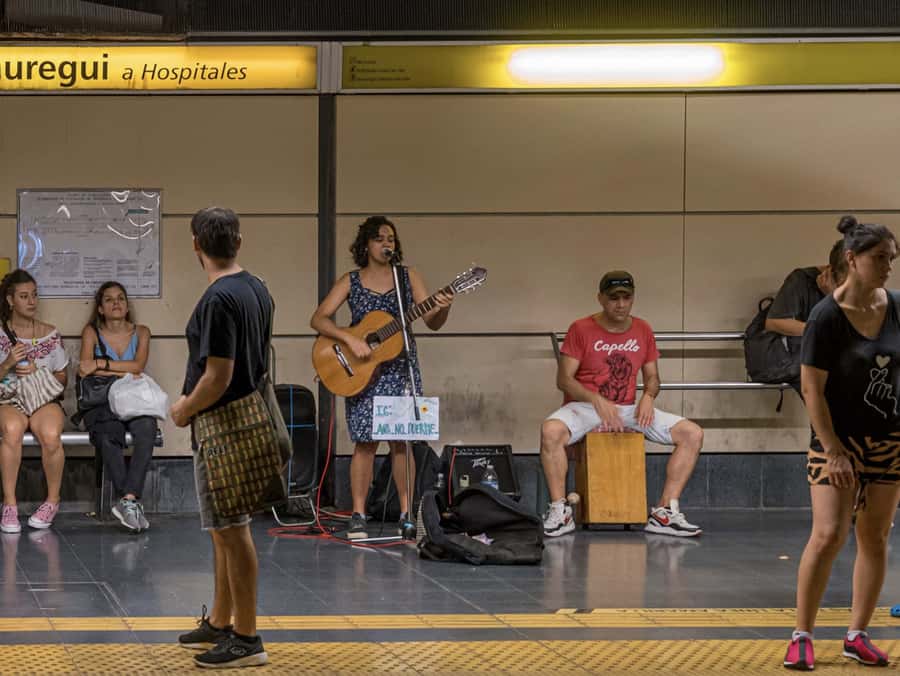
Public transport used during the tour is also covered. That may include a local bus or subway. Riding the metro is not just a way to save steps. It gives you a brief look at how residents move through the city and breaks up the long walk.
Still, the route is active. The tour is not suitable for wheelchair users, children under 10, people with a cold, or people over 95. The stated requirement is simple: bring comfortable shoes. I would add light clothing suitable for a full day outside and keep the included bottle of water within easy reach.
The group size matters here. With no more than seven participants, the guide can usually keep the group together through busy streets and transit stops without the feel of a large herd. You also have a better chance to ask about restaurants, neighborhoods, or places to return to after the tour.
San Telmo’s old streets and market halls
The final neighborhood is San Telmo, one of the most atmospheric parts of the route. Plaza Dorrego is among Buenos Aires’ oldest and most popular squares, with bars, restaurants, and handicraft sellers around it. It is a good place to notice the slower, more social side of the city after the formal spaces of the central district.
The San Telmo Indoor Market provides a different view. Its iron structure dates to 1897 and now houses antiques, souvenirs, restaurants, fresh food, and local market vendors. This is not a polished attraction built only for sightseeing. It is a place where shopping, eating, and neighborhood business share the same roof.
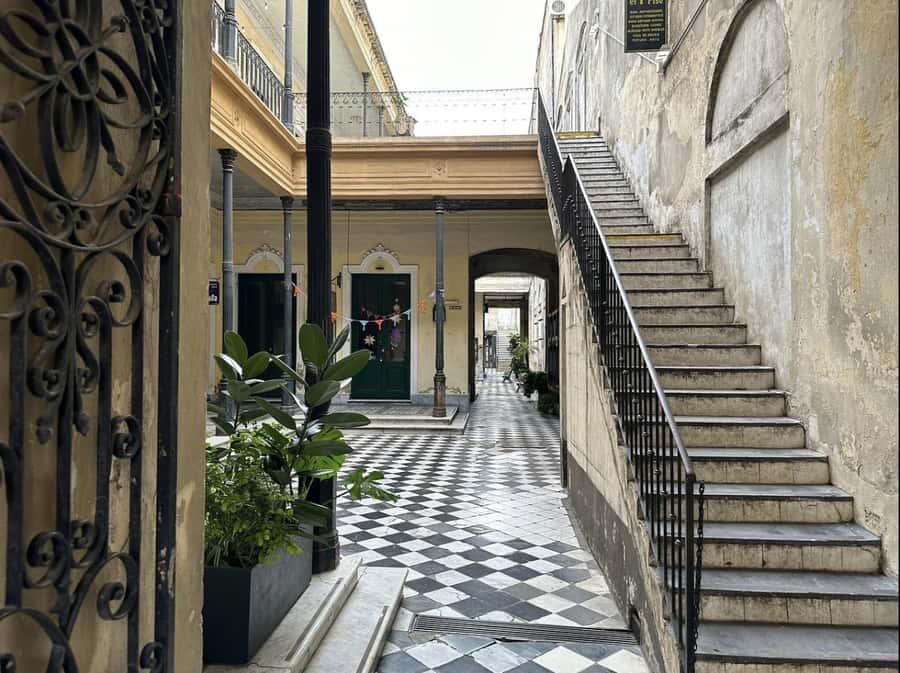
You finish along Defensa Street, a cobblestone road running through San Telmo. Antique dealers line the route, and the buildings show original Spanish and Italian influence. The street is a strong ending because it leaves you among places you may want to explore again rather than at a transport hub or isolated monument.
The end point is near plenty of spots to eat, drink, and shop. That is useful planning information. You can continue your evening in San Telmo instead of losing time crossing the city after a long day.
What the $160 price includes
At $160 per person, this is not a budget walking tour. The value depends on how much of the city you want to cover in one day and how much help you want with the details.
The price includes the English-speaking guide, entry to Recoleta Cemetery, coffee or an equal-priced drink, a local lunch with a beverage, public transport used during the route, and a bottle of water. Recoleta admission alone represents more than US$15, so the package is more useful than a basic guide-only walk.
I would compare it with the cost of arranging several separate visits. You would need to plan transport between distant neighborhoods, pay for cemetery entry, find lunch, and build your own route through five distinct areas. The small group and guide access are the main reasons to consider the price worthwhile.
The tradeoff is that some travelers prefer to spend a whole morning in Recoleta or linger over lunch. This itinerary keeps moving so it can fit a large number of sights into seven hours. You are paying for coverage and interpretation, not unlimited time at each stop.
Who should book this Buenos Aires walk?
I would recommend it most strongly if you have only one full day in Buenos Aires. The route gives you a working map of the city and shows you where you may want to return, whether that means Recoleta Cemetery, Florida Street, or San Telmo’s market.
It also suits you if you like history told through buildings and streets rather than a day spent indoors. The guide’s local language ability, historical knowledge, and friendly style are useful additions, especially if you want to ask questions as the day unfolds.
This is less suitable if you dislike long walks, need step-free access, want a relaxed food tour, or prefer to visit each landmark at your own pace. Families with children under 10 cannot join, and smoking is not allowed during the activity.
Cancellation is flexible up to 24 hours before the start for a full refund, and you can reserve now and pay later. The tour begins at 10 a.m. and ends at 5 p.m., so make sure that schedule fits your arrival and evening plans.
Should you book the BA 101 walk?
Book it if you want a big first look at Buenos Aires with a guide, lunch, transport, and cemetery admission bundled into one day. The strongest parts are the range of neighborhoods, the personal group size, and the mix of famous sights with details such as the water palace, old cafes, metro line, and market hall.
Skip it if your ideal day means lingering, shopping slowly, or choosing only two or three sights. At seven hours, it is a full program. For an active visitor who wants context and a clear sense of the city’s layout, the $160 price can make good sense.
FAQ
How long is the Buenos Aires BA 101 walking tour?
The tour lasts seven hours, beginning at 10 a.m. and ending around 5 p.m.
Where does the tour begin?
It begins in the Recoleta or Barrio Norte area near the corner of Avenida Santa Fe and Avenida Callao. Exact meeting instructions are sent with the confirmation email.
Where does the tour end?
The tour ends in San Telmo, near places to eat, drink, and shop.
How many people can join the group?
The group is limited to seven participants.
What language is the tour conducted in?
The live tour guide speaks English.
Is lunch included?
Yes. The price includes a local lunch consisting of a main dish and a beverage.
Is coffee included?
Yes. Morning coffee, or a drink of equal value, is included.
Is admission to Recoleta Cemetery included?
Yes. Entrance fees to historical sites, including Recoleta Cemetery, are included.
Is public transportation included?
Yes. Local public transport used during the tour, such as a bus or subway, is included.
Who cannot take this tour?
The tour is not suitable for children under 10, wheelchair users, people with a cold, or people over 95. Smoking is also not allowed.
Just added in Buenos Aires
- Photo Session in Buenos Aires★ 5.0 · 26 reviews
- Discover Buenos Aires’ independent art scene — Ticket included★ 5.0 · 30 reviews
- Your Private Photographer in Buenos Aires★ 5.0 · 4 reviews
- Yerba Mate Workshop – Learn to Drink Mate like a Local!★ 5.0 · 11 reviews
- Your Personal Photographer in Buenos Aires★ 5.0 · 24 reviews
- BA: Wine Tasting and Blending Experience in Palermo★ 5.0 · 1 review
- Winery and Tasting Experience in Buenos Aires★ 5.0 · 1 review
- Taste of Tradition: Yerba Mate & Alfajores Experience★ 4.0 · 5 reviews
Buenos Aires Tours, compared.
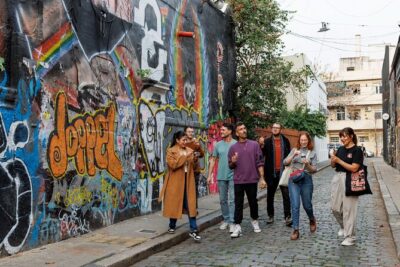
Local Foodie Adventure in Buenos Aires with Sherpa Food Tours
Read our review →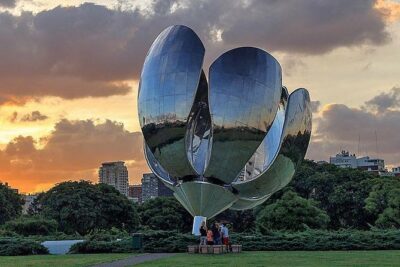
Buenos Aires City Private Tour with Local Guide
Read our review →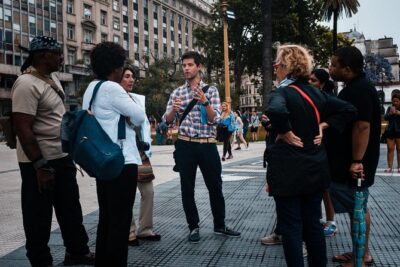
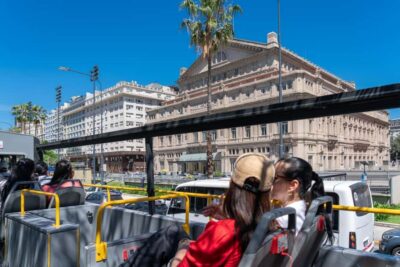
Buenos Aires Hop-On Hop-Off Bus and Exclusive Benefits
Read our review →

Argentine Experience Interactive Dining and Cooking
Read our review →Browse the lists this tour appears in