
Reviewed · ARGENTINE FOOD AND WINE TASTINGS
BA: Premium Empanadas & Alfajores Cooking Experience in Palermo
Good food makes Buenos Aires easier to understand. This two-and-a-half-hour class in Palermo brings you into the kitchen to prepare two Argentine favorites from scratch: savory empanadas and sweet alfajores filled with dulce de leche. I like the family-friendly format and the chance to learn food traditions while sitting down to eat what you made.
I also like the small-group setting, which is capped at 12 people and has sometimes been as intimate as four or six. The main consideration is that the class may not be fully hands-on at every stage. Some ingredients can be prepared before you arrive, and one past class felt rushed even though it stayed within the scheduled time.
In This Review
- Key points to know before booking
- Starting in Palermo at Gorriti 4882
- Making empanadas from dough to crimped edge
- Mate tea and Argentine food customs
- The alfajores and dulce de leche finale
- A small-group class that suits families
- The hosts make a real difference
- What $48 per person gets you
- Timing the class around your Buenos Aires day
- What to expect from the hands-on work
- Who should book this Palermo experience
- Cancellation and practical planning
- Should you book the empanadas and alfajores class?
- FAQ
- How long does the cooking experience last?
- Where does the class begin?
- Where does the experience end?
- What foods do you make?
- Is mate tea included?
- Are ingredients and cooking tools included?
- How many people can join the class?
- Can I cancel for a full refund?
Key points to know before booking
- Two Argentine staples in one class: You make empanadas and alfajores, then eat the finished food.
- A strong choice for families: Children as young as 8 and 10 have enjoyed the activity, and the format suits mixed ages.
- A local touch beyond cooking: Mate tea and stories about Argentine food customs add cultural context.
- Small groups help: The maximum is 12 people, with some sessions much smaller.
- The alfajores may steal the show: The dulce de leche cookies have received especially warm praise.
- Budget about $48 per person: That covers the class, ingredients, tools, host, and mate tea, but not transport or tips.
Starting in Palermo at Gorriti 4882
The class begins at Gorriti 4882 in Palermo, a central Buenos Aires neighborhood with public transportation nearby. You return to this same meeting point at the end, so the experience is simple to fit into a day of exploring.
The fixed location matters. You do not spend part of the afternoon moving between restaurants or kitchens. Instead, you arrive, settle in, and focus on the food. The setting has been described as cozy, and the small room helps create the friendly feel that makes a cooking class work.
I would allow a little extra time to find the address, especially if you are unfamiliar with Palermo. The meeting point is near public transportation, but transportation itself is not included. You are responsible for getting there and making your way back afterward.
The class runs about 2 hours and 30 minutes. That is long enough to prepare two dishes without turning the activity into a full-day commitment. It also works well as a break from museums, shopping, or long walks through Buenos Aires.
More Food and Wine Tastings in Buenos Aires
- Local Foodie Adventure in Buenos Aires with Sherpa Food Tours
★ 5.0 · 6,875 reviews - Argentine Experience Interactive Dining and Cooking
★ 5.0 · 1,382 reviews - Cooking Class Designed by Michelin Chef @ Argentine Experience
★ 5.0 · 1,123 reviews
Making empanadas from dough to crimped edge
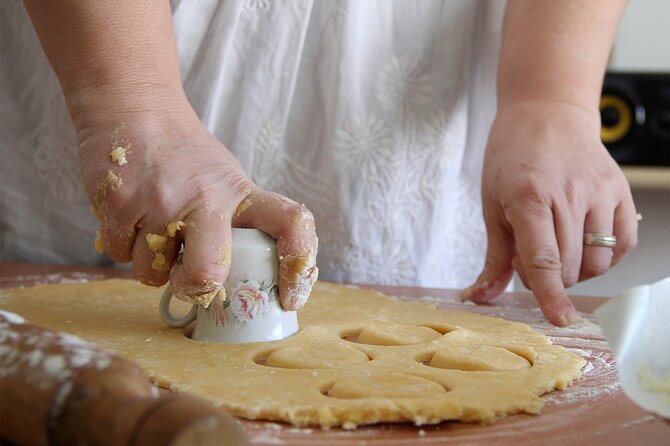
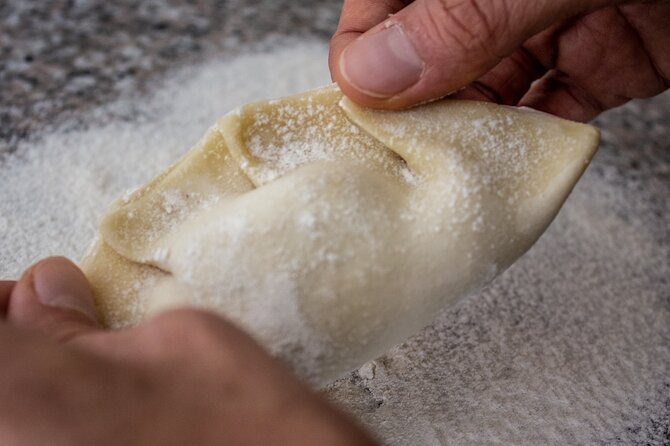
The savory portion begins with the basic structure of an Argentine empanada. You work with the dough, add traditional fillings, and learn how to fold and crimp the edges so the pastry holds together during baking.
This is where the class has its clearest practical value. Empanadas are simple enough to understand quickly, but the folding and sealing technique gives you something useful to take home. You may not leave ready to open an Argentine restaurant, but you should understand the basic method and be able to try it again in your own kitchen.
The class is aimed at beginners. Instructions are designed for any age, and the activity does not require advanced cooking skills. That makes it a good choice if you want a social food experience rather than a serious culinary lesson.
There is one important qualification. Not every ingredient may be prepared in front of you. One session included some pre-prepared elements, which reduced the hands-on time more than expected. If you want to make every part from the first chop or stir, this may feel less detailed than a professional cooking workshop.
The quality of the empanada filling can also depend on the session. One person found the meat filling a little short on flavor, while other classes were praised for easy preparation and good results. That suggests a pleasant, accessible class rather than a lesson built around complex seasoning or regional comparisons.
Mate tea and Argentine food customs
While the empanadas bake, the class shifts from kitchen work to Argentine culture. You taste local mate tea and hear stories about food customs and regional traditions.
Mate is a useful addition because it gives the class a local ritual to discuss, not just a recipe to follow. It is one of the everyday tastes associated with Argentina, and sampling it alongside the cooking helps place the dishes in a broader cultural setting.
The amount of cultural discussion may vary with the host and the group. Tomas has been praised for explaining Argentine cuisine and customs from different regions, while another class was described as competent but in need of more background about each dish. I would book this for a blend of food and culture, but not as a dedicated culinary history seminar.
Wine has also been part of at least some sessions, according to past descriptions, but it is not listed as an included feature. Mate tea is the beverage specifically included in the stated program. If wine matters to your decision, treat it as a possible extra rather than a promise.
The alfajores and dulce de leche finale
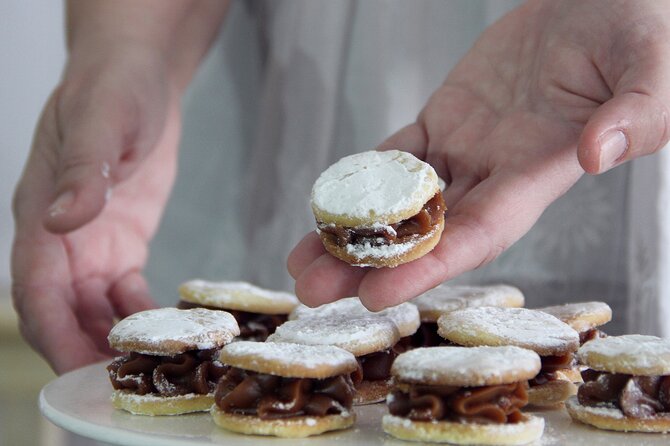
The sweet course is the part most likely to win over children and anyone with a serious sweet tooth. You prepare delicate, crumbly cookies and fill them with creamy dulce de leche.
Alfajores are more than a generic cookie. They are one of Argentina’s best-known sweet treats, and making them gives you a direct way to understand the country’s fondness for dulce de leche. The process is approachable, and the finished result is easy to share.
Past classes have produced especially strong reactions to the alfajores. One assessment found the dessert delicious even when the empanada filling needed more seasoning. Another family said the children enjoyed both the preparation and the results. That makes the sweet course a reliable reward for younger cooks who may lose interest during dough preparation.
The class ends by eating the food you prepared. Plan accordingly. Several people found the meal substantial enough to skip or delay lunch afterward, so do not schedule a large restaurant meal immediately after the class.
A completely different kind of day:
- Buenos Aires City Private Tour with Local Guide
★ 5.0 · 3,475 reviews - Buenos Aires Small-Group City Tour
★ 5.0 · 2,226 reviews - Buenos Aires Hop-On Hop-Off Bus, Free Walking Tours & Discounts
★ 4.5 · 2,218 reviews - Buenos Aires: Piazzolla Tango Show with Optional Dinner
★ 4.4 · 2,122 reviews
A small-group class that suits families
The maximum group size is 12, but the actual number may be much lower. A class with four people feels almost private, while a group of six still leaves room for personal attention and conversation.
That range is a major advantage for families. You can work together without being swallowed up by a large tour group, and the chef has a better chance to help with folding, filling, and baking. A patient instructor is especially important when children are involved.
The activity has worked well for families with children aged 8 and 10. It has also suited couples and people looking for an easy social activity. You do not need to be a dedicated foodie. The appeal is the combination of simple cooking, conversation, and a meal at the end.
For children, the class provides a break from sightseeing routines. It gives them a task with a clear payoff: make the food, bake the food, eat the food. One family called it a useful rest-day activity, which is a good way to think about the pace.
Couples can enjoy it for the same reason. You are not simply watching a chef demonstrate recipes. You are working with other people, sharing mate, and making something that gives you a story to talk about later.
The hosts make a real difference
The instructor shapes the tone of this experience. Hosts named in past sessions include Tomas, Thomas, Carolina, Catalina, Catarina, and Maria. Tomas has been praised for his cooking background and cultural explanations, while Carolina and Catarina were described as welcoming, patient, and fun.
The strongest sessions seem to combine clear instructions with an easy manner. That matters more here than fancy equipment. A beginner class succeeds when the chef notices who needs help, keeps children involved, and explains why the food is prepared in a certain way.
The tone is generally informal and social. You cook, talk, laugh, and eat together. One couple particularly enjoyed the mix of wine, food preparation, and meeting new people, though again, wine is not a guaranteed inclusion in the published package.
There is some variation in energy and pacing. One morning class was described as well organized and professionally led but not especially lively. Another session felt hurried because the host had another event to handle. That is worth keeping in mind if you value a slow, detailed lesson above all else.
What $48 per person gets you
At $48 per person, the price is reasonable if you value the complete experience rather than the food alone. Your fee includes the empanadas and alfajores class, a local host, ingredients, tools, and mate tea.
You are paying for instruction, a social setting, and a prepared meal. If you compare the cost with buying a few empanadas and cookies from a bakery, the class is obviously more expensive. The value comes from learning the folding technique, making the sweets, hearing about Argentine customs, and spending several hours in a small group.
The price also avoids several small add-on costs. Ingredients and cooking tools are included, and you do not need to bring supplies. Gratuities are optional, while transportation is not included.
I see this as good value for a first visit to Buenos Aires, especially if you want an activity that combines culture and food. It is less compelling for a confident home cook who wants advanced instruction, intricate fillings, or a highly technical pastry lesson.
The experience is popular enough to be booked around 24 days ahead on average. If your dates are fixed, reserve before your trip rather than assuming a convenient afternoon will remain open.
Timing the class around your Buenos Aires day
The 2-hour-30-minute duration makes the class easy to pair with other Palermo plans, but do not squeeze it between tight reservations. Cooking has several stages, and the class ends with eating, not with a quick handoff of food.
A morning session can work well. You finish with a full meal and still have the afternoon available. It is also a sensible choice on a rest day, when you want an activity without constant walking.
If you plan to eat at a restaurant afterward, leave plenty of time. You may not feel hungry after the empanadas and alfajores. The class is best treated as a meal-sized experience, not a light snack stop.
The return to Gorriti 4882 keeps the logistics simple. You do not need to arrange a separate pickup, and the starting and ending point are the same.
What to expect from the hands-on work
The word cooking class can mean different things. Here, you should expect a friendly beginner activity with real participation, but not necessarily every preparation step from start to finish.
You will work with empanada dough, fillings, folding, and crimping. You will also prepare the alfajores cookies and fill them with dulce de leche. The finished food is yours to eat, which gives the class a clear sense of purpose.
Some parts may be prepared in advance to keep the two-and-a-half-hour schedule manageable. That helps the class move along, but it can disappoint you if your main goal is to master every recipe detail. Ask yourself what matters more: learning a workable method in a social setting, or studying each technique at professional depth.
The food is forgiving, and that is a benefit for families and beginners. You can make mistakes without the class falling apart. The focus is on taking part and enjoying the result.
Who should book this Palermo experience
I would recommend it most strongly to:
- Families who want an activity children can actively join
- Couples seeking a relaxed food-based experience
- First-time visitors who want Argentine culture through everyday dishes
- Anyone who likes learning a recipe and eating the result
- People looking for a lighter sightseeing day in Palermo
I would be more cautious if you want a serious chef-training session. The class may use pre-prepared ingredients, and the depth of explanation can vary by instructor. It is also not the best pick if you need a fully scheduled restaurant meal afterward.
The high overall rating of 4.9 from 23 ratings reflects very strong satisfaction, and every listed recommendation supports booking. Still, the lower scores point to useful limits: the activity may feel rushed, the empanada filling may not suit every palate, and the hands-on work may be lighter than expected.
Cancellation and practical planning
You can cancel free of charge up to 24 hours before the local start time for a full refund. Cancellations or changes made less than 24 hours before the experience are not accepted for a refund.
Confirmation is provided at booking. The class is near public transportation, but you arrange your own transport to and from Gorriti 4882. The experience ends at the same place where it begins.
Because the class is often reserved well ahead, I would book it early if you are visiting Buenos Aires for only a few days. A small group and a fixed schedule can make last-minute spaces limited.
Should you book the empanadas and alfajores class?
Book it if you want a warm, easygoing introduction to Argentine food, especially if you are traveling with children or want a break from standard sightseeing. The combination of empanadas, dulce de leche, mate tea, and a small group gives you a tasty connection to Buenos Aires without demanding advanced cooking skills.
Skip it if you expect every ingredient to be made from scratch or want a detailed, technical course. For most people, the best reason to book is not that you will become an expert cook. It is that you will spend a few enjoyable hours making two classic Argentine foods, learning a little about local customs, and sitting down to eat what you made.
FAQ
How long does the cooking experience last?
The class lasts approximately 2 hours and 30 minutes.
Where does the class begin?
It begins at Gorriti 4882, C1414BJN, in Buenos Aires.
Where does the experience end?
The class ends back at the same meeting point.
What foods do you make?
You prepare Argentine empanadas and alfajores filled with dulce de leche.
Is mate tea included?
Yes. Mate tea is included in the experience.
Are ingredients and cooking tools included?
Yes. The class includes ingredients and tools.
How many people can join the class?
The maximum group size is 12 people.
Can I cancel for a full refund?
Yes. You can cancel at least 24 hours before the local start time for a full refund.
Just added in Buenos Aires
- Discover Buenos Aires’ independent art scene — Ticket included★ 5.0 · 30 reviews
- Photo Session in Buenos Aires★ 5.0 · 26 reviews
- Your Private Photographer in Buenos Aires★ 5.0 · 4 reviews
- Yerba Mate Workshop – Learn to Drink Mate like a Local!★ 5.0 · 11 reviews
- Your Personal Photographer in Buenos Aires★ 5.0 · 24 reviews
- BA: Wine Tasting and Blending Experience in Palermo★ 5.0 · 1 review
- Winery and Tasting Experience in Buenos Aires★ 5.0 · 1 review
- Taste of Tradition: Yerba Mate & Alfajores Experience★ 4.0 · 5 reviews
Argentine Food and Wine Tastings, compared.
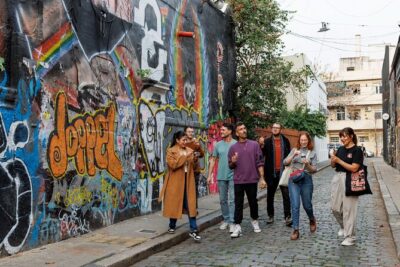
Local Foodie Adventure in Buenos Aires with Sherpa Food Tours
Read our review →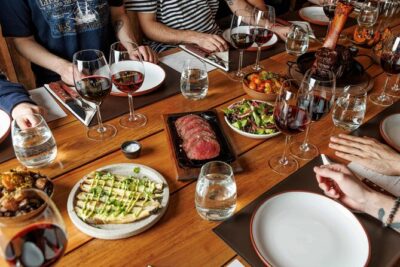
Argentine Experience Interactive Dining and Cooking
Read our review →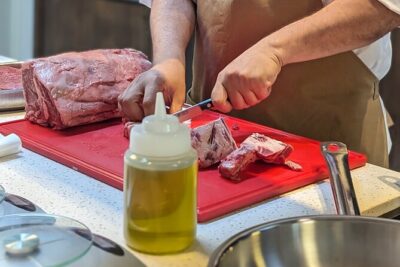
Cooking Class Designed by Michelin Chef @ Argentine Experience
Read our review →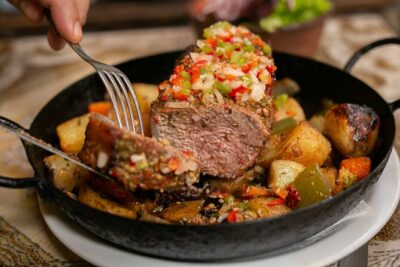
Historical Sherpa Food Tour of San Telmo with Street Food, Drinks
Read our review →
Join a Local Family Asado in Buenos Aires with Betty and Marcelo
Read our review →
Browse the lists this tour appears in