
Reviewed · ARGENTINE FOOD AND WINE TASTINGS
BA: Empanadas and Alfajores Cooking Experience in Palermo
Food tells the story best. This Palermo cooking experience gives you a practical taste of Argentina by having you prepare two national favorites: savory empanadas and dulce de leche alfajores. I like the small-group format, limited to 10 people, and the choice between meat and vegan fillings. I also like that the food comes with local customs, family stories, mate tea, and useful cooking tips.
The main thing to check is how much hands-on work you want. Most participants take part in chopping, mixing, shaping, filling, and assembling, but one account describes more watching than cooking. The class is also fairly simple in technique, so serious home cooks may want a more advanced lesson.
In This Review
- Key points at a glance
- What this Palermo food experience is really about
- Preparing empanadas, from filling to final fold
- Making dulce de leche alfajores without breaking the cookies
- Mate, wine, and conversation around the table
- How hands-on is the cooking?
- The cultural lessons add real value
- Is $49 a fair price?
- Planning your visit to Gorriti 4882
- Who will enjoy this class most?
- Should you book the Palermo empanada class?
- FAQ
- How long does the cooking experience last?
- Where does the class begin?
- Where does the activity end?
- What foods will I make?
- Are vegan options available?
- Is this activity suitable for children?
- What is included in the price?
- Can I cancel for a full refund?
Key points at a glance
- Two Argentine classics in one class: Prepare empanadas, then assemble alfajores filled with dulce de leche.
- Meat and vegan choices: Beef is available, along with lentil filling for vegetarian participants.
- Local customs included: Learn about empanada shapes, family traditions, Argentine food culture, and mate.
- Good for families: Children have enjoyed the class, though adults should help with chopping and sharp knives.
- Small class size: Up to 10 people makes it easier to ask questions and meet others.
- Recipes for home: Recipes are sent by WhatsApp, giving you a way to repeat the meal after your trip.
What this Palermo food experience is really about
This is not a sightseeing tour with a quick cooking demonstration added on. The main event is sitting around a work area with a local chef or host and making food together. You are in Palermo, at Gorriti 4882, near public transportation, and the activity begins and ends at that same address.
The class lasts about two and a half hours. That is enough time to prepare the ingredients, cook the filling, shape the empanadas, make the alfajores, and sit down to eat. It also leaves room for conversation, which is where much of the cultural value comes from.
I especially like the way this kind of class connects food with family life. Empanadas are not just convenient pastries in Argentina. They are tied to regional habits, household recipes, and recognizable shapes. One useful lesson is that different fillings may receive different folds or patterns, so the shape can tell you what is inside.
You may also hear stories about learning these recipes from grandparents. One memorable tradition involves children whistling while preparing empanadas so their grandmother knew they were not sneaking bites of filling. Details like this do more than decorate the lesson. They show how everyday food becomes part of family memory.
More Food and Wine Tastings in Buenos Aires
- Local Foodie Adventure in Buenos Aires with Sherpa Food Tours
★ 5.0 · 6,875 reviews - Argentine Experience Interactive Dining and Cooking
★ 5.0 · 1,382 reviews - Cooking Class Designed by Michelin Chef @ Argentine Experience
★ 5.0 · 1,123 reviews
Preparing empanadas, from filling to final fold
The empanada portion begins with an explanation of the dish and its place in Argentine cooking. The exact pace can vary with the group, but the usual work includes chopping vegetables and meat, cooking the filling on the stovetop, and placing it into dough rounds.
Some sessions use prepared empanada shells, while others include more work with the dough. You should not expect a full pastry school lesson. This is a beginner-friendly class designed to get you cooking and eating within a short afternoon.
That simplicity can be a benefit. You do not need much kitchen experience, and the host can focus on practical things you can repeat at home. You learn how much filling to use, how to avoid breaking the dough, and how to seal the edge without making a mess.
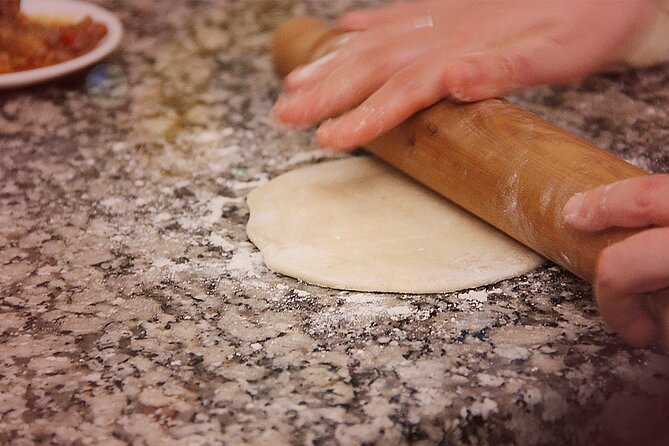
The folding lesson is one of the most useful parts. Empanadas are often sealed with a crimped edge called a repulgue, and the method can vary by filling or region. You might find that your first few look more like folded parcels than bakery-perfect pastries. That is part of the fun, and the host can show you how to improve the shape.
Meat and vegan options make this activity easier to share with a mixed group. Beef is the classic choice, while lentils provide a vegan filling option. If dietary needs matter to you, it is wise to state them when booking so the host can prepare properly.
Once the empanadas are filled and sealed, they are cooked and served. Several accounts describe the finished food as delicious, while two less enthusiastic accounts found the flavor plain. That difference is worth noting. The class is more about learning a household-style preparation than sampling a restaurant tasting menu.
Making dulce de leche alfajores without breaking the cookies
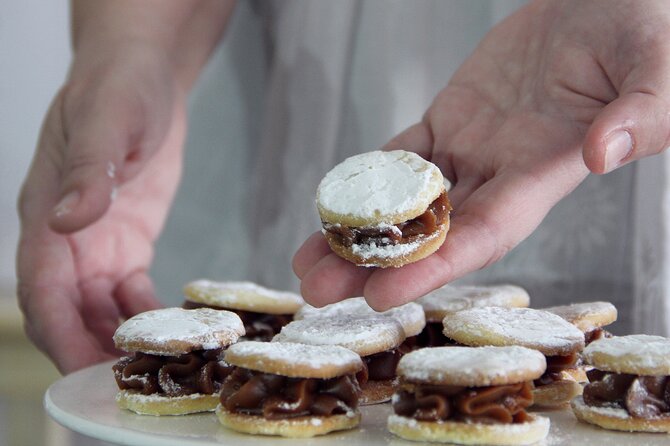
After the savory course, you move to alfajores. These Argentine sandwich cookies are commonly filled with dulce de leche, the thick caramel-like milk spread found across the country.
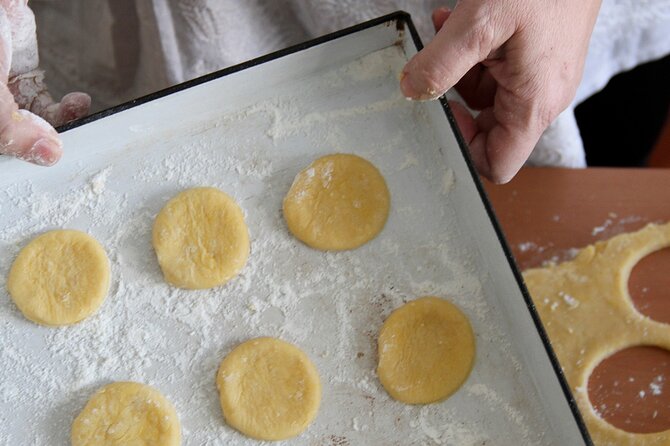
The process is simple and satisfying. You work with cookies, add dulce de leche, and finish the edges with coconut. You may also have a chance to make different shapes. The cookie portion often fits well into the waiting time while the empanada filling cools.
Handle the cookies gently. One useful warning from the class is that they can be fragile, so pressing too hard while adding the dulce de leche may crack them. This is a small detail, but it is exactly the sort of kitchen tip that saves your dessert.
The alfajores are also a good part of the experience for children. Kids can help assemble them and make different designs, with adults handling the more delicate steps. The task feels creative without requiring complicated equipment.
Again, expectations matter. You are not working through a long pastry recipe with many technical stages. You are learning the basic structure of a beloved Argentine sweet, then eating the result with the group.
Mate, wine, and conversation around the table
Mate is included as the main local infusion. If you have never tried it, this is a pleasant place to learn the social side of it. Mate is not simply a tea served in a cup. It is part of daily Argentine hospitality and conversation.
The experience description lists coffee and tea, with mate presented as the famous local drink. Several accounts also mention wine being served, and one participant said wine was offered instead of the promised tea or coffee. This may vary by session, so do not book the class expecting a formal wine tasting or a guaranteed selection of drinks beyond the stated inclusions.
The shared table is a major strength. You may meet people from different countries, compare folding techniques, and trade ideas about places to eat in Buenos Aires. The small group helps the meal feel social rather than like a demonstration in a large studio.
Hosts named in the feedback include Tomas, Thomas, Valentino, Carolina, and Catalina. Tomas received especially warm praise for his patience, instructions, and food knowledge. Other hosts were described as friendly, clear, and welcoming. Since the exact host can change, the teaching style may not be identical every time.
A completely different kind of day:
- Buenos Aires City Private Tour with Local Guide
★ 5.0 · 3,475 reviews - Buenos Aires Small-Group City Tour
★ 5.0 · 2,226 reviews - Buenos Aires Hop-On Hop-Off Bus, Free Walking Tours & Discounts
★ 4.5 · 2,218 reviews - Buenos Aires: Piazzolla Tango Show with Optional Dinner
★ 4.4 · 2,122 reviews
How hands-on is the cooking?
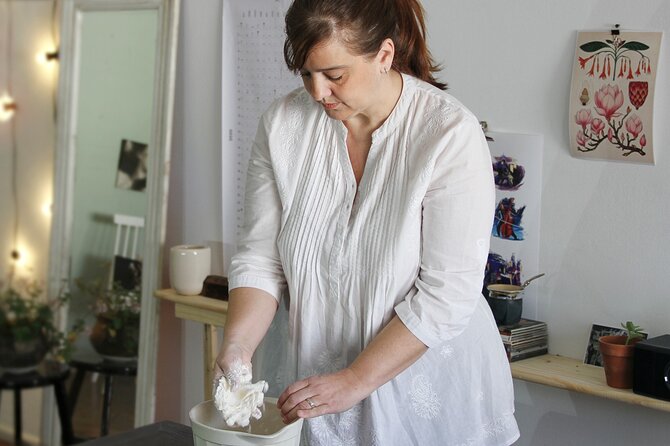
The answer is: usually interactive, but not every task is shared equally. You may chop ingredients, roll dough, stuff empanadas, fold the edges, and assemble alfajores. The host handles explanations and some of the cooking, as you would expect in a short class.
One family account described the cooking as fairly limited, with participants chopping, helping at the stovetop, and filling premade shells. Another account said the group made nearly everything from scratch. Those descriptions suggest that the amount of work can depend on the host, group size, and preparation before the class begins.
If you want to cook every component yourself, ask at the start how the work will be divided. A small group of 10 gives you a better chance to take part, but it does not guarantee that every person will handle every step.
Families should pay attention to the knife work. The activity is suitable for children, and it has been a highlight for kids aged 10 and 13, but chopping meat and vegetables requires adult help. Younger children may enjoy shaping and assembling more than the preparation stage.
Solo visitors can also fit in well. The class creates easy conversation, and the shared meal gives you a natural way to meet people without having to force small talk.
The cultural lessons add real value
Buenos Aires has plenty of food worth trying, but eating an empanada at a bakery does not explain how it reaches the plate. Here, you learn about variations, fillings, folds, and family habits while working with your own hands.
The host may also talk about Argentine geography and the history of the dishes. One session included lessons about the city and country, while another focused on the different types of empanadas. The level of cultural detail depends on the person leading the class, so expect an informal introduction rather than a formal lecture.
That informal tone suits the activity. You can ask about local food, recipes, and customs as they come up. Some hosts have skills beyond the class, too. Tomas, for example, is also an artisan aperitivo maker with a focus on vermouths and fernets. If you enjoy drinks as much as food, you may want to ask about his other activities.
The recipe follow-up is a strong practical benefit. Recipes are sent through WhatsApp at the end, so you can try the dishes again at home. That makes the $49 price more worthwhile because you are paying for instruction, food, drinks, conversation, and a recipe you can reuse.
Is $49 a fair price?
At $49 per person, this is not the cheapest way to eat empanadas in Buenos Aires. You can buy the finished food at a bakery or casual restaurant for much less.
But the price makes more sense if you value the activity itself. You receive the ingredients for both dishes, cooking tools, a professional local host, and coffee or tea with mate listed among the included drinks. You also get roughly two and a half hours of instruction and a meal you helped prepare.
I see the best value for families, solo visitors, and couples who want an active cultural activity. It can fill an afternoon without requiring a long trip across the city, and it gives you something to talk about afterward.
The value is weaker for anyone mainly seeking a polished culinary school lesson or a large amount of food. The recipes are described by some participants as plain, and the use of sunflower oil drew criticism from one person. You are paying for access, instruction, and local context as much as for the final taste.
Planning your visit to Gorriti 4882
The meeting point is Gorriti 4882, C1414BJN, in Buenos Aires. The address is near public transportation, but transportation to and from the activity is not included.
Since the class starts and ends at the meeting point, you can plan another Palermo activity before or afterward. Allow enough time to arrive without rushing, especially if you are carrying bags or coming from another part of the city.
The class is often booked well ahead, with the average booking made about 37 days before the date. That is a useful warning for families and small groups, particularly if you are visiting during a busy period. A maximum of 10 participants keeps the class intimate, but it also means spaces can disappear.
You receive confirmation when booking. Free cancellation is available up to 24 hours before the start time for a full refund. Changes or cancellations made inside that 24-hour window are not accepted or refunded, and one unhappy account described confusion after a cancellation and refund request. Keep your confirmation details and check the meeting time carefully.
Tips are not included. Bring a little cash or plan to tip separately if the host gives you a good lesson.
Who will enjoy this class most?
I would choose this for:
- Families with children who like making and tasting food
- Couples looking for a relaxed activity in Palermo
- Solo visitors who enjoy meeting people over a shared meal
- First-time cooks who want clear, manageable steps
- Anyone who wants Argentine recipes to recreate at home
- Food lovers interested in mate and family traditions
I would be more cautious if you want advanced pastry work, a strict professional kitchen format, or a menu built around complex flavors. The activity is designed for beginners and cultural connection, not culinary certification.
The class also suits a jet-lagged arrival day. It gives you a fixed activity, food, and conversation without asking you to spend the whole day on your feet. At the same time, you should not assume every session will have the same host, drink selection, or level of participation.
Should you book the Palermo empanada class?
I would book this if you want to understand Argentine food by making it, not just ordering it. The strongest features are the small group, meat and vegan choices, family-friendly tasks, mate, cultural stories, and recipes sent home afterward.
Go in with realistic expectations. Some preparation may be done before you arrive, the final flavors may be mild, and participation may vary by host. For $49, the class is a solid choice when you value the social time and local instruction as much as the meal itself.
If your ideal Buenos Aires memory is folding your own empanadas, learning why the edges look different, and eating alfajores with new acquaintances, this is a good fit. If you only want the city’s best empanada and dessert, spend the money at a bakery instead.
FAQ
How long does the cooking experience last?
The activity lasts approximately 2 hours and 30 minutes.
Where does the class begin?
It begins at Gorriti 4882, C1414BJN, in Buenos Aires.
Where does the activity end?
It ends back at the same meeting point.
What foods will I make?
You will prepare Argentine empanadas and dulce de leche alfajores.
Are vegan options available?
Yes. Meat and vegan empanada options are available. Lentil filling is one vegan option described for the class.
Is this activity suitable for children?
Yes. It is described as suitable for families and children. Adults should help children during chopping and other work involving sharp knives.
What is included in the price?
The price includes empanada ingredients, alfajor ingredients, cooking tools, a professional local host, and coffee or tea, including mate as the local infusion.
Can I cancel for a full refund?
Yes. You can cancel at least 24 hours before the start time for a full refund. Cancellations or changes made less than 24 hours before the activity are not accepted for a refund.
Just added in Buenos Aires
- Discover Buenos Aires’ independent art scene — Ticket included★ 5.0 · 30 reviews
- Photo Session in Buenos Aires★ 5.0 · 26 reviews
- Your Private Photographer in Buenos Aires★ 5.0 · 4 reviews
- Yerba Mate Workshop – Learn to Drink Mate like a Local!★ 5.0 · 11 reviews
- Your Personal Photographer in Buenos Aires★ 5.0 · 24 reviews
- BA: Wine Tasting and Blending Experience in Palermo★ 5.0 · 1 review
- Winery and Tasting Experience in Buenos Aires★ 5.0 · 1 review
- Taste of Tradition: Yerba Mate & Alfajores Experience★ 4.0 · 5 reviews
Argentine Food and Wine Tastings, compared.
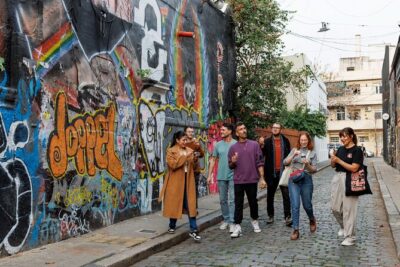
Local Foodie Adventure in Buenos Aires with Sherpa Food Tours
Read our review →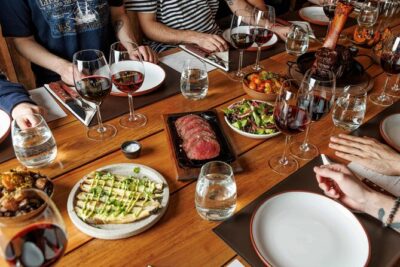
Argentine Experience Interactive Dining and Cooking
Read our review →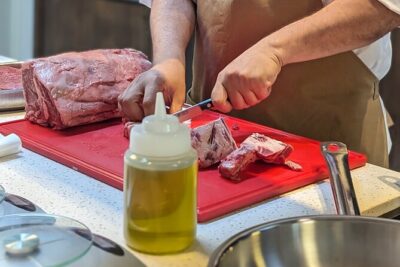
Cooking Class Designed by Michelin Chef @ Argentine Experience
Read our review →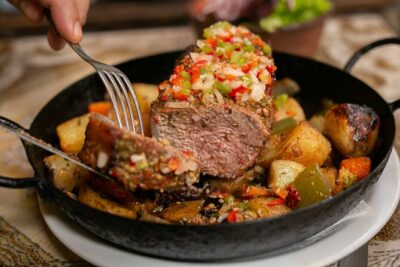
Historical Sherpa Food Tour of San Telmo with Street Food, Drinks
Read our review →
Join a Local Family Asado in Buenos Aires with Betty and Marcelo
Read our review →
Browse the lists this tour appears in