
Reviewed · ARGENTINE WINE TOURS
5 Stops Walking Tour of Buenos Aires hidden Wineries
Wine tasting works best on foot. This Palermo walking tour links five tasting stops with Argentine wine, small snacks, and a guide who explains what is in your glass. I like the broad range of styles, from Torrontés and orange wine to Malbec and Syrah, and I like that the tour keeps its group to 15 people or fewer. The main concern is value: at $82 per person, the tasting pours and food need to feel generous, yet the experience appears more like a guided neighborhood tasting route than a visit to five fully operating wineries.
The guide is one of the tour’s strongest points. The guide has been described as professional and friendly, which matters when the tour depends on clear explanations and an easy pace. Still, you should know that one account found the route disappointing, noting that the venues did not feel like hidden wineries, that most of the food was a modest plate of pepperoni, cheese, and olives at the first stop, and that carrying a used glass between locations was not especially appealing.
In This Review
- Key points before you book
- What this Palermo wine walk is really offering
- Stop one on Juan B. Justo: a gentle opening glass
- Palermo Soho and Mendoza orange wine
- Gurruchaga 963 and the rosé lesson
- Malabia and Argentina’s famous Malbec
- The final Palermo Soho pour and the closing comparison
- The guide, group size, and walking rhythm
- Five wines, but not necessarily five winery visits
- Is $82 a fair price for 90 minutes?
- Who will enjoy this tasting most?
- My booking advice
- FAQ
- Where does the wine tour start?
- Where does the tour end?
- How long does the tour last?
- How many people can join the tour?
- What is included in the price?
- Is transportation included?
- Can anyone participate?
- Can dietary restrictions be accommodated?
Key points before you book
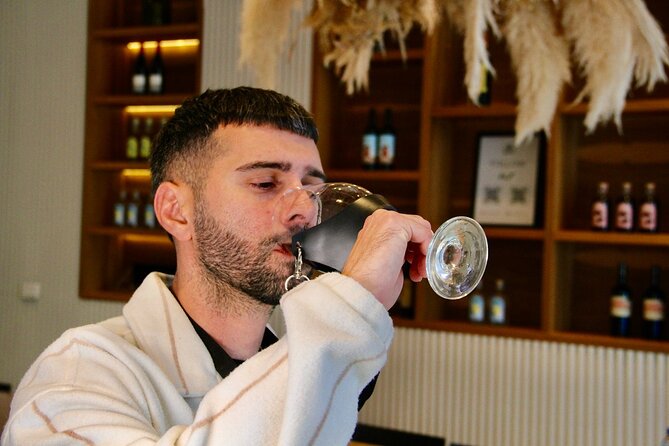
- Five different wine styles: Expect white wine, Mendoza orange wine, rosé, Malbec, and another red wine, with the exact varietals described as Torrontés, Pinot Noir, Cabernet Sauvignon, and Syrah in the wider tasting plan.
- Palermo is the setting: The route begins at Gorriti 4882 and moves through Palermo Soho, with stops on or near Juan B. Justo, Gurruchaga, and Malabia.
- A short, tightly timed outing: The experience lasts about 90 minutes, with roughly 18 minutes assigned to each stop.
- Small food pairings are included: Wine, snacks, and bottled water are part of the price, but do not expect a full meal.
- A friendly guide adds context: The guide explains production methods, regional differences, and the place of Malbec in Argentine wine culture.
- Value deserves close thought: The advertised price is $82, while one account referred to paying $135, so confirm the final amount before committing.
What this Palermo wine walk is really offering
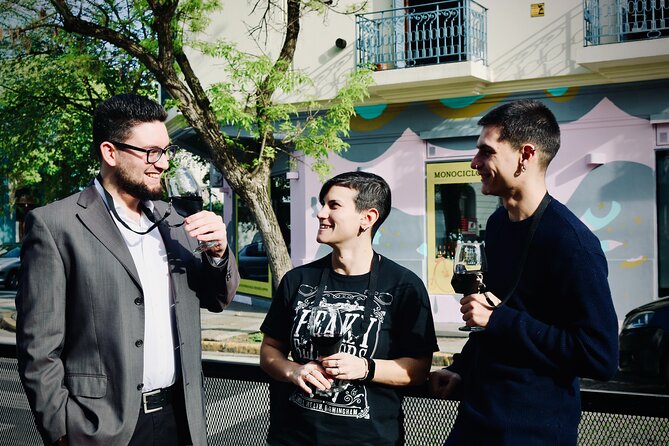
This is best understood as a guided Argentine wine sampler, not a traditional winery tour. You are not being taken out to vineyards or large cellars in Mendoza, Salta, or Patagonia. Instead, you walk through Palermo and stop at several small wine venues where different bottles are poured.
That format has a clear advantage. Argentina’s wine regions are spread across a huge country, so a single short tasting in Buenos Aires can give you a useful first look at several styles without a long drive or a full day outside the city. You can compare grapes and regions side by side, then decide which bottles deserve more attention during the rest of your trip.
The format also has limits. Five stops in 90 minutes leaves little time for long conversations, a relaxed meal, or a detailed look at each venue. The 18-minute timing at each stop keeps the route moving, but it can make the tasting feel more like a sequence of quick pours than a leisurely afternoon with wine.
You meet at Gorriti 4882 in Palermo, and the tour ends back at that same meeting point. The area is near public transportation, which makes it practical to reach without arranging a private car. Since pickup and drop-off are not included, you need to make your own way there and back.
More Walking Tours in Buenos Aires
- Buenos Aires Hop-On Hop-Off Bus, Free Walking Tours & Discounts
★ 4.5 · 2,218 reviews - Buenos Aires: La Boca Guided Walking Tour in English
★ 4.8 · 1,587 reviews - La Boca Walking Tour
★ 5.0 · 1,029 reviews
Stop one on Juan B. Justo: a gentle opening glass
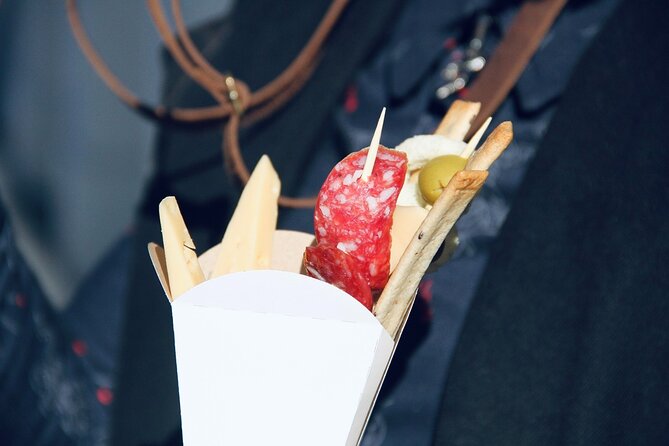
The first stop at Av. Juan B. Justo 1617 sets up the tasting with a white wine and a small plate of cheese and charcuterie. This is a sensible opening. White wine is often an easy way to begin, and the salty food gives you something to eat before the stronger reds arrive.
The wider description points to a Torrontés from Salta, with floral aromas and zesty notes. Torrontés is one of Argentina’s signature white grapes, and it gives you a useful reminder that Argentine wine is not only about Malbec. Its fragrant character can be a welcome change from heavier styles.
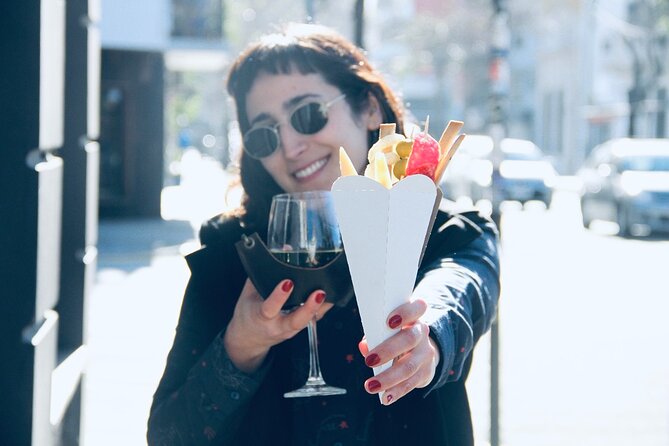
This is also the stop where the food seems to be most clearly concentrated. Cheese, cured meat, and olives are helpful with wine, but the portions should be viewed as tasting snacks rather than lunch. If you arrive hungry, eat something beforehand. The tour includes food, but it does not promise a substantial meal.
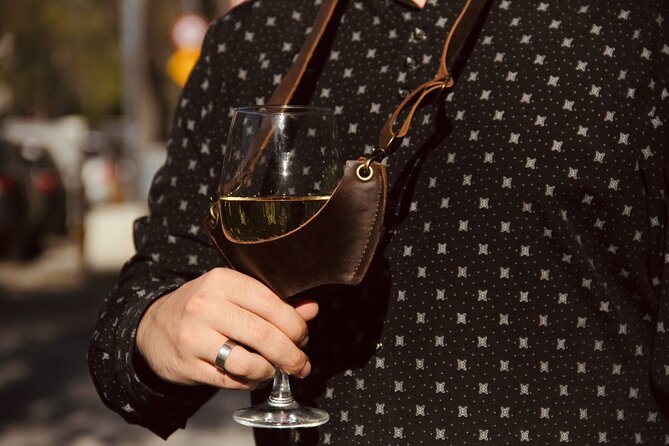
The first stop may also establish the practical question that shapes the rest of the outing: how are glasses handled as you walk? One account specifically objected to carrying a dirty glass through the neighborhood. That detail may sound minor, but it can affect the polish of the experience. A wine tour should make the tasting ritual feel comfortable, not improvised.
Palermo Soho and Mendoza orange wine
The second stop introduces orange wine from Mendoza. This is perhaps the most interesting educational moment because orange wine is made from white grapes handled more like red grapes. The grape skins stay in contact with the juice during fermentation, giving the wine more color, texture, and often a firmer feel than a standard white.
For you, this is a chance to taste a category that can be unfamiliar even to people who already enjoy wine. It also gives the guide something specific to explain. Rather than simply naming a grape, the guide can show how winemaking choices change the result in your glass.
The stop takes place in Palermo Soho, an area well suited to a walking route, but the key point is the tasting rather than the neighborhood sightseeing. You should not expect a long pause to tour a production cellar. The available information describes a tasting stop, not a working winery visit with barrels, vineyards, or a winemaker presentation.
If you enjoy unusual wine styles, this stop may be one of the tour’s best reasons to book. If you mainly want classic reds and a generous meal, orange wine may feel like a detour. I would treat it as a useful comparison rather than assume it will become your favorite pour.
Gurruchaga 963 and the rosé lesson
The third stop at Gurruchaga 963 focuses on rosé. The guide explains how rosé is made while you taste it, helping you connect the production method with the wine’s color and flavor.
This educational angle is valuable because rosé is often misunderstood. The description does not provide a specific grape or region for this pour, so you should not book expecting a particular bottle. What you can expect is a basic explanation of how the style is produced and how its expressions can vary.
The timing is again about 18 minutes. That gives the guide enough room for a short explanation and a tasting, but not for a long technical discussion. If you want to ask about fermentation, skin contact, regional climate, or food pairings, ask early. The group size of up to 15 people is small enough to make questions possible, although the schedule still needs to be respected.
Rosé also gives the tasting a change of pace. After a white and an orange wine, it offers a lighter bridge before the reds. That progression makes sense, even if the actual pours do not match the five varietals named in the broader overview exactly.
More Wine Tours in Buenos Aires
- Authentic Rooftop Asado Experience with Argentine Wine Pairing
★ 5.0 · 274 reviews - Bodega Gamboa Small-Group Wine Tasting Tour with Lunch
★ 5.0 · 212 reviews - Buenos Aires Small-Group Wine Tasting
★ 5.0 · 193 reviews - Buenos Aires: Wine Tasting and Lunch at Bodega Gamboa
★ 4.8 · 177 reviews
Malabia and Argentina’s famous Malbec
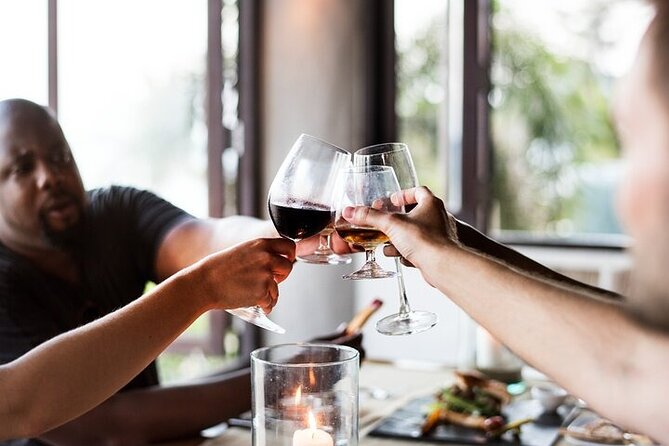
The fourth stop near Malabia brings in red wine, with Malbec described as the jewel of Argentine wine. This is the bottle many people will be waiting for. Argentina’s international wine identity is closely tied to Malbec, especially from Mendoza, and this pour gives the guide a natural opening to discuss the country’s best-known wine region.
The overview describes a Mendoza Malbec with deep cocoa notes. That sounds like a full, dark style, though tasting conditions and bottle selection can shape what you notice. You may pick up fruit, spice, oak, or tannin alongside the cocoa character.
This stop is likely to be more satisfying if you already understand that Malbec is not one single flavor. Mendoza produces different expressions depending on altitude, site, aging, and winemaking. In 18 minutes, you will not receive a full regional study, but you can begin to see why a bottle from Mendoza may taste different from one made elsewhere in Argentina.
The practical issue is pacing. Four pours in less than an hour can catch up with you, especially if the snacks are small. Take the water provided, taste slowly, and avoid treating every glass as a full serving. Bottled water is included, which is useful, but you should still plan for a short tasting rather than a long drinking session.
The final Palermo Soho pour and the closing comparison

The fifth stop returns to Palermo Soho for another red wine. The wider tasting description identifies this as a bold Syrah from Salta, with dark fruit and spicy notes. It also lists a Mendoza Cabernet Sauvignon with structured tannins and a silky Patagonian Pinot Noir with red-berry flavors among the wines presented.
There is an important inconsistency here. The stop-by-stop outline names five categories as white, orange, rosé, red, and red, while the broader wine description names several specific varietals and regions. You should ask the provider which exact five wines are being poured on your date. That answer matters if you are booking mainly to taste Pinot Noir, Cabernet Sauvignon, or Syrah.
The final stop is meant to review the wines and draw conclusions. This is a good way to end a short tasting because you can compare what you have tried rather than simply finish with one more glass. The guide can help you think about body, acidity, fruit, tannin, aroma, and regional character.
You may also buy bottles at the final stop. That option is useful if one of the wines catches your attention, but the information does not state which labels are available or whether bottle purchases are included in the tour price. Bring your preferred payment method and ask about shipping or carrying requirements if you are purchasing for later in your trip.
The guide, group size, and walking rhythm
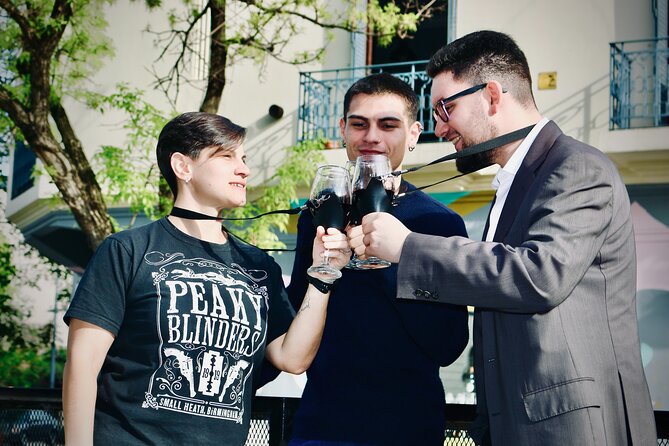
The guide is central to this experience. A professional and friendly manner has been noted, and that is a real strength. In a short tasting, good explanations help you understand why Salta, Mendoza, and Patagonia produce different wines, even when the route itself offers little time for detailed venue visits.
The maximum group size is 15 people. That is not a private tour, but it is manageable for a walking experience. You are less likely to be separated from the guide than in a large coach group, and questions should be possible if everyone keeps the pace moving.
The listed duration is about 1 hour and 30 minutes. Each of the five stops is assigned 18 minutes, which totals 90 minutes before allowing much extra time for walking between addresses. That tells you something important: this is a compact route. You will get a taste of several styles, but you should not expect long breaks or an unhurried meal.
The route uses ordinary city streets in Palermo. Wear shoes that are comfortable for walking and keep your expectations focused on neighborhood movement, tasting, and conversation. The experience ends at the starting point, which makes it easier to continue exploring Palermo afterward.
Five wines, but not necessarily five winery visits
The phrase hidden wineries may create a stronger picture than the actual format supports. The experience takes you to several boutique wine venues, but the available details do not describe five vineyards, production facilities, or behind-the-scenes cellar visits.
That distinction is important when you compare prices. A city wine walk can be worthwhile because it saves you from researching Argentine bottles and gives you an expert-led introduction in a short period. But it should be priced and judged as a tasting walk, not as a full winery excursion.
One written account found the route disappointing for exactly this reason. The complaint was not about the guide’s attitude. It focused on the gap between the promise of hidden wineries and the reality of moving between tasting locations, along with the modest food and the issue of a used glass. I would take that criticism seriously before booking.
The best way to protect yourself from disappointment is to ask a direct question: Are these operating wineries, wine shops, restaurants, or tasting rooms? Also ask which five wines are currently served. Clear answers will tell you if the format matches what you want.
Is $82 a fair price for 90 minutes?
At $82 per person, the value depends heavily on the quality and quantity of the pours, the food, and the guide’s instruction. Wine, snacks, bottled water, and a small group are included. Pickup, drop-off, and tips are not.
For someone new to Argentine wine, the price may make sense if the tour helps you choose bottles and understand the country’s major wine regions. You are paying for convenience, a planned route, an English-speaking or otherwise suitable guide if confirmed at booking, and the chance to compare several styles without arranging separate tastings.
For a wine enthusiast, the calculation is tougher. A 90-minute route with small snacks and quick stops may feel expensive if you already know Malbec, Torrontés, Syrah, and other Argentine grapes. The concern becomes stronger if the venues do not feel like wineries or if the pours are small.
There is also a notable price discrepancy to clarify. The stated price is $82, while one account referred to paying $135. That could reflect taxes, booking charges, a different date, or another version of the activity, but the supplied information does not explain it. Check the final checkout price before you book. At the higher figure, I would expect a more substantial food component or a more polished tasting setup.
Who will enjoy this tasting most?
I would recommend this experience to you if you want a short introduction to Argentine wine while staying in Buenos Aires. It suits curious drinkers who like comparing styles and do not need a formal vineyard visit.
It may also work well for couples or small groups who want an organized Palermo activity before dinner. The neighborhood setting, public transportation access, mobile ticket, and return to the meeting point make the outing simple to fit into a day.
I would be more cautious if you want a generous lunch, a slow wine seminar, or tours of real wineries. The route is too short for that. I would also hesitate if you dislike carrying a glass between locations or expect each stop to offer a fully developed food pairing.
Adults aged 18 and over can participate, and this is an adults-only experience. Dietary restrictions apply, so tell the provider in advance rather than hoping the included snacks can be adjusted on the spot.
My booking advice
Book this if you value variety, a friendly guide, and convenience more than winery architecture or a full meal. The chance to taste white, orange, rosé, and red wines in one Palermo outing is useful, especially if Argentine wine is new to you.
Skip it if the phrase hidden wineries is the main reason you are interested. The route appears to be a quick urban tasting walk, and the food may be too limited for the price. Before paying, confirm the exact five wines, the final total, the serving arrangements, and whether the venues are wineries or tasting rooms.
The cancellation terms are fair: cancel at least 24 hours before the local start time for a full refund. Changes or cancellations made inside that window are not accepted for a refund.
FAQ
Where does the wine tour start?
The tour starts at Gorriti 4882, C1414BJN, in Buenos Aires.
Where does the tour end?
The activity ends back at the same meeting point.
How long does the tour last?
The tour lasts approximately 1 hour and 30 minutes. The five stops are each allocated about 18 minutes.
How many people can join the tour?
The group is limited to a maximum of 15 people.
What is included in the price?
Wine tastings, snacks, and bottled water are included.
Is transportation included?
Pickup and drop-off are not included. The meeting point is near public transportation.
Can anyone participate?
This is an adults-only experience, and participants must be at least 18 years old because alcoholic beverages are served.
Can dietary restrictions be accommodated?
Dietary restrictions apply, so you should advise the provider in advance.
Just added in Buenos Aires
- Discover Buenos Aires’ independent art scene — Ticket included★ 5.0 · 30 reviews
- Photo Session in Buenos Aires★ 5.0 · 26 reviews
- Your Private Photographer in Buenos Aires★ 5.0 · 4 reviews
- Yerba Mate Workshop – Learn to Drink Mate like a Local!★ 5.0 · 11 reviews
- Your Personal Photographer in Buenos Aires★ 5.0 · 24 reviews
- BA: Wine Tasting and Blending Experience in Palermo★ 5.0 · 1 review
- Winery and Tasting Experience in Buenos Aires★ 5.0 · 1 review
- Taste of Tradition: Yerba Mate & Alfajores Experience★ 4.0 · 5 reviews
Argentine Wine Tours, compared.
All Day, Small Group, Luxury Wine Tour with Gourmet Lunch
Read our review →
Argentine Experience: Immersive Dinner & Wine Pairing in Iguazú
Read our review →
Browse the lists this tour appears in