Reviewed · BUENOS AIRES TOURS
Visit to the Diego Armando Maradona Stadium in Buenos Aires
Maradona’s first stage is still wonderfully tangible. This Buenos Aires tour takes you into Estadio Diego Armando Maradona, the home ground of Argentinos Juniors and the field where Diego made his official debut at age 15. I like the personal feel of the museum, built under the stands, and I like that the visit includes the pitch and local locker room, not just a trophy display.
I also like the small group size, capped at 10 people, and the hotel pickup and drop-off. Those touches make a sports visit easier to fit into a busy Buenos Aires day. The main consideration is the $80 price, which is fair for private-feeling transport and a two-and-a-half-hour visit, but high if you only want a quick look at a football stadium.
In This Review
- Key points before you book
- Why this stadium matters to Argentine football
- Entering Estadio Diego Armando Maradona
- The Temple of Soccer museum under the stands
- What the small group and guide add
- Is $80 a fair price?
- Who will enjoy this visit most?
- A few practical points for your day
- Should you book the Maradona stadium tour?
- FAQ
- Where is the Diego Armando Maradona Stadium?
- How long does the tour last?
- What is included in the price?
- How many people can join the tour?
- What can I see inside the stadium?
- Can I cancel for a full refund?
Key points before you book
- Maradona’s actual debut ground: Diego Armando Maradona played his first official match here on October 20, 1976, at age 15.
- A major Messi connection: Lionel Messi made his debut in the Argentina national team shirt at this stadium in 2004.
- A fan-built museum: The museum displays trophies, shirts, photographs, cards, and objects donated by club supporters.
- Access beyond the seats: The tour includes the field and Argentinos Juniors’ local locker room.
- Small-group format: No more than 10 people join the experience, with a Spanish-English bilingual guide.
- Simple city logistics: Hotel pickup and drop-off are included, and the stadium is near public transportation.
Why this stadium matters to Argentine football
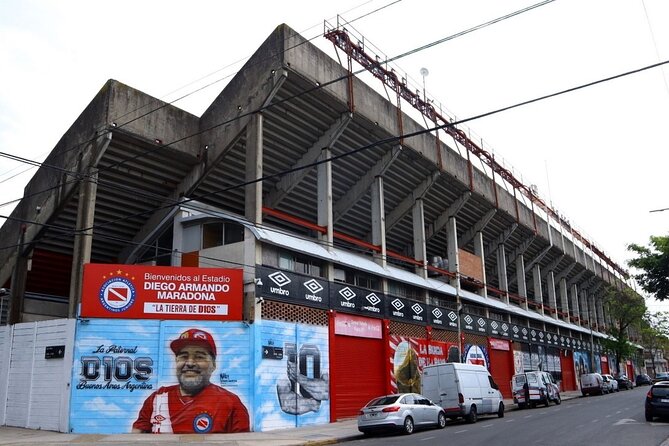
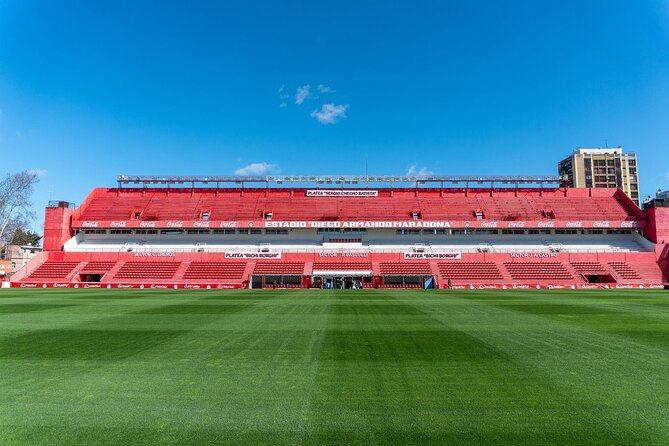
Buenos Aires has famous football grounds all over the city, but Estadio Diego Armando Maradona has a special place in the sport. It is the home of Argentinos Juniors, a club with a powerful connection to young talent and Argentine football culture. The stadium holds about 26,000 people, large enough to feel serious, but still intimate compared with the biggest grounds in the country.
The key reason to visit is simple: Diego Maradona began his professional story here. On Wednesday, October 20, 1976, he made his official debut on this pitch at only 15 years old. He then played five years in Argentina’s First Division for Argentinos Juniors and scored 116 goals, making him the club’s second-highest all-time scorer.
That detail changes the mood of the visit. You are not looking at a stadium chosen only because it carries a famous name. You are visiting the place where that name first became important. The setting connects Maradona to a specific field, locker room, club, and neighborhood rather than turning him into a distant statue.
The stadium also links to another major Argentine football figure. In 2004, Lionel Messi made his debut wearing the Argentina national team shirt in a friendly match against Paraguay. For football fans, having both Maradona and Messi tied to the same ground gives the visit unusual weight.
You do not need to support Argentinos Juniors to appreciate this connection. If you follow Argentine football, the visit gives useful context. If you mainly know Maradona from the 1986 World Cup or Messi from his later career, the stadium shows you an earlier, more local part of both stories.
More things to do in Buenos Aires:
- Local Foodie Adventure in Buenos Aires with Sherpa Food Tours
★ 5.0 · 6,875 reviews - Buenos Aires City Private Tour with Local Guide
★ 5.0 · 3,475 reviews - Buenos Aires Small-Group City Tour
★ 5.0 · 2,226 reviews
Entering Estadio Diego Armando Maradona
The first part of the experience is a visit to the stadium itself, scheduled for about one hour. You get a chance to see the ground as a working football home rather than as a polished attraction built only for sightseeing.
The most important moment is access to the playing field. Walking toward the pitch gives the tour its emotional center, especially when you know Maradona began there as a teenager. One Spanish-language review described the feeling of entering like a player, and that is a useful way to think about this part of the visit. The point is not a grand architectural spectacle. The point is the connection between an ordinary-looking football ground and extraordinary careers.
You also visit the local locker room. That is a worthwhile inclusion because it adds a human scale to the stadium. The locker room is where the club’s daily football life takes place, and it helps you picture the movement from preparation to match day.
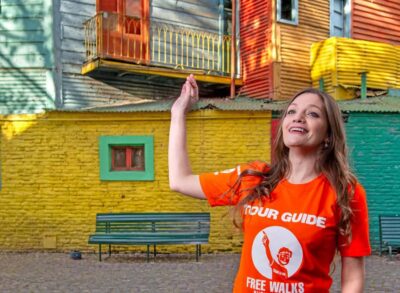
The tour reaches beyond one famous player. You see the home of Argentinos Juniors and get a sense of the club’s identity. The guide’s role matters here. The strongest praise for this experience focuses on guides who are local, enthusiastic, and able to make the stories feel personal rather than rehearsed.
Camilla is one guide specifically praised for bringing strong passion to the visit. Fernando is associated with the hotel transfer and the conversation on the way to the stadium. Guide assignments can vary, but the important point is that the experience is designed around a bilingual Spanish-English guide who can explain the club and its famous connections.
The one-hour stadium visit may feel short if you want a long architectural tour. This is not presented as a technical study of construction, seating design, or stadium operations. It is a football-focused visit, with the field, locker room, and club story doing most of the work.
The Temple of Soccer museum under the stands
The second stop lasts about one hour and 30 minutes. The museum is set beneath one of the stadium stands and is described as the Temple of Soccer, a name that fits its strong club identity.
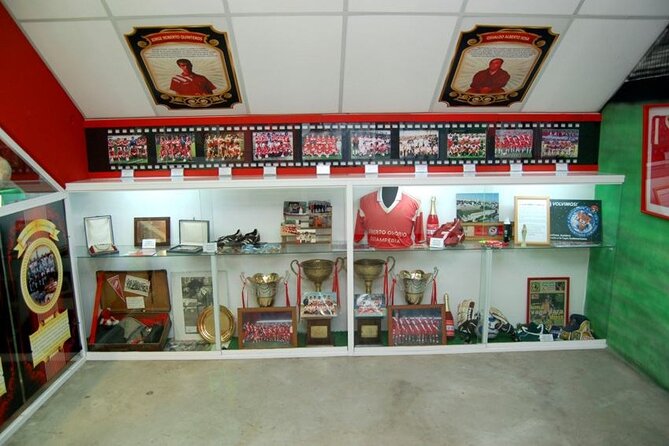
This is not a detached national football museum. Its focus is the sporting and institutional story of Argentinos Juniors. You can expect photographs, player cards, trophies, shirts from different campaigns, and other objects donated by club fans.
That fan connection is one of the museum’s best qualities. Donated items often carry more feeling than a standard display assembled only by professionals. A shirt, card, or photograph can show how supporters remember the club and which moments they chose to preserve.
I would give this section plenty of time. The museum offers a way to place Maradona within the club rather than treating him as the entire story. His debut and his five years in the First Division are central, but the displays also point toward the broader life of Argentinos Juniors.
The Messi connection receives attention here too. His 2004 appearance for Argentina at this ground gives the museum another strong link to the country’s national team story. It is a useful reminder that the stadium’s importance is not limited to one generation.
The museum’s location under the stand may appeal to you if you prefer places with a lived-in, local character. It is not described as a huge, high-tech institution, and that is part of the appeal. You are visiting a club museum shaped by its supporters, with objects that feel close to the people who care about the team.
At the same time, keep your expectations in check. The available information does not promise a large interactive museum, a full English-language audio system, or a massive collection. The value comes from the objects, the setting, and the guide’s explanations.
What the small group and guide add
The tour has a maximum of 10 people. That is a useful limit for a stadium visit because the experience includes several indoor areas, the field, and the locker room. A small party should make it easier to hear the bilingual guide and ask questions without turning the visit into a crowded procession.
The reviews give the clearest picture of what makes the guiding effective. The praise is consistent about local staff, strong football knowledge, and genuine enthusiasm. One guide is described as making the tour engaging from the start, while another is singled out for passion and for creating the feeling of walking into the stadium as a player.
Those comments matter more than a long list of formal features. A stadium can be visually interesting, but the right guide explains why a modest-looking ground matters. You want someone who can connect the date of Maradona’s debut, his 116 goals for the club, and Messi’s 2004 national-team debut to the spaces you are seeing.
The bilingual format works best if you speak either Spanish or English and want clear explanations in one of those languages. You should still allow for the possibility that the depth of conversation depends on the guide and on the questions asked by your group.
The hotel transfer is another practical advantage. Fernando has been praised for making the ride part of the experience with easy conversation. Pickup and drop-off remove some of the planning burden, especially if you are unfamiliar with Buenos Aires or do not want to arrange a taxi to the stadium.
The stadium is also near public transportation, so the transfer is not the only way to reach it. Still, the included ride adds value to the $80 cost, particularly if you are staying in a central hotel and want a straightforward outing.
A completely different kind of day:
- Buenos Aires Hop-On Hop-Off Bus, Free Walking Tours & Discounts
★ 4.5 · 2,218 reviews - Buenos Aires: Piazzolla Tango Show with Optional Dinner
★ 4.4 · 2,122 reviews - Buenos Aires: City Highlights Guided Tour with Transfer
★ 4.7 · 1,946 reviews - Buenos Aires: Hop-On Hop-Off City Bus Tour
★ 4.2 · 1,855 reviews
Is $80 a fair price?
At $80 per person, this is not a budget museum visit. You are paying for roughly two hours and 30 minutes, museum admission, a bilingual guide, and hotel pickup and drop-off. The small group size also makes the price easier to defend than it would be for a large, impersonal outing.
I see the value in three parts. First, you are visiting a genuine club stadium with direct Maradona and Messi connections. Second, the admission covers spaces beyond the public seating area, including the field and locker room. Third, transport and guiding are built into the price.
The tour is a stronger buy if football is one of your main interests in Buenos Aires. It is also a good choice if you want a local club experience rather than only the city’s most famous sights. The museum’s supporter-donated objects and the guide’s club-focused explanation give you something more specific than a standard stadium photo stop.
The value is weaker if you are not especially interested in football history. The museum is centered on Argentinos Juniors, Maradona, and Messi, so visitors looking for broad Argentine culture may find the subject narrow. You may also prefer a cheaper self-guided visit if transport and detailed commentary do not matter to you.
Because the tour is often booked about nine days ahead, I would not leave it until the last moment if your Buenos Aires schedule is fixed. Confirmation is provided when you book, and free cancellation is available if you cancel at least 24 hours before the start time. Changes or cancellations inside that window are not accepted for a refund.
Who will enjoy this visit most?
I would recommend this experience first to Maradona fans, Argentinos Juniors supporters, and anyone interested in how Argentine football develops its legends. The ground gives you a place-based story that you cannot get from watching old match footage alone.
It also suits Messi fans. His first appearance for the Argentina national team took place here in 2004, in a friendly against Paraguay. That detail gives the visit a second major football thread and makes it worthwhile for people whose interest begins with Messi rather than Maradona.
Families and mixed-age groups may find the two-and-a-half-hour length manageable. Most people can participate, and the group limit keeps the visit from feeling too large. Still, the main attraction is football, so children who are not interested in the sport may get less from the museum section.
You should also consider this tour if you enjoy meeting local guides. The strongest feature is not luxury. It is the enthusiasm of people connected to the club and its story. That personal tone is what turns the visit from a quick look at a stadium into a memorable Buenos Aires outing.
A few practical points for your day
Plan for the full two hours and 30 minutes, not just the one-hour stadium portion. The museum is a substantial part of the visit, and rushing away after seeing the pitch would miss much of what you are paying for.
Wear comfortable clothing for moving around the stadium and museum. No special equipment or fitness level is listed, and most people can participate, but you should still expect a walking-based visit through several areas.
Keep your schedule flexible around the pickup and return. The tour includes hotel transfers, which is convenient, but the exact timing of those movements is not provided. If you have a timed restaurant booking or another attraction immediately afterward, leave room between plans.
The stadium is near public transportation, giving you a backup option or a way to continue exploring the area. The included transfer remains the simplest choice if your hotel is covered by the pickup service.
Finally, ask questions. The dates, goal tally, and famous debuts are fascinating, but the guide can help connect them to the club and the stadium spaces. A small group gives you a better chance to turn the visit into a conversation.
Should you book the Maradona stadium tour?
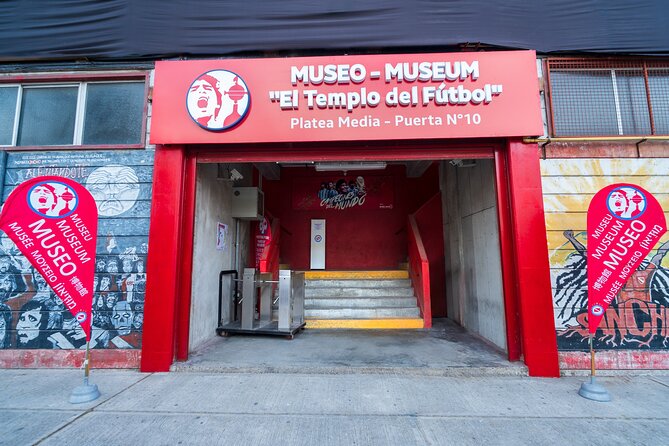
Book it if you want an intimate football experience tied directly to Maradona’s first professional club and Messi’s early national-team story. The field, locker room, fan-built museum, local guides, and hotel transport make this more than a quick photograph outside a stadium.
I would hesitate only if you are seeking a broad Buenos Aires sightseeing tour or the lowest possible price. For everyone else, the $80 cost is reasonable when you value the small group, bilingual guidance, admission, and transfers. This is a focused experience, but it has real local character and a clear reason to exist: you are standing where two of Argentina’s greatest football stories began.
FAQ
Where is the Diego Armando Maradona Stadium?
The stadium is in Buenos Aires, Argentina. It is the home ground of Argentinos Juniors and is near public transportation.
How long does the tour last?
The experience lasts approximately two hours and 30 minutes. The stadium visit takes about one hour, followed by about one hour and 30 minutes in the museum.
What is included in the price?
The $80 price per person includes hotel pickup and drop-off, museum entrance, and a bilingual Spanish-English guide.
How many people can join the tour?
The tour has a maximum group size of 10 people.
What can I see inside the stadium?
The visit includes the playing field, the local locker room, and the stadium connected to Argentinos Juniors. The stadium has capacity for about 26,000 people.
Can I cancel for a full refund?
Yes. You can cancel at least 24 hours before the experience start time for a full refund. Cancellations or changes made less than 24 hours before the start time are not refunded or accepted.
Just added in Buenos Aires
- Discover Buenos Aires’ independent art scene — Ticket included★ 5.0 · 30 reviews
- Photo Session in Buenos Aires★ 5.0 · 26 reviews
- Your Personal Photographer in Buenos Aires★ 5.0 · 24 reviews
- Your Private Photographer in Buenos Aires★ 5.0 · 4 reviews
- Yerba Mate Workshop – Learn to Drink Mate like a Local!★ 5.0 · 11 reviews
- BA: Wine Tasting and Blending Experience in Palermo★ 5.0 · 1 review
- Winery and Tasting Experience in Buenos Aires★ 5.0 · 1 review
- Taste of Tradition: Yerba Mate & Alfajores Experience★ 4.0 · 5 reviews
Buenos Aires Tours, compared.
Local Foodie Adventure in Buenos Aires with Sherpa Food Tours
Read our review →
Buenos Aires City Private Tour with Local Guide
Read our review →

Buenos Aires Hop-On Hop-Off Bus and Exclusive Benefits
Read our review →