Reviewed · BUENOS AIRES TOURS
Tour a pie de Historia y Naturaleza por Palermo
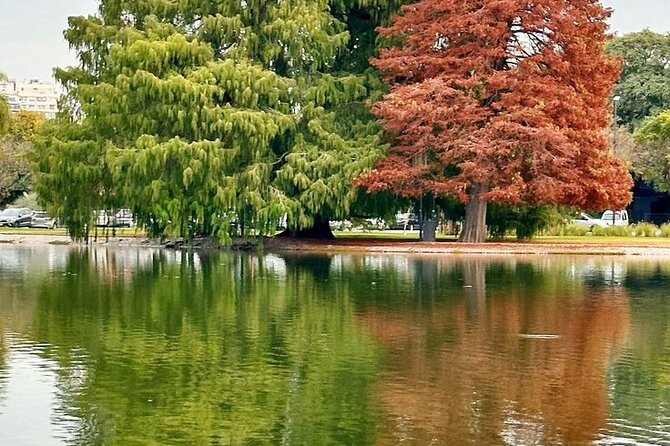
Palermo trades grand streets for living nature. I like the Botanical Garden and Rosedal, where Buenos Aires history meets plants, gardens, and local folklore, and I like the way historian guide Andrés Gabriel Pecchi connects architecture, geography, mythology, and daily life. The main consideration is pace: three hours covers a lot of ground, and the Planetarium is viewed from outside.
This is a private walking tour for your group, offered in English, beginning and ending at Plaza Italia. At $52 per person, it makes the most sense if you want a guide to interpret Palermo rather than simply stroll through its parks. You should also note that the Rosedal and Japanese Garden are visited free of charge from Tuesday through Sunday.
In This Review
- Six useful things to know before booking
- Why Palermo works so well for a walking tour
- Starting at Plaza Italia with Palermo’s Italian connection
- The Botanical Garden and the stories growing there
- Ecoparque, Rosedal, and the pleasure of Palermo’s gardens
- The Planetarium and Parque 3 de Febrero
- Tree-lined streets and the Japanese Garden
- What the guide adds to the experience
- Is $52 a fair price?
- Who should book this Palermo walk?
- Should you book this tour?
- FAQ
- Where does the tour begin?
- Where does the tour end?
- How long does the Palermo tour last?
- Is the tour offered in English?
- Is this a private tour?
- Is the Planetarium visited inside?
Six useful things to know before booking
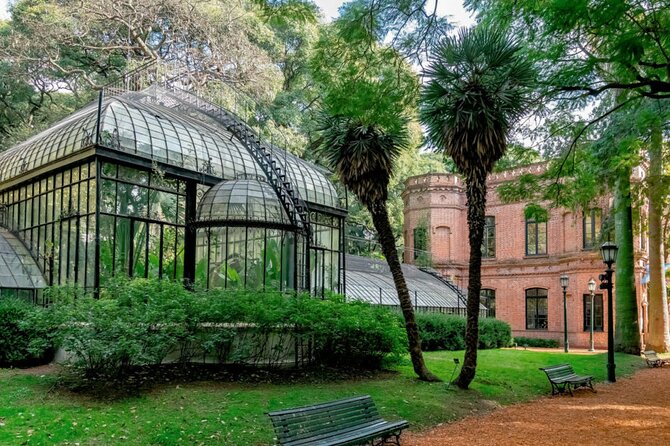
- The tour covers seven Palermo highlights: Plaza Italia, the Botanical Garden, Ecoparque, Rosedal, Palermo Woods, the Planetarium, and Japanese Garden.
- Andrés Gabriel Pecchi leads the experience: His explanations range from Argentine history and flora to architecture, gastronomy, railway design, and folklore.
- It is a private English walking tour: Only your group participates, so the experience is more personal than a large scheduled walk.
- The Botanical Garden gets 40 minutes: This is one of the strongest sections for nature, city history, and folk traditions.
- Parque 3 de Febrero is a favorite stretch: The paths through the woods connect the gardens and add breathing room to the city tour.
- The route returns to Plaza Italia: You finish where you began, close to public transportation.
Why Palermo works so well for a walking tour
Palermo is one of Buenos Aires’ best areas for combining city culture with open-air sightseeing. Within a few hours, you move from a historic square to formal gardens, tree-lined avenues, public parks, and buildings with distinctive architectural character.
I like this route because it does not treat Palermo as just a collection of pretty green spaces. The guide uses the gardens to explain how Buenos Aires developed, how immigrant communities shaped the city, and how nature appears in local stories and traditions.
The tour is also different from a standard monument walk. You are not spending the morning moving between indoor attractions. Instead, the experience takes place outdoors, with time to observe plants, paths, public art, buildings, and the changing feel of each part of the neighborhood.
The private format matters here. Andrés Gabriel Pecchi is described as a historian guide with a warm manner, good humor, and a clear teaching style. His subjects include history, geography, flora, fauna, populations, cultures, architecture, railway architecture, gastronomy, and mythology. That is a wide range, but it suits a route that keeps changing its subject from one stop to the next.
More things to do in Buenos Aires:
- Local Foodie Adventure in Buenos Aires with Sherpa Food Tours
★ 5.0 · 6,875 reviews - Buenos Aires City Private Tour with Local Guide
★ 5.0 · 3,475 reviews - Buenos Aires Small-Group City Tour
★ 5.0 · 2,226 reviews
Starting at Plaza Italia with Palermo’s Italian connection
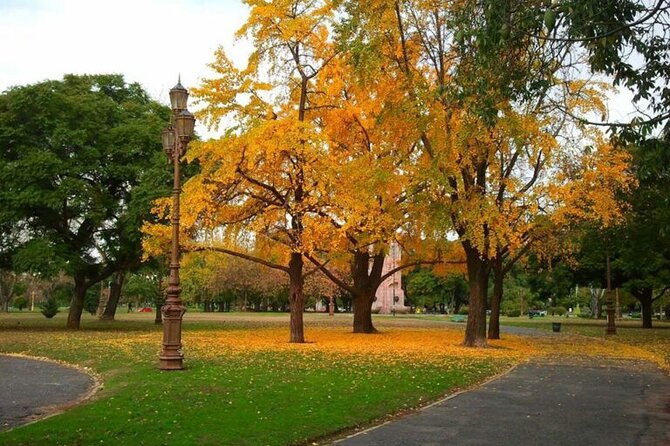
The tour begins at Plaza Italia, a practical meeting point in Buenos Aires and a useful introduction to the neighborhood. You spend about 20 minutes here, with no admission charge.
The square was created in the 19th century as a tribute to the Italian and Italian-Argentine population, as well as the Italian hero Giuseppe Garibaldi. That detail gives the tour an early connection to migration and identity. Buenos Aires is often described through its European influences, and Plaza Italia lets you begin with one specific example rather than a vague generalization.
I would pay attention to how the guide frames the square. It is not only a place to meet before walking onward. It helps explain how immigrant communities became part of the city’s public life and how European figures and traditions were honored in Argentina.
Twenty minutes is enough for an introduction, but not enough for a long architectural study. That is useful to know if you are hoping for a detailed examination of every monument or building around the plaza. The strength of this stop is context and orientation.
The Botanical Garden and the stories growing there
The Carlos Thays Botanical Garden receives about 40 minutes, making it one of the central parts of the experience. It opened in the 19th century and was designed by French landscape designer Jules Charles Thays.
The garden contains plants from the local region and from other parts of the world. That mix gives the guide plenty to discuss, from the natural environment of Argentina to the way people have studied, organized, and displayed plant life in a city setting.
I like this stop because it adds substance to what could otherwise be a simple garden visit. The tour uses the garden to discuss the natural world, the population history of Buenos Aires, and folk mythology tied to nature. You are not only looking at plants. You are considering how people explain, use, and imagine the natural world.
The reviews of the experience give this section especially strong praise. Several people singled out the Botanical Garden, and one called it a favorite part of the tour. That makes sense for visitors who want more than urban sightseeing. The garden provides a slower setting, and the guide’s subject range can turn a short walk among the plants into a lesson about Argentina’s environment and culture.
The limitation is time. Forty minutes can introduce the garden, but it will not allow you to explore every corner at leisure. If you are a serious plant enthusiast, you may want to return on your own after the tour. For most people, though, the guided visit gives the garden a clear purpose and keeps the overall route moving.
Ecoparque, Rosedal, and the pleasure of Palermo’s gardens
After the Botanical Garden, the route passes through Ecoparque before reaching the Rosedal and the Palermo Woods. The schedule allows about 40 minutes for this part of the route.
The Rosedal is one of the most admired stops on the walk. Its appeal is easy to understand: it combines planned garden design with the open setting of Palermo’s larger park system. The guide discusses its history and its place in the natural surroundings where Palermo residents spend time.
You also hear about folklore connected with the woods and gardens. That gives the walk a local character. Instead of treating the park as a generic recreation area, the tour connects it with traditions and stories from Buenos Aires.
I would consider this section one of the strongest reasons to book the tour. The natural scenery changes the rhythm of the morning, and the route feels less like a checklist of landmarks. One person particularly enjoyed passing through Parque 3 de Febrero, while others highlighted the Rosedal and the Palermo Woods.
Ecoparque is passed along the way rather than presented as a full, separate visit. Keep that distinction in mind. If you want a detailed visit to the park itself, this tour is not designed around that. Its purpose is to connect Palermo’s green spaces and explain the city’s relationship with them.
The Rosedal and Japanese Garden are visited free of charge from Tuesday through Sunday. The supplied information does not promise the same access arrangement on Monday, so check the day of your booking if entering both sites is important to you.
A completely different kind of day:
- Buenos Aires Hop-On Hop-Off Bus, Free Walking Tours & Discounts
★ 4.5 · 2,218 reviews - Buenos Aires: Piazzolla Tango Show with Optional Dinner
★ 4.4 · 2,122 reviews - Buenos Aires: City Highlights Guided Tour with Transfer
★ 4.7 · 1,946 reviews - Buenos Aires: Hop-On Hop-Off City Bus Tour
★ 4.2 · 1,855 reviews
The Planetarium and Parque 3 de Febrero
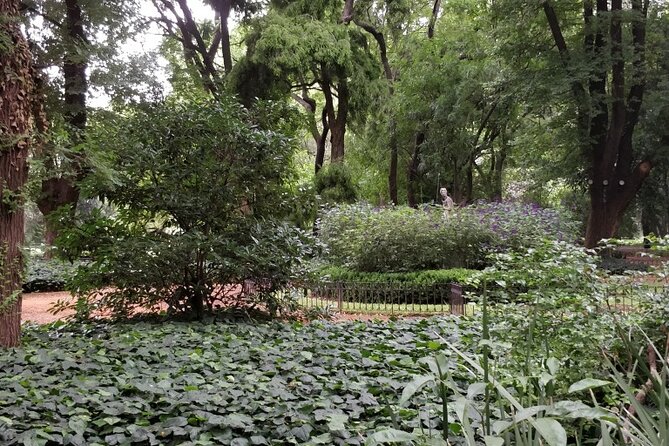
The next stop is the Galileo Galilei Planetarium, viewed from outside, followed by more walking through Parque 3 de Febrero. The scheduled time is about 30 minutes.
The Planetarium adds a strong architectural feature to a route otherwise centered on gardens and public parks. Even without an interior visit, the building gives the guide another way to discuss the city, public design, and the place of science in Buenos Aires.
The route then continues through Parque 3 de Febrero, also known as the Palermo Woods. This is more than a transfer between attractions. The park creates a broad, open section where you can appreciate the scale of Palermo’s public green spaces.
This was the favorite part for at least one participant, and I can see why. The path through the park lets the tour breathe after the more focused stops at Plaza Italia and the Botanical Garden. It also brings together several themes: nature, recreation, city planning, and the way Buenos Aires residents use parks in everyday life.
The clear drawback is that you do not tour the Planetarium’s interior. If your main interest is astronomy or the building’s exhibits, you would need another visit. Here, the Planetarium functions as an exterior landmark within a wider walking route.
Tree-lined streets and the Japanese Garden
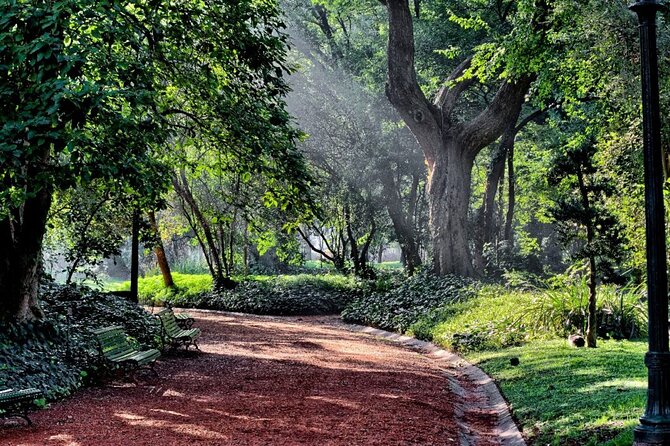
The final major stop is the Japanese Garden, reached through tree-lined streets and avenues. The itinerary gives this section about 50 minutes, the longest scheduled portion of the route.
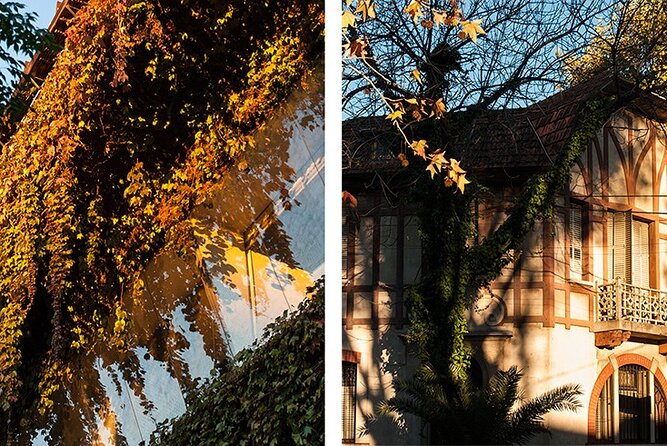
The guide uses this part of the walk to discuss architecture, historical influences, and folklore in the Autonomous City of Buenos Aires. That keeps the final section from becoming just another garden visit. You continue looking at how built spaces, traditions, and natural settings work together.
The Japanese Garden is repeatedly described as an essential stop, and it offers a clear change in mood from the larger public parks. Its design gives the guide a way to talk about cultural traditions and architectural choices within Buenos Aires.
The timing is helpful. Fifty minutes gives you more room here than at Plaza Italia or the Planetarium. Still, the exact balance between walking, explanations, and time inside the garden can vary depending on the group and the guide’s pace.
You return to Plaza Italia at the end. That makes the route easy to understand and removes the need to arrange a separate return transfer. Since the starting point is near public transportation, you can continue to another part of Buenos Aires from the same general area.
What the guide adds to the experience
A good guide is particularly important on a tour like this because gardens and parks do not explain themselves. Without context, you may see pleasant paths and attractive plants but miss the connections between immigration, public space, natural science, folklore, and city development.
Andrés Gabriel Pecchi receives strong praise for being attentive, professional, pleasant, and good-humored. His explanations are described as complete and easy to follow. The repeated emphasis on his teaching style suggests that the value of the experience comes less from simply reaching each stop and more from the way he links them.
I appreciate the breadth of the subjects attached to the route. History and geography are expected, but discussions of flora, fauna, railway architecture, gastronomy, and mythology give the tour a wider view of Buenos Aires.
That breadth can also be a matter of taste. If you prefer a tightly focused botanical tour, this may feel too broad. If you enjoy making connections between a city’s people, buildings, food, stories, and natural spaces, the variety is a major advantage.
Is $52 a fair price?
The cost is $52 per person for about three hours. All listed stops have no admission charge, so you are paying mainly for the guide, the private format, the route design, and the interpretation.
That can be good value if you are traveling with a small group and want a focused introduction to Palermo. A private tour lets you share the pace and questions with only your own group. It also avoids the impersonal feel that can come with a large walking tour.
The price is less compelling if you only want to wander through the parks independently. Plaza Italia, the gardens, the woods, and the exterior of the Planetarium can be visited without paying a tour fee, and the Rosedal and Japanese Garden are free Tuesday through Sunday.
For me, the value depends on how much explanation you want. The route itself is free or low-cost, but the connections between Argentine history, nature, architecture, and folklore are the part you cannot get from a map alone.
Who should book this Palermo walk?
I would recommend it to you if you enjoy walking, public gardens, city history, and cultural interpretation. It suits first-time visitors who want to understand Palermo beyond restaurants and shopping, as well as returning visitors who prefer a quieter, greener side of Buenos Aires.
It is also a good choice for anyone who likes variety. In three hours, you see a historic square, a botanical collection, formal gardens, an ecopark area, a major city park, a distinctive science building, and a Japanese-style garden.
You should think twice if you want a museum-heavy outing, an indoor Planetarium visit, or a slow photography session at every stop. The route covers a lot of ground, and the schedule gives each place a defined window.
The tour is offered in English and most people can participate. Wear comfortable shoes and expect a sustained outdoor walk. Confirmation is provided when you book, and free cancellation is available until 24 hours before the start time. Cancellations or changes made later are not accepted for a refund.
Should you book this tour?
Book it if you want Palermo explained, not simply photographed. The Botanical Garden, Rosedal, and Parque 3 de Febrero receive the strongest praise, while the private format and Andrés Gabriel Pecchi’s wide-ranging commentary add real value to a route made up mostly of free public spaces.
Skip it if you prefer to explore gardens alone or want admission inside the Planetarium. For a guided introduction to Palermo’s history, nature, architecture, and folklore, though, this is a thoughtful three-hour choice at a fair price for a private group.
FAQ
Where does the tour begin?
The tour begins at Plaza Italia in Buenos Aires, at C1425 Buenos Aires, Argentina.
Where does the tour end?
The experience ends back at the starting point in Plaza Italia.
How long does the Palermo tour last?
The tour lasts approximately three hours.
Is the tour offered in English?
Yes. The experience is offered in English.
Is this a private tour?
Yes. Only your group participates in the private activity.
Is the Planetarium visited inside?
No. The Galileo Galilei Planetarium is visited from outside, after which the walk continues through Parque 3 de Febrero.
Just added in Buenos Aires
- Discover Buenos Aires’ independent art scene — Ticket included★ 5.0 · 30 reviews
- Photo Session in Buenos Aires★ 5.0 · 26 reviews
- Your Private Photographer in Buenos Aires★ 5.0 · 4 reviews
- Yerba Mate Workshop – Learn to Drink Mate like a Local!★ 5.0 · 11 reviews
- Your Personal Photographer in Buenos Aires★ 5.0 · 24 reviews
- Winery and Tasting Experience in Buenos Aires★ 5.0 · 1 review
- Taste of Tradition: Yerba Mate & Alfajores Experience★ 4.0 · 5 reviews
- BA: Wine Tasting and Blending Experience in Palermo★ 5.0 · 1 review
Buenos Aires Tours, compared.
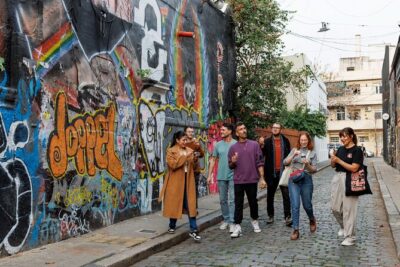
Local Foodie Adventure in Buenos Aires with Sherpa Food Tours
Read our review →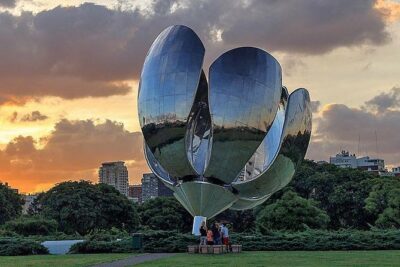
Buenos Aires City Private Tour with Local Guide
Read our review →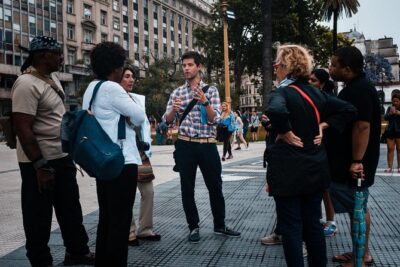
Buenos Aires Hop-On Hop-Off Bus and Exclusive Benefits
Read our review →