
Reviewed · BUENOS AIRES TOURS
Teatro Colon Skip-the-Line plus Palaces of Buenos Aires Tour
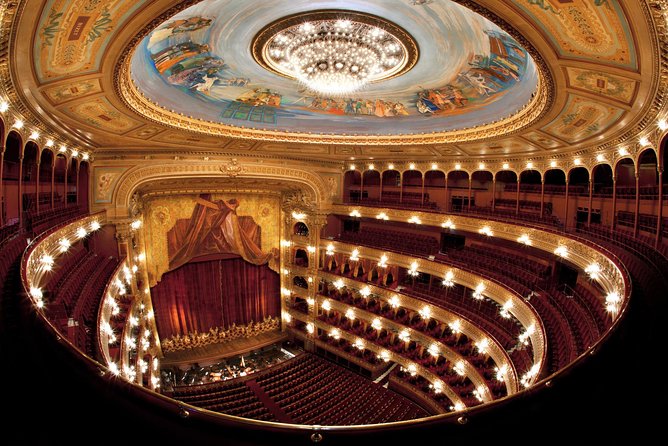
Teatro Colón rewards anyone who looks up. This two-part Buenos Aires tour pairs skip-the-line entry to the opera house with a walk past grand palaces and embassies, making the city’s Belle Époque ambitions easier to understand. I especially like the chance to see the theater’s ornate interiors and massive stage, then connect them with the French-inspired buildings along Avenida Alvear.
I also like the small maximum group of 12 and the tour’s manageable length. Guides such as Franco, Mariela, Alicia, Laura, Florencia, Julieta, and Ana have earned warm praise for their humor, flexibility, and command of local stories. The main caution is that the order can change, and the outdoor walk may come before the theater visit, which matters on a hot day.
In This Review
- Key points to know before booking
- Why Teatro Colón anchors the experience
- The Belle Époque story begins on Avenida Alvear
- Casey Palace and the Ministry of Culture
- The French Embassy and academic French style
- Pereda Palace, now the Brazilian Embassy
- The Four Seasons and the Álzaga Unzué Palace
- Fernández Anchorena Palace and the Apostolic Nunciature
- Duhau Palace and the Maguire Residence
- What the guides add to the walk
- Timing, meeting point, and group size
- Is $68 a fair price?
- Who should book this Buenos Aires tour?
- Should you book Teatro Colón and the palaces tour?
- FAQ
- Where does the tour start?
- Where does the tour end?
- Is admission to Teatro Colón included?
- Are palace entrance fees included?
- How long does the tour last?
- Can the tour order change?
- Is transportation included?
- What is the cancellation policy?
Key points to know before booking
- Teatro Colón is the centerpiece: Plan on about 50 minutes inside one of the world’s most acclaimed opera houses, with admission and skip-the-line access included.
- The palaces are viewed from outside: The walk focuses on façades, architecture, stories, and changing Buenos Aires society. Interior admission is not included at the other stops.
- The schedule can shift: Theater availability may mean walking first and visiting Teatro Colón later.
- Belle Époque Buenos Aires comes into focus: French academic architecture, English Edwardian touches, aristocratic wealth, immigration, and the world wars all enter the story.
- The group is intended to stay small: The stated maximum is 12 people, though one comment found a group larger than ideal.
- English quality may vary: The tour can use a multilingual guide, so clear communication is worth confirming when booking.
Why Teatro Colón anchors the experience
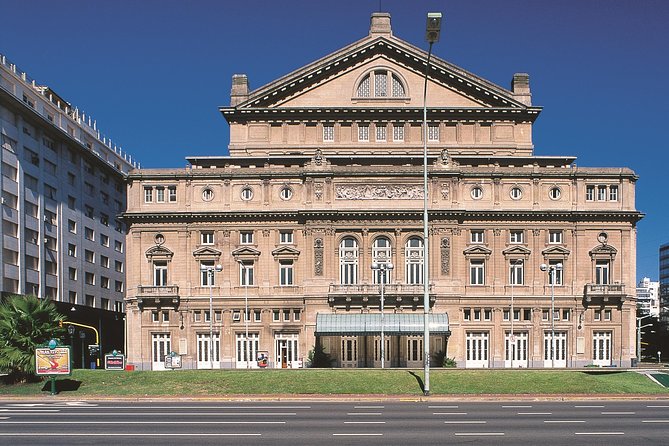
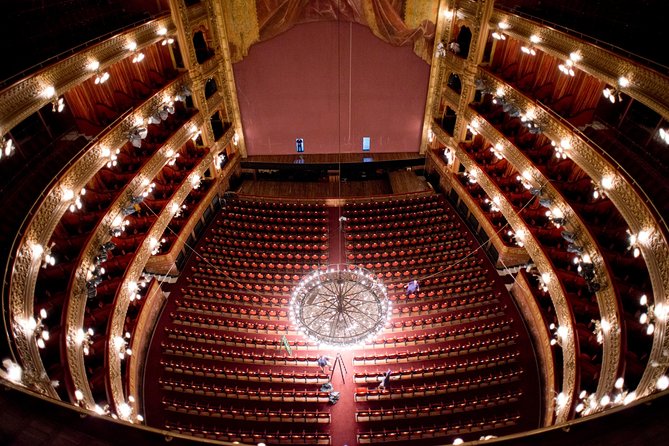
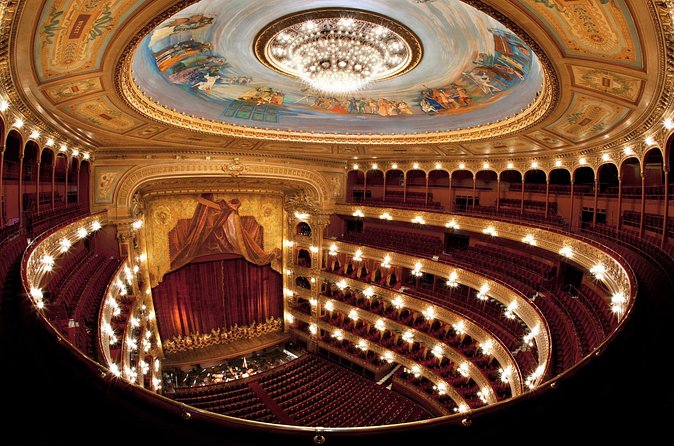
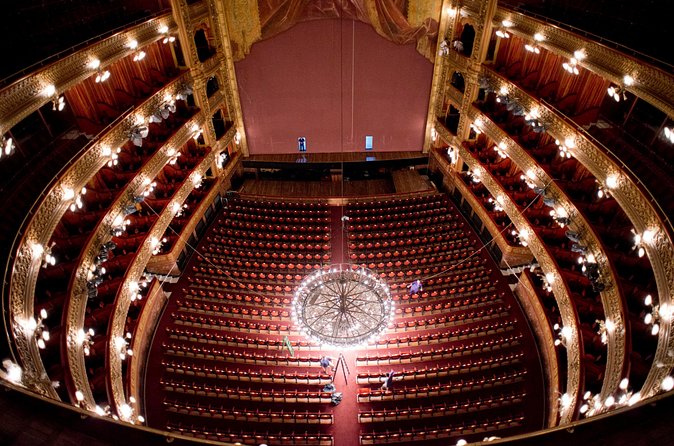
Buenos Aires has plenty of grand buildings, but Teatro Colón gives this tour its strongest reason to book. The opera house is often placed among the world’s leading performance venues because of its size, acoustics, and long association with major musical artists. Even if you are not an opera regular, the building makes a persuasive case for itself.
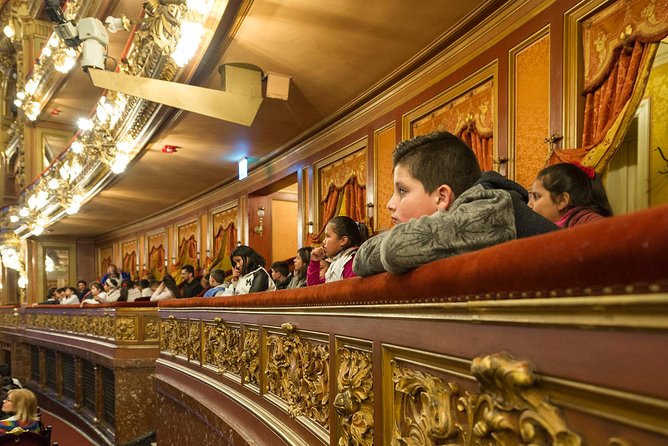
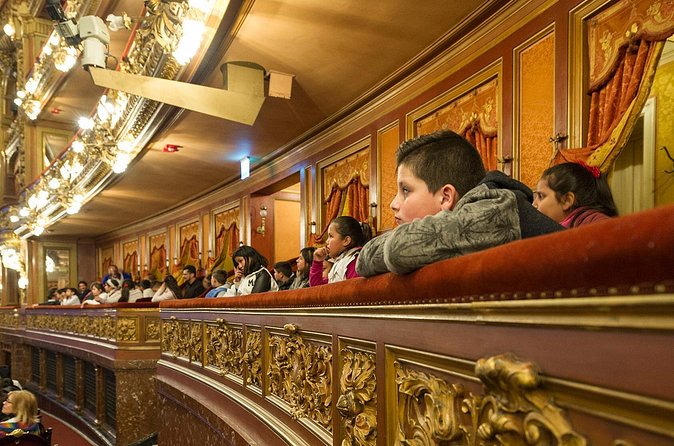
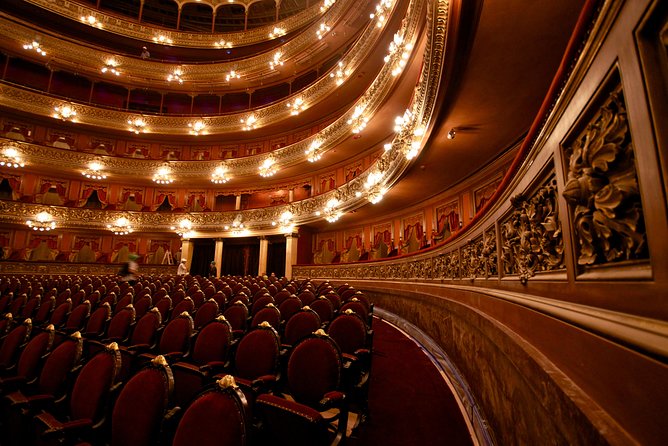
The interior is the part to watch closely. A theater employee leads the visit through the ornate spaces, explaining the mural work, decorative details, and enormous stage. The tour also gives you photo opportunities, and several guides have been praised for making the theater’s story lively rather than stiff.
You should expect roughly 50 minutes inside. That is enough time to appreciate the decoration and hear the main architectural story, but it is not a backstage production tour. The available information specifically points to the public areas, interior design, murals, acoustics, and stage. If you are hoping to see dressing rooms, technical areas, or theater machinery, keep your expectations modest.
The skip-the-line feature matters most when Teatro Colón is busy. It saves you from arranging a separate theater visit and places the admission fee inside the tour price. One useful detail: some participants were confused when they arrived at the theater entrance and expected the walking guide there. Read the meeting instructions carefully and look for the tour representative, not only a theater employee.
More things to do in Buenos Aires:
- Local Foodie Adventure in Buenos Aires with Sherpa Food Tours
★ 5.0 · 6,875 reviews - Buenos Aires City Private Tour with Local Guide
★ 5.0 · 3,475 reviews - Buenos Aires Small-Group City Tour
★ 5.0 · 2,226 reviews
The Belle Époque story begins on Avenida Alvear
The second half of the experience moves outdoors through Recoleta and the grand avenue around Plaza Carlos Pellegrini. This is not a palace tour in the sense of entering every residence. Instead, you walk from building to building while the guide explains who commissioned them, which architectural styles they favored, and what Buenos Aires society wanted to project.
That context gives the buildings a purpose beyond decoration. Around the beginning of the 20th century, Argentina’s wealthy families invested in elaborate European-style homes while the country’s economy and social order were marked by sharp contrasts. New arrivals from Europe lived alongside an agro-export elite that looked toward Paris for ideas about taste, status, and city planning.
The walk also addresses the effect of both world wars on Argentine society. That broader frame is useful because these palaces are not just pretty façades. They represent wealth, migration, social ambition, and a period that eventually changed beyond recognition.
The walk includes several short stops, generally about 10 minutes each. You will want comfortable shoes, sun protection, and water, especially if the theater visit is scheduled after the outdoor portion. The distance is not given, but the experience is clearly a walking tour with no transportation between sites.
Casey Palace and the Ministry of Culture
At Alvear Avenue and Rodríguez Peña Street, Casey Palace houses the national Ministry of Culture. Its red and gray exposed-brick façade is broken by strips of Paris-style stone, ornamental details, and black slate mansard roofs.
This stop is a good example of how the tour works. You do not enter for a formal palace visit. Instead, the guide points out features you might otherwise pass without understanding, then places the building within the French-influenced streetscape of Recoleta.
The building’s unusual combination of brick, stone, and roofline makes it especially photogenic. Allow yourself a moment to look above street level. Buenos Aires often rewards that habit.
The French Embassy and academic French style
The French Embassy occupies the former Ortiz Basualdo-Zapiola residence, built between 1912 and 1918. It is considered a strong example of French academic architecture and contains a mix of styles that reflect the artistic tastes of the period.
The stop is brief, but the building helps explain why this part of Buenos Aires can feel so European. Your guide can point out how the residence was designed to signal refinement and international status. Since the embassy remains a working diplomatic building, the tour views it from outside and does not include entry.
For you, the value here is comparison. Seeing the French Embassy after Casey Palace helps you notice that the city’s grand buildings do not all copy the same model. The details vary, even when the overall goal was similar.
A completely different kind of day:
- Buenos Aires Hop-On Hop-Off Bus, Free Walking Tours & Discounts
★ 4.5 · 2,218 reviews - Buenos Aires: Piazzolla Tango Show with Optional Dinner
★ 4.4 · 2,122 reviews - Buenos Aires: City Highlights Guided Tour with Transfer
★ 4.7 · 1,946 reviews - Buenos Aires: Hop-On Hop-Off City Bus Tour
★ 4.2 · 1,855 reviews
Pereda Palace, now the Brazilian Embassy
Across from the French Embassy and Plaza Carlos Pellegrini is Pereda Palace, home to the Brazilian Embassy. Its château-like design reflects the strong French influence on Buenos Aires architecture during the early 20th century.
The palace also has an unusual design story. One architect began the project, and another completed it, after the owner’s plans and preferences changed. The property is known for lavish staircases, Carrara marble, decorated ceilings, and works of art, though those interiors are not part of this walking visit.
That distinction is important. You see the imposing exterior and hear about the people and choices behind it. If you want to inspect the interior rooms, the tour will not provide that access.
The Four Seasons and the Álzaga Unzué Palace
The Four Seasons Hotel occupies the Álzaga Unzué Palace, another reminder of the social contrasts behind Buenos Aires’ grand avenues. The residence was built for a family whose tastes combined English Edwardian design with a fondness for French Loire Valley castles.
Scottish architect Robert Russell spent four years on the construction. The building followed the hotel particulier model, a large urban mansion arranged across four floors for one family, with separate functions within the house.
This stop adds variety to the architectural story. The French Embassy and Pereda Palace show the city’s formal French influence, while Álzaga Unzué brings in English touches and a more blended personal style. You can also consider how a private residence later became a hotel, one of the many ways these properties found new lives.
Fernández Anchorena Palace and the Apostolic Nunciature
Fernández Anchorena Palace is one of the few upper-class residences still surviving along Avenida Alvear. It now belongs to the Holy See and serves as the Apostolic Nunciature in Buenos Aires.
The building provides a useful pause in the tour’s story of adaptation. These homes were created for private families, but some later became diplomatic or institutional headquarters. The guide explains the change while you view the mansion from the street.
At around 10 minutes, this is not a long stop. Still, the palace helps you see how much of the avenue’s old residential character remains, even though the buildings now serve purposes different from those intended by their original owners.
Duhau Palace and the Maguire Residence
Duhau Palace, now part of the Park Hyatt Buenos Aires, was declared a historic monument in 2002. The current building was commissioned by the Duhau brothers in the 1930s and designed by León Dourge in a French neoclassical style.
Its history is tied to changing ownership and architectural taste. The palace once belonged to Teodoro de Bari, then received a new chapter under the Duhau family. Your guide can use the building to explain how wealthy owners reshaped residences to match their ideas of elegance.
Nearby, the Maguire Residence is one of the more enigmatic buildings on the route. It is one of the few surviving upper-middle-class mansions from a corridor of residences that were later demolished or converted into hotels. Since 2002, it and the adjacent Duhau Palace and Apostolic Nunciature have held National Historic Monument status.
These final stops make the walk more than a procession of enormous mansions. You see different levels of society, different eras of construction, and the survival of only a small part of the original residential corridor.
What the guides add to the walk
The best part of this experience depends heavily on the guide. Strong guides have made the tour personal and easy to follow. Franco was praised for being funny, quick to solve a meeting problem, and well informed about Buenos Aires. Mariela was noted for adjusting the pace to the group’s interests and making room for questions. Alicia, Laura, Florencia, Julieta, and Ana also received especially warm comments for clear explanations and friendly service.
That flexibility matters on a short urban tour. The buildings are impressive, but the guide gives you the reason to care about them. Stories about architects, owners, competing tastes, and social change turn a street walk into a readable chapter of Buenos Aires.
There have also been clear weaknesses. One participant found the guide’s English difficult to understand. Another reported offensive comments about immigrants and felt the theater portion was much stronger than the rest of the tour. The operator responded that the matter would be addressed. Those accounts are not typical of the many positive comments, but they are worth keeping in mind because a multilingual guide can affect the experience considerably.
Timing, meeting point, and group size
The tour begins at Teatro Colón, Tucumán 1171, in central Buenos Aires, and ends back at the same meeting point. Hotel pickup, drop-off, and transportation are not included, so you need to make your own way there and return afterward.
The stated duration is about two hours, while the inclusions also describe a 2.5-hour guided tour. The individual stops suggest a schedule of about 50 minutes inside the theater plus roughly an hour and 10 minutes at the palaces and embassies, with some walking time between them. Confirm the exact start time and expected duration before setting up another activity.
The order is not fixed. Usually, the theater comes first, but theater availability can push that visit to later in the day. On one occasion, the walking portion came first and the theater visit began at 3 p.m. That created confusion for someone expecting to enter Teatro Colón at 1 p.m., and it made the outdoor walking less comfortable in hot weather.
The maximum group size is 12, which should allow a more personal conversation than a large city tour. Still, group sizes can affect how well you hear the guide, especially on a busy sidewalk. One comment found the group larger than ideal, while another praised the relaxed pace and time for questions.
Is $68 a fair price?
At $68 per person, this is not the cheapest way to see Teatro Colón. You are paying for the theater admission, skip-the-line access, a professional guide, and the added walking tour through some of Buenos Aires’ most important palace-lined streets.
The value is strongest if you want both parts. Buying a theater visit alone may suit you better if your only goal is to see the opera house and you prefer a longer or more specialized theater presentation. The combined tour earns its price by linking the theater to the buildings around Recoleta, giving you a larger picture of the city’s architecture and social past.
The price feels less attractive if you expect backstage access or entry into the palaces. Those are not included. It also feels less secure if your guide’s English is hard to follow, since the interpretation is a major part of what you are buying.
Free cancellation is available up to 24 hours before the start time. Children must be accompanied by an adult, and most people can participate. The experience is described as kid-friendly, though younger children may care more about the theater’s size and decoration than the architectural history.
Who should book this Buenos Aires tour?
I would recommend it to first-time visitors who want a compact introduction to central Buenos Aires, especially if grand architecture and social history appeal to you. It also suits families and couples who prefer a guided walk rather than piecing together several sites alone.
You will get the most from it if you enjoy looking at façades, asking questions, and hearing how buildings connect to politics, money, immigration, and changing social customs. Bring comfortable shoes and plan for outdoor conditions.
I would hesitate if you want extensive theater access, private palace interiors, or a strictly fixed schedule. I would also contact the operator in advance if clear English is essential to your experience.
Should you book Teatro Colón and the palaces tour?
Book it if you want a convenient combination of Buenos Aires’ grand opera house and the palace district around Avenida Alvear. The theater is the sure highlight, and the walking portion adds useful context about the Belle Époque, French academic design, English Edwardian influence, and the families who shaped the city.
Before paying, confirm the start time, tour order, language, and expected duration. If those details suit your plans, the $68 price is reasonable for a small guided experience with theater admission included. If you want only Teatro Colón, a theater-only option may offer better value and fewer moving parts.
FAQ
Where does the tour start?
It starts next to Teatro Colón at Tucumán 1171, C1049AAW, Buenos Aires.
Where does the tour end?
The experience ends back at the Teatro Colón meeting point.
Is admission to Teatro Colón included?
Yes. The admission fee to Teatro Colón and skip-the-line access are included.
Are palace entrance fees included?
No. The palace and embassy stops are primarily exterior visits, and admission fees for those sites are not included.
How long does the tour last?
The experience is described as approximately two hours, while the inclusions also state a 2.5-hour guided tour. Confirm the exact timing when booking.
Can the tour order change?
Yes. Theater availability can mean that the walking tour happens first and the Teatro Colón visit takes place later.
Is transportation included?
No. Hotel pickup, hotel drop-off, and transportation to or from the attractions are not included.
What is the cancellation policy?
You can cancel at least 24 hours before the local start time for a full refund. Changes or cancellations made less than 24 hours before the start time are not accepted for a refund.
Just added in Buenos Aires
- Discover Buenos Aires’ independent art scene — Ticket included★ 5.0 · 30 reviews
- Photo Session in Buenos Aires★ 5.0 · 26 reviews
- Your Private Photographer in Buenos Aires★ 5.0 · 4 reviews
- Yerba Mate Workshop – Learn to Drink Mate like a Local!★ 5.0 · 11 reviews
- Your Personal Photographer in Buenos Aires★ 5.0 · 24 reviews
- BA: Wine Tasting and Blending Experience in Palermo★ 5.0 · 1 review
- Winery and Tasting Experience in Buenos Aires★ 5.0 · 1 review
- Taste of Tradition: Yerba Mate & Alfajores Experience★ 4.0 · 5 reviews
Buenos Aires Tours, compared.
Local Foodie Adventure in Buenos Aires with Sherpa Food Tours
Read our review →
Buenos Aires City Private Tour with Local Guide
Read our review →
Buenos Aires Hop-On Hop-Off Bus and Exclusive Benefits
Read our review →

Argentine Experience Interactive Dining and Cooking
Read our review →Browse the lists this tour appears in