Reviewed · BUENOS AIRES TOURS
San Telmo – Colonial Tour Buenos Aires
Buenos Aires began as a small village. This two-hour walk shows how it grew into a vast capital by using San Telmo’s streets, passages, mansions, parks, and market as a living history book. I like the focus on colonial Buenos Aires and the way the route also brings in modern icons such as Mafalda.
I also like the tour’s small maximum of 15 people, which should make it easier to hear the guide and ask questions. The main consideration is that the tour covers a lot in two hours, so anyone wanting lengthy museum visits or a slow look at every building may find the pace brisk.
In This Review
- Key points at a glance
- Why San Telmo makes a fine first lesson in Buenos Aires
- Starting near Av. Presidente Julio A. Roca
- The early city, Indigenous peoples, and the Apple of Lights
- San Lorenzo Passage and the colonial street plan
- The Minimal House and Afro-Argentine Buenos Aires
- Education in Argentina and the Eva Perón Foundation
- Mafalda, local humor, and popular icons
- San Telmo Market and the Ezeiza Mansion
- Lezama Park and the foundation of Buenos Aires
- What $30 gets you
- Who will enjoy this San Telmo walk?
- Booking, timing, and cancellation
- Should you book the San Telmo Colonial Tour?
- FAQ
- How long is the San Telmo Colonial Tour?
- What time does the tour start?
- Where does the tour begin?
- Where does the tour finish?
- What language is the tour offered in?
- How much does the tour cost?
- How large is the tour group?
- Is the ticket available on a mobile phone?
- Can I cancel for a full refund?
Key points at a glance
- Colonial San Telmo in two hours: Follow Buenos Aires from its early village days to its role as a major cosmopolitan city.
- Stories beyond grand buildings: The route includes Argentina’s Indigenous peoples, Afro-Argentine communities, education, popular culture, and Eva Perón.
- Mafalda and the narrow house: Local personality comes through in unusual details, including the city’s minimal house and a beloved comic character.
- A walk from Roca Avenue to Lezama Park: Begin near Av. Presidente Julio A. Roca and finish beside the monument to Don Juan de Garay.
- Clear, lively guiding: The strongest praise centers on explanations that are easy to follow, with a fun tone that suits a story-based neighborhood walk.
- Good value at $30: The price works well if you want a structured introduction to San Telmo without paying for a long, formal sightseeing tour.
Why San Telmo makes a fine first lesson in Buenos Aires
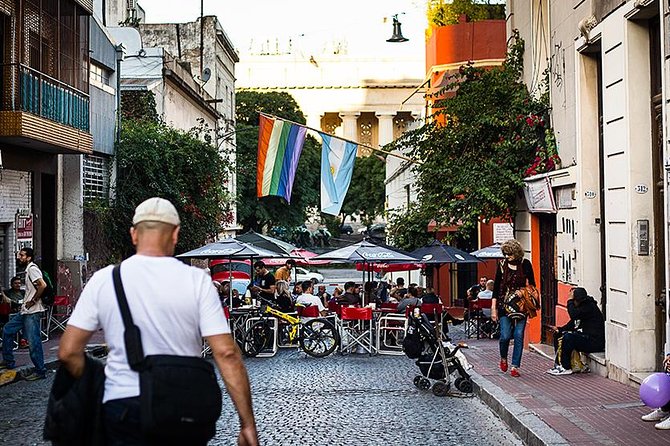
San Telmo is a good place to learn the city because the neighborhood connects several eras in a compact walking route. You are not simply looking at old façades. You are following a story about settlement, colonial life, social change, national identity, and popular culture.
The walk begins with the question of how Buenos Aires changed from a small village into the huge city you see today. That broad frame matters. Without it, San Telmo can seem like a collection of attractive old streets. With it, the neighborhood becomes a sequence of clues.
I especially like the mix of subjects. The route does not stay with wealthy colonial families or famous politicians. It includes Argentina’s Indigenous peoples, Afro-Argentine residents, education, Eva Perón, and Mafalda. That gives you a wider view of the city and helps explain that Buenos Aires was shaped by many communities.
The tour is offered in English, an important point for anyone who wants more than a quick photo stop. The guide’s role is central here. The walk depends on clear storytelling, and the strongest praise for the experience focuses on explanations that are understandable, lively, and fun.
More things to do in Buenos Aires:
- Local Foodie Adventure in Buenos Aires with Sherpa Food Tours
★ 5.0 · 6,875 reviews - Buenos Aires City Private Tour with Local Guide
★ 5.0 · 3,475 reviews - Buenos Aires Small-Group City Tour
★ 5.0 · 2,226 reviews
Starting near Av. Presidente Julio A. Roca
The meeting point is Av. Presidente Julio A. Roca 595, in the area listed as C1067ABA in Buenos Aires. The walk starts at 3:30 pm, which gives you a useful afternoon activity after a morning spent elsewhere in the city.
The start time also shapes the feel of the experience. You are not setting out at dawn, and the route can serve as a bridge between daytime sightseeing and an evening in San Telmo. Since the tour lasts about two hours, you finish around 5:30 pm, though the exact end time can vary.
The walk ends at Brasil 400, next to the Monument to Don Juan de Garay in Lezama Park. This point is listed as the end location, so you should plan to meet at the first address rather than going directly to the park.
San Telmo is served by public transportation, and the tour is described as being near transit. That makes it practical if you are building the walk into a larger day in Buenos Aires. The mobile ticket is another small convenience. You can keep the booking on your phone rather than carry a printed voucher.
The early city, Indigenous peoples, and the Apple of Lights
The opening part of the route sets up the city’s earliest development. The mention of Argentina’s Indigenous peoples adds an important correction to the usual colonial story. Buenos Aires did not begin with European buildings alone, and this part of the tour places the city within a longer human story.
The route also includes the Apple of Lights, a historic area associated with some of Buenos Aires’ earliest institutions and colonial-era development. The name itself hints at a dense concentration of important buildings and civic life.
You should expect the guide to use the streets as prompts rather than lead you through a series of interior visits. The experience is a walking tour, and admission is listed as free for the stops. That keeps the cost down, but it also means the value comes from interpretation and context rather than entry into paid attractions.
This is where a good guide can make a big difference. A street may look ordinary at first glance. A clear explanation can show why its location mattered, who used it, and how it fits into the city’s growth. The tour’s positive comments specifically praise a guide who explains things clearly, which is exactly the skill this section requires.
San Lorenzo Passage and the colonial street plan
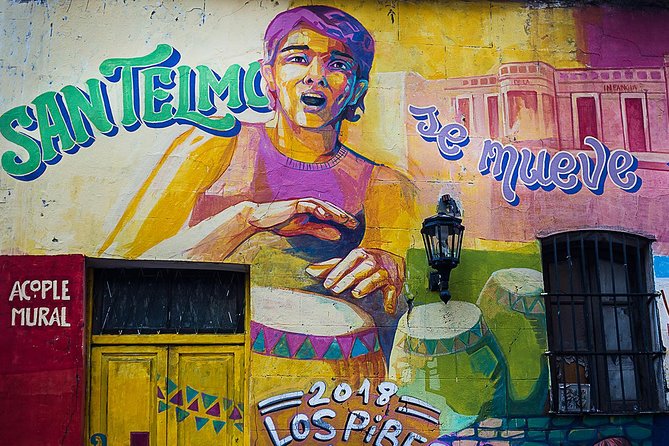
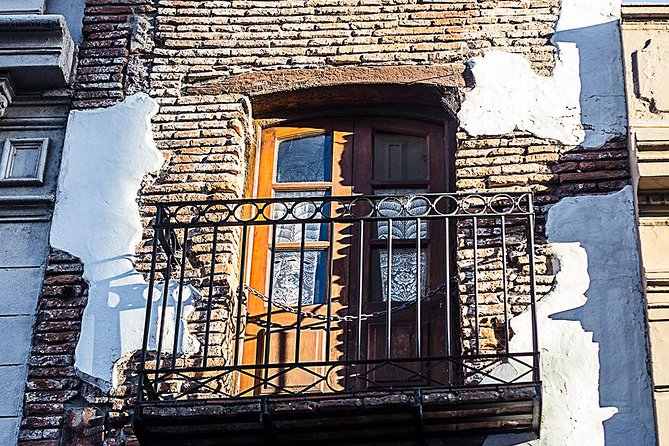
San Lorenzo Passage brings the colonial period into sharper focus. Passages and narrow lanes can reveal how people moved through the old city and how buildings were arranged around daily life.
The tour presents this part as Colonial Buenos Aires, so you can expect attention to the neighborhood’s older character and the stories connected with it. This is one of the better reasons to choose a guided walk instead of wandering alone. You may notice the architecture on your own, but you are less likely to connect it to the city’s early development without some explanation.
The route is not designed as a specialist architecture course. It is broader and more social. You will hear stories and facts alongside the physical setting, which keeps the walk from becoming a parade of dates and building names.
I would treat San Lorenzo Passage as a place to listen closely and look around slowly when the group pauses. The tour lasts only two hours, so you may not have long for photographs at every stop. If you prefer a relaxed pace, keep your camera ready before the group reaches each point.
A completely different kind of day:
- Buenos Aires Hop-On Hop-Off Bus, Free Walking Tours & Discounts
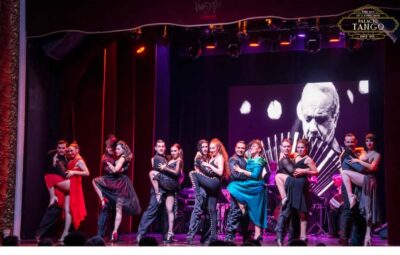
★ 4.5 · 2,218 reviews - Buenos Aires: Piazzolla Tango Show with Optional Dinner
★ 4.4 · 2,122 reviews - Buenos Aires: City Highlights Guided Tour with Transfer
★ 4.7 · 1,946 reviews - Buenos Aires: Hop-On Hop-Off City Bus Tour
★ 4.2 · 1,855 reviews
The Minimal House and Afro-Argentine Buenos Aires
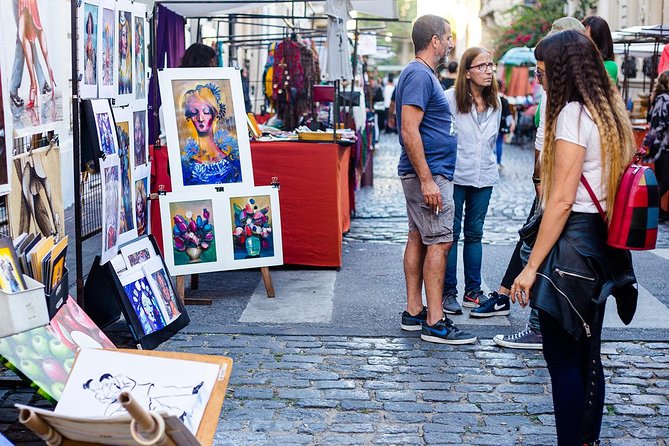
One of the most unusual details on the route is Buenos Aires’ narrowest, or minimal, house. Small buildings often make memorable sightseeing stops because they give a human scale to city history. Instead of thinking only about grand mansions and official monuments, you see how limited space shaped ordinary homes.
This stop also introduces Afro-Argentine communities. That is a valuable part of the tour’s design. Buenos Aires is often presented through European immigration and grand civic architecture, but Afro-Argentine history belongs in the picture too.
The exact interior access is not provided, so you should expect to see and discuss the site from the walking route rather than assume a house visit. That is not a serious weakness for a $30 neighborhood tour, but it is worth knowing if you are hoping to enter historic properties.
For me, this pairing of the minimal house and Afro-Argentine history is one of the strongest sections. The building gives you something concrete to see, while the subject adds social depth. You get a memorable image and a reminder that the city’s past included people whose stories are often left out.
Education in Argentina and the Eva Perón Foundation
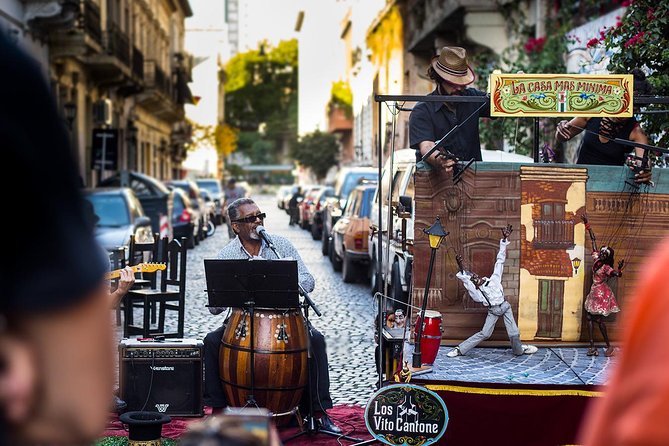
The walk also covers education in Argentina. This subject broadens the tour again, moving from streets and homes to the institutions that helped shape public life.
The route includes the former Eva Perón Foundation as well. Eva Perón remains one of Argentina’s most recognizable political and cultural figures, and her foundation carries a strong connection to social programs and public memory. The tour does not promise a museum visit, so the appeal here is the guide’s explanation of the place and its significance.
This section should suit anyone who wants more than colonial architecture. San Telmo’s past is not frozen in one period. The neighborhood can lead you from early settlement to questions about education, social support, class, and political identity.
Because the walk includes several major subjects, you may want to note a few names and themes as you go. Two hours is enough for a useful introduction, but not enough to explore every topic in detail. I would see this as a framework for later independent sightseeing, not the final word on Eva Perón or Argentine education.
Mafalda, local humor, and popular icons
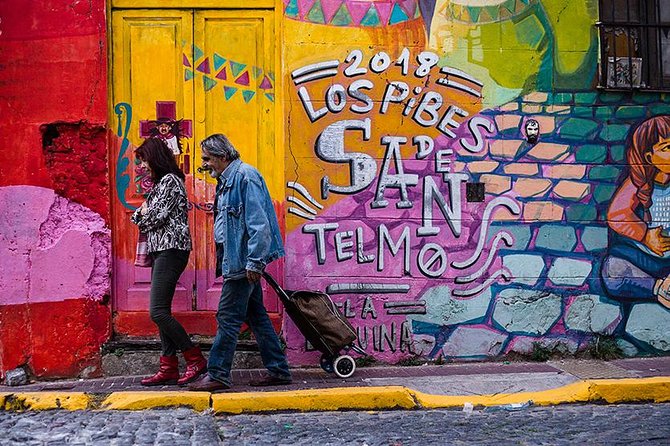
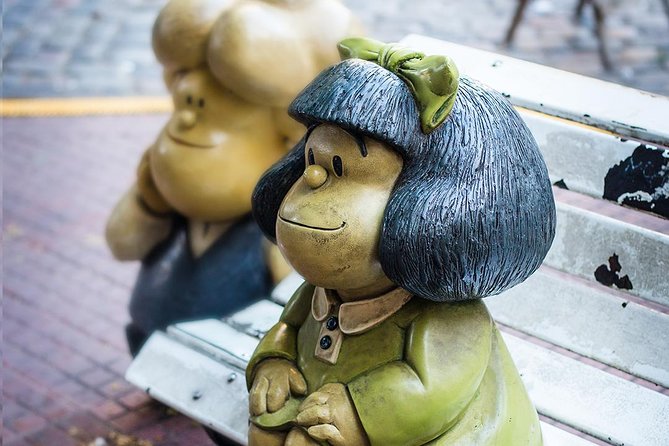
Do you know Mafalda? The tour uses this famous comic character to connect San Telmo with modern Argentine culture.
Mafalda is more than a cute figure for photographs. She is a popular icon with a strong place in Argentine public life, and including her gives the walk a lighter turn after the heavier subjects of colonial society, Indigenous peoples, and Afro-Argentine history.
I like this change of tone. A neighborhood tour needs a few memorable, human details, and Mafalda helps keep the experience from feeling like a lecture. The guide can move from old buildings to a familiar cultural symbol, showing how San Telmo still relates to the wider identity of Buenos Aires.
The tour’s style appears to be one of its real strengths. The guide is praised for being fun as well as clear, and that combination matters. Humor helps you remember facts, while clear explanations keep the stories from becoming vague.
San Telmo Market and the Ezeiza Mansion
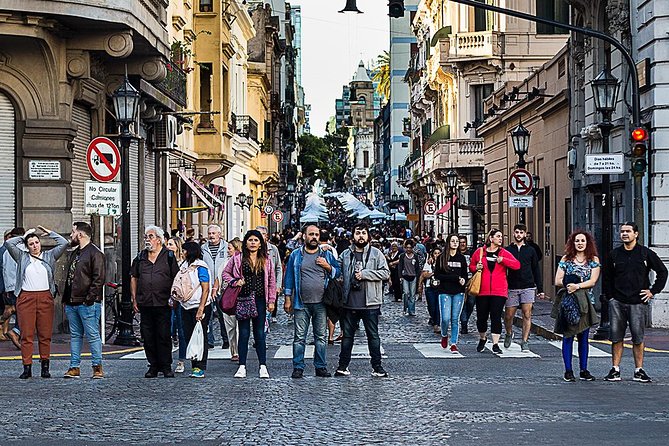
The route includes San Telmo Market, one of the neighborhood’s best-known attractions. The market adds movement and everyday character to a walk otherwise focused on history and buildings.
You should not assume that two hours leaves time for a full market visit or a meal. The market is one stop within a larger route, so the guide’s purpose is likely to explain its place in San Telmo rather than give you an extended shopping session.
The Ezeiza Mansion adds another architectural and social reference point. Mansions help show how wealth and status shaped the neighborhood, especially when set against the minimal house and the stories of Afro-Argentine residents.
That contrast is useful. You can compare a grand residence with a tiny home and then consider how different groups experienced the same city. The tour is at its best when it makes those connections instead of treating every stop as an isolated fact.
If you want to return to the market or inspect the mansion area at length, plan another visit. The guided route gives you orientation and context. It does not promise unlimited time at each location.
Lezama Park and the foundation of Buenos Aires
The walk finishes in Lezama Park, beside the Monument to Don Juan de Garay. This ending brings the discussion back to the foundation of Buenos Aires.
A park is a fitting place to close a history walk. After moving through narrow passages, old residences, and market streets, you have room to connect the earlier stories. The final stop also provides a clear endpoint rather than leaving you in an unnamed side street.
The tour presents Lezama Park as part of the city’s foundation story. That makes the ending more than a pleasant green space. It gives the walk a beginning-to-end structure: early settlement, colonial development, social change, popular culture, and the city that grew from it.
The end point is Brasil 400, at the park and next to the monument. That makes the location easy to identify. Since the tour ends here, you can use the park as a place to pause before deciding what to do next, though no additional activities are included in the tour details.
What $30 gets you
At $30 per person, this is a fair price for a two-hour guided walk in a central historic neighborhood. You are paying for a structured route, English-language explanations, local stories, and an overview that would be difficult to assemble on your own during a first visit.
The value is strongest if you enjoy context. If you only want to stroll through San Telmo, you can do that free of charge. If you want to understand why a passage, market, mansion, park, or small house matters, the guide adds the main value.
The small group limit of 15 helps justify the price. It is not a private tour, but it is also not an enormous crowd. A smaller group should make it easier to hear the guide and follow the route through city streets.
The two-hour length keeps the cost and commitment modest. You can learn the basic shape of San Telmo without giving up a full day. The tradeoff is limited depth. You will get an engaging introduction, not a full study of every period and building in the neighborhood.
Who will enjoy this San Telmo walk?
I would recommend this tour to first-time visitors who want a clear introduction to one of Buenos Aires’ oldest neighborhoods. It also suits anyone who likes social history, local personalities, and small details more than a checklist of famous monuments.
History lovers should find plenty to enjoy, especially with the focus on colonial Buenos Aires, Indigenous peoples, Afro-Argentine communities, education, and the city’s foundation. Fans of Argentine culture will appreciate the Mafalda connection and the Eva Perón material.
The tour may be less suitable if you need a wheelchair-free route, since the supplied details do not describe the walking surface or step-free access. Service animals are allowed, and most people can participate, but you may want to confirm any specific mobility needs before booking.
It is also not the right pick if your main goal is shopping at San Telmo Market. The market is part of the route, but the experience is built around storytelling and neighborhood history rather than extended browsing.
Booking, timing, and cancellation
Confirmation is provided when you book, and the ticket is available on your mobile device. The tour is offered in English and begins at 3:30 pm.
The provider is Buenos Aires Urban Walks. The experience is often reserved well ahead of the date, with an average booking lead time of 107 days. That does not guarantee every date will sell out, but it is a useful sign to plan early if your Buenos Aires schedule is fixed.
Free cancellation is available up to 24 hours before the local start time for a full refund. Cancellations or changes made less than 24 hours before the start are not refunded or accepted, so check your plans before that cutoff.
Should you book the San Telmo Colonial Tour?
Book it if you want a lively, English-language introduction to San Telmo at a reasonable price. The strongest reasons are the clear storytelling, the small group cap, and the range of subjects, from colonial streets and the Apple of Lights to Afro-Argentine history, Mafalda, Eva Perón, San Telmo Market, and Lezama Park.
Skip it if you want a slow architectural inspection, interior admissions, or a long market visit. In that case, explore San Telmo independently and give yourself more time.
For most first-time visitors, I would book this near the start of a Buenos Aires stay. It gives you a useful map of the neighborhood and enough stories to make a later solo walk more rewarding.
FAQ
How long is the San Telmo Colonial Tour?
The tour lasts approximately two hours.
What time does the tour start?
The listed start time is 3:30 pm.
Where does the tour begin?
It begins at Av. Presidente Julio A. Roca 595, C1067ABA, Buenos Aires.
Where does the tour finish?
It finishes at Brasil 400, beside the Monument to Don Juan de Garay in Lezama Park.
What language is the tour offered in?
The tour is offered in English.
How much does the tour cost?
The listed price is $30 per person.
How large is the tour group?
The maximum group size is 15 people.
Is the ticket available on a mobile phone?
Yes. The experience provides a mobile ticket.
Can I cancel for a full refund?
Yes. You can cancel at least 24 hours before the local start time for a full refund. Cancellations made less than 24 hours before the experience are not refunded.
Just added in Buenos Aires
- Photo Session in Buenos Aires★ 5.0 · 26 reviews
- Discover Buenos Aires’ independent art scene — Ticket included★ 5.0 · 30 reviews
- Your Private Photographer in Buenos Aires★ 5.0 · 4 reviews
- Yerba Mate Workshop – Learn to Drink Mate like a Local!★ 5.0 · 11 reviews
- Your Personal Photographer in Buenos Aires★ 5.0 · 24 reviews
- BA: Wine Tasting and Blending Experience in Palermo★ 5.0 · 1 review
- Winery and Tasting Experience in Buenos Aires★ 5.0 · 1 review
- Taste of Tradition: Yerba Mate & Alfajores Experience★ 4.0 · 5 reviews
Buenos Aires Tours, compared.
Local Foodie Adventure in Buenos Aires with Sherpa Food Tours
Read our review →
Buenos Aires City Private Tour with Local Guide
Read our review →
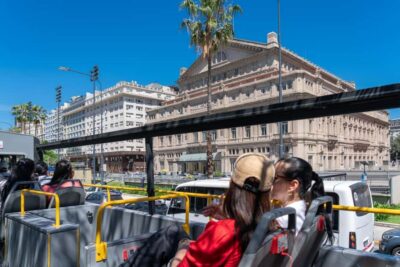
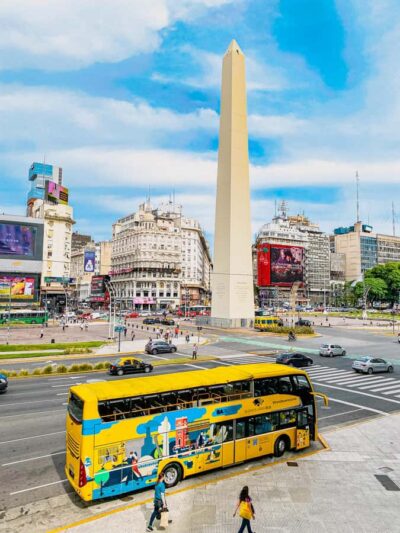
Buenos Aires Hop-On Hop-Off Bus and Exclusive Benefits
Read our review →