Reviewed · BUENOS AIRES TOURS
Recoleta & cemetery for curious people
Buenos Aires reveals itself one block at a time. This small-group walk links Plaza General San Martín with Recoleta Cemetery, using grand buildings, railways, wealthy landowners, and immigrant communities to explain how the city took shape.
I like the clear historical thread, which connects British railway money, the agricultural economy, Belle Époque palaces, and modern Buenos Aires. I also like the tiny group size, limited to eight people, because it gives you room to ask questions instead of simply following a flag through the streets.
The main drawback is the cemetery ticket. It is not included, and entrance is optional, so you need to confirm the current admission cost before booking. The walk also depends on good weather, and one canceled outing was not communicated clearly to a family.
In This Review
- Key points worth knowing
- Why this walk gives Recoleta more meaning
- Starting at Plaza General San Martín
- Retiro San Martín and the business of exporting Argentina
- Torre Monumental and the British presence
- Edificio Kavanagh and the Belle Époque city
- Palacio San Martín and the old elite
- Edificio Nicolás Mihanovich and immigrant Buenos Aires
- Plazoleta Carlos Pellegrini and the Jockey Club
- The Gomero de la Recoleta and the neighborhood’s name
- Entering Recoleta Cemetery
- Guides, group size, and the tone of the walk
- Is $25 a fair price?
- Who should book this Buenos Aires walk?
- FAQ
- How long does the Recoleta and cemetery tour last?
- Where does the tour begin?
- Where does the tour end?
- Is the Recoleta Cemetery entrance included?
- How many people can join the tour?
- Is the tour available in poor weather?
- Can I cancel for a full refund?
- Should you book it?
Key points worth knowing
- Three hours of city context: The walk is about much more than Recoleta Cemetery, beginning in Retiro and tracing the forces that shaped Buenos Aires.
- A maximum of eight people: The small group suits curious visitors who want conversation and questions.
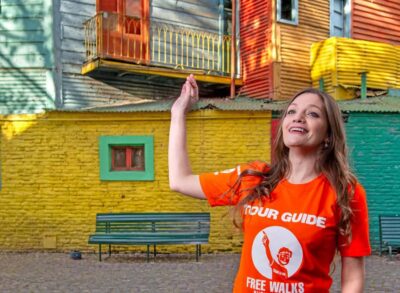
- University-trained guides: Guides such as Nicolás, Ignacio, and Sofía have received especially warm praise for their history, humor, and clear English.
- A railway station with an economic story: Retiro San Martín helps explain Argentina’s export-focused agricultural past and British investment.
- The cemetery is optional: Your guide goes with you into Recoleta Cemetery, but the entrance fee is separate.
- Strong value at $25: For two to three hours of guiding across several important sites, the price is modest, especially if you care about context more than a checklist of sights.
Why this walk gives Recoleta more meaning
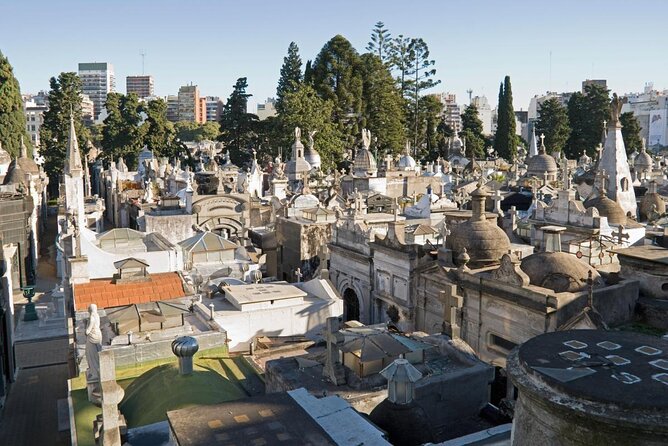
Recoleta Cemetery is one of Buenos Aires’ best-known sights, but it can be easy to treat it as a collection of famous names and ornate tombs. This tour takes a wider view. Before you reach the cemetery, you learn why Recoleta became an elite neighborhood and how Argentina’s wealth was made and displayed.
That approach matters. The cemetery is not an isolated attraction. It reflects the social order of the city: powerful landowners, political figures, wealthy families, immigrants, military leaders, and cultural personalities all represented in one compact place.
Your guide leads you through roughly two to three hours of walking, with stops generally lasting between 10 and 30 minutes. The pace is divided into short discussions rather than one long lecture. That makes the route easier to follow, though you should still expect a substantial amount of time on your feet.
The experience is designed for people who enjoy asking questions. Several guides have been praised for turning the walk into a conversation, with politics, economics, architecture, and present-day Buenos Aires all entering the discussion. If you prefer a silent stroll with only a few facts, this may feel more talk-heavy than you want.
More things to do in Buenos Aires:
- Local Foodie Adventure in Buenos Aires with Sherpa Food Tours
★ 5.0 · 6,875 reviews - Buenos Aires City Private Tour with Local Guide
★ 5.0 · 3,475 reviews - Buenos Aires Small-Group City Tour
★ 5.0 · 2,226 reviews
Starting at Plaza General San Martín
The meeting point is at Rapanui on Avenida Santa Fe 772, close to Plaza General San Martín. The plaza is a fitting place to begin because it offers a quick introduction to the city’s public spaces, national memory, and old elite district.
You start with the broad question behind the whole tour: how can Buenos Aires’ past help you understand its present? The guide uses the buildings around you to set up that answer. You are not simply looking at handsome facades. You are beginning to read who had money, who had influence, and how those forces changed the city.
This opening section takes about 30 minutes and costs nothing extra. It is also a useful orientation for your first days in Buenos Aires. The walk gives you a framework for later sightseeing, so buildings and neighborhoods are less likely to seem like disconnected attractions.
Retiro San Martín and the business of exporting Argentina
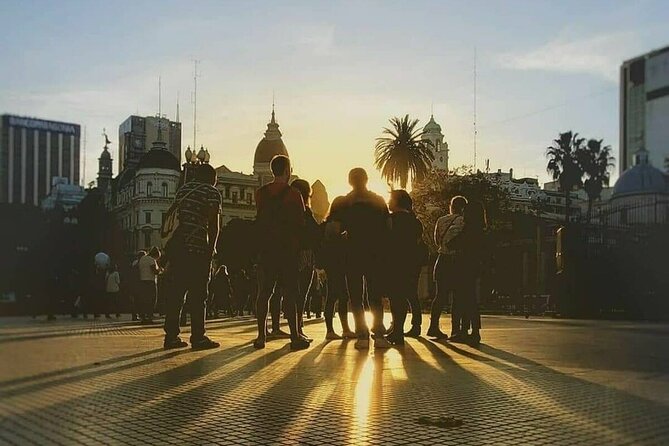
The next stop is Estación Retiro San Martín, with about 20 minutes devoted to the station and its economic setting. The tour presents it as the largest railway station in Latin America and uses the site to explain Argentina’s export-oriented agricultural economy.
This is one of the strongest parts of the route because railways make the country’s economic story easier to picture. Argentina had enormous agricultural production, but farms and ranches needed links to ports and markets. British capital played a major role in developing the railway system, and the guide explains why British investors were so interested in Argentina.
You also learn why the country developed such an extensive rail network. The subject is larger than transport. It touches land ownership, foreign capital, trade, and the relationship between the interior and Buenos Aires.
If you like infrastructure and economics, allow yourself to pay close attention here. The station is not just a handsome transport building. It is a clue to how Argentina became wealthy and how that wealth was distributed.
Torre Monumental and the British presence
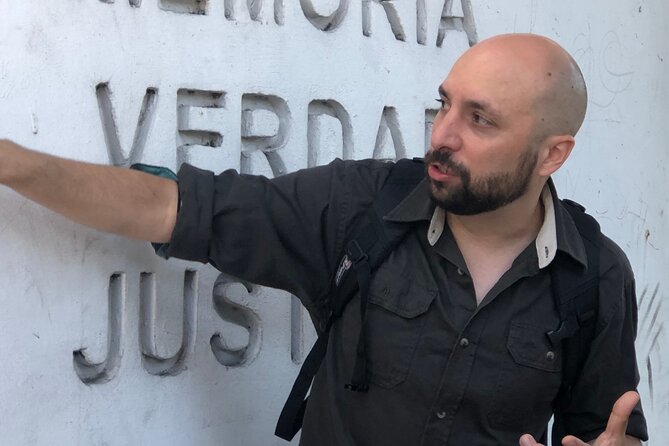
The short stop at Torre Monumental continues the British connection. In about 10 minutes, the guide explains the British community in Buenos Aires and why so many British interests took root on these shores.
The tower gives the discussion a physical marker. Instead of hearing about foreign influence as an abstract idea, you are looking at a visible reminder of the community that helped shape commerce, railways, architecture, and social life.
This section is brief, so do not expect a full account of British-Argentine relations. Its purpose is to connect the station and the next part of the walk. The tour keeps moving from one piece of evidence to another, building a larger explanation rather than stopping for long at any single monument.
A completely different kind of day:
- Buenos Aires Hop-On Hop-Off Bus, Free Walking Tours & Discounts
★ 4.5 · 2,218 reviews - Buenos Aires: Piazzolla Tango Show with Optional Dinner
★ 4.4 · 2,122 reviews - Buenos Aires: City Highlights Guided Tour with Transfer
★ 4.7 · 1,946 reviews - Buenos Aires: Hop-On Hop-Off City Bus Tour
★ 4.2 · 1,855 reviews
Edificio Kavanagh and the Belle Époque city
At Edificio Kavanagh, the focus shifts to the Belle Époque and the way that period changed Buenos Aires. The discussion lasts around 10 minutes and also considers the role of large landowners in the country’s growth.
Kavanagh helps show how agricultural wealth reached the capital. Money made from the Pampas was spent on urban buildings, status, comfort, and architectural ambition. The result was a city that often looks more European than first-time visitors expect.
I like this stop because the guide does not treat architecture as decoration alone. The building becomes evidence of social change. You see how powerful families and investors used Buenos Aires to display their place in the national order.
The tour does not ask you to admire the Belle Époque without question. It also raises the less comfortable issue of how a small group accumulated so much land and wealth. That balance gives the route more substance than a simple parade of beautiful buildings.
Palacio San Martín and the old elite
The Palacio San Martín stop continues the story of the Pampas landowners. You look at palaces built by wealthy families and discuss how they acquired such large amounts of arable land and where they spent their fortunes.
This is a useful correction to the usual image of Argentina as simply a country of cattle and sheep. The wealth behind those exports helped create a powerful landowning class. Their money flowed into grand residences, political influence, social clubs, and the city’s public identity.
The stop lasts about 10 minutes, so the treatment is an introduction rather than a full lesson in land policy. Still, it gives you an important lens for later sights. When you reach Recoleta Cemetery, the elaborate mausoleums make more sense because you have already considered the class system behind them.
Edificio Nicolás Mihanovich and immigrant Buenos Aires
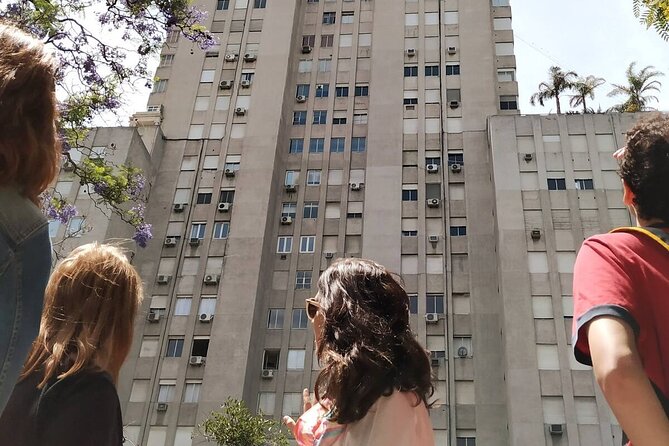
The 20-minute stop at Edificio Nicolás Mihanovich brings a different group into the story: Austro-Hungarian and Yugoslav immigrants. The guide explains why people from these parts of Europe came to Argentina in such large numbers.
This section broadens the walk beyond British investment and Argentine landowners. Buenos Aires was shaped by many communities, and the city’s identity cannot be explained only through its most powerful families.
The building gives you a place to pause and consider movement, opportunity, and belonging. The exact lives of these immigrants are not presented as a separate museum display. Instead, their arrival becomes part of the city’s larger story, showing how Buenos Aires grew through both wealth at the top and migration from Europe.
A 20-minute discussion is long enough for questions. In a group of eight or fewer, this is the kind of stop where you can ask for clarification about immigration, national identity, or the different European groups that shaped the capital.
Plazoleta Carlos Pellegrini and the Jockey Club
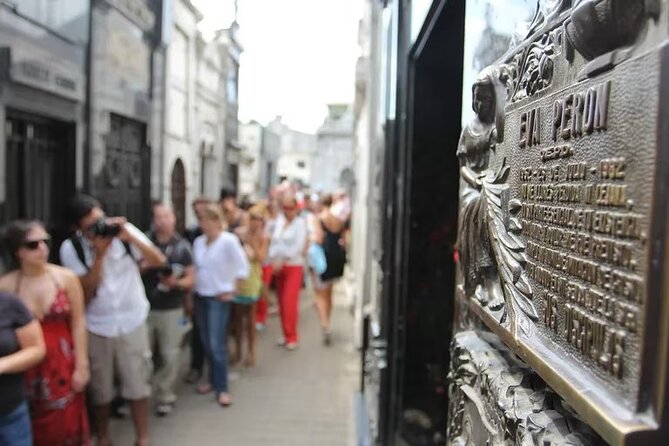
At Plazoleta Carlos Pellegrini, the subject is the Jockey Club and the social world of the Pampas. The guide makes the point that the rural economy was not only about cows and sheep.
That line captures the spirit of the stop. Land, livestock, racing, money, and social rank were closely connected. The Jockey Club represents a world where the wealthy met, competed, and reinforced their position.
This is another short stop, about 10 minutes. It will appeal most if you want to understand the habits and institutions of Argentina’s old upper class. If you are mainly looking for street photography or famous landmarks, it may feel less immediately exciting, but it adds useful social context.
The Gomero de la Recoleta and the neighborhood’s name
The walk then reaches Gomero de la Recoleta, a large and historic rubber tree associated with the neighborhood. Here, you discuss why Recoleta has its name and where the area’s enormous trees came from.
This is a welcome change of scale. After railways, foreign capital, palaces, and elite clubs, the tree gives the group a chance to look at the neighborhood itself. The guide uses the setting to explain how Recoleta developed and why its streets feel so different from other parts of Buenos Aires.
The stop lasts about 10 minutes. It is a small detail, but these details often help you remember a district better than a list of dates. You begin to see Recoleta as a place with a particular past, not merely the address of a cemetery.
Entering Recoleta Cemetery
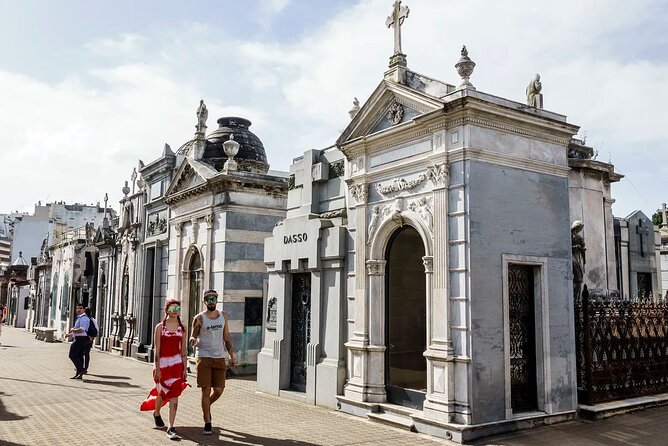
The final stop is Recoleta Cemetery, where the guide introduces the cemetery’s inhabitants and the mysteries associated with the site. The listed time is about 20 minutes, but the total visit can feel longer depending on questions and the pace of the group.
The cemetery entrance is optional and the ticket is not included in the $25 tour price. The route information says the walk ends inside the cemetery, and the guide accompanies the group there, so you should be prepared to pay separately if you want the full experience.
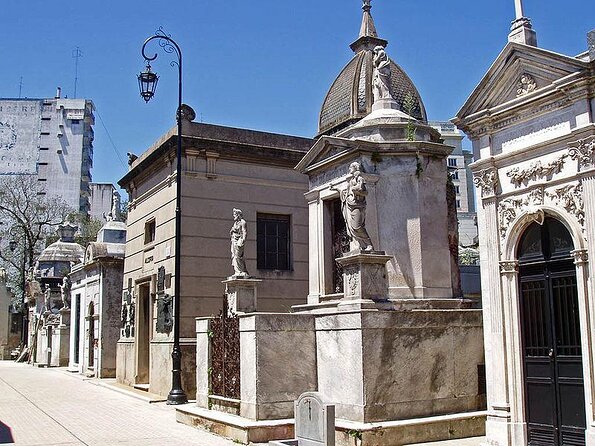
That guided entry is one of the tour’s most important strengths. You can walk through the cemetery on your own, but the maze of mausoleums can be hard to interpret. With a guide, the site becomes a place of stories and social clues rather than just marble, statues, and narrow paths.
The cemetery also serves as the payoff for the earlier stops. You have already heard about landowners, wealth, politics, immigration, and European influence. Now you see how those forces were recorded in stone.
One practical point: this is not a route for bad weather. The experience requires good conditions, and a cancellation due to weather should result in either a different date or a full refund. Because one cancellation was not communicated properly through the booking system, I would check your messages and confirmation details before setting out.
Guides, group size, and the tone of the walk
The tour uses university graduate guides, and the strongest praise has gone to Nicolás, also called Nico, along with Ignacio and Sofía. Their strengths are not limited to facts. The best descriptions emphasize passion, humor, clear English, and the ability to connect past events with present-day Buenos Aires.
That matters on a history walk. A dry list of dates would make the route feel long. The guides instead appear to use questions and conversation to keep the group involved. One solo participant who worried about the interactive format found it enjoyable and comfortable, which suggests the tone is friendly rather than forced.
The maximum of eight people is a real advantage. You can hear the guide more easily, ask about a point that interests you, and avoid the anonymous feel of a large group. The trade-off is that the experience depends more on the chemistry of your group. A curious group will get more from it than one that wants to stay quiet.
The walk is also suitable for most people, and service animals are allowed. It is near public transportation, which makes the start and finish practical, though the data does not specify a fully step-free route. If mobility is a concern, ask the provider before booking.
Is $25 a fair price?
At $25 per person, the value is strong if you want explanation rather than simple access to sights. You get two to three hours with a university-trained guide, a route through several major areas, and a small group capped at eight.
The price does not include the cemetery entrance. That keeps the basic cost down, but it also means the final total is not quite $25 if you choose to enter. Since the cemetery visit is the natural finish, most people interested in this tour will likely want to budget for the extra ticket.
I would compare this with the cost of exploring the area alone. You can see the plaza, station, tower, palaces, tree, and cemetery without a guide, but you would miss the links between them. The tour’s value lies in explaining why these places belong in one story.
Who should book this Buenos Aires walk?
I recommend it most strongly for first-time visitors who want a useful introduction to Buenos Aires. It is also a good match for anyone interested in architecture, politics, economic history, migration, or the social world behind Recoleta’s elegant appearance.
You will get the most from it if you enjoy asking questions and can handle two to three hours of walking. Families, couples, solo visitors, and groups of friends have all found the format suitable, though younger children may not care about the economic and political detail.
You may want to skip it if you only want a short cemetery visit, if you dislike guided conversation, or if your schedule cannot absorb a weather-related change. Also remember that the cemetery ticket is separate.
FAQ
How long does the Recoleta and cemetery tour last?
The experience lasts approximately two to three hours.
Where does the tour begin?
It begins at Rapanui, Avenida Santa Fe 772, in Buenos Aires.
Where does the tour end?
The tour ends at Recoleta Cemetery on Junín 1760. The route information says the group ends inside the cemetery.
Is the Recoleta Cemetery entrance included?
No. Cemetery admission is not included, and entering the cemetery is optional.
How many people can join the tour?
The group has a maximum of eight participants.
Is the tour available in poor weather?
The experience requires good weather. If poor weather causes a cancellation, you will be offered another date or a full refund.
Can I cancel for a full refund?
Yes. You can cancel at least 24 hours before the start time for a full refund. Cancellations or changes made less than 24 hours before the start time are not accepted for a refund.
Should you book it?
Book this walk if you want Recoleta Cemetery to make sense within the larger story of Buenos Aires. The route gives you railways, foreign investment, agricultural wealth, palaces, immigrant communities, elite clubs, and finally the cemetery where many of those social forces are preserved.
At $25, it offers good value, especially with a small group and a strong guide such as Nico, Ignacio, or Sofía. Just budget separately for cemetery admission, confirm the meeting details, and keep a little weather flexibility in your schedule. For curious visitors, this is a smart way to begin understanding Buenos Aires rather than simply looking at it.
Just added in Buenos Aires
- Discover Buenos Aires’ independent art scene — Ticket included★ 5.0 · 30 reviews
- Photo Session in Buenos Aires★ 5.0 · 26 reviews
- Your Private Photographer in Buenos Aires★ 5.0 · 4 reviews
- Yerba Mate Workshop – Learn to Drink Mate like a Local!★ 5.0 · 11 reviews
- Your Personal Photographer in Buenos Aires★ 5.0 · 24 reviews
- BA: Wine Tasting and Blending Experience in Palermo★ 5.0 · 1 review
- Winery and Tasting Experience in Buenos Aires★ 5.0 · 1 review
- Taste of Tradition: Yerba Mate & Alfajores Experience★ 4.0 · 5 reviews
Buenos Aires Tours, compared.
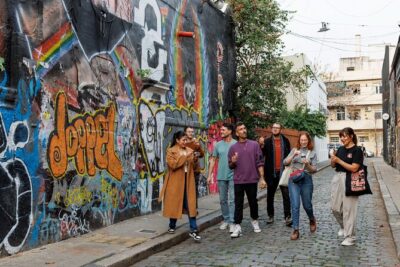
Local Foodie Adventure in Buenos Aires with Sherpa Food Tours
Read our review →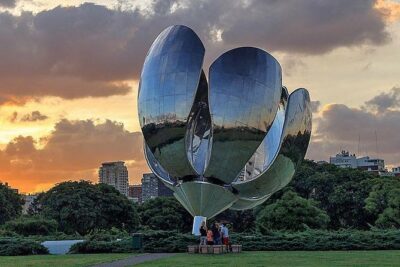
Buenos Aires City Private Tour with Local Guide
Read our review →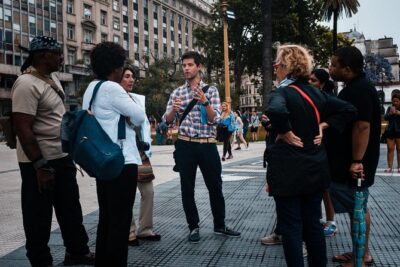

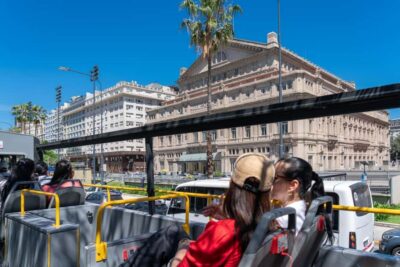
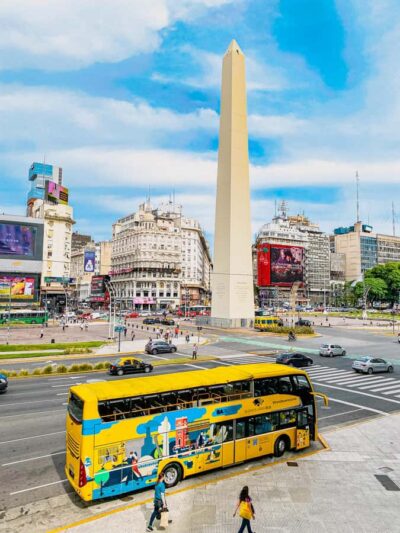
Buenos Aires Hop-On Hop-Off Bus and Exclusive Benefits
Read our review →