
Reviewed · BUENOS AIRES TOURS
Private City Tour with Local Gastronomy
Buenos Aires unfolds one neighborhood at a time. This four-hour private tour links colorful La Boca, grand Avenida de Mayo, old San Telmo, elegant Recoleta, and modern Puerto Madero with Argentine parrilla lunch and wine tasting. You ride in an air-conditioned vehicle, stay with a bilingual guide, and travel only with your own group.
I like the smart mix of major sights and local food, and I like the personal service built into a private tour. Guides such as Dario, Anna, and Ruben have been praised for their command of Buenos Aires history and culture. The main drawback is pace: eight stops, lunch, and wine in about four hours leave little time for long visits or independent wandering.
In This Review
- Key points to know before booking
- What the four-hour format really means
- Caminito and La Boca: colorful, famous, and brief
- Avenida de Mayo: the city’s grand historical spine
- San Telmo Market: old stalls meet the tourist trade
- Puerto Madero and the tango shape of Puente de la Mujer
- Catedral: a neoclassical church beside Plaza de Mayo
- Recoleta Cemetery and the tomb of Evita
- El Ateneo Grand Splendid: a bookstore in a former theater
- Floralis Genérica: a moving flower of steel
- Lunch, parrilla, and Argentine wine
- Guide quality and the private format
- Who should book this Buenos Aires tour?
- Should you book it?
- FAQ
- How long does the private city tour last?
- How much does the tour cost?
- Is transportation included?
- Is the tour private?
- Is lunch included?
- Is wine included?
- Can I cancel for a full refund?
Key points to know before booking
- Eight major sights in roughly four hours: You cover La Boca, central Buenos Aires, San Telmo, Puerto Madero, Recoleta, and Palermo-area landmarks in one outing.
- A private bilingual guide stays with you: Your guide provides context, helps with photographs, and can shape the experience around your group.
- Lunch is part of the tour: A meal at a historic Argentine parrilla gives the sightseeing a practical local-food focus.
- Argentine wine tasting is included: Alcohol is available to people aged 18 and over, with soda also provided.
- The route mixes old and new Buenos Aires: You see colonial and national landmarks, grand avenues, ornate tombs, modern architecture, and contemporary public art.
- Plan ahead if your dates are fixed: The tour is often booked 41 days in advance, though free cancellation is available up to 24 hours before the start time.
What the four-hour format really means
This is a sightseeing sampler rather than a slow walking tour. The vehicle matters because the route crosses several widely separated parts of Buenos Aires, and private transport saves you from arranging taxis between each neighborhood.
At each point, you generally have 15 to 20 minutes for photographs, except for longer stops at Caminito, Avenida de Mayo, San Telmo Market, and Recoleta Cemetery. That gives you a broad introduction to the city, but you should not expect a museum-style visit or extended shopping time.
The private setup is the strongest practical feature. Your group travels alone, and the bilingual guide remains with you at each stop. That makes it easier to ask about Argentina’s politics, food, neighborhoods, architecture, or daily life without waiting for a large group to catch up.
The route is also useful on a first day in Buenos Aires. You can see where the major districts sit in relation to one another, then return later to the places that deserve more time. If you have only one free day, this approach covers a lot of ground. If you have a week, use it as an orientation tour rather than your only visit to these neighborhoods.
More things to do in Buenos Aires:
- Local Foodie Adventure in Buenos Aires with Sherpa Food Tours
★ 5.0 · 6,875 reviews - Buenos Aires City Private Tour with Local Guide
★ 5.0 · 3,475 reviews - Buenos Aires Small-Group City Tour
★ 5.0 · 2,226 reviews
Caminito and La Boca: colorful, famous, and brief
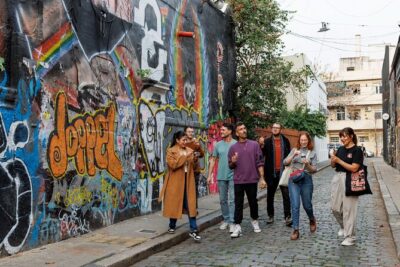
The tour begins at Caminito, the best-known pedestrian street in Buenos Aires. Its curved walkway runs for about 150 meters in La Boca, close to the Riachuelo River and roughly 400 meters from La Bombonera, the Boca Juniors stadium.
The painted houses and outdoor artworks make this the most immediately photogenic stop. You can expect bright façades, artistic displays, and a compact pedestrian area that feels very different from the grand avenues in the city center. The guide adds value here by explaining how La Boca fits into Buenos Aires culture and development.
You have about an hour at Caminito, with free admission. That is enough time to see the main promenade and take photographs, though the area is designed for a quick visual impression rather than a long architectural study. The tour does not list entry to La Bombonera, so football fans should not assume the stadium is part of the visit.
I like opening with La Boca because it gives you a strong sense of place right away. Just remember that Caminito is one of the city’s most visited sights, so the experience is more polished for tourism than a quiet neighborhood stroll.
Avenida de Mayo: the city’s grand historical spine
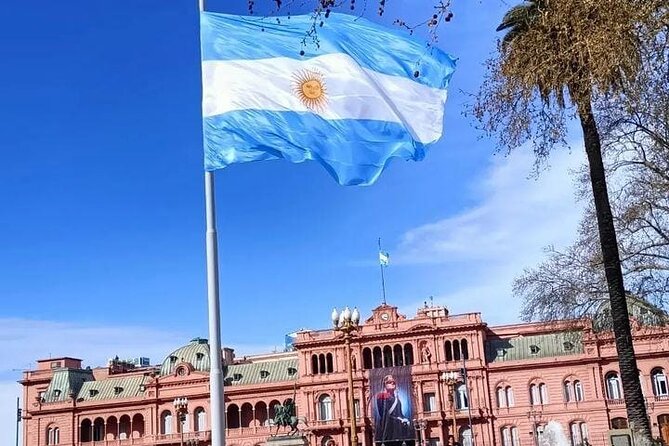
The next major stop shifts from color to scale. Avenida de Mayo runs from Plaza de Mayo, with the Casa Rosada at one end, toward the National Congress building at the other.
The avenue officially opened in 1894 and was inspired by Madrid’s Gran Vía. Its importance is not only visual. It helps explain how Buenos Aires presented itself as a modern capital and how political life, public buildings, and urban ambition shaped the city.
You spend about an hour here, with no admission fee. A guide is especially useful on this stretch because the buildings make more sense when connected to the story of Argentina’s government and national identity. From Plaza de Mayo, you can understand the relationship between the Casa Rosada, the city center, and the route toward Congress.
This is one of the tour’s best stops for context. Caminito shows a distinct neighborhood character, while Avenida de Mayo shows Buenos Aires as a national capital. The tradeoff is that an hour can pass quickly if you want to enter buildings or study every façade. The schedule is aimed at seeing and understanding the avenue, not exploring every interior.
San Telmo Market: old stalls meet the tourist trade
Mercado San Telmo is a large indoor market in the San Telmo neighborhood. It still has older shops selling vegetables and meat, while antique dealers and businesses aimed at visitors now share the same building.
That mix is what makes the market worth a stop. You see an older neighborhood market beside the newer commercial life that followed San Telmo’s rise as a sightseeing district. Some businesses have entrances from the street, including greengrocers, a liquor store, a restaurant, and the bars San Pedro Telmo and La Coruña.
The tour allows about 30 minutes, with no admission fee. That is enough for a quick walk through the building and a sense of its character. It is not enough for a careful antique search or a full meal here, especially since lunch is included later at a historic parrilla.
I would treat this as a short orientation visit. If San Telmo becomes your favorite part of Buenos Aires, return on your own with more time. The private guide can help you understand what you are seeing, but the stop is still fairly quick.
More city tours in Buenos Aires:
- Buenos Aires: City Highlights Guided Tour with Transfer
★ 4.7 · 1,946 reviews - Buenos Aires: Hop-On Hop-Off City Bus Tour
★ 4.2 · 1,855 reviews - Bike Tour: Half-Day City Highlights of Buenos Aires
★ 5.0 · 1,083 reviews - Group City Tour of Buenos Aires (MISSABLE)
★ 4.5 · 571 reviews
Puerto Madero and the tango shape of Puente de la Mujer
Puente de la Mujer gives the tour a modern architectural pause. The white pedestrian bridge is one of the best-known symbols of Puerto Madero and was designed by Spanish architect Santiago Calatrava.
The bridge rotates to let sailing vessels pass through the docks. Its shape represents a couple dancing tango, with the white pole suggesting the man and the curved bridge suggesting the woman. The work was made in Spain and donated to Buenos Aires by a private individual.
You have about 15 minutes here. That is enough for photographs and a short explanation, not a full walk through Puerto Madero. I like this stop because it shows another side of the capital. Buenos Aires is not only old cafés, political monuments, and historic markets. It also uses modern architecture and public art to project a current identity.
The bridge may be less rewarding in poor weather or if you hoped for a longer waterfront visit. Still, as a short photo stop between older districts, it breaks up the route nicely.
Catedral: a neoclassical church beside Plaza de Mayo
The Catedral is the main seat of Argentina’s Catholic Church and occupies a key position in the city. The current structure is the sixth building raised on this site since the second foundation of Buenos Aires.
Its final design is neoclassical and looks more like a Greek temple than the pointed, towered cathedral many people expect. That unusual profile makes the exterior worth noticing, while the location connects the church to the central political history of the city.
The visit lasts about 15 minutes and admission is free. This is a concise stop, so your guide’s explanation is important. You can take in the façade and the church’s long construction story without spending a large part of the day indoors.
The short timing suits people who want a city overview. If religious art or church architecture is a major interest, you will likely want to return independently.
Recoleta Cemetery and the tomb of Evita
Recoleta Cemetery is the most substantial historic stop after Caminito and Avenida de Mayo. It occupies the former garden of the Recoleta monks, beside the Basilica Nuestra Señora del Pilar, in one of Buenos Aires’ most prestigious districts.
The cemetery is famous for its elaborate mausoleums and vaults. Many belong to leading figures in Argentine history, including Eva Perón, known as Evita. Her tomb is one of the most visited places inside the cemetery, but the wider collection of marble, sculptures, and family vaults is just as important.
More than 90 vaults and mausoleums have been declared National Historic Monuments. The buildings reflect a period when Argentina was an emerging economic power and wealthy families competed to create imposing final homes. Several were designed by important architects.
You have about 30 minutes, and admission is included. I consider this a valuable part of the tour because it provides more than a famous name. The cemetery shows how wealth, politics, family status, and architecture came together in Buenos Aires.
Thirty minutes is enough for the principal sights, including Evita’s tomb, but it is not enough to examine the entire cemetery. The guide can help you use the time well. If you want to study individual mausoleums, return later with a map or a longer visit.
El Ateneo Grand Splendid: a bookstore in a former theater
El Ateneo Grand Splendid is one of the tour’s most memorable visual stops. The bookstore occupies the former Grand Splendid movie theater and retains the original frescoed cupola, railings, décor, and theater boxes.
Books fill the former auditorium. A café sits on the old stage behind the velvet curtain, while armchairs occupy the sides of the main room. The boxes function as small reading spaces, and the basement holds children’s books. The upper floor is used for displays and exhibitions.
The visit lasts about 15 minutes and admission is free. That is enough to take in the theater conversion and photographs, but not enough to browse seriously or sit down with a book and coffee. The tour’s promise of seeing one of the world’s most beautiful bookstores is justified by the unusual setting, not by the amount of shopping time.
This stop works particularly well after Recoleta Cemetery. Both places show how Buenos Aires uses grand interiors, careful decoration, and old buildings in modern life. If you like bookstores, theaters, or adaptive architecture, make a note to return on your own.
Floralis Genérica: a moving flower of steel
The final sight is Floralis Genérica, a 20-meter-high sculpture in United Nations Square. Argentine architect Eduardo Catalano donated it to Buenos Aires, and the work uses stainless steel and aluminum. It weighs 18 tons.
The sculpture is notable for its movement. A hydraulic system and photoelectric cells control it, making it the first moving sculpture of its type. Its name refers to flowers in general, and Catalano intended the large structure to express the movement of the modern age.
The stop lasts about 10 minutes and admission is free. This is a quick finish, mainly for photographs and a final explanation from your guide. It also gives the route a clean visual ending after the older architecture of central Buenos Aires and Recoleta.
Do not book this tour expecting a long visit at every landmark. Floralis Genérica is a good example of that format: you see an important public work, hear why it matters, and move on.
Lunch, parrilla, and Argentine wine
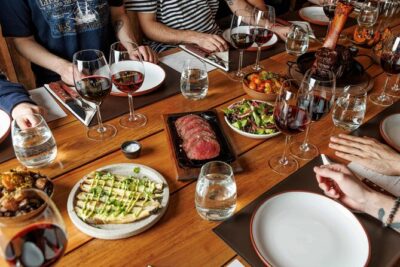
Food is not an afterthought here. The tour includes lunch at a historic Argentine parrilla, along with an Argentine wine tasting and soda.
A parrilla is central to the country’s food culture, so this meal gives you a useful introduction to Argentina beyond sightseeing. The local perspective is one of the tour’s most praised features, especially for people planning a larger food-focused trip through the country.
The exact menu and wine selection are not specified, so you should not book expecting a particular cut, vintage, or tasting format. What is clear is that the meal is included, the wine tasting is part of the experience, and the guide can connect the food to local customs and culture.
The timing is important. A four-hour tour that includes lunch must keep moving, so this is unlikely to be a long, leisurely restaurant session. Still, including a proper meal makes the $130 price easier to assess. You are paying for private transport, a bilingual guide, sightseeing across several districts, lunch, wine, and the convenience of keeping the same guide and vehicle throughout.
For a solo participant or couple, that price is not budget sightseeing. For a family or small group, the private format can offer better value because only your party participates and the cost is per person. The strongest value comes when you want history, food, and transport handled in one half-day.
Guide quality and the private format
The guide is the part of this tour that can shape the entire experience. The service includes a bilingual guide throughout, and the guide helps with photographs at each stop rather than simply dropping you at a landmark.
Dario received especially warm praise for making a final day in South America memorable through his explanations of local history and culture. Anna and Ruben were also singled out for professional service during a tour for a group of 10. Those names may help you know what level of personal attention the company aims to provide, though guide assignment is not guaranteed.
I like the private arrangement for another reason: you can ask direct questions. A large bus tour often gives you facts and a meeting time. Here, you can ask how neighborhoods developed, why a bridge represents tango, or what to order at a parrilla.
The downside is that a private tour is only as good as the guide on the day. The listed feedback is uniformly positive, with 100 percent recommending the experience and a five-star rating from 19 reviews. That is encouraging, but it is still a small sample, so I would judge the tour mainly by its route, inclusions, and format.
Who should book this Buenos Aires tour?
I would recommend it most strongly to first-time visitors who want a fast, guided introduction to the capital. It also suits anyone arriving from a cruise, anyone with a late-night flight, and families or small groups that value door-to-door private transport.
It is a smart choice before a longer culinary trip through Argentina. The food and wine give you a starting point, while the guide can help you understand the city before you explore more deeply.
You may want something else if you prefer long museum visits, extended meals, serious shopping, or unhurried neighborhood walks. The schedule covers a lot, but it does so through short visits. Travelers with mobility concerns should also remember that the tour includes getting in and out of a vehicle and walking around several sites, even though the supplied information says most people can participate and service animals are allowed.
Book early if your schedule is fixed. The experience is booked an average of 41 days ahead, and private departures can fill on popular dates. You can cancel for a full refund up to 24 hours before the start time, but changes or cancellations inside that window are not accepted.
Should you book it?
Book this tour if you want maximum coverage in a half-day, personal guiding, and a meal that introduces you to Argentine parrilla and wine. The route gives you a useful first picture of Buenos Aires, from La Boca’s painted streets to Recoleta’s marble tombs and Puerto Madero’s modern bridge.
Skip it if your priority is slow exploration. In that case, choose fewer neighborhoods and spend a full morning in each. For most first visits, though, the private vehicle, strong guide focus, included lunch, and wide range of sights make this a practical way to get oriented quickly.
FAQ
How long does the private city tour last?
The tour lasts approximately four hours.
How much does the tour cost?
The price is $130 per person.
Is transportation included?
Yes. The experience includes private transportation in an air-conditioned vehicle.
Is the tour private?
Yes. Only your group participates in the activity.
Is lunch included?
Yes. Lunch at a historic Argentine parrilla is included.
Is wine included?
Yes. An Argentine wine tasting is included. Alcoholic beverages are available to people aged 18 and over, and soda is also provided.
Can I cancel for a full refund?
Yes. You can cancel at least 24 hours before the local start time for a full refund. Cancellations or changes made less than 24 hours before the start time are not accepted.
Just added in Buenos Aires
- Discover Buenos Aires’ independent art scene — Ticket included★ 5.0 · 30 reviews
- Photo Session in Buenos Aires★ 5.0 · 26 reviews
- Your Private Photographer in Buenos Aires★ 5.0 · 4 reviews
- Yerba Mate Workshop – Learn to Drink Mate like a Local!★ 5.0 · 11 reviews
- Your Personal Photographer in Buenos Aires★ 5.0 · 24 reviews
- BA: Wine Tasting and Blending Experience in Palermo★ 5.0 · 1 review
- Winery and Tasting Experience in Buenos Aires★ 5.0 · 1 review
- Taste of Tradition: Yerba Mate & Alfajores Experience★ 4.0 · 5 reviews
Buenos Aires Tours, compared.
Local Foodie Adventure in Buenos Aires with Sherpa Food Tours
Read our review →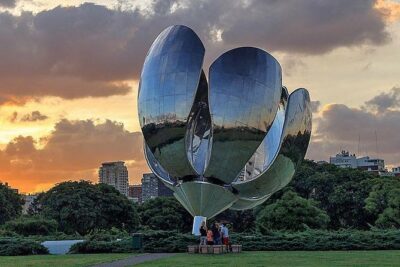
Buenos Aires City Private Tour with Local Guide
Read our review →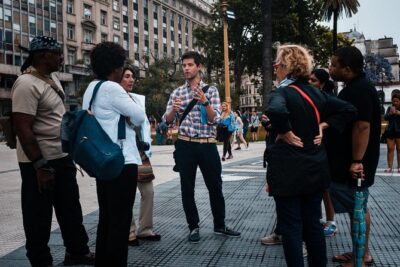
Buenos Aires Hop-On Hop-Off Bus and Exclusive Benefits
Read our review →
Argentine Experience Interactive Dining and Cooking
Read our review →Browse the lists this tour appears in