Reviewed · BUENOS AIRES TOURS
Pope Francis Tour in Buenos Aires
Pope Francis’s story begins in ordinary Buenos Aires neighborhoods. This three-hour outing follows Jorge Bergoglio from his family home and schools to the churches that shaped his faith. I like the small-group format, limited to 10 people, and I like the way the route links religious sites with daily life, including his love of soccer at San Lorenzo. The guides Sylvia, Silvia, and Carlos have earned especially warm praise for their patience, clear explanations, and personal touch.
The main drawback is that several stops may be viewed only from outside, and church access can change with Mass schedules. You also finish at Plaza de Mayo rather than returning to San Telmo. At $65, the price feels fair if you want focused storytelling and included transport, but less so if you expect entry inside every building or a broad survey of Pope Francis’s years as archbishop.
In This Review
- Key points to know before booking
- Why Pope Francis’s Buenos Aires story works as a city tour
- Starting in San Telmo at 10 a.m.
- Flores and the home where Bergoglio grew up
- Schools, the Jesuit connection, and formative years
- Basilica of San José de Flores and the decision to become a priest
- Basílica María Auxiliadora y San Carlos
- San Lorenzo and the soccer side of Pope Francis
- San Ignacio de Loyola and the Jesuit heart of Montserrat
- Plaza de Mayo and the Buenos Aires Metropolitan Cathedral
- What the $65 price really covers
- Who will enjoy this tour most
- My booking advice
- FAQ
- How long does the Pope Francis Tour in Buenos Aires last?
- Where does the tour begin?
- What time does the tour start?
- Where does the tour end?
- Is transportation included?
- Are food, drinks, and hotel transfers included?
Key points to know before booking
- Follow Bergoglio’s life in order: See his childhood neighborhood, schools, baptismal church, vocation church, favorite soccer club, Jesuit churches, and cathedral.
- Small groups matter: The maximum group size is 10, though some departures may be even more personal, with one guide and one guest.
- Sylvia and Silvia receive standout praise: Their use of photographs, patient answers, and warm manner can make the story feel more human.
- Church access is not guaranteed: The schedule may change because of Masses or church availability, and some locations are exterior views only.
- Transport saves time: An air-conditioned minivan connects San Telmo with Flores and central Buenos Aires.
- The tour ends at Plaza de Mayo: Plan your next activity from there, since hotel drop-off and transport back to San Telmo are not included.
Why Pope Francis’s Buenos Aires story works as a city tour
This is not a grand Vatican-style tour. It is a personal route through Buenos Aires, built around the early life of Jorge Mario Bergoglio before he became Pope Francis.
That difference matters. You are not simply looking at monuments connected to a famous religious figure. You are moving through the neighborhoods, schools, churches, and institutions that formed him. The route shows how an international figure began in a family home, attended local schools, followed soccer, and made a life-changing decision in a familiar parish church.
I find the religious angle strong, but the tour is not limited to practicing Catholics. One family with a 15-year-old enjoyed it despite not being religious, partly because the experience presents Bergoglio as a person before presenting him as a pope. That human scale is the best reason to book.
The outing also gives you a useful ride through Buenos Aires. You leave San Telmo, pass toward the city center, and reach the Flores neighborhood before returning to historic central sites. You see parts of the city that a standard Plaza de Mayo visit would not cover.
More things to do in Buenos Aires:
- Local Foodie Adventure in Buenos Aires with Sherpa Food Tours
★ 5.0 · 6,875 reviews - Buenos Aires City Private Tour with Local Guide
★ 5.0 · 3,475 reviews - Buenos Aires Small-Group City Tour
★ 5.0 · 2,226 reviews
Starting in San Telmo at 10 a.m.
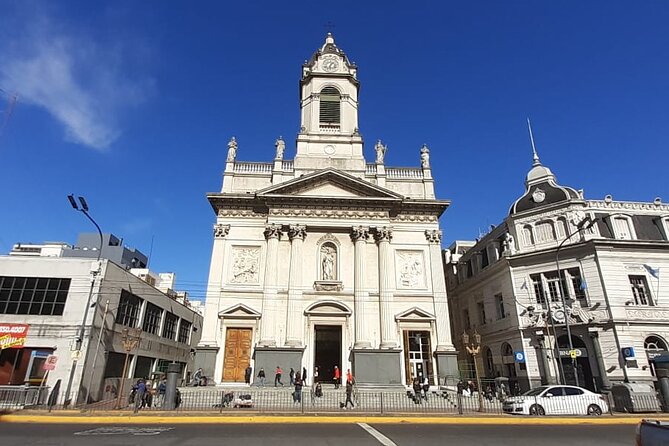
You meet your guide and small group at the Tangol Travel Agency on Defensa 831 in San Telmo. The scheduled start is 10 a.m., and the air-conditioned minivan is included.
I would arrive early. One person nearly missed the departure after finding the office closed on a holiday and then locating the guide a few blocks away. That sounds unusual, but it is a useful reminder to confirm the meeting point and keep the local operator’s contact details handy.
The minivan is a practical part of the experience. Buenos Aires sites connected to Bergoglio are spread across different districts, so walking between all of them would waste much of your three hours. The ride also gives the guide time to explain the city and set up the story before you begin visiting churches.
The group limit is 10. If the departure is lightly booked, you may receive near-private attention. One solo participant had the guide alone, while another small group traveled by taxi when only two people joined. The exact vehicle can therefore vary, even though included transport is part of the plan.
Flores and the home where Bergoglio grew up
The first major stop takes you to Flores, the district associated with Bergoglio’s childhood. You see the house where he lived with his parents and siblings during his early years.
This is one of the most appealing stops because it puts a famous name into an ordinary setting. A childhood home can be more revealing than a formal monument. You begin to picture the young Jorge as part of a family and neighborhood, not as a distant church figure.
Set your expectations carefully. The house is not presented as a museum, and access inside is not assured. One participant found the homes and schools inaccessible, so the guide’s explanation and the view from outside may be the full experience.
That is not necessarily a flaw, but it changes the value of the stop. You are paying for the context, the route, and the guide’s interpretation, not for admission to a preserved interior. If you need to enter every site, this tour may leave you wanting more.
Schools, the Jesuit connection, and formative years
The route continues to educational places linked with Bergoglio, including the Instituto Nuestra Señora de la Misericordia, also called the College of Our Lady of Mercy, and the Jesuit Universidad del Salvador. The itinerary also names the Iglesia del Salvador.
These stops help explain that his formation was not limited to one church. The schools point to his early education, while the Jesuit institutions connect him with the order and intellectual tradition that shaped his religious career.
The university is particularly useful as part of the timeline because Bergoglio later taught there. You may view some locations from the outside, so the quality of the explanation matters. A strong guide can make a passing view meaningful by connecting the building to a specific stage of his life.
This is where guide quality makes the largest difference. Sylvia and Silvia received repeated praise for adding photographs and extra details, answering questions, and explaining the meaning of each church. Carlos was also praised for presenting the formative places in a clear order.
The experience is not equally strong with every guide. A few people wanted more background about Bergoglio and clearer English. If you already know a great deal about Pope Francis, ask questions as you go. The route provides the framework, but the guide’s added stories determine how much you take away.
A completely different kind of day:
- Buenos Aires Hop-On Hop-Off Bus, Free Walking Tours & Discounts
★ 4.5 · 2,218 reviews - Buenos Aires: Piazzolla Tango Show with Optional Dinner
★ 4.4 · 2,122 reviews - Buenos Aires: City Highlights Guided Tour with Transfer
★ 4.7 · 1,946 reviews - Buenos Aires: Hop-On Hop-Off City Bus Tour
★ 4.2 · 1,855 reviews
Basilica of San José de Flores and the decision to become a priest
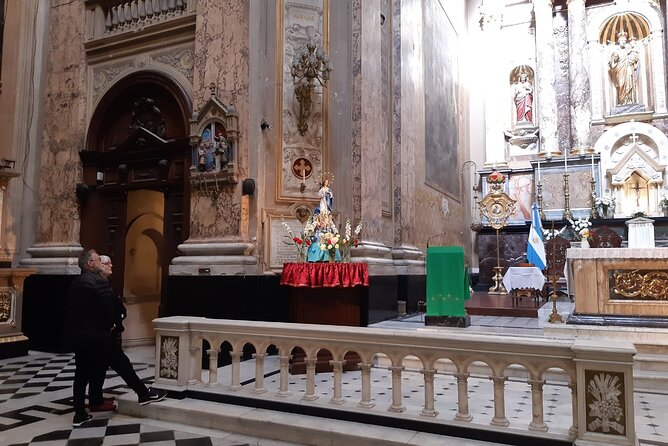
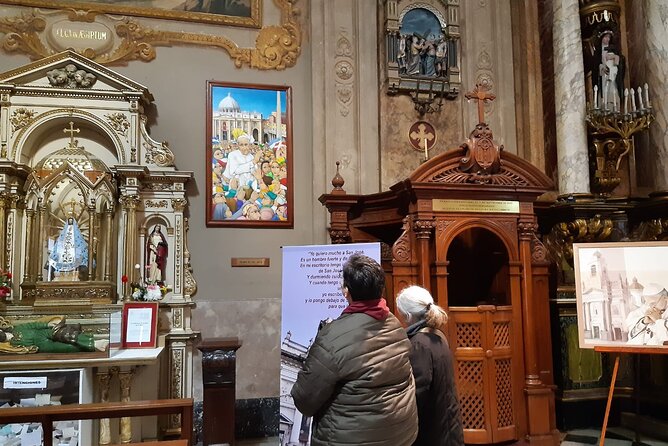
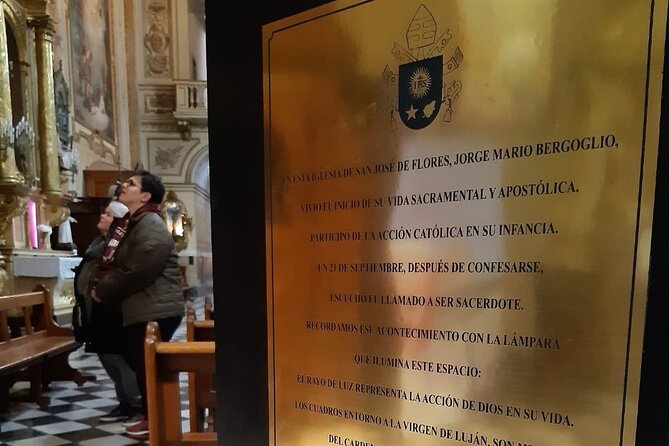
The Basilica of San José de Flores is the emotional center of the tour. This is the church where Bergoglio received sacraments and, at age 17, felt the religious vocation that led him toward the priesthood.
The importance of this stop is easy to understand even if you are not Catholic. A teenager entered a neighborhood church and made a decision that shaped the rest of his life. The guide explains how this place became part of his spiritual path and why it matters in the story of Pope Francis.
Allow time for the atmosphere of the church. This is not only a photo stop. For a Catholic visitor, it may feel like a pilgrimage site. For others, it offers a close look at how a personal decision can grow from a local parish and community.
The basilica may be affected by services or access restrictions. The operator notes that the itinerary can change without notice when Mass schedules or church availability interfere. Treat the order as flexible rather than guaranteed.
Basílica María Auxiliadora y San Carlos
The next church is the Basílica María Auxiliadora y San Carlos, associated with Bergoglio’s baptism. The scheduled visit lasts about 15 minutes, and admission is free.
This stop adds an important beginning to the timeline. At San José de Flores, you hear about his vocation as a teenager. Here, you connect him with the church where his religious life began through baptism.
A 15-minute visit is brief, so do not expect a long architectural tour. Its value lies in the personal connection and in the way it fills out the sequence of his life. Depending on access, you may see the church inside or receive an explanation from outside.
The several church visits can feel repetitive if you are mainly interested in architecture. I would book this tour for the stories linking the buildings together, not for a detailed study of church design.
San Lorenzo and the soccer side of Pope Francis
The stop connected with Club Atlético San Lorenzo de Almagro gives the tour a welcome change of pace. Pope Francis is a passionate supporter of the club, and the guide explains his affection for the team and its place in his life.
This is one of the most memorable details because it shows the pope outside formal religious settings. Soccer is part of everyday Argentine culture, and Bergoglio’s support for San Lorenzo makes him feel like a local porteño as well as a church leader.
The itinerary describes learning about the club rather than attending a match or taking a full stadium tour. Keep that distinction in mind. You are getting the connection and the story, not necessarily a major sports attraction.
I especially like this part for families and for visitors who are curious about Argentine culture. Even if you do not follow soccer, the stop keeps the outing from becoming a procession of churches. It also gives the guide a chance to show how faith, friendship, neighborhood life, and football all sat together in Bergoglio’s early world.
San Ignacio de Loyola and the Jesuit heart of Montserrat
In the Montserrat district, you visit the Iglesia de San Ignacio de Loyola. Built by the Jesuits in 1675, it is described as the oldest church in Buenos Aires and part of the historic Manzana de las Luces.
This church broadens the tour beyond Bergoglio’s biography. It connects his Jesuit identity with the older religious and civic fabric of Buenos Aires. You begin with a young man in Flores, then see the wider institution and city in which his work developed.
The church also makes a good contrast with the more personal sites. The family home and parish churches relate directly to Bergoglio. San Ignacio helps place him within Buenos Aires’s longer Catholic story.
As with the other churches, entry depends on conditions at the time. The schedule may be adjusted if religious services are taking place. Wear respectful clothing and be prepared to keep your visit quiet if worship is underway.
Plaza de Mayo and the Buenos Aires Metropolitan Cathedral
The tour ends at Plaza de Mayo, where you visit the Buenos Aires Metropolitan Cathedral. This is Argentina’s main Catholic church and the cathedral where Jorge Bergoglio served as Archbishop of Buenos Aires.
The building was first established in the 16th century and rebuilt several times, resulting in a mix of architectural styles. The guide can also explain its place in the city’s public life, since the cathedral faces one of Buenos Aires’s most important squares.
For Pope Francis followers, this is the key final chapter. People gathered here while waiting to hear who would succeed Pope Benedict XVI. Bergoglio’s local cathedral suddenly became the focus of worldwide attention when he was chosen.
The cathedral visit is listed at about 30 minutes, as is the Plaza de Mayo stop. Those half-hours give you more time than the shorter church visits, although the exact pace can shift.
One especially worthwhile extra is the changing of the guard at the tomb beside the cathedral, if the timing works. It is not promised as part of the schedule, but one guide included it as a bonus. This is a good example of why asking your guide about current events around Plaza de Mayo can improve the last part of the tour.
Once the tour ends here, you are well placed to continue exploring central Buenos Aires. You need to arrange your own return to San Telmo or your hotel, since hotel pickup and drop-off are not included.
What the $65 price really covers
At $65 per person, the tour sits in a reasonable middle range for a three-hour guided outing with transport. You are paying for a guide, a coordinated route across several districts, and an air-conditioned minivan. Admission to the listed churches is free, so the main value comes from organization and interpretation.
I think the price works best for a first visit to Buenos Aires when you want a focused introduction to Pope Francis and neighborhoods you might not reach on your own. It is also useful if you prefer not to sort out the locations and transport yourself.
The value weakens if you expect access to private homes, schools, or every church interior. Some stops are exterior views, and one person felt the experience needed more detailed information for the cost. Go in for the guided connections, not for a museum-style collection of exhibits.
The tour is often reserved about a month ahead, with an average booking lead time of 31 days. That suggests planning early if the experience is important to your schedule, particularly if you want a small group.
Who will enjoy this tour most
I would recommend it most strongly to:
- Catholics and anyone interested in the personal side of Pope Francis
- Families with older children or teenagers
- Visitors who want local neighborhoods rather than only famous central sights
- Solo visitors who value the chance of a very small group
- People who enjoy religious buildings but also want soccer and city context
It may be less suitable if you want a long architectural tour, guaranteed interior access, or a detailed account of every stage of Bergoglio’s public career. The focus is his early life, vocation, Jesuit links, soccer loyalty, and years as Archbishop of Buenos Aires.
The amount of walking also deserves attention. One 79-year-old participant completed the outing but found the combination of walking and heat demanding. Most people can take part, but ask about the walking pace at the start and use the vehicle breaks sensibly.
My booking advice
I would book this experience if Pope Francis’s connection to Buenos Aires is one of your reasons for visiting, or if you want a personal route through Flores and central Buenos Aires. The strongest guides, especially Sylvia and Silvia, appear to add photographs, patient answers, and extra city context that turn simple exterior stops into meaningful ones.
I would skip it if you want guaranteed access to every site or if you already know Bergoglio’s biography in detail. In that case, the three hours may feel too dependent on the guide’s storytelling.
For most interested visitors, the balance is good: several churches, a childhood neighborhood, schools, soccer, Jesuit history, and the cathedral where Buenos Aires waited for news of a new pope. Just confirm the meeting point, arrive early, expect schedule changes, and remember that the route ends at Plaza de Mayo.
FAQ
How long does the Pope Francis Tour in Buenos Aires last?
The tour lasts approximately three hours.
Where does the tour begin?
It begins at the Tangol Travel Agency, Defensa 831, in San Telmo, Buenos Aires.
What time does the tour start?
The scheduled start time is 10 a.m.
Where does the tour end?
The tour ends at Plaza de Mayo, near the Buenos Aires Metropolitan Cathedral.
Is transportation included?
Yes. Transport by air-conditioned minivan is included, although the exact vehicle may vary for very small groups.
Are food, drinks, and hotel transfers included?
No. Food and drinks are not included, and hotel pickup and drop-off are not provided.
Just added in Buenos Aires
- Discover Buenos Aires’ independent art scene — Ticket included★ 5.0 · 30 reviews
- Photo Session in Buenos Aires★ 5.0 · 26 reviews
- Your Private Photographer in Buenos Aires★ 5.0 · 4 reviews
- Yerba Mate Workshop – Learn to Drink Mate like a Local!★ 5.0 · 11 reviews
- Your Personal Photographer in Buenos Aires★ 5.0 · 24 reviews
- BA: Wine Tasting and Blending Experience in Palermo★ 5.0 · 1 review
- Winery and Tasting Experience in Buenos Aires★ 5.0 · 1 review
- Taste of Tradition: Yerba Mate & Alfajores Experience★ 4.0 · 5 reviews
Buenos Aires Tours, compared.
Local Foodie Adventure in Buenos Aires with Sherpa Food Tours
Read our review →
Buenos Aires City Private Tour with Local Guide
Read our review →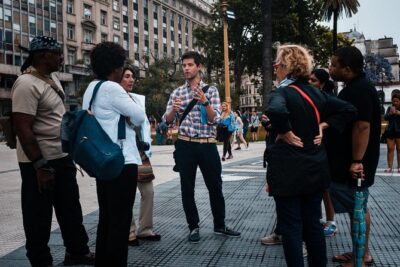
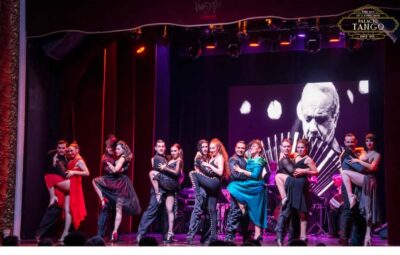
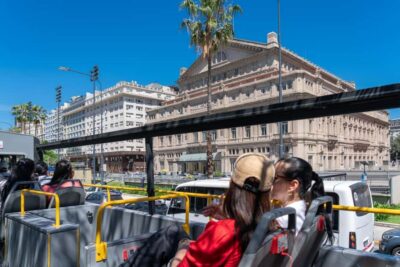
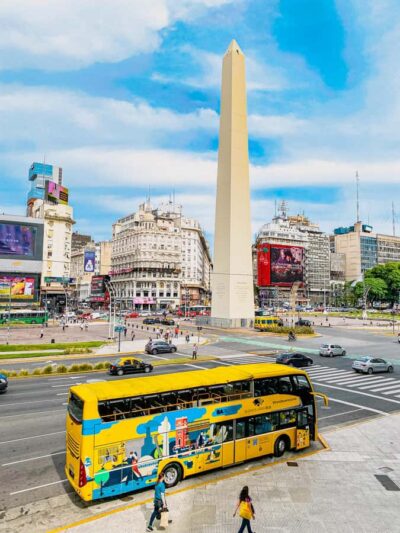
Buenos Aires Hop-On Hop-Off Bus and Exclusive Benefits
Read our review →