Reviewed · BUENOS AIRES TOURS
Peron Peron: Behind the Story of Evita and the Peronist Movement
Politics gets personal here. This private Buenos Aires tour connects Evita, Juan Domingo Perón, labor unions, public squares, and modern Peronist life in one focused half-day experience. I like the small private format, which lets you ask questions and adjust the pace, and I like the way the route moves beyond famous names to places tied to the movement itself. The main consideration is the price: at $432.50 per person, it makes the most sense for visitors who want a serious, personalized look at Argentine politics rather than a general city tour.
I also like that the experience brings you to both grand public sites and a Peronist gathering place, Lo de Néstor. That final stop gives the tour a human and current edge. The one drawback is that the schedule includes many stops in about five hours, so some locations receive only 15 minutes. You will see a lot, but you should not expect a long museum visit or a slow architectural tour at every stop.
In This Review
- Key points to know before booking
- Why Perón and Evita still shape Buenos Aires
- Starting at Plaza de Mayo
- Seeing the building Evita never used
- The only Perón statue in the city
- Evita’s image on the Ministry of Health
- A fuller look at Evita at Museo Evita
- Evita’s tomb at Recoleta Cemetery
- The CGT and the power of organized labor
- Talking Peronism at Lo de Néstor
- What a private five-hour format changes
- Is $432.50 per person a fair price?
- Who will enjoy this experience most?
- Final verdict: book it for political insight, not general sightseeing
- FAQ
- How long does the Perón and Evita tour last?
- Is this a private tour?
- Is pickup available?
- Is admission to Museo Evita included?
- Does the tour visit Evita’s tomb?
- Can I cancel for a full refund?
Key points to know before booking
- Plaza de Mayo provides the political starting point: This is where the tour places the birth of the Peronist Movement within Buenos Aires history.
- Evita gets more than a single cemetery visit: You see her foundation’s former building, the Evita Museum, her public image on the Ministry of Health, and her family tomb.
- The private format matters: Only your group takes part, with pickup offered and no large coach to manage.
- Lo de Néstor adds a present-day view: The Peronist bar is designed for conversation about what Peronism means today.
- The route mixes free sites with one included ticket: Admission to the Evita Museum is included, while the outdoor stops do not require an admission ticket.
- The tour lasts about five hours: The rest of your day remains open for another Buenos Aires neighborhood, museum, or meal.
Why Perón and Evita still shape Buenos Aires
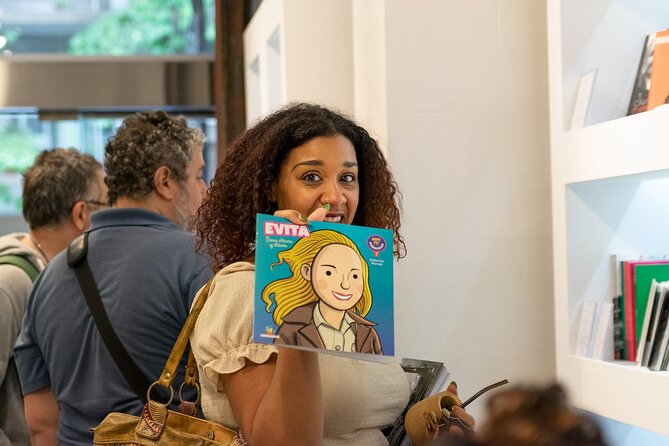
Peronism is not just a chapter in an Argentine history book. It is a political movement tied to workers, organized labor, social programs, national identity, and the powerful public image of Eva Perón.
That makes this tour useful for you if the usual Buenos Aires sightseeing leaves out the country’s political arguments. You will not simply look at statues and buildings. Your guide links each place to the people and institutions that helped Peronism gain power and keep its hold on public life.
The route focuses especially on Evita, who died in 1952, and on the charitable work connected to the Fundación María Eva Duarte de Perón. It also gives time to Juan Domingo Perón’s relationship with labor organizations, including the General Confederation of Labor.
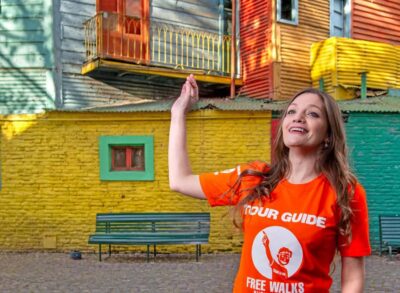
A strong guide matters here. Maru received especially warm praise for her passion for Argentine history and Peronism, as well as her excellent English. The useful thing about that feedback is not just the compliment. It tells you that the experience depends heavily on explanation and discussion. The buildings themselves will not always explain their role clearly.
More things to do in Buenos Aires:
- Local Foodie Adventure in Buenos Aires with Sherpa Food Tours
★ 5.0 · 6,875 reviews - Buenos Aires City Private Tour with Local Guide
★ 5.0 · 3,475 reviews - Buenos Aires Small-Group City Tour
★ 5.0 · 2,226 reviews
Starting at Plaza de Mayo
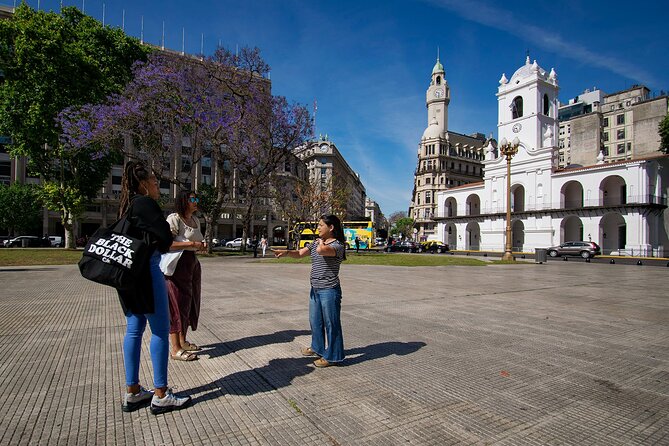
The tour begins at Plaza de Mayo, the oldest public square in Buenos Aires and a natural place to set the political scene. You spend about 45 minutes here, which gives your guide time to explain why this square matters and how it became connected to Peronist history.
Plaza de Mayo is described as the foundational block of the city and the birthplace of the Peronist Movement. That wording points to the square’s larger role: it has hosted major public events and political gatherings for generations.
I like this opening because it gives the rest of the tour a clear frame. When you later see Evita’s image on a government building or visit the union headquarters, you already have a sense of how public space and mass politics fit together.
The square is also a practical first stop. It is free to visit, easy to reach, and near public transportation. Since the tour is private, you can use this time to ask basic questions about Perón, Evita, or Argentine politics without worrying about slowing down a large group.
Seeing the building Evita never used
At the Facultad de Ingeniería, you stop for about 15 minutes to admire an imposing mid-20th-century building originally constructed for the Fundación María Eva Duarte de Perón.
Evita ran this charitable foundation, but she died in 1952 and never used the building. That detail gives the site an unusual quality. It represents the scale and ambition of her foundation, while also showing how her death interrupted plans connected to her public work.
This is mainly an exterior visit, so you should think of it as a short architectural and historical pause rather than a full museum stop. Your guide’s explanation is what gives the building meaning.
For me, this is one of the tour’s more valuable ideas: Evita is not presented only as a face on a balcony or a body in a famous tomb. You also see the institutions created around her charitable role.
The only Perón statue in the city
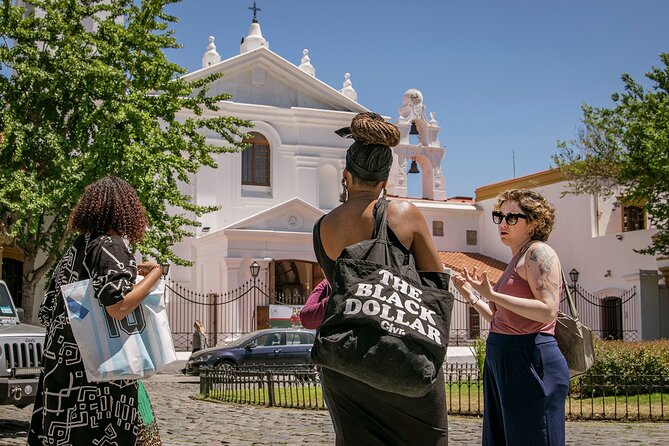
The next stop is Plaza General Agustín Pedro Justo, where you can find the only Perón statue in Buenos Aires. The visit lasts about 15 minutes.
The short stop is enough to view the monument and hear why it matters. It also raises an interesting point about memory in the city. Evita appears repeatedly along this route, while Perón’s physical representation is more limited in this particular circuit.
This stop will suit you if you enjoy reading public monuments as political statements. It may feel brief if you want detailed sculpture or architectural commentary, but the statue works well as part of the larger story.
The private setup helps here. If the monument prompts a question, you can stop and talk rather than simply take a photograph and move on.
A completely different kind of day:
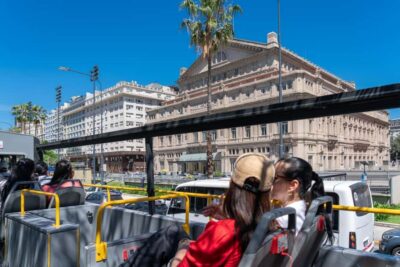
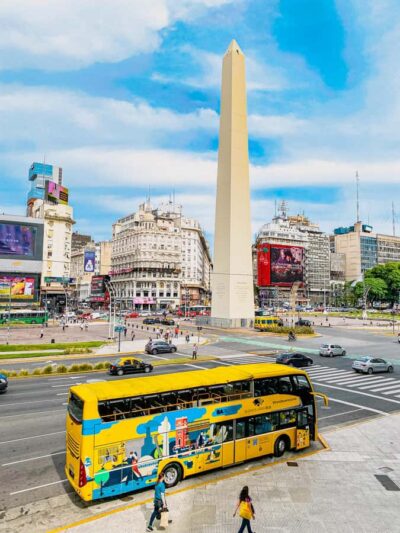
- Buenos Aires Hop-On Hop-Off Bus, Free Walking Tours & Discounts
★ 4.5 · 2,218 reviews - Buenos Aires: Piazzolla Tango Show with Optional Dinner
★ 4.4 · 2,122 reviews - Buenos Aires: City Highlights Guided Tour with Transfer
★ 4.7 · 1,946 reviews - Buenos Aires: Hop-On Hop-Off City Bus Tour
★ 4.2 · 1,855 reviews
Evita’s image on the Ministry of Health
The Edificio del Ministerio de la Salud y de Desarrollo Social is another quick stop, scheduled for about 15 minutes. It was one of Juan Domingo Perón’s early offices and is associated with an iconic representation of Evita.
This is a good example of how the tour moves through political symbols rather than only conventional attractions. The building connects Perón’s administrative power with Evita’s public image. You do not need a long visit to grasp the basic point, but you do need the guide to explain what you are looking at.
Bring your attention to the building exterior and the representation of Evita. The stop is not designed as a lengthy indoor visit. If you prefer tours that spend most of the day inside museums, this route may feel too spread out.
If you want to understand how political imagery works in Buenos Aires, though, this brief stop adds something that a standard city walk may leave out.
A fuller look at Evita at Museo Evita
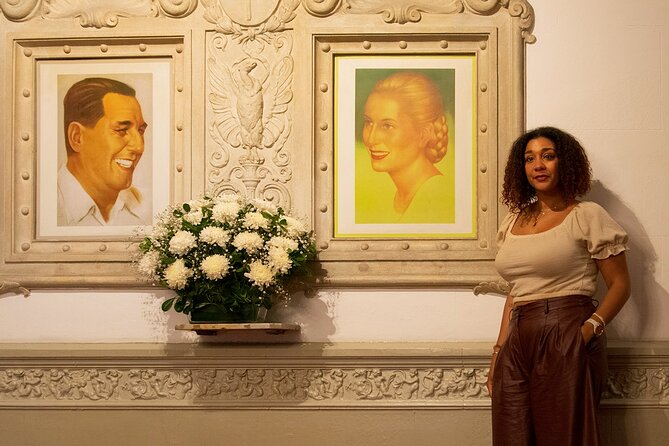
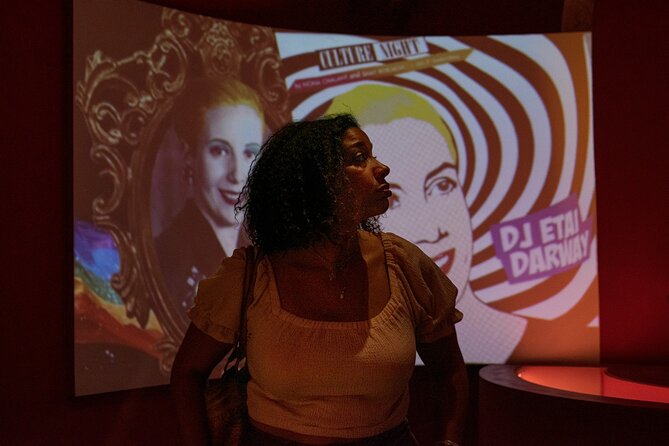
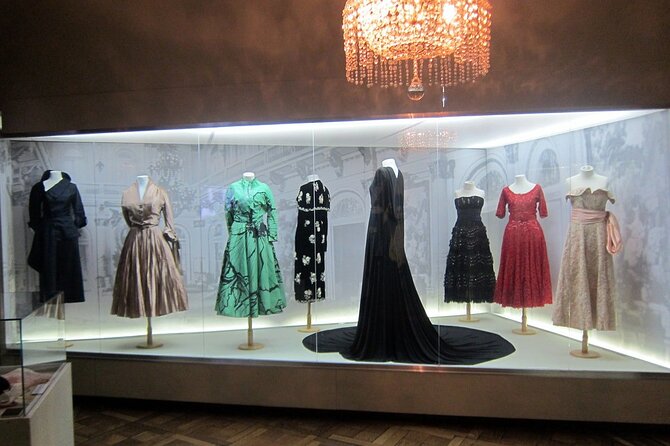
The Museo Evita receives about 45 minutes, and admission is included. The museum occupies a former shelter run by Evita Perón, a setting that connects the building to women and children who found refuge there.
The location matters as much as the displays. The walls once echoed with Evita’s forceful voice and with the voices of women and children who lived within the shelter. That setting gives the museum a direct connection to her charitable work.
You should expect this to be the tour’s main indoor stop. Forty-five minutes is enough for a focused visit, but it is not a full afternoon in the museum. The guide can help you place what you see within the wider route, especially after the earlier stops at the foundation building and the Ministry of Health.
I appreciate the way the museum is positioned in the schedule. By the time you arrive, you have already seen several sites connected to Evita. The museum can then add personal and institutional detail instead of carrying the entire story on its own.
The included ticket also improves the value of the tour. Outdoor sites are free, but the museum is the one listed admission included in your booking. If Evita is your main reason for choosing this experience, this stop is essential.
Evita’s tomb at Recoleta Cemetery
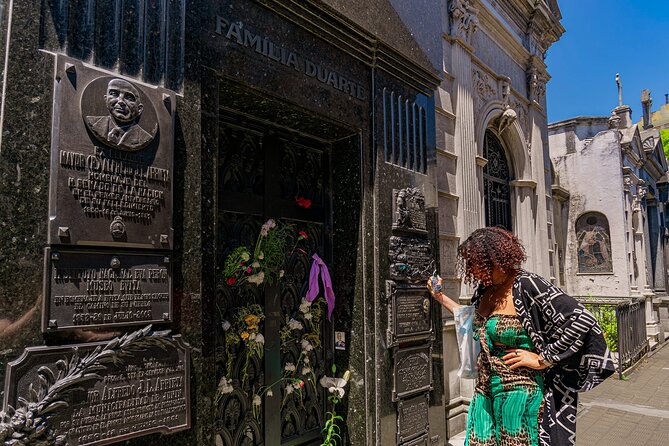
Recoleta Cemetery is one of Buenos Aires’s most memorable places, even if you arrive with no interest in Peronism. The tour spends about 45 minutes here, including a visit to Evita Perón’s tomb.
The cemetery has shaded walkways and large marble mausoleums in Art Deco, Art Nouveau, baroque, and neo-Gothic styles. Evita’s tomb is the political focus, but the setting gives you a wider view of the city’s funeral architecture and social history.
This is a place where a guide can save you time. Recoleta Cemetery contains many paths and monuments, and the tour directs your attention to the tomb while explaining why it has such importance.
The stop also gives the day a quieter change of pace. Earlier sites are connected to crowds, government, labor, and public speech. Here, the story becomes more private and symbolic.
You should allow some flexibility in your expectations. The provided schedule gives 45 minutes, so the tour cannot cover every notable corner of Recoleta Cemetery. If you want a detailed cemetery walk, you may need to return independently. For the Peronist story, however, the allotted time gives you a clear visit without taking over the whole day.
The CGT and the power of organized labor
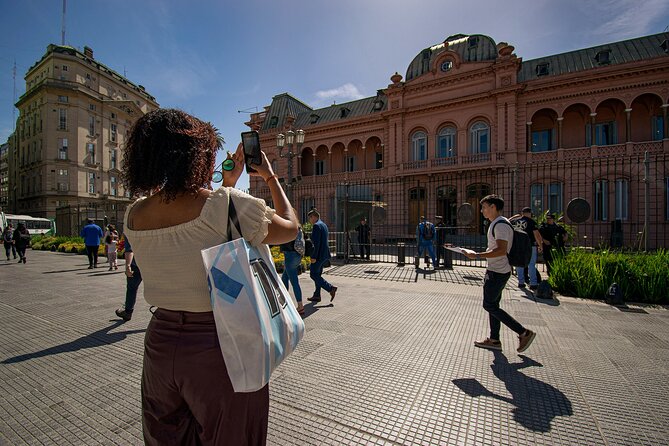
The General Confederation of Labor, or CGT, receives about 30 minutes. This is the union organization that helped cement and consolidate Peronist power in Argentina.
The CGT was founded in 1930 and became a major national trade union federation. Its importance to the tour is clear: Peronism cannot be understood through Evita and Perón alone. Organized labor is one of the movement’s central forces.
This stop gives you a chance to think about politics from the workplace upward. The story is not only about presidents, speeches, or monuments. It is also about employees, unions, and the organized support that shaped Argentina’s political system.
Thirty minutes should be enough for an explanation and exterior visit, but not a detailed institutional tour. The value comes from the connection between this stop and Plaza de Mayo. The first location shows political power in a public square. The CGT shows how that power was linked to labor.
Talking Peronism at Lo de Néstor
The final stop, Lo de Néstor, lasts about 45 minutes and includes admission. It is a bar created and run for and by Peronists.
This is the tour’s most unusual stop. Instead of looking at a monument or former government building, you enter a place where Peronist identity is discussed in social terms. The goal is to learn what keeps Peronist ideas alive decades after Perón’s death and to talk about what being a Peronist means today.
I like ending here because it prevents the experience from becoming a museum lesson. You have seen the symbols and institutions. At the bar, you can ask how those ideas function in present-day Argentina.
The tone may depend on the conversation and on your guide, so come prepared to participate. This is not simply a place to check off a drink stop. It is intended for discussion. If you want a neutral overview with no political conversation, this part may feel more opinionated than the rest.
For curious visitors, though, Lo de Néstor can be the most revealing stop. Political movements survive through people, habits, arguments, and shared spaces. A bar connected to Peronists shows that politics is still part of ordinary social life.
What a private five-hour format changes
This is a private activity, so only your group participates. That gives you control over questions, pacing, and emphasis. If you are especially interested in Evita’s charitable foundation, the labor movement, or present-day Peronism, you can ask your guide to spend more time on those subjects.
Pickup is offered, and the tour is near public transportation. Those details matter in Buenos Aires, where moving between central sites can take more time than expected. The route includes eight stops, so private transport and clear coordination can make the day easier.
The timing is also worth understanding. The listed stops add up to just under four hours, while the overall experience lasts about five hours. The remaining time likely allows for movement between locations, pickup, and conversation. Do not treat the schedule as eight equally long visits.
Most people can participate, and service animals are allowed. Group discounts are available, which may improve the price for a larger private party. Confirmation arrives when you book, and free cancellation applies if you cancel at least 24 hours before the start time. Changes or cancellations made within 24 hours are not refunded.
Is $432.50 per person a fair price?
At $432.50 per person, this is an expensive half-day experience. The price is difficult to justify if you only want a quick look at Evita’s tomb or a few Perón-related buildings.
The value improves if you are traveling with a small group, can use the group discount, and want a private guide for a subject that is hard to understand without context. You are paying for a custom format, pickup availability, a full route across several parts of Buenos Aires, museum admission, and extended conversation at Lo de Néstor.
The included museum ticket is helpful, but it is not the main reason to book. Most stops are free outdoor locations. The strongest part of the price is the guide’s time and ability to connect the locations.
I would compare this experience with the cost of arranging several separate visits and hiring a specialist guide. If you are passionate about Argentine politics, the focused route may be worth the premium. If you want a broad introduction to Buenos Aires, spend your money elsewhere and choose a less specialized city tour.
Who will enjoy this experience most?
I would recommend this tour to you if:
- You already know a little about Evita and Perón and want more context.
- You care about Argentine politics, labor movements, or social programs.
- You prefer private tours where you can ask direct questions.
- You want to connect historic places with current political identity.
- You have a group that can benefit from the private format and possible discount.
- You are comfortable with a tour that includes discussion and interpretation.
You may want to skip it if you prefer art, food, architecture, or general sightseeing. The route includes impressive buildings and Recoleta Cemetery, but politics is always the main subject.
English-language guiding is another important factor. Maru was praised for clear English and strong passion for the subject, which is especially useful when the topic includes political terms, historical disputes, and changing public opinions.
Final verdict: book it for political insight, not general sightseeing
You should book this tour if Peronism is a real interest, not just a name you recognize from the film Evita. The route gives you public squares, government buildings, a foundation site, a museum, a cemetery, a labor headquarters, and a Peronist bar. That is a strong range for five hours.
I especially like the combination of Evita’s personal story with the wider structure of unions and political power. The stop at Lo de Néstor also gives the day a useful present-day dimension.
The price is high, and several stops are short. Still, a private guide can make this complex subject far easier to follow than a guidebook. Book it for focused conversation and political context. Do not book it expecting a relaxed, general Buenos Aires tour.
FAQ
How long does the Perón and Evita tour last?
The tour lasts approximately five hours and includes eight stops across Buenos Aires.
Is this a private tour?
Yes. Only your group participates, so you do not join a large coach or shared tour group.
Is pickup available?
Yes, pickup is offered. The tour is also near public transportation.
Is admission to Museo Evita included?
Yes. Tickets to the Evita Perón Museum are included in the experience.
Does the tour visit Evita’s tomb?
Yes. The itinerary includes a visit to Evita Perón’s tomb at Recoleta Cemetery, with about 45 minutes at the cemetery.
Can I cancel for a full refund?
Yes, if you cancel at least 24 hours before the experience start time. Cancellations made less than 24 hours before the start time are not refunded, and changes within that period are not accepted.
Just added in Buenos Aires
- Discover Buenos Aires’ independent art scene — Ticket included★ 5.0 · 30 reviews
- Photo Session in Buenos Aires★ 5.0 · 26 reviews
- Yerba Mate Workshop – Learn to Drink Mate like a Local!★ 5.0 · 11 reviews
- Your Personal Photographer in Buenos Aires★ 5.0 · 24 reviews
- Your Private Photographer in Buenos Aires★ 5.0 · 4 reviews
- BA: Wine Tasting and Blending Experience in Palermo★ 5.0 · 1 review
- Winery and Tasting Experience in Buenos Aires★ 5.0 · 1 review
- Taste of Tradition: Yerba Mate & Alfajores Experience★ 4.0 · 5 reviews
Buenos Aires Tours, compared.
Local Foodie Adventure in Buenos Aires with Sherpa Food Tours
Read our review →
Buenos Aires City Private Tour with Local Guide
Read our review →

Buenos Aires Hop-On Hop-Off Bus and Exclusive Benefits
Read our review →