Reviewed · BUENOS AIRES TOURS
Palermo Graffiti Tour
Street art tells Palermo’s story. This two-hour walk through Buenos Aires’s trendiest neighborhood connects painted walls with local artists, football fever, social themes, and the character of the streets. I especially like the easy central meeting point and the chance to see smaller pieces that you could easily miss while walking alone. The $13 price also gives you a lot of city time for very little money.
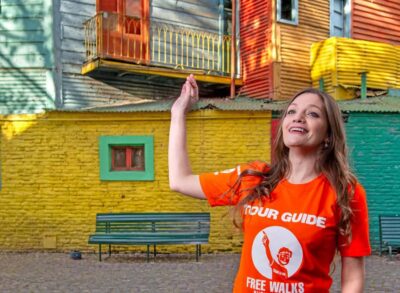
I also like that the guides explain the ideas behind the work rather than simply pointing at painted walls. Guides such as Juan and Vito are frequently praised for their energy, humor, and clear passion for Argentine art and culture. The main caution is the group size, which is advertised at up to 35 people but has sometimes felt larger. On a hot day, two hours in direct sun can also be tiring.
In This Review
- Key points to know before you go
- Why Palermo is the right neighborhood for this walk
- Meeting at Jorge Luis Borges 1627 at 3:00 pm
- The opening lesson: graffiti background concepts
- Street Art in Argentina and the meaning behind the walls
- Worldwide Wall Paste Up and smaller pieces
- Mural of the Dreams and Palermo’s photo stops
- Martin Ron’s Selfie Girl
- Alfredo Segatori’s trash mural
- Football murals and Argentine identity
- What the two-hour pace feels like
- Group size, sound, and the guide experience
- Is $13 good value for Palermo?
- Who should book the Palermo Graffiti Tour?
- My verdict on this changing Palermo art walk
- FAQ
- Where does the Palermo Graffiti Tour start?
- What time does the tour begin?
- How long does the tour last?
- Where does the tour finish?
- How much does the tour cost?
- Is food or drink included?
- How large can the group be?
- Can I cancel for a full refund?
Key points to know before you go
- The tour begins at 3:00 pm on Jorge Luis Borges Street, right in the center of Palermo.
- The route lasts about two hours and finishes near Gorriti and Lavalleja, seven blocks from the starting point.
- The art changes over time, since outdoor murals fade, disappear, and get painted over.
- Football art is part of the experience, reflecting Argentina’s powerful football culture.
- A portable microphone helps, though a large group can still make it hard to see or hear from the edges.
- The $13 price is strong value, especially if you want a guided introduction to Palermo and its street art.
Why Palermo is the right neighborhood for this walk
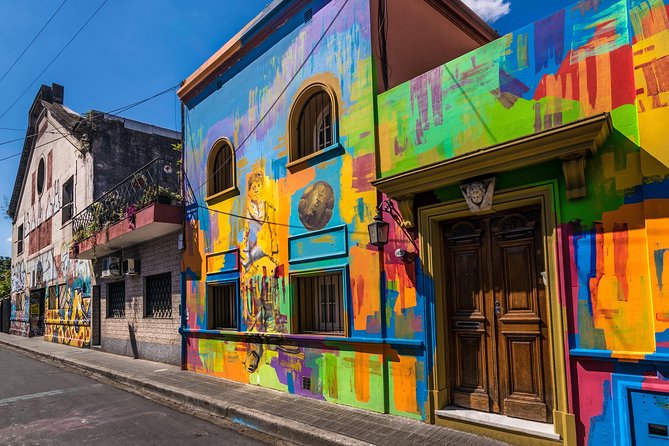
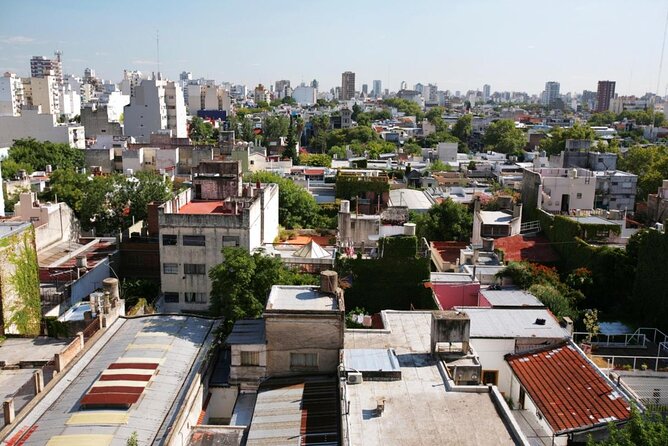
Palermo is a natural setting for a street art tour. Cobblestone streets, cafés, shops, studios, and painted walls give the neighborhood a changing visual character. The art is not confined to one gallery or a single formal exhibition. It appears on ordinary streets, side walls, alleys, and building fronts.
That matters because you are seeing art in its working setting. A mural is tied to a particular wall, neighborhood, and moment. Some pieces are polished and large. Others are small paste-ups or quick interventions that you might walk past without noticing.
I like this format because the walk gives you a reason to look up, slow down, and study the city around you. You are not only seeing Palermo’s famous cafés and shops. You are also seeing how artists respond to politics, football, identity, community projects, and daily life.
The tour is best understood as an introduction rather than a specialist art seminar. It gives you a broad look at styles and artists, then adds the stories that make each work easier to understand.
More things to do in Buenos Aires:
- Local Foodie Adventure in Buenos Aires with Sherpa Food Tours
★ 5.0 · 6,875 reviews - Buenos Aires City Private Tour with Local Guide
★ 5.0 · 3,475 reviews - Buenos Aires Small-Group City Tour
★ 5.0 · 2,226 reviews
Meeting at Jorge Luis Borges 1627 at 3:00 pm
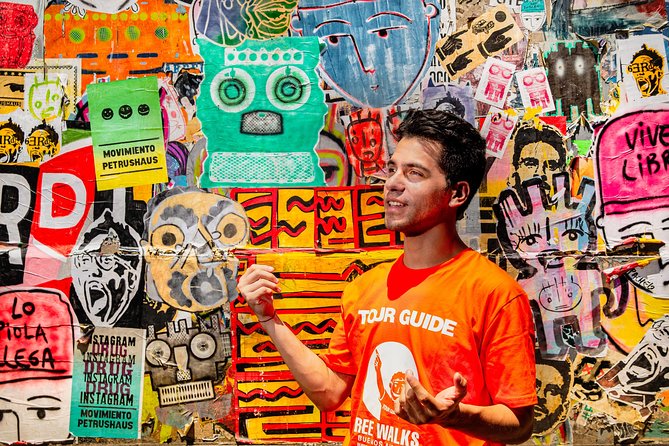
The starting point is Jorge Luis Borges 1627, C1414 in Palermo. This is a useful location because it is in the heart of the neighborhood and near public transportation. You do not need to travel to a distant industrial district or meet outside the center of Buenos Aires.
The tour starts at 3:00 pm. That timing gives you the morning and early afternoon for another part of the city, then lets you spend the later afternoon walking through Palermo. Since food and drinks are not included, you can eat beforehand or plan a café stop afterward.
Bring water, especially in warm weather. Several people found the route more physical than expected, and some of the walking can take place in direct sun. Comfortable shoes are a sensible choice because the route covers a fair amount of ground.
The guide uses a portable microphone. That is helpful for a walking tour, particularly when the group gathers around a wall or along a noisy street. Still, you should stay reasonably close to the guide. A microphone cannot solve every problem when a large group spreads across a sidewalk.
The opening lesson: graffiti background concepts
The early part of the walk introduces basic graffiti and street art ideas. This section helps if you are new to the subject, since it gives you a way to read what comes next.
You may hear distinctions between graffiti and street art, along with discussion of different approaches and techniques. The point is not simply to memorize labels. It is to notice how artists use lettering, images, pasted material, large painted surfaces, and public space.
Some people find this introduction useful because it gives structure to the rest of the walk. Others may find it too general, especially if they already follow urban art. If you are mainly interested in large murals, keep in mind that the tour may spend time on smaller works and background ideas as well.
That broader approach is part of the tour’s character. It is designed for a regular visitor who wants to understand what they are looking at, not only for a serious graffiti enthusiast.
Street Art in Argentina and the meaning behind the walls
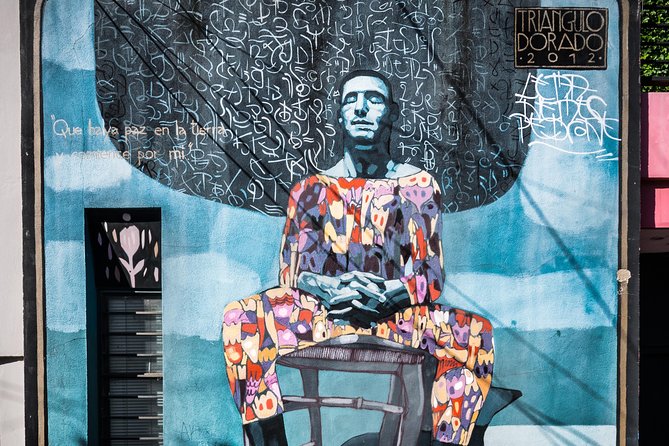
The Argentine street art section connects local work with the country’s culture. The guide explains artists, styles, and the ideas behind selected pieces, so the walk becomes more than a series of photo stops.
This is where guides such as Juan and Vito can make a real difference. Juan is often praised for his English, warmth, storytelling, and ability to link art with the history and culture of Buenos Aires. Vito is described as energetic, funny, and highly engaged with the subject.
The quality of the explanation matters because a mural may not be immediately clear from its image alone. A guide can tell you why a particular person, event, style, or symbol appears on the wall. That context can turn a piece you might have ignored into one you remember.
The experience does vary with the guide and the group. One guide may move quickly, leaving less time for photos. Another may spend longer explaining an artist or theme. If you want pictures, position yourself near the front when the group stops, then take your shots before the explanation moves on.
A completely different kind of day:
- Buenos Aires Hop-On Hop-Off Bus, Free Walking Tours & Discounts
★ 4.5 · 2,218 reviews - Buenos Aires: Piazzolla Tango Show with Optional Dinner
★ 4.4 · 2,122 reviews - Buenos Aires: City Highlights Guided Tour with Transfer
★ 4.7 · 1,946 reviews - Buenos Aires: Hop-On Hop-Off City Bus Tour
★ 4.2 · 1,855 reviews
Worldwide Wall Paste Up and smaller pieces
The Worldwide Wall Paste Up stop points to a different side of urban art. Instead of a single large mural, pasted work can feel more temporary and compact. It rewards close attention.
This kind of stop is useful because Palermo’s street art is not only made up of giant painted walls. Small pieces can be tucked into corners or placed alongside older marks. They show how quickly the visual character of a street can change.
The temporary nature of the art is important. Outdoor pieces fade, weather, and get painted over. New work appears in its place. That means the route is not fixed in the same way as a museum collection.
You should not expect every piece to be in perfect condition. A wall may look different from photographs taken months earlier. The tour’s appeal comes partly from seeing what is present now, not from checking off a permanent collection.
Mural of the Dreams and Palermo’s photo stops
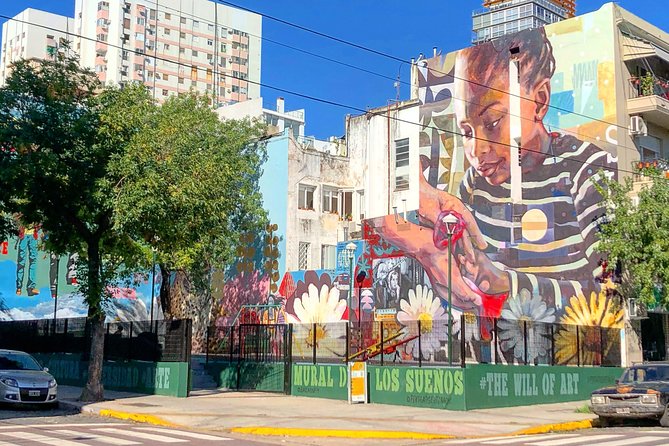
Mural of the Dreams is one of the stops named on the route. Large murals such as this provide the kind of broad, colorful surface that most people imagine when they hear street art tour.
The tour includes regular pauses to view the walls and take photographs. That is helpful, but the time available at each stop can depend on the group’s pace, weather, street conditions, and the guide’s plan.
A few comments point to a guide moving a little fast or not allowing quite enough time for pictures. You can avoid some frustration by taking photos early, before the group begins moving again. If you are serious about photography, this may not feel like a dedicated photo tour.
Rain can also alter the rhythm. On one outing, rain and hail caused delays and waiting at certain points. The route still lasted about two hours, but the experience was less fluid. Outdoor art tours are always more dependent on weather than museum visits.
Martin Ron’s Selfie Girl
Martin Ron’s Selfie Girl brings attention to one of the recognized artists connected with the route. The title itself hints at a modern subject, and the stop gives the guide a chance to discuss the artist’s style and the role of contemporary life in public art.
This is the sort of piece that benefits from explanation. You can see the image in a few seconds, but the guide adds information about the artist and the work’s place in Buenos Aires’s street art scene.
The stop also shows why the tour works better with a guide than as a self-guided stroll. Palermo has so much visual material that you may notice only the biggest wall. A guide points out the selected work, explains its importance, and helps you connect it to the rest of the neighborhood.
If your interest is specifically Martin Ron, you should keep your expectations in check. The tour is an overview of Palermo’s art scene, not a single-artist study.
Alfredo Segatori’s trash mural
Alfredo Segatori’s trash mural adds a different subject to the route. Its focus on discarded material gives the tour a chance to consider how artists respond to everyday urban problems and objects.
This stop also broadens the idea of what a mural can be. Street art does not need to deal only with beauty or decoration. It can comment on waste, public space, consumption, and the way a city handles its unwanted material.
The tour’s named stops suggest a mix of themes and methods: pasted work, large murals, artist-focused pieces, and socially minded projects. That variety should appeal to you if you want a general look at urban art rather than one narrow style.
At the same time, not every stop will have the same visual impact. One person may find a small intervention exciting while another prefers a giant, technically impressive mural. This is a subjective art experience, and the route cannot guarantee a personal favorite at every corner.
Football murals and Argentine identity
Football is an important part of the walk. Some groups have found the opening focus on football art too long, especially if they were hoping immediately for a wide range of mural styles.
Still, football murals make sense in Buenos Aires. The sport is closely tied to local identity, and the walls reflect that passion. The tour may include images connected with football heroes, major events, and the emotions surrounding Argentina’s World Cup victory after more than 30 years of waiting.
If you are not interested in football, this part may feel repetitive. If you want to understand what matters to many people in Argentina, it offers useful cultural context.
The selection changes as new events shape public art. That also means one group may see a different balance of football and other subjects than a group taking the walk later. The route reflects the current walls, not a fixed museum display.
What the two-hour pace feels like
Two hours is a sensible length for this experience. It is long enough to walk through several parts of Palermo and hear background stories without taking up an entire day.
You should expect a steady walking tour, not a short stroll between three nearby walls. The route finishes at Gorriti and Lavalleja, about seven blocks from the starting point and eight blocks from the Scalabrini Ortiz station on Line D.
The ending location is practical. It is in a safe area with bars nearby, so you can continue the afternoon with a drink or a meal. You will need to organize your own food and drinks, since neither is included.
Weather is a major factor. On a hot, sunny day, much of the route may feel exposed. The guides generally stop in shaded places for explanations when possible, but you may still spend time in the sun while viewing or photographing the walls.
The tour can also finish slightly before or after the two-hour mark. Group pace, traffic lights, weather, and the amount of discussion can all affect the timing. Plan a little flexibility rather than scheduling an immediate appointment afterward.
Group size, sound, and the guide experience
The stated maximum is 35 people, but some past groups felt closer to 40 or 50. That difference matters. A large pack can block your view of a mural, make crossings slower, and spread the guide’s voice across a wide sidewalk.
The portable microphone helps, and Vito in particular is praised for being loud enough and for managing a large group well. Juan is also frequently described as friendly, engaging, and clear in English.
Even with a good guide, you should stay close. People at the outer edge may miss parts of the explanation. If you prefer a quieter and more personal experience, this may not be the right format. Some people have said they would gladly pay more for a smaller group.
The advertised maximum of 35 is worth checking when you book. If group size is your biggest concern, ask the operator for the expected number on your date.
Is $13 good value for Palermo?
At $13 per person, I consider this strong value if you want a guided introduction to the neighborhood. You receive roughly two hours of walking, a professional guide, explanations of artists and styles, and a route that includes places you might not identify on your own.
The value is less about the number of murals and more about the interpretation. You can walk through Palermo for free, but you may pass extraordinary work without understanding who made it or why it matters.
There are limits. The tour does not include food or drinks, and it is not a private walk. You also cannot expect every mural to be spectacular. Public art changes, and the current route may contain pieces that appeal more to some tastes than others.
For $13, I would book it as a low-cost way to see Palermo differently. I would not book it expecting a museum-quality sequence of major masterpieces.
Who should book the Palermo Graffiti Tour?
I recommend this tour if you want to combine sightseeing with an introduction to Buenos Aires street art. It suits first-time visitors to Palermo, casual art fans, photographers who enjoy urban details, and anyone who likes hearing the stories behind public images.
You will get the most from it if you are open to different styles, including smaller works, pasted pieces, football murals, and community projects. A basic interest in Argentine culture also helps.
I would hesitate if you dislike walking in warm weather, need a small group, or want only enormous murals. Serious graffiti fans may want more technical detail and more time at each work. If you prefer to explore at your own pace, a self-guided walk may feel less rushed.
The free cancellation policy allows you to cancel up to 24 hours before the start time for a full refund. Service animals are allowed, the meeting point is near public transportation, and most people can participate.
My verdict on this changing Palermo art walk
I like the Palermo Graffiti Tour because it gives public art a local voice. The best guides, especially Juan and Vito, add humor, cultural context, and stories that make the walls easier to read.
The experience is not flawless. Group size can weaken the atmosphere, some guides may move too quickly, and the amount of direct sunlight can be uncomfortable. The art itself is also unpredictable, since murals disappear and new ones take their place.
Book it if you want a lively, affordable introduction to Palermo’s changing streets. Skip it if you need a small, highly specialized art tour or a guaranteed parade of monumental murals. For most curious visitors, $13 is a fair price for two hours of walking, looking, and learning how Buenos Aires expresses itself on the walls.
FAQ
Where does the Palermo Graffiti Tour start?
The tour starts at Jorge Luis Borges 1627, C1414 Buenos Aires, in Palermo.
What time does the tour begin?
The scheduled start time is 3:00 pm.
How long does the tour last?
The tour lasts approximately two hours.
Where does the tour finish?
It ends at the intersection of Gorriti and Lavalleja, about seven blocks from the starting point and eight blocks from Scalabrini Ortiz station on Line D.
How much does the tour cost?
The price is $13 per person.
Is food or drink included?
No. Food and drinks are not included.
How large can the group be?
The stated maximum is 35 people. Some past outings have felt larger, so you may want to confirm the expected group size when booking.
Can I cancel for a full refund?
Yes. You can cancel at least 24 hours before the experience start time for a full refund. Changes or cancellations made less than 24 hours beforehand are not accepted for a refund.
Just added in Buenos Aires
- Photo Session in Buenos Aires★ 5.0 · 26 reviews
- Discover Buenos Aires’ independent art scene — Ticket included★ 5.0 · 30 reviews
- Your Private Photographer in Buenos Aires★ 5.0 · 4 reviews
- Yerba Mate Workshop – Learn to Drink Mate like a Local!★ 5.0 · 11 reviews
- Your Personal Photographer in Buenos Aires★ 5.0 · 24 reviews
- BA: Wine Tasting and Blending Experience in Palermo★ 5.0 · 1 review
- Winery and Tasting Experience in Buenos Aires★ 5.0 · 1 review
- Taste of Tradition: Yerba Mate & Alfajores Experience★ 4.0 · 5 reviews
Buenos Aires Tours, compared.
Local Foodie Adventure in Buenos Aires with Sherpa Food Tours
Read our review →
Buenos Aires City Private Tour with Local Guide
Read our review →
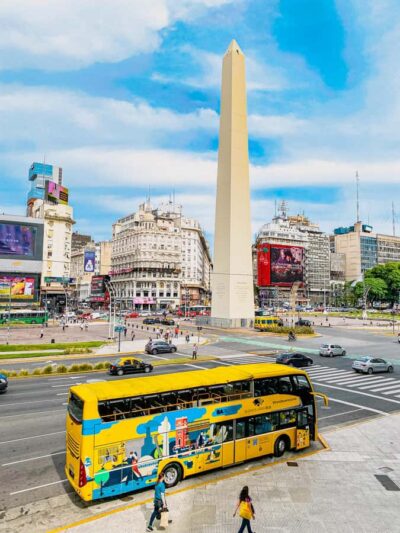
Buenos Aires Hop-On Hop-Off Bus and Exclusive Benefits
Read our review →