Reviewed · BUENOS AIRES TOURS
La Boca Out off the Beaten Track
La Boca has more stories than its painted streets. This small-group walk with Paola De Luca reaches immigrant landmarks, working-class art, a former conventillo, and corners most short visits miss. I like the personal connection: Paola grew up as a neighbor in La Boca, and I love that the tour includes coffee in an old café dating from 1882. The main consideration is pace: 150 minutes on foot may feel tiring in intense heat, especially since much of the experience takes place outdoors.
This is not a quick photo stop at Caminito. You get context for the neighborhood’s immigrants, mutual-aid groups, anarchist newspapers, tango culture, religion, and fierce loyalty to Boca Juniors. The drawback is that the Boca Juniors stadium is viewed from outside, and the Quinquela Martín museum costs extra if you choose to enter.
In This Review
- Key points to know before booking
- Why this La Boca walk feels different
- Starting beside the harbor and old warehouses
- Inside a corrugated-metal conventillo
- Meeting Argentina’s first volunteer firefighters
- Murals that explain more than color
- Anarchist newspapers, bordellos, football, and faith
- Caminito, tango, and the final coffee
- The Quinquela Martín option
- Is $35 a fair price?
- Who should book this experience?
- Should you book La Boca Out off the Beaten Track?
- FAQ
- Where does the tour begin?
- Where does the tour finish?
- How long does the experience last?
- What languages are available?
- How large is the group?
- Is coffee included?
- Is food included?
- Are the firefighter station and conventillo included?
- Is the Quinquela Martín museum ticket included?
- Can I cancel for a full refund?
- Can I use an electric wheelchair?
- Who may find the tour unsuitable?
Key points to know before booking
- A local guide gives La Boca a personal voice: Paola spent her childhood and youth in the neighborhood and connects street scenes with her own memories.
- The tour goes beyond Caminito: You visit the harbor, old warehouses, a picturesque train station, murals, a conventillo, and buildings linked to early twentieth-century social life.
- Two unusual interiors are included: Entry to the first volunteer firefighter station in Argentina and a corrugated-metal conventillo cultural center are part of the price.
- The coffee stop has real character: Your included drink comes at a notable café dating to 1882, a fitting end to a walk about old La Boca.
- Art is explained, not simply photographed: Murals and fileteado are connected to social issues, local identity, tango, and the neighborhood’s working people.
- The group is limited to 10 people: That makes questions and conversation easier, particularly with a guide who knows the area personally.
Why this La Boca walk feels different
La Boca is often reduced to a strip of bright façades, tango poses, and souvenir shops. Those are part of the neighborhood, but they are only the front page. This experience takes you through the forces that shaped La Boca: migration, poverty, solidarity, football, faith, and art.
I like the way the route joins these subjects instead of treating them as separate sights. A fire station tells you about mutual assistance. A tenement house shows how new arrivals found shelter. A mural gives a later generation a way to speak about social problems. Together, the stops help you see La Boca as a community, not just a colorful backdrop.
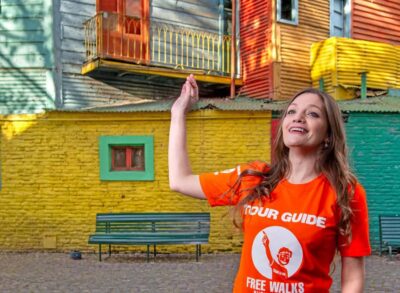
Paola’s background matters here. She grew up in the neighborhood, so her commentary can move beyond dates and labels. Her strong English has been praised, and she also guides in Spanish. One especially useful quality is her attention to people in the group. During a very hot walk, she made a point of checking on everyone’s comfort.
The group limit of 10 is a good fit for this kind of tour. You are not being pushed through the streets in a large crowd. You can ask about a mural, a football tradition, or a building that catches your eye.
More things to do in Buenos Aires:
- Local Foodie Adventure in Buenos Aires with Sherpa Food Tours
★ 5.0 · 6,875 reviews - Buenos Aires City Private Tour with Local Guide
★ 5.0 · 3,475 reviews - Buenos Aires Small-Group City Tour
★ 5.0 · 2,226 reviews
Starting beside the harbor and old warehouses
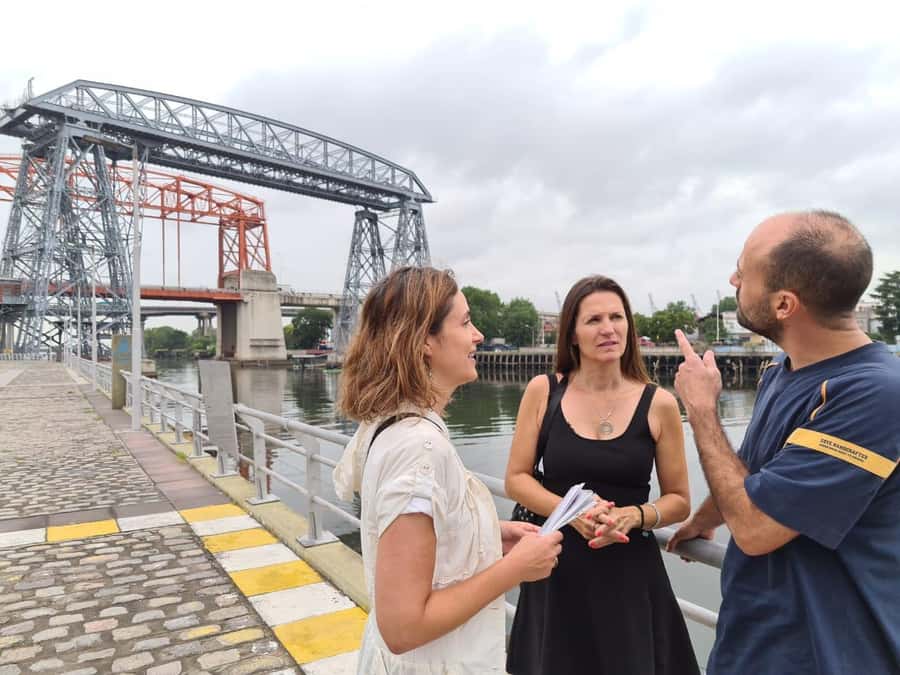
The meeting point is at Martín Rodríguez and Avenida Don Pedro de Mendoza. From there, the walk begins in the wider La Boca area, near the harbor and old warehouses.
This is a useful place to begin because La Boca’s identity is tied to movement. Immigrants arrived by ship and train, and the neighborhood grew around work, housing, associations, churches, and port activity. The picturesque train station is part of that story. Large numbers of immigrants arrived through this area, and the station helps you picture La Boca before it became a major sightseeing stop.
You will not simply hear that the neighborhood had immigrants. You will get a sense of the systems that helped people survive after arrival. That distinction makes the route worthwhile. It explains why mutual-aid groups, churches, football clubs, and neighborhood institutions became so important to people who had left their homes behind.
The harbor and warehouses also provide a useful contrast with Caminito. The famous street presents La Boca in a polished, highly photographed form. The opening section points toward the working neighborhood behind that image.
Inside a corrugated-metal conventillo
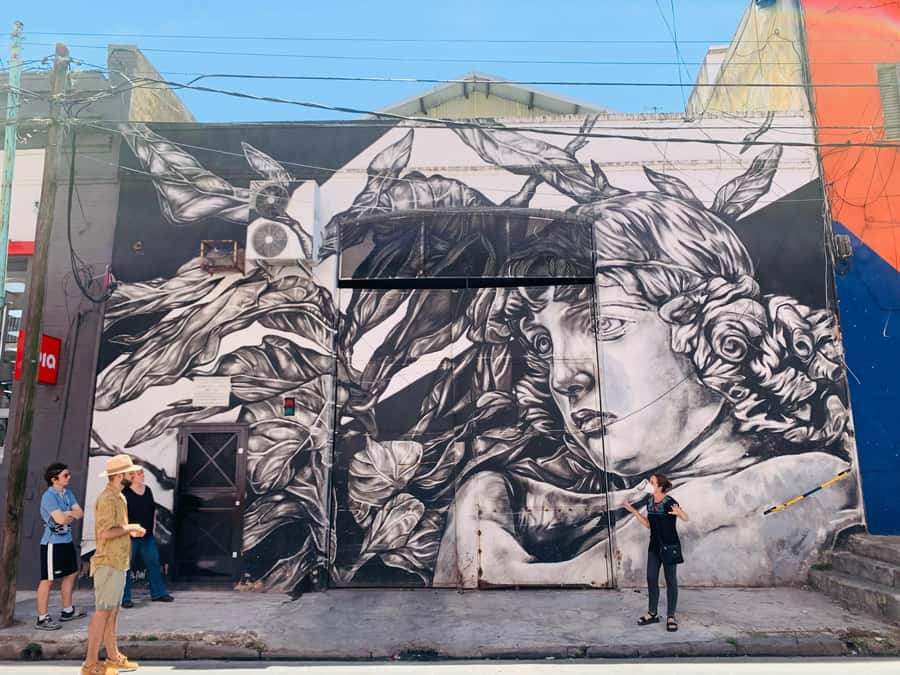
One of the most memorable stops is a former conventillo, a shared tenement house once used as shelter for immigrants. The building is clad in corrugated metal and now operates as a cultural center.
The visit gives you a chance to think about daily life rather than only admire façades. A conventillo was not a grand residence. It was practical housing for people arriving with limited money and few local connections. Several families could occupy a single building, sharing facilities and living close together.
That history adds weight to La Boca’s painted houses. The color and decoration are not just a style invented for photographs. They sit on top of a neighborhood shaped by crowded housing, migration, labor, and strong social ties.
The interior visit is included, which improves the value of the tour. You are not limited to looking at the exterior while Paola gives a quick explanation. You can enter and see how one of these buildings has been given a new cultural purpose.
The practical limitation is that this is a historic tenement, not a modern museum built for comfort. If you need a fully accessible experience, check carefully before booking. Electric wheelchairs are specifically not permitted, and the activity is not considered suitable for people over 95.
Meeting Argentina’s first volunteer firefighters
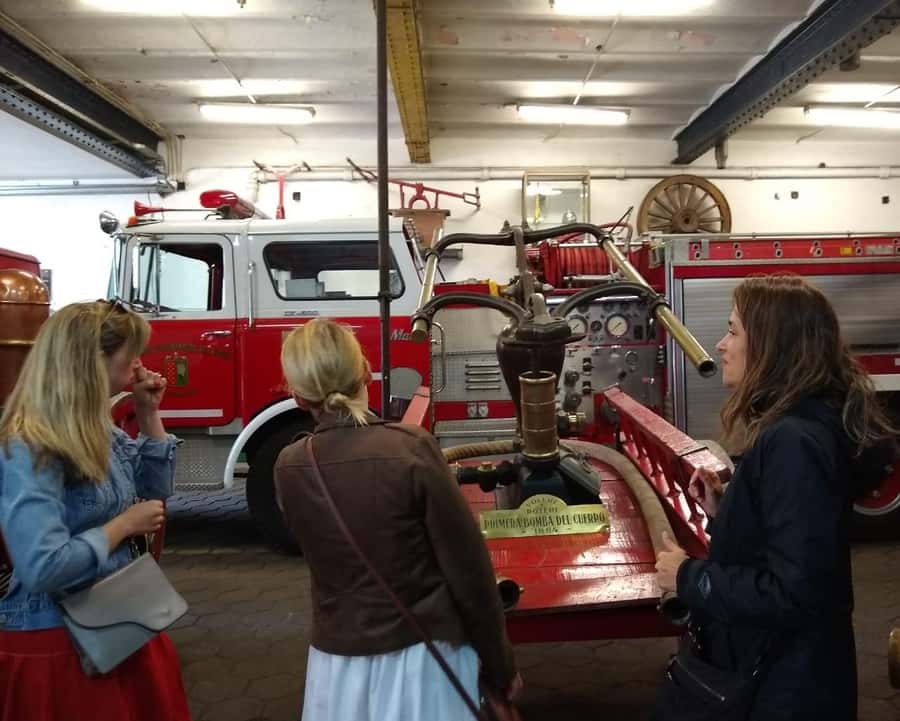
The tour also enters Argentina’s first Volunteer Firefighter Station. This is an unusual stop and one of the strongest reasons to choose this walk over a standard La Boca photo tour.
Volunteer fire departments tell an important neighborhood story. New communities often had to organize their own protection and services, especially in places filled with wooden structures, crowded homes, workshops, and warehouses. The station reflects the practical side of local solidarity.
I appreciate that the visit is included rather than treated as an optional extra. It gives the tour another indoor stop and adds a civic dimension to the experience. You are seeing an institution connected to how residents cared for one another.
The station is not presented as a theme-park attraction. Its value comes from understanding why it exists and what it represents. Paola’s local perspective should help connect the building to the wider story of La Boca’s mutual-assistance associations.
A completely different kind of day:
- Buenos Aires Hop-On Hop-Off Bus, Free Walking Tours & Discounts
★ 4.5 · 2,218 reviews - Buenos Aires: Piazzolla Tango Show with Optional Dinner
★ 4.4 · 2,122 reviews - Buenos Aires: City Highlights Guided Tour with Transfer
★ 4.7 · 1,946 reviews - Buenos Aires: Hop-On Hop-Off City Bus Tour
★ 4.2 · 1,855 reviews
Murals that explain more than color
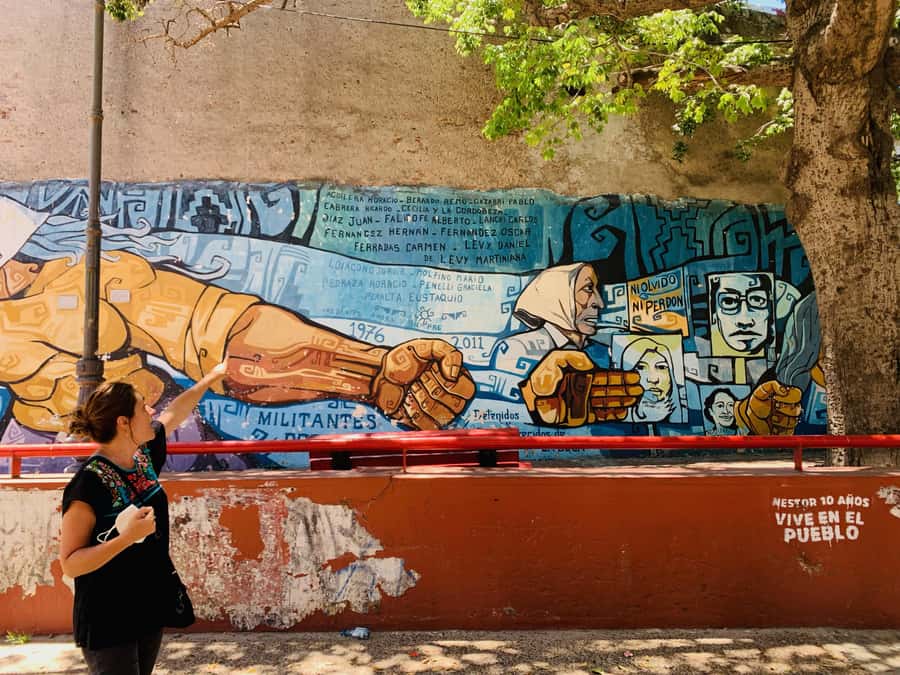
La Boca’s murals can be easy to admire and easy to misunderstand. This tour takes time to discuss their social themes, so you are not left with nothing more than a bright wall and a camera opportunity.
The artwork reflects different social issues and helps show how public art can carry local arguments, memories, and hopes. That is especially useful in La Boca, where painted surfaces are part of the neighborhood’s public language.
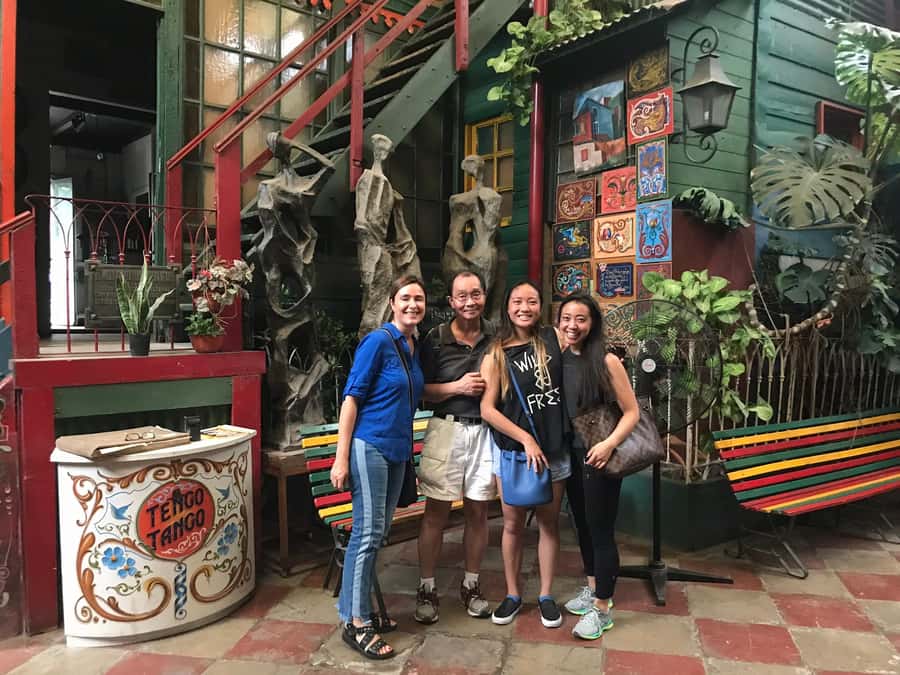
You will also encounter fileteado, the decorative painted lettering and ornament associated with Buenos Aires. Near Caminito, it appears alongside tango imagery and other local symbols. Paola’s explanations can help you understand the references instead of treating every painted figure as generic Argentine decoration.
The reviews of the experience repeatedly praise this kind of interpretation. One of the strongest points is that Paola explains the background of the paintings, making them easier to read. I would choose this tour if you care about the meaning behind street art and not just the best angle for a photograph.
Anarchist newspapers, bordellos, football, and faith
The route includes old buildings connected to anarchist newspapers and bordellos from the early twentieth century. These stops broaden the story again. La Boca was not only a port neighborhood with colorful houses. It was also a place where political ideas circulated and where entertainment, nightlife, and hardship existed side by side.
You will also see two major local icons from outside: Boca Juniors Stadium and the Salesian Church. The stadium visit is exterior only, so do not book this expecting a stadium tour or access to the pitch. Still, its location in La Boca makes it an important part of the neighborhood’s identity.
Football here is more than a sporting subject. Boca Juniors is deeply tied to local pride, and Paola’s talks about the club and its place in the neighborhood have been singled out as especially engaging. If you want to understand why football can shape the soul of a district, this part of the walk will likely be important to you.
The Salesian Church represents the other major refuge named on the route: religion. Churches helped root communities that had arrived with little security, while football clubs gave later generations another source of belonging. Seeing both helps you understand how La Boca built a shared identity.
Caminito, tango, and the final coffee
The walk finishes at Caminito, where tango and fileteado appear around every corner. This is the most recognizable part of La Boca, but it works better at the end of the tour.
By the time you reach Caminito, you have already learned about the people and institutions behind the image. The colorful streets then feel less like a decorative display and more like the public face of a complicated neighborhood.
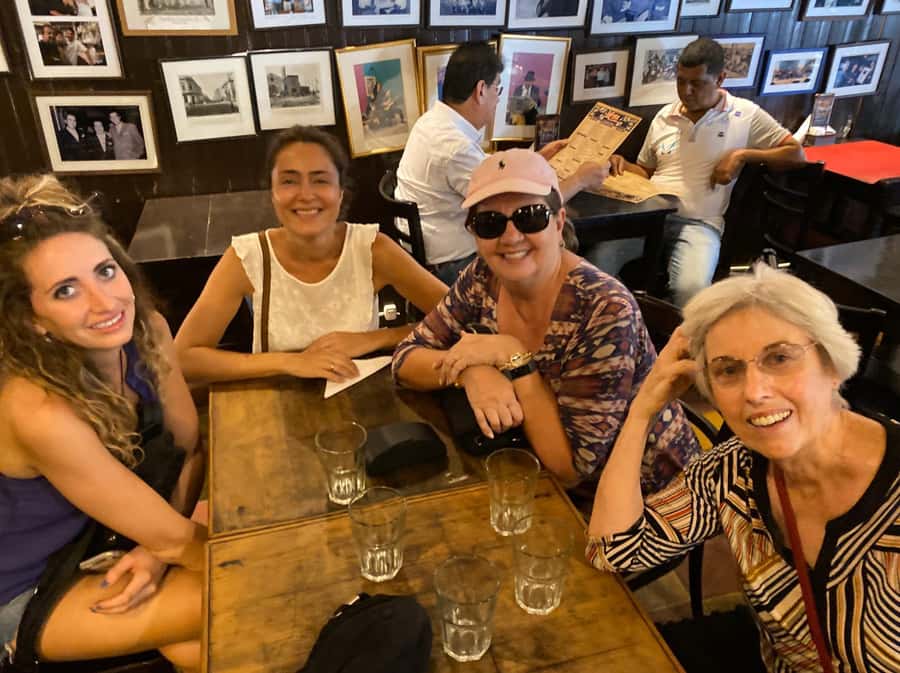
A coffee at a notable café dating from 1882 follows the walk. The coffee is included, while food is not. This is a welcome pause after an outdoor route, particularly in hot weather, and it gives you time to continue the conversation with Paola.
The café stop also fits the theme of the experience. You are not ending at a generic modern chain. You are sitting in an old Buenos Aires institution, surrounded by the kind of setting that suits a neighborhood built on immigration and working-class culture.
Do not expect the coffee stop to replace a meal. If you need lunch, plan for that separately. The stated duration is 150 minutes, with roughly two hours of guided walking and a 30-minute coffee break.
The Quinquela Martín option
The route can also include the Museum of Fine Arts of La Boca, associated with Benito Quinquela Martín. Part of the building was his home.
Quinquela Martín is an important name for understanding La Boca’s artistic identity. The museum offers a more formal setting for the art that the walk introduces through murals, painted houses, and neighborhood symbols.
The museum ticket is not included in the $35 price. That is fair to know before you arrive, because the tour’s advertised value rests on the included firefighter station, conventillo, and coffee, not on free museum admission.
If you are strongly interested in Argentine art, paying separately may be worthwhile. If you prefer the social history and street art side of the experience, you can finish at Caminito without adding the museum.
Is $35 a fair price?
At $35 per person, this is a reasonable price for a 150-minute small-group experience, especially because three useful extras are included: the firefighter station, the conventillo, and coffee.
The value is not in the number of famous sights. A standard self-guided visit can take you to Caminito and the stadium exterior for less money. The added value here is access, interpretation, and local connection. Paola brings you inside places you might otherwise pass, then explains how they fit into La Boca’s social story.
The group limit of 10 also matters. A private tour would cost more, while a large group would make it harder to ask questions or hear personal stories. This sits in a practical middle ground.
I would not choose it if your only goal is a fast introduction to Buenos Aires or a stadium visit. I would choose it if you want the neighborhood explained by someone who grew up there and you are happy to spend much of the time walking outdoors.
The booking terms are flexible: you can reserve and pay later, and cancellation is free up to 24 hours before the start for a full refund. Starting times depend on availability, so check the schedule before making other plans.
Who should book this experience?
I would recommend this tour to first-time visitors who want more than the standard Caminito circuit. It also suits repeat visitors who have already seen the colorful streets and now want the neighborhood’s social and artistic background.
It is a particularly good fit for:
- People interested in immigration and urban history
- Art lovers who want mural and fileteado context
- Football fans curious about Boca Juniors’ local importance
- Visitors who prefer small groups and conversation
- English-speaking or Spanish-speaking visitors seeking a local guide
- Anyone who enjoys personal stories alongside historical facts
You should think twice if you dislike walking, struggle in hot weather, or need an electric wheelchair. Jewelry, alcohol, and drugs are not allowed. Food is not included, and the museum entrance costs extra.
Should you book La Boca Out off the Beaten Track?
Book it if you want to understand La Boca rather than simply photograph it. The route brings together the harbor, immigrant housing, volunteer firefighters, murals, politics, religion, football, tango, and an old café in a sensible two-and-a-half-hour walk.
Paola is the central reason to choose it. Her childhood connection to La Boca gives the experience warmth and local detail, while her clear English and Spanish make the historical material easy to follow. Her care in hot weather is another practical plus.
Skip it if you want a short, polished sightseeing loop with little walking or if stadium access is your main purpose. For everyone else, the $35 price buys something more useful than a collection of photo stops: a way to see why La Boca looks, feels, and remembers the way it does.
FAQ
Where does the tour begin?
It begins at the corner of Avenida Don Pedro de Mendoza and Martín Rodríguez in La Boca.
Where does the tour finish?
The experience finishes in Caminito, also in La Boca.
How long does the experience last?
The total duration is 150 minutes.
What languages are available?
The live guide conducts the experience in English and Spanish.
How large is the group?
The group is limited to 10 participants.
Is coffee included?
Yes. Coffee at a notable café is included.
Is food included?
No. Food is not included in the price.
Are the firefighter station and conventillo included?
Yes. Entrance to the volunteer firefighter station and the conventillo is included.
Is the Quinquela Martín museum ticket included?
No. If you choose to visit the museum, you must pay the entrance fee separately.
Can I cancel for a full refund?
Yes. You can cancel up to 24 hours in advance for a full refund.
Can I use an electric wheelchair?
No. Electric wheelchairs are not permitted for this activity.
Who may find the tour unsuitable?
The experience is listed as not suitable for people over 95 years old.
Just added in Buenos Aires
- Discover Buenos Aires’ independent art scene — Ticket included★ 5.0 · 30 reviews
- Photo Session in Buenos Aires★ 5.0 · 26 reviews
- Your Private Photographer in Buenos Aires★ 5.0 · 4 reviews
- Yerba Mate Workshop – Learn to Drink Mate like a Local!★ 5.0 · 11 reviews
- Your Personal Photographer in Buenos Aires★ 5.0 · 24 reviews
- BA: Wine Tasting and Blending Experience in Palermo★ 5.0 · 1 review
- Winery and Tasting Experience in Buenos Aires★ 5.0 · 1 review
- Taste of Tradition: Yerba Mate & Alfajores Experience★ 4.0 · 5 reviews
Buenos Aires Tours, compared.
Local Foodie Adventure in Buenos Aires with Sherpa Food Tours
Read our review →
Buenos Aires City Private Tour with Local Guide
Read our review →
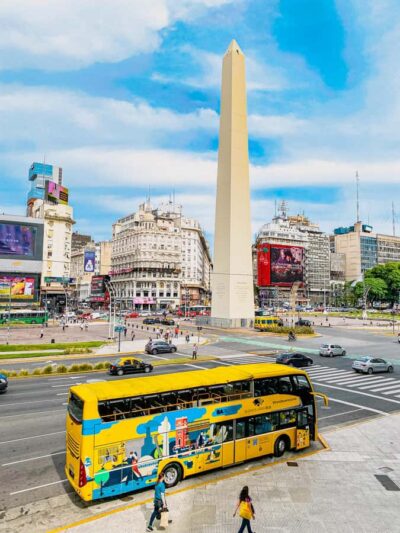
Buenos Aires Hop-On Hop-Off Bus and Exclusive Benefits
Read our review →