Reviewed · BUENOS AIRES TOURS
From Colonialism to Eclecticism, Buenos Aires arquitectonica
Buenos Aires rewards anyone who looks up. This three-hour walking tour makes the city’s buildings the main story, moving from the Cabildo and Casa Rosada to the Brutalist Banco Hipotecario, Gran Rex, the Obelisk, and Teatro Colón. I like the small group limit of four, which gives you room to ask questions, and I like the mate tasting, a simple but meaningful way to connect architecture with Argentine life. The main consideration is the amount of walking, much of it outdoors, so comfortable shoes and sun protection matter.
The route covers famous sights, but it also gives attention to buildings you could easily pass without a second glance. Juan Ignacio and Loli lead the experience in English or Spanish, and their approach combines architectural facts with cultural stories, including a traditional snack and water. At $25 per person, the value is strongest if you want context rather than only photographs.
In This Review
- Key points at a glance
- Why this architecture walk is different
- Starting at Plaza de Mayo and Bolívar 65
- Reconquista Street and the Banco Hipotecario facade
- The CCK and the former Post and Telegraph Palace
- Corrientes Avenue, Gran Rex, and the Opera
- The Obelisk and the 9 de Julio view
- Plaza Lavalle and two very different institutions
- Mate, Argentine snacks, and a cultural finish
- Finishing at Teatro Colón
- Is three hours and $25 good value?
- Who should book this Buenos Aires architecture tour?
- Should you book From Colonialism to Eclecticism?
- FAQ
- How long does the Buenos Aires architecture tour last?
- Where does the tour begin?
- Where does the tour finish?
- What languages are available?
- How large is the group?
- Is the Teatro Colón entrance included?
- What is included in the price?
Key points at a glance
- Only four participants: The small group makes it easier to customize the walk around architecture, culture, or particular buildings.
- A sharp change of styles: You move from colonial Buenos Aires at Plaza de Mayo to Art Deco, modern design, Brutalism, and grand theaters.
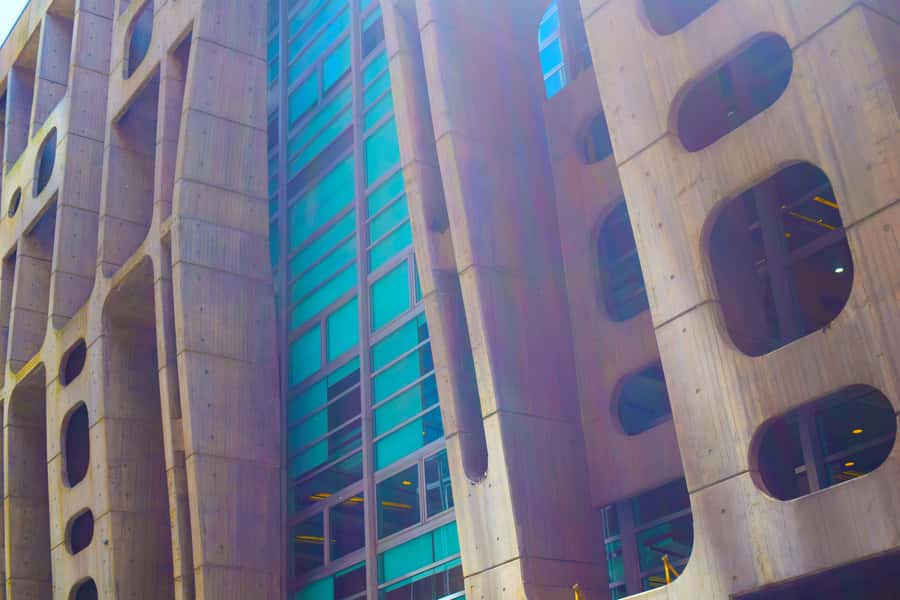
- Banco Hipotecario is a highlight: Its unusual Brutalist facade gives the tour a less familiar architectural focus.
- Mate is part of the lesson: You taste Argentina’s signature drink while learning how it fits daily culture.
- Three hours on foot: The route links Plaza de Mayo, the CCK, Corrientes Avenue, the Obelisk, Plaza Lavalle, and Teatro Colón.
- Optional Teatro Colón visit: The walk finishes at the theater, with the option to remain for its guided interior visit. The entrance is not included.
Why this architecture walk is different
Many Buenos Aires sightseeing routes treat buildings as backdrops for political events. This one reverses the order. You use the buildings to understand how the city changed, who shaped it, and how different periods now share the same streets.
That matters in the Microcentro, where a colonial civic building can sit near a severe concrete office block and a richly decorated theater. You do not need to be an architecture specialist to enjoy the contrast. The guide explains what to notice, then gives you time to look for details yourself.
I especially like the balance between major landmarks and less obvious stops. Plaza de Mayo is essential, but the Banco Hipotecario and the Julio Argentino Roca School provide a more unusual angle. The route is not simply a greatest-hits parade.
Juan Ignacio and Loli are named as the guides for this experience. Juan Ignacio brings a strong command of architects, periods, and dates, while Loli adds stories connected to South American culture. The useful combination is clear: one guide helps you read the structure, and the other helps place it in local life.
More things to do in Buenos Aires:
- Local Foodie Adventure in Buenos Aires with Sherpa Food Tours
★ 5.0 · 6,875 reviews - Buenos Aires City Private Tour with Local Guide
★ 5.0 · 3,475 reviews - Buenos Aires Small-Group City Tour
★ 5.0 · 2,226 reviews
Starting at Plaza de Mayo and Bolívar 65
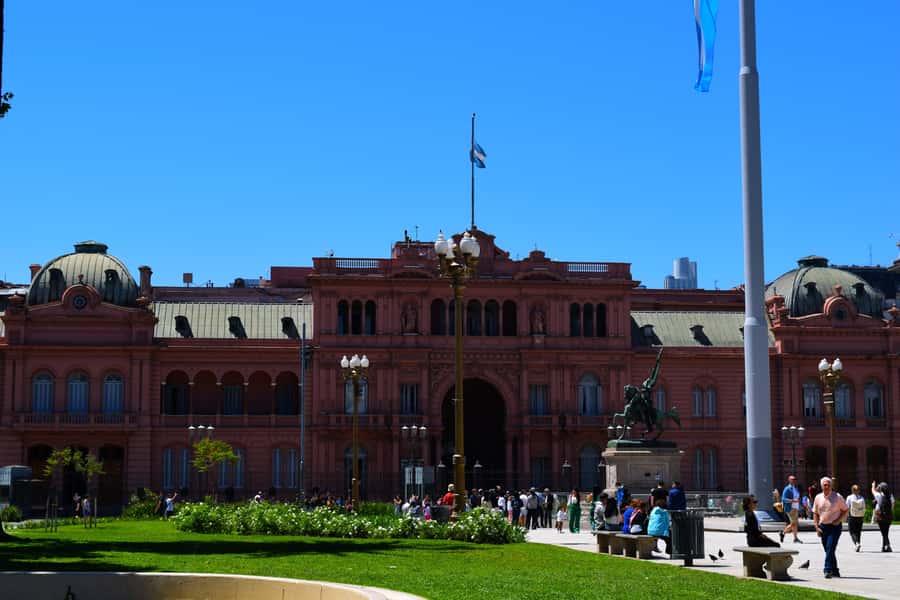
The walk begins at Bolívar 65, at the intersection of Bolívar and Avenida de Mayo, right by Plaza de Mayo. This is a sensible starting point because the square gathers several of Argentina’s most important buildings in one view.
You look at the Cabildo, the former seat of colonial government, then the Metropolitan Cathedral, Casa Rosada, and Banco Nación. Each building points to a different part of the city’s public life. The Cabildo connects to the colonial period, the cathedral brings religious architecture into the picture, Casa Rosada remains the country’s best-known seat of government, and Banco Nación shows the importance of finance in the capital.
The guide’s role here is not just to identify each facade. You learn why these buildings matter to Argentina’s political and social life, and how their styles reflect different periods. Plaza de Mayo is a busy place, so expect an open urban setting rather than a quiet architectural study.
Because the tour is outdoors, the time of day affects your comfort. Bring sunglasses, a hat, sunscreen, and clothes that work for three hours of walking. Water is included, but it is still wise to arrive prepared for the weather.
Reconquista Street and the Banco Hipotecario facade
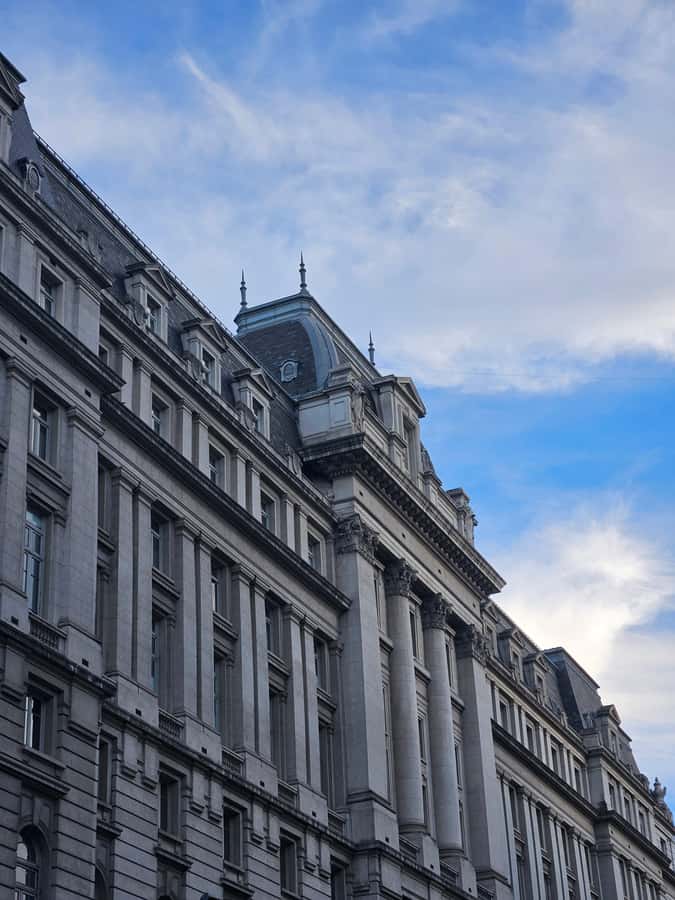
From Plaza de Mayo, the group heads north along Reconquista Street. This part of the route helps show how Buenos Aires changes block by block.
The stop at Banco Hipotecario is one of the most appealing parts for anyone who wants something beyond the classic circuit. Its Brutalist facade is a strong contrast to the older civic buildings near Plaza de Mayo. Brutalism often favors heavy forms, exposed-looking concrete, and a direct approach to structure. Here, the value is in learning how to read that visual language rather than simply labeling the building as modern.
This stop also makes the broader point that Microcentro is not tied to one style. Different architects and eras coexist in a relatively compact area. You may begin noticing how entrances, windows, materials, and massing change from one block to the next.
The tour can be adjusted to your interests, according to the experience details. If you already care about modern architecture, you can ask for more attention to buildings like Banco Hipotecario. If you are more interested in culture or public spaces, the guides can shape the conversation in that direction.
The CCK and the former Post and Telegraph Palace
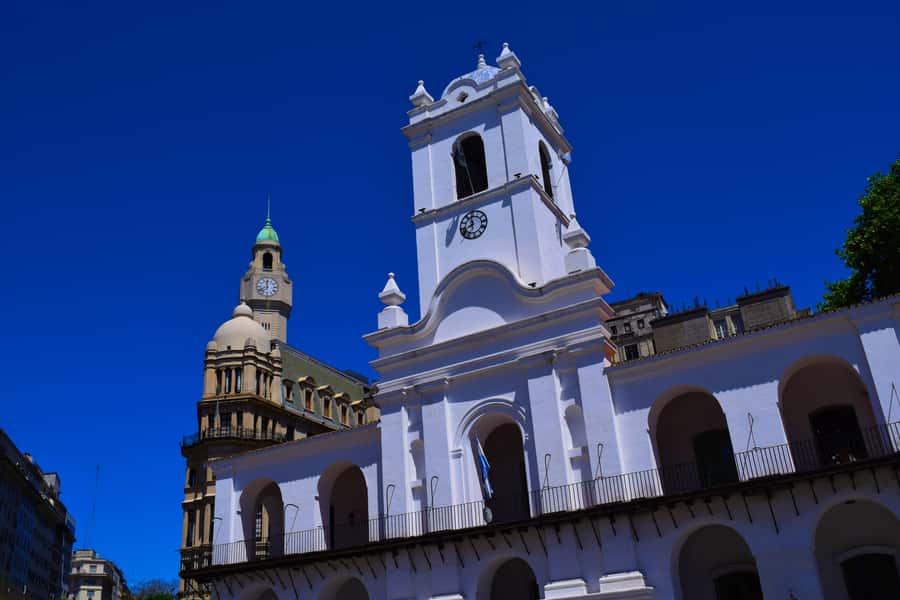
The next major stop is the Centro Cultural Kirchner, known previously as the Palacio de Correos y Telégrafos, or Post and Telegraph Palace. The group pauses outside to examine its facade and learn about its story.
This is a useful stop because it links architecture with communication. A post and telegraph palace was not an ordinary office. It represented a large public system and the importance of connecting the capital with the rest of the country. The building’s later identity as a cultural center adds another layer to the discussion.
You should expect a walk and exterior viewing here, not an included interior visit. That distinction matters if you are planning your day around museums or cultural buildings. The tour gives you the architectural setting and background, while the main focus remains the city street.
The CCK also helps break up the route. After the older facades around Plaza de Mayo and the sharp modern character of Banco Hipotecario, this building adds another period and purpose to the sequence.
A completely different kind of day:
- Buenos Aires Hop-On Hop-Off Bus, Free Walking Tours & Discounts
★ 4.5 · 2,218 reviews - Buenos Aires: Piazzolla Tango Show with Optional Dinner
★ 4.4 · 2,122 reviews - Buenos Aires: City Highlights Guided Tour with Transfer
★ 4.7 · 1,946 reviews - Buenos Aires: Hop-On Hop-Off City Bus Tour
★ 4.2 · 1,855 reviews
Corrientes Avenue, Gran Rex, and the Opera
The route then reaches Corrientes Avenue, a major center for Buenos Aires nightlife, culture, and performances. You pass two of its famous theaters, Gran Rex and the Opera.
These theaters are not presented as isolated monuments. They are part of the avenue’s public life, where shows and entertainment have drawn crowds over time. The guide explains their former heyday and their continuing role as places for performances and congregation.
Gran Rex is especially useful for showing how a theater can shape the identity of a street. The Opera adds another major cultural landmark nearby. You get an architectural lesson, but also a sense of why Corrientes matters to Buenos Aires beyond its traffic and commercial activity.
There is a practical limitation here: the tour does not include theater interiors. You view the buildings from the route and hear about their history. If you want a full theater experience, you will need to arrange that separately.
The Obelisk and the 9 de Julio view
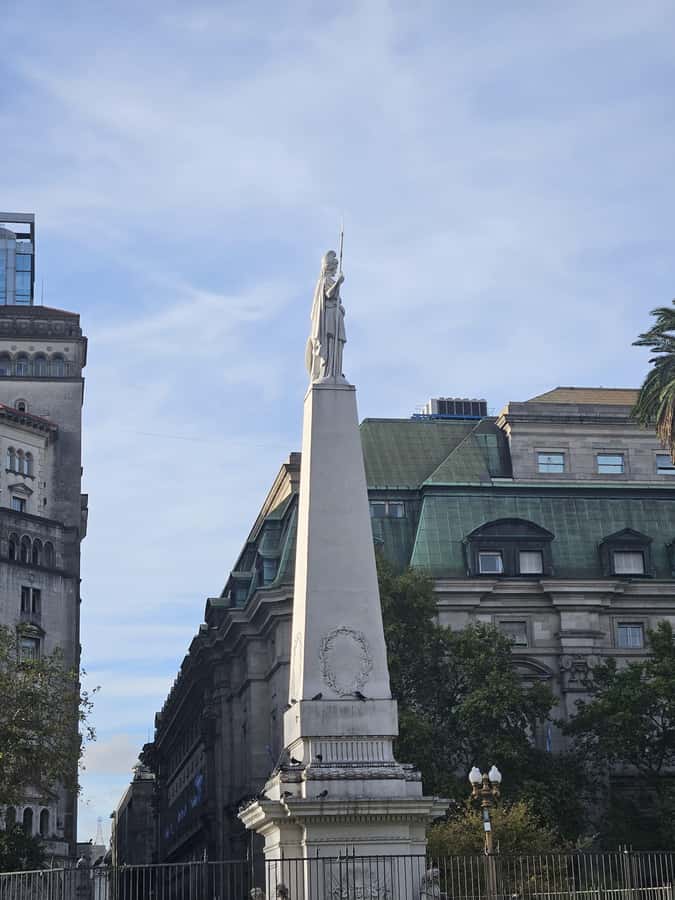
The first part of the walk ends at the Obelisk and Plaza de la República. This is one of the city’s most recognizable points, but the tour treats it as more than a photo stop.
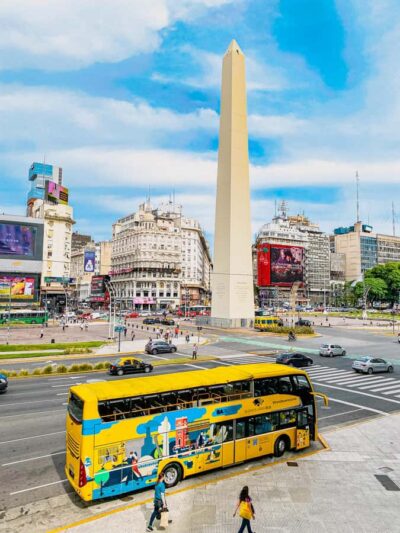
You learn about the Obelisk’s importance in Argentina’s political and social life. Its location also makes the scale of central Buenos Aires easier to understand. Avenida 9 de Julio and Corrientes meet here in one of the city’s busiest intersections, creating a dramatic setting for public gatherings, celebrations, and demonstrations.
A short pause at the Obelisk staircase provides a panoramic viewpoint over the crossing. The information describes this as a chance for some of the finest views of the intersection. It is a useful moment to stop, take photographs, and let the earlier architectural comparisons settle.
The setting can be noisy and crowded, and the tour does not promise a long rest period. Still, the pause is well placed. After several building facades, you get a wider view of how streets, traffic, public space, and architecture fit together.
Plaza Lavalle and two very different institutions
The final section takes you along Diagonal Norte to Plaza Lavalle. This square brings together two notable buildings: the Courts Palace and the Julio Argentino Roca School.
The Courts Palace gives you another major civic building to compare with the government structures at Plaza de Mayo. Across from it, the school offers a different kind of public architecture. Looking at these buildings together helps you see how Buenos Aires assigned architectural weight to courts, education, government, finance, and entertainment.
This is also a good point in the route for questions. The small group format matters here because you are not trying to speak over a large crowd. With no more than four participants, you can ask about a particular style, architect, period, or facade detail.
The route remains a walking tour, so Plaza Lavalle is not simply a final sitting area. Think of it as another outdoor sightseeing stop before the cultural finish at Teatro Colón.
Mate, Argentine snacks, and a cultural finish
The mate tasting adds something that a standard architecture tour often lacks. You learn about the drink’s place in Argentine culture and taste it during the walk, along with water and a traditional snack.
This is not a separate food tour. The tasting is brief, but it gives the architectural discussion a human connection. Buildings tell you about institutions and periods. Mate helps you understand an everyday tradition shared through social customs.
One of the guides provides cookies or a similar typical snack, according to the experience details. That small touch can be useful if you have not yet tried a local treat, but it should not be mistaken for lunch. Lunch is not included, and three hours of walking may leave you ready for a proper meal afterward.
I would pay attention to the explanation rather than treating mate as just a drink sample. The point is the tradition around it, not only the flavor. If you have never tasted mate, this gives you a low-key introduction without requiring a separate cultural activity.
Finishing at Teatro Colón
The walk ends at Teatro Colón, one of Buenos Aires’ major cultural landmarks. The building provides a fitting finish because the route has already introduced you to Gran Rex and the Opera. You can now compare several theater buildings and see how each contributes to the city’s identity.
An interior guided visit to Teatro Colón is optional and not included in the $25 price. This gives you useful flexibility. If you are short on time or have another appointment, you can finish with the exterior. If you want to continue, you can stay for the theater’s own guided visit, subject to its arrangements and entrance cost.
There is a small point to clarify before booking. The activity information names Teatro Colón as the finish, while the meeting details also say the activity ends back at the meeting point. Confirm the exact end arrangement and timing if you need to meet transport or begin another scheduled visit.
Is three hours and $25 good value?
At $25 per person, this is a modestly priced experience for a three-hour guided walk, especially with a maximum of four people. You are paying for interpretation, not admission tickets, transport, or a meal.
The price makes good sense if you would otherwise walk through Microcentro without understanding the architectural changes around you. The guide helps you connect the Cabildo, Banco Hipotecario, CCK, theaters, Obelisk, courts, school, and Teatro Colón into one story.
The value is less compelling if you only want quick photographs of the headline sights. Some stops are exterior views, and the Teatro Colón entrance is extra. You also need to be comfortable walking between locations.
The small group is the strongest value point. A larger tour can explain the same buildings, but a group of four gives you better access to the guides and makes customization more realistic. The experience is offered in English or Spanish, so choose the language in which you will ask the most detailed questions.
Free cancellation is available up to 24 hours in advance for a full refund, and you can reserve now and pay later. Those policies make it easier to fit the walk into a changing Buenos Aires schedule.
Who should book this Buenos Aires architecture tour?
I would recommend it to you if you enjoy cities through their streets rather than only through museums. It suits first-time visitors who want an introduction to central Buenos Aires, as well as repeat visitors who have already seen Plaza de Mayo and the Obelisk but want a sharper look at the surrounding buildings.
It is also a good fit for students, photographers, design fans, and anyone curious about how colonial, civic, financial, Brutalist, modern, and theater architecture share the same central districts. You do not need technical training. The guides explain the styles in an approachable way.
You may want a different activity if your priority is entering every landmark, sitting down often, or having a full meal included. This is an outdoor walking experience with several photo stops and only an optional interior visit at Teatro Colón.
Wear comfortable shoes. Bring sunglasses, a hat, sunscreen, and comfortable clothing. The included water, snack, and mate tasting are helpful, but they do not replace lunch.
Should you book From Colonialism to Eclecticism?
Book this tour if you want Buenos Aires to make more sense after you leave the square. The route gives you famous buildings, less familiar facades, architectural comparisons, and a small taste of local culture without taking up a full day.
I would choose it especially for the Banco Hipotecario stop, the four-person group, and the combination of architectural detail with mate and Argentine traditions. Skip it only if you prefer indoor visits or a faster landmark checklist. For $25, it offers a thoughtful way to read the city one building at a time.
FAQ
How long does the Buenos Aires architecture tour last?
The tour lasts three hours. You should expect to spend that time walking between outdoor sights and stopping for explanations, photographs, and the mate tasting.
Where does the tour begin?
The meeting point is Plaza de Mayo, at Bolívar 65, near the intersection of Bolívar and Avenida de Mayo.
Where does the tour finish?
The listed finish is Teatro Colón. The meeting information also says the activity ends back at the meeting point, so confirm the exact end location when booking if this affects your plans.
What languages are available?
The live tour guide is available in English or Spanish.
How large is the group?
The experience is limited to four participants, making it a small-group tour with room for questions and some customization.
Is the Teatro Colón entrance included?
No. The walking tour finishes at Teatro Colón, and you have the option to remain for a guided interior visit, but the entrance is not included.
What is included in the price?
The price includes an English- or Spanish-speaking guide throughout the tour, water, a traditional Argentine snack, and a mate tasting. Lunch and the Teatro Colón entrance are not included.
Just added in Buenos Aires
- Discover Buenos Aires’ independent art scene — Ticket included★ 5.0 · 30 reviews
- Photo Session in Buenos Aires★ 5.0 · 26 reviews
- Your Private Photographer in Buenos Aires★ 5.0 · 4 reviews
- Yerba Mate Workshop – Learn to Drink Mate like a Local!★ 5.0 · 11 reviews
- Your Personal Photographer in Buenos Aires★ 5.0 · 24 reviews
- BA: Wine Tasting and Blending Experience in Palermo★ 5.0 · 1 review
- Winery and Tasting Experience in Buenos Aires★ 5.0 · 1 review
- Taste of Tradition: Yerba Mate & Alfajores Experience★ 4.0 · 5 reviews
Buenos Aires Tours, compared.
Local Foodie Adventure in Buenos Aires with Sherpa Food Tours
Read our review →
Buenos Aires City Private Tour with Local Guide
Read our review →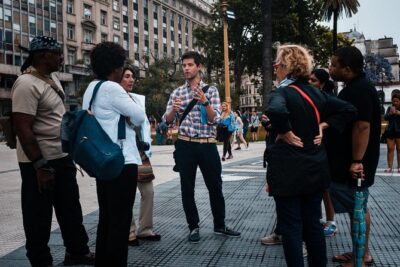
Buenos Aires Hop-On Hop-Off Bus and Exclusive Benefits
Read our review →