Reviewed · BUENOS AIRES TOURS
Forging Democracy: Discover the Argentine Fight for Human Rights
History feels different when you walk where power was exercised. This Buenos Aires tour connects the former dictatorship, the return of democracy in 1983, and the continuing work of human rights groups to places you can see in the city center. I like the historian guide and the way the walk links political events to real buildings. I also like the private format, which gives your group more room for questions.
The main consideration is the subject itself. This is not a light sightseeing stroll. You will discuss dictatorship, political instability, the Dirty War, and the struggle led by the Mothers of Plaza de Mayo. The three-hour route is a strong choice for curious visitors, but it may feel heavy if you are looking for only grand architecture and easygoing city stories.
In This Review
- Key points to know before booking
- Why this Buenos Aires walk matters
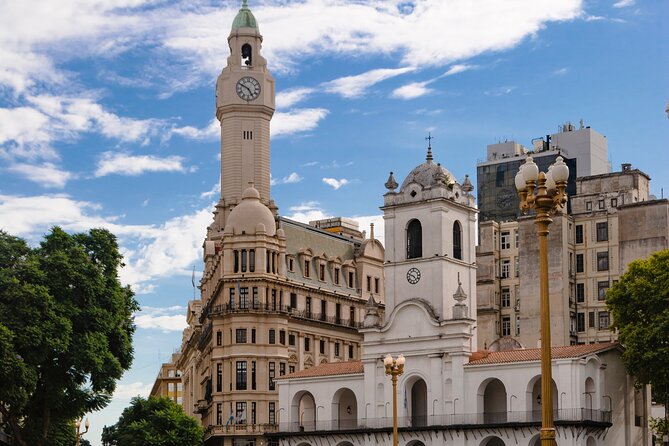
- Starting at the Cabildo on Bolívar Street
- Casa Rosada and the center of political power
- The main church and the Monserrat neighborhood
- Seeing the signs of Argentina’s Dirty War
- The Mothers of Plaza de Mayo and the fight for truth
- Ending at the Ministry of Defense
- What the private format adds
- Price, timing, and overall value
- Who should book this experience
- Cancellation and planning notes
- Should you book the democracy tour?
- FAQ
- How long does the experience last?
- Where does the tour begin?
- Where does the tour end?
- Is the tour private?
- Is a historian included?
- Can I cancel for a full refund?
Key points to know before booking
- A historian and activist leads the walk: The guide brings both academic background and personal commitment to the human rights subject.
- Casa Rosada is part of the political story: You spend time near Argentina’s Presidential Palace and the surrounding government buildings.
- The tour begins at the Cabildo: The colonial City Hall gives you an early point of reference for Argentina’s political past.
- The Mothers of Plaza de Mayo receive central attention: Their fight helped keep the issue of the disappeared and human rights in public view.
- It is a private three-hour experience: Only your group participates, and group discounts are available.
- The walk ends near the Ministry of Defense: The final location keeps the focus on the relationship between civilian democracy and military power.
Why this Buenos Aires walk matters
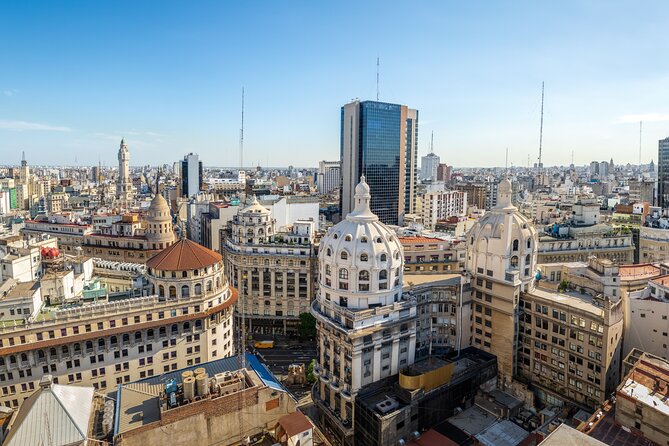
Buenos Aires offers grand avenues, cafés, painted buildings, and elegant plazas. It is easy to see the city as a beautiful capital and miss the political tension beneath the surface. This experience asks you to look again, especially at the area around Plaza de Mayo and the government buildings.
I like that the tour does not treat democracy as a finished story. Argentina returned to democratic rule in 1983, but the experience presents the following decades as part of an ongoing effort to protect that system. That idea gives the walk more weight than a simple account of past presidents or famous buildings.
The focus is also useful because Argentina’s dictatorship is not presented as an isolated episode. You learn about the unstable period that came before it, the reasons the dictatorship took hold, and the fight that followed. The guide’s task is to connect those stages without turning the walk into a long classroom lecture.
A historian and activist can add a particular kind of perspective. You are not only looking at monuments. You are considering how public spaces carry political meaning, how governments use institutions, and how ordinary people press for accountability. The available information identifies Manu as a guide who clearly brings that human rights focus to the route.
More things to do in Buenos Aires:
- Local Foodie Adventure in Buenos Aires with Sherpa Food Tours
★ 5.0 · 6,875 reviews - Buenos Aires City Private Tour with Local Guide
★ 5.0 · 3,475 reviews - Buenos Aires Small-Group City Tour
★ 5.0 · 2,226 reviews
Starting at the Cabildo on Bolívar Street
The meeting point is the Museo Nacional del Cabildo de Buenos Aires y de la Revolución de Mayo, at Bolívar 65. This is the city’s colonial City Hall, known simply as the Cabildo. Starting here gives the tour a useful time span, since the building points to an earlier period of Argentine civic and political life before the modern presidential palace and military ministries enter the picture.
I appreciate this opening because it avoids beginning with a list of names and dates. You start with a building that represents colonial administration and the growth of public institutions. From there, the guide can help you place the modern fight for democracy in a much longer story.
The stop is also practical. The Cabildo sits in the historic center, close to major sites in the Monserrat area and near public transportation. Arrive ready to walk and listen rather than expecting a museum visit with a long indoor section. The supplied details do not promise admission inside the Cabildo, so think of it primarily as the starting point for the guided route.
This is a good place to ask your first questions. If you want help separating Argentina’s colonial past, later political instability, and the dictatorship period, ask early. A private tour makes that sort of clarification easier than a large group walk.
Casa Rosada and the center of political power
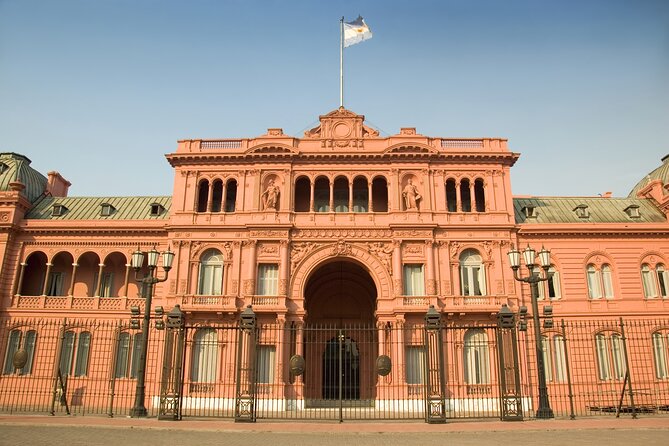
The route includes Casa Rosada, Argentina’s Presidential Palace. The listed time at this stop is about 10 minutes, and admission is free. That short stop tells you something about the purpose of the experience: the palace is a key reference point, but the tour is not built around a long palace visit or an interior tour.
Instead, Casa Rosada works as a place to discuss authority. The building represents the national executive and the public face of government. In this setting, the guide can explain how the surrounding area relates to dictatorship, the return of democratic rule, and the public demand for human rights.
I like this approach because political history becomes easier to grasp when you are standing beside the institutions involved. You can connect the idea of presidential power to an actual location rather than hearing about it in an abstract room. The nearby military buildings add another layer, helping the guide explain the relationship between civilian government and the armed forces.
Do not book this expecting a long architectural tour of Casa Rosada. The provided schedule gives only 10 minutes, so the value comes from the interpretation, not from seeing every corner of the palace. If you want a detailed palace interior visit, you will need to look for a separate experience.
The main church and the Monserrat neighborhood
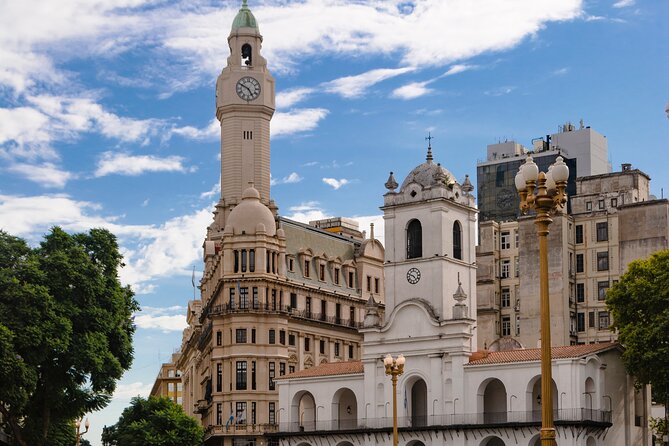
The walk also takes in Argentina’s main church, the seat of the Catholic Church in the country and the former diocese of Pope Francis. This is the Catedral Metropolitana, located in the historic center. The church adds a religious and civic dimension to the route, since it is part of the same central area where national politics, public demonstrations, and major institutions meet.
The information provided does not give a fixed visit length or promise entry inside. You should therefore expect the guide to use the church as part of the wider story rather than assume that this is a formal cathedral tour. The building’s importance comes from its role in Argentina’s public life and from its connection to Pope Francis before he became pope.
The Monserrat neighborhood gives the walk a sense of place. You are not moving between disconnected attractions. The Cabildo, Casa Rosada, the cathedral, and government buildings all sit within a compact part of central Buenos Aires, where colonial, religious, presidential, and military symbols share the same streets.
That concentration is one of the tour’s strengths. You can cover a great deal in three hours without spending the whole time in a vehicle. It also means the experience depends on walking and paying attention to the guide’s commentary. Comfortable shoes are sensible, though the supplied details do not state the exact walking distance or surface conditions.
A completely different kind of day:
- Buenos Aires Hop-On Hop-Off Bus, Free Walking Tours & Discounts
★ 4.5 · 2,218 reviews - Buenos Aires: Piazzolla Tango Show with Optional Dinner
★ 4.4 · 2,122 reviews - Buenos Aires: City Highlights Guided Tour with Transfer
★ 4.7 · 1,946 reviews - Buenos Aires: Hop-On Hop-Off City Bus Tour
★ 4.2 · 1,855 reviews
Seeing the signs of Argentina’s Dirty War
The most serious part of the walk is the discussion of the dictatorship and the Dirty War. The available account describes visible signs of that unstable period still present in central Buenos Aires. That detail matters because it suggests the tour looks for traces in the city rather than keeping the subject locked in a distant political timeline.
I would approach this section with patience. The tour is about the reasons behind the dictatorship, the damage it caused, and the work needed to restore democratic rule. It is not designed to make the past comfortable or tidy.
The guide may point out how public buildings and streets relate to the period, but the exact examples can vary by guide and route. What you can count on is a focus on the city center, the Presidential Palace, military buildings, and the continuing effort to sustain democracy more than 40 years after its restoration.
That last point is particularly valuable. Many history tours stop at a change of government and treat the problem as solved. This experience keeps going, asking you to consider why democratic systems need public pressure, memory, and protection even after elections return.
The Mothers of Plaza de Mayo and the fight for truth
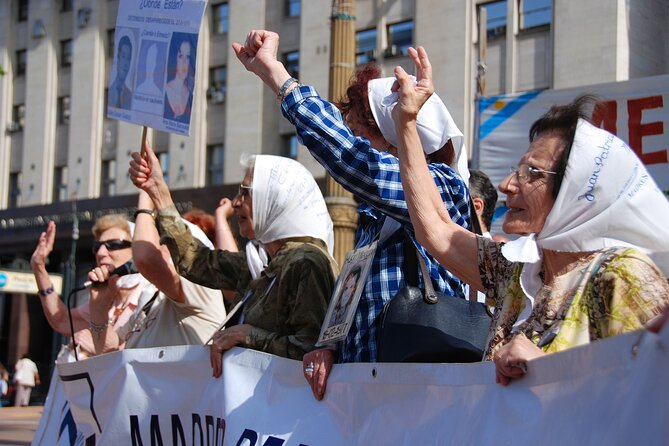
The Mothers of Plaza de Mayo are at the heart of the tour’s human rights story. Their movement is presented as part of the immense effort to challenge the dictatorship and help bring human rights abuses into public view. You learn about their role alongside other human rights organizations, not as a single isolated group.
This is where the experience moves beyond government buildings. Casa Rosada and the military ministries show where power sat. The Mothers show how citizens confronted that power. The contrast gives the route its moral center.
I like that the tour includes both political structure and personal courage. You are not asked to remember only presidents, generals, or official dates. You also consider the people who kept demanding answers and accountability when doing so was difficult and dangerous.
If you have already visited the Plaza de Mayo, this walk can still add value because the guide changes what you notice. The square is not merely a scenic stop near the cathedral and Casa Rosada. It becomes a place tied to public protest, memory, and the defense of democratic rights.
Expect the subject to be presented with feeling. The one available five-star account describes the tour as thought-provoking and recalls being repeatedly stunned by what the guide revealed about the period. That reaction fits the purpose of the walk, though you should not expect entertainment in the usual sightseeing sense.
Ending at the Ministry of Defense
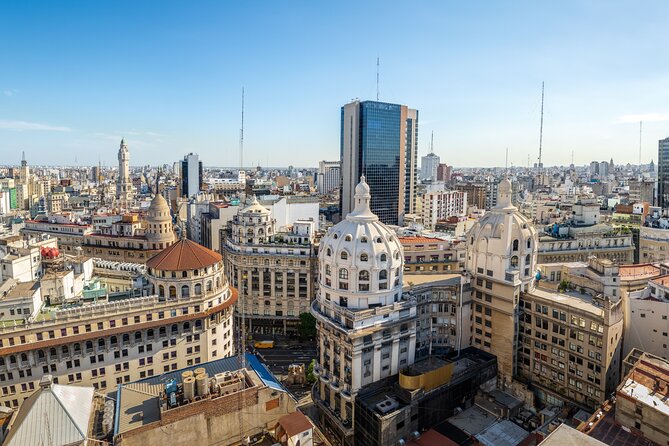
The tour ends at the Ministerio de Defensa, at Azopardo 250. This is a fitting endpoint because the route begins with civic institutions and presidential power, then brings military buildings into the discussion before finishing at the national defense ministry.
The end location also helps frame the tour’s main question: how can a country protect democracy while dealing with the power of the military? The supplied description makes clear that the guide treats this as an issue that continues into the present, rather than a closed chapter ending in 1983.
There is no stated interior visit or admission fee for the ministry. Think of it as a final exterior reference point and a place to wrap up the discussion. Since the tour ends here rather than returning to the Cabildo, plan your next stop from the southern side of the central area.
That one-way design is useful if you have other plans nearby, but less convenient if you leave a bag or arrange transport at the starting point. The route is near public transportation, so continuing through Buenos Aires should be straightforward, though the exact best connection depends on your destination.
What the private format adds
This is a private activity, so only your group participates. That matters more here than it would on a simple photo walk. The subject can raise detailed questions about political events, human rights organizations, and the meaning of specific places.
I would use the private format actively. Tell the guide what you already know, and say if you want more attention on the dictatorship, the Mothers of Plaza de Mayo, the return to democracy, or the role of the church. A good historian can then adjust the balance.
The private setting may also make the emotional tone easier to manage. You can pause when needed, ask for clarification, or spend a little longer on a place that matters to you. At the same time, the details do not state the maximum group size, so you should not assume a particular vehicle, seating arrangement, or very small party beyond the fact that it is private.
Manu is the named guide associated with the strongest available account of the experience. If you are assigned Manu, you can expect a guide who connects the political story to the visible center of Buenos Aires and approaches the subject with clear personal commitment.
Price, timing, and overall value
The cost is $173.50 per person, with group discounts available. That is a serious price for about three hours, especially because there are no paid admissions included and Casa Rosada is listed with free entry.
The value rests in the guide, not in tickets. You are paying for a private, specialized service led by a historian, with a focused route and a difficult subject explained in context. If you would otherwise spend hours reading about Argentina’s dictatorship without knowing how the key places fit together, the cost may feel justified.
For a solo visitor, the price requires more thought. A private history walk can be expensive when divided by one person. For two or more people, and especially when a group discount applies, the calculation improves because the experience is shared without becoming a large public tour.
The three-hour length is well judged for the topic. A shorter walk might reduce the story to slogans and dates. A much longer walk could become tiring, particularly because the subject is emotionally demanding. You get enough time to connect the Cabildo, Casa Rosada, the cathedral, Monserrat, military buildings, and the Ministry of Defense without committing a full day.
Tips are not included and are generally welcomed by the guides. Keep that extra cost in mind when setting your budget, especially since the guide’s interpretation is the main part of what you are buying.
Who should book this experience
I recommend this tour most strongly if you want political history tied to actual places. It suits visitors who have already seen Buenos Aires’s famous sights and now want to understand the forces that shaped modern Argentina.
It is also a good fit if you have an interest in human rights, social movements, dictatorship, or the return of democracy. The Mothers of Plaza de Mayo are not a passing reference here. Their fight forms a major part of the experience.
You may prefer another tour if your priority is food, architecture, tango, or relaxed sightseeing. Casa Rosada and the cathedral appear on the route, but the guide uses them to tell a civic and political story. You should not expect a general introduction to every part of Buenos Aires.
Most people can participate, and service animals are allowed. The walk is near public transportation, but the exact distance and accessibility of each section are not specified. If you have particular mobility needs, contact Lunfarda Travel before booking and ask for route details.
Cancellation and planning notes
You receive confirmation when you book. Free cancellation is available if you cancel at least 24 hours before the local start time. Cancellations made less than 24 hours before the start, or changes made within that period, are not accepted for a refund.
Meet at the Cabildo, Bolívar 65, in central Buenos Aires. The tour ends at the Ministry of Defense, Azopardo 250. Since the starting and ending points differ, plan your day around a one-way walk and avoid leaving anything at the first location.
Should you book the democracy tour?
Book it if you want a serious, place-based account of Argentina’s recent political past and you value an excellent guide more than admission tickets. The private format, historian service, and focus on the Mothers of Plaza de Mayo give the experience real substance.
Skip it if you want a carefree city walk or if the subject of dictatorship and human rights feels too heavy for your trip. At $173.50 per person, this is not a bargain attraction. It is a focused history experience whose worth depends on your interest in understanding Buenos Aires beyond its postcard views.
FAQ
How long does the experience last?
The tour lasts approximately three hours.
Where does the tour begin?
It begins at the Museo Nacional del Cabildo de Buenos Aires y de la Revolución de Mayo, Bolívar 65, C1066, Buenos Aires.
Where does the tour end?
The tour ends at the Ministerio de Defensa, Azopardo 250, C1107ADD, Buenos Aires.
Is the tour private?
Yes. Only your group participates in the activity.
Is a historian included?
Yes. The experience includes specialized guide service provided by a historian.
Can I cancel for a full refund?
Yes, if you cancel at least 24 hours before the experience’s local start time. Cancellations made less than 24 hours in advance are not refunded.
Just added in Buenos Aires
- Discover Buenos Aires’ independent art scene — Ticket included★ 5.0 · 30 reviews
- Photo Session in Buenos Aires★ 5.0 · 26 reviews
- Your Private Photographer in Buenos Aires★ 5.0 · 4 reviews
- Yerba Mate Workshop – Learn to Drink Mate like a Local!★ 5.0 · 11 reviews
- Your Personal Photographer in Buenos Aires★ 5.0 · 24 reviews
- BA: Wine Tasting and Blending Experience in Palermo★ 5.0 · 1 review
- Winery and Tasting Experience in Buenos Aires★ 5.0 · 1 review
- Taste of Tradition: Yerba Mate & Alfajores Experience★ 4.0 · 5 reviews
Buenos Aires Tours, compared.
Local Foodie Adventure in Buenos Aires with Sherpa Food Tours
Read our review →
Buenos Aires City Private Tour with Local Guide
Read our review →
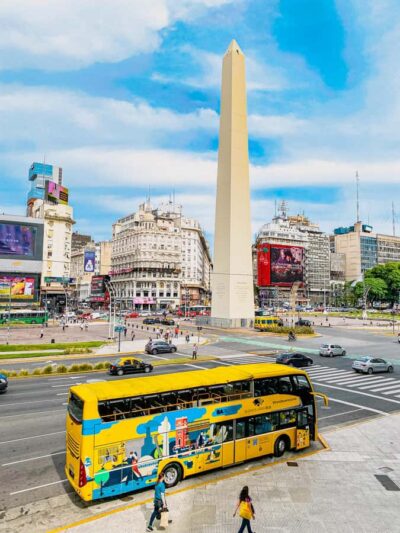
Buenos Aires Hop-On Hop-Off Bus and Exclusive Benefits
Read our review →