Reviewed · BUENOS AIRES TOURS
Experience Recoleta in Buenos Aires Little Paris
Recoleta tells Buenos Aires in four stops. I like the small maximum of 10 people, which should make it easier to hear the guide and ask questions. I also like the route itself: the dramatic Floralis Generica and the stories inside Recoleta Cemetery give you both modern Buenos Aires and its grander, older face. The main drawback is the sun exposure, especially during the outdoor stops, so bring water and protection.
This two-hour walk costs $60 per person and ends near the Recoleta Cultural Center, a useful location for continuing your afternoon. Guide Raphael has earned especially warm praise for making the tour personal and informative. Still, the short format means you get an introduction, not a full study of the neighborhood.
In This Review
- Key points to know before booking
- Why Recoleta earns the Little Paris label
- Meeting the tour at the Faculty of Law
- The moving flower at Plaza de las Naciones Unidas
- Spending an hour inside Recoleta Cemetery
- Finishing at the Recoleta Cultural Center
- What $60 buys you in two hours
- Who should choose this Recoleta walk
- Booking, cancellation, and practical details
- Should you book Experience Recoleta in Buenos Aires Little Paris?
- FAQ
- Where does the tour start?
- Where does the tour end?
- How long does the experience last?
- How much does the tour cost?
- How many people can join the tour?
- Which places are included?
- Is admission included?
- Is the tour suitable for most people?
- What happens if the weather is poor?
- Can I cancel for free?
Key points to know before booking
- A compact four-stop route: You visit the Faculty of Law, Floralis Generica, Recoleta Cemetery, and the Recoleta Cultural Center in about two hours.
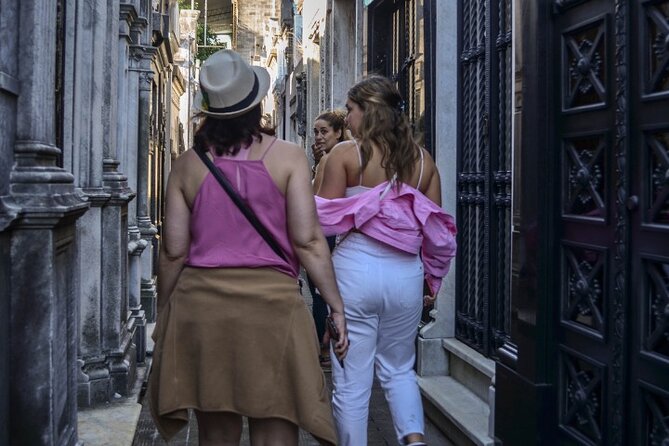
- The cemetery gets the most time: One hour is set aside for mausoleums, political figures, Evita, and the unusual story of Liliana Crociati.
- A small group helps: The tour accepts no more than 10 people, a good size for a walking route with guide-led storytelling.
- Outdoor comfort matters: Much of the experience takes place outside, and direct sun can be a serious issue.
- The endpoint is well chosen: You finish at the Recoleta Cultural Center, where you can continue exploring on your own.
- Weather can affect the plan: Poor weather may lead to a new date or a full refund, and cancellation is free up to 24 hours ahead.
Why Recoleta earns the Little Paris label
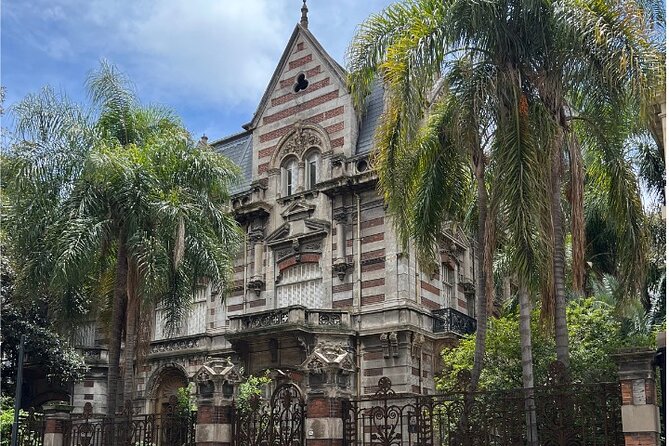
Recoleta is one of Buenos Aires’ most polished districts. Its grand buildings, formal avenues, cultural spaces, and famous cemetery create the European feel behind the nickname Little Paris. This tour does not try to cover every corner of the neighborhood. Instead, it gives you a tidy route through several of its most recognizable sights.
I like that the stops are not all variations on the same theme. The Faculty of Law offers monumental architecture. Floralis Generica brings a piece of modern public art. Recoleta Cemetery supplies politics, family drama, art, and national memory. The cultural center closes the walk with a younger, more contemporary mood.
That mix makes the tour useful early in a Buenos Aires visit. You get a sense of how the city handles power, public space, death, art, and culture. You also finish in a part of town where you can keep walking without needing another major transfer.
The tour lasts about two hours. That is long enough to give the main sights a proper introduction, but short enough to fit around lunch, a museum visit, or another Buenos Aires plan. The tradeoff is depth. If you want every architectural detail or a long stay at each site, you may find the schedule brisk.
More things to do in Buenos Aires:
- Local Foodie Adventure in Buenos Aires with Sherpa Food Tours
★ 5.0 · 6,875 reviews - Buenos Aires City Private Tour with Local Guide
★ 5.0 · 3,475 reviews - Buenos Aires Small-Group City Tour
★ 5.0 · 2,226 reviews
Meeting the tour at the Faculty of Law
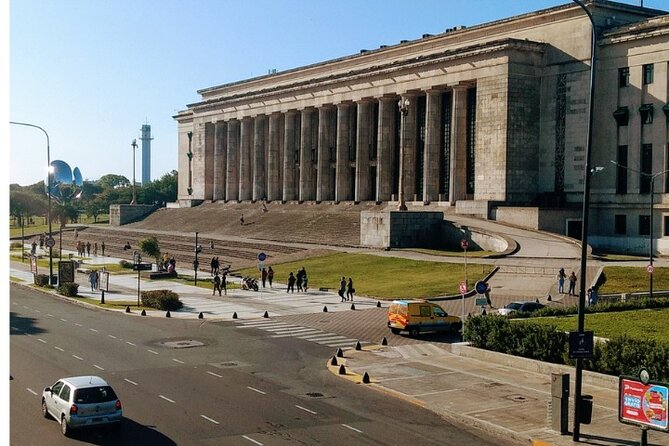
The walk begins at the Faculty of Law of the University of Buenos Aires, at Avenida Presidente Figueroa Alcorta 2263. This is a strong opening because the building makes an immediate visual impression.
The design follows a pure Doric style. Its effect comes from the size and structure rather than surface decoration. The building covers 40,000 square meters, spread across a ground floor, main floor, and two upper floors. That scale helps explain why this first stop feels more like a civic monument than an ordinary university building.
You have about 20 minutes here, with admission included at no extra cost. The building contains a museum, an art gallery, and a specialized library. Inside the assembly hall, an oil painting by Antonio González Moreno depicts the inauguration ceremony of the University of Buenos Aires.
The short visit means you should treat this as an architectural and cultural introduction, not a full campus tour. Your guide can give the building context, while the brief stop keeps the route moving. If grand public architecture interests you, this opening will likely feel worthwhile. If you mainly want historic interiors, 20 minutes may seem limited.
The meeting point is near public transportation, which makes the start practical. The supplied details do not specify a particular station, route, or transfer, so check your own map before setting out. Arrive with enough time to locate the entrance and meet the group without rushing.
The moving flower at Plaza de las Naciones Unidas
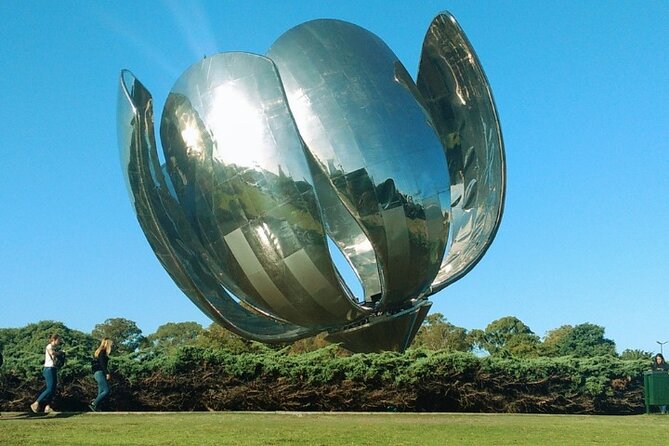
From the Faculty of Law, the route continues to Floralis Generica in Plaza de las Naciones Unidas on Avenida Figueroa Alcorta. This is the tour’s simplest stop to understand and one of its most memorable sights.
Floralis Generica is a stainless steel sculpture 20 meters high and weighing 18 tons. Eduardo Catalano, an Argentine architect, gave it to the city. Its large petals open and close in response to sunlight, using a hydraulic system and photoelectric cells.
You get about 20 minutes here, and there is no admission charge. That matters because the sculpture is an outdoor public work, not a ticketed attraction. Your time is used for viewing, photographs, and an explanation of how the mechanism works.
I like the contrast with the law faculty. The first building looks fixed, formal, and rooted in classical design. Floralis Generica is mechanical, open-air, and responsive to its surroundings. In two nearby stops, the tour shows two very different ideas of public architecture.
This is also where the sun advice becomes important. One direct review of the experience specifically recommends bringing water and preparing for a lot of sun. Take that seriously. The tour is short, but standing outdoors beside a large metal sculpture can feel hot, especially if the weather is clear.
The tour requires good weather. If poor conditions cancel the outing, you are offered another date or a full refund. That rule is sensible for a walking route, but it means you should leave some flexibility in your Buenos Aires schedule if possible.
Spending an hour inside Recoleta Cemetery
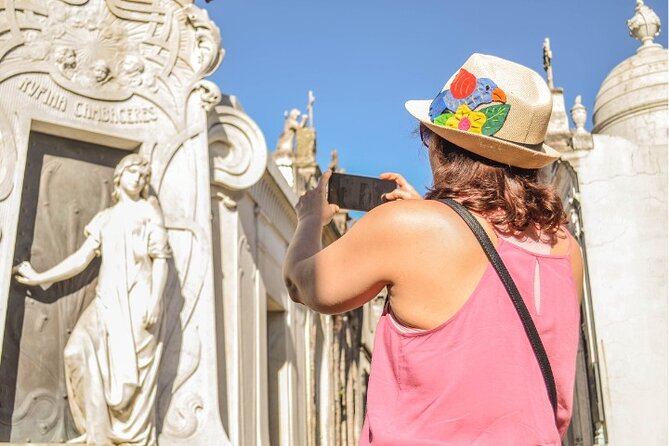
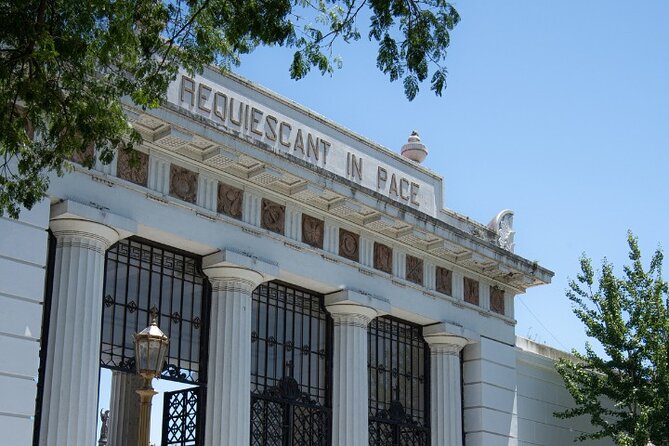
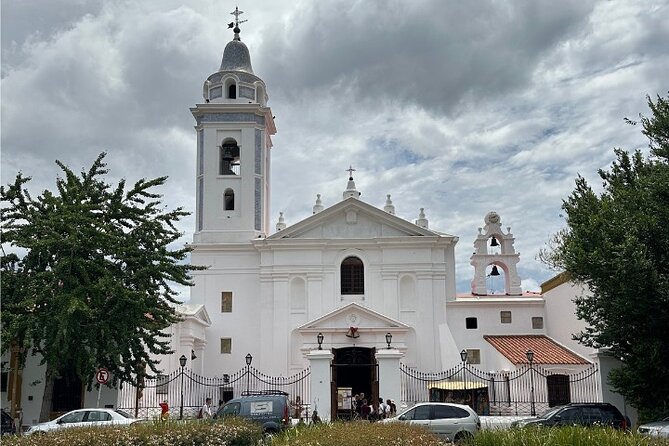
Recoleta Cemetery is the main event. The tour allows one hour here, far more time than at the first two stops. That balance makes sense. The cemetery is not just a place to locate a few famous graves. It is a maze of mausoleums and vaults, with layers of Argentine history packed into a relatively concentrated space.
The neighborhood takes its name from the Recollect monks whose convent once occupied the area. The cemetery became the city’s most visited burial ground because of its elaborate memorials and the prominent people buried there.
Your guide points out the mausoleum of Eva Perón, known throughout Argentina as Evita. You also see the burial places connected with former presidents Raúl Alfonsín and Domingo Faustino Sarmiento. These names give the cemetery political weight, but the setting is not only about presidents and national icons.
The architecture of the tombs matters just as much as the names. The mausoleums and vaults reflect wealth, ambition, mourning, and family pride. In a place like this, a guide is valuable because the details can be easy to miss when you walk alone. A well-told story turns a row of stone facades into a set of human choices.
One of the most unusual stories concerns Liliana Crociati. Her tomb includes a bronze statue of her standing beside a replica of her dog, Sabú. Her parents commissioned a neo-Gothic tomb after her death and asked for several personal details: a wedding dress, an engagement ring, and the dog at her side.
That story changes the mood of the visit. You move from public figures and national memory to a family’s very personal act of mourning. The statue is memorable because it does not present death in an abstract way. It shows a daughter as a person, with clothing, a relationship, and a beloved animal.
The cemetery portion is also the place where guide quality matters most. Raphael is praised for offering a personal and insightful tour, and that style suits Recoleta well. The site needs more than dates. It needs someone who can connect names, buildings, customs, and family stories without turning the walk into a list.
You should expect outdoor walking on uneven surfaces in a cemetery setting. The information provided does not give specific details about seating, restroom access, or the condition of every path, so wear shoes in which you can comfortably walk. Bring water before you enter, since the sun can build during this hour.
A completely different kind of day:
- Buenos Aires Hop-On Hop-Off Bus, Free Walking Tours & Discounts
★ 4.5 · 2,218 reviews - Buenos Aires: Piazzolla Tango Show with Optional Dinner
★ 4.4 · 2,122 reviews - Buenos Aires: City Highlights Guided Tour with Transfer
★ 4.7 · 1,946 reviews - Buenos Aires: Hop-On Hop-Off City Bus Tour
★ 4.2 · 1,855 reviews
Finishing at the Recoleta Cultural Center
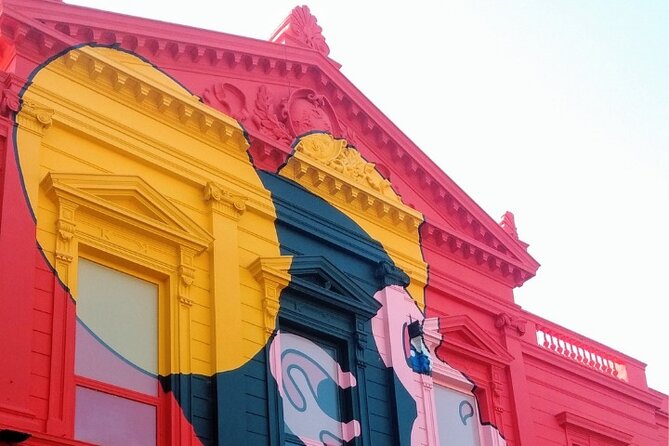
The final stop is the Recoleta Cultural Center at Junín 1930. You have about 20 minutes here, with admission included.
The center occupies a historic site with 300 years of history, but its purpose is firmly connected to the present. It is a participatory space for adolescents and young people, with a focus on living together across differences. For more than three decades, it has supported artistic movements from Argentina and other parts of the world.
That makes it a smart ending. After the formal architecture of the university, the giant public sculpture, and the memorial world of the cemetery, you reach a space aimed at new creative work and younger audiences. The route moves from established institutions to current cultural life.
The center receives more than half a million people each year, mostly people between 18 and 35. That number helps you understand its role in the city. It is not simply a preserved historic building. It is an active cultural venue with a modern social purpose.
Your 20-minute visit is an introduction rather than a full program of exhibitions or performances. The available details do not promise a specific show, gallery, or event on the day of your tour. If you have a strong interest in contemporary art, check what is happening separately and return after the walk if the schedule appeals to you.
Ending at Junín 1930 is practical. You are already in Recoleta, and the tour does not leave you at an isolated roadside point. You can continue exploring the neighborhood, find a meal, or make your own way to the next Buenos Aires sight.
What $60 buys you in two hours
At $60 per person, this is not a bargain-priced orientation walk. The value depends on how much you want from a guide-led introduction to Recoleta.
You are paying for a small-group experience capped at 10 people, a planned route, included admission at the cemetery and cultural center, and explanations at four distinct places. The strongest value comes from the cemetery. Without context, you can admire the tombs, but you may miss why particular figures and memorials matter.
The route also saves planning time. You do not have to work out how to combine the Faculty of Law, Floralis Generica, Recoleta Cemetery, and the cultural center. For a first day in Buenos Aires, that convenience can be useful.
The price is harder to justify if you are happy to see the exterior of the law faculty and Floralis Generica alone, then visit the cemetery using your own guidebook. The experience is most worthwhile if you want someone to explain the stories as you go and keep the walk organized.
The 4.7 rating from 13 reviews and 92 percent recommendation mark a strong response, though the sample is small. The clearest praise centers on guides who are prompt, accommodating, personal, and well informed. Raphael receives specific praise for making the experience feel personal and insightful.
That is the quality to look for here. The sights are already famous. The guide’s job is to connect them in a way that feels clear, human, and worth your time.
Who should choose this Recoleta walk
I would suggest this tour if you have limited time in Buenos Aires and want a guided first look at Recoleta. It suits people who enjoy architecture, public art, cemetery history, and short cultural walks rather than a single long museum visit.
It also works well for anyone who prefers a small group. A maximum of 10 people is far more manageable than a large street procession, particularly inside a cemetery where you want to stay close enough to hear the story.
You should be comfortable spending much of the tour outside. Water, sun protection, and sensible walking shoes are practical choices. The first review specifically warns about sun and hydration, so do not treat those as minor concerns.
Families and mixed-interest groups may also find the route useful because each stop offers something different. The sculpture can catch the eye quickly, the law faculty supplies architecture, the cemetery carries the main stories, and the cultural center adds a current artistic angle.
I would hesitate if you want a slow, highly detailed architectural study or a full museum day. Two hours gives you a strong sampler, but it cannot cover every street, tomb, gallery, and building in Recoleta.
Booking, cancellation, and practical details
Confirmation is received when you book. Service animals are allowed, and the activity is near public transportation. Most people can participate, although the provided information does not give detailed accessibility notes for every cemetery path or building interior.
Free cancellation applies up to 24 hours before the experience starts. Cancel later than that and the amount paid is not refunded, and changes made within that period are not accepted. All cut-off times use local Buenos Aires time.
The outing also depends on a minimum number of participants. If that minimum is not met, the provider may offer another date or experience, or give you a full refund. Poor weather can produce the same choices.
The start point is the Faculty of Law at Avenida Presidente Figueroa Alcorta 2263. The endpoint is the Recoleta Cultural Center at Junín 1930. Since you do not return to the starting point, plan your next activity from the endpoint rather than leaving a vehicle or other transport at the beginning.
Should you book Experience Recoleta in Buenos Aires Little Paris?
Book it if you want a short, organized introduction to one of Buenos Aires’ most distinctive districts, especially if cemetery stories and architecture appeal to you. The small group, the strong guide praise, and the one-hour cemetery visit are the best reasons to choose it.
Skip it if you prefer independent sightseeing, want to spend a full day inside museums, or do not want to walk in direct sun. At $60, the tour earns its price through interpretation and convenience, not through a long list of included attractions.
For most first-time visitors with only a few hours for Recoleta, I see it as a useful orientation. Bring water, allow for weather changes, and expect a thoughtful sampler rather than an exhaustive neighborhood tour.
FAQ
Where does the tour start?
It starts at the Faculty of Law of the University of Buenos Aires, at Avenida Presidente Figueroa Alcorta 2263 in Buenos Aires.
Where does the tour end?
It ends at the Recoleta Cultural Center, at Junín 1930 in Buenos Aires.
How long does the experience last?
The tour lasts approximately two hours.
How much does the tour cost?
The listed price is $60 per person.
How many people can join the tour?
The activity has a maximum of 10 participants.
Which places are included?
The route includes the Faculty of Law of the University of Buenos Aires, Floralis Generica, Recoleta Cemetery, and the Recoleta Cultural Center.
Is admission included?
Admission is included for Recoleta Cemetery and the Recoleta Cultural Center. The Faculty of Law and Floralis Generica are listed with free admission.
Is the tour suitable for most people?
The provided details state that most people can participate. Service animals are also allowed.
What happens if the weather is poor?
If poor weather causes a cancellation, you are offered a different date or a full refund.
Can I cancel for free?
Yes. You can cancel up to 24 hours before the experience start time for a full refund. Cancellations made less than 24 hours before the start are not refunded.
Just added in Buenos Aires
- Discover Buenos Aires’ independent art scene — Ticket included★ 5.0 · 30 reviews
- Photo Session in Buenos Aires★ 5.0 · 26 reviews
- Your Private Photographer in Buenos Aires★ 5.0 · 4 reviews
- Yerba Mate Workshop – Learn to Drink Mate like a Local!★ 5.0 · 11 reviews
- Your Personal Photographer in Buenos Aires★ 5.0 · 24 reviews
- BA: Wine Tasting and Blending Experience in Palermo★ 5.0 · 1 review
- Winery and Tasting Experience in Buenos Aires★ 5.0 · 1 review
- Taste of Tradition: Yerba Mate & Alfajores Experience★ 4.0 · 5 reviews
Buenos Aires Tours, compared.
Local Foodie Adventure in Buenos Aires with Sherpa Food Tours
Read our review →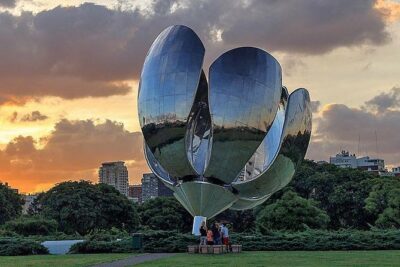
Buenos Aires City Private Tour with Local Guide
Read our review →

Buenos Aires Hop-On Hop-Off Bus and Exclusive Benefits
Read our review →