
Reviewed · EL CALAFATE TOURS
El Calafate History Museum Tour
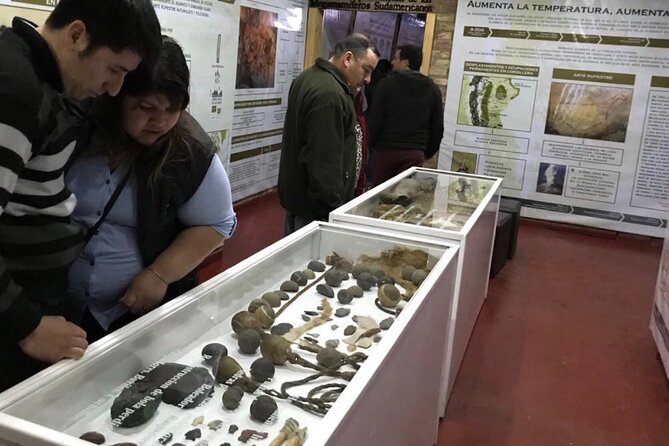
The past is bigger than the glaciers. The El Calafate Historical Interpretation Center gives you a compact, affordable way to understand Southern Patagonia through dinosaur bones, extinct mega-mammals, glacier science, and the story of the Tehuelche people. I like the clear timeline and the fact that you can visit at your own pace. I also like the family-friendly price, at $15 per person with admission included.
The main consideration is size. This is a relatively small center, so you should not expect a full-day museum visit or a large guided attraction. The displays rely heavily on reading, graphics, videos, and bone montages, and one piece of feedback suggests that careful reading is more useful than depending on the audio aids.
In This Review
- Key points to know before you go
- Why this small museum matters in El Calafate
- Reaching the center from Libertador Avenue
- Following the 100-million-year timeline
- Dinosaur skeletons and fossils
- The extinct mega-mammals
- Glaciers and Pleistocene ecological change
- Tehuelche culture in the larger story
- How long you should allow
- Language options and how to get the most from the displays
- What the $15 price includes
- Who should book this experience
- Booking, timing, and cancellation details
- Should you book the El Calafate History Museum Tour?
- FAQ
- How much does the El Calafate History Museum Tour cost?
- How long does the museum visit take?
- When is the Interpretation Center open?
- What can you see at the center?
- Are language options available?
- Is transportation to the museum included?
- Can children participate?
- Can I cancel for a full refund?
Key points to know before you go
- A 100-million-year story: The center connects dinosaurs, mega-mammals, glaciers, ecological change, and human culture in one chronological visit.
- Good value at $15: Admission, taxes, fees, and handling charges are included, making this a modest-cost indoor activity in El Calafate.
- Plan on about two hours: The stated visit can take from one to four hours, but two hours is the practical middle ground for most people.
- Open daily from 10:00 a.m. to 8:00 p.m.: The long opening window makes it easy to fit around other plans.
- Useful for families: There is no minimum age, but children must be accompanied by an adult.
- Reading matters here: English, French, Italian, Portuguese, and Spanish translation options are available, but you should allow time to read the displays rather than rushing through.
Why this small museum matters in El Calafate
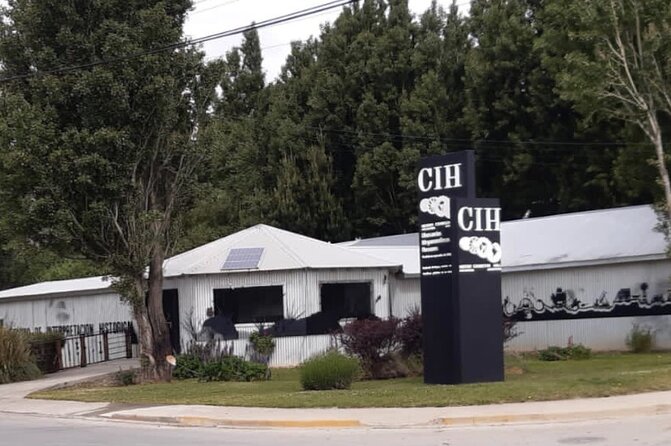
El Calafate is best known as a base for seeing glaciers, but the ice is only one chapter of the area’s story. Before the great Pleistocene ice sheets shaped Southern Patagonia, this region passed through major geological and ecological changes. Dinosaurs lived here. Later, enormous mammals occupied the area. Human communities then adapted to the changing environment.
The Interpretation Center links those parts together. I like that approach because it gives you a better frame for the sights outside town. After seeing the museum, a glacier is not just a wall of blue ice. It becomes part of a much longer process involving climate, erosion, retreat, and changing ecosystems.
The human story is included as well, with attention to the Tehuelche culture. That matters because a visit focused only on prehistoric animals can make Patagonia seem empty until modern tourism arrived. This center places people within the region’s timeline and shows that the area has a human past as well as a geological one.
The museum does not try to be a massive national institution. Its strength is the way it gathers the main threads of Southern Patagonia into a visit that does not demand an entire day.
More History Tours in El Calafate:
- Immersive 4×4 Patagonia Safari: Dicover Flora Heritage & Wildlife
★ 5.0 · 2 reviews - Historical Sherpa Food Tour of San Telmo with Street Food, Drinks
★ 5.0 · 920 reviews - Nazis in Buenos Aires: a historical walking tour
★ 4.9 · 193 reviews
Reaching the center from Libertador Avenue
The center is about seven blocks from Libertador Avenue, the main commercial artery through El Calafate. That location makes it practical if you are already walking around town, though it is not directly on the main avenue itself.
Transportation to and from the attraction is not included. You are responsible for getting there, and any parking fee is paid separately at check-in. The center is near public transportation, which gives you another option if you do not want to walk.
The booking information gives a 10:00 a.m. start time, while the museum is open every day from 10:00 a.m. to 8:00 p.m. Since the visit can be made during opening hours, check the exact arrangements attached to your reservation before setting out. The long daily schedule is useful if you have an early excursion, a late arrival, or a weather interruption in your plans.
Following the 100-million-year timeline
The visit is organized around the passage of time. Graphics, videos, and bone montages help explain what happened in Southern Patagonia across roughly 100 million years.
That timeline is the center’s most useful feature. Instead of showing isolated fossils with little context, it helps you connect the pieces. You can see how the region changed from the age of dinosaurs to the era of mega-mammals, then through the Pleistocene and into human history.
Dinosaur skeletons and fossils
The dinosaur displays offer a direct look at animals that once lived in a part of the world many people associate mainly with glaciers and wind. Seeing bones and fossils gives the story physical weight. You are not just reading that dinosaurs existed in Patagonia, you are looking at the remains used to tell that story.
The information provided does not identify every species or guarantee a particular skeleton on display, so I would not book this expecting a specialized dinosaur collection. Think of the dinosaurs as one major section in a broader account of the region.
That broader approach is helpful for families. Children may come for the bones, while adults can follow the geological and cultural changes that surround them. The visit has enough variety to serve different interests without becoming a museum devoted to one narrow subject.
More museums in El Calafate:
- Buenos Aires: Tickets to Boca Juniors Museum & Stadium
★ 4.5 · 581 reviews - Buenos Aires: River Plate and Boca Juniors Museum Tour
★ 4.5 · 72 reviews - Buenos Aires: Hop-On Hop-Off Bus and Football Museums
★ 4.3 · 39 reviews - Buenos Aires: Tickets to River Plate Museum
★ 4.6 · 32 reviews
The extinct mega-mammals
The mega-mammal material gives the museum a second strong hook. These animals belong to a later period than the dinosaurs and help show how life in Patagonia continued to change.
Bones and fossil displays make extinction easier to understand than a few dates on a wall. They show that the region has not always supported the same animals or ecosystems. For you, this section can be a useful bridge between prehistoric Patagonia and the later environmental changes described in the museum.
Glaciers and Pleistocene ecological change
If you are visiting El Calafate for glacier excursions, this part may be the most immediately useful. The center explains the glacier process and the ecological transformations of the Pleistocene, connecting climate and ice to the plants, animals, and people of the region.
I like this context because it helps you understand what you are seeing beyond the town. A glacier is not simply a scenic object. Its movement affects valleys, water, soil, and living systems. The museum gives you the basic story before or after you see those processes in the field.
Do not expect a substitute for a full glacier excursion. The museum provides interpretation, not a boat ride, trail, or viewpoint. It is best used as preparation or as a follow-up, especially if you want your outdoor sightseeing to have more meaning.
The Pleistocene material also helps explain how environmental change affected the Tehuelche culture. That connection is important. Climate and ice were not abstract scientific forces, they shaped where people could live, move, hunt, and find resources.
Tehuelche culture in the larger story
The inclusion of Tehuelche culture gives the museum a needed human focus. The past of Patagonia is not only a sequence of fossils and geological events. People lived with those changing conditions and developed their own ways of using the region.
The available information does not provide a detailed list of every cultural display, so you should not assume the center offers an extensive ethnographic collection. Still, its place in the timeline helps keep the visit from becoming purely natural history.
I find this especially valuable if you have limited time in El Calafate. The museum gives you an introductory cultural and historical setting in one stop. It cannot replace a longer, dedicated study of Tehuelche history, but it can make the region feel less like scenery and more like a lived place.
How long you should allow
The suggested visit lasts from one to four hours, with about two hours described as the normal amount of time. That range gives you some flexibility.
If you read quickly and mainly want to see the bones, an hour may be enough. If you watch the videos, study the graphics, and follow the full timeline, two hours is more realistic. Four hours would suit someone who reads every panel slowly or wants to revisit sections.
I would plan around two hours, then leave extra room if you are interested in prehistoric life. That is long enough to avoid racing through the displays but short enough to fit around a day of sightseeing.
The small size can be an advantage. You do not need to commit an entire afternoon, and the visit is manageable when you have already spent much of the day outdoors. The drawback is that anyone expecting a huge museum may finish sooner than planned.
Language options and how to get the most from the displays
Translation options are available in Spanish, French, English, Italian, and Portuguese. That makes the visit more useful for international visitors, though the exact format of those language options is not specified.
Because the center uses graphics, videos, and written material, I would take my time with the text. One piece of available feedback specifically favored reading over relying on the audio aids. That is a practical tip: use the written explanations as your main guide, and treat any audio support as an extra rather than the entire visit.
A good strategy is to begin with the timeline, then return to the fossils and cultural material with the larger sequence in mind. The displays make more sense when you know where each period belongs.
If you are visiting with children, let them start with the bones and fossils, then use the graphics to explain how the animals, ice, and people fit together. The center has no minimum age, but children must be accompanied by an adult.
What the $15 price includes
At $15 per person, this is a low-cost activity by the standards of organized sightseeing in El Calafate. The admission ticket is included, along with all taxes, fees, and handling charges.
That price is most worthwhile when you treat the center as background for the rest of your visit. It gives you geological, environmental, and cultural context that can improve your understanding of glacier outings and the region around town.
The value is less certain if you want a large collection, extensive hands-on exhibits, or several hours of entertainment without reading. This is an interpretation center, not a major attraction with a long list of separate galleries.
Extra purchases are not included. Souvenir photos, snacks, coffee, tea, and non-alcoholic drinks are available to buy. Parking fees are also separate, and transportation to the center is your responsibility.
Who should book this experience
I would recommend the museum to several types of visitors:
- Families looking for an educational indoor activity
- Anyone interested in fossils, dinosaurs, or extinct animals
- People visiting glaciers who want more geological context
- History-minded visitors who want an introduction to Southern Patagonia
- Anyone with a spare hour or two in El Calafate
- Visitors who prefer a self-paced museum to a fixed group excursion
It is also a sensible choice on a day when weather affects outdoor plans. The center is indoors, open daily, and does not require a full day.
I would be more cautious if you want a highly interactive attraction or a large, sophisticated museum. The displays are compact, and the experience depends on your interest in reading, watching, and following a historical sequence.
The activity is private, meaning only your group participates. That can be useful if you want to set your own pace, though the supplied details do not explain whether a personal guide is always present. A multilingual guide may operate the experience, and translation options are available in five languages.
Booking, timing, and cancellation details
Confirmation is received at the time of booking. The experience is available for children of any age, but an adult must accompany each child. Most people can participate, and service animals are allowed.
Free cancellation is available if you cancel at least 24 hours before the scheduled start time. Cancellations made less than 24 hours before the start, as well as late changes, are not refunded or accepted. The cut-off is based on local time in El Calafate.
Since the center operates from 10:00 a.m. to 8:00 p.m., it can work before dinner, after a morning outing, or during an open stretch in your schedule. Just make sure your booking time and arrival plan match the current arrangements.
Should you book the El Calafate History Museum Tour?
Book it if you want a reasonably priced, easy-to-fit introduction to Patagonia’s geological and human past. The combination of dinosaur fossils, mega-mammals, Pleistocene changes, glaciers, and Tehuelche culture gives you more context than a quick stroll through a fossil display.
The center’s 4.5 rating from 32 ratings and 91 percent recommendation rate fit its strengths: it is affordable, educational, family-friendly, and well placed for a short town visit. The main limitation is its size and reliance on reading. Go expecting a compact interpretation center, not a grand museum.
For $15, I think it earns a place in your El Calafate plans, especially before a glacier excursion or on a spare afternoon. Allow two hours, read the displays carefully, and use the visit to connect the ice, fossils, animals, and people into one long Patagonian story.
FAQ
How much does the El Calafate History Museum Tour cost?
The price is $15 per person. Admission, taxes, fees, and handling charges are included.
How long does the museum visit take?
The visit takes approximately one to four hours. About two hours is the stated typical duration.
When is the Interpretation Center open?
The museum is open every day from 10:00 a.m. to 8:00 p.m.
What can you see at the center?
You can see dinosaur bones and fossils, extinct mega-mammal remains, and displays about the geological and human history of Southern Patagonia. The visit also covers glaciers, Pleistocene ecological changes, and Tehuelche culture.
Are language options available?
Yes. Translation options are available in Spanish, French, English, Italian, and Portuguese. The experience may also be operated by a multilingual guide.
Is transportation to the museum included?
No. Transportation to and from the attraction is not included. The center is near public transportation, and the museum is about seven blocks from Libertador Avenue.
Can children participate?
Yes. There is no minimum age, but children must be accompanied by an adult.
Can I cancel for a full refund?
Yes, if you cancel at least 24 hours before the experience start time. Cancellations or changes made less than 24 hours in advance are not accepted for a refund.
Just added in El Calafate
- 3hrs de Escala y Caminata en Via Ferrata del Cañadón★ 4.0 · 5 reviews
- Laguna de los Tres Hiking Day Trip from El Chaltén★ 4.5 · 22 reviews
- El Chalten: Full Day Trekking to Loma del Pliegue Tumbado★ 5.0 · 8 reviews
- 3 Hours Grilled Lamb Experience in Estancia Bonanza★ 3.5 · 5 reviews
- El Chalten: Full Day Trekking to Laguna de los Tres and Mount Fitz Roy★ 4.5 · 45 reviews
- Chalten Kayak at the Rio de las Vueltas★ 5.0 · 6 reviews
- Alpine Adventure in Pollone Lagoon and Lake Electric Valley★ 5.0 · 3 reviews
- 2-Day Hiking Tour of Fitz Roy and Cerro Torre from El Chalten★ 5.0 · 7 reviews
El Calafate Tours, compared.
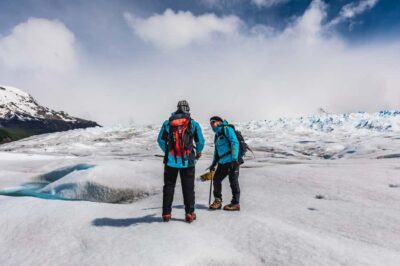
Perito Moreno Glacier Trekking Tour and Cruise
Read our review →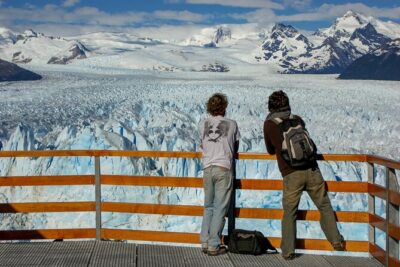
Perito Moreno Glacier Full Day Tour with Optional Boat Safari
Read our review →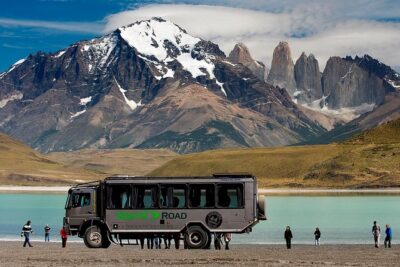
Torres Del Paine Full Day Overland Truck 4×4 from El Calafate
Read our review →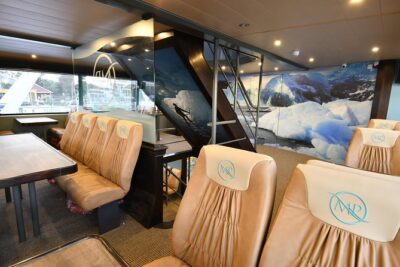
Glaciares Gourmet Navigation: Spegazzini, Upsala & Perito Moreno
Read our review →
Kayak Full-Day Activity in La Leona River from El Calafate
Read our review →Browse the lists this tour appears in