
Reviewed · BUENOS AIRES TOURS
E-Bike Tour in the Southern Circuit of Buenos Aires
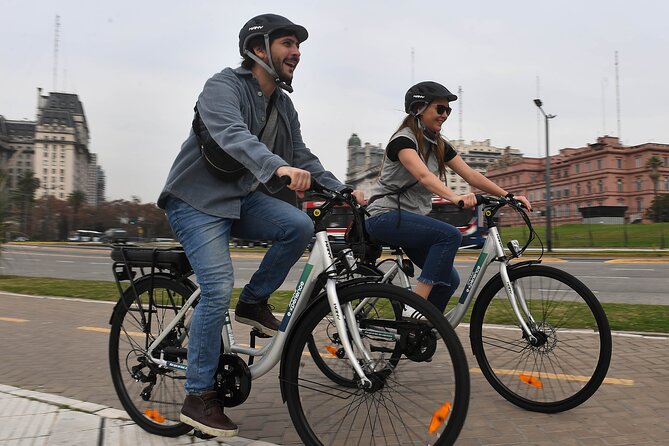
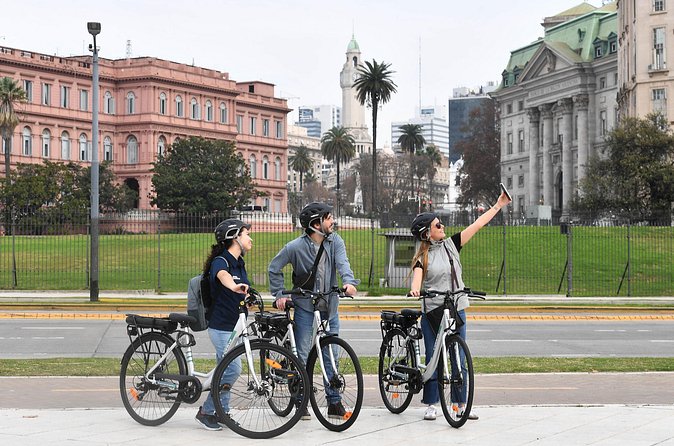
Buenos Aires unfolds best at street level. This 3.5-hour e-bike ride connects Puerto Madero, the historic center, San Telmo, La Boca, and the Costanera Sur, giving you a broad look at the city without the fatigue of a long walking tour. I like the brand-new e-bikes and the way the route covers several very different neighborhoods in one outing. I also like the mix of history and local tastes, including medialunas, choripán, and coffee. The main drawback is weather sensitivity: the tour may be canceled even with a small chance of rain.
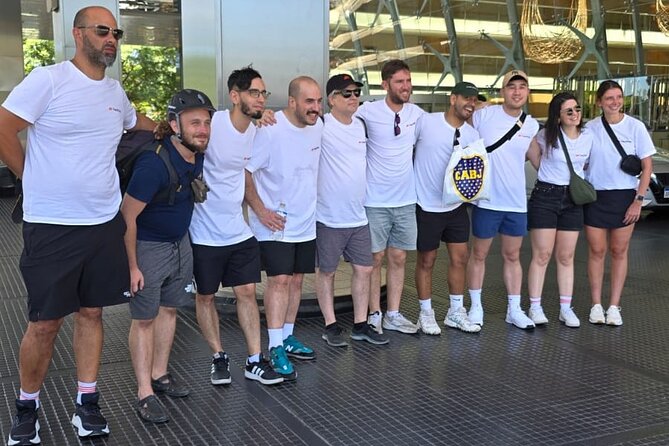
The small group, capped at nine people, should make it easier to hear the guide and keep the pace manageable. One especially praised guide, Frani, was noted for combining historical detail with humor and good timing. Still, this is a sightseeing ride, not a slow museum visit, so you will spend more time seeing places from outside than entering them.
In This Review
- Key points to know before booking
- Starting beside Puerto Madero at Puente de la Mujer
- Plaza de Mayo and the city’s first chapters
- La Manzana de las Luces and colonial Buenos Aires
- San Telmo, old houses, and Plaza Dorrego
- Parque Lezama and the National Historical Museum
- La Boca, La Bombonera, and the city’s working-class roots
- Usina del Arte and the food stop
- Returning to Puerto Madero and the Costanera Sur
- What the $65 price really buys you
- Timing, fitness, and practical details
- Who should book this Buenos Aires e-bike tour?
- Should you book it?
- FAQ
- Where does the e-bike tour start?
- Where does the tour finish?
- How long does the tour last?
- How much does the tour cost?
- How many people can join the tour?
- Is food included?
- Is admission to La Bombonera included?
- Is admission to Reserva Ecológica Costanera Sur included?
- Can I cancel for a full refund?
- What happens if bad weather cancels the tour?
Key points to know before booking
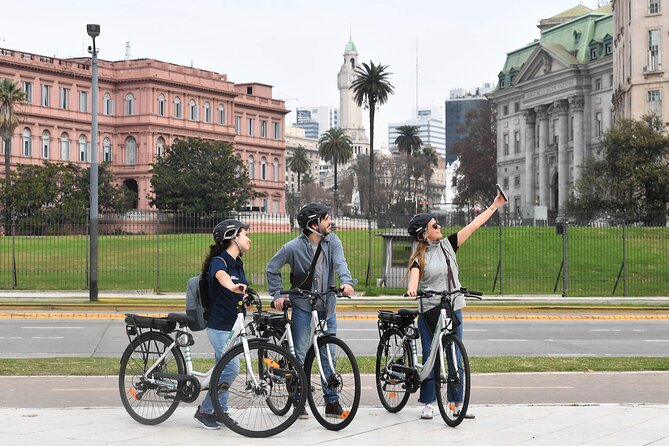
- Nine-person maximum: The small group should feel more personal and less chaotic than a large bus tour.
- A wide city route: You ride from Puente de la Mujer and Plaza de Mayo to San Telmo, La Boca, Puerto Madero, and the Costanera Sur.
- Food is part of the plan: The experience includes tastings of medialunas, choripán, and coffee.
- The e-bikes do the hard work: The bikes make it possible to cover a lot of Buenos Aires comfortably in one morning or afternoon.
- Weather can change the plan: Poor conditions can lead to a new date or a full refund, and a minimum group size is required.
- The La Boca section has real character: La Bombonera, Caminito, tango, immigration, and neighborhood history give this part of the ride a strong local flavor.
Starting beside Puerto Madero at Puente de la Mujer
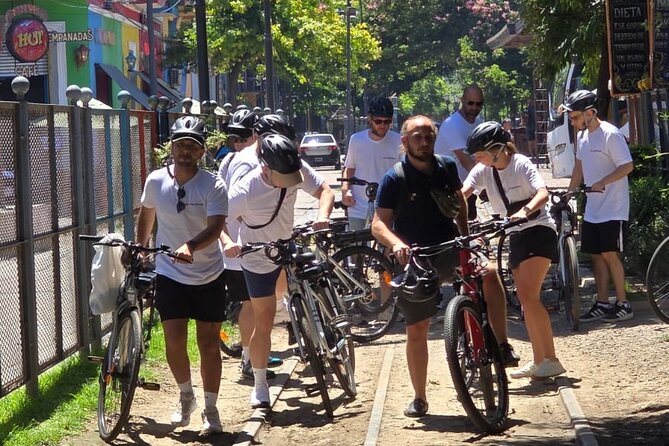
The tour begins at Macacha Güemes 351, in the Puerto Madero area. That location puts you near one of Buenos Aires’ most polished districts, where converted docklands meet modern apartment towers, restaurants, and public art.
Your first stop is Puente de la Mujer, the sweeping pedestrian bridge designed to suggest a tango couple. The guide explains the bridge’s construction, its link with tango, and the broader tribute to women repeated around Puerto Madero. It is a short five-minute stop, so expect a quick orientation rather than a detailed architectural study.
This opening works well because it introduces a familiar image of Buenos Aires right away. You get the city’s modern face, then move toward older neighborhoods where politics, immigration, football, and working-class traditions take center stage.
The Old Post Office Palace, now a cultural center, is also part of this early section. Its concert halls and art exhibitions show how Buenos Aires continues to reuse grand civic buildings. The schedule does not list a long interior visit here, so think of it as a landmark explained from the route.
More Bike Tours in Buenos Aires
- Bike Tour: Half-Day City Highlights of Buenos Aires
★ 5.0 · 1,083 reviews - Buenos Aires: North or South Buenos Aires Bike Tour
★ 4.7 · 719 reviews - Highlights of BA by Bike – Part one
★ 5.0 · 285 reviews
Plaza de Mayo and the city’s first chapters
Plaza de Mayo is the historical heart of the ride. The guide covers the origins of Buenos Aires, its foundation and early years, and the major events that took place around the square.
You will see the Cabildo and the Cathedral, two of the city’s most important historic buildings. The 15-minute stop is enough to understand their place in Buenos Aires history, though not enough for an in-depth visit inside every building.
The nearby Catholic church, identified as the oldest Catholic temple in the city and built in 1722 by Jesuit fathers, adds another layer to the story. These details are useful because they show how the city grew around religious institutions, civic buildings, and public squares rather than only around grand avenues.
I would pay close attention here if you are interested in Argentine politics and independence. Plaza de Mayo is not simply a pretty square. It is a place where the country’s public life has repeatedly played out.
La Manzana de las Luces and colonial Buenos Aires
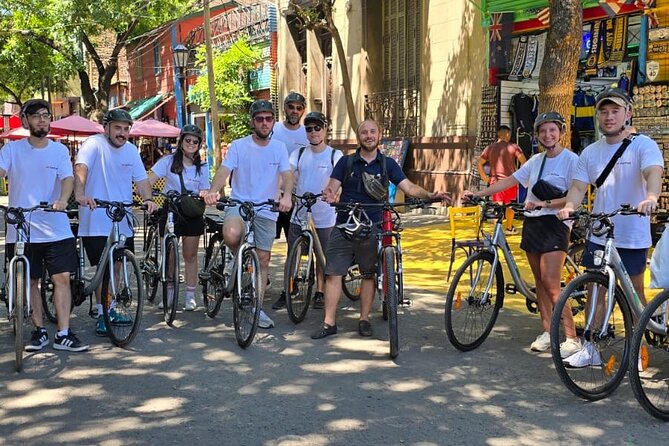
From Plaza de Mayo, the ride continues to La Manzana de las Luces, or the Block of Enlightenment. This historic block once held the first National Library, the early headquarters of the University of Buenos Aires, and the Colegio Real San Carlos.
The guide also connects the site to Argentine political figures and national heroes who trained or studied there. The 15-minute visit is brief, but the stop helps explain why Buenos Aires became an intellectual and political center.
This is one of the places where a guide adds real value. A quick look at an old building can mean little without context. With the story of libraries, education, and political formation, the block becomes easier to place in the city’s development.
Do not expect a full archaeological or academic tour. The strength here is the compact explanation, followed by the chance to see another historic district from the saddle.
San Telmo, old houses, and Plaza Dorrego
San Telmo gets a longer stop, about 25 minutes at Plaza Dorrego. The square began as a cart stop south of Buenos Aires and later became one of the city’s most recognizable public spaces.
The tour explains San Telmo’s beginnings and how this once peripheral area changed over time. Plaza Dorrego is also associated with the neighborhood’s famous antiques and street life, although the supplied schedule does not promise a market visit or shopping time.
Two smaller sites add texture to this part of the route. One is an old mansion connected to an archaeological find, including colonial-era tunnels, cisterns, and other remains. The other is a house with only 2.50 meters of frontage, known as the oldest house in the city.
That narrow house carries an uncomfortable but important story. This type of small dwelling was designed for freed slaves, whose former owners assigned them tiny plots beside their own properties. It is a reminder that the old city is not only a collection of charming facades. Its buildings also reflect class, race, and the limits placed on people after emancipation.
A completely different kind of day:
- Local Foodie Adventure in Buenos Aires with Sherpa Food Tours
★ 5.0 · 6,875 reviews - Buenos Aires City Private Tour with Local Guide
★ 5.0 · 3,475 reviews - Buenos Aires Small-Group City Tour
★ 5.0 · 2,226 reviews - Buenos Aires Hop-On Hop-Off Bus, Free Walking Tours & Discounts
★ 4.5 · 2,218 reviews
Parque Lezama and the National Historical Museum
Parque Lezama provides a change of pace. The 20-minute stop connects the park with the first Spanish settlement in the Río de la Plata and with the origins of the National Historical Museum.
The museum occupies a 19th-century mansion and presents material from Indigenous cultures, the conquest, the colonial period, the May Revolution, and the growth of Buenos Aires society. The schedule does not indicate that museum admission is part of the tour, so you should not plan on a full museum visit during this stop.
I like the park because it helps connect several eras in one place. You get the early colonial story, the later mansion, and the growth of national identity. It is also a useful pause before the route turns toward La Boca and football culture.
The 20-minute timing means the guide must keep the explanation focused. If you want to explore the museum properly, save it for another visit.
La Boca, La Bombonera, and the city’s working-class roots
The La Boca section is likely the emotional center of the tour. At Estadio Alberto J. Armando, better known as La Bombonera, you hear about the origins of the football club and famous athletes connected with it.
The stadium stop lasts about 20 minutes, and admission is not included. That distinction matters. You may see the stadium and hear its story, but a museum or match-day experience would require a separate arrangement.
The route also includes a space honoring volunteer firefighters who protected the neighborhood from frequent fires. This is a small but worthwhile detail. It shifts the story away from famous football names and toward residents who worked to protect their community.
Caminito follows with a 25-minute stop. Here the guide covers La Boca’s movement from suburban district to one of the city’s most visited areas. You also hear about tango’s origins, immigration waves, and the major role of Quinquela Martín.
This is where Buenos Aires’ European immigration story meets local art and popular culture. The bright streets of Caminito can feel highly arranged for sightseeing, but the background gives them more meaning. The area grew from a working neighborhood shaped by port workers, immigrants, artists, and tango.
A donated building associated with Benito Quinquela Martín is also included. His aim was to create a primary school and a museum for Argentine artists, and the establishment opened in 1936. That connection shows how one artist helped shape the cultural identity of his neighborhood.
Usina del Arte and the food stop
Usina del Arte receives the longest listed stop, about 40 minutes. The former power station is one of La Boca’s major cultural buildings, and the guide explains its founding and its link to the neighborhood’s working-class past.
The stop also leads to a classic Buenos Aires restaurant for a tasting. The food component includes medialunas, choripán, and coffee, giving you three simple but telling tastes of Argentina.
A medialuna is a small crescent-shaped pastry, often enjoyed with coffee. Choripán, grilled sausage served in bread, is a much more savory bite and a familiar part of Argentine casual food culture. The combination keeps the tasting grounded in everyday eating rather than formal dining.
This food break is one of the tour’s best ideas. You are not only looking at neighborhoods. You get a chance to pause, eat, and connect the city’s history with things people actually consume. The schedule does not specify portion sizes or dietary alternatives, so anyone with food restrictions should ask the operator before booking.
Returning to Puerto Madero and the Costanera Sur
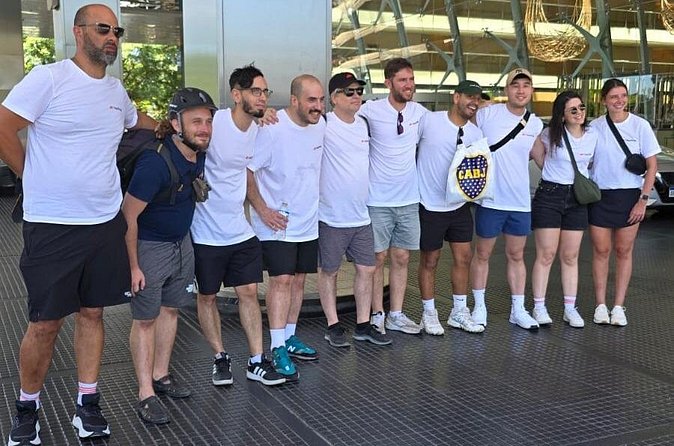
After La Boca, the route returns toward Puerto Madero. The guide explains how the district began as a second port project, declined, and later changed into one of the city’s most expensive areas.
That transformation is one of the clearest examples of Buenos Aires changing in front of you. Early port ambitions gave way to decline, then to polished redevelopment. You can compare the old industrial purpose with the modern district introduced at the start of the tour.
The route also passes a work by Lola Mora, a Tucumán-born artist. Made in Rome, the sculpture represents Venus surrounded by tritons and nereids, water figures from classical mythology. It gives the Puerto Madero section a strong public-art angle.
The final major stop is Reserva Ecológica Costanera Sur, Buenos Aires’ most important green area. The guide covers its origins and development, then visits a promenade honoring major figures in Argentine sport.
Admission is not included, and the listed stop lasts about 20 minutes. The reserve adds open space after several dense urban districts, but do not expect a long nature outing. The tour uses the area as a final look at the city’s relationship with the river, recreation, and public land.
What the $65 price really buys you
At $65 per person, this is not the cheapest way to see Buenos Aires. You can visit many of these areas independently by public transport or on foot for much less.
The value comes from the amount of ground covered in 3.5 hours. You move between districts that would be tiring to link on foot, while the electric assistance keeps the ride comfortable. One of the strongest points is the route itself, which has been praised as safe and well planned.
The small group also matters. A maximum of nine people is a much better setting for questions than a large coach. If Frani is leading your outing, the combination of history and humor may make the long sequence of stops easier to absorb.
The food tasting adds modest but useful value. You are paying for a guided introduction to the city, bicycle use, route planning, and snacks, not for major entrance tickets. La Bombonera and the ecological reserve list admission as not included, so budget separately if you want to visit their interiors.
Timing, fitness, and practical details
Most people can take part, and the activity is near public transportation. You need to be comfortable riding for several hours, stopping often, and moving through an urban route, but the electric bikes reduce the effort compared with standard bicycles.
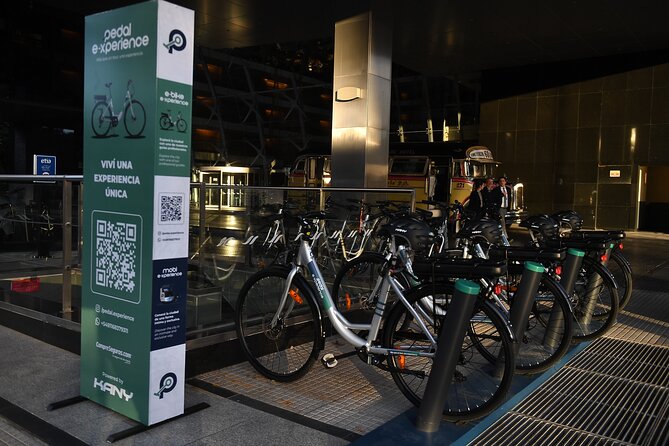
The experience ends where it begins, at Macacha Güemes 351. A mobile ticket is provided, and confirmation arrives at booking.
Weather deserves special attention. This activity requires good conditions, and the operator may cancel if the weather is poor. One cancellation caused frustration because the forecast showed only a small chance of rain, so I would keep some flexibility in your Buenos Aires schedule rather than placing this ride on your only available day.
Free cancellation is available up to 24 hours before the start time. Changes or cancellations inside that window are not accepted for a refund. The tour also requires a minimum number of participants, so a date could change if that number is not reached.
Who should book this Buenos Aires e-bike tour?
I would choose this ride if you have limited time and want a broad first look at Buenos Aires. It suits you especially well if you want history, neighborhoods, football, tango, public art, and local food in one compact experience.
It is also a good choice if walking long distances is tiring but you still want to see more than the central sights. The electric bikes and small group make the route more manageable, while the guide supplies the connections between places.
I would hesitate if your priority is entering museums, touring La Bombonera, or spending a long time at Caminito. The schedule gives you short visits at many locations, so depth is traded for range.
Should you book it?
Book this tour if you want to cover a large slice of southern Buenos Aires without spending the day on foot. The safe-feeling route, small group, new e-bikes, and food tasting give it a practical edge over a basic city sightseeing ride.
Skip it if weather uncertainty or a tightly fixed schedule would cause stress. At $65, the tour makes the most sense as a first-day orientation, especially for someone who wants the city’s major districts explained in a lively, compact ride rather than explored one at a time.
FAQ
Where does the e-bike tour start?
It starts at Macacha Güemes 351, C1106, in Buenos Aires.
Where does the tour finish?
The activity ends back at the meeting point.
How long does the tour last?
The approximate duration is 3 hours and 30 minutes.
How much does the tour cost?
The listed price is $65 per person.
How many people can join the tour?
The activity has a maximum of nine participants.
Is food included?
The experience includes tastings of medialunas, choripán, and coffee.
Is admission to La Bombonera included?
No. Admission to Estadio Alberto J. Armando, La Bombonera, is not included.
Is admission to Reserva Ecológica Costanera Sur included?
No. Admission to the ecological reserve is not included.
Can I cancel for a full refund?
Yes. You can cancel at least 24 hours before the start time for a full refund.
What happens if bad weather cancels the tour?
You will be offered another date or a full refund. The tour may also be changed or refunded if the minimum number of participants is not reached.
Just added in Buenos Aires
- Discover Buenos Aires’ independent art scene — Ticket included★ 5.0 · 30 reviews
- Photo Session in Buenos Aires★ 5.0 · 26 reviews
- Your Private Photographer in Buenos Aires★ 5.0 · 4 reviews
- Yerba Mate Workshop – Learn to Drink Mate like a Local!★ 5.0 · 11 reviews
- Your Personal Photographer in Buenos Aires★ 5.0 · 24 reviews
- Winery and Tasting Experience in Buenos Aires★ 5.0 · 1 review
- Taste of Tradition: Yerba Mate & Alfajores Experience★ 4.0 · 5 reviews
- BA: Wine Tasting and Blending Experience in Palermo★ 5.0 · 1 review
Buenos Aires Tours, compared.
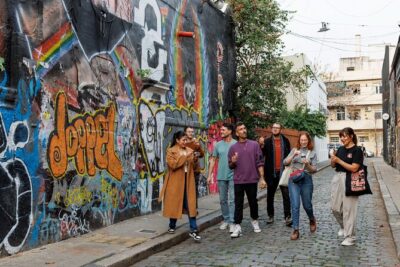
Local Foodie Adventure in Buenos Aires with Sherpa Food Tours
Read our review →
Buenos Aires City Private Tour with Local Guide
Read our review →
Buenos Aires Hop-On Hop-Off Bus and Exclusive Benefits
Read our review →
Argentine Experience Interactive Dining and Cooking
Read our review →Browse the lists this tour appears in