Reviewed · BUENOS AIRES TOURS
Buenos Aires to get to know each other.
Buenos Aires reveals itself one block at a time. This three-hour walking tour links the city’s grandest civic spaces, curious architectural oddities, and famous cultural landmarks, from Palacio Libertad to Teatro Colón. I like the small maximum of 12 people, which should make it easier to hear the guide and ask questions, and I like the focus on details you could easily miss alone, such as the animal sculptures on Otto Wulff and the five domes of Edificio Bencich. The main concern is uneven service reliability, since one detailed account describes a confirmed booking with no guide appearing and no response to calls or messages.
At $35 per person, the experience can be good value if you want a brisk introduction to central Buenos Aires rather than a museum-heavy tour. Guide Mati, also identified as Matias in the feedback, receives strong praise for his knowledge of architecture, Argentine culture, and local football. Still, you should confirm the meeting details shortly before setting out and keep enough time afterward for Teatro Colón, since its admission is not included.
In This Review
- Key points to know before booking
- What this Buenos Aires walk is really offering
- Palacio Libertad begins the story
- Plaza de Mayo and the seat of power
- The city’s old corners near Buenos Aires Museo
- Colegio Nacional and San Ignacio Loyola
- Otto Wulff, Buenos Aires architecture at its strangest
- Edificio Bencich and the five domes
- The Obelisco viewpoint
- Teatro Colón closes the route
- What the $35 price gets you
- Guide quality and the service warning
- Who should book this walk?
- My booking verdict
- FAQ
- How long does the Buenos Aires to Get to Know Each Other tour last?
- Where does the tour begin?
- Where does the tour end?
- What language is the tour offered in?
- How large is the group?
- Is admission included at every stop?
- Is food included?
- Can I cancel for a full refund?
- What happens if bad weather cancels the tour?
Key points to know before booking
- The route covers eight central landmarks, beginning at Palacio Libertad and ending at Teatro Colón.
- You get architecture and history together, from colonial Baroque churches to Jugendstil and Neoplateresque buildings.
- The group is capped at 12 people, a useful size for a city walk with frequent explanations.
- The Obelisco visit includes access to a viewpoint, while several other interiors require separate admission.
- The tour lasts about three hours to three hours and 20 minutes, with walking between stops.
- One serious no-show complaint affects the practical risk, despite several highly positive comments about Mati.
What this Buenos Aires walk is really offering
The title suggests a friendly first meeting with Buenos Aires, and that is a fair description. This is not a food crawl, tango class, or broad city bus tour. It is a compact introduction to the central city, built around public squares, landmark buildings, political history, and architectural contrasts.
You begin at Palacio Libertad, formerly the Centro Cultural Kirchner, and finish at Teatro Colón. That route moves through the civic heart of Buenos Aires and crosses several different periods of Argentine history. You will see colonial buildings, symbols of national government, late 19th-century institutions, early 20th-century commercial architecture, and the modern city’s most famous monument.
I especially like the way the route uses buildings as its organizing idea. Buenos Aires can seem like a collection of handsome façades until someone points out why a dome, sculpture, courtyard, or street plan matters. This tour appears designed to give those details a story.
The pace is fairly quick. The listed stops add up to about two hours, leaving roughly an hour for walking, transitions, and conversation. You should expect an active city walk, not a slow architectural seminar. Wear sensible shoes, bring water, and keep some Argentine pesos or other cash available for personal purchases.
More things to do in Buenos Aires:
- Local Foodie Adventure in Buenos Aires with Sherpa Food Tours
★ 5.0 · 6,875 reviews - Buenos Aires City Private Tour with Local Guide
★ 5.0 · 3,475 reviews - Buenos Aires Small-Group City Tour
★ 5.0 · 2,226 reviews
Palacio Libertad begins the story
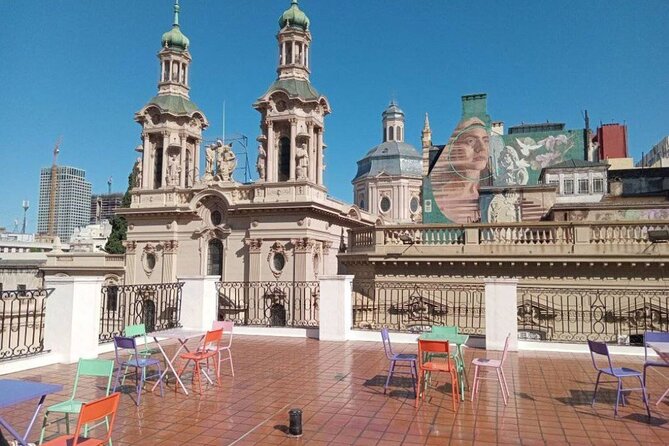
The meeting point is Palacio Libertad at Sarmiento 151, the former post office palace now used as a cultural center. It is only a short distance from Avenida Corrientes and Luna Park, placing you in one of the city’s most central zones from the first minute.
You have about 20 minutes here. The focus is the building’s former role as a major postal institution and its current use as a cultural center with free activities. The listing does not include an admission ticket, but it describes free programming inside, so you might find something open if the schedule works in your favor.
That uncertainty is worth noting. The tour’s main value here is likely the explanation of the building and its setting, not guaranteed time inside a particular exhibition. If you want to explore Palacio Libertad at length, plan a separate visit.
Plaza de Mayo and the seat of power
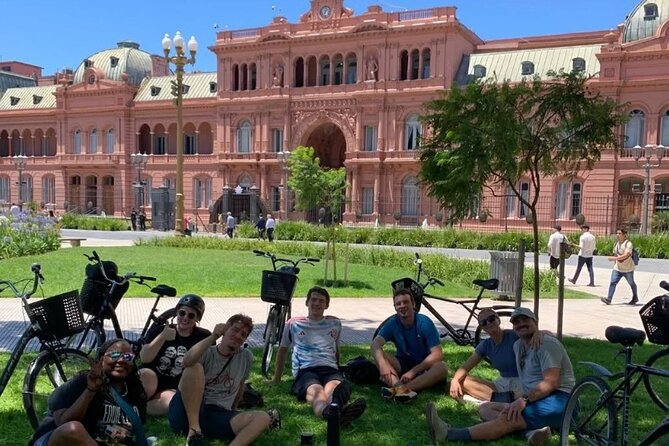
From Palacio Libertad, the walk reaches Plaza de Mayo, the political center of Buenos Aires. You will see Casa Rosada, the pink Government House, along with buildings from European, colonial, and postmodern traditions.
The square is also where three large avenues open outward, giving you a sense of how Buenos Aires expands from its historic core. The mention of an old fort behind the Government House adds an important layer to the view. The present city grew over earlier military and colonial foundations, even when the modern streets make that past easy to overlook.
The stop lasts about 20 minutes, and admission is included. That does not necessarily mean a long indoor visit, but it does mean there is no extra ticket charge attached to this part of the program.
This is one of the most useful stops for a first-time introduction because it connects architecture with national identity. Casa Rosada is not just a photogenic pink façade. It is the symbol at the center of Argentina’s public life, and Plaza de Mayo is the place where the city’s history, demonstrations, ceremonies, and daily movement meet.
The city’s old corners near Buenos Aires Museo
The Buenos Aires Museo, also called Museo de la Ciudad, brings the walk into a more intimate section of the center. You will encounter the city’s oldest house, known as Altos de Elorriaga, the Baroque Convent of San Francisco, El Ávila, described as the oldest bookstore, and the former Pacific Railway Company building with its onion dome.
The route is presented as a set of alleyways that can remind you of Barcelona. That comparison points to the visual pleasure of this part of the walk: narrow passages, varied façades, and architectural fragments packed close together.
You have only 15 minutes here, and admission is not included. That short timing suggests a guided exterior look rather than a thorough museum visit. If the Buenos Aires Museo is a priority, check whether you can return later with a separate ticket and more time.
I like this section because it gives you a break from the monumental scale of Plaza de Mayo. The city is not only government palaces and grand avenues. Its older identity also survives in modest houses, religious buildings, bookshops, and irregular side streets.
A completely different kind of day:
- Buenos Aires Hop-On Hop-Off Bus, Free Walking Tours & Discounts
★ 4.5 · 2,218 reviews - Buenos Aires: Piazzolla Tango Show with Optional Dinner
★ 4.4 · 2,122 reviews - Buenos Aires: City Highlights Guided Tour with Transfer
★ 4.7 · 1,946 reviews - Buenos Aires: Hop-On Hop-Off City Bus Tour
★ 4.2 · 1,855 reviews
Colegio Nacional and San Ignacio Loyola
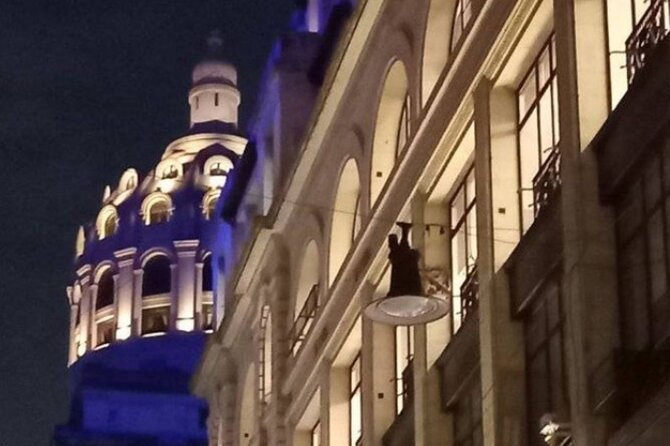
The next stop pairs education and religion. Colegio Nacional de Buenos Aires operates under the University of Buenos Aires and dates from the late 19th century. It is presented as an emblem of Argentina’s period of national power, with presidents and scientists among those who passed through its halls.
Albert Einstein is also connected to the building through a master class he gave there. That detail gives the college a wider intellectual reach, though your visit is brief, about 10 minutes.
Beside the school is San Ignacio Loyola, described as the oldest church in Buenos Aires. Its colonial Baroque design is a visual contrast to the more formal institutional architecture nearby. The church is also associated with tunnels beneath the building, an intriguing detail that raises questions about the city’s colonial defenses and underground spaces.
The admission ticket is not included. With just 10 minutes at this stop, you should treat it as an exterior explanation unless the guide confirms that entry is available. The pairing works well because it shows two kinds of old authority: the church and the school.
Otto Wulff, Buenos Aires architecture at its strangest
Edificio Otto Wulff is likely the most unusual stop on the route. The building is covered with sculptural figures, including South American animals and atlantes, the human figures that appear to support the structure.
Its architect, Hungarian designer Rônow, gave the building two domes that rise above the street and carry references to the Austro-Hungarian crown. The style is identified as Jugendstil, a branch of the Art Nouveau movement.
You get about 15 minutes here. Admission is not included, but this is the kind of place where the exterior is the main event. Look upward. The building rewards a slow scan from the lower sculptures to the domes, especially if the guide points out details you would otherwise pass without noticing.
I consider this a strong reason to take the walk. Famous landmarks are easy to find in a guidebook. Distinctive buildings like Otto Wulff are harder to place in a sensible route, and a local guide can explain why its decoration looks so different from the surrounding city.
Edificio Bencich and the five domes
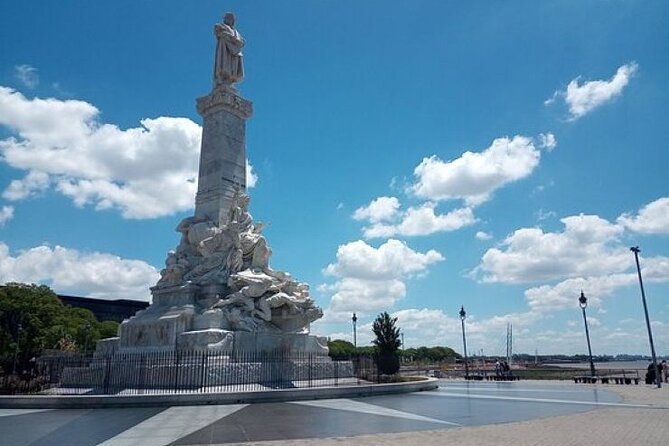
Edificio Bencich offers another lesson in decorative commercial architecture. At the corner known as the Five Domes, you will see Spanish Neoplateresque design combined with octagonal roofs, Art Deco domes, finials, and gazebos.
The building opens over the North Diagonal, adding height and visual drama to one of the city’s central corridors. The stop lasts about 15 minutes, and admission is free.
This is a good example of why the tour is aimed at people who enjoy looking up. Buenos Aires has famous avenues, but its upper façades often carry the most surprising work. The mix of roof forms can be difficult to understand from a quick photograph, so the guide’s explanation should help you separate the Spanish references from the later Art Deco touches.
The route also makes a useful point about the city’s identity. Buenos Aires borrowed heavily from Europe, but it did not reproduce one style in a tidy way. Different architects and periods left their marks on the same blocks.
The Obelisco viewpoint

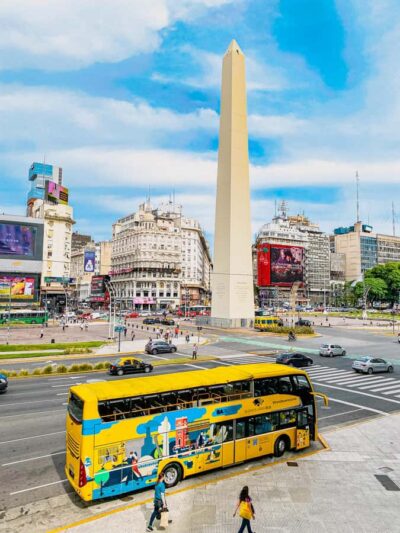
The Obelisco is the most instantly recognizable landmark on this walk. Alberto Prebisch designed it, and it became a symbol of national celebrations as well as the city’s move from the Belle Époque toward the modernist direction of the 1930s.
The planned 10-minute stop includes access to a viewpoint, which gives this section more than a street-level photo opportunity. The experience is still brief, so do not expect an extended visit or a long historical presentation. But the elevated look can help you understand the Obelisco’s relationship to the surrounding avenues.
This is also one of the stops where timing matters. Buenos Aires traffic and city movement are part of the setting, and the monument is not a quiet museum object. Keep your belongings secure and follow the guide’s instructions when crossing streets or moving toward the viewpoint.
Teatro Colón closes the route
The tour ends at Teatro Colón on Cerrito 628, one of Latin America’s most famous opera houses. Its Italianate design, renowned acoustics, chamber subfloors, and connection to major performers give it an important place in the cultural life of Buenos Aires.
The final 15 minutes also take in the grand buildings and public spaces nearby, including Lavalle, the Palace of Tribunals, Teatro Hispano Cervantes, Libertad Synagogue, and Escuela Roca. That surrounding group matters. Teatro Colón is not isolated. It belongs to a district of institutions, theaters, courts, religious buildings, and formal plazas.
Admission to Teatro Colón is not included, so you will need a separate ticket if you want an interior visit. Since the walk ends here, that makes planning easy. You can arrange a later tour or return on another day without backtracking to the starting point.
If Teatro Colón is high on your list, ask before booking whether the walking tour schedule leaves enough time for a separate visit. The route provides an introduction, not a full guided tour of the opera house.
What the $35 price gets you
At $35, this is reasonably priced for a three-hour small-group city walk if the guide delivers the expected commentary and the group stays near its 12-person limit. You are paying mainly for route design, local interpretation, and a way to connect eight stops that would otherwise require your own map work.
The price includes all fees and taxes. It does not include lunch, drinks, personal purchases, or admission at several locations. The food note lists empanadas, breaded meat, meat sandwiches, red wine, choripán, salad, and a gluten-free option as not included, so do not arrive expecting a meal.
The value is strongest for an independent-minded visitor who wants orientation on the first day in Buenos Aires. You can use the route to decide which buildings deserve a second look. The value is weaker if you want long indoor visits, a sit-down meal, or a tour centered on one subject such as tango or politics.
Guide quality and the service warning
Mati, also referred to as Matias, receives repeated praise for his approach. He is described as personable, passionate about architecture, and able to explain Argentine culture with humor. His work has also been praised for extending beyond the scheduled activity, including help arranging tickets and a guide for a football match.
Those comments fit the design of this route. It needs a guide who can connect architecture, history, local life, and small details without turning the walk into a list of dates.
But I would not ignore the serious service warning. One customer described arriving early for a 4:00 PM departure, then receiving no response to a WhatsApp message, phone call, or voicemail when the guide failed to appear. The customer also reported not receiving a refund or explanation at that point.
That single account conflicts sharply with the positive descriptions of Mati. It does not prove that every booking will fail, but it creates a practical reason to protect your schedule. Confirm the meeting point and departure shortly before the walk, save the provider’s contact information, and avoid booking this as your only activity on a day when a missed tour would cause major trouble.
The stated cancellation policy allows a full refund if you cancel at least 24 hours before the start time. Cancellations within 24 hours are not refundable. Poor weather may lead to another date or a full refund.
Who should book this walk?
I would recommend it to you if you want:
- A first look at central Buenos Aires in about three hours
- A small group rather than a large coach
- Architectural details and city history in the same walk
- A route that includes famous sights and less obvious buildings
- English-language guiding
- A finish near Teatro Colón, where you can continue sightseeing
You might want another type of experience if you need extensive interior access, a slower pace, or guaranteed food. The schedule gives many stops only 10 to 20 minutes, so the route favors variety over depth.
It can also suit repeat visitors who have already seen Plaza de Mayo and the Obelisco but want help noticing Otto Wulff, Edificio Bencich, San Ignacio Loyola, and the older streets around the Buenos Aires Museo.
My booking verdict
I would book this tour for its route and its architectural focus, but I would do so with a backup plan. The strongest features are the small group size, the unusual buildings, the viewpoint at the Obelisco, and the chance to hear Mati’s personal take on Buenos Aires if he is leading the walk.
At $35, it offers fair value for a compact orientation. The no-show complaint is too serious to brush aside, however. Confirm the appointment close to departure, keep evidence of your booking, and do not place an important airport transfer or prepaid dinner immediately afterward.
If you want a practical first afternoon in the city and can accept that service risk, this is a worthwhile choice. If reliability matters more than an interesting route, choose a provider with a more consistently documented operating record.
FAQ
How long does the Buenos Aires to Get to Know Each Other tour last?
The experience lasts approximately three hours to three hours and 20 minutes.
Where does the tour begin?
It begins at Palacio Libertad, Centro Cultural Domingo Faustino Sarmiento, at Sarmiento 151 in Buenos Aires.
Where does the tour end?
The tour ends at Teatro Colón, at Cerrito 628.
What language is the tour offered in?
The tour is offered in English.
How large is the group?
The experience has a maximum of 12 participants.
Is admission included at every stop?
No. All fees and taxes are included, but admission is not included at Palacio Libertad, Buenos Aires Museo, Colegio Nacional de Buenos Aires, Edificio Otto Wulff, and Teatro Colón. Plaza de Mayo and the Obelisco are listed with admission included, while Edificio Bencich is free.
Is food included?
No. Lunch and items such as empanadas, breaded meat, meat sandwiches, red wine, choripán, salad, and a gluten-free option are not included.
Can I cancel for a full refund?
Yes, if you cancel at least 24 hours before the experience start time. Cancellations made less than 24 hours before the start time are not refundable.
What happens if bad weather cancels the tour?
If poor weather causes cancellation, you will be offered another date or a full refund.
Just added in Buenos Aires
- Discover Buenos Aires’ independent art scene — Ticket included★ 5.0 · 30 reviews
- Photo Session in Buenos Aires★ 5.0 · 26 reviews
- Your Private Photographer in Buenos Aires★ 5.0 · 4 reviews
- Yerba Mate Workshop – Learn to Drink Mate like a Local!★ 5.0 · 11 reviews
- Your Personal Photographer in Buenos Aires★ 5.0 · 24 reviews
- BA: Wine Tasting and Blending Experience in Palermo★ 5.0 · 1 review
- Winery and Tasting Experience in Buenos Aires★ 5.0 · 1 review
- Taste of Tradition: Yerba Mate & Alfajores Experience★ 4.0 · 5 reviews
Buenos Aires Tours, compared.
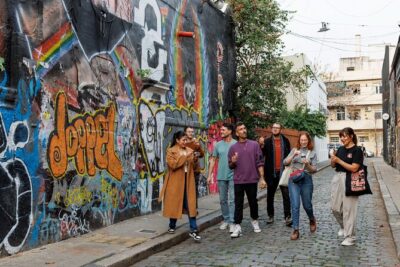
Local Foodie Adventure in Buenos Aires with Sherpa Food Tours
Read our review →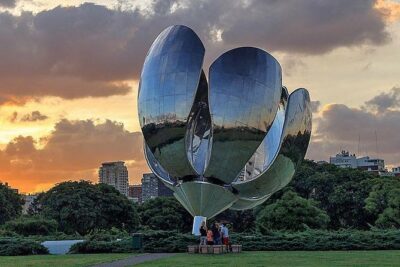
Buenos Aires City Private Tour with Local Guide
Read our review →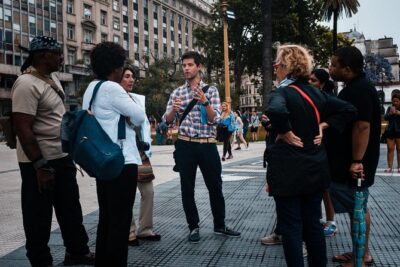
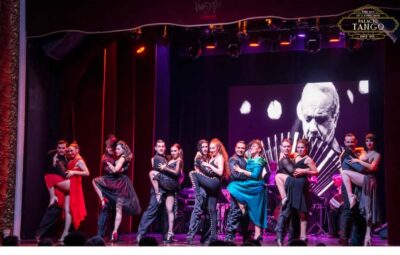
Buenos Aires Hop-On Hop-Off Bus and Exclusive Benefits
Read our review →