Reviewed · BUENOS AIRES TOURS
Buenos Aires The dark years of the Dirty War
History leaves scars. This private Buenos Aires tour connects the city’s most important Dirty War sites, from the memorials at Parque de la Memoria to the former ESMA detention center. I like the way it combines serious historical context with actual places, and I like the flexibility of a private guide who can adjust the day to your interests. The main caution is that museums and memorial spaces may close on holidays or without much warning, so the exact plan can change.
The subject is painful, and this is not a light sightseeing outing. Still, guides such as Howard and John have earned praise for their calm, clear explanations and their ability to discuss politics, economics, and Argentine society without turning the tour into a lecture. At $219.36 per person, the price is high, but private transportation across a huge city makes more sense when you consider how scattered these sites are.
In This Review
- Key points to know before booking
- Why the Dirty War needs more than a textbook
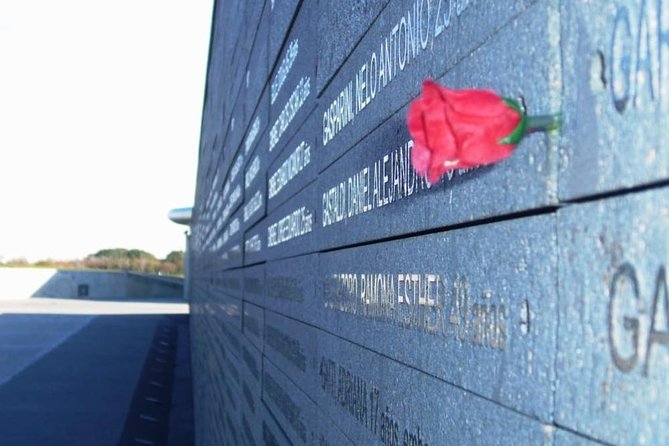
- Parque de la Memoria and the names of the disappeared
- Former ESMA, the tour’s hardest stop
- Plaza de Mayo and the Mothers’ weekly protest
- Club Atlético and a detention center lost beneath a motorway
- The Malvinas memorial and the dictatorship’s final years
- The value of a private car across Buenos Aires
- Is $219.36 per person fair?
- Who will appreciate this experience most?
- Should you book Buenos Aires: The Dark Years of the Dirty War?
- FAQ
- How long does the tour last?
- What sites are included?
- Is admission included?
- Is this a private tour?
- How many people are required to book?
- Can I cancel for a full refund?
Key points to know before booking
- Parque de la Memoria honors the disappeared: A large memorial beside the Río de la Plata gives names and meaning to the thousands killed or abducted during the dictatorship.
- Former ESMA is the emotional center: The navy training school was used to detain and torture prisoners, making this the most difficult and important stop for many people.
- A private vehicle saves time: The sites are spread across Buenos Aires, and the tour fits several distant locations into roughly four to five hours.
- Plaza de Mayo links past and present: You see where the Mothers of Plaza de Mayo continue their weekly public demand for answers.
- The route can be adapted: Howard and John adjusted plans for guests who had already visited some locations or needed a gentler pace.
- Museum closures are a real concern: ESMA and the Malvinas-related facilities have sometimes been closed, including on holidays, so confirm the day’s access before setting your expectations.
Why the Dirty War needs more than a textbook
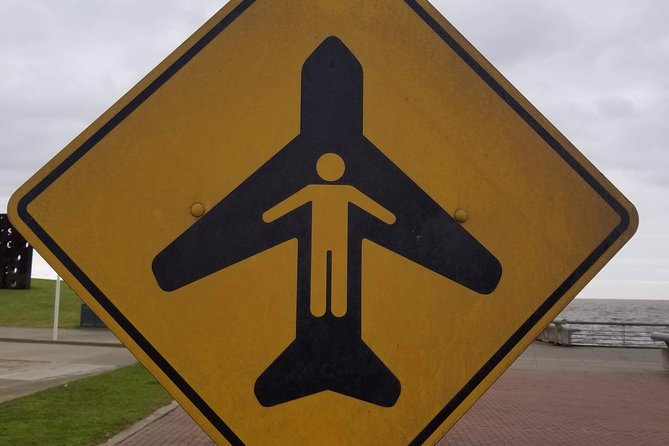
Argentina’s Dirty War refers to the military dictatorship and its campaign against people accused of being political opponents, activists, or subversives. Thousands were abducted, held in secret detention centers, tortured, and killed. Many simply disappeared, leaving families without bodies, records, or clear answers.
You do not need a specialist background to follow this tour. A good guide builds the story step by step, explaining the political and economic setting before showing you the places where the violence occurred. That matters because the sites can otherwise feel disconnected: a plaza here, a memorial there, an ordinary-looking building somewhere else.
I especially value the human scale of this experience. It does not reduce the period to dates and military leaders. You see how families organized, how the Mothers of Plaza de Mayo kept public pressure alive, and how researchers still work to document crimes and hold those responsible accountable.
The mood is sober. You may find the visit emotionally heavy, especially at ESMA and the memorial to the disappeared. That is part of the point, but you should leave enough space in your day afterward rather than scheduling a major party or a packed museum visit immediately after.
More things to do in Buenos Aires:
- Local Foodie Adventure in Buenos Aires with Sherpa Food Tours
★ 5.0 · 6,875 reviews - Buenos Aires City Private Tour with Local Guide
★ 5.0 · 3,475 reviews - Buenos Aires Small-Group City Tour
★ 5.0 · 2,226 reviews
Parque de la Memoria and the names of the disappeared
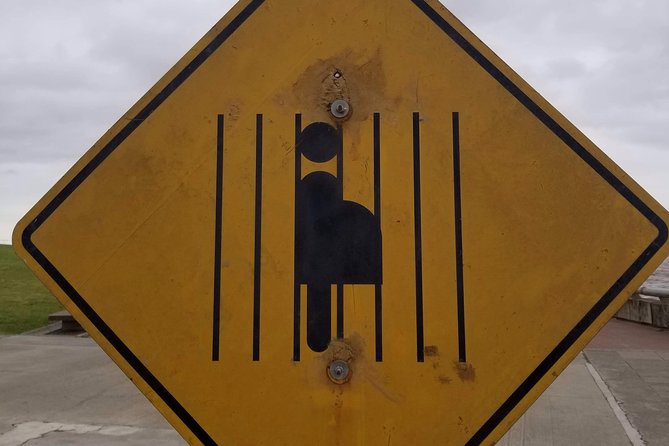
The tour begins at Parque de la Memoria, where you spend about an hour. The park is dedicated to people murdered or disappeared during the dictatorship, and its memorial gives the history a physical presence rather than leaving it as an abstract national tragedy.
This is a strong opening stop because the guide can establish the basic story before you enter the former detention centers. You can expect an explanation of the dictatorship, the disappearances, and the scale of the violence. The setting beside the river also carries a grim connection to the crimes, since victims were thrown from military aircraft into the water.
The park is not simply a place for photographs. The memorial asks you to think about names, families, and the long process of identifying what happened. A guide adds real value here by explaining what you are seeing and answering questions that would be hard to resolve from signs alone.
Admission is listed as free. The main limitation is that an outdoor memorial cannot explain every part of the period by itself. If you have already studied Argentine history, you may want to ask the guide to spend more time on political groups, international influences, or the later justice process.
Former ESMA, the tour’s hardest stop
Espacio Memoria y Derechos Humanos, the former ESMA, is usually the most important stop on the route. ESMA was a navy training school, but parts of the complex were used as a clandestine detention and torture center. Prisoners were held there before many were murdered, including victims who were sedated and thrown from military planes.
You spend about an hour at the site. The power of the visit comes from the contrast between the institution’s official purpose and what took place inside it. The buildings were part of a functioning military complex, yet hidden rooms and detention areas were used for systematic abuse.
This is where a guide’s judgment matters most. Howard was praised for explaining the site with care and for answering difficult questions clearly. John was also described as measured and objective, with commentary that connected the place to the wider political and social events of the period.
Do not assume every part of the museum will be open. ESMA and related museum spaces have been closed at times, including during holidays. That can be a major disappointment because this is often the stop you most want to see. Ask the operator to confirm access before the tour, and ask what replacement sites or explanations will be offered if the doors are shut.
Even when access is limited, a good guide can still explain the role of ESMA and place the building within the wider network of secret detention centers. That does not fully replace entering the site, but it can keep the day useful rather than allowing one closure to spoil the entire experience.
Plaza de Mayo and the Mothers’ weekly protest
The visit to Plaza de Mayo lasts about 40 minutes. This is the political heart of Buenos Aires, surrounded by major civic buildings and full of national symbolism. On the plaza, the Mothers of Plaza de Mayo have marched weekly to remember their missing children and demand justice.
The value here is that the Dirty War is not presented as a sealed chapter. The public action of the Mothers shows how memory became part of city life and Argentine politics. Their white headscarves and repeated marches became a visible symbol of families refusing to let the disappeared be forgotten.
Your guide can explain the difference between memorializing the dead and demanding information about people whose fate was never properly acknowledged. That distinction is central to understanding why the Mothers’ movement remains so powerful.
Plaza de Mayo is also the point where this tour may feel most connected to ordinary Buenos Aires. It is not an isolated museum room. It is an active public square, and the same space has been used for political gatherings, protests, celebrations, and official ceremonies.
The stop is relatively short, so ask questions while you are there. If you want more time for photographs, further discussion, or nearby sights, tell the guide early. A private tour gives you more room to shape the pace than a large group outing.
A completely different kind of day:
- Buenos Aires Hop-On Hop-Off Bus, Free Walking Tours & Discounts
★ 4.5 · 2,218 reviews - Buenos Aires: Piazzolla Tango Show with Optional Dinner
★ 4.4 · 2,122 reviews - Buenos Aires: City Highlights Guided Tour with Transfer
★ 4.7 · 1,946 reviews - Buenos Aires: Hop-On Hop-Off City Bus Tour
★ 4.2 · 1,855 reviews
Club Atlético and a detention center lost beneath a motorway
The former clandestine center known as Club Atlético receives about 30 minutes. It operated in the basement of what was then the Federal Police supply service, where more than 1,500 people were kidnapped and tortured.
The most striking fact is that the original building was demolished to make way for a motorway. That detail gives the stop an added layer of discomfort. The place where crimes occurred was physically erased, yet the memory and evidence did not disappear with the structure.
You may find this a less visually complete stop than ESMA because the former building no longer survives in its original form. Its value comes from understanding how secret detention sites were woven into the city and how urban development could obscure the evidence.
A guide helps you imagine the site without pretending that the missing building is still there. The stop also shows why documentation matters. Researchers and human rights groups have had to reconstruct events from testimony, records, surviving traces, and the accounts of families.
Because the visit lasts only half an hour, it works best as part of the larger route. On its own, you might leave with too many questions. Alongside Parque de la Memoria and ESMA, it helps show the scale and organization of the repression.
The Malvinas memorial and the dictatorship’s final years
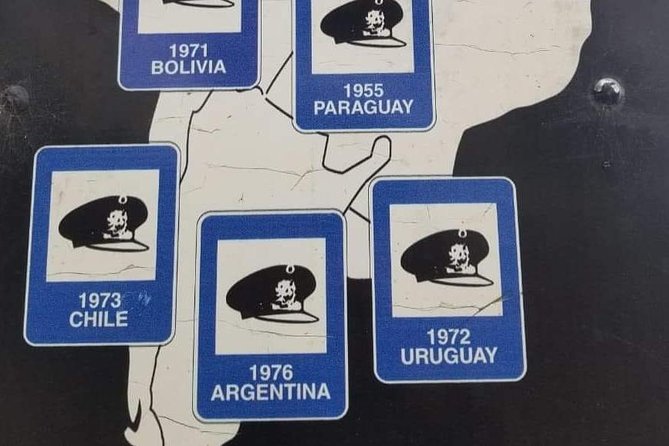
The Monumento a Combatientes de Malvinas commemorates Argentine soldiers who died in the 1982 Falklands War, known in Argentina as the Malvinas War. The stop lasts about 40 minutes.
At first, the memorial may seem separate from the Dirty War. It is not. The war took place during the dictatorship and forms part of the final period of military rule. The conflict caused heavy losses and helped expose the weakness of the regime, contributing to its eventual end.
This stop broadens the tour beyond the secret detention centers. You are not only learning about disappearances and torture. You are also seeing how the government used nationalism and military power, and how the Malvinas defeat affected Argentina’s political future.
Access to Malvinas-related museum spaces can vary. One guest found the museum closed, which was especially frustrating because it was expected to be a key part of the day. Confirm what will be open, and ask whether the guide will substitute another location or provide a fuller explanation at the memorial itself.
Even if the indoor museum is unavailable, the monument remains useful when the guide connects it to the wider story. Without that explanation, it could feel like an unrelated military memorial. With context, it becomes an important final piece.
The value of a private car across Buenos Aires
This is not a compact walking tour. The five stops are scattered around Buenos Aires, and moving between them by public transport would take planning, transfers, and time. The private vehicle is therefore more than a comfort. It is what makes the full route practical in half a day.
The published duration is about four to five hours, beginning at 10:00 a.m. A guide and driver can handle the movement between sites while you focus on the discussion. John was praised for being a skilled chauffeur as well as a strong guide, and the private format means only your group participates.
That format also helps if you have already visited one of the locations. The day can be adjusted around what you have seen and what you want to understand better. One family traveling with an elderly mother also found the guide attentive to physical limitations, which is useful on an emotionally demanding day with several stops.
The tour requires at least two people per booking. Smart-casual clothing is requested, and the meeting area is near public transportation, though pickup details should be confirmed when you reserve. Food and drinks are not included, so plan to eat before or after the tour.
The tour is described as suitable for most people, but physical ease and emotional readiness are different questions. You should be comfortable visiting former torture sites and hearing about murder, disappearance, and state violence.
Is $219.36 per person fair?
At $219.36 per person, this is not a budget history walk. The price makes the most sense for two or more people who want a private vehicle, a guide who can answer detailed questions, and several sites in one morning or afternoon.
You are paying for access to a difficult subject, but also for the time saved crossing Buenos Aires. If you tried to organize Parque de la Memoria, ESMA, Plaza de Mayo, Club Atlético, and the Malvinas memorial independently, you would need to research opening hours, plan transportation, and build in extra time between locations.
The value drops if several major sites are closed and the replacement plan is not clear. The itinerary lists free admission at every stop, so the fee is mainly for guiding, transportation, planning, and the private experience rather than entrance tickets.
I would ask three questions before booking:
- Will ESMA be open on the chosen date?
- Will the Malvinas museum or memorial facilities be accessible?
- What sites will replace them if they are closed?
Those answers can make the difference between a strong private tour and an expensive drive past locked doors.
Who will appreciate this experience most?
I would recommend this tour to anyone interested in Argentine politics, human rights, military dictatorships, the Cold War, Latin American history, or the way societies remember state violence. It also suits visitors who want to see parts of Buenos Aires that are difficult to connect by public transport in a single day.
It is a good choice for families with older children or teenagers who can handle serious material. A parent and teenage daughter found the day meaningful and informative, with room to discuss both history and present-day culture.
You should think twice if you want a relaxed sightseeing outing or if you find descriptions of torture and murder too distressing. The guide can explain the material thoughtfully, but the subject itself cannot be softened without losing its meaning.
The private setup is also useful for people who prefer questions and conversation over a fixed speech. Howard adapted the route to previous sightseeing, and John adjusted the day to suit his group. That flexibility is one of the clearest reasons to choose this tour over a standard group excursion.
Should you book Buenos Aires: The Dark Years of the Dirty War?
Book it if you want a serious, well-guided look at Argentina’s dictatorship and you value reaching several distant sites in one day. The strongest parts are the private transportation, the guide’s ability to explain difficult material, and the chance to connect memorials, detention centers, public protest, and the Malvinas War.
Before paying, confirm opening hours for ESMA and the Malvinas facilities. If those sites are accessible, the tour offers unusually direct contact with Argentina’s recent past. If they are closed, the day can still work, but only if the guide has a clear replacement plan.
The experience is emotionally demanding, but it gives you a better understanding of Buenos Aires than a standard city tour. For a subject this important, that kind of context is worth making room for.
FAQ
How long does the tour last?
The tour lasts approximately four to five hours and starts at 10:00 a.m.
What sites are included?
The route includes Parque de la Memoria, Espacio Memoria y Derechos Humanos at the former ESMA, Plaza de Mayo, the former Club Atlético detention center, and the Monumento a Combatientes de Malvinas.
Is admission included?
Admission tickets are listed as free at all five stops. Food and drinks are not included.
Is this a private tour?
Yes. Only your group participates in the activity.
How many people are required to book?
A minimum of two people per booking is required.
Can I cancel for a full refund?
Yes. You can cancel at least 24 hours before the experience start time for a full refund. Cancellations or changes made less than 24 hours in advance are not accepted for a refund.
Just added in Buenos Aires
- Discover Buenos Aires’ independent art scene — Ticket included★ 5.0 · 30 reviews
- Photo Session in Buenos Aires★ 5.0 · 26 reviews
- Your Private Photographer in Buenos Aires★ 5.0 · 4 reviews
- Yerba Mate Workshop – Learn to Drink Mate like a Local!★ 5.0 · 11 reviews
- Your Personal Photographer in Buenos Aires★ 5.0 · 24 reviews
- BA: Wine Tasting and Blending Experience in Palermo★ 5.0 · 1 review
- Winery and Tasting Experience in Buenos Aires★ 5.0 · 1 review
- Taste of Tradition: Yerba Mate & Alfajores Experience★ 4.0 · 5 reviews
Buenos Aires Tours, compared.
Local Foodie Adventure in Buenos Aires with Sherpa Food Tours
Read our review →
Buenos Aires City Private Tour with Local Guide
Read our review →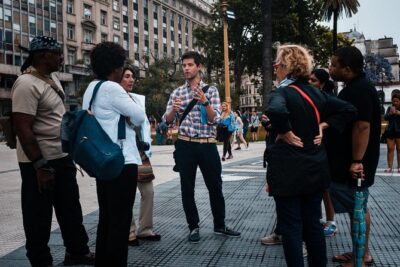
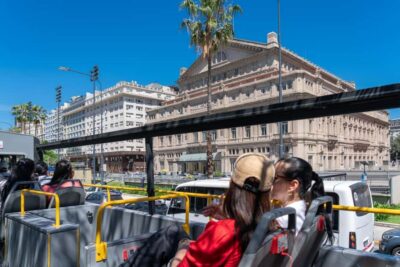
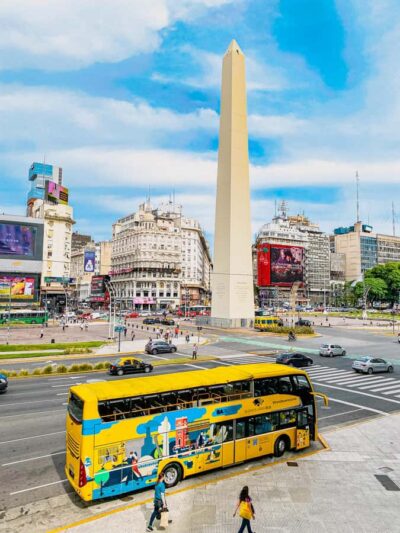
Buenos Aires Hop-On Hop-Off Bus and Exclusive Benefits
Read our review →