Reviewed · BUENOS AIRES TOURS
Buenos Aires: Panoramic Bus Tour
Buenos Aires reveals itself quickly. I like the way this three-hour panoramic bus tour links old districts, grand avenues, colorful La Boca, and sleek Puerto Madero without asking you to master the city map first. I also like the two planned photo stops, Plaza de Mayo and Caminito, since they give you time to step off, look around, and take proper pictures. The main drawback is a tight schedule, especially with a group of roughly 30 people, so this is an introduction rather than a leisurely neighborhood walk.
The tour earns its strongest praise for its friendly professional guides and clear introduction to local customs, architecture, and city history. You will see far more ground than you could cover comfortably on foot in three hours, but you should expect limited free time at most stops and some waiting while everyone returns to the bus.
In This Review
- Key points to know before booking
- Why this bus tour works well in Buenos Aires
- San Nicolás: the Obelisk and the city that stays awake
- Monserrat: Buenos Aires at its political center
- San Telmo: old streets and tango tradition
- La Boca: color, immigration, and Caminito
- Puerto Madero: a sharp turn toward modern Buenos Aires
- Retiro: an immigrant gateway and elegant city quarter
- Palermo: the city’s largest district
- Recoleta: grand buildings and the famous cemetery
- How the three-hour format affects your experience
- Is $55 a fair price for this Buenos Aires tour?
- Who should book this panoramic tour?
- FAQ
- How long does the Buenos Aires panoramic bus tour last?
- What neighborhoods does the tour visit?
- Where are the photo stops?
- How long are the photo stops?
- What languages are available?
- Is hotel pickup included?
- Can I cancel the booking?
- Should you book it?
Key points to know before booking
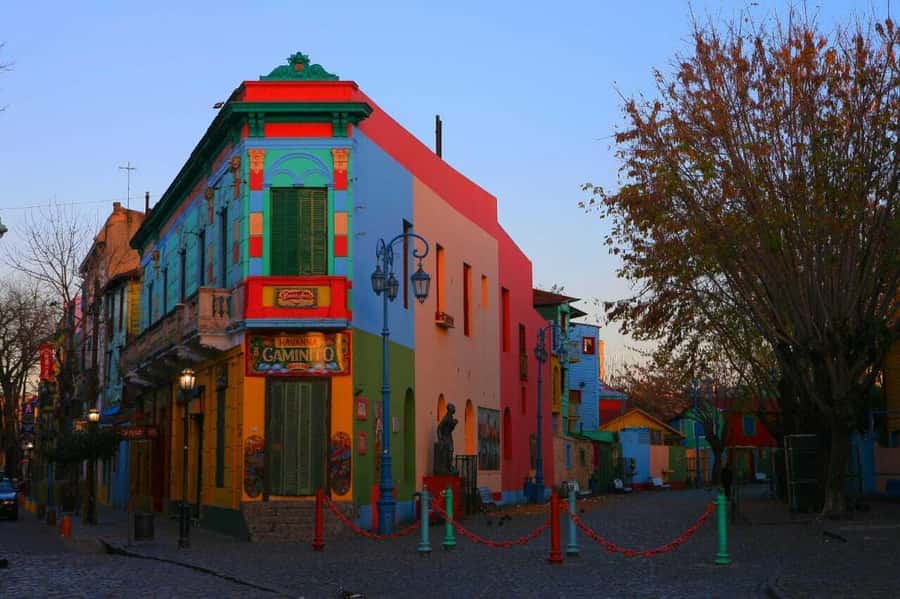
- Two proper photo stops: Spend about 30 minutes at Plaza de Mayo and another 30 minutes around Caminito in La Boca.
- Eight major districts in one outing: The route covers San Nicolás, Monserrat, San Telmo, La Boca, Puerto Madero, Retiro, Palermo, and Recoleta.
- A useful first-day orientation: The bus connects landmarks that are spread widely across Buenos Aires.
- A bilingual guide leads the way: Tours are offered in English, Portuguese, and Spanish.
- Hotel pickup may be available: Your closest pickup location is assigned after booking, depending on your hotel.
- A compact group tour: One verified account describes a coach with more than 30 people, which helps explain the fixed timing.
Why this bus tour works well in Buenos Aires
Buenos Aires is not a city you can understand from one central square. Its districts feel like separate chapters. San Nicolás gives you the city center and theater district. Monserrat brings the political heart. San Telmo supplies old streets and tango connections. La Boca adds color and immigrant culture, while Palermo and Recoleta show a more polished side of the capital.
That spread is the main reason to consider a bus tour. You are not simply riding past random streets. The route gives you a basic mental map of the city, then attaches famous sights to the neighborhoods where they belong.
I would especially consider this outing if you have only a short stay, are visiting Buenos Aires for the first time, or prefer a guide to explain what you are seeing as the bus moves. It also works well early in a trip. Afterward, you can decide which districts deserve a longer return visit.
The tradeoff is pace. Three hours sounds generous, but Buenos Aires covers a lot of ground. The stops are focused, and the coach must keep to its route. If you want long café breaks, museum visits, or time to browse local shops, you will need a separate day.
More things to do in Buenos Aires:
- Local Foodie Adventure in Buenos Aires with Sherpa Food Tours
★ 5.0 · 6,875 reviews - Buenos Aires City Private Tour with Local Guide
★ 5.0 · 3,475 reviews - Buenos Aires Small-Group City Tour
★ 5.0 · 2,226 reviews
San Nicolás: the Obelisk and the city that stays awake
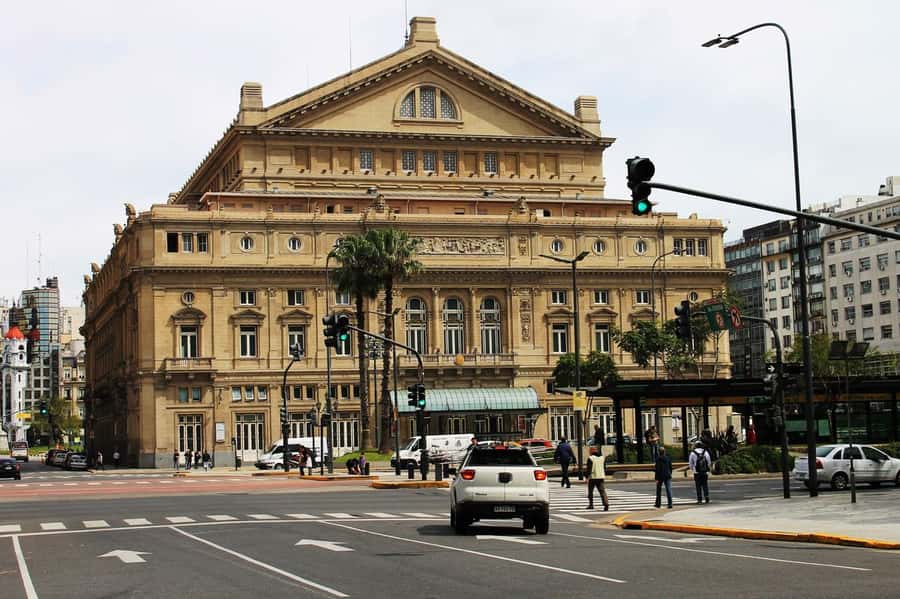
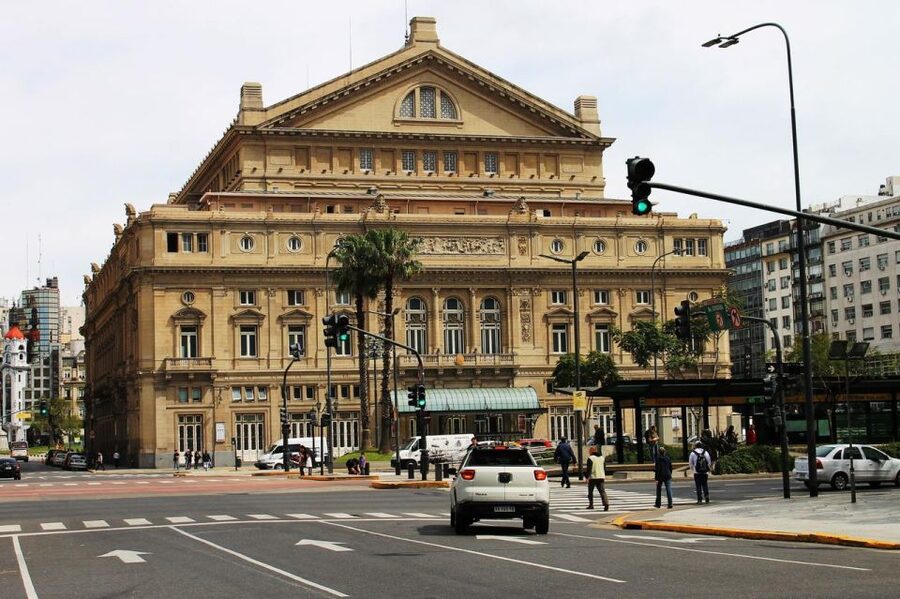
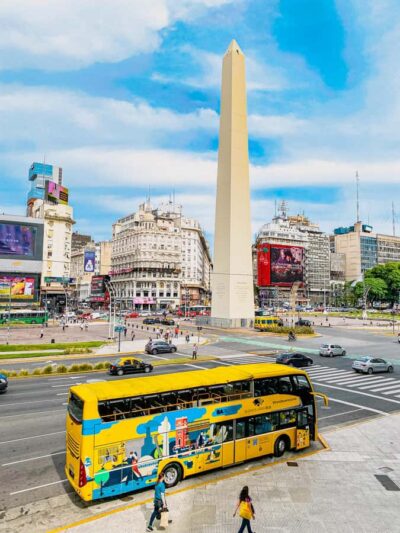
The tour finishes at the Obelisk, but you encounter San Nicolás earlier in the route. This central district is home to the Obelisk, the Colón Theatre, and Corrientes Avenue, one of Buenos Aires’ best-known entertainment streets.
The panoramic bus view is useful here. You can take in the scale of the avenues and see how the Obelisk acts as a visual marker in the city center. The Colón Theatre is another highlight, especially if you appreciate grand public buildings and the city’s long connection with opera, theater, and music.
Corrientes Avenue is known for its theaters and restaurants. The guide’s explanation helps connect the street to local habits, not just architecture. You will hear why it is often called the avenue that never sleeps, though this short tour does not give you time to sample its nightlife.
Do not expect a theater visit or a long stop in San Nicolás. This section is about orientation and views. The final stop at the Obelisk gives you a convenient central ending point, but it also means your sightseeing day is not fully door to door.
Monserrat: Buenos Aires at its political center
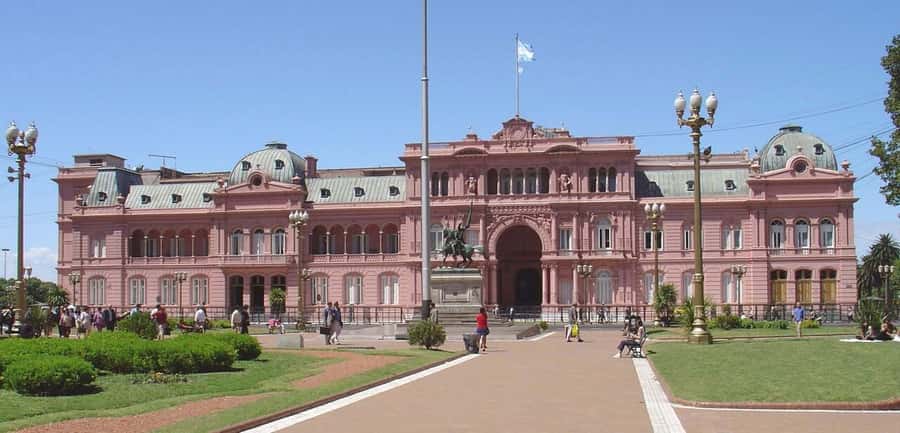
Monserrat contains some of the city’s most important national symbols. The key stop is Plaza de Mayo, where you get about 30 minutes for photographs and a closer look.
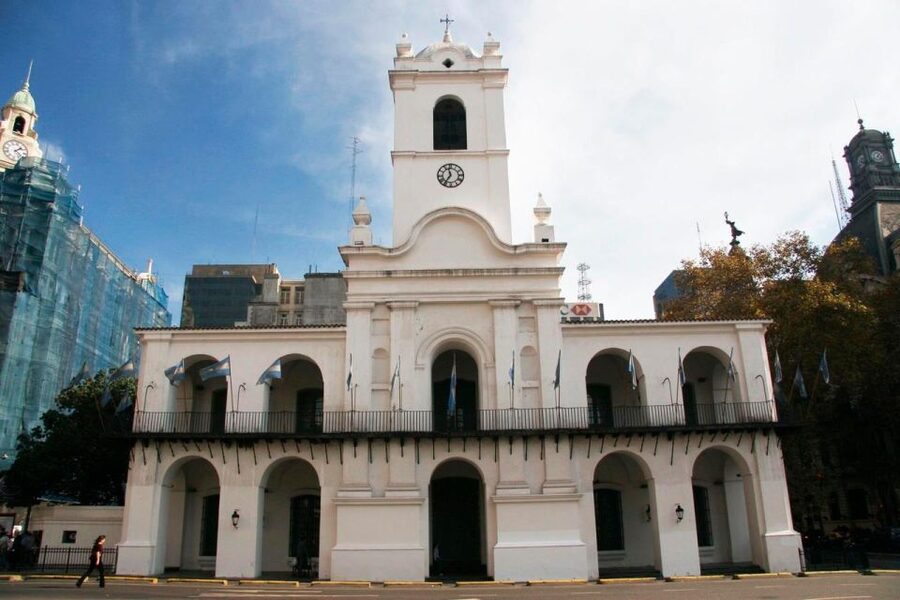
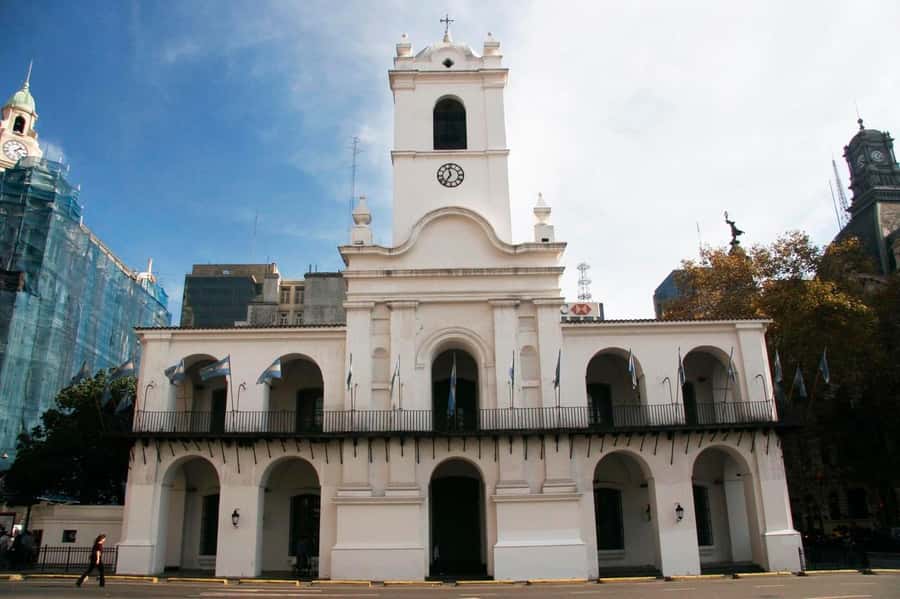
From here, the guide points out the Casa Rosada, the Cabildo, the Cathedral, and Avenida de Mayo. These places help explain how Buenos Aires developed as Argentina’s seat of government and public life. Plaza de Mayo is not just a pretty open space. It is the place to connect the city’s colonial beginnings, political events, and civic identity.
This is one of the strongest parts of the tour because the stop gives you time outside the coach. You can frame the Casa Rosada, study the surrounding buildings, and get a sense of the square’s size.
Still, half an hour passes quickly. You will want to stay aware of the meeting time and listen for instructions about where to rejoin the bus. The tour is designed to show you the main sights, not to provide an extended visit inside any building.
San Telmo: old streets and tango tradition
San Telmo is one of Buenos Aires’ oldest and most traditional districts. The route introduces you to the historic center, Defensa Street, Lezama Park, and the Casa Mínima.
The guide also places San Telmo in the context of tango. You may see references to its many tango venues, known locally as tanguerías, as the bus moves through the district. That matters because tango is not treated as a separate stage show here. It is tied to the streets, neighborhoods, and social life of the city.
San Telmo is the sort of district that rewards a slower return visit. On this bus tour, you mainly receive the explanation and visual introduction. You will not have much time to wander through side streets or stop at a café.
I like this part of the route because it adds texture between the large civic squares and modern waterfront. It shows that Buenos Aires is not only about monumental avenues. Its older districts have a more intimate scale, even if the bus can only offer a brief look.
A completely different kind of day:
- Buenos Aires Hop-On Hop-Off Bus, Free Walking Tours & Discounts
★ 4.5 · 2,218 reviews - Buenos Aires: Piazzolla Tango Show with Optional Dinner
★ 4.4 · 2,122 reviews - Buenos Aires: City Highlights Guided Tour with Transfer
★ 4.7 · 1,946 reviews - Buenos Aires: Hop-On Hop-Off City Bus Tour
★ 4.2 · 1,855 reviews
La Boca: color, immigration, and Caminito
La Boca provides the tour’s most distinctive stop. You leave the bus for about 30 minutes around Caminito, the colorful pedestrian area that has become one of Buenos Aires’ best-known images.
The guide explains how immigrants settled in this area because of nearby work opportunities. Many built homes from wood and sheet metal, then used leftover paint from the shipyards to give the walls their bright colors. That simple detail makes the district easier to understand. The painted façades are not just decoration. They reflect the working-class origins of the neighborhood.
You will also hear about the tenements and the intense football loyalty connected with Boca Juniors. La Boca combines immigrant history, art, street color, and football in a way few other parts of the city can match.
Caminito is the second proper photo stop, and you should make the most of it. Thirty minutes is enough to walk around the central area and take pictures, but not enough for a relaxed exploration of all La Boca. Keep your return time in mind. The tour must wait for the full group, and that can reduce the time available to look around.
La Boca is also the clearest example of the tour’s limits. You get a useful introduction and a memorable visual experience, but you do not get an unhurried neighborhood visit. If this area captures your interest, return separately with more time.
Puerto Madero: a sharp turn toward modern Buenos Aires
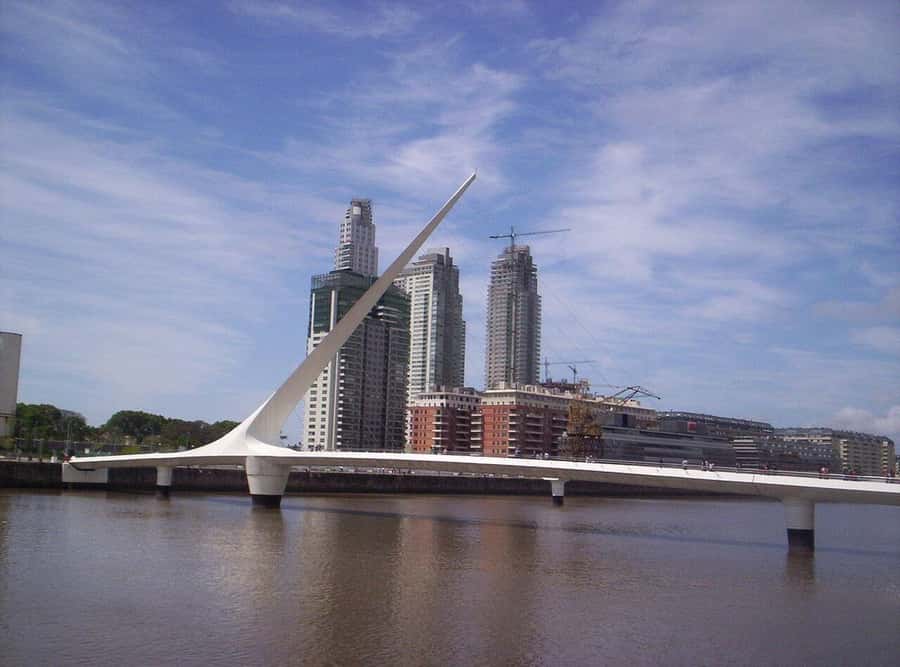
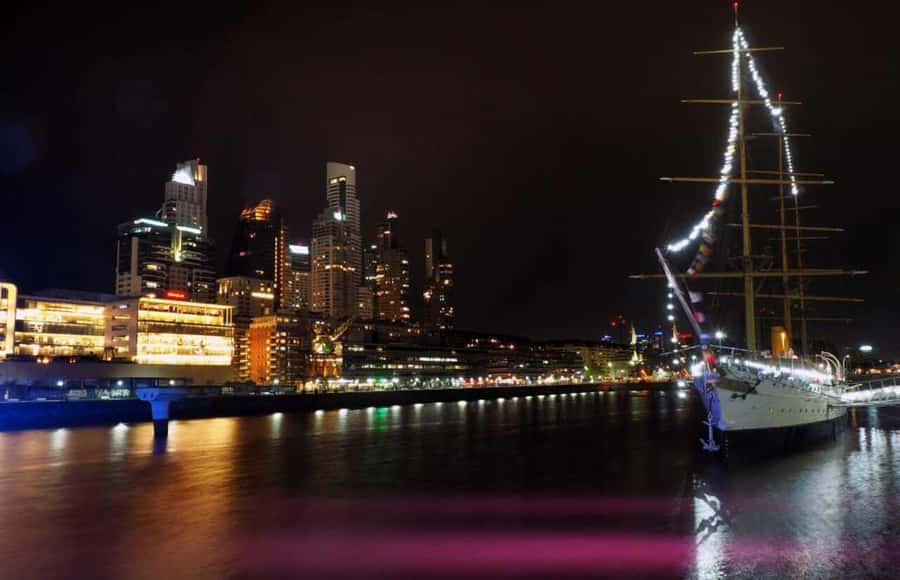
After older districts, Puerto Madero changes the mood. This is one of the city’s newest and most modern areas, built around redeveloped docks and contemporary public spaces.
The guide points out the Puente de la Mujer, the Costanera Sur Ecological Reserve, and the Tango Monument. The district also pays tribute to important women in Argentine history, adding a civic theme to its modern design.
Puerto Madero is valuable on this route because it prevents you from seeing Buenos Aires as only an old European-style capital. The city has changed dramatically, and this district shows its newer face.
The bus is a practical way to see the contrast. You move from historic streets and colorful working-class buildings to a cleaner, more recent waterfront setting without arranging separate transport. The drawback is that Puerto Madero is a guided pass-through rather than a long walking visit. You may see the main sights, but you should not expect time at the ecological reserve.
Retiro: an immigrant gateway and elegant city quarter
Retiro has served as both a residential and financial center. It was also an arrival point for millions of immigrants during the nineteenth and twentieth centuries, giving the district an important place in the city’s story.
The route includes views of Plaza San Martín, Florida pedestrian street, the train station, and the Monumental Tower. These sights show several sides of Retiro at once: formal public spaces, busy commercial streets, transport links, and grand civic monuments.
This is a good example of what the panoramic coach does best. You can connect several landmarks quickly and hear how they relate to the wider city. On foot, you might see only one or two before losing time to navigation.
You should not expect a shopping break on Florida street. The tour does not provide free browsing time there. Think of Retiro as a narrated city tour, with the option to return later if a particular building or street catches your eye.
Palermo: the city’s largest district
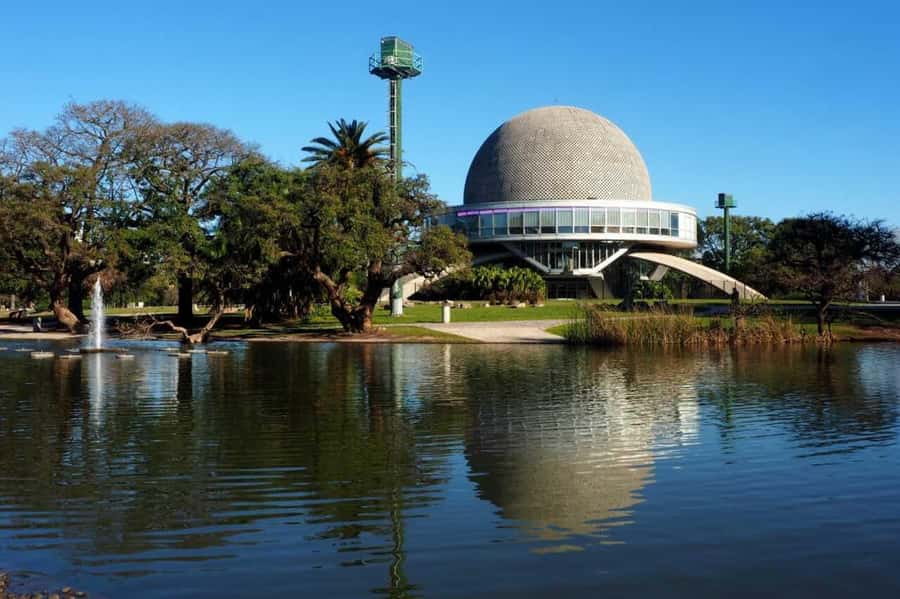
Palermo is the largest neighborhood on the route and offers a broad set of sights. You may see the Bosques de Palermo, Galileo Galilei Planetarium, Plaza Italia, the MALBA Latin American Art Museum, and the Hippodrome.
The district helps explain why Buenos Aires can feel spacious and varied. Parks, cultural institutions, a planetarium, a museum, and a racecourse all sit within the same large part of the city. It is a useful counterpoint to the tight streets of San Telmo and the formal buildings around Plaza de Mayo.
The bus gives you a quick overview rather than a visit to the MALBA or planetarium. If you enjoy art, science, or parks, note the places that appeal to you and plan a separate outing.
Palermo also makes the three-hour schedule feel ambitious. You cover a large area, and the guide must keep the group moving. That is a benefit if your goal is broad coverage. It is less suitable if you prefer to stop whenever a museum or park looks interesting.
Recoleta: grand buildings and the famous cemetery
Recoleta is one of Buenos Aires’ most elegant districts. The route passes the famous Recoleta Cemetery, where many well-known figures are buried, along with the National Museum of Fine Arts, Carlos Thays Park, and the striking Law School.
These sights give you another change of tone. Recoleta is more formal and polished than La Boca, and its monuments help show the city’s social and cultural range. The cemetery is the main visual draw, but the museum, park, and Law School add useful context.
The bus does not include a cemetery visit. You see the area as part of the guided route, so plan a separate stop if you want to explore the tombs and pathways. The same applies to the National Museum of Fine Arts.
Recoleta is a strong finish to the neighborhood portion of the trip. By this point, you have seen old quarters, government buildings, immigrant districts, modern docks, parks, and cultural landmarks. The route ends at the Obelisk, returning you to a central point for the rest of your day.
How the three-hour format affects your experience
The stated duration is approximately three hours, with a bilingual guide aboard a panoramic bus. English, Portuguese, and Spanish are available, so select the language that lets you follow the historical explanations most easily.
A verified account describes a coach carrying a little over 30 people and says the timing felt strict. That is useful practical information. The bus cannot wait indefinitely at each neighborhood, and every photo stop depends on the full group returning on time.
I would bring a passport or identity card, or a copy, as requested for the activity. Wear shoes you can walk in comfortably for the two stops, and keep your camera ready before leaving the coach. There is no need to overpack. You are not setting out for a full-day hike.
Hotel pickup or a designated meeting point is included, but the closest location is determined after booking based on your hotel. If your accommodation lies outside the pickup area, choose the meeting point option. If your selected pickup is not a hotel, it may be changed to a nearby hotel.
The tour is not suitable for people with mobility impairments. The combination of coach access, getting off at stops, and keeping to a group timetable may be difficult if you need substantial assistance.
Is $55 a fair price for this Buenos Aires tour?
At $55 per person, the value depends on how you use it. You are paying for roughly three hours of transport, a certified professional guide, hotel pickup or a meeting point, and two photo stops. You also cover a large portion of Buenos Aires without paying for separate taxis or arranging several independent routes.
I consider the price reasonable for a first orientation, especially if your stay is short or you want clear neighborhood context. The guide is a key part of the value. One of the strongest positive comments specifically praises the guide, and another describes the experience as an effective introduction to each district.
The price is less attractive if you want extended time at landmarks. There are no stated museum admissions, cemetery admissions, meals, or long walking visits included. You are buying coverage and explanation, not a series of full attraction visits.
The booking terms add some useful flexibility. You can reserve now and pay later, and cancellation is free up to 24 hours before departure for a full refund. Check available start times before choosing your day.
Who should book this panoramic tour?
I would recommend it for a first visit, a short stay, or anyone who wants to see how Buenos Aires fits together before choosing where to spend more time. It is also a good match if you prefer a seated sightseeing format and value a guide’s explanation over independent wandering.
You will get the most from it if you treat the bus ride as a city overview. Mark down the places you want to revisit, then return to San Telmo, La Boca, Recoleta, or Palermo on your own schedule.
I would choose another format if you want flexibility. A hop-on hop-off bus can make it easier to spend longer in one district, and a walking tour may suit you better if street-level detail matters more than total coverage. The fixed route and group timing are real limitations.
FAQ
How long does the Buenos Aires panoramic bus tour last?
The tour lasts approximately three hours.
What neighborhoods does the tour visit?
The route covers San Nicolás, Monserrat, San Telmo, La Boca, Puerto Madero, Retiro, Palermo, and Recoleta.
Where are the photo stops?
The scheduled photo stops are Plaza de Mayo in Monserrat and Caminito in La Boca.
How long are the photo stops?
The itinerary allows about 30 minutes at Plaza de Mayo and about 30 minutes at Caminito.
What languages are available?
The live guide is available in English, Portuguese, and Spanish.
Is hotel pickup included?
Hotel pickup or pickup from a meeting point is included. The local partner determines the closest location based on your hotel. If you are outside the pickup area, you should select the meeting point option.
Can I cancel the booking?
You can cancel up to 24 hours in advance for a full refund. You can also reserve now and pay later.
Should you book it?
Book this tour if you want a quick, guided introduction to Buenos Aires and prefer seeing many districts in one organized outing. The two photo stops, especially Plaza de Mayo and Caminito, give the route real substance, while the guide helps you understand why the city’s neighborhoods feel so different.
Skip it if you want long visits, flexible timing, or detailed exploration of individual attractions. At $55, it is best viewed as a practical first look at Buenos Aires, not a complete substitute for exploring the city on foot.
Just added in Buenos Aires
- Discover Buenos Aires’ independent art scene — Ticket included★ 5.0 · 30 reviews
- Photo Session in Buenos Aires★ 5.0 · 26 reviews
- Your Private Photographer in Buenos Aires★ 5.0 · 4 reviews
- Yerba Mate Workshop – Learn to Drink Mate like a Local!★ 5.0 · 11 reviews
- Your Personal Photographer in Buenos Aires★ 5.0 · 24 reviews
- BA: Wine Tasting and Blending Experience in Palermo★ 5.0 · 1 review
- Winery and Tasting Experience in Buenos Aires★ 5.0 · 1 review
- Taste of Tradition: Yerba Mate & Alfajores Experience★ 4.0 · 5 reviews
Buenos Aires Tours, compared.
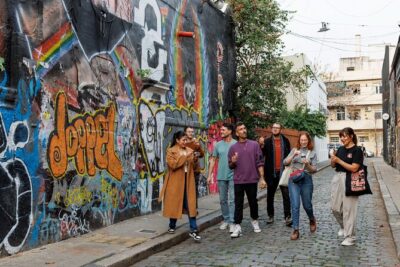
Local Foodie Adventure in Buenos Aires with Sherpa Food Tours
Read our review →
Buenos Aires City Private Tour with Local Guide
Read our review →

Buenos Aires Hop-On Hop-Off Bus and Exclusive Benefits
Read our review →