Reviewed · BUENOS AIRES TOURS
Buenos Aires: Montserrat, San Telmo, La Boca, and Puerto …
Buenos Aires reveals itself street by street. This four-hour tour links Montserrat and San Telmo, where old churches, cafés, markets, and colorful characters tell the city’s story. I especially like the focus on small details, such as the oldest pharmacy and the city’s smallest house, and the chance to see La Boca and Puerto Madero in one outing. The main consideration is pace: four neighborhoods in four hours leaves little time for long visits or relaxed meals.
I also like the guide support in three languages and the practical route, which begins at the Metropolitan Cathedral and ends at Puente de la Mujer. Alejandra earned especially warm praise for her friendly, well-informed approach, while Sebastian helped keep the outing enjoyable. Wear good walking shoes, and remember that Café Tortoni depends on availability.
In This Review
- Key things to know before you go
- Why this four-hour route works
- Montserrat and the power around Plaza de Mayo
- Calle Defensa and Montserrat’s small historic surprises
- San Telmo Market and the character of Plaza Dorrego
- La Boca, Boca Juniors, and the color of Caminito
- Puerto Madero and the city’s modern waterfront
- Is $100 a fair price?
- Who will get the most from this tour?
- Practical tips for a smoother four hours
- Should you book it?
- FAQ
- How long does the Buenos Aires neighborhood tour last?
- Where does the tour begin?
- Where does the tour finish?
- Which languages are available?
- Is Café Tortoni guaranteed to be part of the visit?
- Are meals and drinks included?
Key things to know before you go
- Four historic districts in four hours: Montserrat, San Telmo, La Boca, and Puerto Madero each offer a different side of Buenos Aires.
- Small details make the tour special: Look for the oldest bookstore, church, and pharmacy, plus the first two-story building and smallest house.
- Football and tango share the spotlight: You see Boca Juniors Stadium and Caminito, where tango dancers perform in traditional restaurants.
- San Telmo brings the best market stop: The 1897 market now mixes antiques, food stalls, restaurants, and everyday shopping.
- Puerto Madero changes the mood: The final district trades old streets for skyscrapers, riverfront dining, Puente de la Mujer, and historic naval vessels.
- The tour is walk-heavy: Comfortable shoes matter, and the experience is not suitable for wheelchair users.
Why this four-hour route works
Buenos Aires can feel scattered at first. Its major sights sit in districts with very different personalities, and a short stay can make it hard to connect them. This route gives you a useful first look at the city’s historic center, working-class roots, football culture, and modern waterfront.
You begin at the Catedral Metropolitana de Buenos Aires, then move through Montserrat and San Telmo on foot. Short transfers of about 10 minutes carry you between San Telmo and La Boca, then La Boca and Puerto Madero. The route finishes at Puente de la Mujer, a clear and memorable endpoint.
I like this design for a first day in the city because it helps you get your bearings fast. You see the major districts without spending your limited time figuring out local transport. The tradeoff is simple: this is an introduction, not a series of long museum visits. Expect guided walks, exterior views, neighborhood stories, and selected stops rather than hours inside each attraction.
No group size is specified, so the feel may depend on the departure you choose. The guide languages are English, Spanish, and Portuguese. Alejandra’s friendly style received particular praise, which matters on a tour that relies on storytelling as much as sightseeing.
More things to do in Buenos Aires:
- Local Foodie Adventure in Buenos Aires with Sherpa Food Tours
★ 5.0 · 6,875 reviews - Buenos Aires City Private Tour with Local Guide
★ 5.0 · 3,475 reviews - Buenos Aires Small-Group City Tour
★ 5.0 · 2,226 reviews
Montserrat and the power around Plaza de Mayo
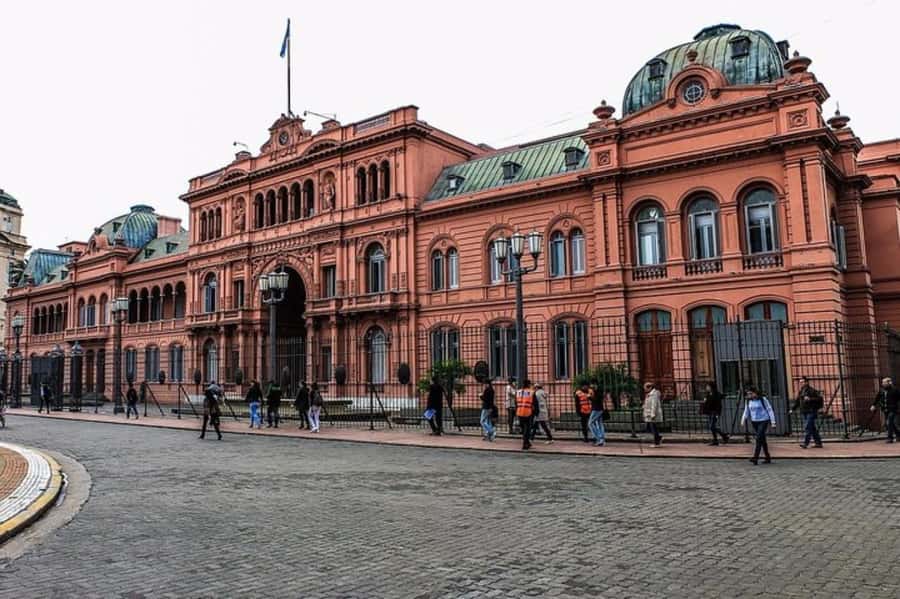
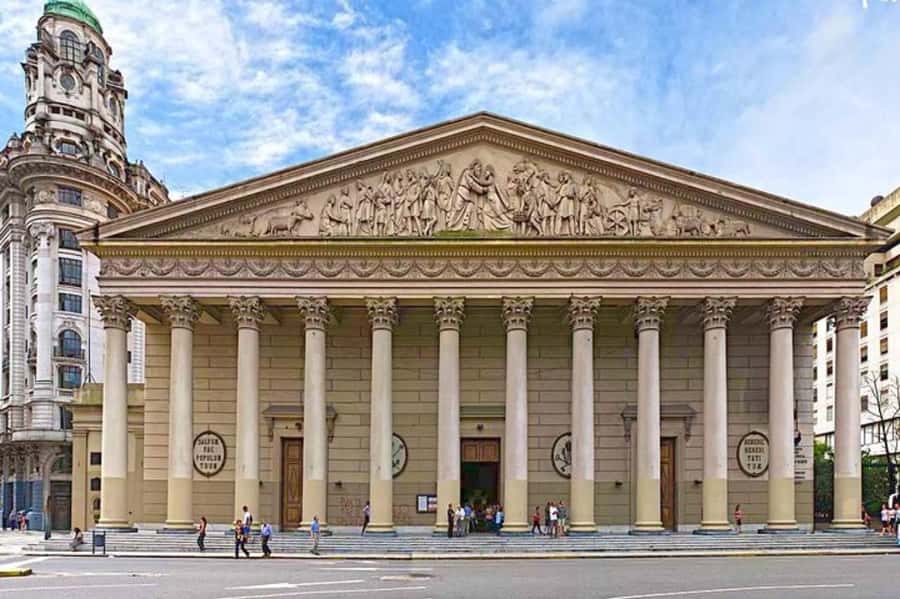
Montserrat is the natural place to begin. Plaza de Mayo is Buenos Aires’ oldest square and remains the city’s political heart. Around it, you see the Casa Rosada, the Cabildo, the Metropolitan Cathedral, and government ministries connected with the economy and defense.
The setting gives you more than a list of buildings. It shows how Argentina’s religious, colonial, and political life meet in one compact space. The Casa Rosada supplies the instantly recognizable pink facade, while the Cabildo recalls an earlier era of Spanish rule. The cathedral adds another layer, with its important place in the city’s civic life.
Starting at the Metropolitan Cathedral is practical. You can find the meeting point easily, and the square gives the guide room to explain the city before the walk moves into narrower streets. If you are new to Buenos Aires, listen for the links between the buildings rather than treating them as separate photo stops.
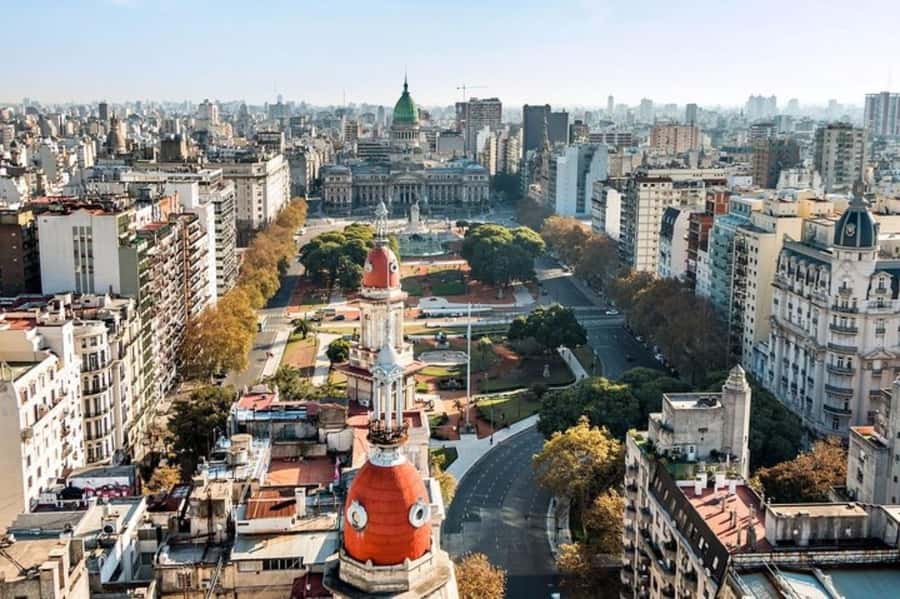
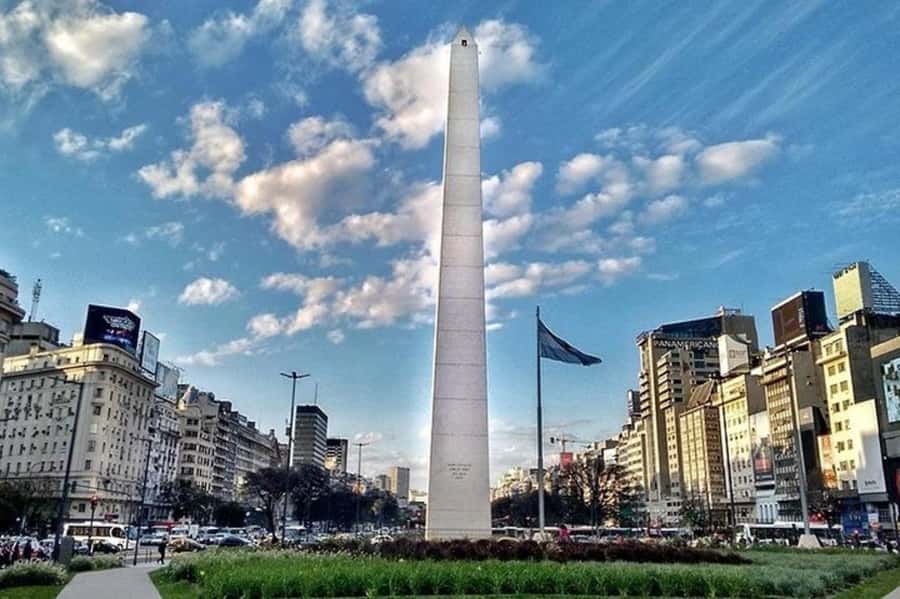
From the western end of Plaza de Mayo, Avenida de Mayo runs toward the National Congress. It was the city’s first boulevard and the first avenue in South America. Its importance is partly visual, but it also connects Argentina’s executive and legislative centers.
Halfway along the avenue is Café Tortoni, described as the oldest café in Argentina and South America. The tour includes it subject to availability, so you should not plan your day around a guaranteed interior visit. If access is possible, it adds a classic café stop to the walk. If not, the avenue and surrounding architecture still provide plenty to see.
Calle Defensa and Montserrat’s small historic surprises
The walk becomes more intimate along Calle Defensa. Here, the tour focuses on unusual claims and old institutions: the city’s oldest bookstore, church, and pharmacy, as well as its first two-story building.
These stops are valuable because they turn Buenos Aires into a place of human scale. Grand plazas can blur together, but a pharmacy with a long local story or an early multi-level building gives you a sharper sense of how the city grew. You are not only looking at famous facades. You are noticing the small markers that make one street different from another.
The guide also shares stories connected with sailors, immigrants, enslaved people, and local urban legends. That mix is important. Buenos Aires is often presented through grand architecture, tango, and European influences, but these stories point toward the people who shaped the city’s daily life.
Calle Defensa is also the bridge into San Telmo. You can expect a steady walking pace, with time for explanations and photographs but not a long independent wander. If you like to stop at every shop, you may find the schedule tight.
San Telmo Market and the character of Plaza Dorrego
San Telmo is the city’s second-oldest neighborhood, and its streets have a more worn, intimate feel than the formal center. One of the best stops is San Telmo Market, opened in 1897.
The market has changed with the neighborhood. It now combines antique shops, small restaurants, and traditional fruit and vegetable stalls. That mix makes it more useful than a polished souvenir hall. You can see old objects, browse local goods, and watch ordinary shopping take place in the same building.
I would treat this as a place to look closely rather than rush through with your camera raised. Notice how the market joins daily commerce with Buenos Aires’ love of antiques and old interiors. Meals are not included, and the tour does not promise a dedicated eating break, so save the market’s food options for another visit if you want to sit down properly.
Before reaching San Juan Avenue, the route includes Plaza Dorrego, the city’s second-oldest square. It is one of San Telmo’s key gathering places, framed by historic buildings and linked with the district’s antique trade and tango identity.
Nearby, Ezeiza’s house offers another architectural detail. The French Passage provides a particularly good setting for photographs. This is also an area where you might choose to return for a meal after the tour, since food is not included in the $100 price.
A stop at the Mafalda statue adds a lighter note. Mafalda is one of Argentina’s best-loved comic characters and a cultural symbol. The statue gives you a quick photo opportunity, but it also introduces a piece of local identity that has nothing to do with grand monuments.
A completely different kind of day:
- Buenos Aires Hop-On Hop-Off Bus, Free Walking Tours & Discounts
★ 4.5 · 2,218 reviews - Buenos Aires: Piazzolla Tango Show with Optional Dinner
★ 4.4 · 2,122 reviews - Buenos Aires: City Highlights Guided Tour with Transfer
★ 4.7 · 1,946 reviews - Buenos Aires: Hop-On Hop-Off City Bus Tour
★ 4.2 · 1,855 reviews
La Boca, Boca Juniors, and the color of Caminito
After San Telmo, a transfer of about 10 minutes takes you toward La Boca. This section changes the tone sharply. La Boca is associated with Boca Juniors Stadium, one of the city’s most famous football landmarks, and with Caminito, its colorful open-air street.
The tour lets you see the stadium and hear about the Boca Juniors football club. For football fans, this may be the emotional high point of the day. The experience does not specify an interior stadium tour, so plan on seeing the iconic venue and learning about its importance rather than assuming access inside.
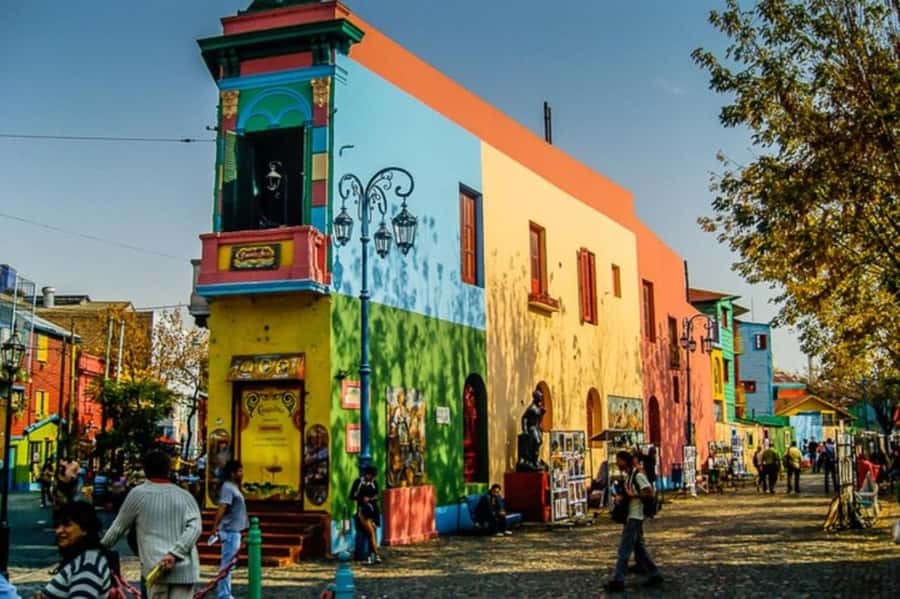
Caminito offers a very different kind of appeal. Brightly painted buildings, souvenir stalls, and tango performances give the street its famous look. Traditional restaurants may have dancers performing, so you might catch tango as part of the neighborhood atmosphere.
The area is tied to tango’s beginnings, and the tour connects the music with La Boca’s identity. You should also keep your expectations realistic. Caminito is a concentrated sightseeing zone, not a quiet residential street. Its color and performances are fun, but the experience can feel more staged than the older streets of San Telmo.
That contrast is not a reason to skip it. It is useful to see how Buenos Aires presents itself through football, tango, and public art. I would simply give more weight to the guide’s explanation and the district’s cultural background than to the souvenir browsing.
You can find distinctive keepsakes here, but personal purchases are not included. If you want to eat, buy drinks, or shop, bring that cost into your planning. Since the full tour continues to Puerto Madero, you will not have unlimited free time in La Boca.
Puerto Madero and the city’s modern waterfront
Another short transfer brings you to Puerto Madero. This district once began as an abandoned port project and has since become one of Buenos Aires’ modern business and dining areas. Tall buildings reshape the skyline, while a riverside promenade offers bars and restaurants.
Puerto Madero provides a useful final chapter. After the old government buildings, market halls, narrow streets, and colorful facades, you see a newer version of the city. The change is not subtle, and that is exactly why it works on this route.
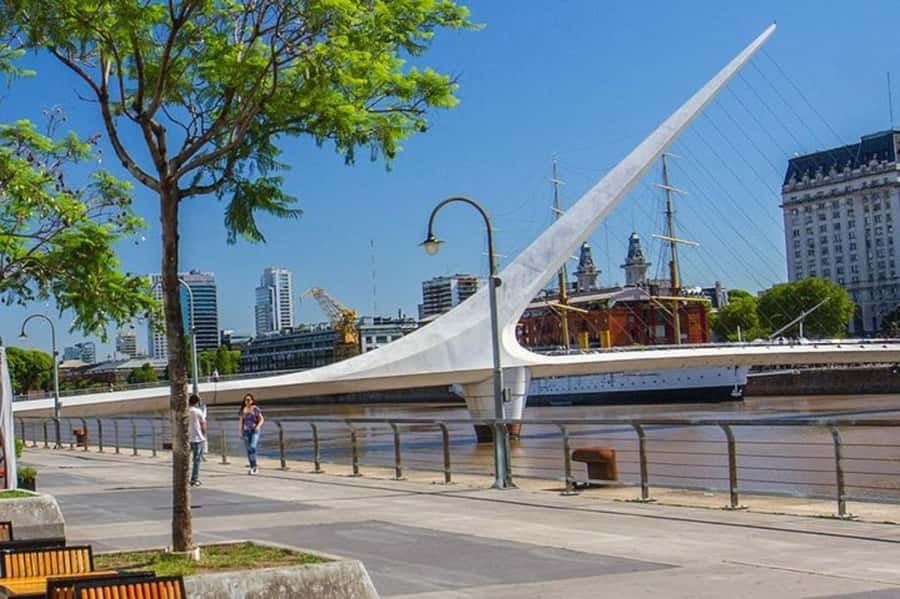
The key landmark is Puente de la Mujer, designed by Santiago Calatrava. Its sweeping form gives you one of the city’s most recognizable modern photo spots. The bridge also makes a clear finishing point, so you are not left wondering where the tour ends.
Puerto Madero contains historic vessels as well. The frigate Sarmiento and corvette Uruguay preserve Argentina’s naval story and offer a reminder that this modern district grew from a port. The tour introduces these ships as historical sights, though the supplied details do not confirm admission inside them.
The waterfront is a good place to continue your evening. Restaurants and bars line the promenade, but meals and drinks are your responsibility. Ending here gives you options, whether you want dinner, more photographs, or a quiet walk after the guide says goodbye.
Is $100 a fair price?
At $100 per person, this is not the cheapest way to see Buenos Aires’ old center. Its value depends on what you want from four hours.
You are paying for a live guide, a planned route, neighborhood explanations, and transfers between districts. The tour also brings together sights that would take more planning to connect independently: Plaza de Mayo, Avenida de Mayo, San Telmo Market, Caminito, Boca Juniors Stadium, Puerto Madero, and Puente de la Mujer.
The price makes the most sense for a first-time visitor with limited time who wants context rather than a simple bus ride. It is also useful if you prefer a guide to explain why the oldest bookstore, smallest house, Mafalda statue, and market matter.
The value is weaker if you want long independent stops, included food, museum entry, or a slow neighborhood walk. Meals, drinks, shopping, and other personal costs are extra. Café Tortoni is subject to availability, and no interior access to the stadium or ships is promised.
For a four-hour introduction with a strong cultural range, I consider the price reasonable if the guide is as engaging as Alejandra was described to be. The quality of the storytelling will shape your experience more than the number of landmarks checked off.
Who will get the most from this tour?
This outing suits you if you are visiting Buenos Aires for the first time, have only part of a day, or want a broad introduction before exploring districts on your own. It works especially well for people who like political landmarks, local stories, food markets, football, tango, architecture, and modern city design in one package.
It is a good match for English, Spanish, or Portuguese speakers who want a live guide rather than an audio app. The praise for Alejandra’s friendly manner is encouraging, since the route covers a lot of ground and benefits from clear explanations.
You should think twice if walking is difficult. The tour is not suitable for wheelchair users, and the route includes several neighborhood walks. Comfortable shoes are essential. Check the weather before leaving and dress for the conditions, since much of the experience takes place outdoors.
Families and mixed-interest groups may also like the variety. One person can focus on Plaza de Mayo, another on Boca Juniors, and another on the bridge and waterfront. The fast pace may frustrate anyone who wants to linger over architecture or sit for a full meal.
Practical tips for a smoother four hours
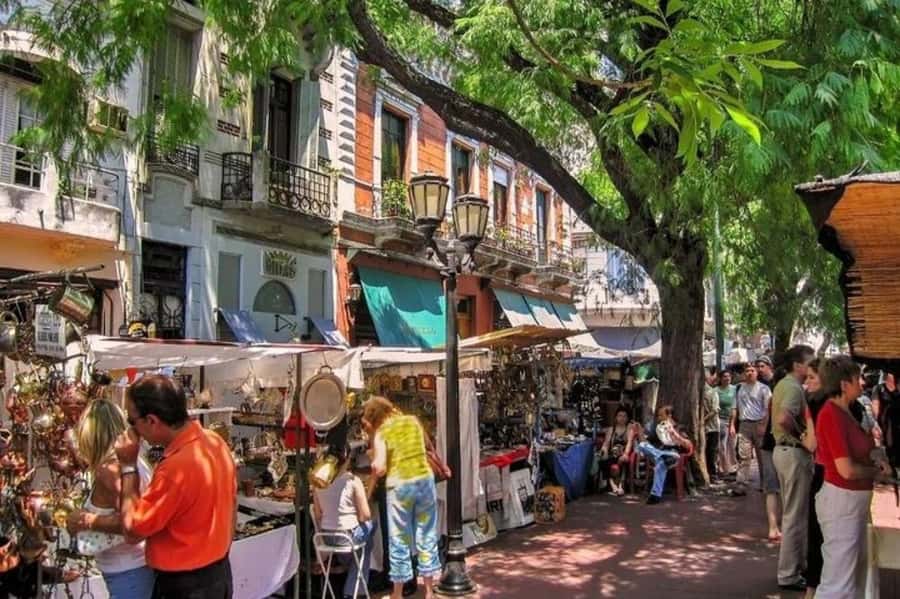
Start with comfortable shoes rather than stylish ones. The route includes Montserrat, San Telmo, La Boca, and Puerto Madero, with walking at each stop and short transfers between districts.
Bring weather-appropriate clothing. The tour information specifically advises checking the forecast, and that is sensible for an outing built around open-air streets, plazas, and a waterfront promenade.
Keep your food budget separate. Meals and drinks are not included, and the best areas for a later meal are around San Telmo, the French Passage, or Puerto Madero. You may find food at San Telmo Market and restaurants in La Boca, but the schedule is not built around a guaranteed dining stop.
Treat Café Tortoni as a welcome possibility, not a promise. Availability may affect the visit. The same practical rule applies to any sight where the information describes seeing or discovering a landmark but does not specify entry.
The tour offers free cancellation up to 24 hours before departure and lets you reserve while paying later. Starting times vary, so check availability for the date you want.
Should you book it?
Book this tour if you want a guided first look at Buenos Aires’ most historic and recognizable districts in a single half-day. The route has real range: Plaza de Mayo explains the city’s public life, San Telmo supplies old streets and market culture, La Boca brings football and tango, and Puerto Madero shows the modern waterfront.
Skip it if you want a slow day, included meals, guaranteed interior visits, or a fully accessible route. For most first-time visitors who value clear explanations and efficient sightseeing, the combination is strong. The biggest reason to book is not simply the number of stops. It is the chance to understand how Buenos Aires can feel colonial, immigrant-shaped, football-mad, tango-driven, and modern within a few hours.
FAQ
How long does the Buenos Aires neighborhood tour last?
The tour lasts four hours, with approximately one hour allocated to each main neighborhood or stop and two transfers of about 10 minutes each.
Where does the tour begin?
It begins at the Catedral Metropolitana de Buenos Aires.
Where does the tour finish?
The tour finishes at Puente de la Mujer in Puerto Madero.
Which languages are available?
The live tour guide is available in English, Spanish, and Portuguese.
Is Café Tortoni guaranteed to be part of the visit?
No. A visit to Café Tortoni depends on availability.
Are meals and drinks included?
No. Meals, drinks, and personal purchases are not included in the tour price.
Just added in Buenos Aires
- Discover Buenos Aires’ independent art scene — Ticket included★ 5.0 · 30 reviews
- Photo Session in Buenos Aires★ 5.0 · 26 reviews
- Yerba Mate Workshop – Learn to Drink Mate like a Local!★ 5.0 · 11 reviews
- Your Personal Photographer in Buenos Aires★ 5.0 · 24 reviews
- Your Private Photographer in Buenos Aires★ 5.0 · 4 reviews
- BA: Wine Tasting and Blending Experience in Palermo★ 5.0 · 1 review
- Winery and Tasting Experience in Buenos Aires★ 5.0 · 1 review
- Taste of Tradition: Yerba Mate & Alfajores Experience★ 4.0 · 5 reviews
Buenos Aires Tours, compared.
Local Foodie Adventure in Buenos Aires with Sherpa Food Tours
Read our review →
Buenos Aires City Private Tour with Local Guide
Read our review →

Buenos Aires Hop-On Hop-Off Bus and Exclusive Benefits
Read our review →