Reviewed · BUENOS AIRES TOURS
Buenos Aires for curious people
Buenos Aires rewards curious walkers. I like this tour for its small groups of no more than eight and its willingness to discuss politics, memory, and everyday life alongside famous sights. I also like the route through San Telmo, which includes lesser-known places such as the Memory Walk and Swedish church. The one drawback is that this is a serious walking tour, not a relaxed photo stop circuit, and its pace may be difficult for anyone who needs frequent rests.
The guides bring strong academic and local experience. Nico is a Buenos Aires native from a family with several generations in the city, while Ignacio works as a history professor. Sophia and Santiago have also led tours praised for their patience and lively explanations. You should expect a conversation about how the city was formed, not just a list of buildings.
In This Review
- Key points at a glance
- Why this Buenos Aires walk feels different
- Starting at Bar Britanico and Parque Lezama
- A Swedish church and the city’s mixed identity
- The Memory Walk and Argentina’s difficult past
- San Pedro González Telmo and the old neighborhood
- Plaza Dorrego, where San Telmo gathers
- Mercado San Telmo and immigrant Buenos Aires
- Puente de la Mujer and the modern city
- Ending at Casa Rosada and Plaza de Mayo
- The guides and the teaching style
- Is $33 a fair price?
- Who should book this walk?
- My verdict on Buenos Aires for curious people
- FAQ
- How long does the Buenos Aires for curious people tour last?
- How much does the tour cost?
- What is the maximum group size?
- Where does the tour start?
- Where does the tour end?
- Is admission to Casa Rosada included?
- Does the tour visit San Telmo Market?
- Are service animals allowed?
- Can I cancel for a full refund?
Key points at a glance
- San Telmo beyond the market: See the old district through churches, immigrant history, political memory, and street life.
- A small group capped at eight: Questions are easier to ask, and the guide can adjust explanations to the group.
- History with present-day context: The tour connects colonial Buenos Aires with dictatorship, economics, politics, and social change.
- A route with difficult subjects: The Memory Walk concerns detention, torture, and extermination during Argentina’s 1976 to 1979 dictatorship.
- A strong value at $33: Two to three hours of guided context costs less than many large sightseeing tours.
- Ends near Casa Rosada: You finish at the presidential office, making it easy to continue around Plaza de Mayo.
Why this Buenos Aires walk feels different
Many city walks move from one famous facade to the next. This one uses the streets as a history lesson. You begin in the old part of Buenos Aires, pass through San Telmo, and finish at Casa Rosada, with the route linking architecture to immigration, religion, state power, and Argentina’s recent past.
I especially like the way the experience treats Buenos Aires as a living city. You are not only shown where something happened. You are given reasons for why the place matters, how the city changed, and how old conflicts still affect Argentine life.
That approach suits you if you want an introduction to Argentina’s complicated social and political background. It may not suit you if you want only glamorous landmarks, quick facts, and time for posed photographs.
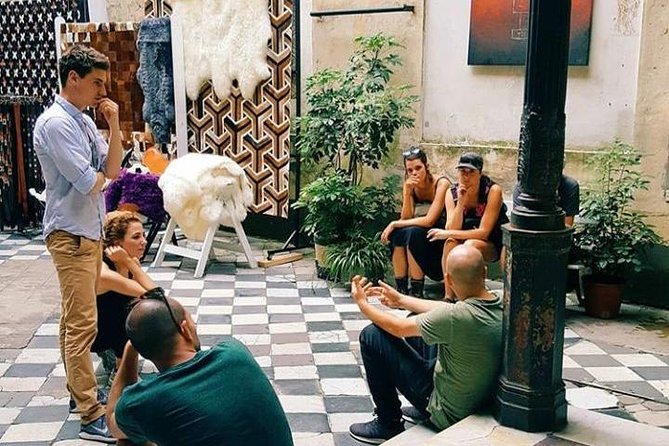
The walk lasts about two to three hours. That is enough time for useful explanation without taking your entire day, but you should wear comfortable shoes and arrive ready to walk. One practical advantage is the small group. With eight people or fewer, you can ask about food, culture, politics, architecture, or anything that catches your attention.
More things to do in Buenos Aires:
- Local Foodie Adventure in Buenos Aires with Sherpa Food Tours
★ 5.0 · 6,875 reviews - Buenos Aires City Private Tour with Local Guide
★ 5.0 · 3,475 reviews - Buenos Aires Small-Group City Tour
★ 5.0 · 2,226 reviews
Starting at Bar Britanico and Parque Lezama
The meeting point is Bar Britanico at Brasil 399. The itinerary also identifies Parque Lezama as the starting area, so check the exact meeting instructions when you book and allow time to find the group.
Bar Britanico sits in Buenos Aires’ old town, and it provides an atmospheric beginning rather than a generic hotel pickup. The stop itself is brief, about five minutes, with no admission charge. You will not spend the morning inside the cafe, but its presence helps set the tone for the older streets around San Telmo.
Parque Lezama receives about 30 minutes. The park is tied to the site where the first fort was established in 1536, giving your guide a natural place to explain the early foundations of Buenos Aires.
This is a good opening because it starts with a question bigger than a single monument: how did a remote colonial settlement become one of South America’s major capitals? Old maps and photographs may be used during the explanations. That visual material can help you understand how the city has changed, rather than simply hearing dates in isolation.
A Swedish church and the city’s mixed identity
The Club Sueco Restaurante stop takes around ten minutes and includes the Swedish church, built in 1944. It is a small but useful reminder that Buenos Aires was shaped by many immigrant communities, not only by Spanish colonial rule or Italian immigration.
A short stop like this works best when your guide explains the people and institutions behind the building. Do not expect a major interior visit or a long architectural study. Its value is in showing how a European community made a place for itself in the city.
That idea returns later at Mercado San Telmo. Together, the church and market give you a broader view of Buenos Aires as a city built by overlapping communities. The route does not reduce the city to one national story.
The Memory Walk and Argentina’s difficult past
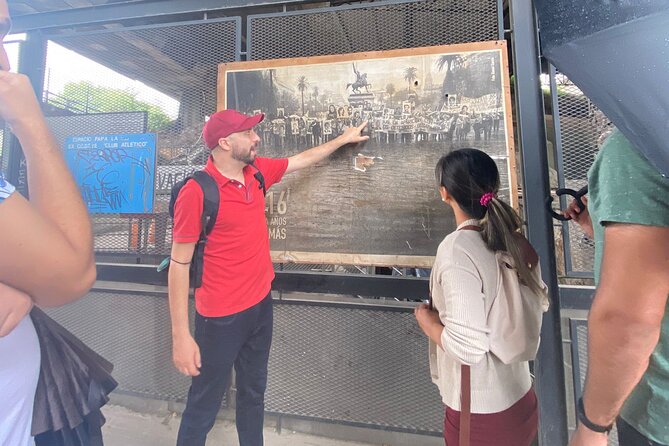
The most emotionally demanding stop is the Memory Walk. It marks a former clandestine center for detention, torture, and extermination used from 1976 to 1979.
This is not light sightseeing. The subject concerns Argentina’s military dictatorship and the people who suffered under it. A good guide needs to explain the facts clearly while allowing the group time to process them. On this experience, the historical and political material is a central feature, not an aside.
I would consider this stop a major reason to choose the tour, but also a reason to know what you are booking. If you want a cheerful introduction focused only on cafes and colorful streets, this subject may feel too heavy. If you want to understand modern Argentina, it gives essential context.
The guides are comfortable discussing recent political history, social questions, and the long effects of national trauma. Their explanations are described as factual and engaging, with plenty of room for questions. You may leave with a more serious view of the country, but also a more honest one.
A completely different kind of day:
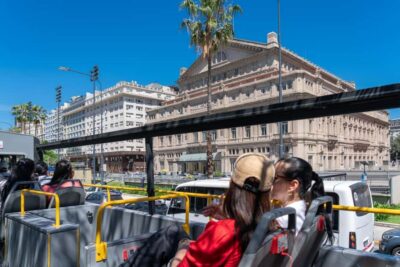
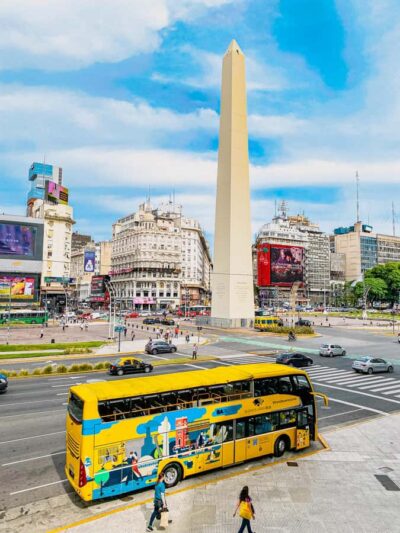
- Buenos Aires Hop-On Hop-Off Bus, Free Walking Tours & Discounts
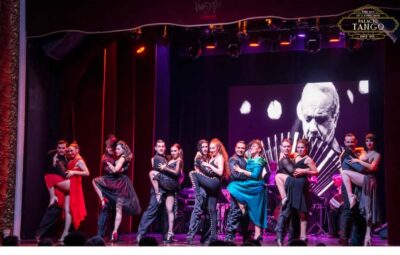
★ 4.5 · 2,218 reviews - Buenos Aires: Piazzolla Tango Show with Optional Dinner
★ 4.4 · 2,122 reviews - Buenos Aires: City Highlights Guided Tour with Transfer
★ 4.7 · 1,946 reviews - Buenos Aires: Hop-On Hop-Off City Bus Tour
★ 4.2 · 1,855 reviews
San Pedro González Telmo and the old neighborhood
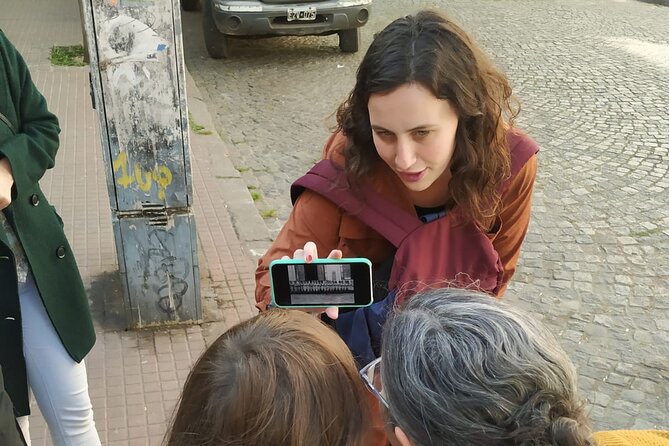
The Parroquia de San Pedro González Telmo is a colonial Catholic church, with about 15 minutes set aside for the stop. The church helps anchor San Telmo in the city’s older religious and colonial past.
This part of the route is useful because the neighborhood is not presented only as a market district. You see how religion, settlement, and public life were connected in the old city. The church also provides a change of pace after the heavier discussion at the Memory Walk.
The exact amount of interior access can depend on conditions at the church, so think of this as a guided exterior and neighborhood stop unless your guide confirms otherwise. The admission cost is listed as free.
Plaza Dorrego, where San Telmo gathers
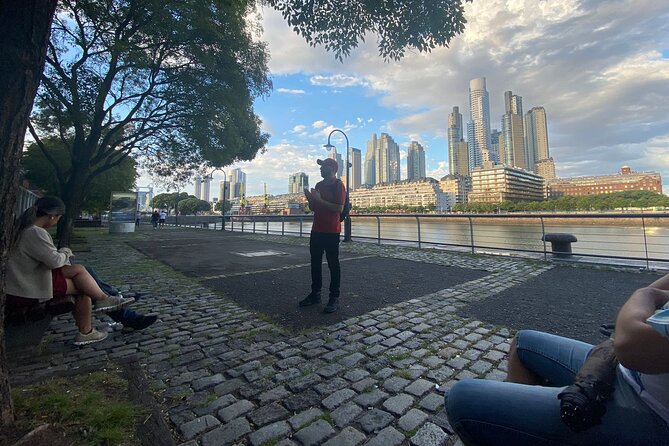
Plaza Dorrego is described as the main square of old San Telmo, with about 15 minutes to explore. It is one of the clearest places to understand the character of the district.
The square gives the tour a public, social center after several historical stops. Your guide can connect the buildings and street activity to the neighborhood’s past, rather than leaving you to see only a picturesque plaza.
This is also a useful moment to ask practical questions about San Telmo. You can ask what to return for later, where the market is strongest, or how the district fits into a wider Buenos Aires visit. The tour’s guides are praised for offering suggestions for the rest of your time in the city, which makes this stop more useful than a quick photograph.
Mercado San Telmo and immigrant Buenos Aires
The Mercado San Telmo receives about 30 minutes. The market was built by Italian immigrants, and that detail gives you an important way to read the neighborhood.
San Telmo is often treated as an atmospheric old quarter, but the market shows how migration shaped daily life, commerce, and food. This is the point where history becomes especially tangible. You can look at the building, watch local activity, and connect Italian immigration with the wider story of porteño identity.
The half-hour timing is enough to experience the market without turning the tour into a meal break. Food is part of the conversation, and guides have included local eating traditions in their explanations. Bring some Argentine pesos or a payment method if you want to buy something, but no food purchase is included in the $33 price.
A break for snacks or the bathroom has been built into some departures, and guides have sometimes paused twice during the walk. Do not treat that as a guaranteed feature of every departure, but it is a useful sign that the tour is not designed as a nonstop lecture.
Puente de la Mujer and the modern city
Puente de la Mujer is a sharp change in setting and design. The pedestrian bridge was designed by Spanish architect and structural engineer Santiago Calatrava, and the stop lasts about 15 minutes.
The bridge brings modern Buenos Aires into the story. After older parks, churches, markets, and political memory, you see a city that also presents contemporary architecture and renewed urban areas.
The bridge is a short stop, so do not expect a full architectural tour. Its real value is contrast. It helps you see that Buenos Aires is not frozen in its colonial or nineteenth-century image. The city contains old neighborhoods and newer symbols of civic and commercial change within the same sightseeing day.
Ending at Casa Rosada and Plaza de Mayo
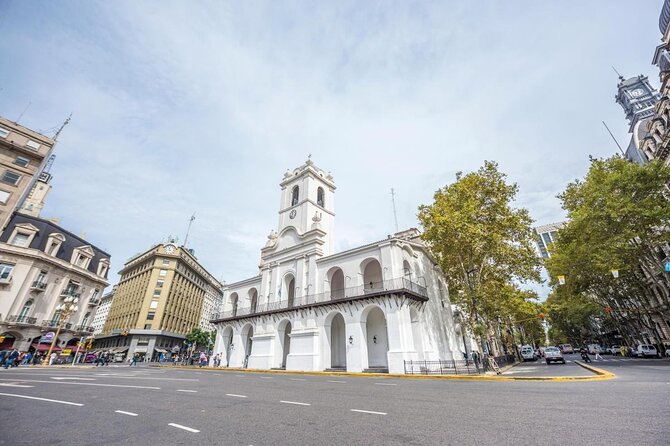
The final stop is Casa Rosada, the president’s office, with about 25 minutes scheduled. The experience ends at Balcarce 78, near Plaza de Mayo.
Casa Rosada is one of Buenos Aires’ defining political buildings. Finishing here gives the earlier discussions a clear focal point. The colonial beginnings, immigration, dictatorship, public memory, and modern city all lead toward the question of how Argentina is governed and how power is represented.
Admission to Casa Rosada is not included. The itinerary does not promise an interior visit, so you should regard this as an exterior and surrounding-area stop unless your guide tells you otherwise. That is not a serious weakness for a walking tour, since the building and plaza can still anchor a strong explanation of Argentine politics.
The ending is convenient. You can continue exploring Plaza de Mayo afterward, arrange your own visit to another nearby sight, or stop for food. Since the tour finishes in a central area rather than returning to the starting point, plan your next move before the walk begins.
The guides and the teaching style
The strongest part of this experience is the guiding. Nico is described as a local who grew up in Buenos Aires and comes from a family with at least three generations in the city. That kind of personal connection can add texture to explanations of neighborhoods, food, and city life.
Ignacio is a history professor, which suits the tour’s academic side. His explanations are clear, factual, and structured around the major forces that shaped Buenos Aires and Argentina. Nico has also used maps and old photographs to show how the city developed.
You may hear about the country’s social and political challenges, economic issues, historic figures, and cultural habits. The discussion can be detailed, but the teaching style is conversational rather than stiff. English is described as excellent, and guides have been patient when participants switch between English and Spanish.
The tour has also been led by Sophia and Santiago. Sophia is praised for handling questions patiently, while Santiago is associated with a relaxed pace and easy conversation. Guide assignments can change, so book the format and subject matter rather than expecting one specific person.
Is $33 a fair price?
At $33 per person, this is a strong value if you care about context. You receive roughly two to three hours with a small group, a route through several important areas, and guidance that goes well beyond identifying buildings.
The value is not based on admission tickets. Nearly every listed stop is free, and Casa Rosada admission is not included. You are paying for interpretation, local knowledge, historical material, and the chance to ask questions in a group small enough for real conversation.
Large city tours can cover more ground, but they often make it harder to hear and harder to shape the discussion around your interests. Here, the eight-person maximum matters. If your group is smaller, the experience may feel closer to walking through the city with an informed local companion.
For a first or second day in Buenos Aires, the tour can also save you planning time. You get a guided orientation to San Telmo and nearby areas, then leave with ideas for where to return on your own.
Who should book this walk?
I would choose this experience if you:
- Want history, politics, and culture explained together
- Prefer a small group over a large bus or crowded walking tour
- Like asking questions and discussing what you see
- Want San Telmo beyond the standard market photograph
- Are comfortable with difficult subjects concerning Argentina’s dictatorship
- Want local food and immigrant history included in the city story
I would think twice if you need a very slow pace or dislike long explanations. One account describes a departure slowed by participants who were not suited to a walking tour. The guide cannot easily predict that in advance, so be realistic about your mobility and stamina.
You should also allow for the weather. The experience requires good conditions, and a poor-weather cancellation results in a new date or a full refund. Free cancellation is available up to 24 hours before the start time, but changes or cancellations inside that window are not accepted for a refund.
The tour is near public transportation, service animals are allowed, and most people can participate. Those details make it broadly accessible, but they do not remove the need for comfortable walking shoes and reasonable endurance.
My verdict on Buenos Aires for curious people
This is a thoughtful, unusually serious introduction to Buenos Aires. I like its mix of famous places and overlooked stops, especially the way San Telmo’s market, church, park, and political memory are treated as parts of one connected story.
At $33, the tour offers good value for anyone who wants to understand the city rather than simply photograph it. Book it if you are curious, willing to walk for two to three hours, and open to difficult history. Skip it if you want a light sightseeing loop with minimal commentary. For the right person, this is a memorable way to begin making sense of Buenos Aires.
FAQ
How long does the Buenos Aires for curious people tour last?
The tour lasts approximately two to three hours.
How much does the tour cost?
The price is $33 per person.
What is the maximum group size?
The tour allows a maximum of eight participants.
Where does the tour start?
The listed meeting point is Bar Britanico at Brasil 399 in Buenos Aires. Parque Lezama is also identified as the starting area, so confirm the exact meeting instructions when booking.
Where does the tour end?
The tour ends at Casa Rosada, at Balcarce 78 near Plaza de Mayo.
Is admission to Casa Rosada included?
No. Admission to Casa Rosada is not included in the tour price.
Does the tour visit San Telmo Market?
Yes. The itinerary includes approximately 30 minutes at Mercado San Telmo.
Are service animals allowed?
Yes. Service animals are allowed on the experience.
Can I cancel for a full refund?
Yes, if you cancel at least 24 hours before the experience begins. Cancellations or changes made less than 24 hours before the start time are not refunded. If poor weather causes the tour to be canceled, you are offered another date or a full refund.
Just added in Buenos Aires
- Discover Buenos Aires’ independent art scene — Ticket included★ 5.0 · 30 reviews
- Photo Session in Buenos Aires★ 5.0 · 26 reviews
- Your Private Photographer in Buenos Aires★ 5.0 · 4 reviews
- Yerba Mate Workshop – Learn to Drink Mate like a Local!★ 5.0 · 11 reviews
- Your Personal Photographer in Buenos Aires★ 5.0 · 24 reviews
- BA: Wine Tasting and Blending Experience in Palermo★ 5.0 · 1 review
- Winery and Tasting Experience in Buenos Aires★ 5.0 · 1 review
- Taste of Tradition: Yerba Mate & Alfajores Experience★ 4.0 · 5 reviews
Buenos Aires Tours, compared.
Local Foodie Adventure in Buenos Aires with Sherpa Food Tours
Read our review →
Buenos Aires City Private Tour with Local Guide
Read our review →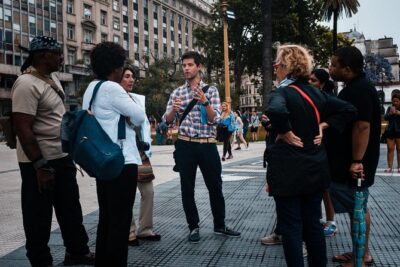
Buenos Aires Hop-On Hop-Off Bus and Exclusive Benefits
Read our review →