Reviewed · BUENOS AIRES TOURS
Backstreet Bites of Buenos Aires Cafés, Parrillas and Beyond
Come hungry, leave better oriented. This five-and-a-half-hour Buenos Aires food walk links old cafés, pizza counters, parrillas, cocktail bars, and historic squares with the city’s political and cultural story. I especially like the small maximum group of seven and the way food is used to explain porteño life, not just served as a string of tastings. I also like that guides such as Esteban, Lucía, and Maui have shaped the day around questions, local recommendations, and the weather.
The main consideration is the $135 price, which is not cheap for Buenos Aires. You are paying for a licensed guide, a full sequence of food and drinks, and access to places you may not find easily on your own. Still, anyone expecting a simple walk with a few snacks should know this is a long, food-heavy city tour with plenty of standing and walking.
In This Review
- Key points at a glance
- Starting at 10:00 near Plaza Lavalle
- Plaza Lavalle and Argentina’s habit of arguing
- Galerías Pacífico, from rail office to shopping center
- Florería Atlántico and the city’s culinary crossroads
- Plaza San Martín and a meal that keeps building
- What you may eat and drink
- The guide can make or break the history
- Is $135 a fair price?
- Who should book this Buenos Aires food tour?
- Should you book Backstreet Bites?
- FAQ
- How much does Backstreet Bites of Buenos Aires cost?
- How long does the tour last?
- What time does the tour start?
- Where does the tour begin?
- Where does the tour end?
- Is the tour offered in English?
- How many people can join the tour?
- What food and drinks are included?
- Is private transportation included?
- Can I cancel for a full refund?
Key points at a glance
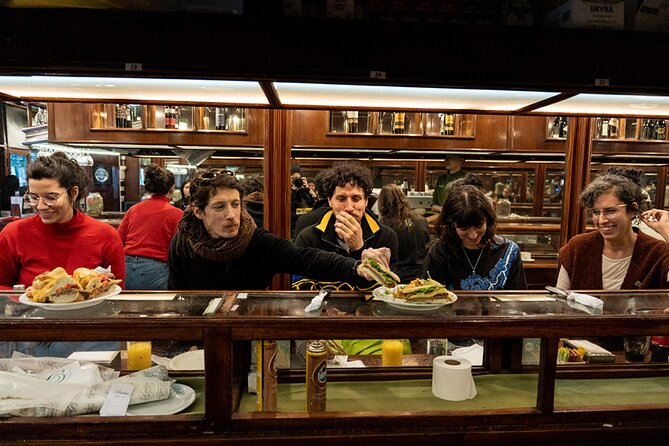
- A seven-person maximum keeps the walk personal: You have a better chance to ask questions and hear the guide clearly than on a large bus-style food tour.
- Buenos Aires comes through food and politics: Plaza Lavalle introduces the country’s famous divisions, while cafés, pizza, meat, and drinks show how those ideas appear in daily life.
- The menu covers a full day of eating: Breakfast, pastries, pizza, flatbread, spinach fritters, parrilla meats, sweets, soda, water, and alcoholic drinks are included.
- Guides add real value: Esteban is praised for connecting food with Argentine history and culture, while Lucía has shown practical flexibility in extreme heat.
- The route includes places with changing identities: Galerías Pacífico has served as a railway office, a commercial gallery, a dictatorship-era detention site, and a mall.
- You need a light breakfast or none at all: The food is generous, and the day builds toward substantial meat and dessert.
Starting at 10:00 near Plaza Lavalle
The tour begins at Av. Callao 501 at 10:00 a.m. The meeting point is near public transportation, which makes the start easier to reach without arranging a car. Private transportation is not included, so plan on using public transit, a taxi, or a ride-hailing service to get there.
The route is designed as a walking food tour, with time spent at four main areas. The listed stop times are about one hour each, but the entire experience lasts approximately five and a half hours. That extra time allows for movement between stops, conversation, ordering, and eating.
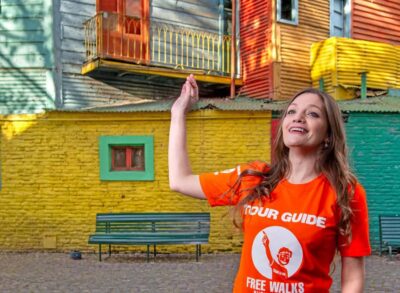
A small group matters here. Seven people is enough for a social atmosphere but small enough that the guide can explain a building, answer a question, or adjust the pace without losing half the group. Esteban has been praised for making the tour feel like a moving history lesson with lunch attached. Maui, another guide, has been described as friendly, city-savvy, and happy to offer recommendations for later meals.
You receive confirmation at booking, and the tour is offered in English. Most people can participate, but the supplied information does not describe the exact walking distance, number of stairs, or arrangements for mobility needs. If those details matter to you, ask before booking.
More things to do in Buenos Aires:
- Local Foodie Adventure in Buenos Aires with Sherpa Food Tours
★ 5.0 · 6,875 reviews - Buenos Aires City Private Tour with Local Guide
★ 5.0 · 3,475 reviews - Buenos Aires Small-Group City Tour
★ 5.0 · 2,226 reviews
Plaza Lavalle and Argentina’s habit of arguing
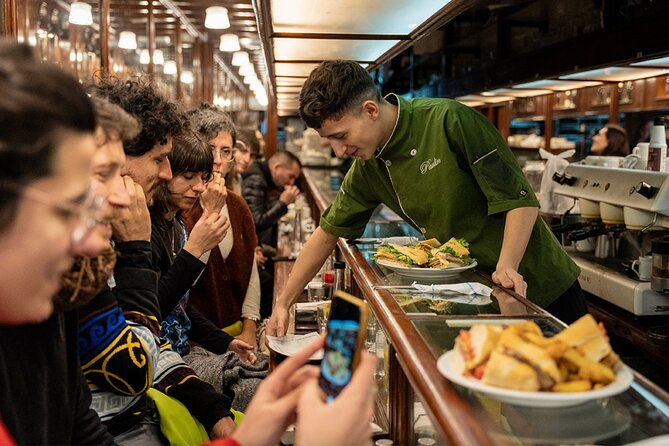
Plaza Lavalle is more than a green pause in the city center. It is used to introduce la grieta, the deep political and social split that has shaped Argentina. The examples include Boca and River football loyalties, Peronism and anti-Peronism, and the old conflict between unitarios and federales.
That is a useful opening because it gives you a lens for the rest of the day. Buenos Aires food is not presented as a neat list of national dishes. It comes with arguments about identity, class, immigration, politics, and tradition. A good guide can help you understand why a café, bar, or grill matters beyond what is on the plate.
The square also gives the tour a sensible beginning. You are not rushed straight into a restaurant without context. Instead, you start by placing the city’s habits and tensions into a broader story. Esteban has been especially praised for explaining how Argentine culture and politics developed over time, and that background appears to be a major part of the experience.
The possible drawback is that history stops can feel less exciting if you want food immediately. This tour is not simply a market crawl. You will hear political and cultural explanation, so it suits you best if you enjoy learning while you eat.
Galerías Pacífico, from rail office to shopping center
Galerías Pacífico is one of the route’s most interesting buildings because its past keeps changing. It began as a commercial gallery and later became the main office for the Buenos Aires al Pacífico train line, connected with the national rail system. It also served as a concentration camp during Argentina’s dictatorship before becoming a mall in the 1990s.
That sequence gives the building unusual weight. It is not merely a handsome shopping stop or a place to escape bad weather. Its walls connect transport, commerce, repression, and modern consumer life. The guide’s job here is to explain those layers without turning the visit into a dry lecture.
You spend about an hour in the area, and admission is included. The stop also fits the food theme because Buenos Aires’ culinary culture developed through movement: people, ingredients, workers, and ideas arriving through the railway system, the port, and central neighborhoods.
I would pay close attention during this part of the walk. The tasting stops may be the most immediately enjoyable, but Galerías Pacífico helps explain why the city feels culturally mixed and why food traditions in Buenos Aires rarely belong to only one source.
Florería Atlántico and the city’s culinary crossroads
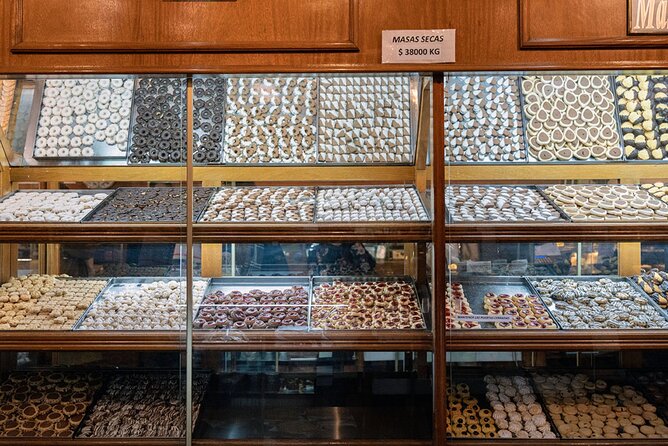
The stop at Florería Atlántico brings the tour toward the zone where downtown meets the train stations and port. The area is described as a center of Argentine culinary exchange, shaped by the river and railway lines.
Florería Atlántico is also associated with the hidden-bar tradition of Buenos Aires. The supplied details do not promise a specific cocktail or a particular tasting at this stop, but the food pattern described by past participants includes an alcoholic drink in a historic bar setting. One memorable example is a Cynar Julep, a bitter, herbal cocktail that gives you something different from the usual beer or wine stop.
This is where the tour’s title, cafés, parrillas and beyond, makes sense. You are not being taken only to formal restaurants. The day moves through places that reflect how porteños actually eat and drink: coffee and pastries earlier, quick pizza and flatbread, a drink at a traditional bar, meat at a local grill, and sweets at the end.
The setting may appeal to you if you like places with a story. It may be less satisfying if you want a fixed tasting menu with exact dishes published in advance. The food appears generous and varied, but the precise lineup can depend on the day, the guide, and the venues.
A completely different kind of day:
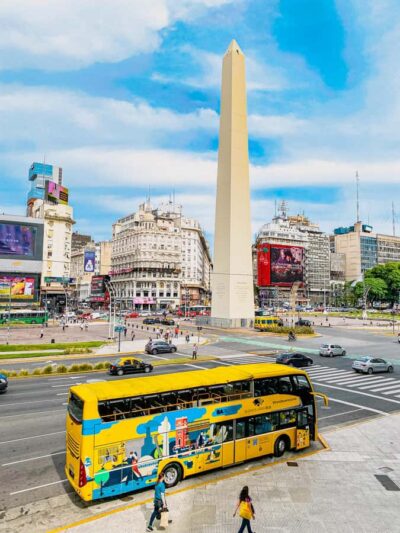
- Buenos Aires Hop-On Hop-Off Bus, Free Walking Tours & Discounts
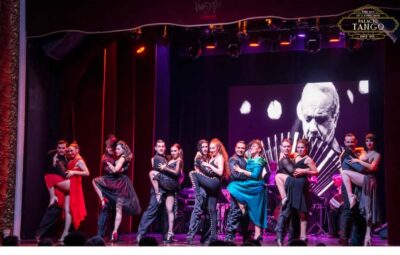
★ 4.5 · 2,218 reviews - Buenos Aires: Piazzolla Tango Show with Optional Dinner
★ 4.4 · 2,122 reviews - Buenos Aires: City Highlights Guided Tour with Transfer
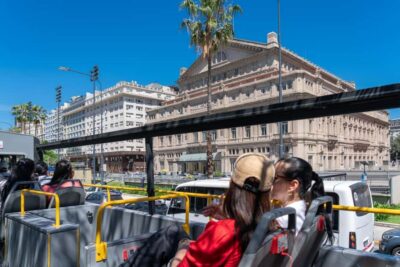
★ 4.7 · 1,946 reviews - Buenos Aires: Hop-On Hop-Off City Bus Tour
★ 4.2 · 1,855 reviews
Plaza San Martín and a meal that keeps building
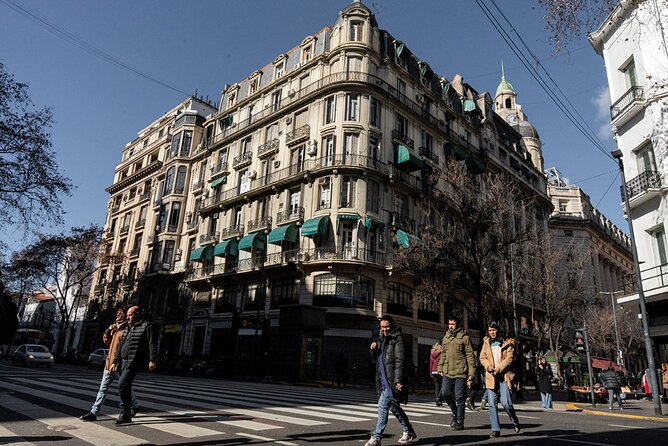
The final listed stop is Plaza San Martín, where the tour ends after about an hour. The route information gives an endpoint in the Villa Pueyrredón area, so I would check the exact map pin and meeting details before the morning begins. The listing identifies Plaza San Martín as the ending point, but the full address is written in a confusing way.
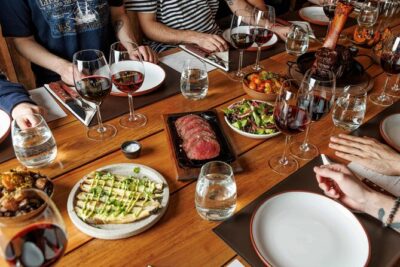
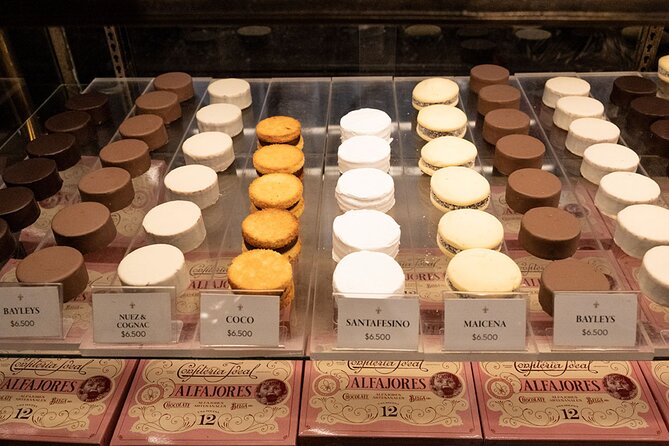
By this stage, the food sequence can amount to a small Buenos Aires feast. Expect the style of eating to move through several stages rather than arrive as one formal lunch. Past descriptions include coffee and local pastries, a medialuna at Los Galgos bar, sweet tarts eaten in a square, pizza and flatbread, spinach fritters, a platter of assorted parrilla cuts, and a finish involving chocolate, gelato, or ice cream.
The meat course is the point when you will be glad you skipped a large breakfast. The description of big meat, all the cuts suggests a broad parrilla tasting rather than one small sample. Argentina is famous for beef, but the value here is in seeing it as part of a social meal, served in a local grill and discussed alongside customs and daily life.
Dessert gives the afternoon a softer landing. A chocolate or ice cream stop is not as historically central as the square or railway building, but it balances the heavy meal. One participant felt the gelato stop did not fit the theme perfectly, so your reaction may depend on whether you want every stop to have a strong cultural connection.
What you may eat and drink
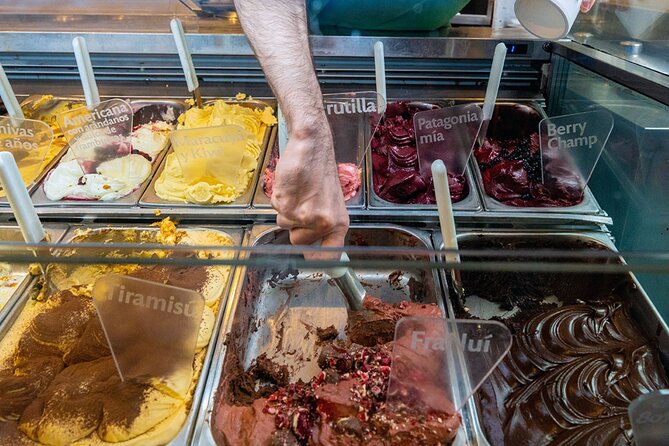
The experience includes breakfast, lunch, snacks, soda, bottled water, and alcoholic beverages. That is a substantial inclusion for a five-and-a-half-hour tour, especially in a city where stopping for several separate meals and drinks can quickly become expensive.
The food is varied enough to show different sides of Buenos Aires:
- Coffee and medialunas introduce the café tradition.
- Sweet tarts and pastries add a lighter early bite.
- Pizza and flatbread point to the city’s Italian influence.
- Spinach fritters add a less expected savory stop.
- Parrilla meats provide the main meal.
- Chocolate, gelato, or ice cream finish the route.
- A cocktail such as a Cynar Julep brings in Argentina’s bar culture.
You should treat this as a grazing day, not a series of tiny samples. The portions are described as generous, and the most practical advice is simple: come hungry. If you have allergies, dietary restrictions, or strong dislikes, ask what substitutions are possible before you pay. The available information does not promise vegetarian, vegan, gluten-free, or allergy-specific arrangements.
The guide can make or break the history
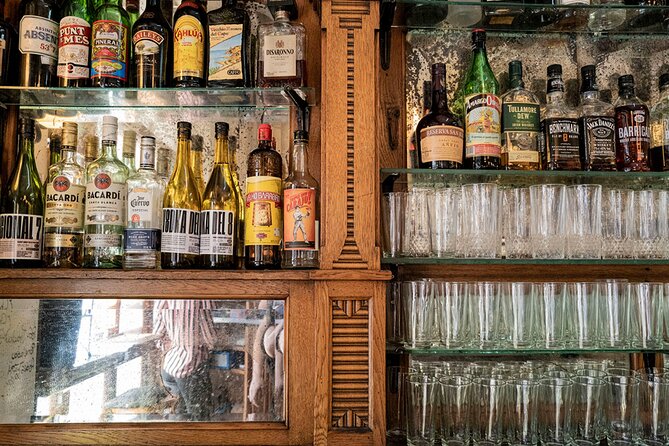
The strongest part of this experience is the guide’s role. Food tours can easily become a list of addresses. Here, the guides are expected to connect each bite to the city around it.
Esteban receives particularly strong praise for explaining Argentine history, porteño culture, customs, politics, and the origins of the food. He is also described as willing to answer questions without rushing the group. That matters because Buenos Aires can feel confusing at first. Its European-looking architecture, Argentine political vocabulary, football loyalties, immigrant food traditions, and intense café culture do not fit into a quick orientation talk.
Lucía has shown a different strength: practical judgment. On an extremely hot day, she changed some stops to keep the group in cooler places. That kind of flexibility is useful on a five-hour walk, especially when the tour includes outdoor squares and a full schedule of tastings.
Maui is praised for knowing the city and its cafés, explaining the contrast between festive and peaceful neighborhoods, and giving personal recommendations. One useful benefit of a guide like this is what happens after the tour. You may leave with an idea for a pizza place or a local bar to try on another evening.
Is $135 a fair price?
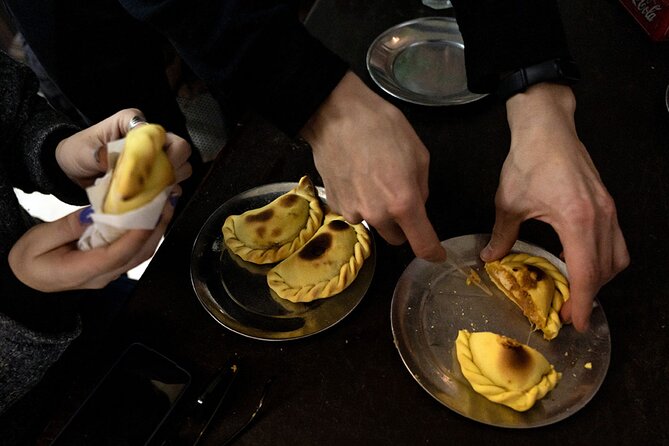
At $135 per person, this is a premium food tour for Buenos Aires. The price makes more sense when you count what is included: a licensed English-speaking guide, alcoholic drinks, water, soda, breakfast, lunch, and snacks. You are also paying for a very small group and for the time spent arranging a coherent route through historic venues.
The value is strongest if you want one booking to cover both city orientation and a large portion of your day’s food. Buying similar meals and drinks independently could cost less, but you would need to find the places, understand their context, order confidently, and connect them into a route.
The value is weaker if you mainly want a cheap lunch or already know Buenos Aires well. It is also less attractive if you prefer choosing every dish yourself. The attraction is convenience, access, and interpretation, not bargain dining.
With an average booking lead time of 42 days, it makes sense to reserve ahead if your dates are fixed. The group limit is only seven, so late availability may be limited.
Who should book this Buenos Aires food tour?
I would recommend it for a first or second visit to Buenos Aires, especially if you want an introduction that goes beyond the standard sightseeing circuit. You get food, city history, political context, and local recommendations in one morning and afternoon.
It suits you particularly well if:
- You enjoy learning about a city through meals.
- You want an English-speaking guide who can answer questions.
- You like small groups rather than large organized tours.
- You want to try cafés, pizza, meat, cocktails, and sweets in one outing.
- You are comfortable with a long food-focused walk.
- You would rather have a local plan than choose every stop yourself.
I would think twice if you have strict dietary needs, dislike long meals, or want a tour centered only on famous landmarks. The history is important, but it is woven between tastings rather than delivered as a conventional sightseeing lecture.
Free cancellation is available if you cancel at least 24 hours before the 10:00 a.m. start time. Changes or cancellations inside that window are not accepted for a refund.
Should you book Backstreet Bites?
Book it if you want Buenos Aires explained through what people eat, where they gather, and what their city has endured. The best parts are the small group, the strong guides, the generous range of food, and the unusual stops at places such as Galerías Pacífico and Florería Atlántico.
Skip it if $135 feels too high for a meal-based tour, or if you need a precisely published menu. For everyone else, this looks like a useful first-day choice: arrive hungry, ask questions, wear comfortable shoes, and save room for the parrilla and dessert.
FAQ
How much does Backstreet Bites of Buenos Aires cost?
The price is $135 per person.
How long does the tour last?
The experience lasts approximately five hours and 30 minutes.
What time does the tour start?
The tour starts at 10:00 a.m.
Where does the tour begin?
The meeting point is Av. Callao 501, C1022AAF, Buenos Aires, Argentina.
Where does the tour end?
The listed ending point is Plaza San Martín. The supplied address also includes Villa Pueyrredón and should be checked carefully on the map before the tour.
Is the tour offered in English?
Yes. The tour is offered in English.
How many people can join the tour?
The group has a maximum of seven participants.
What food and drinks are included?
Breakfast, lunch, snacks, alcoholic beverages, bottled water, and soda are included.
Is private transportation included?
No. Private transportation is not included, though the meeting point is near public transportation.
Can I cancel for a full refund?
Yes, if you cancel at least 24 hours before the experience start time. Cancellations or changes made less than 24 hours in advance are not accepted for a refund.
Just added in Buenos Aires
- Discover Buenos Aires’ independent art scene — Ticket included★ 5.0 · 30 reviews
- Photo Session in Buenos Aires★ 5.0 · 26 reviews
- Your Private Photographer in Buenos Aires★ 5.0 · 4 reviews
- Yerba Mate Workshop – Learn to Drink Mate like a Local!★ 5.0 · 11 reviews
- Your Personal Photographer in Buenos Aires★ 5.0 · 24 reviews
- BA: Wine Tasting and Blending Experience in Palermo★ 5.0 · 1 review
- Winery and Tasting Experience in Buenos Aires★ 5.0 · 1 review
- Taste of Tradition: Yerba Mate & Alfajores Experience★ 4.0 · 5 reviews
Buenos Aires Tours, compared.
Local Foodie Adventure in Buenos Aires with Sherpa Food Tours
Read our review →
Buenos Aires City Private Tour with Local Guide
Read our review →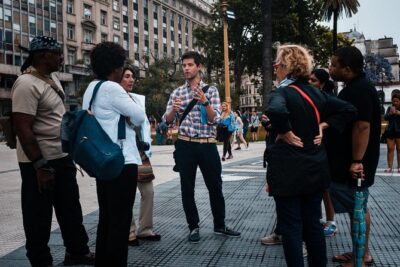
Buenos Aires Hop-On Hop-Off Bus and Exclusive Benefits
Read our review →