
Reviewed · BUENOS AIRES TOURS
15-Day Trip from Patagonia to Rio de Janeiro
Two countries, one sweeping journey. This 15-day trip links Buenos Aires, Ushuaia, El Calafate, Iguazú Falls, and Rio de Janeiro, giving you tango, glaciers, wildlife, waterfalls, beaches, and famous city sights in one organized package. I like the route because it covers the big South American highlights without asking you to arrange every flight, hotel, airport transfer, and excursion yourself.
I also like the sharp change in scenery, from cold Patagonia to warm Iguazú and tropical Rio. The main consideration is pace: several days include flights, long excursions, or full sightseeing schedules, and park entrance fees and flights are not included in the $4,155 price.
In This Review
- Five things to know before booking
- What the $4,155 price really covers
- Buenos Aires begins with old streets and tango
- Tigre adds water and a slower afternoon
- Ushuaia brings the true southern edge of the trip
- El Calafate and Perito Moreno Glacier
- Iguazú shows both faces of the waterfalls
- Rio finishes with its famous high points
- Who should book this route?
- FAQ
- How long is the tour?
- Are flights included?
- What meals are included?
- Are national park entrance fees included?
- What should I pack for Patagonia and Iguazú?
- How many people can join the group?
- My verdict
Five things to know before booking
- The route covers five major bases: Buenos Aires, Ushuaia, El Calafate, Puerto Iguazú, and Rio de Janeiro.
- Patagonia requires warm layers: Ushuaia and El Calafate can be cold, even when Buenos Aires feels mild.
- Iguazú is a two-sided experience: You visit the Brazilian side for broad views and the Argentine side for closer walkways and Garganta del Diablo.
- You get useful arrival and departure help: Airport transfers are arranged in Buenos Aires, Ushuaia, El Calafate, Iguazú, and Rio.
- The group can reach 40 people: That keeps costs under control, but it may feel less personal than a small-group trip.
- The schedule is full but purposeful: Days off are built in after some flights, while the major natural sights receive full outings.
What the $4,155 price really covers

At $4,155 per person, this is not a budget trip. It is a packaged route designed to remove much of the work involved in crossing Argentina and Brazil. Your price includes 14 breakfasts, accommodation, listed excursions, transfers, lunch, and dinner, including the Buenos Aires tango evening.
The biggest value comes from the domestic transport and coordination. Moving from Buenos Aires to Ushuaia, then El Calafate, Iguazú, and Rio would require careful planning. Here, a driver meets you at airports and takes you to your hotel, which matters after flights and in places where airport arrangements may otherwise be confusing.
The price does not include flights. It also excludes national park entrances, optional museum admissions, personal expenses, extra food and drinks, and services not listed. Set aside extra money for those costs before deciding that the advertised price is your full budget.
Accommodation styles can be selected according to your needs, but the supplied details do not specify exact hotels or room categories. Ask for the available options before paying, especially if hotel location or room comfort matters to you.
The tour is offered in English, accepts mobile tickets, provides pickup, and allows group discounts. It is limited to a maximum of 40 people. That is a fairly large group, so expect a practical rather than intimate touring style.
More Day Trips in Buenos Aires
- Gaucho Day Trip from Buenos Aires: Santa Susana Ranch
★ 4.0 · 272 reviews - Colonia del Sacramento Small-Group Day Trip
★ 4.5 · 155 reviews - Gaucho Experience: A Day Trip to Don Silvano Ranch
★ 4.0 · 148 reviews
Buenos Aires begins with old streets and tango
Your first day is intentionally light. A driver meets you in the airport disembarkation area with a sign showing your name, then takes you to your downtown hotel. After check-in, you have the rest of the day to rest.
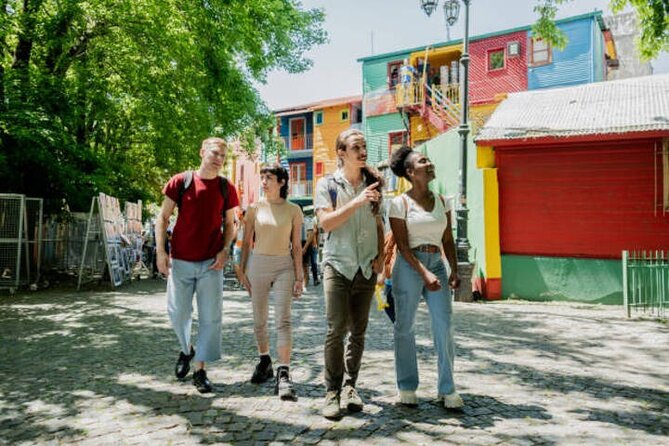
Day two gives you a useful introduction to Buenos Aires. The walking tour begins in San Telmo, one of the city’s oldest districts. Along Defensa Street, you see cobblestones, antique shops, old buildings, street lamps, tango activity, and the bohemian character that makes this part of the city so memorable.
If your visit includes a Sunday, San Telmo is especially lively because the market spreads around Plaza Dorrego. The tradeoff is that popular market hours can be crowded, but this is also when the neighborhood feels most alive.
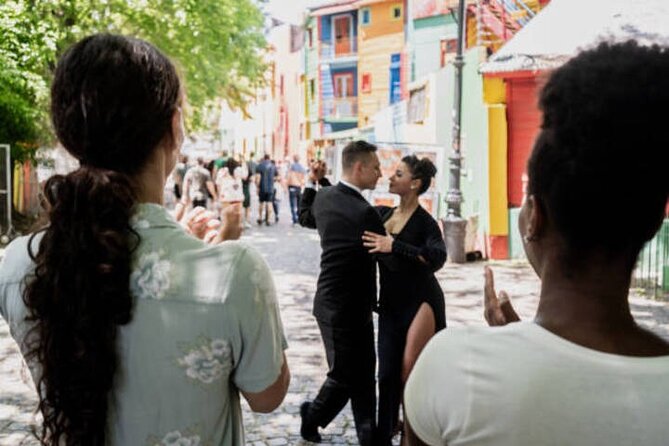
From San Telmo, the route continues toward Parque Lezama and La Boca. La Boca brings together two powerful parts of Buenos Aires culture, football and tango, with Boca Juniors Stadium and the colorful Caminito street. Street singers and tango dancers add atmosphere, though you should remember that the stop is an introduction rather than a deep exploration of the area.
The tour then shifts to modern Puerto Madero and the Puente de la Mujer. The bridge’s curved shape represents a couple dancing tango, a neat bit of design that connects the modern district with the city’s favorite dance.
At Plaza de Mayo, you see the Metropolitan Cathedral, the Cabildo, and the Casa Rosada. This is the political center of Argentina, and the compact group of buildings helps explain how Buenos Aires developed from colonial beginnings into a major capital.
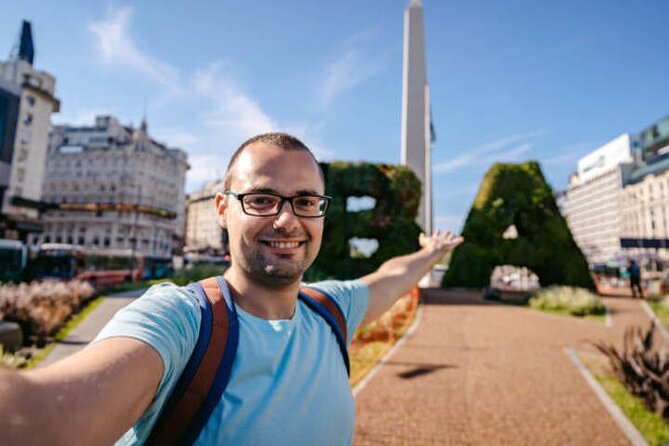
The final daytime stops include the Obelisk and 9 de Julio Avenue, one of the city’s defining spaces. The outing ends at Recoleta Cemetery, surrounded by elegant architecture, museums, and cafés. The itinerary gives you a broad first look at the city, though the short stop times mean you will not study every site in detail.
That evening, pickup takes you to La Ventana Barrio de Tango in San Telmo. A three-course dinner with regional wines comes before a show tracing the development of tango through dancers and singers. The evening runs from about 8 or 8:30 p.m. until midnight, so it is a long night, but it makes good use of your first full day in Buenos Aires.
Tigre adds water and a slower afternoon
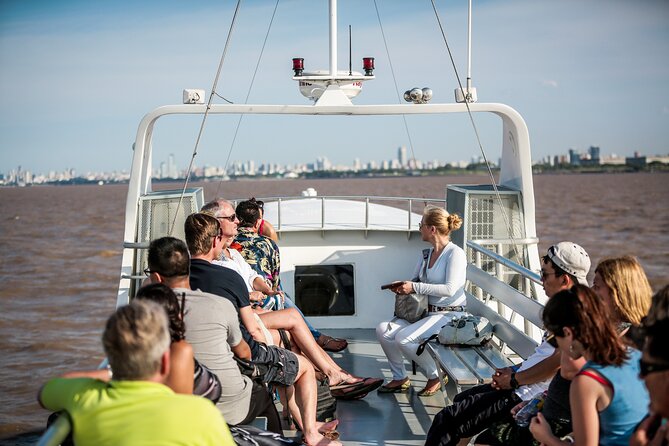
Day three moves north to the Tigre Delta. You meet at the Puerto Madero boat terminal at 9:45 a.m., then sail across the Rio de la Plata and through the delta for about two hours.
The water route gives you a different view of Buenos Aires and leads into Tigre, a river town with a more relaxed feel. At Puerto de Frutos, once a commercial port and now a popular market area, you have time for crafts, souvenirs, photos, and browsing.
You also get free time for lunch before visiting Paseo Victorica. This riverfront area combines views, restaurants, nature, and museums. The Museo del Mate, Museo Naval, and Museo de Arte de Tigre are optional and cost extra.
The return to Buenos Aires is by train to Retiro Station. I like this day because it breaks up the city sightseeing, but the boat, bus, free time, and train create a less tightly controlled rhythm than the walking tour.
Ushuaia brings the true southern edge of the trip

On day four, airport transport takes you to Ushuaia. After arrival, another transfer brings you to your hotel, with the rest of the day free.
The next day is devoted to Tierra del Fuego National Park, about 11 kilometers from Ushuaia. You can ride the End of the World Train for about an hour, passing through dramatic scenery while learning about the area’s past. The train is optional in the sense that its admission is not included, so confirm the extra cost before you go.
The park outing continues on foot. You see remains of an Indigenous settlement, beaver dams, Ensenada Bay, nearby islands, the Beagle Channel, and mountains along the Chilean side. At Lago Roca, the route follows the lake and Lapataia River, with views of Green Lagoon and Black Lagoon before reaching Lapataia Bay.
This is a day for sensible clothing. Warm layers are recommended, and conditions can change quickly in Patagonia. The walking is part of the appeal, but anyone with mobility concerns should ask for details about the trails and train access before booking.
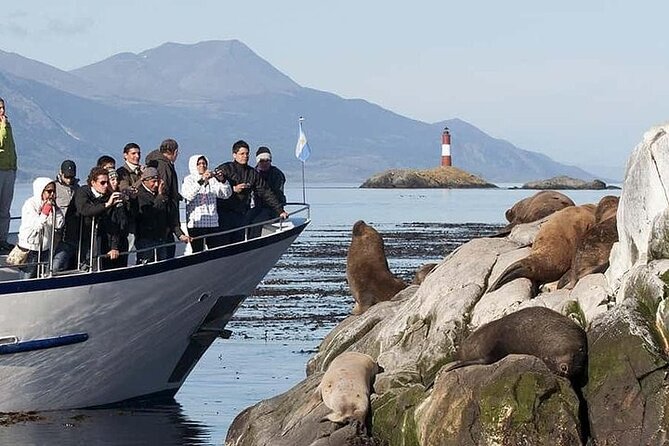
Day six takes to the Beagle Channel by boat. The route heads toward Les Eclaireurs Lighthouse, then Los Lobos Island, where you may see sea lions. Los Pajaros Island brings cormorants, albatrosses, petrels, giant petrels, skuas, and other sea birds.
The boat outing lasts about three hours. It is a fine contrast to the park day, with Ushuaia and Mount Martial providing a scenic frame on the return. The description allows for wildlife viewing, but nature is never a timed performance, so exact sightings cannot be guaranteed.
More things to do in Buenos Aires:
- Local Foodie Adventure in Buenos Aires with Sherpa Food Tours
★ 5.0 · 6,875 reviews - Buenos Aires City Private Tour with Local Guide
★ 5.0 · 3,475 reviews - Buenos Aires Small-Group City Tour
★ 5.0 · 2,226 reviews - Buenos Aires Hop-On Hop-Off Bus, Free Walking Tours & Discounts
★ 4.5 · 2,218 reviews
El Calafate and Perito Moreno Glacier
Day seven includes a flight to El Calafate, followed by hotel transfer and free time. That pause is welcome because the trip has already included several transfers.
Day eight is one of the route’s major highlights. You leave at 9 a.m. and follow Route 11 along Lago Argentino toward Los Glaciares National Park. At Curva de los Suspiros, you get an early view of Perito Moreno Glacier before continuing to Bajo las Sombras Pier.
A boat trip takes you toward the glacier’s southern wall. You then spend about five hours on the walkways, viewing the ice from balconies at several heights and angles. The long stop is worthwhile because Perito Moreno changes character as you move between viewpoints.
The park entrance is not included, so budget for it. The glacier day is also likely to be cold and windy, making layered clothing, sturdy shoes, and protection from the weather sensible choices.
Day nine is open for an additional glacier navigation or the Estancia Cristina outing, which includes boat transport to see other glaciers. This is one of the itinerary’s better choices because you can add another major experience or simply rest after the full glacier day. The extra excursion is not described as included, so confirm the price.
Iguazú shows both faces of the waterfalls
Day ten takes you by air to Puerto Iguazú. After hotel check-in, you visit the Brazilian side of Iguazú Falls in the afternoon.
The Brazilian park uses a walkway of about 1,200 meters along the Iguazú River gorge. Its great strength is perspective: you see a broad panorama of the falls, including views toward the Argentine side. The route finishes near Garganta del Diablo, where a viewpoint and a lasting rainbow often make a strong final impression.
The Brazilian park entrance is not included. Iguazú is also warm, humid, and wet around the falls. Quick-drying clothes, a swimsuit or light clothing, long sleeves, and protection from sun and mosquitoes are sensible choices.
Day eleven covers the Argentine side, and it is a longer, more involved day. You use the park’s transport system to reach the Superior and Inferior circuits, with a 600-meter Green Trail connecting areas of the park.
The Superior Circuit follows about 800 meters of raised walkways over the falls. The Inferior Circuit adds about 1,600 meters closer to the water, with views of Dos Hermanas, Alvar Núñez, San Martín, Bosetti, and other falls.
The day ends at Garganta del Diablo. A train ride of about 18 minutes leads to the station, followed by a 1,200-meter walkway to the main balcony. Here, the water gathers into the most forceful section of the falls.
The two park days work well together. Brazil gives you the wide view; Argentina gives you more paths and closer contact with the spray. Entrance charges are separate, and the amount of walking makes light clothing, comfortable shoes, and water important.
Rio finishes with its famous high points
Day twelve transfers you to the airport in Puerto Iguazú or Foz do Iguaçu for the flight to Rio. Once you arrive, you are taken to your hotel and have the rest of the day free.
Day thirteen is a classic Rio sightseeing day. The first major stop is Corcovado and Christ the Redeemer, set 710 meters above the city inside Tijuca National Park. From the summit, you can see Rodrigo de Freitas Lagoon, beaches, and much of the city.
You then visit Maracanã Stadium, with the Maracanã Museum available as an optional admission. The Sambadrome follows, including Apoteose Square and access to the Samba Museum.
After lunch at a traditional barbecue restaurant, the route continues to Sugarloaf Mountain. A glass cable car carries you to the summit at 395 meters, where the view takes in Guanabara Bay, Copacabana, Urca, Botafogo, Flamengo, and nearby areas.
The day ends in the historic center with the Metropolitan Cathedral, Selarón Steps, and the Arcos of Lapa. This is a lot for one day, but it gives you the symbols most first-time visitors want to see. Optional admissions, such as Maracanã Museum, cost extra.
Day fourteen offers a different view of Rio from Guanabara Bay. The boat departs at 9:30 a.m. and sails along Rio and Niterói, passing beaches, forts, islands, the Rio-Niterói Bridge, museums, and Sugarloaf.
The bay’s name comes from the Portuguese arrival in January 1502, when the inlet was mistaken for the mouth of a river. The boat outing lasts about two hours and works as a gentler final sightseeing day after the busy city tour.
Who should book this route?

I would choose this trip if you want the major sights of Argentina and Brazil but do not want to manage a complicated series of flights, transfers, hotels, and park visits. It suits first-time visitors who value variety and prefer an organized plan over independent problem-solving.
I would hesitate if you want long stays in each place, small-group intimacy, or plenty of unplanned time. The maximum group size is 40, and the route moves quickly. You also need to budget separately for flights, park entrances, optional visits, and personal spending.
The cancellation terms deserve attention. You can receive a full refund when canceling at least six full days before the start, while cancellations two to six full days ahead receive 50 percent. Less than two full days brings no refund, and all cut-off times use local time.
FAQ
How long is the tour?
The trip lasts approximately 15 days, beginning with airport pickup in Buenos Aires and ending with airport transfer from Rio de Janeiro.
Are flights included?
No. Flights between the destinations are not included in the tour price.
What meals are included?
The package includes 14 breakfasts, lunch, and dinner. Extra food, drinks, and services not specifically listed are not included.
Are national park entrance fees included?
No. Entrance fees for the national parks are excluded, including the parks connected with Patagonia and Iguazú Falls.
What should I pack for Patagonia and Iguazú?
For Patagonia, bring warm and layered clothing. For Iguazú, light clothing that dries quickly is recommended, along with long sleeves for sun and mosquito protection.
How many people can join the group?
The group can include a maximum of 40 people. The tour is offered in English, and most people can participate. A valid passport is required throughout the trip.
My verdict
This is a big, ambitious South American route that earns its price through coordination rather than luxury. I especially like the balance of Buenos Aires culture, Patagonia’s cold southern scenery, the two-sided Iguazú experience, and Rio’s grand city views.
Book it if you want a clear, guided path through two enormous countries. Skip it if you prefer to travel slowly, choose your own hotels and flights, or spend several days in each destination. The route is demanding, but for the right kind of explorer, it packs an impressive amount into two weeks.
Just added in Buenos Aires
- Discover Buenos Aires’ independent art scene — Ticket included★ 5.0 · 30 reviews
- Photo Session in Buenos Aires★ 5.0 · 26 reviews
- Your Private Photographer in Buenos Aires★ 5.0 · 4 reviews
- Yerba Mate Workshop – Learn to Drink Mate like a Local!★ 5.0 · 11 reviews
- Your Personal Photographer in Buenos Aires★ 5.0 · 24 reviews
- BA: Wine Tasting and Blending Experience in Palermo★ 5.0 · 1 review
- Winery and Tasting Experience in Buenos Aires★ 5.0 · 1 review
- Taste of Tradition: Yerba Mate & Alfajores Experience★ 4.0 · 5 reviews
Buenos Aires Tours, compared.
Local Foodie Adventure in Buenos Aires with Sherpa Food Tours
Read our review →
Buenos Aires City Private Tour with Local Guide
Read our review →

Buenos Aires Hop-On Hop-Off Bus and Exclusive Benefits
Read our review →

Argentine Experience Interactive Dining and Cooking
Read our review →Browse the lists this tour appears in