
Reviewed · TANGO SHOWS
Tour cultural a pie de 3 horas por la historia del Tango
Tango still has a pulse here. This three-hour walk follows Corrientes Street through the bars, theaters, cafes, and corners that shaped Buenos Aires’ tango culture. I like the focus on real city life, not just stage performance, and I like that the tour ends inside an authentic milonga porteña, where locals experience tango in a social setting.
I also appreciate the mix of architecture and cultural history. You see old facades, famous theaters, traditional cafes, bookstores, pizzerias, and the Obelisco while your guide explains how tango moved from the port area into the center of town. Guide Dino earned particular praise for his warm manner, patience, and detailed understanding of Buenos Aires.
The main drawback is physical: this is a walking tour for people who can manage three hours on foot. It is not suitable for wheelchair users or people with mobility impairments, and the busy downtown setting may feel tiring if you prefer a slower, quieter outing.
In This Review
- Key details about the tango walk
- Why Corrientes Street is the right place to study tango
- Starting at Av. Corrientes 348
- Salón Marabú and the first chapter of tango
- Teatro Lola Membrives and Corrientes y Esmeralda
- Confitería Ideal and the cafe tradition
- Teatro Ópera Orbis and the Obelisco
- La Giralda and a pause inside the city
- Teatro General San Martin and Discépolo’s legacy
- Los Galgos Bar and the final approach
- El Beso, a real porteña milonga
- What the $80 price gets you
- Who will enjoy this walk most
- Should you book the tango history walk?
- FAQ
- How long does the tango walking tour last?
- Where does the tour begin?
- Where does the tour finish?
- Is a milonga visit included?
- Are drinks at the milonga included?
- What languages are available?
- Is the tour suitable for wheelchair users?
Key details about the tango walk
- Corrientes Street is the main stage: The route follows one of Buenos Aires’ best-known central streets, famous for late-night theaters, cafes, pizza places, and cultural debate.
- The final stop is a working milonga: You do not only hear about tango. You visit El Beso, also known as La Casa de la Milonga Permanente, to see how porteños take part in tango culture.
- The stops cover several eras: The story moves from tango’s early days and Carlos Gardel’s age to the cultural and political life of the 1960s and early 1970s.
- You visit major city landmarks: The Obelisco, Teatro Ópera Orbis, Teatro General San Martin, Teatro Lola Membrives, Confitería Ideal, and La Giralda all add visual depth to the walk.
- A historic bar snack is included: Food at a historic bar gives you a small taste of the cafe tradition that helped shape Corrientes Street.
- The price includes the milonga visit: At $80 per person, the value depends on how much you want cultural explanation and a genuine tango setting rather than a short dance show.
Why Corrientes Street is the right place to study tango
Tango began in Buenos Aires’ port neighborhoods, including La Boca, then moved toward the city center. Corrientes Street became one of its most important urban homes, especially during the music’s golden age.
That change in location matters. Tango is not only a dance performed for an audience. It grew alongside nightlife, theater, cafes, immigrant communities, working people, musicians, writers, and artists. On this walk, you follow the route from tango’s rougher beginnings toward the theaters and late-night meeting places of central Buenos Aires.
Corrientes is often called the street that never sleeps. The phrase makes sense once you consider its mix of evening theaters, bookstores that stay open late, art cinemas, cafes, and pizzerias serving food into the early hours. The street gives you a useful setting for understanding why tango became tied so closely to city life.
I like that the tour treats tango as part of a larger culture. You learn about the music, but you also hear about the artistic bohemia around it. The story includes Carlos Gardel, nightlife, theater, literary conversation, and the changing political mood of Buenos Aires.
Tango was declared an Intangible Cultural Heritage of Humanity by UNESCO. That label is useful, but the walk gives it human scale. You see the buildings and meeting places where the city’s cultural life developed, then finish at a place where tango remains a living social activity.
More Tango Shows in Buenos Aires:
- Buenos Aires: Piazzolla Tango Show with Optional Dinner
★ 4.4 · 2,122 reviews - Buenos Aires: Tango Show at Tango Porteño & Optional Dinner
★ 4.6 · 981 reviews - Intimate Underground Tango Show by Secreto Tango Society
★ 5.0 · 893 reviews
Starting at Av. Corrientes 348
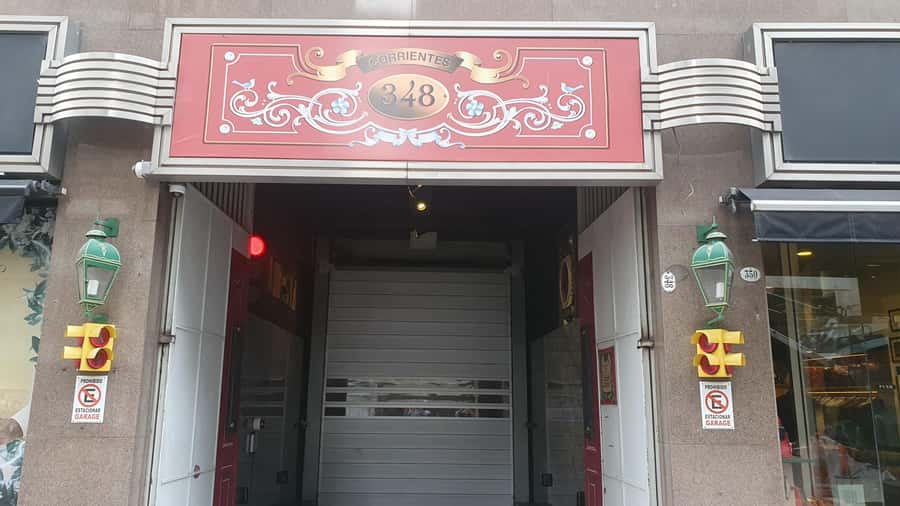
The meeting point is Av. Corrientes 348. Look for the guide carrying a sign marked Milonga City. This detail is worth remembering because Corrientes Street is a busy central thoroughfare, and finding the correct person quickly is easier when you know exactly what to look for.
The tour is offered in English, German, and Spanish. If you want the fullest connection to the local expressions and cultural references, Spanish may be the natural choice, but the multilingual option makes the tour more useful for international visitors.
The route is described as three hours, with many scheduled visits of about 20 minutes. The listed stops add up to more than three hours if every minute is treated as a separate timed visit, so you should understand those times as approximate. Walking, explanations, photo pauses, and transitions are likely folded into the overall schedule.
Wear comfortable shoes and bring water. A camera is useful because the appeal here comes partly from details on facades, theater fronts, signs, and old interiors. Hotel pickup and drop-off are not included, so you make your own way to central Buenos Aires.
Salón Marabú and the first chapter of tango
Salón Marabú is the first major stop. You have time for a visit, a guided explanation, and photographs, with about 20 minutes scheduled here.
A salon like this helps connect tango with the places where people actually gathered to hear music and dance. Instead of beginning with an abstract lecture, the tour puts you in front of a real tango venue and uses it to set the scene for the city’s artistic life.
This stop is likely most useful if you want context before reaching the milonga at the end. You start to see the difference between tango as a polished stage product and tango as part of Buenos Aires’ nightlife.
Teatro Lola Membrives and Corrientes y Esmeralda
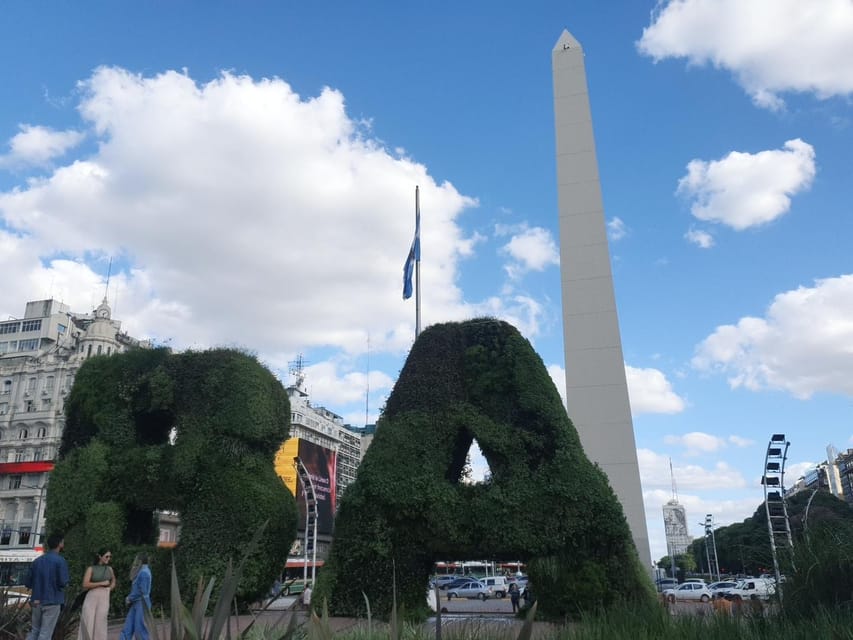
Teatro Lola Membrives brings the theater into the story. The theater is visited with a guided explanation, and it appears again later in the route for a photo stop. The repeated listing suggests that the theater may serve two purposes, one more focused visit and another moment to photograph the building as you continue.
The connection between theater and tango is important. Corrientes was not only about dance halls. It was also a place where performers, musicians, writers, and audiences met. Seeing the theater helps you picture the wider entertainment world surrounding tango.
At Corrientes y Esmeralda, the tour reaches one of the city’s emblematic corners. Expect another guided stop of roughly 20 minutes. This intersection gives the guide a natural place to discuss the street’s cultural identity and the way tango, nightlife, and public life overlapped.
You are not simply crossing a famous avenue. You are following a historic meeting point in the downtown area. Pay attention to the facades and street views, since the tour’s strength is in connecting ordinary city details to larger changes in Buenos Aires.
More things to do in Buenos Aires:
- Local Foodie Adventure in Buenos Aires with Sherpa Food Tours
★ 5.0 · 6,875 reviews - Buenos Aires City Private Tour with Local Guide
★ 5.0 · 3,475 reviews - Buenos Aires Small-Group City Tour
★ 5.0 · 2,226 reviews - Buenos Aires Hop-On Hop-Off Bus, Free Walking Tours & Discounts
★ 4.5 · 2,218 reviews
Confitería Ideal and the cafe tradition
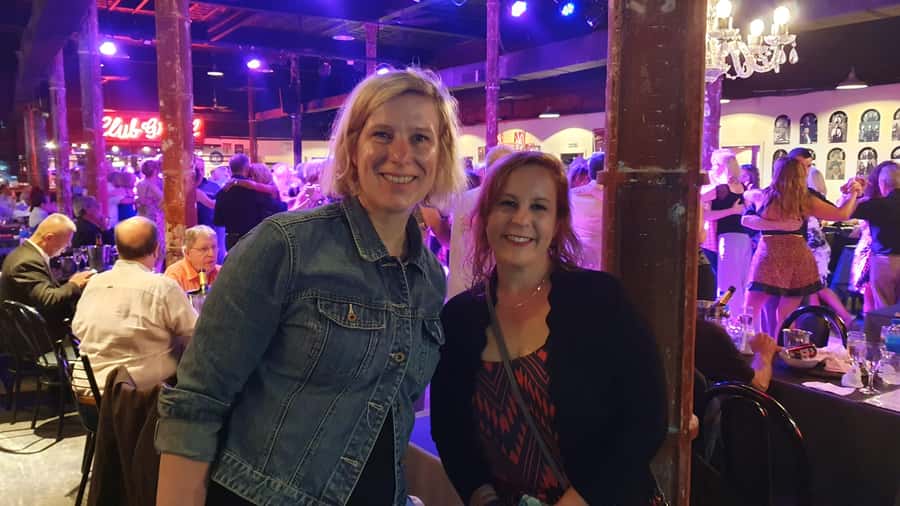
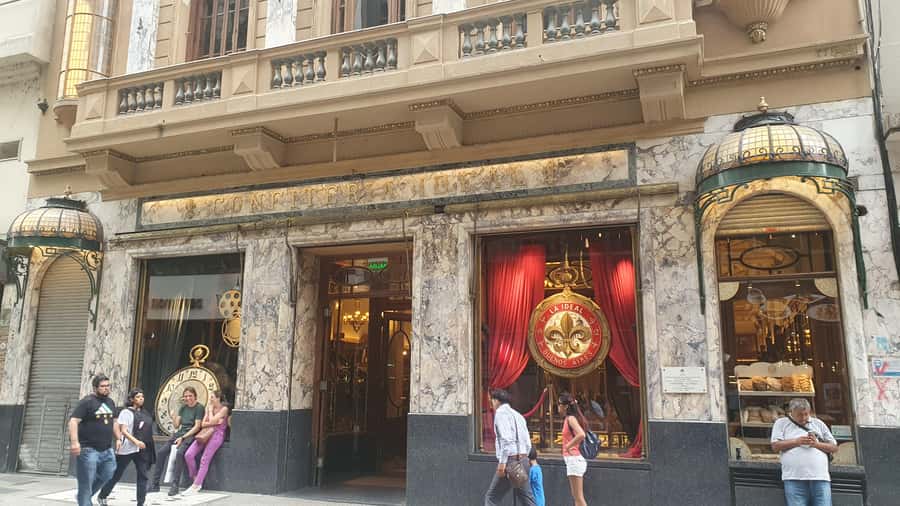
Confitería Ideal is one of the most appealing stops for anyone interested in old Buenos Aires. You have time to visit, take photographs, and hear the guide explain its place in the city’s story.
Traditional cafes and confectionery shops were important social spaces. They offered somewhere to meet, argue, write, flirt, plan, and watch the city move around you. The tour uses places like Confitería Ideal to show that tango culture developed in conversation with cafes and nightlife, not in isolation.
A visit here also gives the walk an interior setting. After several street-level views, stepping into a historic cafe changes the pace. Look at the room, the decoration, and the sense of age. You may find that these small visual details explain the period better than a long list of dates.
Teatro Ópera Orbis and the Obelisco
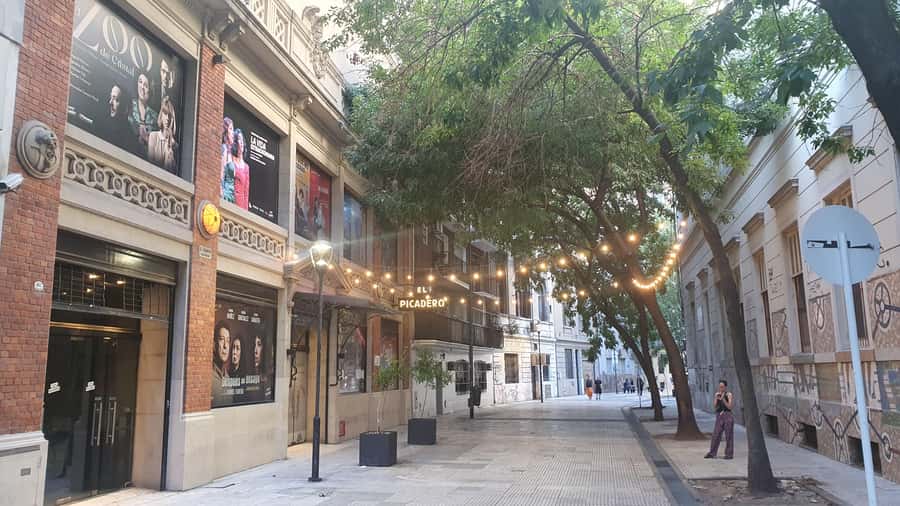
The route continues to Teatro Ópera Orbis, another theater connected to Corrientes’ performance culture. This is a photo stop and guided visit, with about 20 minutes planned.
The theater helps underline how much of Corrientes’ identity comes from entertainment. Tango shared this district with stage shows, cinema, music, and late-night audiences. If your main interest is dance, you may find the theater material less direct. If you want to understand the city that produced tango, it adds useful depth.
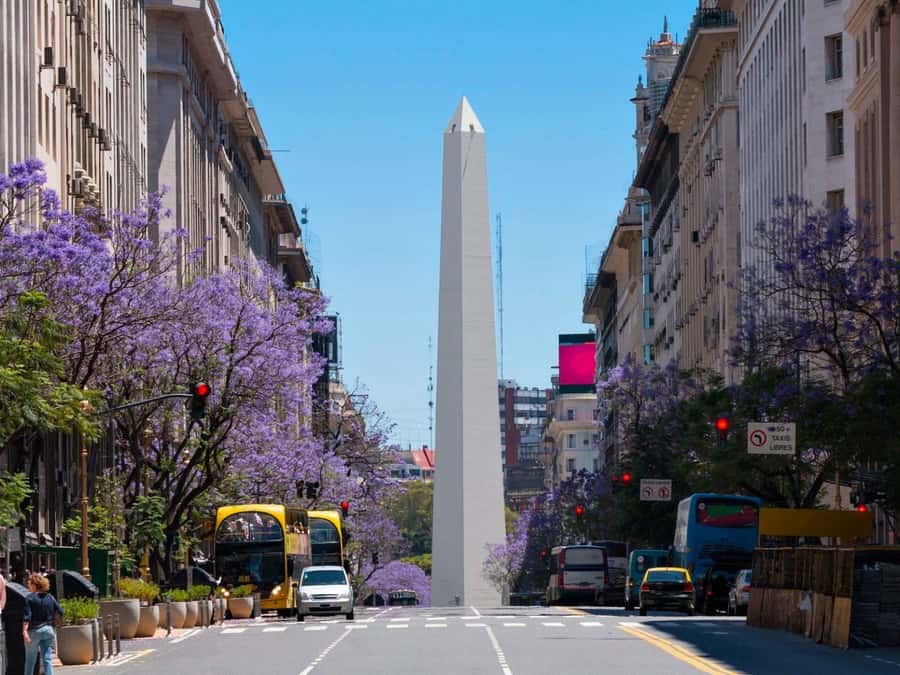
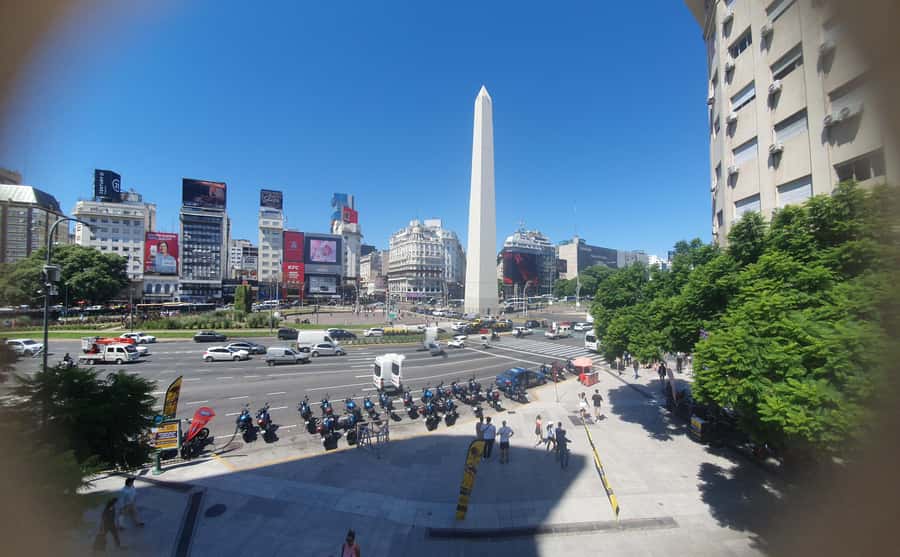
The Obelisco provides the most recognizable landmark on the walk. It is a natural place for photographs and a clear point of orientation in central Buenos Aires. The stop also shows how tango’s story sits within the modern city, surrounded by traffic, commerce, and daily urban movement.
The Obelisco is not a tango venue, so do not expect a performance here. Its value is visual and geographic. It helps you see where Corrientes fits in relation to the broader downtown area and gives the route a strong landmark between older cultural sites.
La Giralda and a pause inside the city
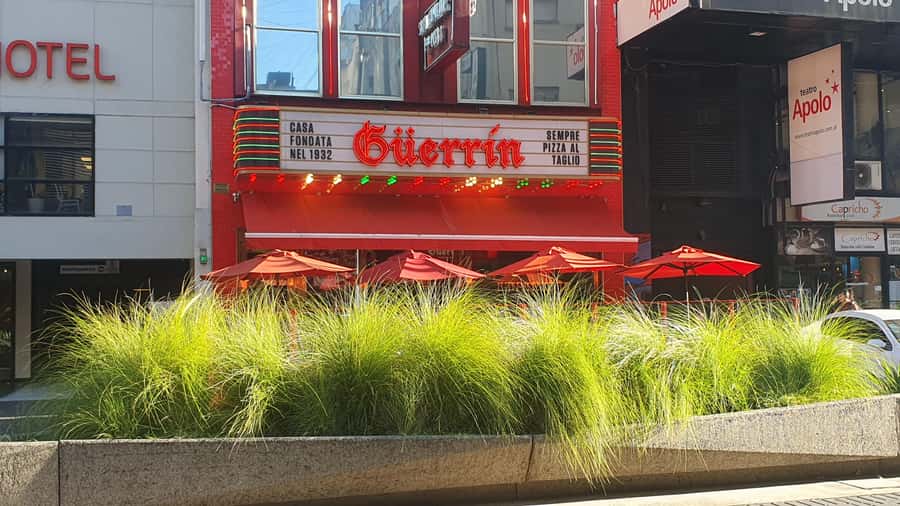
La Giralda includes a 30-minute break, photo stop, visit, and guided explanation. That longer pause is welcome in a walking tour with many stops.
This is also where the tour’s food element becomes relevant. Snacks in a historic bar are included, while drinks at the milonga are not included. The snack is modest rather than a full meal, so you should not arrive expecting lunch or dinner.
La Giralda represents the cafe and bar side of Corrientes. These places helped make the street a center for conversation and nightlife. The tour connects the old cafes with the literary, political, and artistic discussions associated with the 1960s and early 1970s.
I would use this stop to ask questions. The guide can help connect what you are seeing to the changing culture of Buenos Aires. Good questions might include how tango audiences changed, how theater affected the street, or how the city’s cafe culture relates to the milonga you will visit later.
Teatro General San Martin and Discépolo’s legacy
Teatro General San Martin adds another important performance venue. The stop lasts about 20 minutes and includes photographs and a guided explanation.
By this point, you have seen several theaters, a historic cafe, and major public landmarks. The pattern becomes clear: Corrientes was a cultural corridor. Tango was one part of a larger world of performance and debate.
The stop connected with Enrique Santos Discépolo brings the focus back to an important tango figure. Discépolo was a composer, lyricist, and performer associated with the darker, sharper side of tango expression. The visit is short, about 10 minutes, but it gives the guide a chance to connect a person’s work to the streets and venues around you.
This is one reason a guide adds value. Plaques, names, and theater fronts can pass unnoticed when you walk alone. With an explanation, they become clues to the city’s artistic past.
Los Galgos Bar and the final approach
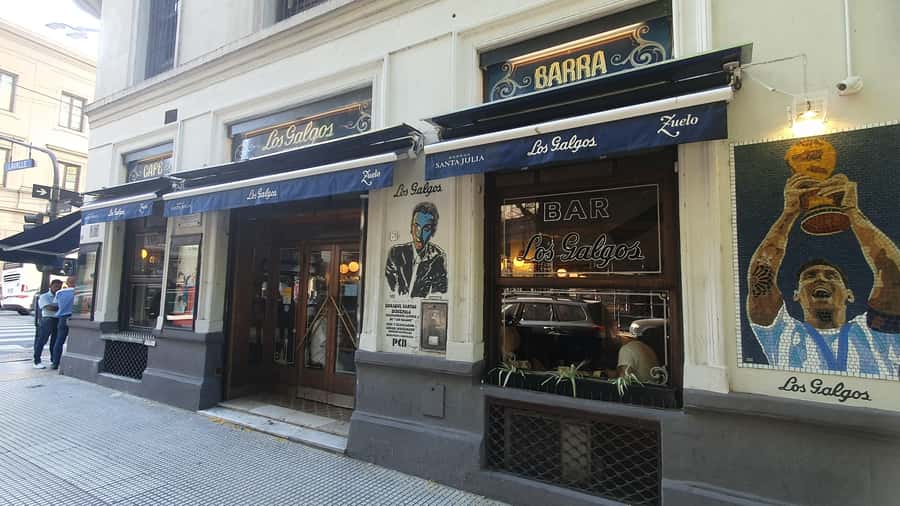
Los Galgos Bar is another historic bar stop, with time for photographs and a guided visit. Its place on the route reinforces the importance of cafes and bars as meeting places for artists, writers, and ordinary porteños.
The route is not designed as a series of grand monuments only. Some of its best moments may come from modest places that still preserve the feel of an older city. You see how cultural life took place in bars and cafes, not just inside formal theaters.
The walk then moves toward El Beso. By this point, the many earlier stops have prepared you to see tango as a social practice. The final venue makes the transition from history lesson to present-day culture.
El Beso, a real porteña milonga
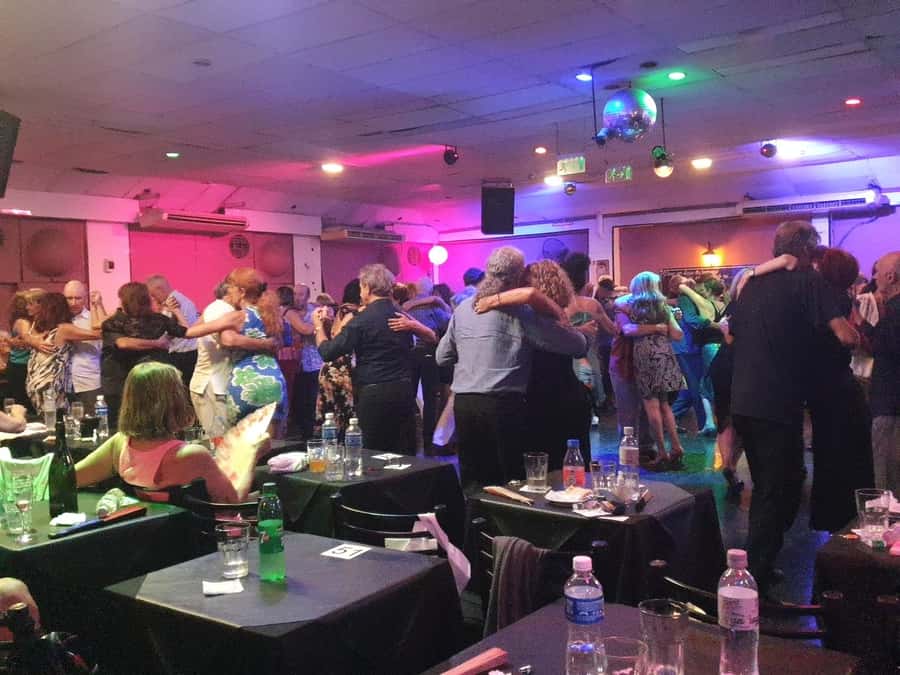
El Beso, La Casa de la Milonga Permanente, is the final stop and the emotional center of the experience. The scheduled time is about 50 minutes, longer than any other stop.
That extra time matters. You get more than a quick photograph outside a tango hall. The tour includes a ticket to visit an authentic milonga porteña, so you can observe how local people experience tango in a social setting.
A milonga is not simply a theater show. It is a place where tango is danced, watched, and shared as part of city life. The atmosphere may feel different from a polished tourist performance, and that is the point. You are seeing tango in the setting that keeps its social side alive.
You should budget separately for drinks at the milonga. The entry is included, but beverages are not. The tour finishes at El Beso, which is convenient because you do not need to walk back to the starting point with the group.
The milonga was the favorite part for Caterine, who described the experience as excellent and especially enjoyed seeing the show. That makes sense for visitors who want a direct encounter with tango rather than only background information.
What the $80 price gets you
At $80 per person, this is not the cheapest way to see central Buenos Aires. You are paying for three hours of guided interpretation, a structured walking route, entry to an authentic milonga, and snacks at a historic bar.
The value is strongest if you would otherwise walk past Corrientes’ theaters and cafes without knowing their connection to tango. A self-guided walk costs less, but it will not automatically explain why the street mattered during the 1940s, or how its cultural life continued through the 1960s and early 1970s.
The price is less compelling if you mainly want to watch professional dancers on a stage. This experience focuses on history, places, and local tango culture. It is not presented as a full-scale theater production.
The small number of published ratings gives only limited evidence about consistency. Still, the available comments are strongly positive. Martin singled out Dino’s friendly personality, patience, and detailed knowledge of Buenos Aires. That combination matters on a walking tour, where the guide shapes the experience more than any single building.
Who will enjoy this walk most
I would recommend this tour to you if you want to understand tango within the city that created it. It suits visitors who enjoy architecture, music, cafes, theater, urban history, and local customs as much as they enjoy a dance performance.
It is also a good choice if you are curious about how porteños spend time in traditional places. The final milonga gives you a glimpse of tango as a living social activity rather than a museum subject.
You may want a different experience if you have limited walking ability, use a wheelchair, or prefer a seated activity. The tour is explicitly not suitable for wheelchair users or people with mobility impairments.
Bring water, wear shoes you can walk in comfortably, and carry a camera. Since the guide may speak English, German, or Spanish, check the available language when you choose your starting time.
Free cancellation is available up to 24 hours before the tour for a full refund, and you can reserve now and pay later. Those terms make it easier to fit the walk into a changing Buenos Aires schedule.
Should you book the tango history walk?
Book it if you want the story behind tango, not only the dance itself. The walk gives you Corrientes Street, historic cafes, theaters, the Obelisco, figures such as Gardel and Discépolo, and a final visit to El Beso where tango is still experienced socially.
I especially like the balance between old buildings and present-day culture. You begin by reading the city’s facades and end by seeing people gather around tango. At $80, it is a fair choice for a culturally focused three-hour outing, especially if Dino is guiding your group.
Skip it if you want a large stage production, hotel transport, or a short activity with little walking. For everyone else, this is a thoughtful way to meet Buenos Aires through its most famous music, one street corner and cafe at a time.
FAQ
How long does the tango walking tour last?
The tour lasts three hours.
Where does the tour begin?
It begins at Av. Corrientes 348. Look for the guide holding a sign marked Milonga City.
Where does the tour finish?
The tour finishes at El Beso, La Casa de la Milonga Permanente.
Is a milonga visit included?
Yes. The ticket to visit an authentic milonga porteña is included.
Are drinks at the milonga included?
No. Drinks at the milonga are not included.
What languages are available?
The live guide is available in English, German, and Spanish.
Is the tour suitable for wheelchair users?
No. The tour is not suitable for wheelchair users or people with mobility impairments.
Just added in Buenos Aires
- Discover Buenos Aires’ independent art scene — Ticket included★ 5.0 · 30 reviews
- Photo Session in Buenos Aires★ 5.0 · 26 reviews
- Your Personal Photographer in Buenos Aires★ 5.0 · 24 reviews
- Your Private Photographer in Buenos Aires★ 5.0 · 4 reviews
- Yerba Mate Workshop – Learn to Drink Mate like a Local!★ 5.0 · 11 reviews
- BA: Wine Tasting and Blending Experience in Palermo★ 5.0 · 1 review
- Winery and Tasting Experience in Buenos Aires★ 5.0 · 1 review
- Taste of Tradition: Yerba Mate & Alfajores Experience★ 4.0 · 5 reviews
Tango Shows, compared.
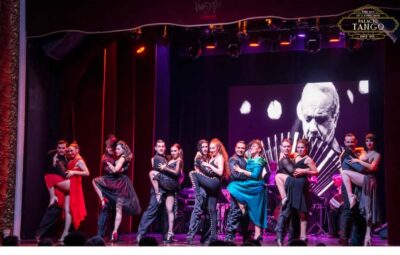

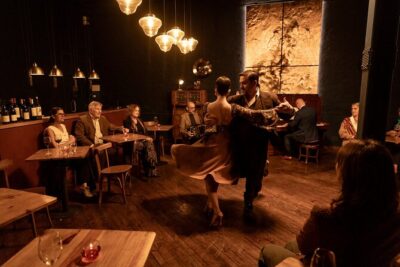
Intimate Underground Tango Show by Secreto Tango Society
Read our review →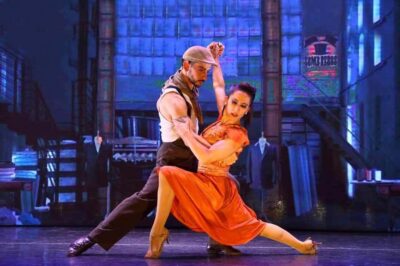
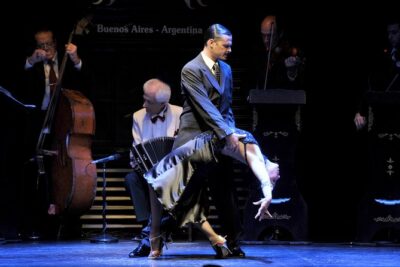
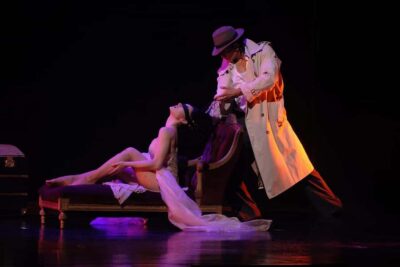
Tango Porteño: The Best Tango Night in Buenos Aires
Read our review →
Palacio Tango: Tango Show at the Piazzolla Theater
Read our review →
Browse the lists this tour appears in