
Reviewed · BARILOCHE TOURS
PATAGONIA INDIGENOUS PEOPLES: Tehuelche, Mapuche, canoe tribes
History is hiding in plain sight. This compact Bariloche walking tour connects the Tehuelche, Mapuche, and canoe peoples with the city’s monuments, lakefront, church, and Patagonia Museum. I especially like the small group limit of 15 and the way the tour treats colonization and Christianity as part of the story rather than skipping over difficult subjects.
I also like the strong guide-led approach. Diego is praised for making complex material easy to follow, while Diana receives warm praise for her thoughtful walking tour. The main drawback is the short length: at about 90 minutes, you get a focused introduction, not a full study of Indigenous Patagonia.
In This Review
- Key details that shape the experience
- Why this short Bariloche tour is worth your time
- Starting at Centro Civico at 11 a.m.
- Walking beside Lago Nahuel Huapi
- Seeing Nuestra Señora del Nahuel Huapi differently
- The optional Patagonia Museum room
- The guide makes or breaks this experience
- What the $41 price really covers
- Who will enjoy this tour most
- Practical advice before you book
- Should you book the Indigenous Peoples of Patagonia tour?
- FAQ
- Where does the tour start?
- What time does the tour begin?
- Where does the tour finish?
- How long does the tour last?
- What is the price?
- How large is the group?
- Is the Patagonia Museum admission included?
- How much walking is involved?
- Is the tour near public transportation?
- Can I cancel or change my booking?
Key details that shape the experience
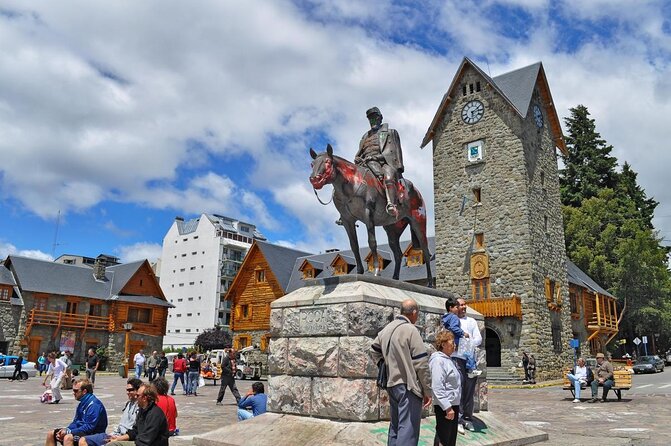
- The tour begins at Centro Civico, where Bariloche’s central monument becomes an entry point into the area’s Indigenous past.
- The lakeside walk links Nahuel Huapi to Indigenous stories and relics, giving the history a physical setting rather than keeping it inside a classroom.
- The cathedral stop adds a difficult but useful perspective on the relationship between Indigenous communities and the Catholic Church.
- One room of the Patagonia Museum supplies the historical evidence, with the museum visit treated as an optional 15-minute part of the outing.
- The $41 price pays for interpretation more than admission, since the main value comes from the guide’s research and storytelling.
- The 11 a.m. start and 15-person maximum make this easy to fit into a day in central Bariloche.
Why this short Bariloche tour is worth your time
Bariloche is often sold through chocolate shops, mountain views, lake cruises, and Swiss-style architecture. Those are enjoyable parts of the city, but they can leave out the people who lived in the region long before the tourist image took shape. This tour gives you a chance to correct that imbalance.
I like the format because it does not ask you to spend an entire day in a museum. You move through central Bariloche, pause at several meaningful sites, and hear how Indigenous communities were affected by colonization and the spread of Christianity. The city becomes part of the lesson.
The subject deserves careful handling, and the guide’s role matters here. Diego is singled out for fair, non-biased research and for making the material engaging without turning it into a lecture. Another guide, Diana, is praised for explaining both Bariloche’s past and present in a way that encouraged further questions.
You should still keep your expectations in check. The tour lasts only around an hour and a half. It cannot offer a full account of Tehuelche, Mapuche, and canoe cultures, nor can it cover every period of Indigenous life in Patagonia. Think of it as a well-organized starting point that helps you notice more during the rest of your stay.
More Bariloche trips:
- Bariloche: 7 Lakes & San Martin de Los Andes Road Trip
★ 4.5 · 624 reviews - German Footprint & Nazi presence – Walking Tour in Bariloche
★ 5.0 · 337 reviews - Bariloche: Circuito Chico with optional Cerro Catedral
★ 4.5 · 316 reviews
Starting at Centro Civico at 11 a.m.
You meet at the Bariloche Tourist Information office at Libertad 56, beside the city’s central area. The tour opens at Centro Civico, the well-known historic monument that gives the city much of its visual identity.
This first stop lasts about 30 minutes. Instead of treating Centro Civico as a quick photo stop, the guide uses it to point out traces and references connected with Aboriginal peoples in the region. That approach gives you a useful reminder: public buildings do not tell only one story. Their design, symbols, and setting can reflect choices about whose past is displayed and whose past is pushed aside.
I appreciate this opening because it starts with something familiar. You do not need prior knowledge of Patagonia or Indigenous studies. The guide can establish the main themes while you are still close to the meeting point, including the impact of colonization and the way local identity has been shaped over time.
The setting also helps with orientation. If you have just arrived in Bariloche, Centro Civico gives you a central reference point for later walks and sightseeing. You are not being taken far outside town for a specialized attraction. The tour makes use of the city you already came to see.
The free admission is another small advantage. Your payment is mainly for the guide’s time, preparation, and interpretation rather than for an expensive entrance ticket.
Walking beside Lago Nahuel Huapi
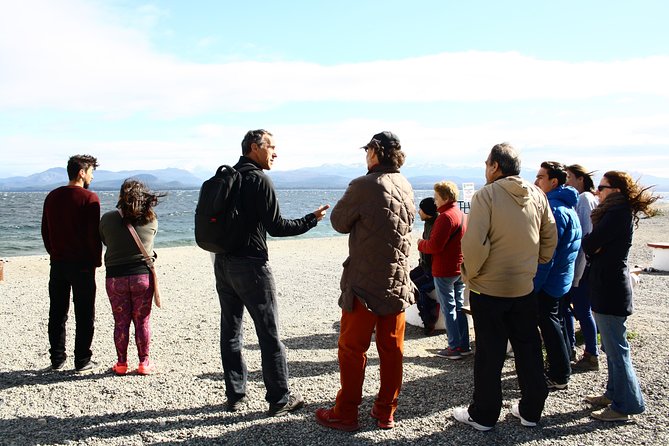
From Centro Civico, the group walks toward the shore of Lago Nahuel Huapi and through a lakeside park. This section takes about 30 minutes and brings the Indigenous story into direct contact with the place itself.
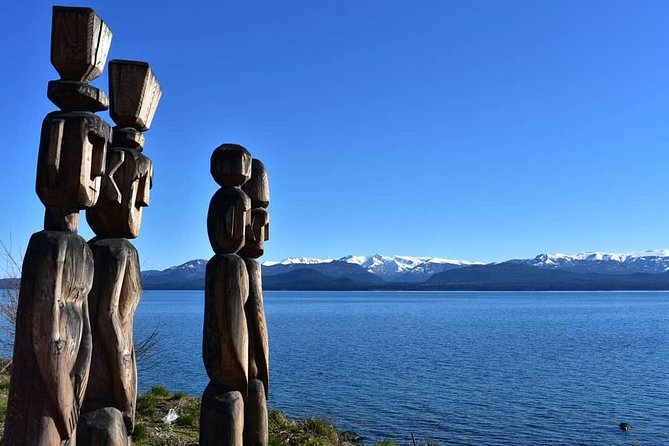
The lake is not simply scenery here. The route is used to discuss relics and stories connected with Indigenous peoples, helping you understand why water, travel, and settlement mattered in the region. The tour title includes canoe tribes, and this lakeside portion is the natural place for that subject to take shape.
I find this kind of stop more useful than a string of dates. You can connect the guide’s explanation to the shore in front of you, the open water, and the routes that made the area meaningful to earlier communities. You may come away with a better sense of Patagonia as a lived-in place, not an empty wilderness waiting for modern discovery.
The walking is described as moderate, and the whole outing is intended for people with a moderate level of physical fitness. One useful point from the feedback is that the amount of walking is fairly small, making the tour a possible choice for older visitors or people with mobility concerns. Still, you should be comfortable moving between the downtown sites and standing for portions of the explanation.
The lakeside stop is also a good reason to choose this tour early in your Bariloche visit. It can give later lake activities more context, including boat trips on Nahuel Huapi. Diego has even helped participants locate a boat tour for another day, which suggests that he knows how to connect this experience with the wider range of things to do in town.
Seeing Nuestra Señora del Nahuel Huapi differently
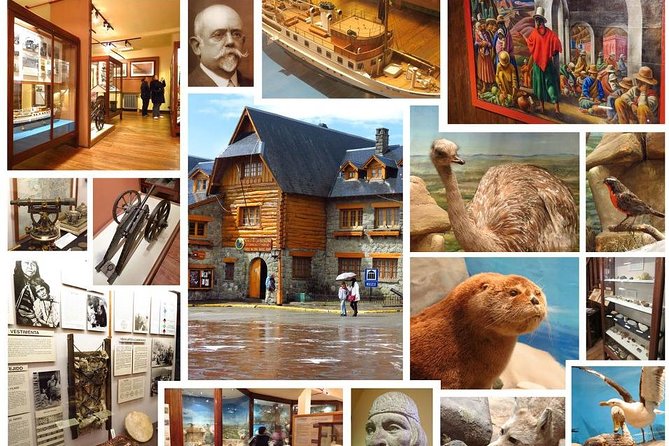
The third stop is Iglesia Nuestra Señora del Nahuel Huapi, with about 15 minutes devoted to the site. The focus is the relationship between Indigenous communities and the Catholic Church.
This is a brief visit, but it may be one of the most memorable parts. A church can be easy to treat as another attractive building on a city walk. Here, the guide encourages you to look for the connections between religious institutions, colonization, and Indigenous life.
That context can change what you notice inside the cathedral. Diego is praised for pointing out details that would otherwise go unseen and for making the visit much more meaningful through his commentary. The church is not presented only as a place of worship or architecture. It becomes part of a larger discussion about power, belief, cultural change, and the complicated meetings between different communities.
The short time limit has a benefit and a cost. The benefit is that the visit stays focused and does not overwhelm a compact tour. The cost is that you will not have time for a long architectural or religious study. If your main interest is church design, you may want to return on your own.
For this tour, though, the church works as an important counterpoint to the lake and civic center. You see how Indigenous history is connected not only to land and water, but also to institutions that helped shape the region after colonization.
A completely different kind of day:
- Fly Fishing Bariloche
★ 5.0 · 305 reviews - Bariloche: German Immigration and History Walking Tour
★ 4.8 · 169 reviews - San Martín de los Andes por 7 Lagos
★ 4.4 · 155 reviews - Circuito Chico
★ 4.5 · 146 reviews
The optional Patagonia Museum room
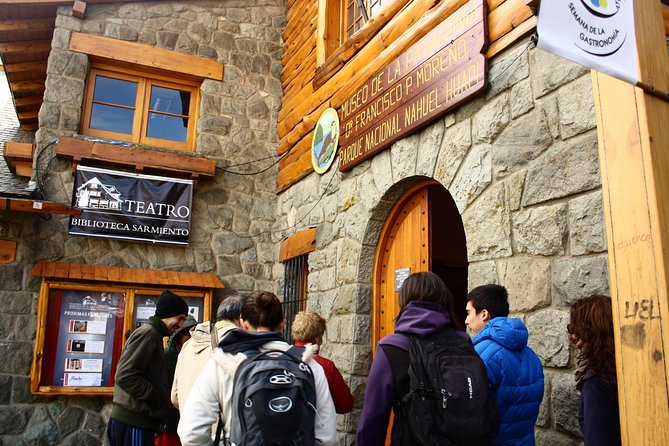
The final listed stop is the Museo de la Patagonia, where the tour visits one room devoted to Aboriginal history and related objects. The museum portion lasts about 15 minutes and is described as optional.
That word matters. You should not expect a full museum tour. The guide focuses on a single room and uses selected historical elements to support the themes already introduced at Centro Civico, the lake, and the church.
I think the museum works best as a short evidence stop. Outdoor sites give you setting and story, while museum objects can make the past more concrete. You may find that a relic or display helps clarify something the guide mentioned earlier.
Admission is not included in the tour price. One account puts the museum ticket at about $1, with the useful detail that the ticket can be used for the entire trip. Because the supplied tour information does not state a fixed current admission price, check the amount when booking or at the museum. Even if the fee has changed, it should remain a small extra cost compared with the tour itself.
If you are watching every peso, you can regard this portion as optional. If you want the fullest version of the experience, I would include it. Fifteen minutes is not long, and the objects add a museum-based layer to a tour that otherwise takes place mostly outdoors.
The guide makes or breaks this experience
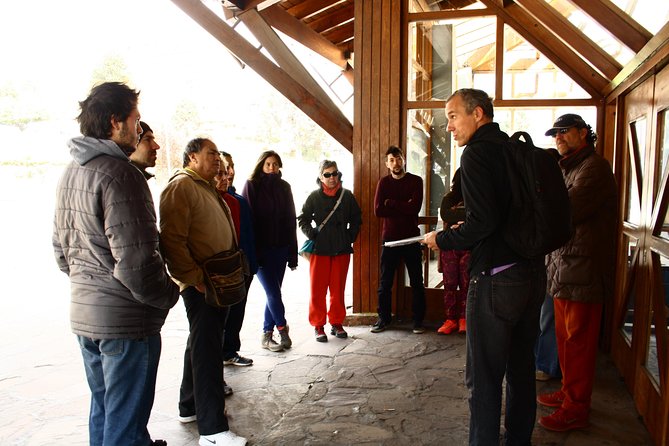
This is a guide-centered tour. The route is simple, and the sites are all in or near central Bariloche. What you are paying for is the explanation that ties those places together.
Diego receives especially strong praise for his preparation, friendly manner, and ability to make the subject come alive. One particularly useful comparison describes his style as similar to listening to a favorite podcast, which gives you a sense of the tone: informed, personal, and easy to follow rather than stiff or academic.
He is also praised for going beyond the planned route by helping with ideas for a Nahuel Huapi boat trip. That kind of practical local help can add value, especially if you are using the tour near the start of your stay.
Diana is also named as a strong guide, with praise for her ability to explain Bariloche’s past and present. Since guide assignments can vary, you should not assume that every departure will have the same person. The important point is that the experience has earned a 4.9 rating from 20 ratings, with 100 percent recommending it, and the highest praise centers on the guides’ clear explanations and personable style.
The maximum group size is 15. That is not a private tour, but it is small enough for the guide to give more attention than you usually get in a large city walk. If the group reaches its limit, ask questions early and stay close enough to hear clearly during the outdoor portions.
What the $41 price really covers
At $41 per person, this is not the cheapest way to spend 90 minutes in Bariloche. You can walk around Centro Civico, visit the lakefront, and see the church without paying for a guide.
The value comes from the connections. Without interpretation, these places may feel like separate stops. With a strong guide, they form a clear discussion about Indigenous communities, colonization, religion, and the way Bariloche presents its past.
The price also includes the advantage of a small group, with no main admission fees listed for Centro Civico or the lakefront. The museum costs extra, though the reported ticket price is modest. I would consider the tour good value if you want historical context and prefer asking questions rather than reading a guidebook on your own.
It is less suitable if you want a long museum visit, a full-day cultural program, or extensive time with Indigenous communities themselves. The tour is about interpretation of historical places in Bariloche, not a visit to a remote community or a performance of traditional culture.
Who will enjoy this tour most
I would recommend it to you if you want to understand Bariloche beyond its postcard image. It suits first-time visitors who want a short orientation, history-minded visitors who want a focused subject, and anyone curious about how Indigenous peoples are represented in the city.
It also fits well for people with only part of a day available. The 11 a.m. start leaves room before or after the tour for lunch, shopping, or another activity. Since it ends back at the meeting point, you do not need to arrange a separate return journey.
The tour may suit older visitors or people who prefer limited walking, based on the reported small amount of walking. You still need moderate physical fitness, and you should expect to move around central streets and the lakeside area.
I would be more cautious about booking it for young children unless they already enjoy history. The subject includes colonization and the relationship between Indigenous peoples and the Catholic Church, so the appeal depends more on attention and curiosity than on entertainment.
Practical advice before you book
Because the experience is non-refundable and cannot be changed after booking, choose your date carefully. It also requires a minimum number of participants, so a cancellation for low demand can lead to an alternative date, another experience, or a full refund.
The activity is booked around 11 days ahead on average. That does not guarantee that every date fills early, but it is a useful sign that you should not leave it until the last morning of your visit if this is important to you.
Public transportation is nearby, which makes the meeting point straightforward to reach. Confirmation is provided when you book. Wear comfortable shoes, bring a layer suitable for a lakeside walk, and keep some room in your schedule for the optional museum room.
Most important, arrive ready to listen and ask questions. This is not a tour built around dramatic scenery or a long list of attractions. Its success depends on the guide’s ability to explain why these particular places matter.
Should you book the Indigenous Peoples of Patagonia tour?
Book it if you want a short, thoughtful history lesson built into your Bariloche sightseeing. The strongest reasons are the small group, the careful treatment of colonization and Christianity, the lakeside setting, and the highly praised guides, especially Diego and Diana.
Skip it if your priority is a long cultural visit, extensive museum time, or a physically demanding excursion outside the city. At 90 minutes, it offers an introduction rather than the final word.
For most visitors interested in Patagonia’s people and past, I think the $41 price is fair. You get a focused route, useful context, and a better understanding of places you might otherwise pass without a second thought.
FAQ
Where does the tour start?
It starts at Secretaría de Turismo Bariloche, Informes Turísticos, at Libertad 56, R8400 San Carlos de Bariloche, Río Negro, Argentina.
What time does the tour begin?
The scheduled start time is 11:00 a.m.
Where does the tour finish?
The activity ends back at the original meeting point.
How long does the tour last?
The tour lasts approximately 1 hour and 30 minutes.
What is the price?
The listed price is $41 per person.
How large is the group?
The maximum group size is 15 people.
Is the Patagonia Museum admission included?
No. Museum admission is not included in the tour price. The museum visit is also optional.
How much walking is involved?
The tour includes walking through downtown Bariloche, along the shore of Lago Nahuel Huapi, and through a lake park. A moderate level of physical fitness is recommended.
Is the tour near public transportation?
Yes. The meeting point is near public transportation.
Can I cancel or change my booking?
No. The experience is non-refundable and cannot be changed for any reason. If the minimum number of participants is not reached and the activity is canceled, you will be offered another date or experience, or a full refund.
Just added in Bariloche
- Exclusive Sailboat Trip through the Lakes of Bariloche★ 4.0 · 9 reviews
- Snow excursion in Bariloche – Suitable for the whole family★ 4.5 · 3 reviews
- MATE tasting ceremony – (Argentina traditional tea)★ 5.0 · 2 reviews
- Trekking Day in Bariloche – Low/Medium/High difficulty★ 5.0 · 10 reviews
- Transfer from the Airport to Bariloche★ 3.5 · 4 reviews
- Camino de los siete Lagos, bilingüe★ 4.0 · 4 reviews
- 10 Secrets of Bariloche, Nahuel Huapi, and Patagonia★ 5.0 · 46 reviews
- GERMAN TREKKING TO BERGHOF – Mountain stories★ 4.5 · 4 reviews
Bariloche Tours, compared.
Bariloche Small Circuit: Mt Campanario and Llao Llao Peninsula
Read our review →
Browse the lists this tour appears in