
Reviewed · BARILOCHE TOURS
German Footprint & Nazi presence – Walking Tour in Bariloche
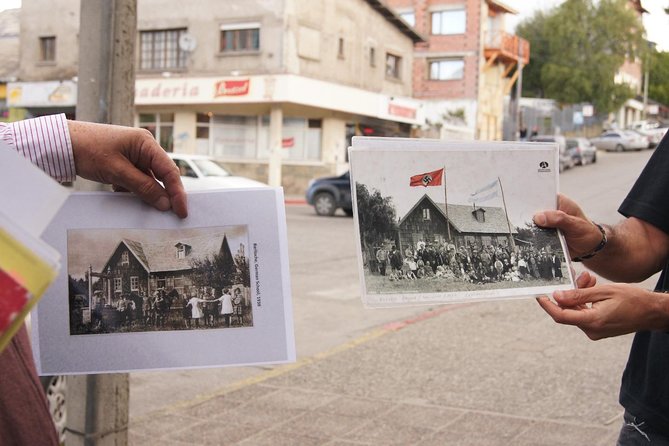
History can change how you see a town. This 90-minute walk through central Bariloche connects German-speaking immigration, local civic life, and the controversial arrival of Nazi fugitives after World War II. I especially like the clear historical storytelling and the chance to see ordinary streets and buildings through a less familiar lens. I also like that the small-group format is intended to give you direct access to the guide.
The main drawback is that this is a history-heavy walk, not a sightseeing tour built around grand interiors or mountain views. Some stops are outside buildings, and one account described a group of about 40 people, which made street noise a problem. If you have difficulty walking uphill, take note: the route covers roughly 10 blocks and includes inclines.
In This Review
- Key points to know before you go
- Why this short Bariloche walk is worth your time
- Centro Cívico: starting with the town’s German-speaking roots
- Club Andino Bariloche and the town’s early institutions
- The Primo Capraro Institute and a change in German influence
- Plaza Belgrano: the most sensitive part of the route
- What the guides do best
- Group size, sound, and the private-tour question
- Is $41 a fair price for 90 minutes?
- Who should take this walk?
- How to get the most from the experience
- Should you book the German Footprint and Nazi Presence walk?
- FAQ
- How long does the walking tour last?
- Where does the tour begin?
- Where does the tour end?
- What locations are included?
- Is admission included at the stops?
- Is the tour private?
- Can most people take part?
- What happens if the tour is canceled because the minimum number is not reached?
Key points to know before you go
- The story begins at Centro Cívico, where you get the background on Bariloche’s foundation and German-speaking immigration.
- The route links four central locations, including Club Andino Bariloche, the Primo Capraro Institute, and Plaza Belgrano.
- Diego is the main guide praised by name, with Federico also mentioned as a guide who answered questions well.
- The Nazi connection is handled as a serious historical subject, not as a sensational side show.
- The walk lasts about 1 hour and 30 minutes, making it an easy addition to a sightseeing day.
- The $41 price buys context and interpretation, not admission to a series of indoor attractions.
Why this short Bariloche walk is worth your time
Bariloche is often sold through snow, chocolate, lakes, and chalet-style architecture. Those are good reasons to come, but they tell only part of the town’s story. This walk asks you to look more closely at how German-speaking immigrants helped shape the city and how later arrivals connected Bariloche to one of the darkest chapters in European history.
I like that the tour does not treat the Nazi subject as a cheap mystery. The route places it within a longer account of immigration, business, civic life, and Argentina’s postwar history. That matters. Without that setting, the Nazi material can become sensational and misleading.
The guide-led format is the real value here. A walk through Bariloche’s center on your own will show you streets, plazas, and notable buildings, but it will not necessarily explain why they matter. Diego is repeatedly praised for clear English, strong storytelling, and thoughtful answers. Federico is also named as an effective guide, so the experience may vary slightly depending on the departure.
The walk is also a useful first-day activity. It gives you a basic orientation to the center while adding historical context you can carry into the rest of your stay. One practical tip: schedule it early in your visit if you can. You will recognize several central places afterward, and the town will feel less like a postcard and more like a lived-in place with competing layers of memory.
More Walking Tours in Bariloche:
- Bariloche: German Immigration and History Walking Tour
★ 4.8 · 169 reviews - Nahuel Huapi Lake Cruise with Victoria Island and Arrayan Forest Walk
★ 3.5 · 50 reviews - Buenos Aires Hop-On Hop-Off Bus, Free Walking Tours & Discounts
★ 4.5 · 2,218 reviews
Centro Cívico: starting with the town’s German-speaking roots
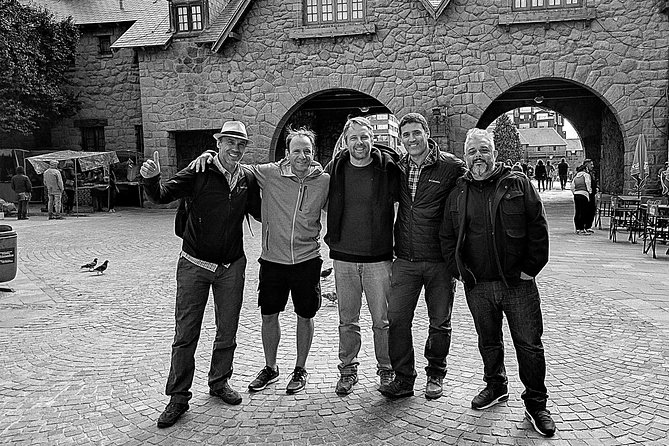
The tour begins at the Secretaría de Turismo Bariloche, at Libertad 56, and returns to the same meeting point. The first stop is Centro Cívico, one of the most important public spaces in the center.
Here, the guide explains where, when, and how German-speaking immigration influenced the foundation of Bariloche. That starting point is useful because it avoids jumping straight into Nazi history without context. You first get the broader story of settlement and town building.
The exact wording of the tour description is a little awkward, but the purpose is clear: this is an introduction to the people and migration patterns that helped shape Bariloche more than a century ago. You are not simply looking at architecture. You are learning how immigration affected the town’s identity and public life.
The stop lasts about 15 minutes, and admission is free. Since Centro Cívico is an open public space, you do not need a separate ticket for this part. The guide’s explanation is the main attraction.
This is also where the quality of the presentation matters most. A dry list of dates would make the opening feel like a lecture. The praise for Diego centers on his ability to connect facts into a story, and that skill is especially useful at the beginning, when you are still learning the basic names and historical periods.
Club Andino Bariloche and the town’s early institutions
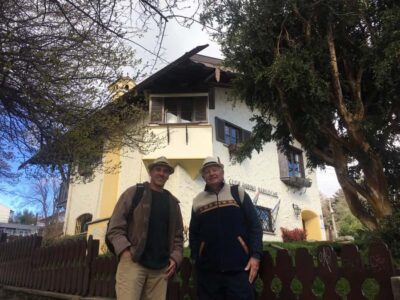
The second stop takes you outside the historic Club Andino Bariloche, usually known as CAB. The tour spends about 15 minutes in the area, discussing the building, its historical setting, and the role of German-speaking immigrants.
The important point here is that immigration is presented through institutions, not just family names or decorative details. Clubs, associations, schools, and civic organizations help show how a community became part of the town’s public life. The CAB stop gives the guide a place to explain that process.
You will not necessarily go inside. Admission is not included, and the stop is described as taking place outside the historic house. That is worth knowing before you book. If you expect interior rooms, displays, or museum exhibits, this tour may feel lighter on physical access than you imagined.
Still, a good outdoor explanation can be more revealing than a formal museum visit. You see the building in its actual street setting, then hear why it matters. I find that useful because it connects the past to the modern town instead of placing history behind glass.
The walk is not long, but it is not entirely flat. Several accounts describe uphill sections, and the route covers around 10 blocks in total. Most people who are comfortable with a normal city walk should manage it, but anyone with mobility concerns should consider the inclines before paying.
The Primo Capraro Institute and a change in German influence
The third stop is outside the Primo Capraro Institute. The guide spends about 15 minutes here explaining what the tour describes as a key moment and a breakthrough in German influence in Bariloche and Argentina.
This stop seems designed to move the story from immigration as a general force to a more specific turning point. The exact historical details are supplied by the guide during the walk, so the experience depends heavily on how well that story is explained. Based on the feedback about Diego, the presentation is one of the tour’s strongest features.
The name of the institute also gives the walk a more personal scale. Instead of dealing only with broad national history, you encounter people and places tied to the development of Bariloche. That approach helps you understand that the town’s German connection was not an abstract label. It appeared through real organizations, buildings, and local decisions.
Again, this is an exterior stop, and admission is not included. You should think of the tour as an interpretive walk through public streets, not a ticketed museum circuit. The buildings are prompts for the story. The guide supplies the meaning.
More Bariloche trips:
- Bariloche: 7 Lakes & San Martin de Los Andes Road Trip
★ 4.5 · 624 reviews - Bariloche: Circuito Chico with optional Cerro Catedral
★ 4.5 · 316 reviews - Fly Fishing Bariloche
★ 5.0 · 305 reviews - San Martín de los Andes por 7 Lagos
★ 4.4 · 155 reviews
Plaza Belgrano: the most sensitive part of the route
The final main stop is Plaza Belgrano, where the group spends about 30 minutes. This is described as the heart of the German neighborhood, with houses and sites linked to German and Nazi presence in Bariloche.
Because this is the longest stop, it is also where the tour’s central subject receives the most attention. The guide discusses Germans who arrived in Argentina after World War II, including Nazi figures and the wider question of how Bariloche became associated with them.
This part needs careful handling. German immigration and Nazi activity are not the same thing, and a responsible tour should keep those histories separate while explaining how they overlap in the public memory of Bariloche. The strongest feedback points to an unbiased, factual, and respectful presentation that does not avoid the controversy.
That balance is important for you as a visitor. A sensational tour might focus only on secret identities and dramatic stories. This experience appears to place those stories within the broader history of Argentina and the German-speaking community. You get a more useful account when the guide explains not only who arrived, but also the social and political setting that allowed them to settle.
Plaza Belgrano is also where the architecture becomes part of the evidence. You look at houses and sites connected to the neighborhood while hearing the stories attached to them. Because much of the material is delivered outdoors, street noise can affect how much you catch. If the group is large, stay close to the guide and ask for clarification when needed.
What the guides do best
The guide can make or break a tour about a complicated topic. Here, Diego receives the strongest praise. He is described as eloquent, passionate, easy to understand in English, and willing to answer questions thoughtfully. Several people felt that his storytelling made the 90 minutes pass quickly.
That is a good sign for a tour that covers several historical periods in a short time. The route moves from early German-speaking immigration to civic institutions, then toward postwar Nazi settlement. Without a clear narrative, those pieces could feel disconnected.
Diego’s presentation is also described as provocative but respectful. That combination suits the subject. You should expect questions about responsibility, memory, immigration, and Argentina’s role after the war, not just a parade of dates and famous names.
Federico is also identified as a guide who explained the subject well and handled questions. Since the provider is Historias de Bariloche Walking Tours, the guide assigned to your departure may not be Diego. I would treat the strong praise for Diego as a major positive, while remembering that the personal style may differ.
English ability is another major plus. The tour is especially useful for English-speaking visitors because the subject involves names, dates, and distinctions that can easily get muddled. Clear speech matters more here than on a simple photo walk.
Group size, sound, and the private-tour question
The experience is described as a private activity in which only your group participates, and the small-group format is presented as a way to receive more attention. That should appeal to anyone who wants to ask questions or discuss sensitive historical issues without feeling rushed.
There is one practical complication. One account describes a group of about 40 and says street noise made parts of the explanation difficult to hear. That does not match the private, small-group description, so group size may depend on how the booking is organized or which departure you receive.
This is worth checking before you go if hearing every detail is important to you. A large group can change the tone of a walking tour, especially at outdoor stops. You may need to position yourself near the guide, and the experience may feel less personal.
The route itself is manageable for most people, but the uphill portions deserve attention. The tour is only about 90 minutes, yet the subject is dense. Wear comfortable shoes, allow time to pause at crossings, and do not assume that a short route means no physical effort.
Is $41 a fair price for 90 minutes?
At $41 per person, this is not the cheapest way to spend an hour and a half in Bariloche. You are paying for a specialized subject, an English-speaking guide, and the explanation that ties ordinary buildings and public spaces together.
There are no included admissions at the listed stops. That makes the price look less attractive if you measure value by the number of attractions entered. But that is the wrong yardstick for this particular experience. The tour’s product is interpretation.
I think the price is fair for visitors who care about history and want a focused introduction to Bariloche. You are unlikely to gain the same context by wandering between Centro Cívico and Plaza Belgrano with a guidebook. The value is strongest if you ask questions and pay attention to how the guide separates immigration, German cultural influence, and Nazi settlement.
It is less compelling for someone who wants panoramic views, tastings, or indoor sightseeing. In that case, the money may be better spent on another type of city activity. This walk earns its price through subject matter and storytelling, not extras.
The activity is often booked about 13 days ahead, so I would not leave it until the final morning of your trip. That booking pattern suggests you should reserve in advance if the topic is a priority. The experience is non-refundable and cannot be changed after booking, so choose your date carefully.
Who should take this walk?
I would recommend it most strongly to:
- People interested in World War II and postwar South American history
- Visitors curious about immigration and how communities shape a town
- First-time visitors who want a central Bariloche orientation
- English-speaking visitors who value a clear, question-friendly guide
- Couples and families comfortable discussing serious historical subjects
- Anyone taking a break from snow sports, resorts, or outdoor excursions
The tour is less suitable if you want a relaxed stroll with little commentary. It also may not suit you if uphill walking is difficult or if you prefer to avoid controversial political history while on holiday.
Families can take it, but parents should decide if the Nazi material fits the children in their group. The subject is presented as history, not entertainment, yet it includes disturbing events and moral questions.
The tour is also useful for repeat visitors. Even if you have already seen Centro Cívico and Plaza Belgrano, the guided context can change your understanding of places that otherwise look familiar.
How to get the most from the experience
Meet at the Secretaría de Turismo Bariloche, Informes Turísticos, at Libertad 56. The location is near public transportation, and the walk ends back at the same meeting point, which makes it easy to combine with other plans in the center.
Arrive ready to listen rather than simply take photographs. The stops are short, with 15 minutes at Centro Cívico, 15 minutes at Club Andino Bariloche, 15 minutes at the Primo Capraro Institute, and 30 minutes at Plaza Belgrano. The guide has to fit a lot into a compact route.
Stay close if the group is large or the streets are noisy. Ask questions as they arise, especially if you are unsure about the difference between German immigration and Nazi arrival after the war. The tour’s value grows when you engage with the difficult parts instead of treating the walk as a simple checklist.
I would also place this activity near the beginning of your Bariloche stay. It provides a useful map of the center and gives you historical details to notice later. You may pass the same buildings again and see them differently.
Should you book the German Footprint and Nazi Presence walk?
Yes, if you want a focused history tour and are comfortable with a serious subject. The combination of German-speaking immigration, local institutions, and postwar Nazi presence gives you a side of Bariloche that standard sightseeing often skips.
I would book it for the guide-led explanation, especially if Diego is leading your departure. I would also book it early, reserve well ahead, and confirm the expected group size if possible.
Skip it if you want interiors, attractions with included admission, or an entirely easygoing walk. But if you want to understand why Bariloche has such a strong German association, and why its postwar history remains controversial, this 90-minute route offers unusually good value for your time.
FAQ
How long does the walking tour last?
The tour lasts approximately 1 hour and 30 minutes.
Where does the tour begin?
It begins at Secretaría de Turismo Bariloche, Informes Turísticos, at Libertad 56, R8400 San Carlos de Bariloche, Río Negro, Argentina.
Where does the tour end?
The activity ends back at the meeting point.
What locations are included?
The route includes Centro Cívico, Club Andino Bariloche, the Primo Capraro Institute, and Plaza Belgrano.
Is admission included at the stops?
Centro Cívico has free admission. The other listed stops are described as outside visits, and admission is not included.
Is the tour private?
The activity is described as private, with only your group participating.
Can most people take part?
Most people can participate, but the walk includes some uphill sections. One description estimates the route at about 10 blocks, so it may not suit people with ambulatory difficulties.
What happens if the tour is canceled because the minimum number is not reached?
You will be offered a different date or experience, or a full refund. If you cancel or request an amendment yourself, the experience is non-refundable and cannot be changed.
Just added in Bariloche
- Exclusive Sailboat Trip through the Lakes of Bariloche★ 4.0 · 9 reviews
- Snow excursion in Bariloche – Suitable for the whole family★ 4.5 · 3 reviews
- MATE tasting ceremony – (Argentina traditional tea)★ 5.0 · 2 reviews
- Trekking Day in Bariloche – Low/Medium/High difficulty★ 5.0 · 10 reviews
- Transfer from the Airport to Bariloche★ 3.5 · 4 reviews
- Camino de los siete Lagos, bilingüe★ 4.0 · 4 reviews
- 10 Secrets of Bariloche, Nahuel Huapi, and Patagonia★ 5.0 · 46 reviews
- GERMAN TREKKING TO BERGHOF – Mountain stories★ 4.5 · 4 reviews
Bariloche Tours, compared.
Bariloche Small Circuit: Mt Campanario and Llao Llao Peninsula
Read our review →
Browse the lists this tour appears in