
Reviewed · BARILOCHE TOURS
OneWay Journey: from Bariloche, Argentina to Puerto Varas, Chile
Three lakes, two countries, one very long day. The Andean Lakes Crossing links Bariloche and Puerto Varas by catamaran, bus, and mountain road, following the route used by Patagonia’s first inhabitants. I like the genuine sense of travel here: you are not simply moving between airports, but crossing the Andes through Nahuel Huapi, Lago Frías, and Todos los Santos. I also like the small group size, capped at 14 people. The main drawback is the pace. With several transfers, border formalities, and a late lunch stop, this can feel tiring rather than leisurely.
The scenery is strongest on the first lake crossing, where snowy peaks, forests, birds, and changing water colors keep you looking out the window. Hotel pickup and planned transfers make an international move much easier, but I would confirm the exact drop-off point before departure. One booking included hotel drop-off, yet the passenger was left with luggage across town and up a steep hill.
In This Review
- Key points to know before booking
- What this Bariloche to Puerto Varas crossing really is
- Starting in Bariloche and reaching Puerto Pañuelo
- Nahuel Huapi delivers the strongest early views
- Lago Frías and the first border procedures
- Bus connections are useful, but not always exciting
- Peulla is a late lunch stop, not just a pretty village
- Lago Todos los Santos and the Chilean side
- Arriving in Puerto Varas, Chile
- Is US$347 good value?
- Who will enjoy this route most?
- Should you book the Bariloche to Puerto Varas crossing?
- FAQ
- How long does the Bariloche to Puerto Varas crossing take?
- Where does the experience start?
- Where does the experience end?
- How many lakes does the route cross?
- Is lunch included?
- Are park and port fees included?
- How much luggage can I bring?
- Do I need passport details to book?
- What happens if I need to cancel?
Key points to know before booking
- The route takes about 12 hours: This is a full-day transfer, not a relaxed half-day outing.
- You cross three major lakes: Nahuel Huapi, Lago Frías, and Lago Todos los Santos, with buses connecting the boat sections.
- The best scenery comes early: Nahuel Huapi offers the most dramatic first impression, with forests, wildlife, and mountain views.
- Lunch comes late: Peulla lunch may not happen until 2:30 or 3 p.m., especially if customs takes time.
- Extra cash is required: Port, park, and border charges are not included, and the Nahuel Huapi fee is payable in cash.
- The route ends in Chile: You must arrange your own stay in Puerto Varas, and your passport details are required at booking.
What this Bariloche to Puerto Varas crossing really is
This is both a scenic excursion and an international transfer. You begin in San Carlos de Bariloche, Argentina, and finish in Puerto Varas, Chile, after a chain of lake crossings and road journeys through the Andes.
The advertised duration is about 12 hours, with an 8 a.m. start. That timing matters. You will spend much of the day moving, waiting, boarding, disembarking, and passing through border procedures. If you are looking for a simple way to get from one city to the other, this is more involved than flying. If you want the journey itself to be part of your Patagonia experience, the extra effort has a clear payoff.
The group limit of 14 is helpful. A small group makes luggage transfers and meeting points less chaotic than they might be on a large coach tour. Still, the route uses public-style transport connections and scheduled boat departures, so you should expect a set timetable rather than a private, flexible trip.
The route also has a strong sense of place. You follow an old passage through forests, lakes, and mountain channels, crossing from Argentine Patagonia into Chilean Patagonia by water and road. That gives the journey more character than a standard land transfer.
More Bariloche trips:
- Bariloche: 7 Lakes & San Martin de Los Andes Road Trip
★ 4.5 · 624 reviews - German Footprint & Nazi presence – Walking Tour in Bariloche
★ 5.0 · 337 reviews - Bariloche: Circuito Chico with optional Cerro Catedral
★ 4.5 · 316 reviews
Starting in Bariloche and reaching Puerto Pañuelo
Bariloche is more than a pickup point. The city sits within Nahuel Huapi National Park, and its civic center is known for traditional chocolate shops, hotels, and restaurants. The setting works in every season, with winter and summer offering different ways to enjoy the area.
The excursion begins at about 8 a.m. Pickup is included, which is useful if you are carrying a full suitcase and a smaller bag. The package includes one suitcase up to 23 kilograms and one carry-on up to 10 kilograms. Keep your luggage within those limits, because you will handle it during multiple changes.
The first transfer brings you toward Puerto Pañuelo, the port about 25 kilometers from Bariloche. This is the launch point for the water portion of the journey. A port charge is not included. The stated fee is US$3.50 or AR$500, payable only in cash, though authorities can change the amount.
That small fee is easy to overlook. Bring Argentine pesos or the stated dollar amount before leaving Bariloche. You do not want your first practical problem to happen at the pier.
Nahuel Huapi delivers the strongest early views
The crossing of Lago Nahuel Huapi takes about two hours and is included in the trip. This is where the route usually makes its best first impression.
The lake is broad and open, with wooded shores, changing light, and mountain scenery. The area supports condors, eagles, deer, and other wildlife, so binoculars are worthwhile. A camera helps, but keep it ready rather than packed away. The view can change quickly as the boat moves through open water and along forested edges.
You can watch from inside or head outside when conditions allow. Bring sunblock and sunglasses, even if the morning begins cloudy. The water and sky can make the sun feel stronger than expected. Waterproof clothing is also a smart choice, since weather in the Andes can turn wet and cold.
One useful point from the passenger feedback is that the first lake section is often considered the most beautiful. That does not make the later crossings worthless, but it helps set expectations. If you are hoping for a nonstop series of equally dramatic views, the day may feel uneven.
Nahuel Huapi is also the part where the journey feels least like a transfer and most like a scenic cruise. Take your time here. Once the buses and border procedures begin, the rhythm becomes more stop-and-go.
Lago Frías and the first border procedures
After the opening lake section, the route reaches a striking meeting of waters. The green waters of the Frías River join the blue waters of Nahuel Huapi, surrounded by native forest and the Valdivian Forest.
The Valdivian Forest is a cold forest type found in relatively few parts of the world. Here, it gives the route a different character from the open lake. Instead of wide water and distant peaks, you see thick vegetation, river color, and narrow mountain-country scenery.
Puerto Frías is beside Lago Frías, the smallest of the three lakes used on the journey. The lake gets its green-turquoise color from glacial meltwater. The stop itself is listed at about 20 minutes, but it carries an important practical task: Chilean and Argentine border procedures take place here.
This is one reason the schedule can stretch. Customs and migration are not sightseeing stops, and the timing can vary. Keep your passport accessible, follow the guide’s instructions, and avoid burying essential documents in your main suitcase.
The crossing requires passport name, passport number, expiry date, and country of issue for every participant at booking. That is standard for an international route, but it means you cannot treat this like a casual same-country boat trip.
A completely different kind of day:
- Fly Fishing Bariloche
★ 5.0 · 305 reviews - Bariloche: German Immigration and History Walking Tour
★ 4.8 · 169 reviews - San Martín de los Andes por 7 Lagos
★ 4.4 · 155 reviews - Circuito Chico
★ 4.5 · 146 reviews
Bus connections are useful, but not always exciting
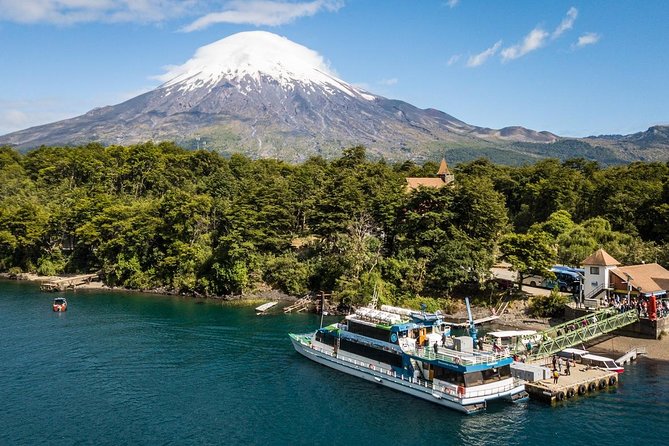
The boats are the star of the experience. The buses are necessary links between them.
You will switch from catamaran to road transport and back again several times. This lets the route cross sections of the Andes that boats cannot reach, but it also creates the tired feeling that comes with repeated starts, stops, boarding, and luggage handling.
A passenger described the day as fun but long, with the bus-to-boat rhythm becoming tiring toward the end. That is a fair way to think about it. The buses are not a separate attraction. They are the price you pay for seeing two countries through their lakes rather than flying between them.
Comfortable shoes matter. Waterproof clothing matters even more if rain is in the forecast. The journey can still be enjoyable in poor weather because you have both bus and boat shelter, but clouds and rain may hide the mountain peaks that make the route special.
The driver-guide is included, though the quality of spoken commentary may depend on the language mix in your group. One English-speaking passenger found that commentary was first delivered in Spanish and then repeated quietly near the front, making it hard to hear over the engine. If English is important to you, ask at the start how explanations will be handled.
Peulla is a late lunch stop, not just a pretty village
Peulla is the main land stop and a break in the middle of the journey. The stop lasts about two hours, and lunch is available for an additional US$25 per person.
The timing is the key issue. Lunch may not happen until 2:30 or 3 p.m., depending on border processing and the pace of the connections. I would carry snacks and water, even though food and drinks are not included. This is especially important if you prefer an early lunch or have dietary needs that may not be covered by the available meal.
Peulla itself is a small ecological village. It has been recognized as one of Chile’s most sustainable locations, which gives the stop more interest than a generic roadside meal break. You get time to pause, eat, and look around before continuing toward Lago Todos los Santos.
Do not count on Peulla as a long independent exploration. The day follows a schedule, and the stop exists within the larger transport chain. Think of it as a useful rest point with scenery, not a separate village tour.
Lago Todos los Santos and the Chilean side
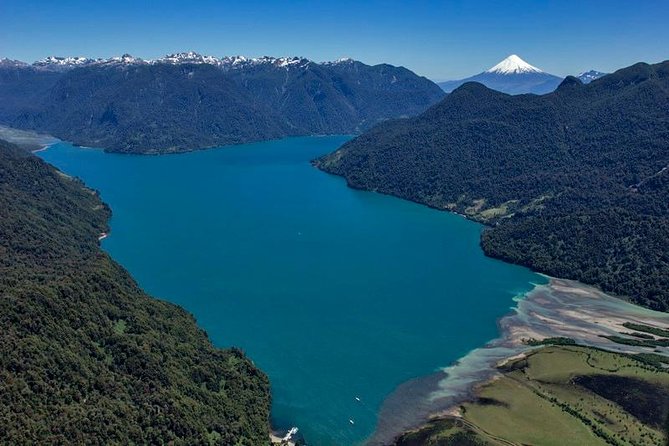
The second major sailing section takes about two hours on Lago Todos los Santos. The lake is known for emerald-colored water, evergreen forests, and steep hills around the shoreline.
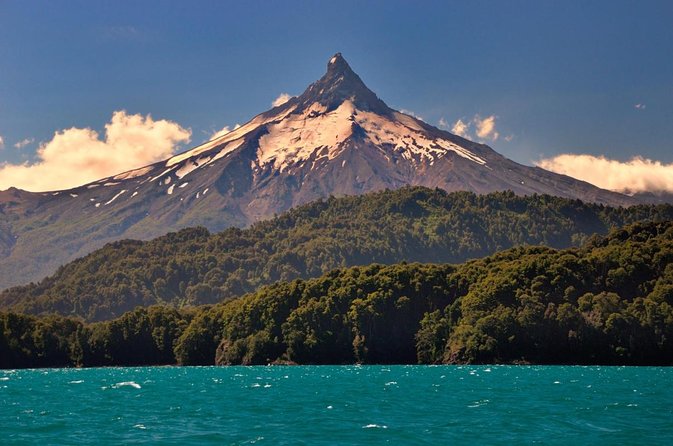
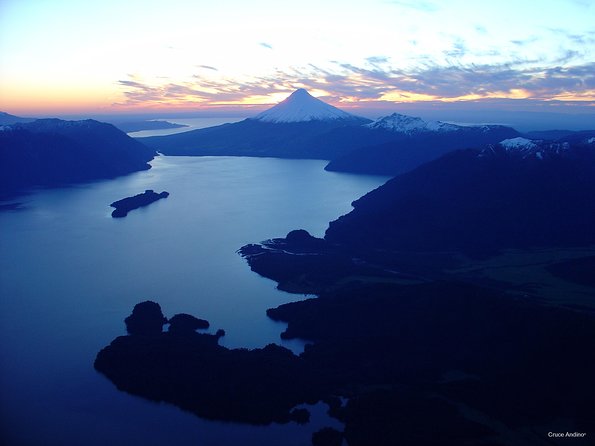
From the catamaran deck, you may see waterfalls and three important snowy peaks: Mount Tronador, Osorno Volcano, and Puntiagudo. Clear weather is a major advantage here. Rain can make the crossing atmospheric, but clouds often soften or hide the volcano views.
This section can feel quieter than Nahuel Huapi. One passenger found Todos los Santos less impressive, especially in poor weather, while others found the entire crossing beautiful even during pouring rain. Both reactions make sense. The scenery depends heavily on visibility, and no tour can control the clouds.
If your main goal is a boat ride through dramatic mountain scenery, this lake still earns its place. If you want every hour to match the best views on Nahuel Huapi, you may find the second sailing less rewarding.
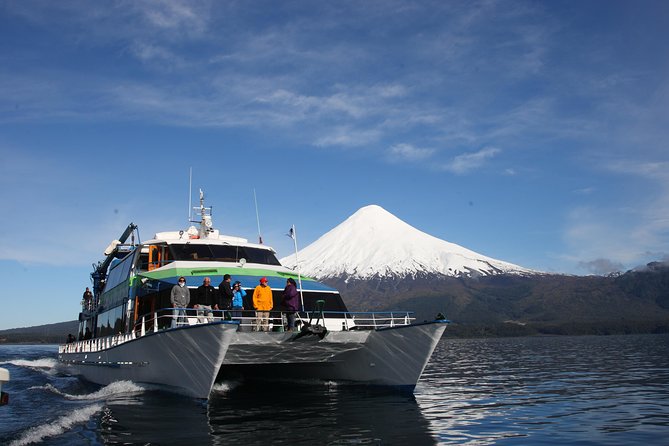
The catamaran offers a different view from the shore road. You see how the forested hills meet the water, and you get a sense of the route as a connected system of lakes and mountain passages rather than a series of isolated viewpoints.
Arriving in Puerto Varas, Chile
The final destination is Puerto Varas, near Puerto Montt. The town provides a useful base for exploring southern Chile, including nearby Frutillar, known for its German pioneer influence, customs, and cultural traditions.
The area also gives you views toward Osorno and Calbuco volcanoes, along with Chilean wine, international food, and clear night skies. Those are not included activities, but they explain why ending in Puerto Varas can be more appealing than returning to Bariloche the same day.
Accommodation in Puerto Varas is not included. You need to book your own place before departure. This is especially important because one passenger booked the route without realizing that the journey ends in Chile and may require an overnight stay.
The listed end point and hotel drop-off details deserve close attention. Hotel pickup and drop-off are advertised as a convenience, but at least one passenger reported being left far from the promised hotel location with luggage. I would confirm the final address and ask exactly where the vehicle will leave you before the day begins.
Is US$347 good value?
At US$347 per person, this is an expensive transfer, but it includes all land and lake transport, a driver-guide, and the main scenic route through two countries. You are paying for the experience as much as the transportation.
The price makes more sense if you already plan to move from Bariloche to Puerto Varas and want to turn that travel day into a major Patagonia outing. Buying separate transport may appear simpler, but it would not reproduce the same sequence of lake crossings.
The value is weaker if you only want to see the lakes. One practical alternative is a day trip from Bariloche that returns to the same city, followed by a flight to Chile. That option may suit you better if you dislike long transfers, late meals, or uncertain weather on the second lake.
Remember the extra costs:
- US$25 for lunch in Peulla
- Port, migration, and national park fees
- A Nahuel Huapi National Park and Puerto Pañuelo charge listed as US$3.50 or AR$500, payable in cash
- Your own accommodation in Puerto Varas
- Any food and drinks outside the included transport
The total cost is therefore higher than the headline fare. Plan for cash and food, and treat the quoted price as the base rather than the complete outlay.
Who will enjoy this route most?
I would choose this experience if you value scenery, unusual transport, and the idea of crossing the Andes by boat. It suits people who see the journey as a major part of the trip, not simply as a way to reach the next hotel.
It is also a good fit for visitors who want a small group rather than a large coach. The 14-person maximum gives the route a more personal scale, although the public transfer structure still means that you will not have complete control over the schedule.
I would hesitate if you have limited energy for a 12-hour day, dislike changing vehicles, or need reliable meal times. I would also think twice if cloudy weather would ruin the experience for you. Much of the reward depends on views across open water and toward snowy peaks.
Pack light, keep your passport and cash close, bring snacks, wear comfortable shoes, and carry waterproof layers. Those simple choices make the long day much easier.
Should you book the Bariloche to Puerto Varas crossing?
Book it if you want a memorable international journey and have a full day to give it. The early Nahuel Huapi crossing, the glacial colors of Lago Frías, the Valdivian Forest, and the emerald waters of Todos los Santos create a route you cannot reduce to a simple bus ride.
Skip it if you want speed, predictable comfort, or a cheap transfer. The boats are pleasant and the scenery can be superb, but the repeated connections, late lunch, border wait, and possible drop-off confusion require patience.
My practical verdict: this is a worthwhile Patagonia crossing for scenery-first visitors, but not the best choice for everyone moving between Argentina and Chile. Confirm the drop-off, budget for the extras, and choose it because you want the route itself.
FAQ
How long does the Bariloche to Puerto Varas crossing take?
The experience lasts approximately 12 hours, beginning at 8 a.m.
Where does the experience start?
It starts in San Carlos de Bariloche, Argentina. Pickup is included, with the route continuing to Puerto Pañuelo.
Where does the experience end?
It ends in Puerto Varas, Chile, near Puerto Montt.
How many lakes does the route cross?
The route includes Lago Nahuel Huapi, Lago Frías, and Lago Todos los Santos.
Is lunch included?
No. Lunch in Peulla costs US$25 per person, and food and drinks are otherwise not included.
Are park and port fees included?
No. Port, migration, and national park fees are excluded. The listed Puerto Pañuelo and Nahuel Huapi fee is US$3.50 or AR$500, payable only in cash, and authorities may change the amount.
How much luggage can I bring?
The included allowance is one suitcase up to 23 kilograms and one carry-on up to 10 kilograms.
Do I need passport details to book?
Yes. The passport name, number, expiry date, and country are required for every participant.
What happens if I need to cancel?
You can cancel for a full refund if you do so at least 24 hours before the experience begins. Cancellations or changes made less than 24 hours before the start time are not accepted or refunded.
Just added in Bariloche
- Exclusive Sailboat Trip through the Lakes of Bariloche★ 4.0 · 9 reviews
- Snow excursion in Bariloche – Suitable for the whole family★ 4.5 · 3 reviews
- MATE tasting ceremony – (Argentina traditional tea)★ 5.0 · 2 reviews
- Trekking Day in Bariloche – Low/Medium/High difficulty★ 5.0 · 10 reviews
- Transfer from the Airport to Bariloche★ 3.5 · 4 reviews
- 10 Secrets of Bariloche, Nahuel Huapi, and Patagonia★ 5.0 · 46 reviews
- GERMAN TREKKING TO BERGHOF – Mountain stories★ 4.5 · 4 reviews
- Camino de los siete Lagos, bilingüe★ 4.0 · 4 reviews
Bariloche Tours, compared.
Bariloche Small Circuit: Mt Campanario and Llao Llao Peninsula
Read our review →
Browse the lists this tour appears in