
Reviewed · TANGO SHOWS
Authentic Tango with a Class Dancer and Milonga
Tango starts before the first step. This six-hour Buenos Aires evening pairs a small-group class with Manuel and a visit to a local milonga, giving you more than a polished stage performance. I like the private terrace setting in an old San Telmo mansion, and I like that the night continues with local dancing, live music, and a reserved table. The main consideration is simple: dinner is not included, and the late evening may feel long if you are not keen on dancing.
The experience costs $42.05 per person, which is a strong price for a class, private transport, event entry, reserved seating, and a live performance. I also like that beginners are welcome. You do not need to arrive knowing how to lead, follow, or even keep time. Manuel’s calm teaching style, described as warm and confidence-building, helps take the sting out of making mistakes in public.
In This Review
- Key things to know before booking
- Why this tango night feels different from a standard show
- Starting in an old San Telmo mansion
- Learning the tango basics with Manuel
- Riding to Milonga Parakultural
- What happens inside the milonga
- Live orchestra, dancers, or both
- Is $42.05 a good value?
- Who should book this experience?
- Should you book the tango class and milonga?
- FAQ
- Where does the experience begin?
- Where does the experience end?
- How long does the experience last?
- What time does it take place?
- Is the tango class mandatory?
- Is dinner included?
- What is included in the ticket?
Key things to know before booking
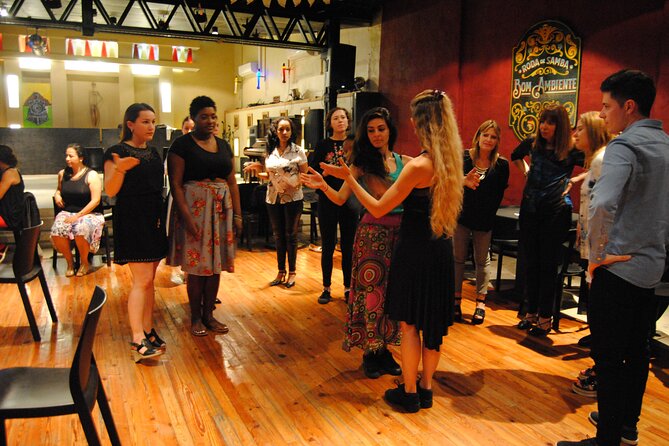
- A real San Telmo setting: Begin in a small, old mansion with a private outdoor terrace before heading to the milonga.
- Beginner-friendly tango lesson: Manuel teaches the basic movements needed to join the social dance floor later.
- Local milonga included: The evening moves beyond a staged show to a place where local people go to dance.
- Reserved table and private transport: Your event ticket and air-conditioned vehicle are included, which makes the late-night plan easier.
- Live entertainment: Depending on the evening, you may see a live orchestra, a professional dancing couple, or both.
- Small enough to feel social: The maximum group size is 30, though some bookings may be much smaller.
Why this tango night feels different from a standard show
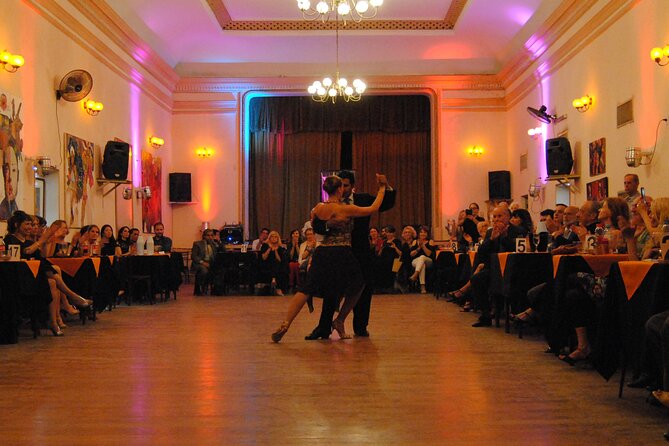
Buenos Aires offers plenty of tango performances built for an audience sitting quietly in the dark. Those shows can be polished and impressive, but they show you tango from a distance. This experience tries to put you closer to the social side of the tradition.
The key word is milonga. In Buenos Aires, a milonga is a place where people gather to dance tango. It is not simply a theater performance with a few tables around it. The point is the shared ritual: music, movement, watching, waiting, and gradually joining in when you feel ready.
That makes the evening useful for you in two ways. First, you see how tango works as a social activity rather than only as choreography. Second, the class gives you enough basic preparation to take part instead of spending the entire night watching from the edge.
You should keep your expectations sensible. A single class will not turn you into a polished tango dancer. It can, however, help you understand the posture, rhythm, and simple steps well enough to feel less lost. For many people, that is the right goal for one evening in Buenos Aires.
The experience has a rating of 4.9 from 14 published ratings, with 100 percent recommending it. That is a small sample, but the praise is consistent: Manuel is repeatedly described as kind, welcoming, and able to make complete beginners feel comfortable.
More Tango Shows in Buenos Aires:
- Buenos Aires: Piazzolla Tango Show with Optional Dinner
★ 4.4 · 2,122 reviews - Buenos Aires: Tango Show at Tango Porteño & Optional Dinner
★ 4.6 · 981 reviews - Intimate Underground Tango Show by Secreto Tango Society
★ 5.0 · 893 reviews
Starting in an old San Telmo mansion
The evening begins at Junín 145, in Buenos Aires, with the listed start window running from 7:30 to 8:30 PM. The supplied information gives the meeting point but does not spell out the exact lesson start time for every booking, so check your confirmation carefully.
The setting is part of the appeal. You meet in a small, old mansion in the heart of San Telmo, one of the city’s best-known tango neighborhoods. The class takes place outdoors on a private terrace reserved for the group. That matters more than it may sound. A private space gives beginners room to make mistakes without an audience of experienced dancers staring over their shoulders.
The terrace also helps set the tone. You are not being rushed straight into a formal theater. Instead, you have a place to relax, meet the group, and get comfortable with the instructor before the public part of the night begins.
The group limit is 30 people. That is not a tiny private lesson, but it keeps the activity from becoming an enormous tour bus exercise. Some sessions may be much smaller. One especially small booking had only a couple signed up, and they received two tango lessons during the evening. You should not assume every date will work that way, but the possibility suggests that the mood can vary with demand.
Learning the tango basics with Manuel
The class is recommended but not mandatory. I would treat it as the heart of the experience, even if you have two left feet and no plans to dance later.
The stated aim is practical. You learn basic tango movements so you can later dance with people at the milonga. This is not presented as a technical workshop for advanced dancers. It is an introduction designed to give you enough confidence to understand what is happening around you.
That beginner focus comes through strongly in the teaching style associated with Manuel. The useful detail is not just that he teaches tango, but that he makes people feel at ease. Beginners often worry about stepping on someone’s foot, missing the beat, or looking foolish. A good social dance teacher has to manage those nerves before teaching complicated movements, and Manuel appears to understand that.
One couple who had no dance experience at all ended up enjoying the lesson enough to describe the whole night as their most memorable Buenos Aires activity. Another person found the class confidence-building from beginning to end. Those details are valuable because they tell you what kind of class this is likely to be: friendly and encouraging, not stern or performance-focused.
Do not expect a full education in Argentine tango in one evening. The class cannot cover the dance’s full musical language or social etiquette in great depth. Still, it can teach you how to stand, move together, and respond to the rhythm. That basic preparation makes the later visit feel less intimidating.
If you already dance tango, you may find the lesson elementary. You could still enjoy meeting Manuel and watching how he explains the basics, but the strongest value is for first-time dancers and people with very limited experience.
Riding to Milonga Parakultural
After the class, the group travels by private, air-conditioned car to Milonga Parakultural. The private vehicle is a practical inclusion. Tango venues often run late, and moving as a group avoids the hassle of arranging your own ride between the lesson and the event.
The ride also marks a change in the evening. The first part is controlled and instructional. The milonga is the real test of what you have learned. You enter a place connected to the city’s local tango life, rather than stopping at a performance venue built only for sightseeing.
Your ticket includes entry and a reserved table. That is important because a milonga can be confusing if you arrive without knowing how the room works. A reserved place gives you a base for the night. You can watch the dancers, talk with the group, and decide how much you want to participate.
The information does not specify the exact seating arrangement, dress code, or schedule for each night. Do not assume your table will include a meal or a full dinner service. Dinner is excluded, so plan to eat beforehand or budget separately for food if it is available at the venue.
More things to do in Buenos Aires:
- Local Foodie Adventure in Buenos Aires with Sherpa Food Tours
★ 5.0 · 6,875 reviews - Buenos Aires City Private Tour with Local Guide
★ 5.0 · 3,475 reviews - Buenos Aires Small-Group City Tour
★ 5.0 · 2,226 reviews - Buenos Aires Hop-On Hop-Off Bus, Free Walking Tours & Discounts
★ 4.5 · 2,218 reviews
What happens inside the milonga
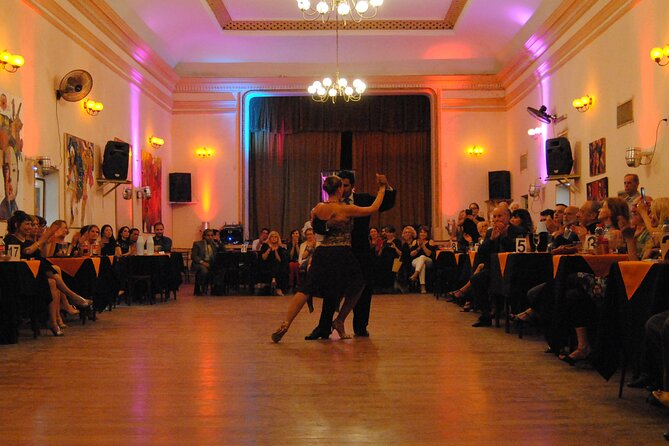
The value of the milonga is the chance to see tango as a living social activity. You will likely watch people dance for pleasure rather than for a staged production. That difference can be subtle at first, but it changes the mood of the room.
The class helps you read the floor. You may recognize the basic posture and stepping patterns, even if you are not ready to join in. If you do dance, keep your ambitions modest. One simple sequence performed with a willing partner is more useful than trying to copy a professional couple’s dramatic movements.
The description says the aim is to dance with local people. That does not mean you are guaranteed a dance partner or that you must enter the floor. The class is optional, and participation at the milonga should suit your comfort level. You can enjoy the music and social setting without forcing yourself to perform.
A group visit also takes away some of the awkwardness. You are not walking into a local dance hall alone, trying to work out the rules from scratch. Manuel selects the venue and stays with the group, which gives the evening a social anchor.
The experience may be especially good for couples and solo visitors who want a cultural night that has some structure but does not feel like a lecture. It is also a strong choice if you want to meet other people during your time in Buenos Aires. The class creates an easy reason to talk, and the shared move to the milonga keeps the group together.
Live orchestra, dancers, or both
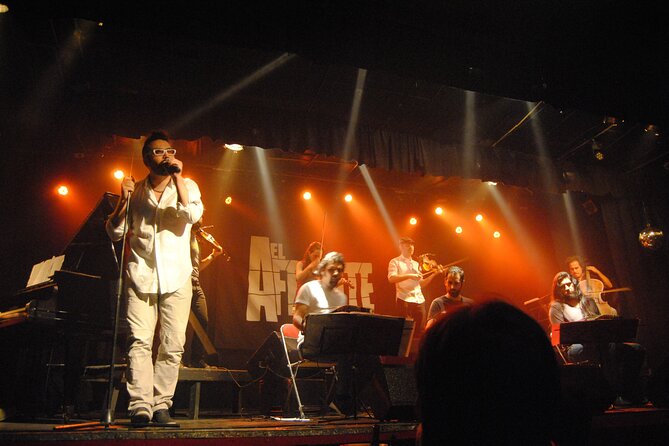
The evening finishes with live entertainment. Depending on the program, you may see a live orchestra, a professional couple dancing, or both.
A live orchestra changes the way tango feels. The music is no longer background sound for a lesson or a staged number. You can watch the dancers respond to it in real time, which makes the relationship between music and movement easier to understand.
A professional couple offers a different kind of pleasure. Their performance gives you a clear look at the control, balance, pauses, and drama that beginners are only starting to notice. It also lets you appreciate the gap between social dancing and stage tango without pretending the class will make you an expert.
The exact entertainment can vary, so book this for the full evening rather than for one promised type of show. If you receive an orchestra, a dance performance, or both, each option supports the same purpose: showing you how tango works as music and movement.
One published account describes an evening with two lessons, a local milonga, a live orchestra, and a spectacular tango show. That sounds like an unusually full night, so I would view it as a possible bonus rather than a guaranteed schedule for every date.
Is $42.05 a good value?
At $42.05 per person, the price is reasonable for the amount included. You receive a tango class, all listed fees and taxes, air-conditioned transportation, event admission, a reserved table, and live entertainment.
The strongest value is the combination of instruction and access. A basic class alone would give you information but not context. A tango show alone would give you entertainment but not participation. This experience links the two and then adds a real milonga.
The reserved table also matters. Admission to a dance venue is not the same as having a place to sit, and a late-night event is easier when you have somewhere to return between dances. Private transport adds another useful layer, particularly because the activity lasts about six hours and ends back at the original meeting point.
The price does not include dinner. That is the main extra cost to plan for. Since the start is in the evening and the experience can run late, eat before meeting or carry enough money for food if the venue offers it.
The tour is commonly booked about 26 days ahead. That does not guarantee that every date sells out, but it suggests you should not leave this decision until the last minute if your Buenos Aires schedule is tight.
Who should book this experience?
I would recommend it most strongly to first-time tango dancers, couples, and solo visitors who want a social evening rather than a formal show alone. You need curiosity more than skill.
It also suits people who want a gentle introduction to San Telmo’s tango culture. The private terrace, lesson, car transfer, and reserved table create a clear path through the night, which is useful if you do not know the city’s milonga scene.
You may want a different option if you dislike group activities, have no interest in dancing, or want a refined dinner-and-show package. The class is optional, but the central idea is still participation and contact with a working tango venue.
The maximum group size is 30, so this is not guaranteed to feel like a private evening. At the same time, the reported small bookings suggest that the actual group can sometimes be much smaller. If a personal teaching experience matters greatly to you, ask about the expected group size before booking.
Confirmation is provided at booking, public transport is nearby, and most people can participate. Free cancellation is available up to 24 hours before the local start time. Changes or cancellations inside that window are not accepted for a refund.
Should you book the tango class and milonga?
Book it if you want to understand tango from the inside, not just watch a polished number on a stage. The combination of Manuel’s supportive class, a real milonga, private transport, reserved seating, and live entertainment offers strong value at $42.05.
Go in expecting an introduction, not mastery. Plan for a long evening, eat before you meet, and keep your schedule open for the full six hours. If you do that, this experience gives you a friendly way to approach one of Buenos Aires’ defining traditions without needing dance skills on day one.
FAQ
Where does the experience begin?
It begins at Junín 145, C1026ABC, in Buenos Aires, Argentina.
Where does the experience end?
The activity ends back at the original meeting point.
How long does the experience last?
The experience lasts approximately six hours.
What time does it take place?
The listed opening window is Monday through Sunday from 7:30 PM to 8:30 PM. Check your booking confirmation for the exact meeting time.
Is the tango class mandatory?
No. The class is optional, but it is recommended because it teaches basic movements for the later milonga.
Is dinner included?
No. Dinner is not included in the price.
What is included in the ticket?
The price includes the tango class, an air-conditioned vehicle, all fees and taxes, event admission with a reserved table, and a live music show or professional dancing couple. Sometimes both are included.
Just added in Buenos Aires
- Discover Buenos Aires’ independent art scene — Ticket included★ 5.0 · 30 reviews
- Photo Session in Buenos Aires★ 5.0 · 26 reviews
- Your Private Photographer in Buenos Aires★ 5.0 · 4 reviews
- Yerba Mate Workshop – Learn to Drink Mate like a Local!★ 5.0 · 11 reviews
- Your Personal Photographer in Buenos Aires★ 5.0 · 24 reviews
- BA: Wine Tasting and Blending Experience in Palermo★ 5.0 · 1 review
- Winery and Tasting Experience in Buenos Aires★ 5.0 · 1 review
- Taste of Tradition: Yerba Mate & Alfajores Experience★ 4.0 · 5 reviews
Tango Shows, compared.
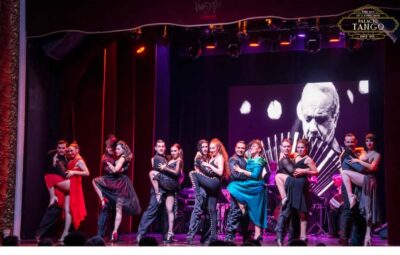

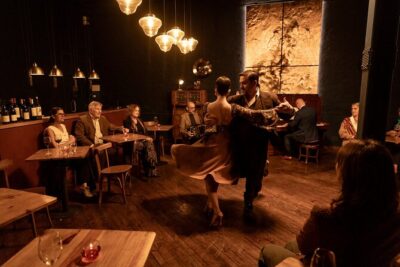
Intimate Underground Tango Show by Secreto Tango Society
Read our review →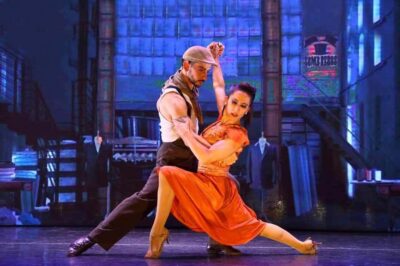
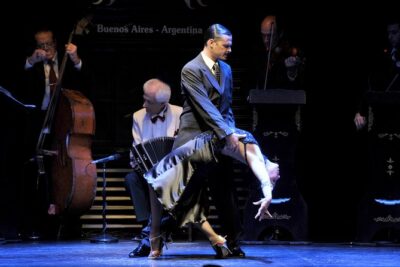
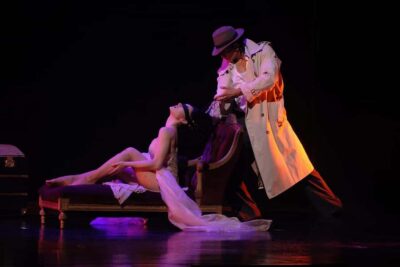
Tango Porteño: The Best Tango Night in Buenos Aires
Read our review →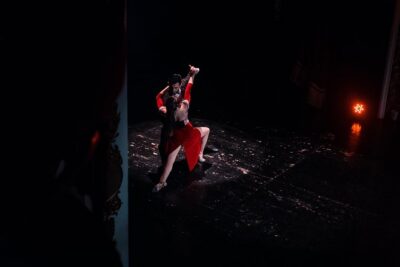
Palacio Tango: Tango Show at the Piazzolla Theater
Read our review →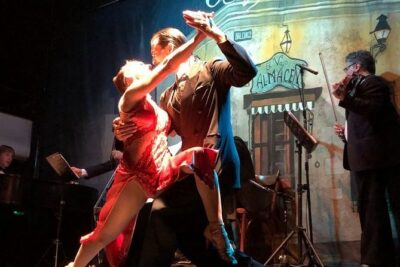
Browse the lists this tour appears in