
Reviewed · SALTA AND JUJUY TOURS
From Jujuy: Day Trip to Quebrada de Humahuaca
The Andes put on a colorful show here. This full-day outing links Purmamarca and the Seven Colors Hill with Tilcara, Uquía, the Tropic of Cancer, and Humahuaca, giving you a broad look at the Quebrada de Humahuaca for $37. I like the strong lineup of stops and the chance to see both natural sights and living Andean culture. I also like that transportation, hotel-area meeting-point service, and a bilingual guide are included.
The tradeoff is time. At 510 minutes, or about eight and a half hours, this is a packed day, and one account describes roughly 40 minutes at several stops as too brief. The bilingual service also needs confirmation, since one past departure changed to Spanish only at short notice.
In This Review
- Key points at a glance
- What this Jujuy day trip really covers
- Purmamarca and the Seven Colors Hill
- Maimará and the Painter’s Palette
- Tilcara, Andean culture, and El Pucará
- Uquía and the gun-toting angels
- A stop at the Tropic of Cancer
- Humahuaca and the great Andean gorge
- How the pace affects the experience
- Guide quality and language arrangements
- Is $37 good value?
- Who should book this day trip?
- Should you book it?
- FAQ
- Where does the tour meet?
- How early should I arrive?
- How long does the excursion last?
- Is transportation included?
- Is the tour available in English?
- Is food included?
- Do I need to pay extra at El Pucará de Tilcara?
Key points at a glance
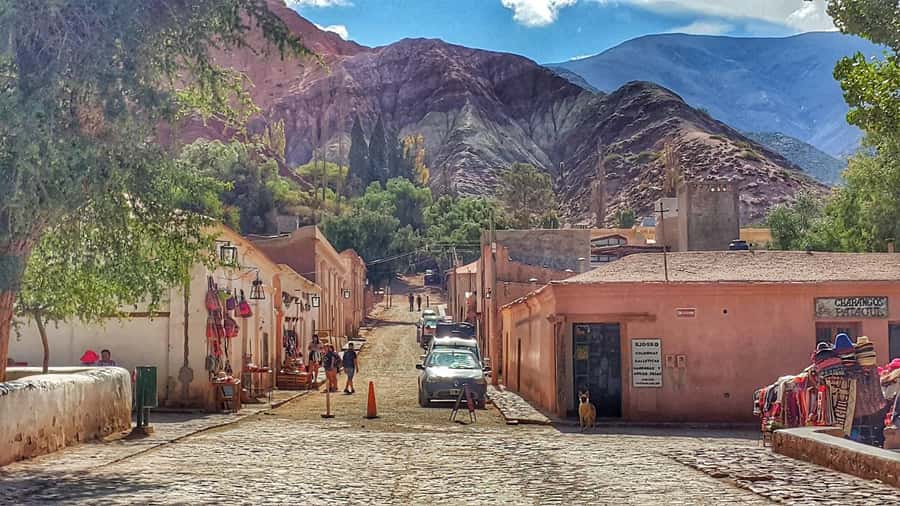
- Purmamarca begins the day with a famous mountain backdrop: The small town sits below the Seven Colors Hill, one of the most recognizable sights in the region.
- Tilcara adds archaeology and Andean character: El Pucará de Tilcara is an optional extra, so bring money if you want to enter.
- Uquía offers an unusual piece of colonial art: Its historic church contains paintings of angels carrying guns.
- The Tropic of Cancer is a quick but memorable stop: You can stand at the most southerly latitude where the sun may appear directly overhead at noon.
- Humahuaca brings the route to its grandest setting: The Quebrada de Humahuaca follows the Grande River for nearly 155 kilometers toward Bolivia.
- The $37 price is strong for a long day out: The main concern is not cost, but the amount of time spent riding and the limited time at each stop.
What this Jujuy day trip really covers
This is a greatest-hits tour of the Quebrada de Humahuaca rather than a slow visit to one town. You meet the group at the YPF gas station on Vilcapugio 1986 in San Salvador de Jujuy, wait at the coffee shop, and travel by bus or minivan depending on group size.
The route moves through several small towns and viewpoints in one long sweep. You get mountain colors, village streets, Indigenous and Andean cultural references, colonial religious art, an archaeological site, and the broad gorge that gives the trip its name.
That range is the main reason to choose it. If you have only one day in the area, this outing lets you understand how the towns and scenery fit together. You will not have much time for unplanned wandering, long meals, or quiet moments, but you will see far more than you could manage easily on your own in one day.
The tour is offered in Spanish and English, with a live guide. Since one past departure became Spanish only after the group was notified the evening before, I would confirm the language arrangement before setting out. If you rely on English explanations, that detail matters.
More Day Trips in Salta and Jujuy
- From Salta: Full-Day Trip to Salinas Grandes and Purmamarca
★ 4.6 · 914 reviews - From Salta: Cafayate Day Trip with Wine Tasting
★ 4.4 · 226 reviews - One Day Tour of Cachi and Calchaquí Valleys from Salta
★ 4.0 · 102 reviews
Purmamarca and the Seven Colors Hill
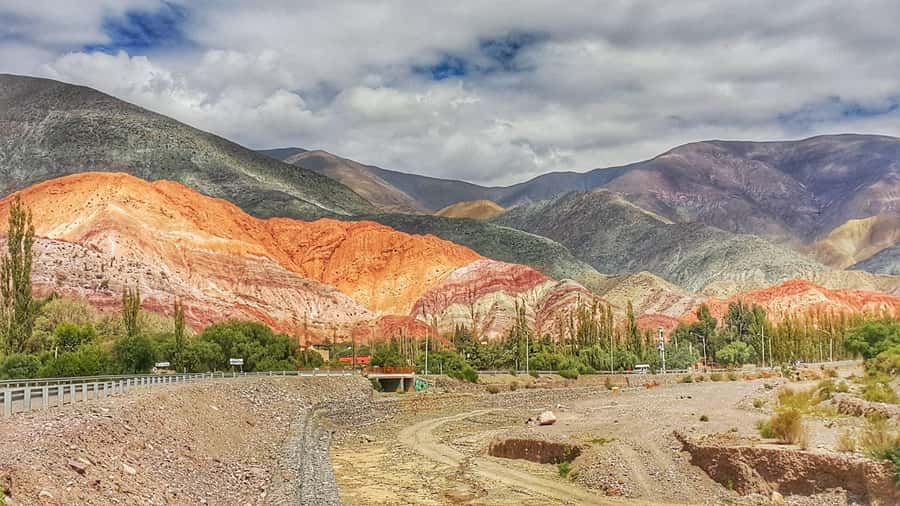
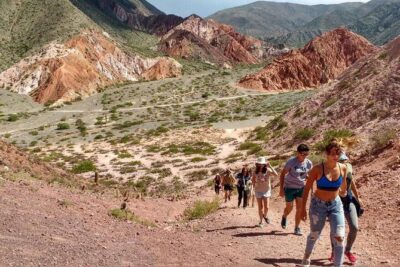
Purmamarca is the first major stop, a small town at the foot of the Seven Colors Hill. The mountain’s name is well earned: bands of red, yellow, orange, and other mineral shades run across its slopes, creating one of the area’s most striking views.
I like beginning here because the setting explains the appeal of the Quebrada immediately. You are not waiting until the end of the day for the big scenery. The colors are close to town, easy to see, and tied directly to the identity of Purmamarca.
The limitation is that a group excursion may give you only a short time to enjoy the town and mountain. Use your stop with a simple plan: first get the main view, then look around the town if time allows. Do not count on a leisurely wander through every street or shop.
This is also a place where the visual experience does most of the work. The tour is valuable even if your Spanish is basic, because the mountain itself is easy to appreciate. Still, a guide can add useful context about the region’s natural and cultural heritage, so the language issue remains important.
Maimará and the Painter’s Palette
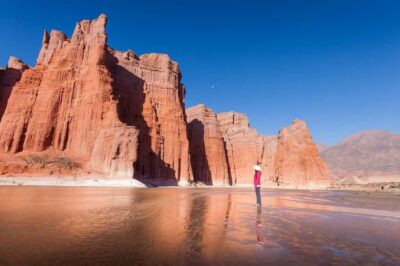
From Purmamarca, the route continues to Maimará, a small village beneath the Monolith Painter’s Palette. This geological formation carries the same bold color story as the Seven Colors Hill, with red, yellow, orange, and pastel tones arranged across the rock.
Maimará gives you a slightly different view of the area. Purmamarca is closely associated with one famous hill and a tourist-friendly town. Maimará presents a village framed by multicolored rock, making the relationship between daily life and the mountains easier to see.
The stop also shows why this trip works best as a visual overview. You are collecting a series of related scenes rather than seeing one attraction in isolation. The colors change in shape and setting from one town to the next.
Because the route includes many stops, keep your expectations practical. You may find yourself taking a quick look, photographing the formation, and moving on. That can feel rushed if you want to sit with the view, but it is useful if your goal is to gain a first sense of the entire gorge.
Tilcara, Andean culture, and El Pucará
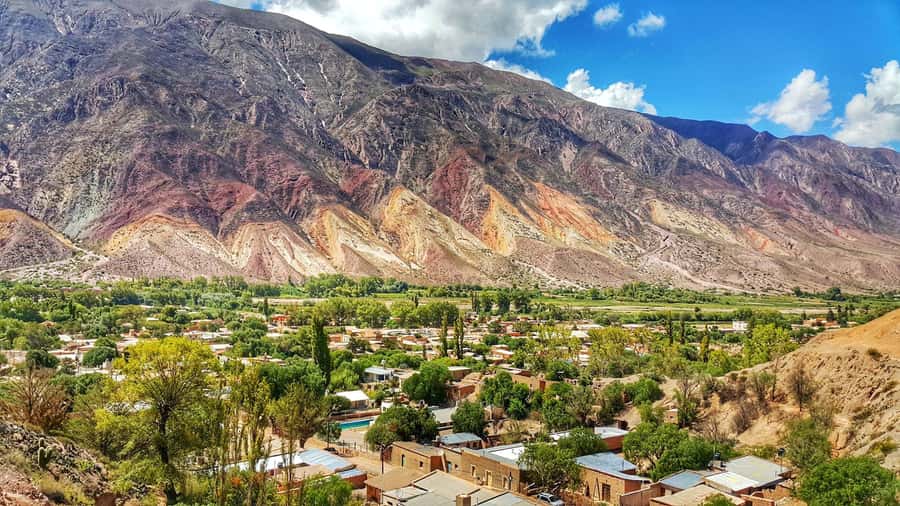
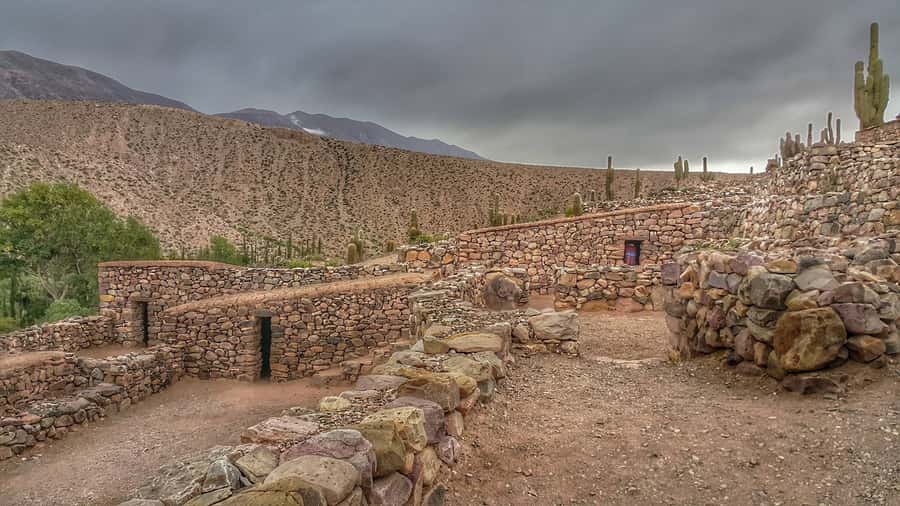
Tilcara is one of the key stops, offering Andean character, mountain views, and a stronger sense of local culture. It is also the point where you can consider visiting El Pucará de Tilcara, an archaeological site whose entrance fee is not included.
That extra cost is worth noting when you compare the tour price with your full day’s budget. The excursion itself costs $37 per person, but the archaeological site requires a separate admission ticket. The supplied information does not give the ticket price, so check locally if El Pucará is a priority.
If you want to enter, listen carefully for the meeting time and do not let the optional visit make you late. The overall route is tightly timed, and the bus cannot wait indefinitely for one person exploring an additional site.
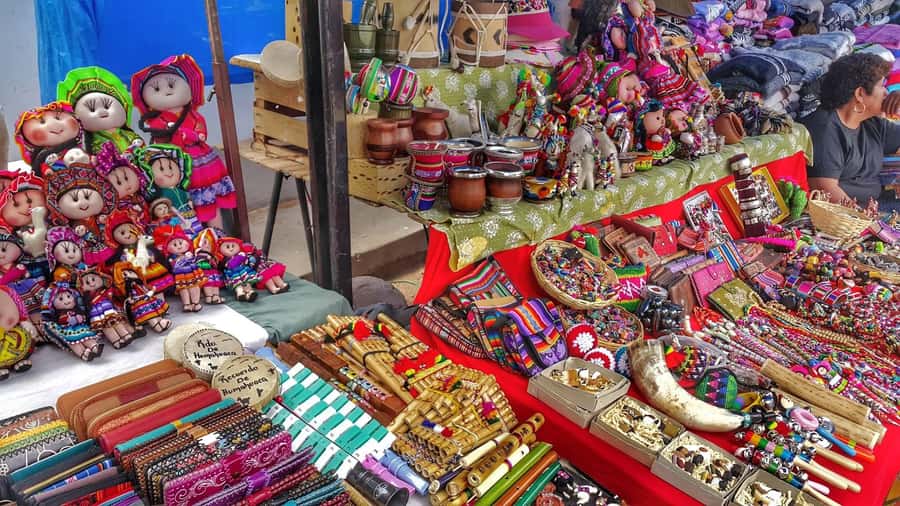
Tilcara is also an important cultural counterpoint to the geological sights. The mountains are the headline attraction, but the towns give the day meaning. You see that the Quebrada is not just a scenic corridor. It is also a place of communities, churches, archaeological remains, and traditions connected to the Andes.
More trips around Salta and Jujuy:
- From Salta: Full-Day Tour to Cafayate with Wine Tasting
★ 4.5 · 478 reviews - From Salta: Salinas Grandes, Purmamarca & Los Colorados Hike
★ 4.3 · 356 reviews - Full-Day Tour Cafayate Calchaqui Valleys with Wine
★ 4.5 · 347 reviews - From Salta: Cafayate, land of wines and imposing ravines
★ 4.4 · 347 reviews
Uquía and the gun-toting angels
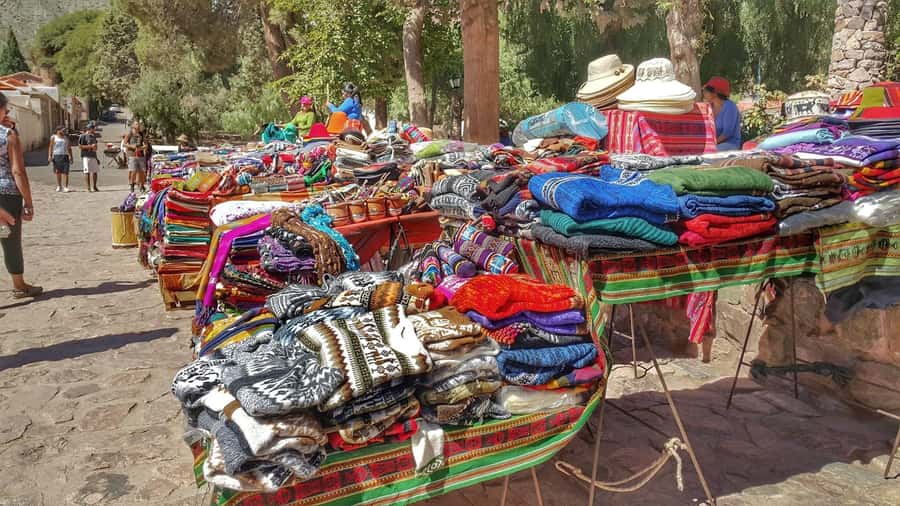
Uquía is a sleepy town with a historic church known for paintings of angels carrying guns. This is one of the most unusual details on the itinerary, and it gives the day a welcome change of pace.
The paintings are a reminder that colonial religious art in the Andes does not always look like the church art you may expect from Europe. The armed angels are visually memorable and offer a glimpse into the way religious imagery developed in the region.
This stop will appeal to you if you enjoy small, specific cultural details more than grand monuments. It is not presented as a long museum visit, so expect a brief look rather than an extended art-history lesson.
I would pay close attention to the guide here. A good explanation can turn a quick church stop into one of the most interesting parts of the day. Without clear interpretation, it may feel like another short photo break.
A stop at the Tropic of Cancer
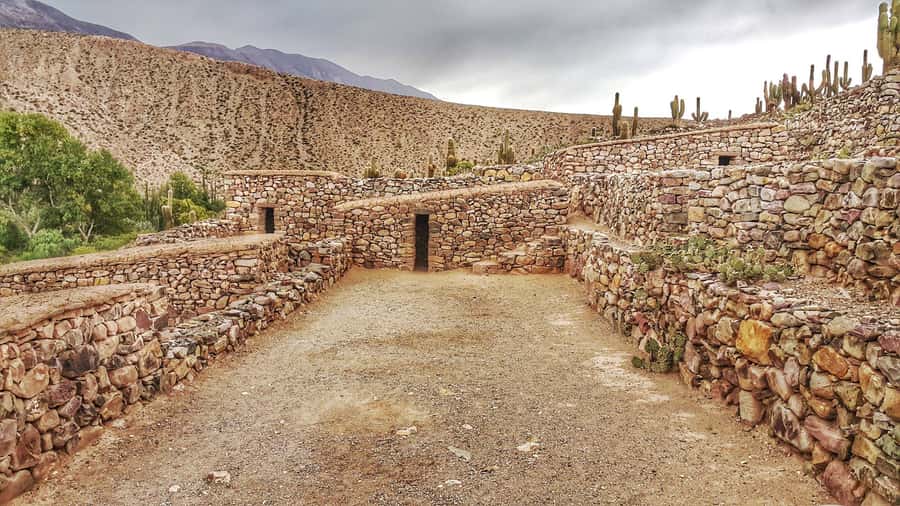
The Tropic of Cancer stop is a simple geographic experience. It marks the most southerly latitude at which the sun can appear directly overhead at noon.
You will not spend hours here, and the stop may be more about understanding your position on the map than seeing a large attraction. Still, it breaks up the long drive and adds a clear geographical point to the route.
This is a good place to have your passport or ID card ready, since those documents are required for the activity. Bring them even if you do not expect a formal border crossing. The tour specifically asks each person to carry a passport or identity card.
The stop also works well as part of the day’s larger pattern. The route is not only showing you colorful mountains. It connects geology, latitude, villages, religion, archaeology, and the long corridor leading toward Bolivia.
Humahuaca and the great Andean gorge
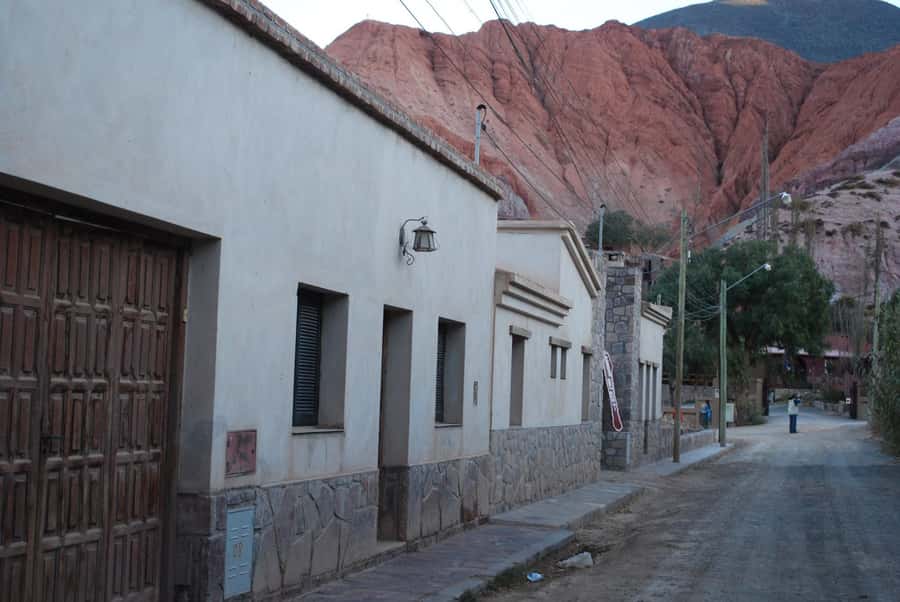
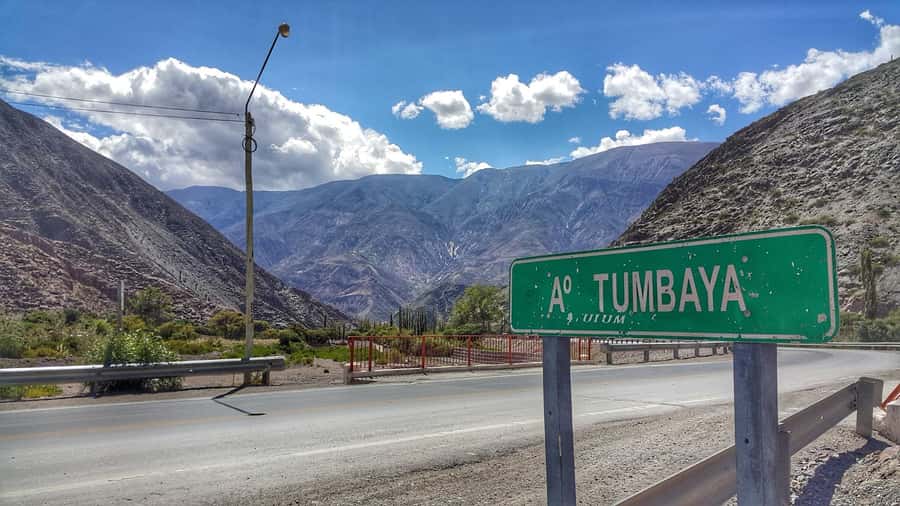
Humahuaca is the final major destination and the point where the scale of the region becomes clearest. The Quebrada de Humahuaca is a mountainous gorge that runs for nearly 155 kilometers along the Grande River and north toward Bolivia.
This is the broadest setting of the day. Earlier stops show individual hills and towns. Humahuaca shows the full sweep of the route, with mountains rising around a historic Andean corridor.
The gorge is recognized as a UNESCO World Heritage Site for its natural and cultural importance. That designation matters because it reflects more than attractive scenery. The area brings together geological formations, settlement, travel routes, and cultural heritage over a long stretch of northern Argentina.
You should give this stop your full attention, even if the schedule feels busy. Take in the shape and color of the mountains before focusing on photographs. If the guide provides historical or cultural context, this is the place where it can tie the entire day together.
The drawback is the same one that affects the rest of the outing: Humahuaca is part of a long circuit. You are seeing a major site within a single day, not staying long enough to understand every corner of the town and gorge.
How the pace affects the experience
The 510-minute duration sounds generous, but the day includes several long stretches by road and many separate stops. A past assessment described the schedule as moving too quickly, with about 40 minutes at each stop not enough to absorb the character of every place.
That criticism is fair. Forty minutes can be enough for a viewpoint, a short walk, or a quick church visit. It is not enough for all three, followed by a relaxed meal and shopping. You need to decide in advance what matters most.
I would prioritize the Seven Colors Hill, the Painter’s Palette, Humahuaca, and either Tilcara’s town or El Pucará. At Uquía, focus on the church and its unusual paintings. At the Tropic of Cancer, treat the stop as a short geographic marker rather than expecting a full attraction.
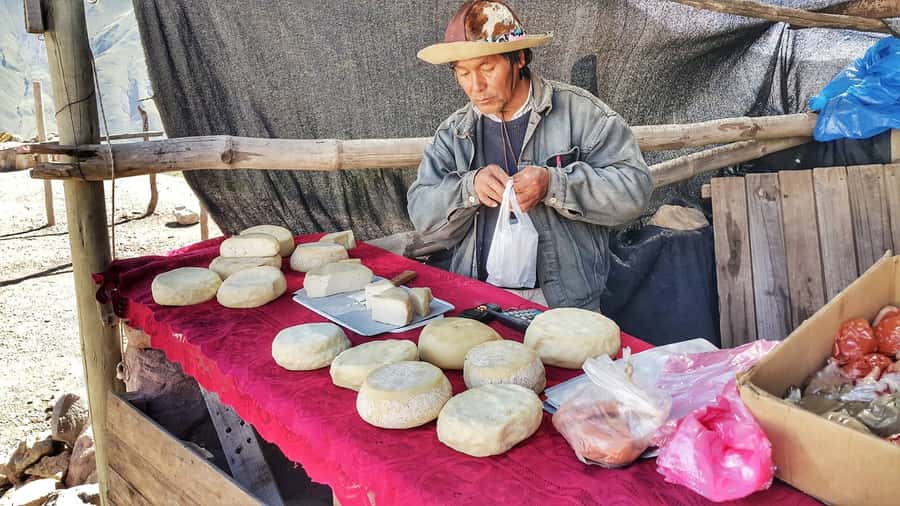
Food and drinks are not included. One past account found the place recommended by the guides disappointing and described the experience as too commercial. I would ask the guide about the meal stop, compare your options if you have a choice, and avoid assuming that the suggested restaurant will suit you.
The long day also makes comfort important. The operator uses either a bus or minivan, depending on group size, so the amount of personal space may vary. Bring water and a simple snack, since food is not part of the price, and arrive early enough to avoid starting the day in a rush.
Guide quality and language arrangements
The strongest feedback centers on the guide’s energy and ability to engage the group. One highly positive account describes the guide as brilliant, engaging, and a major reason the day felt enjoyable. Another praised the guides, drivers, planning, and organization.
That is encouraging, because this itinerary needs good time management. A guide must explain the stops clearly, repeat departure times, and keep the group moving without turning every pause into a lecture.
Language delivery is just as important. The tour is advertised with Spanish and English support, but one past departure switched to Spanish only at short notice. The Spanish-speaking guide in that case spoke too quickly for a person with beginner-level Spanish and gave lengthy answers when a short practical answer was needed.
The lesson is simple: confirm the language before the day starts, and ask for clear instructions about the return time to the vehicle. If you do not speak Spanish comfortably, do not hesitate to request the key details slowly and directly. The difference between a good day and a frustrating one may be as small as understanding exactly when to return to the bus.
There was also one serious service failure in the feedback: a customer reported that the company failed to appear. That appears to be an isolated but important warning. Keep the local partner’s contact email or phone number available, since the operator asks for your contact details in case it needs to reach you.
Is $37 good value?
At $37 per person, the tour is inexpensive for an eight-and-a-half-hour excursion covering several towns and major sights. Transportation and a bilingual guide are included, along with pickup and drop-off at the stated meeting point.
You still need to budget for food, drinks, and El Pucará de Tilcara if you choose to enter. Even with those additions, the base price is attractive if you want transportation between widely separated stops and do not want to plan the route yourself.
The real cost is your time. You are paying with a full day and accepting a schedule that may leave little room for wandering. That is a good trade if you have only one day in the region and want a broad overview. It is less appealing if you prefer slow travel, long meals, or detailed visits to archaeological and religious sites.
The average score is 4 out of 5 from nine ratings, with several strong endorsements for the guides, drivers, planning, and range of stops. The lower assessments point to practical risks: a missed pickup, a language change, an unsatisfying meal recommendation, and a rushed pace.
Taken together, the value is good but not effortless. Confirm the meeting details and language, carry your own snacks, and accept that you are choosing coverage over depth.
Who should book this day trip?
I would choose this excursion if you are staying in Jujuy, have one free day, and want to see the main sights of the Quebrada de Humahuaca without arranging separate transport. It suits first-time visitors who want a clear introduction to Purmamarca, Maimará, Tilcara, Uquía, the Tropic of Cancer, and Humahuaca.
It is also a good fit if you enjoy scenery but want culture mixed in. The church paintings in Uquía, Tilcara’s archaeological option, and the UNESCO designation give the day more substance than a simple mountain-view drive.
I would think twice if your main goal is a quiet, slow visit to each town. The schedule is full, and the short stops can make it hard to linger. I would also be cautious if English commentary is essential unless you receive firm confirmation that the guide will speak both languages.
Before booking, note the practical details: meet at the YPF station on Vilcapugio 1986, wait at the coffee shop, and arrive 15 minutes early. Bring your passport or ID card. Free cancellation is available up to 24 hours before departure, and the reserve-now, pay-later option keeps your plans flexible.
Should you book it?
Book it if you want an affordable, carefully packed introduction to the Quebrada from Jujuy. The route covers an impressive number of places, and the best guide can make the long day feel lively and well organized.
Skip it if you want deep time in Tilcara or Humahuaca, or if you dislike fixed schedules. The strongest reason to book is the combination of price, coverage, and scenery. The strongest reason to hesitate is the pace, plus the need to confirm that English guiding and pickup arrangements are in place.
FAQ
Where does the tour meet?
The meeting point is the YPF gas station at Vilcapugio 1986, Y4607EKF San Salvador de Jujuy. Wait at the coffee shop for the bus and group.
How early should I arrive?
You should arrive 15 minutes before the activity begins and be ready at the meeting point.
How long does the excursion last?
The stated duration is 510 minutes, which is about eight and a half hours.
Is transportation included?
Yes. Transportation is included, with travel by bus or minivan depending on group size. Meeting-point pickup and drop-off are also included.
Is the tour available in English?
The tour lists Spanish and English live guiding. Since a previous departure changed to Spanish only, confirm the language arrangement with the local partner before the day of the tour.
Is food included?
No. Food and drinks are not included, so you should plan to pay for your own meals and refreshments.
Do I need to pay extra at El Pucará de Tilcara?
Yes. Admission to El Pucará de Tilcara is not included in the tour price.
Just added in Salta and Jujuy
- Unveiling Cafayate: Premium Wine Road Adventure★ 5.0 · 2 reviews
- Salta, Cafayate Wine Experience – 3 Full Days! Private★ 5.0 · 12 reviews
- Tilcara: 2 hours cycling tour trough the rural area★ 5.0 · 5 reviews
- Salta: Tour to the Salinas Grandes and Purmamarca★ 3.7 · 3 reviews
- From Salta: Full-Day Tours of Cachi and Salinas Grandes★ 4.5 · 3 reviews
- From Salta: Quebrada de Humahuaca, Purmamarca and Tilcara★ 4.2 · 43 reviews
- From Salta: Full-day excursions through Cachi and Humahuaca★ 5.0 · 2 reviews
- From Salta: Cafayate, Cachi and Salinas Grandes in 3 days★ 3.3 · 6 reviews
Salta and Jujuy Tours, compared.
Full-Day Trip to Salinas Grandes and Purmamarca
Read our review →
Full-Day Tour Cafayate Calchaqui Valleys with Wine
Read our review →
Serranías del Hornocal & Hill of 14 Colors Tour
Read our review →
Full-Day Tour Salinas Grandes and Purmamarca from Salta
Read our review →Browse the lists this tour appears in